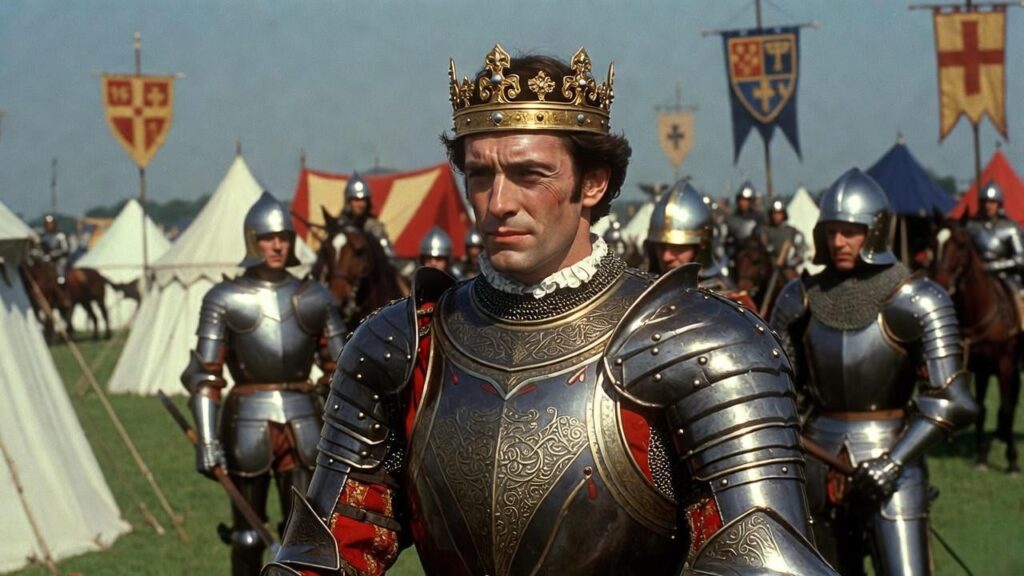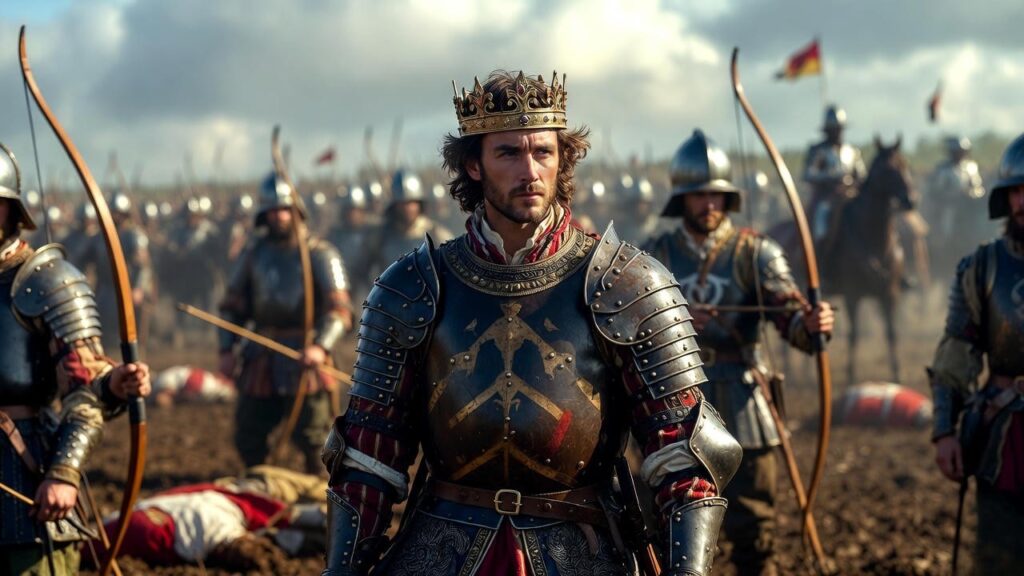
History is rarely a mirror reflecting raw truth; more often, it is a hall of mirrors reflecting the political anxieties of the era in which it is written. When we trace the cultural footprint left behind by the Tudor dynasty, few figures loom as large or as ambiguously as the second monarch of that house. The path from the firsthand observations of statesmen like henry from thomas More down to the immortalized dramatic verse of William Shakespeare represents one of the most fascinating intellectual handoffs in English literature.
How did a king who severed England from Rome, executed wives and counselors with chilling detachment, and inaugurated a religious revolution transform into the complex, melancholic, and manipulated tragic hero of the Renaissance stage? The answer does not lie in a single historical document. Instead, it rests within a multi-layered literary pipeline. Chroniclers, polemicists, and early historians laid down a rigid ideological skeleton, which William Shakespeare and his co-writer John Fletcher then clothed in psychological flesh and blood.
Readers diving into Tudor history often find themselves tangled in a web of names: navigating the differences between Thomas More’s humanist philosophies, Thomas Cromwell’s administrative ruthlessness, and Shakespeare’s theatrical dramatizations can feel overwhelming. This comprehensive guide untangles that historical pipeline. By examining how early Tudor historiography transitioned into Jacobean theatrical propaganda, readers will gain a profound understanding of why plays like Henry VIII (originally performed as All Is True) portray the king not as a monolithic tyrant, but as a deeply human product of a merciless political machinery.
The Historical Bedrock: Thomas More, Edward Hall, and Early Tudor Accounts
The Sources That Shaped the Stage
To understand how the Tudor monarch was perceived by Elizabethan and Jacobean audiences, we must first look to the men who survived him and recorded his reign. Among the most influential intellectual architects of the early Tudor period was Sir Thomas More. While More’s direct historical focus centered heavily on the usurpation and reign of Richard III in his unfinished masterpiece, The History of King Richard III, his skeptical humanist methodology fundamentally altered how English history was written. More introduced psychological motivation and dramatic dialogue into historical narrative, pioneering a style that subsequent chroniclers would eagerly adopt.
Following More, the monumental chronicle tradition took root, anchored by Edward Hall’s 1548 masterwork, Union of the Two Noble and Illustre Families of Lancastre and Yorke (commonly known as Hall’s Chronicle). Hall was no disinterested observer; he was a staunch supporter of the Tudor regime and an enthusiastic champion of the English Reformation. His text provided Shakespeare with a vibrant, highly partisan narrative blueprint. Hall painted the reign of Henry VIII as a grand providential drama—a necessary transition that rescued England from the bloody chaos of the Wars of the Roses and established a glorious imperial destiny under Protestant rule.
The Polemical Lens
History writing in the 16th century was an inherently dangerous and partisan enterprise. The transition from Catholic orthodoxy under Henry VIII to the Protestant settlement under Elizabeth I meant that chroniclers constantly had to navigate shifting religious and political fault lines.
-
Protestant Biases: Chronicles written during the mid-to-late Tudor period deliberately emphasized the tyranny of the medieval Catholic Church, casting figures like Cardinal Wolsey as overmighty villains who usurped royal authority.
-
The Royal Prerogative: Even when chroniclers critiqued specific policies, they were careful to shield the crown from direct blame, establishing a narrative trope where a good king was simply misled by wicked counselors.
-
The Shift to Narrative Drama: As history moved from dry monastic annals to sweeping vernacular prose, it naturally acquired the pacing, conflict points, and emotional stakes required for eventual theatrical adaptation.
From Page to Play: Shakespeare’s Access and Creative License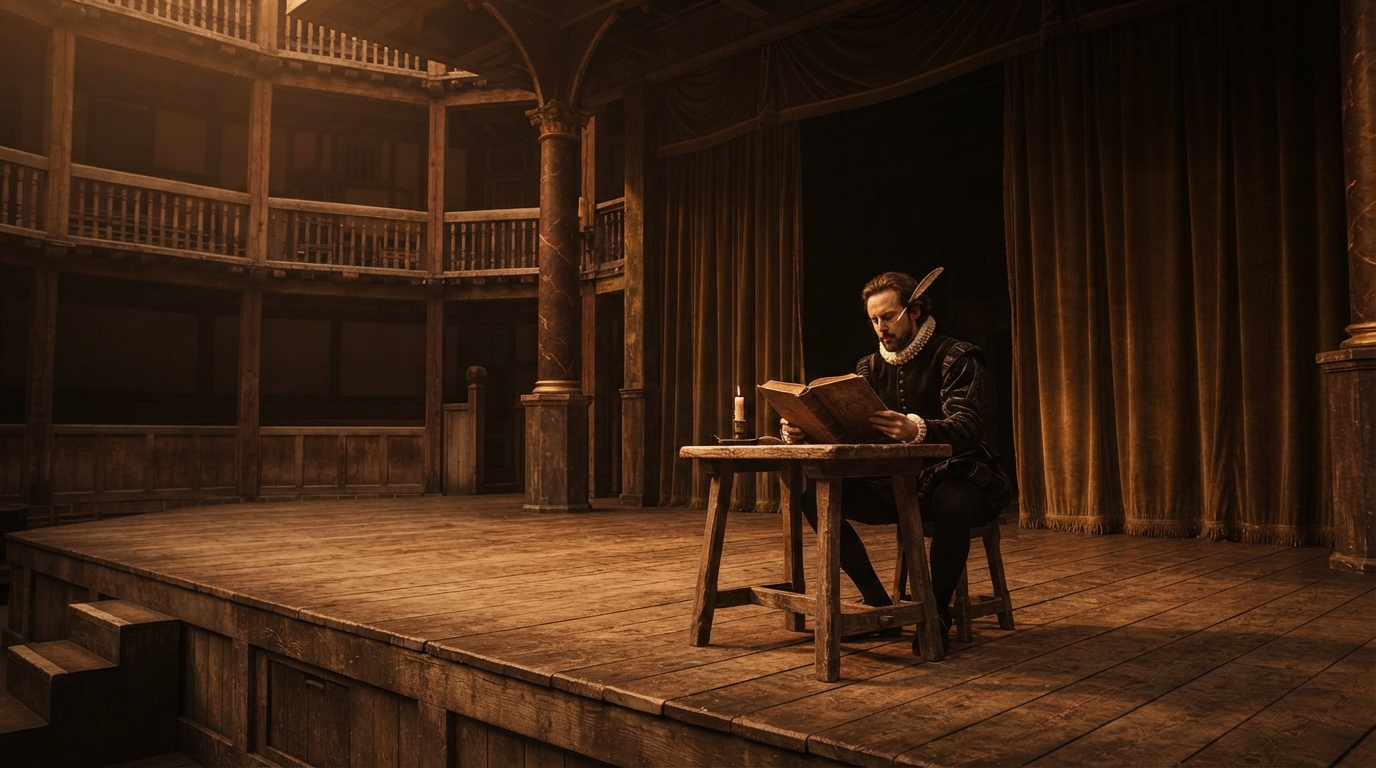
Holinshed’s Chronicles: The Ultimate Intermediary
While Edward Hall provided the ideological fervor, it was Raphael Holinshed’s Chronicles of England, Scotlande, and Ireland (published in 1577 and expanded in 1587) that served as William Shakespeare’s primary library. Holinshed synthesized earlier accounts, including Hall and More, weaving them into a massive, accessible compendium of national history.
When Shakespeare and his collaborator John Fletcher set out to compose Henry VIII around 1613, they relied heavily on Holinshed’s dramatic pacing, speeches, and character descriptions. Yet, Shakespeare did not act as a passive copier. He selected, condensed, and reshaped historical timelines to suit the physical constraints of the Globe Theatre and the psychological demands of dramatic art. For instance, events that occurred years apart—such as the fall of Buckingham, the disgrace of Wolsey, and the birth of Elizabeth—were compressed into tightly wound theatrical arcs to maximize emotional impact.
The Politics of Jacobean Playwriting
Writing history under King James I was a delicate tightrope walk. Unlike the late Queen Elizabeth, who had been a direct participant in the latter half of the Tudor century, James was a Stuart outsider eager to cement his dynasty’s legitimacy.
-
Appeasing the Crown: The play concludes with a glowing prophecy regarding the birth of Elizabeth I and the glorious future ushered in by her successor, James. This served as a vital political buffer, ensuring the playwrights celebrated the Protestant succession without provoking state censorship.
-
Balancing Spectacle and Subversion: While celebrating the Tudor line, the play simultaneously offers a remarkably cynical look at courtly backstabbing, taxation protests, and the crushing vulnerability of those who lean too close to absolute power.
Deconstructing the Characters: History Versus Shakespearean Drama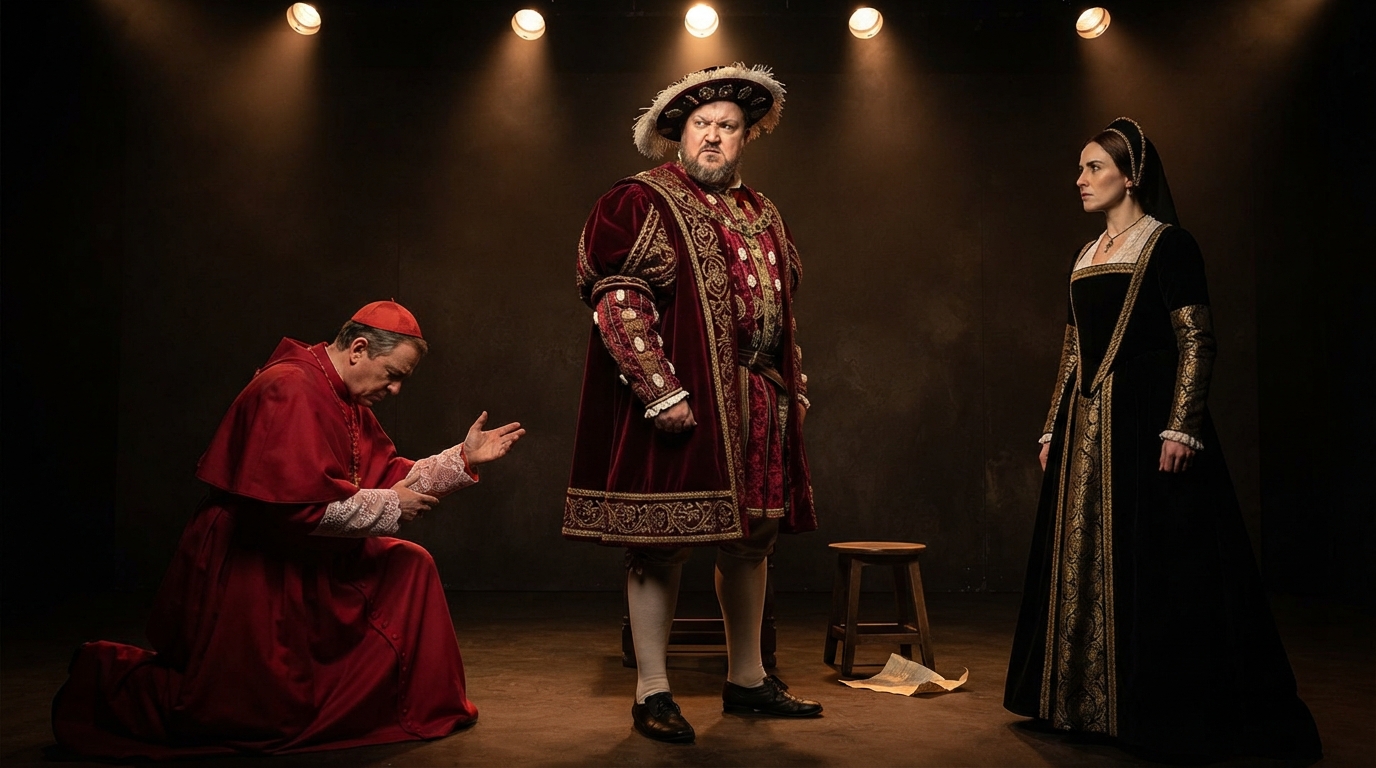
King Henry VIII: Dynamic Ruler or Puppet of Factions?
In historical reality, Henry VIII was an intellectual, deeply athletic, and ruthlessly calculating monarch who dominated his court through sheer force of personality and calculated terror. Yet, in Shakespeare and Fletcher’s Henry VIII, the king is portrayed with striking ambivalence. He appears at times pious, generous, and majestic, yet at other times dangerously naive or emotionally detached as his closest friends and advisors are led to the executioner’s block.
This dramatic portrayal allows the playwrights to explore a classic Renaissance question: Can a monarch remain entirely virtuous while presiding over a corrupt political apparatus? By shifting the blame for tyrannical acts onto ministers like Wolsey and Cromwell, the drama preserves the sacred dignity of the crown while exposing the brutal reality of court politics.
Cardinal Wolsey: The Fall of the Overmighty Subject
No character undergoes a more dramatic transformation in both history and drama than Cardinal Thomas Wolsey.
-
The Historical Wolsey: As Lord Chancellor and papal legate, Wolsey amassed staggering wealth and centralized state power, making him deeply unpopular among the English nobility. His diplomatic failures regarding the king’s divorce ultimately sealed his political doom.
-
The Dramatic Wolsey: Shakespeare and Fletcher elevate Wolsey’s downfall to operatic tragedy. In Act 3, Scene 2, Wolsey delivers one of the most famous melancholic soliloquies in the canon—urging Thomas Cromwell to “fling away ambition” after experiencing the brutal fickleness of royal favor. History remembers Wolsey as a formidable autocrat; the stage transforms him into a poignant emblem of human hubris.
Queen Catherine of Aragon: Stoicism and Statecraft
Catherine’s defense in the divorce proceedings forms the emotional core of the play’s early acts. Historical records confirm her fierce intelligence, dignity, and unwavering refusal to accept the annulment of her marriage. Shakespeare harnesses this historical grit, granting Catherine some of the most commanding, noble lines in Renaissance drama. Her steadfast adherence to her conscience provides a moral counterweight to the shifting political winds of the royal court.
Thematic Analysis: Power, Fall, and Divine Right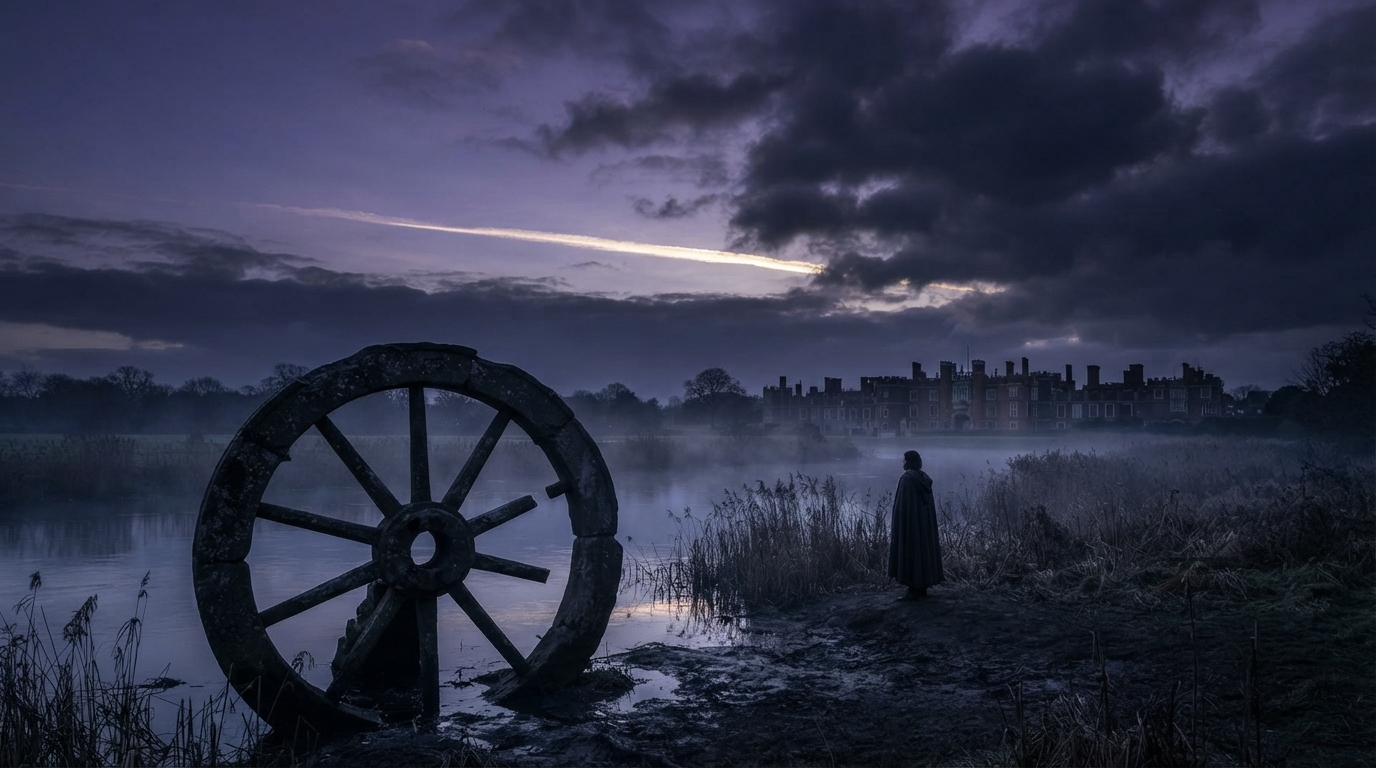
The Wheels of Fortune in Tudor Historiography
A dominant theme connecting sixteenth-century chronicles to Shakespearean drama is the medieval concept of the Wheel of Fortune. In the Tudor worldview, earthly power is fleeting, and those who climb highest are most vulnerable to catastrophic descents.
-
Edward Duke of Buckingham: Executed in 1521, his fall opens the play as a stark warning against political ambition.
-
Cardinal Wolsey: Rises from humble origins to rule church and state, only to experience total ruin.
-
Anne Boleyn: Ascends to the throne in a blaze of triumph, yet the audience knows—from the historical horizon—that her own tragic end looms just beyond the final curtain.
The Shadow of the Reformation
The seismic religious shift that separated England from the papacy underpins every political maneuver in the narrative. While explicit theological debates are minimized to avoid running afoul of the King’s Men’s patrons, the underlying structural changes are profound. The dissolution of the old medieval order gives birth to a modern, centralized nation-state—at a devastating human cost.
FAQ: Common Questions on Shakespeare and Tudor History
Did Shakespeare base his play strictly on Thomas More’s writings?
No. While Sir Thomas More’s intellectual framework heavily influenced Tudor historiography, Shakespeare’s primary narrative source for Henry VIII was Raphael Holinshed’s Chronicles, alongside Edward Hall’s historical accounts.
How accurate is Shakespeare’s depiction of the fall of Cardinal Wolsey?
While compressed for dramatic effect, the core historical trajectory is remarkably accurate. Wolsey fell from royal grace due to his failure to secure the papal annulment of Henry’s marriage to Catherine of Aragon, combined with the relentless lobbying of the Boleyn faction and traditionalist nobles.
What role did John Fletcher play in writing Henry VIII?
Recent textual and stylistic analyses confirm that Henry VIII (originally titled All Is True) was a collaborative effort between William Shakespeare and his younger contemporary, John Fletcher, who succeeded him as chief playwright for the King’s Men. Fletcher’s distinct linguistic cadence is particularly visible in the play’s later acts.
The Enduring Legacy of Tudor Myth-Making
The journey from the analytical chronicles of humanists and early chroniclers to the immortal poetry of the Elizabethan and Jacobean stage demonstrates how cultural memory is forged. Writers like Edward Hall and Sir Thomas More provided the raw factual architecture and ideological framing of the Tudor century. William Shakespeare took those foundational blocks and infused them with psychological depth, theatrical spectacle, and timeless moral inquiry.
Ultimately, exploring how historical accounts shaped the theatrical portrait of King Henry VIII reveals as much about Renaissance anxieties as it does about medieval politics. It reminds us that history is never merely a record of the past; it is an ongoing conversation about power, ambition, and the fragile human cost of wearing a crown.