“The time is out of joint. O cursèd spite, / That ever I was born to set it right!” These haunting words from William Shakespeare’s Hamlet capture the essence of a world disrupted, a cosmic order thrown into chaos. But what if this sense of dislocation runs deeper than Renaissance politics or personal revenge? What if it echoes an ancient astronomical reality known as the precession of the equinoxes—a slow, imperceptible wobble in Earth’s axis that shifts the stars over millennia?
Enter Hamlet’s Mill, the provocative 1969 book by Giorgio de Santillana, a renowned MIT professor of the history of science, and Hertha von Dechend, an ethnologist and historian of science from Frankfurt University. In this groundbreaking work—subtitled An Essay Investigating the Origins of Human Knowledge and Its Transmission Through Myth—the authors argue that ancient myths worldwide were not mere folklore or fertility tales but sophisticated encodings of precise astronomical knowledge. Central to their thesis is the motif of a “heavenly mill,” a cosmic grinding stone rotating around the celestial pole, symbolizing the turning of world ages driven by precession.
Shakespeare’s Hamlet, often hailed as the pinnacle of English literature for its psychological depth and existential inquiry, draws from older Scandinavian legends of Amleth (or Amlodhi). In these tales, the hero is tied to a mill that grinds salt, sand, or even the sea itself—imagery that de Santillana and von Dechend trace back to prehistoric observations of the stars. By connecting Shakespeare’s tragedy to this mythic-astronomical framework, we uncover hidden layers: Hamlet’s melancholy reflects not just human frailty but humanity’s place in vast cosmic cycles.
This article explores how ancient cosmic myths, particularly the “mill” motif, may have shaped Hamlet far beyond its immediate sources. Whether you’re a Shakespeare enthusiast seeking fresh interpretations, a mythology lover curious about archaeoastronomy, or someone pondering humanity’s lost knowledge, this interdisciplinary lens offers deeper appreciation of the play and challenges assumptions about ancient intelligence. We’ll examine the book’s thesis, trace the legend’s roots, weigh criticisms, and show how this perspective transforms your reading of the Bard’s masterpiece.
What Is Hamlet’s Mill? Understanding the Book and Its Core Thesis
The Authors and Their Revolutionary Approach
Giorgio de Santillana (1902–1974) brought unparalleled expertise as a historian of science, having authored works on Galileo and the origins of modern thought. Hertha von Dechend (1915–2002), his co-author, specialized in comparative mythology and non-Western scientific traditions. Together, they bridged disciplines in an era when such cross-pollination was rare.
Published in 1969 by Gambit Incorporated, Hamlet’s Mill emerged amid growing interest in archaeoastronomy—the study of ancient astronomical knowledge embedded in structures, art, and stories. The book challenged the conventional narrative that sophisticated astronomy began with the Greeks (e.g., Hipparchus crediting the discovery of precession around 150 BCE). Instead, de Santillana and von Dechend proposed that this knowledge originated much earlier—possibly in the late Neolithic or early Bronze Age—and survived through oral myth rather than written records.
Their method was bold: a comparative analysis of myths from Mesopotamia, India, Greece, Scandinavia, Polynesia, and beyond, identifying recurring “mythemes” (core symbolic units) that align with astronomical phenomena.
The Central Argument – Precession of the Equinoxes Encoded in Myth
Precession of the equinoxes refers to the gradual shift of Earth’s rotational axis, completing one full cycle roughly every 25,920 years (often rounded to 26,000 years). This causes the vernal equinox point to drift backward through the zodiac constellations—about 1 degree every 72 years. Today, we transition from Pisces to Aquarius; millennia ago, it shifted from Taurus to Aries.
Mainstream history attributes the discovery to Hipparchus, but de Santillana and von Dechend argued ancients observed it far earlier. Without telescopes or precise instruments, how? Through long-term sky-watching and symbolic encoding in myth.
The “mill” motif serves as their key evidence: a heavenly millstone pivoted at the celestial pole (near Polaris or earlier pole stars), grinding around the axis mundi. As the pole shifts due to precession, the mill “unhinges,” symbolizing the end of one world age and the chaotic birth of another. Myths describe this as floods, churnings, or maelstroms—the Milky Way often depicted as the mill’s outflow.
De Santillana and von Dechend emphasized that myths preserved technical data when literacy was limited: “The frame of time” in myth was astronomical, not agricultural or psychological. They rejected fertility interpretations, insisting these stories encoded a shared prehistoric scientific heritage.
The Hamlet Connection – From Amlodhi to Shakespeare
The book’s title derives from the Icelandic kenning “Amlóða kvern” (Amlodhi’s quern/mill), found in Snorri Sturluson’s Skáldskaparmál. Amlodhi, a “simpleton” or fool-hero, owns a mill that grinds salt into the sea (explaining its saltiness) or sand/abundance. This figure parallels Saxo Grammaticus’s 12th-century Amleth in Gesta Danorum—the cunning avenger whose feigned madness mirrors Amlodhi’s apparent folly.
The authors saw Amlodhi/Amleth as a degraded version of an axis-hero tied to the pole: “lame” or disrupted, like the shifting celestial pivot. Shakespeare, adapting these sources via Thomas Kyd’s “Ur-Hamlet” and François de Belleforest’s French version, retained echoes of cosmic disruption—”time out of joint”—without conscious astronomical intent.
The Mythic Roots of Hamlet – Beyond Saxo Grammaticus
The Traditional Sources of Shakespeare’s Hamlet
Shakespeare’s Hamlet (c. 1600–1601) builds on established narratives. The core plot— a prince avenging his father’s murder by a usurping uncle—originates in Saxo Grammaticus’s Gesta Danorum (c. 1200), where Amleth feigns madness to survive, kills his uncle Fengi, and rules wisely before his downfall.
Earlier influences include Belleforest’s 1570 adaptation and possibly the lost “Ur-Hamlet.” Shakespeare transformed this revenge tale into a philosophical tragedy, adding introspection, the ghost, Ophelia’s tragedy, and soliloquies like “To be or not to be.”
Yet the name “Hamlet” (from Amleth/Amlodhi) hints at older layers.
De Santillana and von Dechend’s Deeper Layer
In Hamlet’s Mill, Amlodhi embodies the axis mundi figure: the “pole” around which heavens turn. His “mill” grinds cosmic order; when precession shifts the pivot, the hero appears “foolish” or “lame” because the old alignment fails.
In Shakespeare’s play:
- “The time is out of joint” evokes precessional disruption.
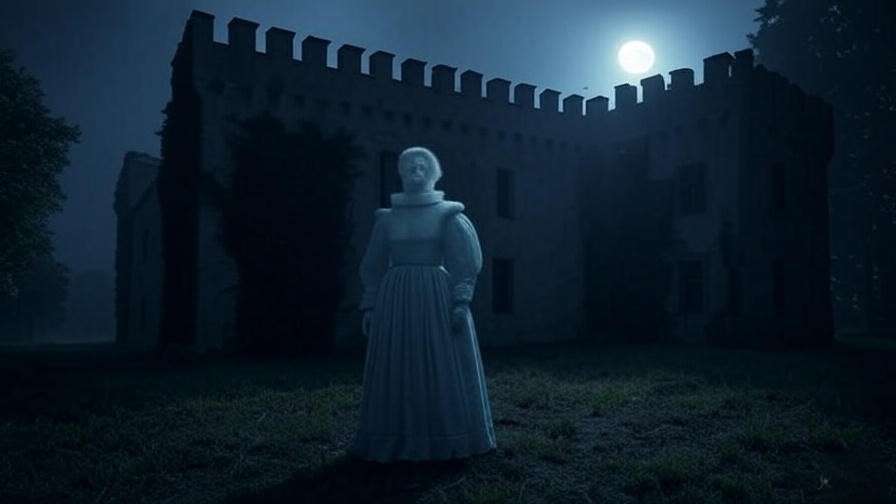
- The ghost (old Hamlet) signals a world-age transition.
- Cycles of revenge mirror cosmic renewal/destruction.
- Hamlet’s delay and melancholy reflect existential awareness amid shifting stars.
The sea as “Amlodhi’s mill” in folklore parallels the play’s maritime imagery and existential flux.
Comparative Mythology – Global Echoes
The mill motif appears worldwide:
- Greek: Gods churning the ocean (like Hindu Samudra Manthan).
- Hindu: Vishnu as tortoise supporting the churning mountain-pole.
- Finnish Kalevala: Sampo mill grinding abundance, stolen and broken.
- Polynesian and Native American tales of world-turning mills or whirlpools.
These reinforce de Santillana and von Dechend’s claim of a diffused prehistoric astronomical code, predating written history.
Criticisms, Legacy, and Modern Relevance of Hamlet’s Mill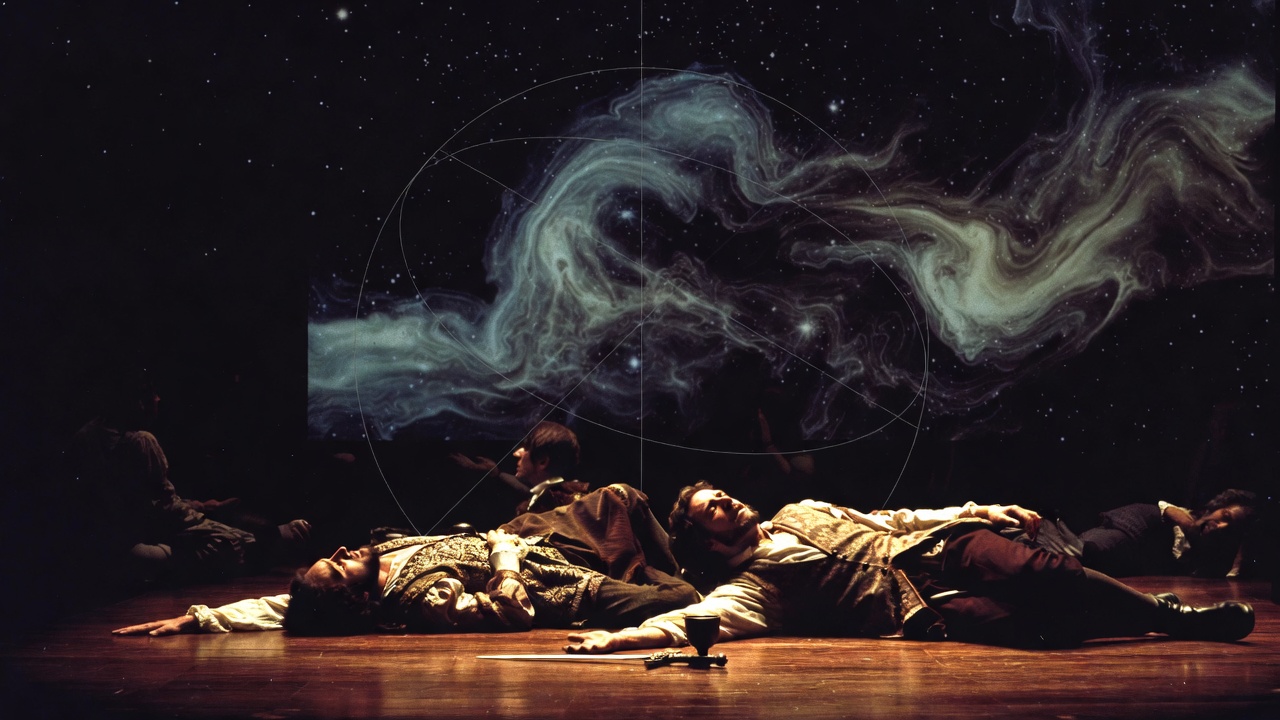
Scholarly Reception and Debates
Hamlet’s Mill received mixed reviews. Praised for pioneering archaeoastronomy and highlighting myth-as-science, it inspired researchers like John Major Jenkins.
Critics, including astronomer Cecilia Payne-Gaposchkin and others, called it speculative: loose etymologies, overreach resembling 19th-century Panbabylonism, and insufficient evidence for Neolithic precession knowledge. Mainstream astronomy still credits Hipparchus.
Yet even detractors acknowledge its value in prompting reevaluation of ancient observational skills (e.g., alignments at Stonehenge or Göbekli Tepe).
Influence on Contemporary Studies
The book fueled archaeoastronomy’s growth, influencing discussions of megalithic astronomy and mythic encodings. Modern works on astrological ages (e.g., Age of Aquarius) often reference it, though cautiously.
In literature and culture, it bridges humanities and sciences, appearing in discussions of cosmic themes in sci-fi or New Age thought.
Why It Matters for Shakespeare Readers Today
This lens adds cosmic scale to Hamlet’s tragedy: his doubt mirrors humanity’s confrontation with indifferent heavens. It enriches interdisciplinary study, showing Shakespeare’s genius in inheriting mythic depths.
How This Perspective Transforms Your Reading of Hamlet
Key Passages Reinterpreted Through the Cosmic Lens
When viewed through the framework of Hamlet’s Mill, several iconic moments in Shakespeare’s play take on added resonance, revealing echoes of an ancient astronomical worldview.
- “The time is out of joint” (Act 1, Scene 5) Hamlet’s cry after encountering the Ghost is traditionally read as personal anguish over moral and political disorder. Yet in the mythic-astronomical context, it directly parallels the “unhinging” of the heavenly mill. Precession slowly misaligns the celestial pole; the old axis no longer holds true. The Ghost—representing the previous order—appears to demand restoration of balance, much as mythic heroes attempt (and often fail) to repair the cosmic mill during transitional ages.
- “To be, or not to be” (Act 3, Scene 1) Hamlet’s most famous soliloquy contemplates existence amid suffering and the fear of the unknown. In the precessional reading, this existential doubt mirrors humanity’s confrontation with vast, indifferent cycles. The stars themselves shift without regard for human concerns; individual life becomes a fleeting speck within the 26,000-year grind. The “undiscovered country” from whose bourn no traveler returns can be seen as the next world age—unknown, potentially chaotic, yet inevitable.
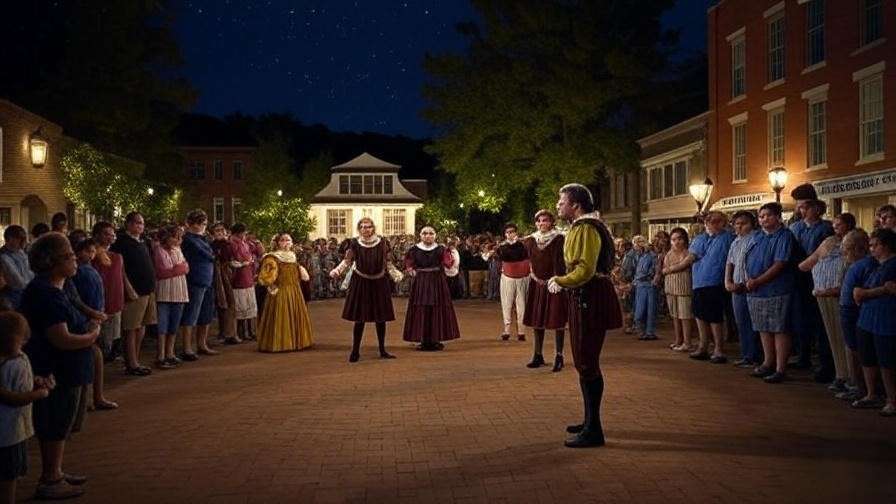
- The play-within-a-play (“The Mousetrap”) (Act 3, Scene 2) Hamlet stages a miniature drama to “catch the conscience of the king.” Mythologically, reenactment and ritual often preserved astronomical knowledge (e.g., seasonal dramas encoding solstice positions). Here, the inner play mirrors the larger mythic encoding process: truth hidden in symbolic performance, just as ancients concealed precise star data in seemingly simple tales.
- The final scene and mass carnage (Act 5, Scene 2) The stage is littered with bodies—Hamlet, Claudius, Gertrude, Laertes, even Rosencrantz and Guildenstern offstage. Traditional readings see this as the tragic cost of revenge. In the Hamlet’s Mill lens, it symbolizes the violent close of one world age: the mill grinds to a halt, old structures collapse, and a new (uncertain) cycle begins. Fortinbras’s arrival from the margins suggests renewal after cosmic catastrophe, akin to flood myths that follow the mill’s breaking.
These reinterpretations do not replace psychological or political readings but enrich them, showing how Shakespeare—perhaps unconsciously—drew from a mythic reservoir far older than the Renaissance.
Practical Tips for Deeper Engagement
To integrate this perspective into your own experience of Hamlet:
- Re-read with intention Highlight every reference to time, stars, heaven, earth, joints, hinges, or grinding/milling imagery. Note how often disruption is cosmic rather than merely personal.
- Consult visual aids Study diagrams of precession: imagine the celestial pole tracing a slow circle over millennia. Apps like Stellarium (free planetarium software) let you rewind the sky to 1600 CE or even 3000 BCE to see how constellations shifted relative to the horizon.
- Explore parallel myths Read excerpts from the Prose Edda (Snorri Sturluson), the Finnish Kalevala (especially the Sampo cycle), or the Hindu Mahabharata churning episode. Compare their mill/grinding symbols with Hamlet’s “mighty opposites” and cyclical violence.
- Cross-reference editions Use an annotated edition (e.g., Arden Shakespeare or Folger) alongside Hamlet’s Mill itself. Look for footnotes on Amleth/ Amlodhi folklore.
- Discuss in groups Bring this lens to book clubs, university seminars, or online forums (Reddit’s r/shakespeare or r/askhistorians). The interdisciplinary angle sparks lively debate between literature scholars, astronomers, and mythologists.
By engaging this way, readers often report a renewed sense of wonder: Shakespeare’s play no longer feels like a product of its time alone, but a link in a chain stretching back to humanity’s earliest systematic observations of the sky.
Hamlet’s Mill invites us to see William Shakespeare’s greatest tragedy not merely as a Renaissance masterpiece of human psychology, but as the late inheritor of an extraordinarily ancient tradition. Giorgio de Santillana and Hertha von Dechend argued persuasively that myths were humanity’s first scientific literature—preserving knowledge of the precession of the equinoxes when no other medium could. The mill of Amlodhi, grinding salt into the sea or abundance into famine, became the degraded but recognizable symbol of cosmic cycles that found its way, through centuries of storytelling, into the character of Prince Hamlet.
Whether or not every detail of their thesis withstands modern scrutiny, the core insight remains powerful: ancient peoples were far more observant, and far more intellectually sophisticated, than we often assume. Shakespeare, working with inherited legends, gave dramatic voice to a sense of dislocation that may ultimately derive from watching the very stars slowly drift out of alignment.
In our own era—marked by rapid technological change, climate uncertainty, and existential questions about humanity’s future—this perspective offers quiet reassurance. Cosmic cycles are slow, vast, and impartial. They remind us that disruption is not new, and that even in chaos, patterns endure. To read Hamlet with the Hamlet’s Mill lens is to stand at the intersection of literature, mythology, and astronomy—and to feel, however briefly, the turning of the same great mill that has ground for millennia.
If this exploration has sparked your curiosity, I encourage you to:
- Revisit Hamlet with fresh eyes.
- Read Hamlet’s Mill in full (available in multiple reprints).
- Dive into contemporary archaeoastronomy works, such as E.C. Krupp’s Skywatchers, Shamans & Kings or Anthony Aveni’s Stairways to the Stars.
The stars still turn. The mill still grinds. And somewhere in that slow rhythm, Shakespeare’s melancholy prince continues to speak to us across the ages.
Frequently Asked Questions (FAQs)
What exactly is the precession of the equinoxes? Precession is the slow wobble of Earth’s rotational axis, similar to a spinning top gradually tilting. It takes approximately 25,920 years to complete one full circle, causing the position of the vernal equinox (where the Sun crosses the celestial equator in spring) to drift backward through the zodiac constellations. Ancients who noticed this shift over generations would have seen entire star patterns move relative to the seasons.
Is the theory in Hamlet’s Mill widely accepted today? No, not in its full form. Most mainstream historians of science credit Hipparchus with discovering precession in the 2nd century BCE. Critics argue that de Santillana and von Dechend relied on speculative connections and selective evidence. However, the book is respected as a pioneering work in archaeoastronomy and continues to influence interdisciplinary discussions about myth and science.
How direct is the connection between Shakespeare’s Hamlet and the astronomical mill motif? Shakespeare almost certainly did not know about precession or intend any astronomical allegory. The link is indirect: he adapted folklore and legends (via Saxo Grammaticus and Belleforest) that themselves preserved much older mythic material. De Santillana and von Dechend used Hamlet/Amleth as a convenient entry point to illustrate a global pattern.
What are some recommended books for further reading?
- Hamlet’s Mill by Giorgio de Santillana and Hertha von Dechend (original 1969 edition or later reprints)
- The Secret of the Ages by John Major Jenkins (a modern follow-up with introductions to the original)
- Echoes of the Ancient Skies by E.C. Krupp
- Conversing with the Planets by Anthony Aveni
- For Shakespeare context: The Sources of Hamlet by Israel Gollancz or the Arden Shakespeare edition’s introduction.