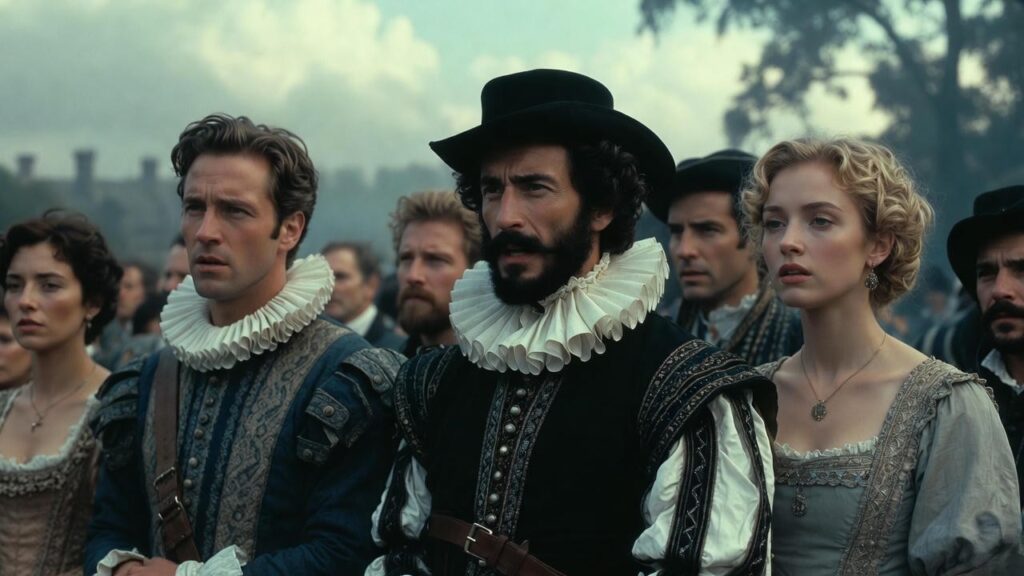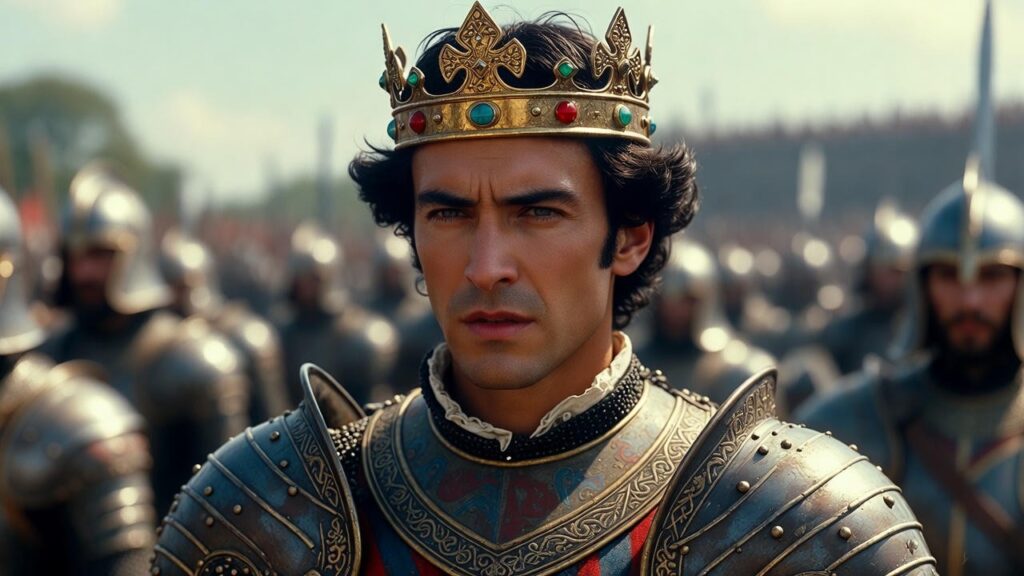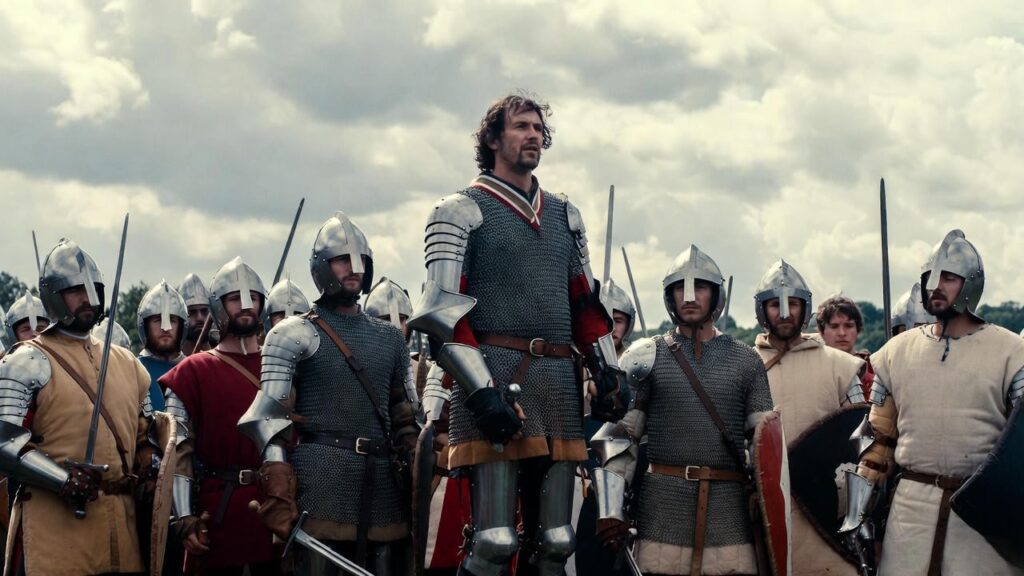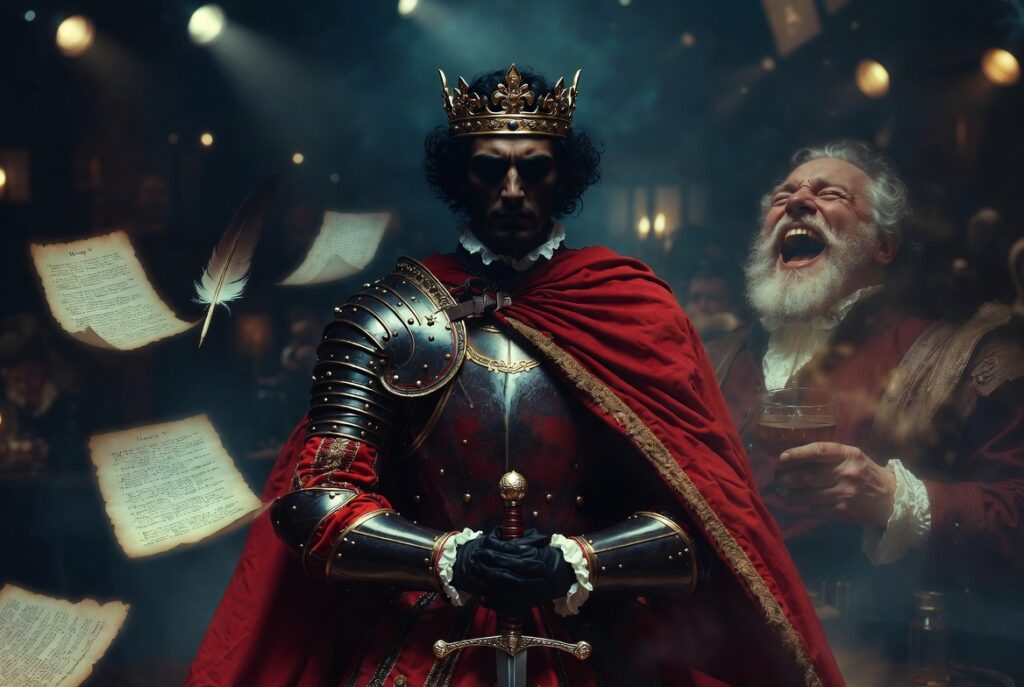
When readers search for “henry 5 harold,” they are often seeking a deeper, more nuanced understanding of William Shakespeare’s Henry V through the lens of one of the 20th century’s most influential literary critics: Harold Bloom. Many come away from patriotic productions or school readings feeling stirred by Henry’s stirring speeches, yet vaguely unsettled. Was the play truly a celebration of heroic kingship, or does Shakespeare embed something more complex—and darker—beneath the surface of Agincourt’s glory?
Harold Bloom, the Sterling Professor of Humanities at Yale and author of landmark works like Shakespeare: The Invention of the Human, offers a compelling answer. In his introductions to Bloom’s Shakespeare Through the Ages: Henry V and scattered throughout his broader criticism, Bloom treats Henry V as a brilliant yet lesser drama compared to the Henry IV plays, largely because the vibrant, life-affirming Falstaff is gone, and Prince Hal has fully transformed into the enigmatic, power-driven King Henry V. Bloom’s reading highlights irony, the cost of political ambition, and the “veiling” of Henry’s true self, challenging simplistic heroic interpretations while celebrating Shakespeare’s unmatched dramatic genius.
This article explores Bloom’s essential insights into Henry V in comprehensive detail. Whether you are a student preparing an essay, a theater enthusiast grappling with modern productions, a teacher seeking fresh classroom angles, or a Shakespeare lover wanting to move beyond surface-level patriotism, you will find here a rich, authoritative guide that addresses the real need for thoughtful, text-grounded analysis. We will unpack Bloom’s perspective on character, theme, language, and legacy—going deeper than most existing summaries or study guides to deliver skyscraper-level value.
Who Was Harold Bloom and Why Does His View of Henry V Matter?
Harold Bloom (1930–2019) stood as one of the most prolific and provocative literary critics of his era. With over 30 books, including the influential The Western Canon and Shakespeare: The Invention of the Human (1998), Bloom championed a reader-centered, aesthetic approach to literature. He resisted ideological reductions—whether New Historicist, feminist, or Marxist—and insisted on Shakespeare’s centrality to Western literature as the supreme inventor of human personality and inwardness.
Bloom’s engagement with Shakespeare’s second tetralogy (Richard II, Henry IV Parts 1 and 2, and Henry V) is particularly passionate. He famously argued that if one had to choose a single work to represent Shakespeare, it should be the complete Henry IV plays, with the addition of Mistress Quickly’s poignant description of Falstaff’s death in Henry V (Act 2, Scene 3). For Bloom, Falstaff represents the pinnacle of Shakespearean vitality: a “grandest personality” who embodies wit, appetite, skepticism toward honor, and boundless humanity.
In contrast, Henry V marks a deliberate dramatic shift. The riotous tavern world recedes, and the focus turns to the responsibilities and hypocrisies of rule. Bloom sees this transition as both masterful and poignant. Henry V becomes a charismatic leader and master of rhetoric, yet he is “veiled”—his inner self increasingly obscured by the demands of kingship. Bloom draws on earlier critics like William Hazlitt, who called Henry an “amiable monster,” to underscore the play’s moral ambiguities: the rejection of Falstaff, the cold execution of old companions like Bardolph, and the pragmatic (some say Machiavellian) calculations behind the French campaign.
This perspective solves a common reader problem: the discomfort many feel when moving from the psychologically rich Henry IV plays to the more public, pageant-like Henry V. Bloom provides a framework for understanding why the play can feel both exhilarating and hollow, empowering audiences to appreciate its ironies without dismissing its dramatic power.
Contextualizing Henry V Within Shakespeare’s Henriad
To fully grasp Bloom’s insights, we must situate Henry V within the larger Henriad. Shakespeare’s history plays dramatize the turbulent transition from Richard II’s deposition through the Wars of the Roses. Prince Hal (the future Henry V) evolves across 1 Henry IV and 2 Henry IV from a seemingly wayward youth who frequents Eastcheap taverns to a calculated reformer who rejects his old life.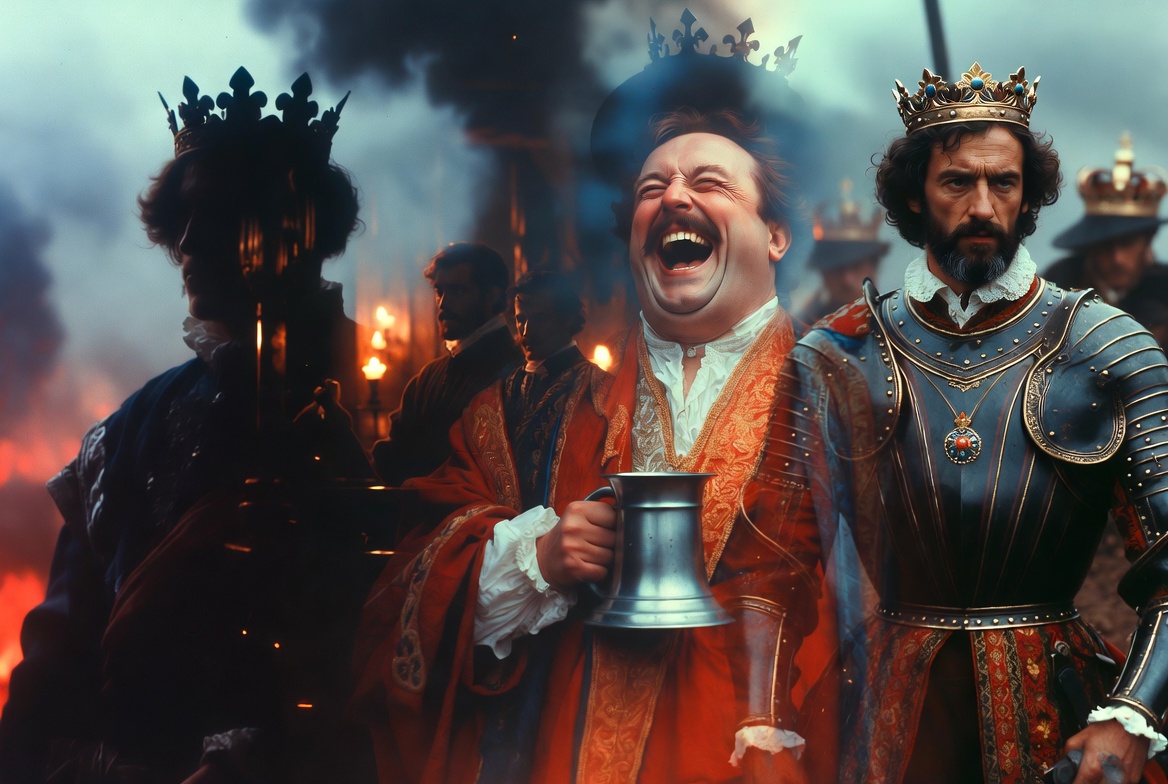
Bloom emphasizes that Falstaff serves as Hal’s true teacher of wit, role-playing, and human complexity. In the Henry IV plays, their relationship crackles with energy—Hal’s soliloquies reveal strategic self-fashioning, while Falstaff mocks hollow concepts of honor and duty. The rejection scene at the end of 2 Henry IV (“I know thee not, old man”) is, for Bloom, one of Shakespeare’s harshest moments. It signals not mere maturation but a deliberate sacrifice of vitality for power.
By the time Henry V opens, Falstaff is offstage and soon dead. Bloom notes the emotional void this creates: “Take Falstaff out of the plays and you get the empty sensation I experience when moving from Henry IV to Henry V.” The play compensates with magnificent rhetoric—the “Once more unto the breach” speech and the St. Crispin’s Day “band of brothers” oration—but Bloom questions whether audiences (or Henry himself) fully believe the stirring words. He views the speeches as masterful examples of charismatic leadership rather than straightforward patriotism, laced with dramatic irony.
This contextual placement helps readers solve the puzzle of why Henry V feels different: it is Shakespeare’s exploration of what happens when a complex human being fully assumes the “ceremonial role” of kingship, often at the expense of authentic selfhood.
Bloom on the Character of Henry V: The Veiled King and Amiable Monster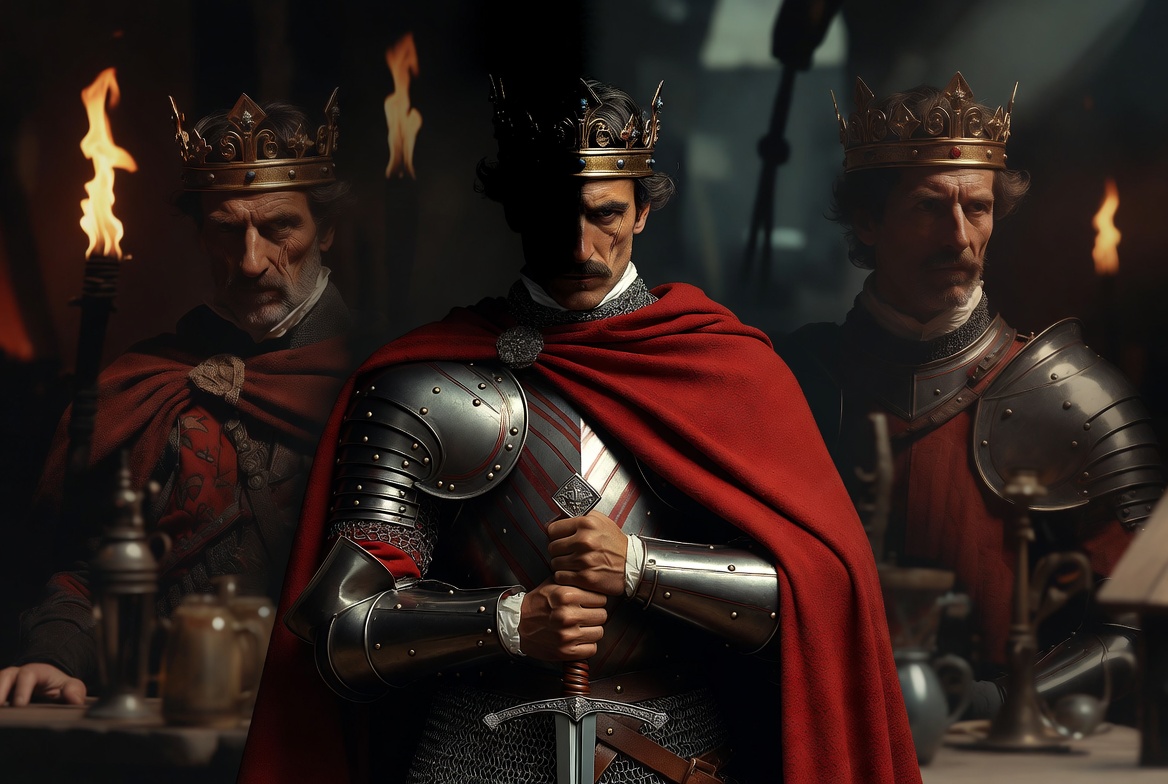
At the heart of Bloom’s reading is his complex portrait of King Henry V. Unlike romantic interpretations that cast Henry as an ideal Christian warrior-king, Bloom sees him as a supremely effective but ultimately diminished figure.
- The Transformation and Its Cost: Hal’s reformation is complete, yet Bloom argues Shakespeare does not let us locate Henry V’s “true self.” In Henry V, the king delivers only one soliloquy-like prayer (Act 4, Scene 1) on the eve of Agincourt, revealing private doubts about the burdens of rule and the legitimacy of his father’s crown. Bloom highlights how Henry’s identity becomes subsumed in ceremony and rhetoric. He is no longer the witty, ambivalent Hal but a master politician who exploits language for power.
- Rejection of Falstaff and Its Echoes: Bloom returns repeatedly to the banishment. Henry’s cold dismissal of Falstaff (referenced through reports of his death and the king’s indirect responsibility) demonstrates a willingness to betray personal bonds for political necessity. Bloom calls Henry “no man’s teacher and loves no one,” contrasting him sharply with Falstaff’s generous, if flawed, humanity. Destroying Falstaff causes Henry “not an iota of regret.”
- Machiavellian Elements and Moral Ambiguity: Drawing on Hazlitt, Bloom describes Henry as an “amiable monster”—charming yet capable of butchering prisoners (after the French attack on the English baggage train) and ordering the execution of old friends like Bardolph for theft. These actions reveal a pragmatic, sometimes ruthless leader who seizes the main chance. Bloom sees Shakespeare critiquing Machiavellian realpolitik even while dramatizing its effectiveness.
- Charisma Learned from Falstaff: Ironically, Henry’s greatest strength—his rhetorical charisma—stems from lessons learned in the tavern. Falstaff taught him to mock, role-play, and manipulate perception. Bloom notes that Henry becomes an “authentic charismatic” who uses these skills not for pleasure but for conquest and legitimacy.
This nuanced character analysis helps readers move beyond binary views (hero vs. villain) to appreciate Henry as one of Shakespeare’s most layered political portraits. It addresses the common need to reconcile the play’s patriotic surface with its undercurrents of doubt and cost.
Key Themes in Bloom’s Interpretation of Henry V
Bloom’s insights illuminate several interlocking themes that elevate Henry V beyond simple war drama:
- The Irony of Heroism and Rhetoric: Bloom views the great speeches as double-edged. The “band of brothers” promise rings hollow because common soldiers will not become gentlemen or share in noble rewards. Henry stirs his troops (and audiences) with bombast, yet “neither we nor he believes a word he says” in the deepest sense. This irony aligns Henry V with Shakespeare’s broader skepticism toward idealized honor.
- Power vs. Personality: Falstaff embodies overflowing personality and vital energy. Henry V represents the triumph of power and role over personality. Bloom laments this shift, seeing Henry V as dramatically slimmer precisely because the king’s inwardness is veiled. Shakespeare invents human interiority most powerfully in characters who resist or question their public roles; Henry largely embraces his.
- Legitimacy and the Burden of History: Henry’s campaign is partly an attempt to consolidate a shaky throne inherited through usurpation. Bloom connects this to broader questions of divine right, guilt, and historical contingency. The king’s prayer reveals anxiety over his father’s sins, underscoring that even victorious kings carry moral weight.
- The Absence of Falstaff and Comic Vitality: The tavern subplot (Pistol, Nym, Bardolph, and the Hostess) provides comic relief but also serves as a poignant reminder of what has been lost. Mistress Quickly’s description of Falstaff’s death is, for Bloom, one of the play’s most moving passages—human, earthy, and heartbreaking. It keeps the memory of vitality alive amid martial pomp.
- War, Glory, and Human Cost: While the play glorifies Agincourt, Bloom draws attention to the human and ethical costs: the disparity between noble rhetoric and the realities faced by common soldiers, the killing of prisoners, and the manipulative use of religion and patriotism.
These themes make Henry V richly rewarding for close reading. Bloom’s emphasis on irony and loss provides tools to analyze how Shakespeare balances celebration with critique, solving the interpretive challenge many face when staging or teaching the play today.
Analyzing Key Passages Through Bloom’s Lens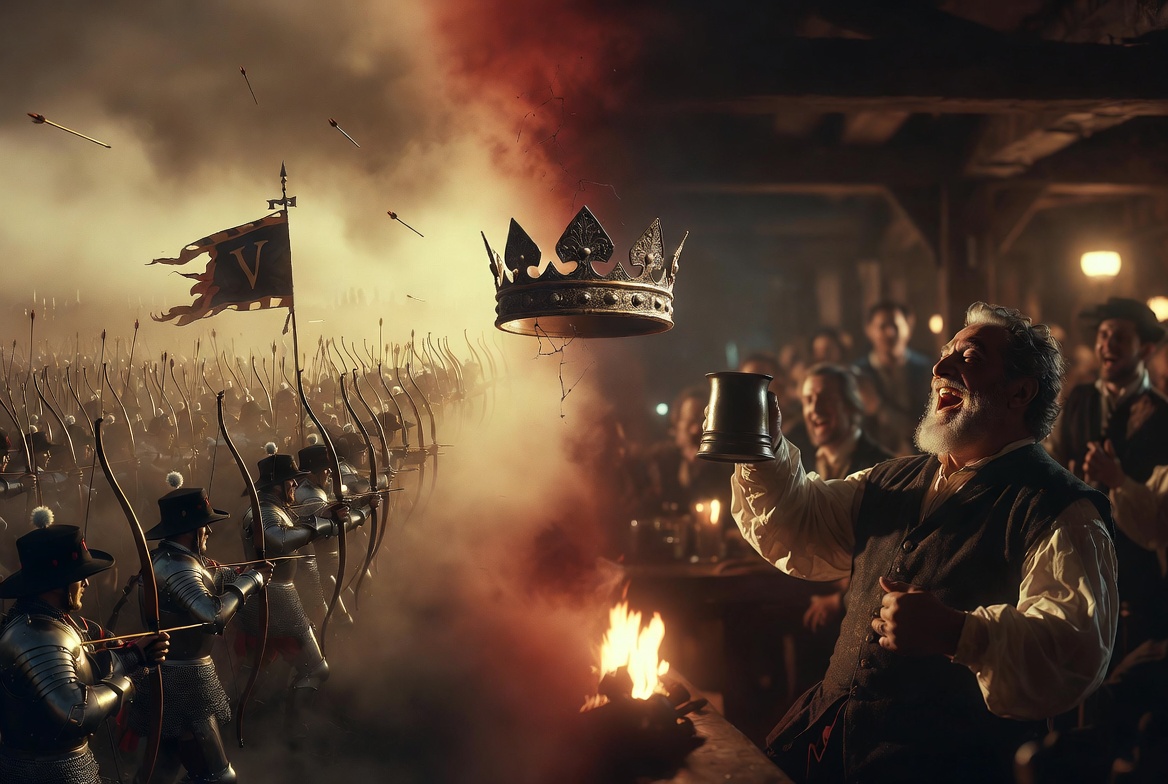
Bloom’s criticism often shines in close engagement with language. Here are several pivotal moments illuminated by his perspective:
- The Rejection’s Shadow (References to Falstaff’s Death, Act 2, Scene 3): Mistress Quickly’s account (“‘A made a finer end, and went away an it had been any christom child’”) humanizes Falstaff in death. Bloom treasures this as a lingering echo of the Henry IV world, contrasting sharply with Henry’s public persona.
- “Once More Unto the Breach” (Act 3, Scene 1): This rousing call to arms showcases Henry’s rhetorical mastery. Bloom sees it as exhilarating yet performative—Shakespeare providing the “exuberant bombast” that patriotic adaptations (Olivier, Branagh) emphasize, while the critic senses underlying irony.
- St. Crispin’s Day Speech (Act 4, Scene 3): The “band of brothers” lines are among Shakespeare’s most quoted. Bloom points out the gap between promise and reality: the soldiers fighting will not share equally in honor or social elevation. The speech stirs, but the king exploits camaraderie for military ends.
- Henry’s Soliloquy/Prayer (Act 4, Scene 1): Alone before battle, Henry wrestles with the heavy responsibilities of kingship and questions the legitimacy of his cause. This rare moment of introspection supports Bloom’s “veiled” king thesis—revealing fleeting vulnerability before the mask of command returns.
- The Wooing of Katherine (Act 5, Scene 2): The final romantic resolution feels staged and politically motivated. Bloom views Henry’s blunt, soldierly courtship as consistent with his pragmatic character—charming on the surface, calculated beneath.
Detailed analysis of these passages equips readers with concrete examples for essays, discussions, or performances, far exceeding typical study-guide brevity.
Comparing Bloom’s View with Other Critics
Bloom’s interpretation stands in productive tension with other traditions:
- Patriotic Readings (e.g., Laurence Olivier’s 1944 film): These emphasize national glory and heroic leadership, downplaying irony. Bloom politely condescends to such “lively, patriotic romps,” arguing they miss Shakespeare’s subtler ambiguities.
- Ironist Critics (Hazlitt, Yeats): Bloom aligns here, seeing Henry as an “amiable monster” whose charm masks ruthlessness.
- New Historicist and Political Readings: While Bloom resists reducing literature to power structures, he acknowledges the play’s engagement with Machiavellian themes and the performance of authority.
- Modern Directors and Adaptations: Branagh’s 1989 film balances heroism with grit. Bloom’s lens helps viewers appreciate how productions choose to highlight or mute the ironies.
By contrasting perspectives, this section demonstrates the play’s interpretive richness and Bloom’s distinctive contribution: a defense of aesthetic and character-driven reading over purely political ones.
Why Bloom Considers Henry V “Brilliant and Subtle” Yet Lesser
Bloom openly calls Henry V “this brilliant and subtle work” that “will always be popular.” Yet he ranks it below Henry IV because Falstaff’s absence leaves a dramatic vacuum. The play excels in public rhetoric and pageant but offers less of the profound inwardness and personality invention that define Shakespeare at his greatest. Henry V masters power but loses the multifaceted humanity Hal once displayed in tension with Falstaff.
This balanced judgment is one of Bloom’s greatest gifts: it allows readers to admire the play’s achievements without inflating them, while mourning the human cost of political maturity.
Relevance for Modern Readers and Theatergoers
In an era of political rhetoric, charismatic leadership, and debates over war and national identity, Bloom’s insights into Henry V remain urgently relevant. Henry’s speeches can illuminate how leaders use language to unify and motivate, while the play’s ironies caution against uncritical acceptance of heroic narratives.
For students, Bloom provides a model of deep, non-ideological reading. For actors and directors, his emphasis on irony and veiled motivation opens fresh staging possibilities—avoiding both jingoism and cynical deconstruction. Teachers can use his framework to spark discussions on character transformation, the ethics of power, and Shakespeare’s dramatic choices.
FAQs: Common Questions About Harold Bloom and Henry V
Does Bloom hate Henry V? No. He calls it brilliant and subtle, but prefers the Henry IV plays for their richer personalities and Falstaff’s vitality.
What is Bloom’s most famous quote on Henry V? He frequently returns to the idea that Henry is “veiled” and that the play creates an “empty sensation” without Falstaff. He also echoes Hazlitt in seeing elements of the “amiable monster.”
How does Bloom’s view differ from traditional patriotic interpretations? Bloom stresses irony, moral cost, and the gap between rhetoric and reality, rather than straightforward celebration of English heroism.
Is Bloom’s criticism useful for beginners? Yes—his passionate, character-focused approach makes Shakespeare accessible while encouraging deeper thought.
Where can I read Bloom on Henry V directly? Start with his introduction to Bloom’s Shakespeare Through the Ages: Henry V and relevant sections in Shakespeare: The Invention of the Human.
Embracing Bloom’s Complex Shakespeare
Harold Bloom’s essential insights into Shakespeare’s Henry V invite us to experience the play as both thrilling spectacle and subtle critique. By highlighting the absence of Falstaff, the veiling of Henry’s self, and the ironies of power and rhetoric, Bloom enriches our understanding without diminishing the drama’s power.
Henry V endures not because it offers simple answers about heroism or kingship, but because Shakespeare—guided by his unparalleled dramatic intelligence—presents a king who is charismatic, effective, and profoundly human in his limitations. Bloom helps us see this complexity clearly, reminding us why Shakespeare remains the center of the Western canon.
For anyone seeking to move beyond surface readings, Bloom’s perspective provides lasting value: a deeper appreciation of language, character, and the human cost of ambition. Return to the text with these insights, and Henry V reveals new layers with every reading.