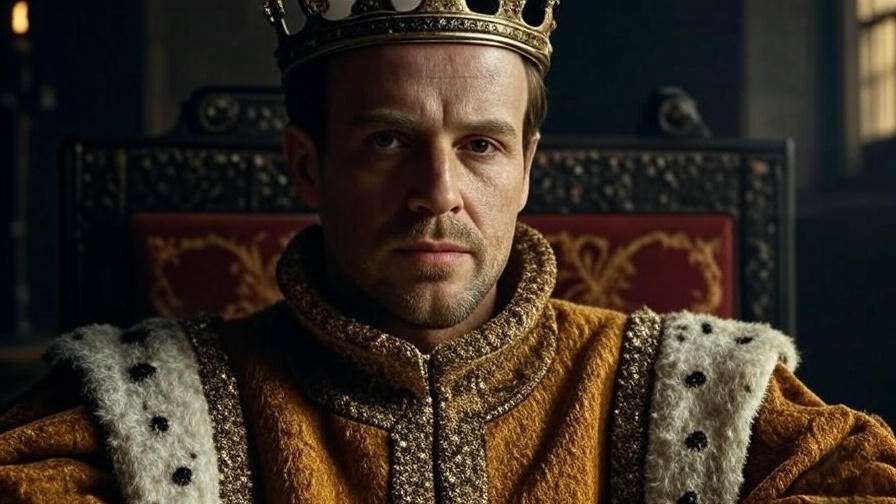
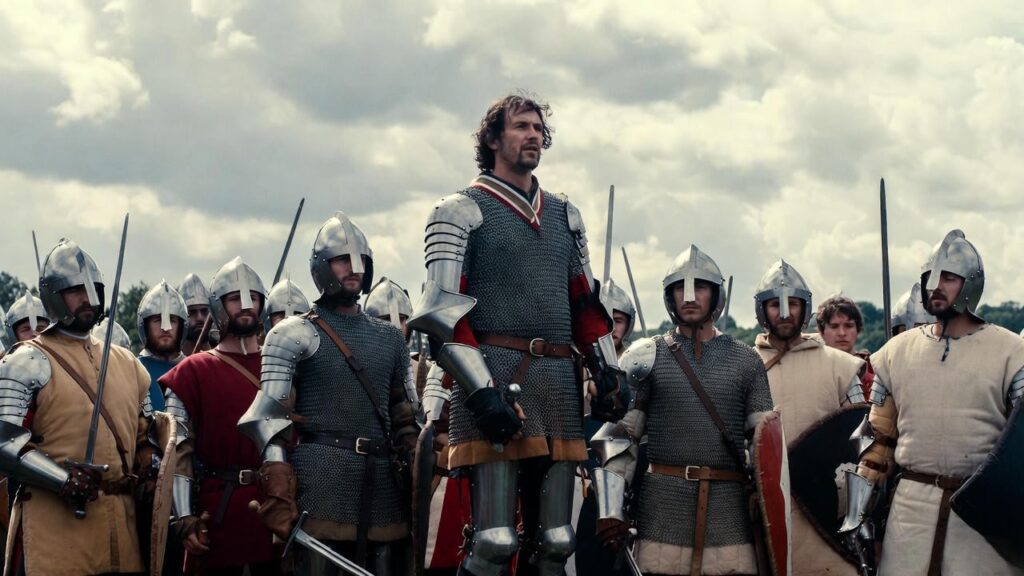
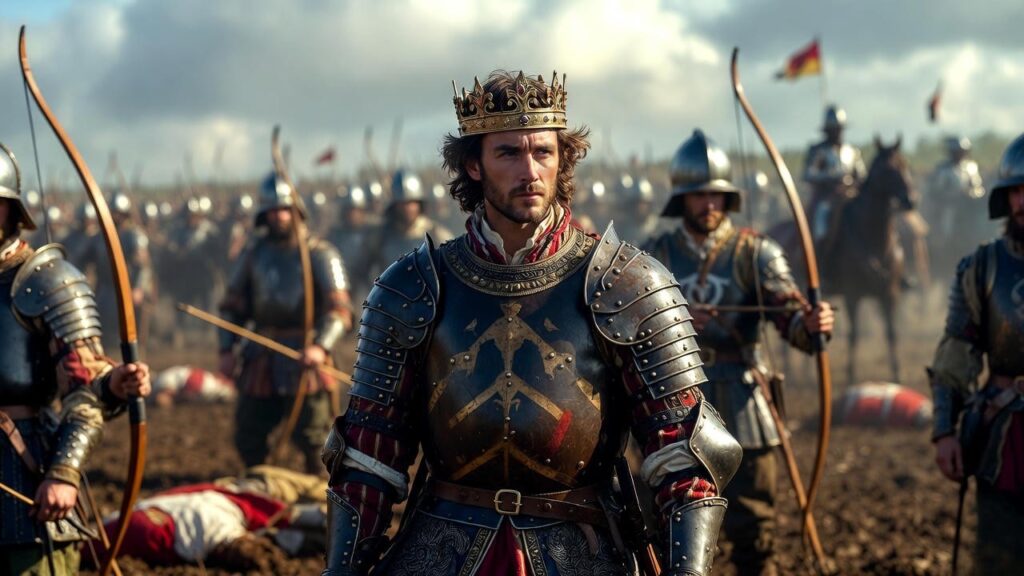
What if the most polarizing Superman in cinematic history wasn’t a failure of heroism, but a deliberate echo of the greatest tragic figures ever penned? Henry Cavill’s portrayal in Batman v Superman: Dawn of Justice (2016) has long divided fans—praised for its mythic gravitas, criticized for its brooding restraint. Yet beneath the cape and the controversy lies a profoundly Shakespearean dilemma: a being of near-divine power burdened by doubt, isolation, and the fatal weight of his own strength. In an era where superheroes dominate screens, Cavill’s Superman stands apart as a modern tragic hero, grappling with questions of action, consequence, and identity that mirror the introspective torment of Hamlet, the corrupted ambition of Macbeth, and the proud alienation of Coriolanus.
This isn’t mere fan theory. It’s a lens that unlocks deeper appreciation for Zack Snyder’s divisive vision and Cavill’s nuanced performance. By examining Batman v Superman through Shakespeare’s tragic framework, we reveal why Cavill’s Man of Steel endures—not as flawless hope, but as a cautionary figure whose power invites fear, judgment, and ultimate sacrifice. For literature lovers seeking fresh insight into pop culture, DC fans craving smarter analysis, and anyone pondering heroism in a cynical world, this exploration offers something rare: a bridge between Elizabethan drama and blockbuster spectacle.
Understanding Henry Cavill’s Superman in Batman v Superman
From Man of Steel to Dawn of Justice – The Evolution of a Reluctant God
Henry Cavill first introduced his Superman in Man of Steel (2013) as a young Kryptonian discovering his place on Earth. By Batman v Superman, that journey has darkened. The Black Zero Event’s destruction in Metropolis lingers like a scar—thousands dead, cities ravaged, and Superman blamed as much as Zod. Cavill’s Clark Kent no longer strides with youthful certainty; he hesitates before intervening, aware that every act of salvation risks collateral catastrophe.
Key moments define this shift: the opening credits montage of global devastation, the Senate hearing where survivors testify against him, and the quiet scenes of Clark walking among protesters. These aren’t signs of weakness but of maturity—Superman as a god among mortals, forced to confront the human cost of his power. Cavill’s physical presence—towering, sculpted, almost statuesque—reinforces this god-like status, yet his eyes convey quiet torment, a man (or alien) forever apart.
Cavill’s Performance – Strengths and Criticisms
Critics often called Cavill’s Superman “stiff” or “emotionless,” but this misreads intent. His classical theater training shines through in subtle restraint: the measured speech, the lingering gazes, the way he holds himself like a figure from myth. In interviews, Cavill has described drawing from real-life isolation—observing the world as an outsider, not brooding in sadness but existing in contemplative solitude. This aligns with Snyder’s deconstructive approach: Superman isn’t the bright beacon of 1978’s Christopher Reeve; he’s a symbol scrutinized in a post-9/11, post-recession world.
Strengths include Cavill’s ability to convey inner conflict without overt histrionics—the bathtub scene with Lois Lane offers rare vulnerability, a moment of human connection amid divine burden. Criticisms, while valid for those expecting traditional optimism, overlook how the stoicism serves the film’s tone: a hero whose very existence provokes existential dread in others.
The Shakespearean Tragic Hero Framework
Defining Shakespearean Tragedy and the Tragic Flaw (Hamartia)
Shakespearean tragedy centers on a noble protagonist undone by a fatal flaw (hamartia), leading to reversal (peripeteia), recognition (anagnorisis), and cathartic downfall. Unlike Greek tragedy’s inevitable fate, Shakespeare’s heroes often contribute to their ruin through choice—ambition, doubt, pride.
Superheroes fit this mold naturally: larger-than-life figures whose gifts become curses. Superman’s hamartia isn’t villainy but overwhelming power paired with moral responsibility. His nobility—saving lives, upholding truth—clashes with humanity’s fear of the uncontrollable.
Superman as a Modern Tragic Figure
Clark Kent arrives as an alien prince, raised with human values yet forever alien. His power isolates him, turning admiration into suspicion. In Batman v Superman, this manifests as public division: worshippers vs. protesters, Batman viewing him as a potential tyrant. Like Shakespeare’s kings, Superman’s “divine right” invites rebellion.
Parallels to Hamlet – Doubt, Contemplation, and Existential Burden
“To Act or Not to Act” – Superman’s Moral Paralysis
Hamlet’s famous soliloquy—”To be, or not to be”—captures paralyzing doubt: act and risk damnation, or inaction and suffer. Superman faces a similar bind. After Man of Steel, he questions intervention. In Batman v Superman, he avoids direct confrontation with Batman initially, fearing escalation. The line “The world didn’t corrupt him” (uttered in despair to Lois) echoes Hamlet’s disillusionment with humanity.
Public scrutiny mirrors Hamlet’s court: every move judged, motives questioned. Superman’s restraint isn’t passivity but tragic awareness—action invites catastrophe.
The Ghost of the Past – Zod’s Legacy and the Weight of History
Zod’s defeat haunts Superman like the Ghost in Hamlet—a command to act justly, yet one that burdens the living. The destruction legacy forces Superman into perpetual atonement, a cycle of doubt and dut
Echoes of Macbeth – Ambition, Power, and Corruption of Ideals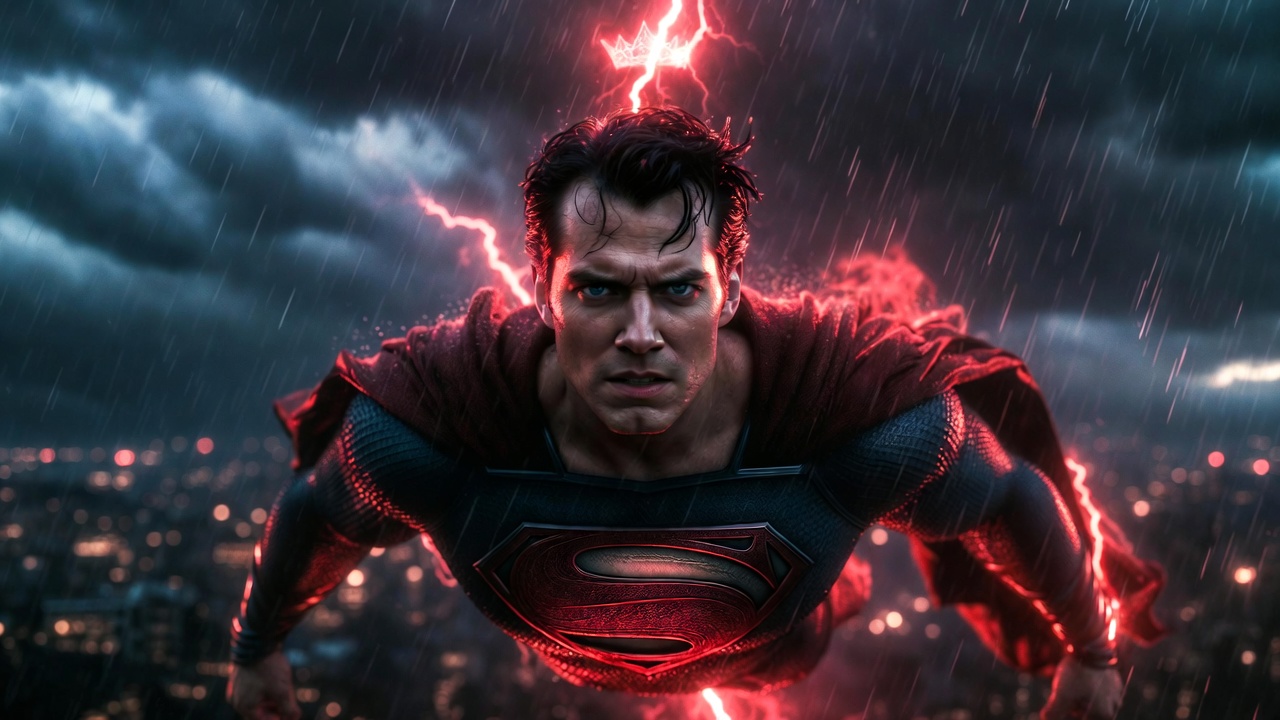
The Temptation of Absolute Power
In Shakespeare’s Macbeth, the tragic arc begins with a prophecy that ignites ambition: “All hail, Macbeth, that shalt be king hereafter!” Once the seed is planted, the hero’s moral compass warps. Power, once a distant promise, becomes an obsession that destroys everything it touches.
Superman in Batman v Superman faces a parallel temptation—not personal ambition, but the inherent danger of unchecked omnipotence. From Batman’s perspective (and increasingly from the world’s), Superman’s very existence is a prophecy fulfilled: a being who could end humanity if he chose. Bruce Wayne’s nightmare sequence—Superman as a tyrant ruling over ashes—mirrors the witches’ visions that drive Macbeth toward regicide.
Unlike Macbeth, who actively pursues the crown, Superman does not seek domination. Yet the parallel holds in the fear he inspires. Lex Luthor articulates this dread explicitly: “The oldest lie in America is that power can be innocent.” Here, Superman’s goodness becomes irrelevant; his capacity for destruction is enough to corrupt the ideal of heroism itself. Cavill’s performance sells this tension: his Superman does not revel in power but recoils from it, yet the recoil itself invites suspicion.
Lois Lane serves as a partial Lady Macbeth analogue—not urging evil, but insisting that Clark must act despite the consequences. “The world needs you to save it,” she tells him, echoing the push-pull dynamic that propels Macbeth forward even as guilt consumes him.
The Downfall Through Hubris and Self-Sacrifice
Macbeth’s tragedy culminates in isolation and death—his ambition leading to paranoia, betrayal, and eventual decapitation. Superman’s arc in Batman v Superman reaches its tragic peak in the Doomsday battle. Knowing full well the spear is laced with kryptonite, he nonetheless chooses to impale the monster—and himself—saving the world at the cost of his apparent life.
This is classic Shakespearean catharsis: the hero’s fatal flaw (in this case, an excess of self-sacrificial nobility) leads to death, yet the death purges the audience’s tension. Cavill’s final moments—reaching toward Lois, whispering “You’re safe now”—are heartbreakingly understated, a quiet recognition (anagnorisis) that his power, however benevolent, has made him a target and a martyr.
Critics who dismiss the film as grimdark often overlook this sacrificial nobility. In Shakespearean terms, it is the moment the tragic hero transcends his flaw through ultimate choice.
Additional Parallels – Coriolanus, Pride, and Public Rejection
The God Among Mortals – Pride and Alienation
Shakespeare’s Coriolanus presents a warrior-hero whose pride and disdain for the common people lead to exile and eventual downfall. Caius Martius Coriolanus is a god of war on the battlefield, but politically tone-deaf among the plebeians.
Superman’s Senate hearing scene echoes this dynamic. The public testimony—grieving mothers, injured veterans—condemns him not for malice, but for being above mortal accountability. Cavill’s Superman stands silent, towering, almost regal in his restraint, yet that very restraint reads as arrogance to those below. Like Coriolanus refusing to show his wounds to win votes, Superman refuses to justify himself beyond action. The result is the same: rejection by the very people he protects.
Redemption Through Sacrifice
Coriolanus meets his end through betrayal and violence, but his death carries a tragic dignity—he dies as he lived, unbowed. Superman’s “death” against Doomsday offers a similar arc: he dies saving humanity from a monster he helped create (by killing Zod years earlier). In the broader Snyderverse narrative, his resurrection provides a faint promise of redemption, though the film itself ends on the note of tragic loss.
Zack Snyder’s Vision – A Deliberate Tragic Lens
Deconstruction vs. Traditional Heroism
Zack Snyder has openly described his approach as mythic deconstruction—placing archetypal figures in a realistic, morally gray world. Unlike the optimistic Superman of earlier eras, Snyder’s version asks: What if a god walked among us today? The answer, in Batman v Superman, is tragedy.
Snyder draws from classical sources—religious iconography, Joseph Campbell’s hero’s journey, and yes, Shakespearean tragedy. The Christ-like imagery (Superman rising from the grave, arms outstretched) is intentional, but so is the tragic weight: a savior who cannot save himself.
Visual and Thematic Symbolism
Snyder’s visual language reinforces the Shakespearean tone:
- Low-angle shots make Cavill appear monumental, god-like, yet isolated.
- Harsh lighting and desaturated colors evoke a world unworthy of its hero.
- The recurring motif of falling (Superman crashing through buildings, Doomsday’s descent) mirrors the tragic fall from grace.
These choices are not accidental—they create a cinematic language that amplifies the internal conflict Cavill portrays so subtly.
Why Cavill’s Portrayal Endures – Legacy and Fan Reappraisal
The Snyder Cut Redemption and Beyond
The 2021 Zack Snyder’s Justice League restored scenes that deepen Superman’s tragedy: his resurrection is not triumphant but painful, a return to a world that still fears him. Cavill’s brief but powerful performance in the theatrical cut of Black Adam (2022) reignited hope for his return, though DC’s shifting direction has left his arc incomplete.
Fan reappraisal has grown steadily. Online discourse increasingly praises Cavill’s restraint as intentional gravitas rather than weakness. In an age of quip-heavy heroes, his quiet intensity feels refreshingly mythic.
Lessons for Today’s Superhero Cinema
Cavill’s Superman reminds us that true heroism often carries unbearable cost. In a post-Avengers: Endgame landscape saturated with spectacle, his portrayal stands as a counterpoint: power without tragedy is shallow; tragedy without power is mere suffering. The best heroes, like Shakespeare’s greatest protagonists, are defined by what they sacrifice.
Expert Insights and Comparisons
Henry Cavill has spoken sparingly but insightfully about the role in interviews over the years. In a 2016 discussion around the film’s release, he described Superman as “a very lonely character,” noting that “he’s trying to do the right thing in a world that doesn’t necessarily understand what the right thing is.” This observation aligns strikingly with the Shakespearean tragic hero: nobility misunderstood, virtue punished by circumstance.
Literary scholars and film critics have occasionally drawn similar parallels, though rarely in mainstream coverage. Joseph Campbell’s monomyth provides one bridge—Superman as the ultimate “hero with a thousand faces”—but Shakespeare adds the crucial layer of internal moral conflict. Unlike Campbell’s triumphant return, Shakespeare’s heroes often end in death or irredeemable loss; Snyder and Cavill lean into that darker resolution.
Compare Cavill’s Superman to other screen iterations:
- Christopher Reeve (1978–1987): Radiant optimism, almost pastoral in its innocence. No tragic flaw beyond external villains. Shakespearean equivalent: more akin to a comedy’s romantic lead than a tragedy’s doomed prince.
- Brandon Routh (Superman Returns, 2006): Gentle melancholy, but still fundamentally hopeful. Closer to a late romance like The Winter’s Tale than high tragedy.
- Tyler Hoechlin (Arrowverse, 2016–present): Warm, fatherly, emotionally open. Lacks the existential weight that defines Cavill’s version.
Cavill’s take is unique in its restraint and gravitas—qualities that echo the understated intensity of actors like Laurence Olivier or Ian McKellen in Shakespearean roles. His training at the London Academy of Music and Dramatic Art (though he did not complete the full course) gave him tools to convey subtext through posture and silence rather than dialogue-heavy exposition.
In broader superhero cinema, Cavill’s Superman sits alongside Christian Bale’s Batman and Robert Downey Jr.’s early Iron Man as performances that treat mythic figures with psychological realism. Yet where Bale and Downey externalize conflict through dialogue and action, Cavill internalizes it—making the tragedy feel intimate and inevitable.
Conclusion
Henry Cavill’s performance in Batman v Superman: Dawn of Justice remains one of the most misunderstood yet richest portrayals in modern superhero cinema. Far from a misstep, his brooding, contemplative Man of Steel is a deliberate invocation of the Shakespearean tragic hero: noble, powerful, isolated, and ultimately sacrificial.
Through parallels to Hamlet’s paralyzing doubt, Macbeth’s dangerous proximity to absolute power, and Coriolanus’s proud alienation from the masses, we see that Cavill’s Superman is not simply “dark” for darkness’s sake. He is a mythic figure placed in a modern, skeptical world—one that fears gods even when they bleed for humanity.
Zack Snyder’s vision, bolstered by Cavill’s measured intensity, forces us to confront an uncomfortable truth: true heroism is rarely triumphant and almost never uncomplicated. The greatest heroes, like Shakespeare’s greatest protagonists, are defined not by victory but by the cost of their virtue.
For fans who felt let down by the theatrical cut, for literature enthusiasts seeking new ways to connect Elizabethan drama to contemporary myth, and for anyone who believes superheroes can carry the weight of serious art, Cavill’s Superman offers enduring value. Revisit the film with this lens. You may find that what once seemed grim is actually profoundly human—and profoundly tragic.
FAQs
Was Henry Cavill’s Superman intentionally tragic? Yes. Both Cavill and Snyder have described the character as burdened by the consequences of his power and the world’s reaction to it. The intention was never a cheerful, uncomplicated savior but a mythic figure whose very existence provokes moral and existential questions.
How does Batman v Superman compare to other Superman films literarily? Most Superman adaptations lean toward heroic romance or adventure. Batman v Superman is the only major live-action version that fully embraces tragic structure—complete with hamartia (excessive power/responsibility), peripeteia (public rejection), and cathartic sacrifice—making it the closest cinematic analogue to Shakespearean tragedy.
What Shakespeare play best fits Superman’s story in this film? Hamlet is the strongest match due to the pervasive theme of doubt, hesitation, and the burden of being “chosen” for a role one questions. Macbeth follows closely for the fear that great power inevitably corrupts or is perceived to corrupt. Coriolanus adds the dimension of public rejection of a heroic but aloof figure.
Key Takeaways – 5 Shakespearean Lessons from Cavill’s Superman
- Power isolates even the noblest — Like Hamlet and Coriolanus, Superman’s strength makes genuine connection nearly impossible.
- Moral certainty is a luxury — Absolute power forces endless moral calculus; inaction can be as tragic as action.
- Sacrifice is the ultimate proof of virtue — The hero’s death is not defeat but the final, irrefutable act of goodness.
- Humanity fears what it cannot control — Public adoration turns to suspicion the moment a savior seems too powerful.
- Tragedy lies in awareness — The greatest suffering comes not from failure, but from understanding the cost of success.