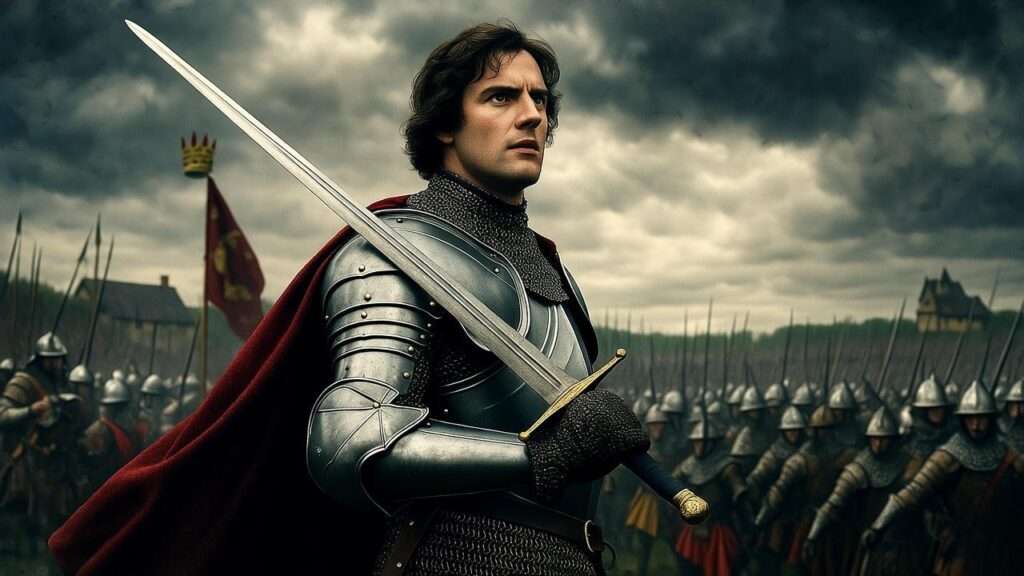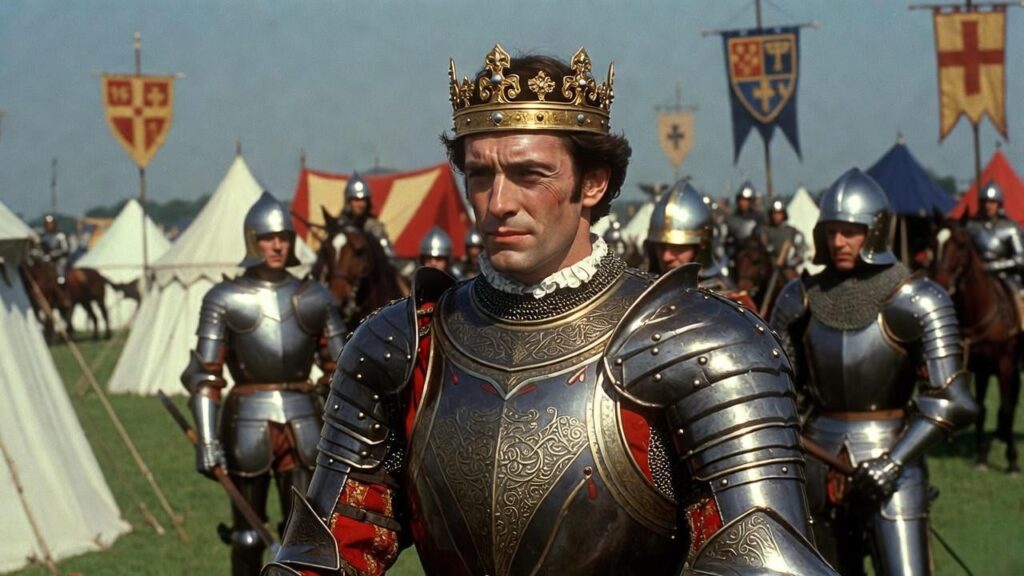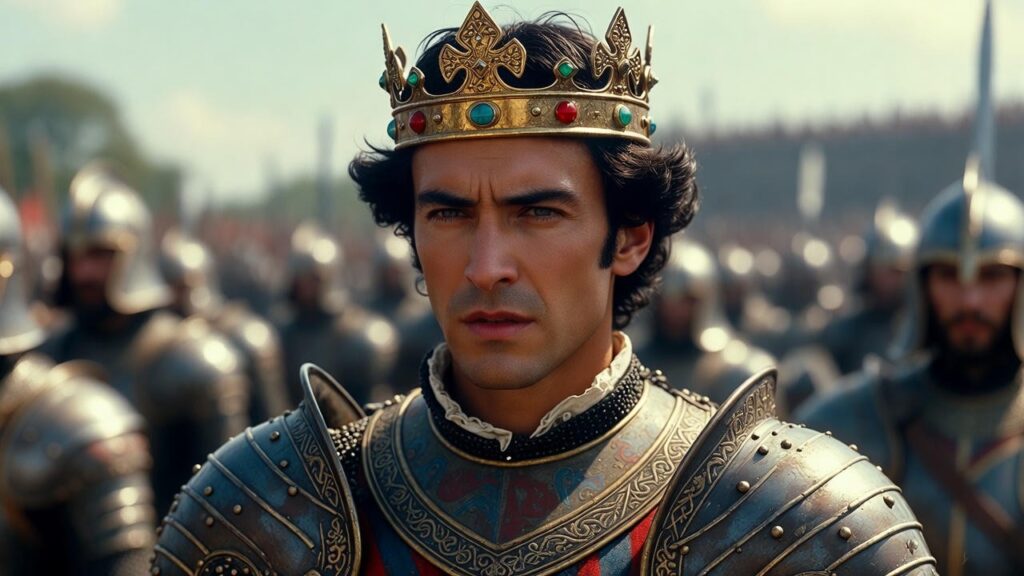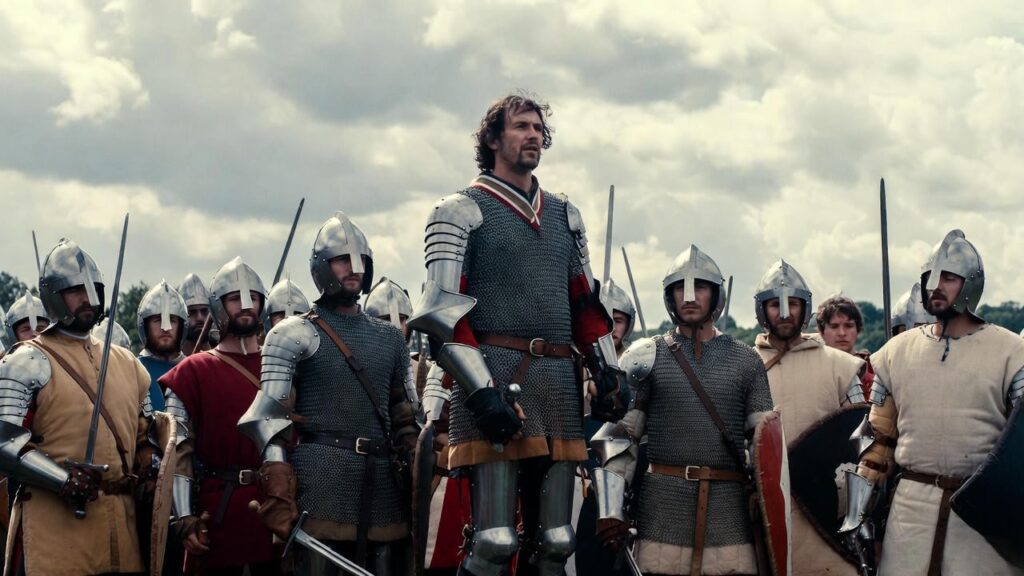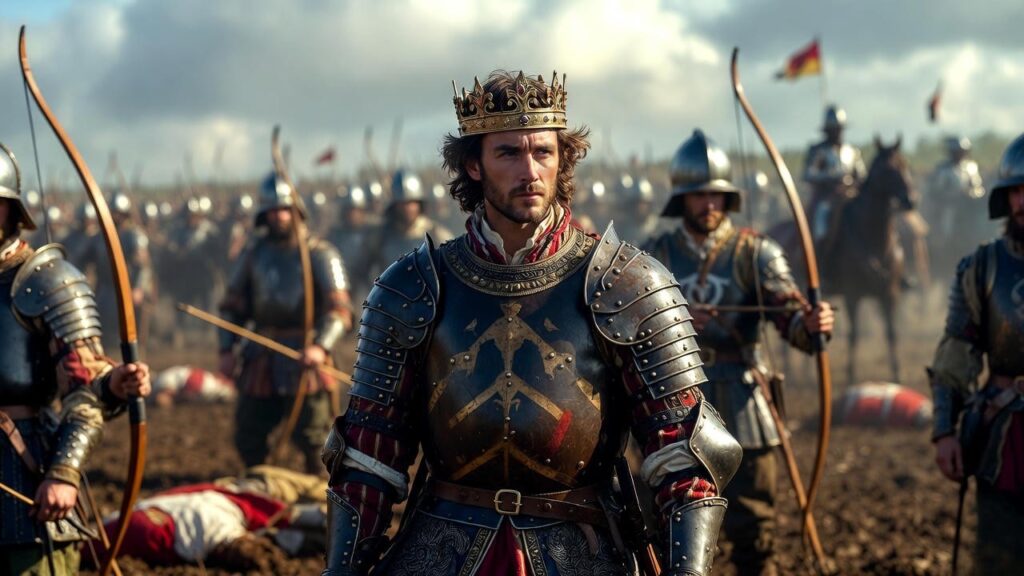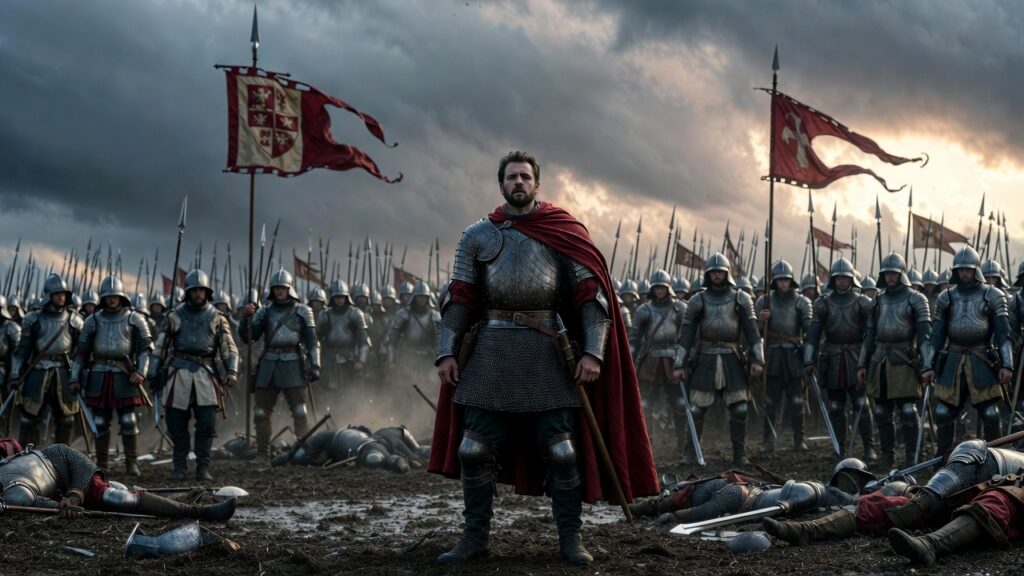
Imagine a young king, once dismissed as a wayward prince, standing before his exhausted troops on a muddy field in northern France. Vastly outnumbered, sick, and far from home, he delivers words that ignite unbreakable resolve: “We few, we happy few, we band of brothers.” This moment from William Shakespeare’s Henry V (often referred to as Henry the Fifth) captures the essence of one of literature’s most stirring tales of leadership and victory against impossible odds. The play, written around 1599, chronicles King Henry V’s transformation and his daring campaign during the Hundred Years’ War, culminating in the legendary Battle of Agincourt in 1415.
For students cramming for exams, literature lovers revisiting Shakespeare’s histories, or anyone curious about the real story behind iconic films like Kenneth Branagh’s 1989 adaptation or Laurence Olivier’s wartime classic, a detailed Henry the Fifth summary offers clarity amid the play’s grandeur. This comprehensive guide provides an act-by-act breakdown, explores key themes like kingship and the cost of war, analyzes famous speeches, and connects the drama to its historical roots—delivering more depth and insight than standard plot recaps.
Shakespeare’s Henry V is the final installment in his second tetralogy (preceded by Richard II and Henry IV Parts 1 & 2), tracing Prince Hal’s evolution into a model of Christian kingship. Yet it is far more than patriotic propaganda; subtle ambiguities question the glory of conquest and the burdens of power.
Historical and Literary Context
To fully appreciate Henry V, understand its grounding in real events. Henry V ruled England from 1413 to 1422, reviving claims to the French throne through his great-grandfather Edward III during the Hundred Years’ War (1337–1453). The pivotal Battle of Agincourt on October 25, 1415, saw Henry’s outnumbered forces—perhaps 6,000–9,000 men, many archers—decimate a French army of 20,000–30,000 through superior tactics, longbow volleys, and muddy terrain that hampered French knights.
Shakespeare drew primarily from Raphael Holinshed’s Chronicles (1577/1587), embellishing for drama. He compresses timelines, heightens Henry’s heroism, and minimizes complexities like Henry’s harsh policies or the campaign’s brutality (e.g., dysentery ravaged the English army). Written during Elizabeth I’s late reign, amid fears of Spanish invasion and succession uncertainty, the play’s patriotic fervor—evident in the Chorus’s calls for national unity—resonates with Elizabethan audiences. Yet Shakespeare includes anti-war voices: soldiers’ fears, civilian suffering, and an Epilogue reminding viewers that Henry’s gains were lost under his son Henry VI.
The Chorus, a unique device, bridges imagination and reality, acknowledging the stage’s limitations while urging audiences to envision “vasty fields” of France.
Act-by-Act Detailed Summary
Act 1: The Call to Arms and Justification for War
The play opens with the Prologue, where the Chorus laments the theater’s inability to capture epic scope, invoking a “muse of fire” to ascend “the brightest heaven of invention.”
In Act 1, Scene 1, the Archbishop of Canterbury and Bishop of Ely discuss a bill threatening Church lands. To divert Henry, the Archbishop supports his French claim and offers funds for war.
Scene 2 sees Henry, now mature and pious, seek legal advice on his claim via the Salic law (which barred female-line inheritance in France). The Archbishop delivers a lengthy justification, arguing it applies only to Germany. French ambassadors arrive with the Dauphin’s mocking gift: tennis balls, mocking Henry’s “wild” youth. Henry responds fiercely: “And tell the pleasant prince this mock of his / Hath turn’d his balls to gun-stones.” He declares war, vowing to “bend [France] to our awe, / Or break it all to pieces.”
This act establishes Henry’s strategic mind—he uses religious justification for political gain—while foreshadowing his rhetorical power.
Act 2: Betrayal, Farewell, and Departure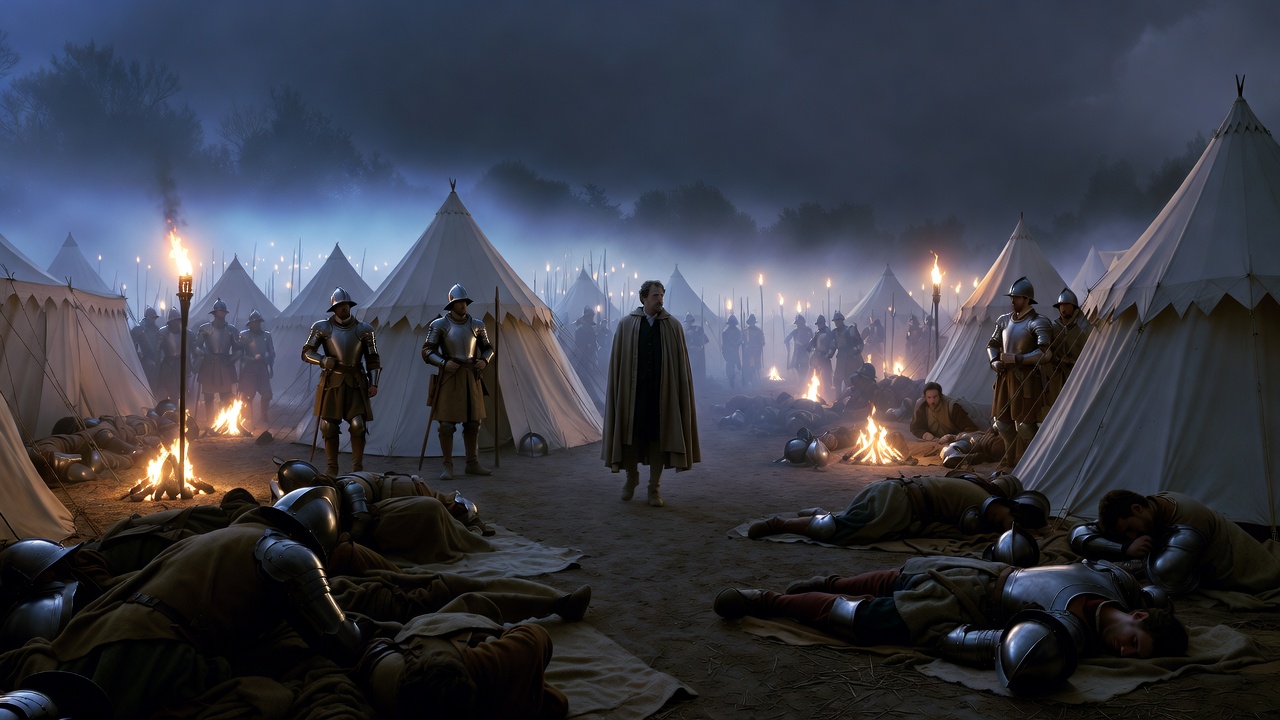
The Chorus describes England’s war fervor: “Now all the youth of England are on fire.”
Comic relief follows in the tavern world: Pistol, Nym, Bardolph, and the Hostess learn of Falstaff’s death (“The king has killed his heart”), a poignant nod to Henry’s past. These low-life characters join the army, contrasting royal duty with common hardship.
In Southampton, Henry uncovers a treason plot by Cambridge, Scroop, and Grey (bribed by France). He feigns trust before revealing evidence, executing them ruthlessly yet regretfully: “I will weep for thee; / For this revolt of thine, methinks, is like / Another fall of man.”
The act ends in France, where the King and Dauphin prepare defenses, underestimating Henry.
This section highlights Henry’s growth: he severs ties to his reckless youth, showing mercy’s limits in kingship.
Act 3: Siege and the Human Face of War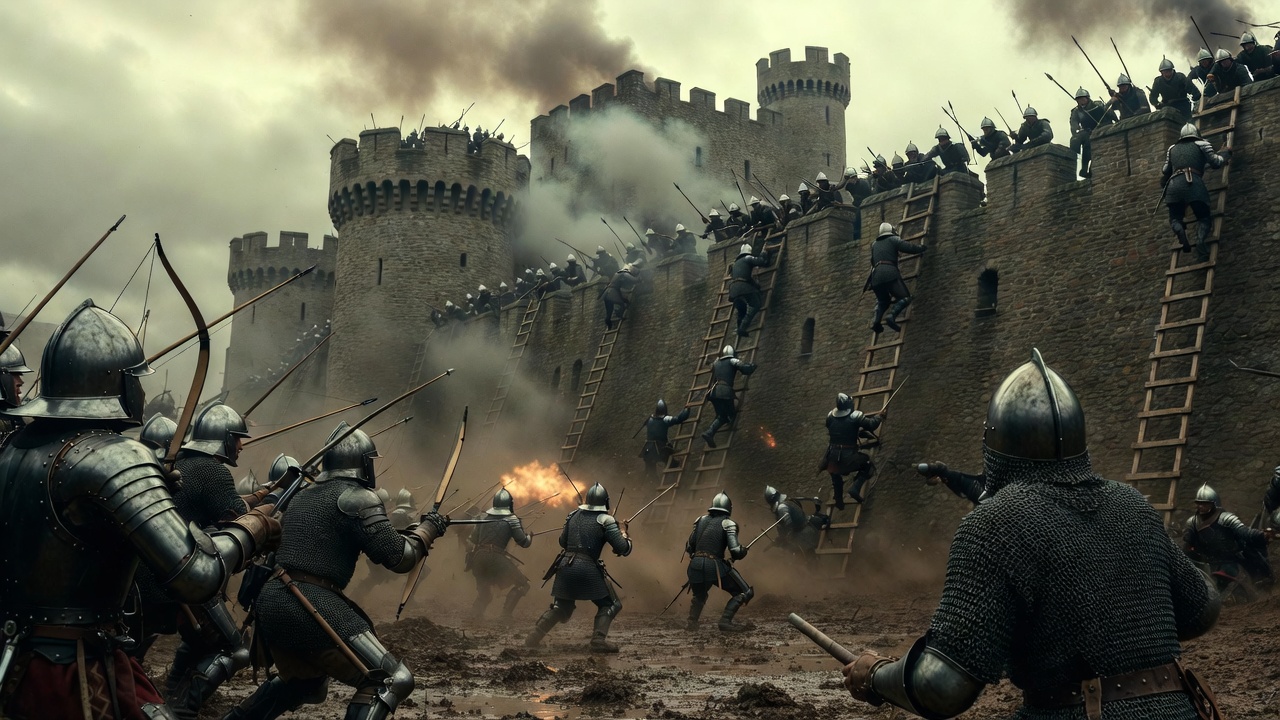
The Chorus narrates the fleet’s voyage and Harfleur siege.
Henry’s “Once more unto the breach, dear friends, once more” speech rallies troops scaling walls: “Stiffen the sinews, summon up the blood, / Disguise fair nature with hard-favour’d rage.” He threatens horrors if Harfleur resists—rape, infanticide—but grants mercy upon surrender.
Comic scenes feature Fluellen’s Welsh discipline and Katherine’s English lesson (“Comment appelez-vous les pieds et la robe?”), humanizing war’s absurdity.
Pistol captures a French soldier for ransom, satirizing profiteering.
This act balances inspiration with brutality, showing war’s toll on soldiers and civilians.
Act 4: The Battle of Agincourt – Climax of Triumph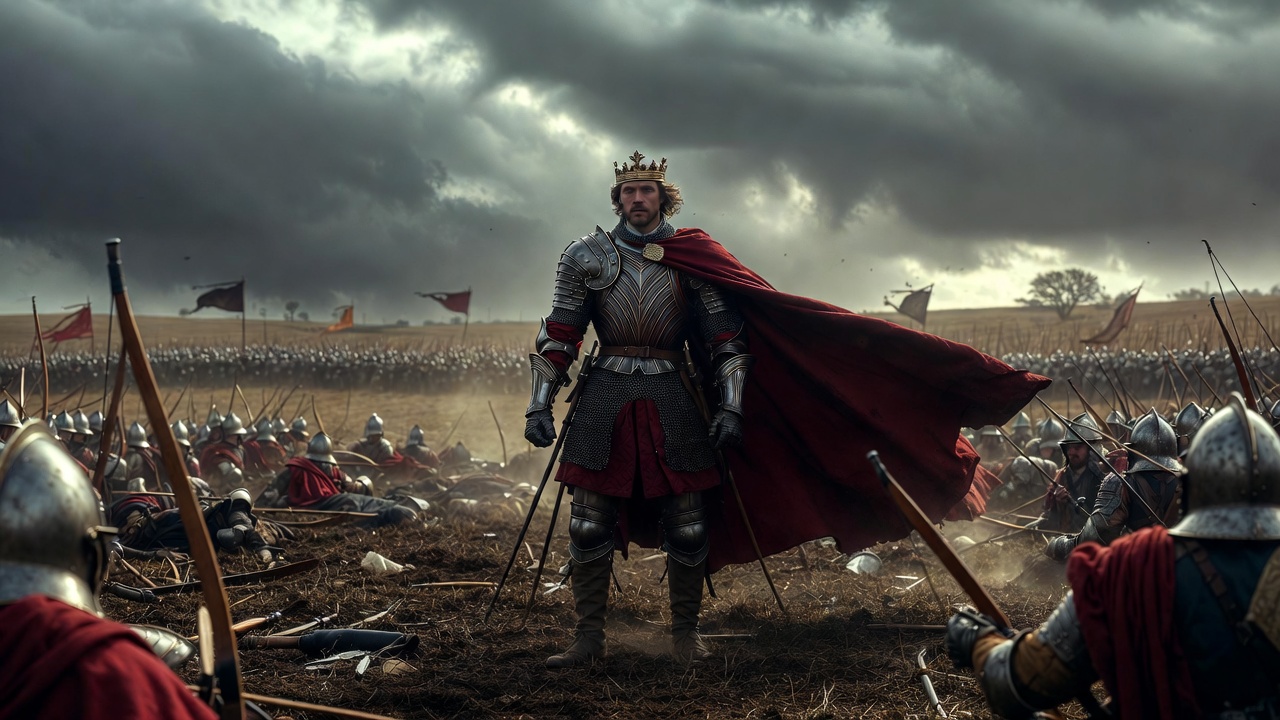
The Chorus depicts the tense night before battle.
Henry, disguised, walks among troops, debating kingship: “I think the king is but a man, as I am.” He hears fears and prays for victory, burdened by his father’s usurpation.
The St. Crispin’s Day speech is legendary: “This day is called the feast of Crispian… We few, we happy few, we band of brothers.” It unites class divides in brotherhood and glory.
The battle (offstage) results in miraculous English victory—minimal losses versus French thousands. Henry credits God: “Take it, God, / For it is none but thine!”
This act peaks with leadership under pressure, divine providence, and fate’s randomness.
Act 5: Resolution, Courtship, and Fragile Peace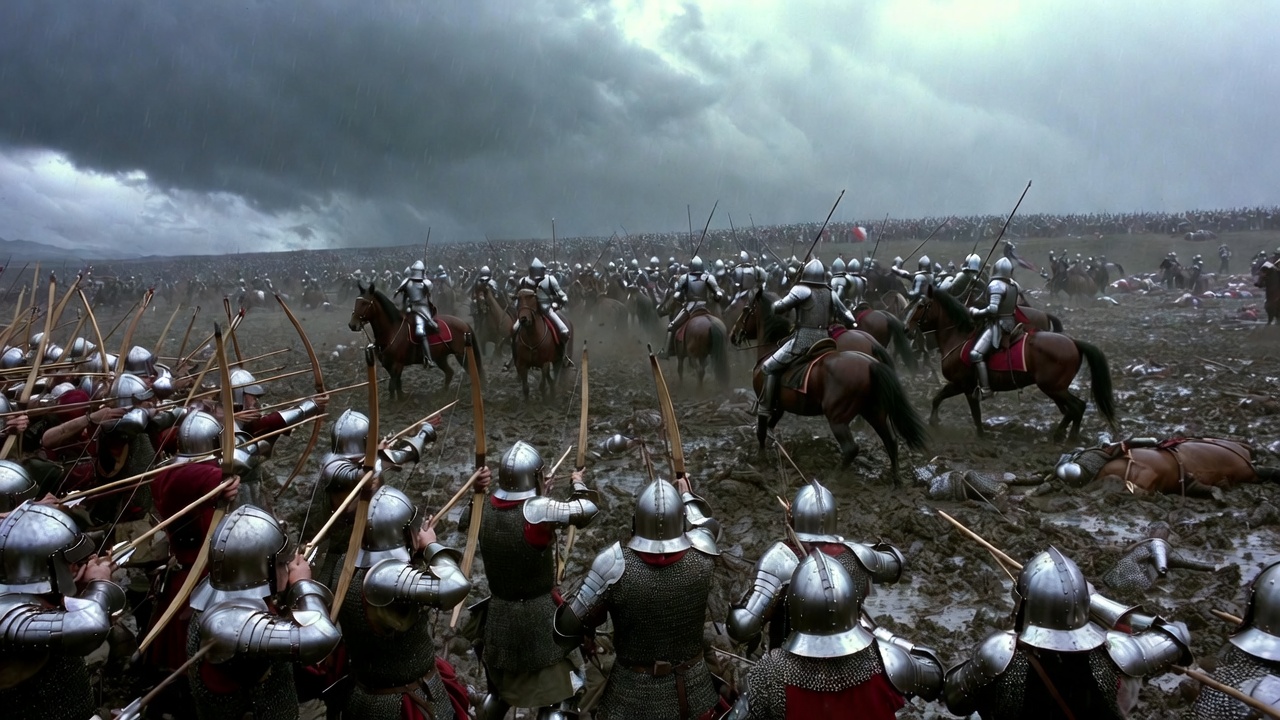
The Chorus jumps forward.
Henry negotiates the Treaty of Troyes, gaining French territories and Katherine’s hand.
The wooing scene is charming and humorous: Henry, plain-speaking (“I know not how to woo in holiday terms”), wins Katherine despite language barriers.
The Chorus’s Epilogue foreshadows tragedy: Henry’s early death and losses under Henry VI.
This bittersweet close tempers triumph with impermanence.
Key Themes and Analysis
Leadership and Kingship: Henry evolves into an ideal ruler—charismatic, strategic, inspirational—yet ruthless (executions, threats). Shakespeare probes if effective leadership requires moral compromise.
The Morality of War: Glorified through speeches, critiqued via soldiers’ cynicism, civilian fears, and human costs. War unites but destroys; glory is fleeting.
Nationalism and Patriotism: Elizabethan pride shines, but irony undercuts it—English unity vs. French division, Chorus’s artificiality.
Language and Rhetoric: Henry’s oratory transforms despair into victory; words become weapons.
Class Dynamics: Nobles and commons mingle; brotherhood transcends hierarchy, yet war exploits all.
Memorable Quotes and Their Significance
- “Once more unto the breach, dear friends, once more” (Act 3, Scene 1): Epitomizes motivational rhetoric, urging ferocity in battle.
- “We few, we happy few, we band of brothers” (Act 4, Scene 3): Iconic for camaraderie; inspires modern leaders and teams.
- “The game’s afoot” (Act 3, Scene 1): Signals action, echoing hunting thrill in war.
- Tennis balls exchange (Act 1, Scene 2): Turns insult into resolve, showing Henry’s wit.
These endure for their eloquence and relevance to motivation, unity, and power.
Characters Overview
- King Henry V: Complex hero—pious yet pragmatic, inspiring yet calculating.
- Chorus: Guides audience, highlights imagination’s role.
- Dauphin: Arrogant foil, underestimates Henry.
- Fluellen: Loyal, comic Welsh captain embodying discipline.
- Pistol: Braggart comic relief, satirizing war profiteers.
- Katherine: Symbol of peace through marriage.
Why Henry V Still Matters Today
In an era of leadership debates and conflict ethics, Henry’s charisma amid adversity resonates. Adaptations like Branagh’s gritty realism or Olivier’s patriotic fervor show its versatility. It questions nationalism, war’s human price, and power’s burdens—timeless concerns.
Frequently Asked Questions (FAQs)
What is the main plot of Henry V? Henry V invades France to claim the throne, overcomes betrayal and odds, wins at Agincourt, and marries Katherine for peace.
Is Henry V a hero or anti-hero? Both: heroic leader inspiring victory, yet ruthless (executions, threats), revealing kingship’s moral ambiguities.
What is the significance of the Chorus? It bridges stage limitations and epic scope, reminding viewers of theater’s artifice while advancing narrative.
How does Henry V connect to Henry IV plays? It completes Hal’s arc from wild prince to responsible king, closing the tetralogy.
Why is the Battle of Agincourt famous? English longbowmen defeated superior French forces; symbol of underdog triumph, immortalized by Shakespeare.
Henry V stands as Shakespeare’s epic of leadership triumph shadowed by war’s costs. From Harfleur’s breach to Agincourt’s glory and fragile peace, it celebrates human potential while questioning conquest’s price. Dive into the full text, watch adaptations, or explore Shakespeare’s histories—they reveal why this play endures as a mirror to power, patriotism, and the human spirit.