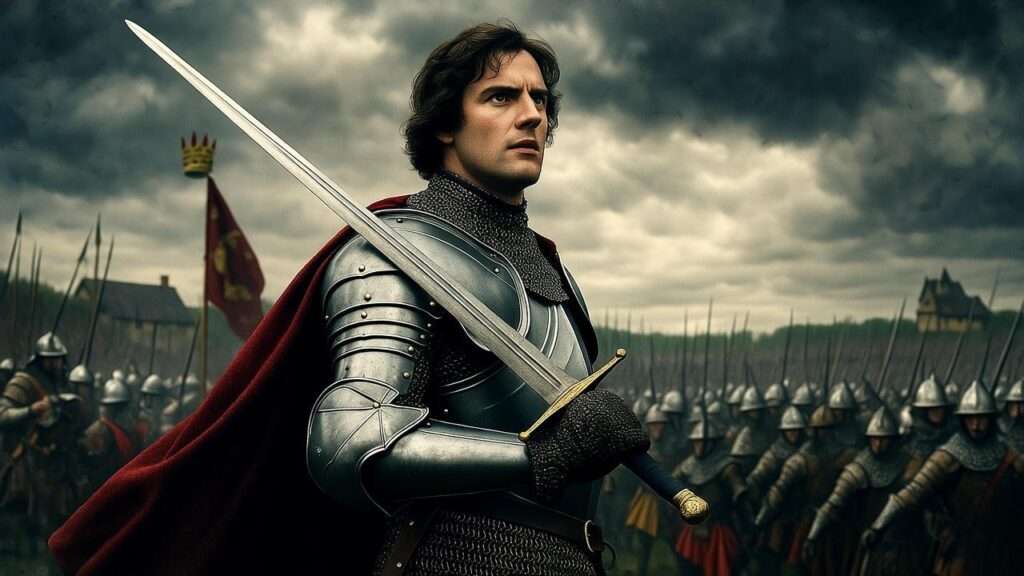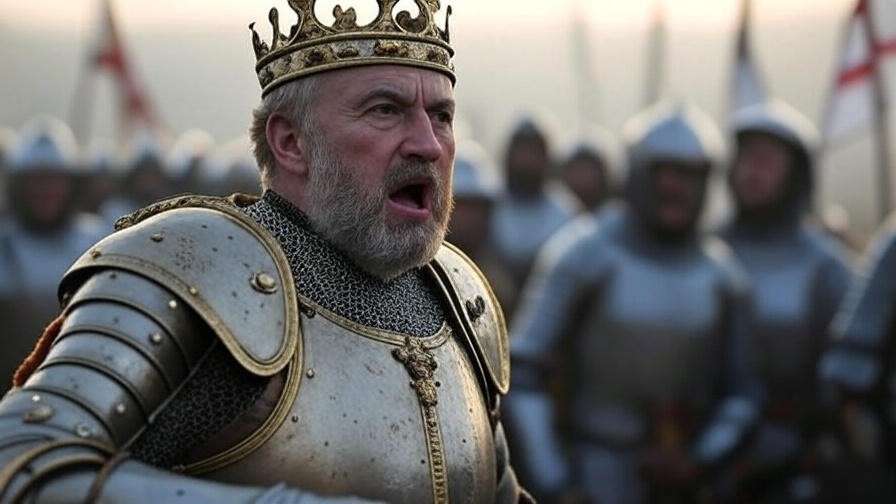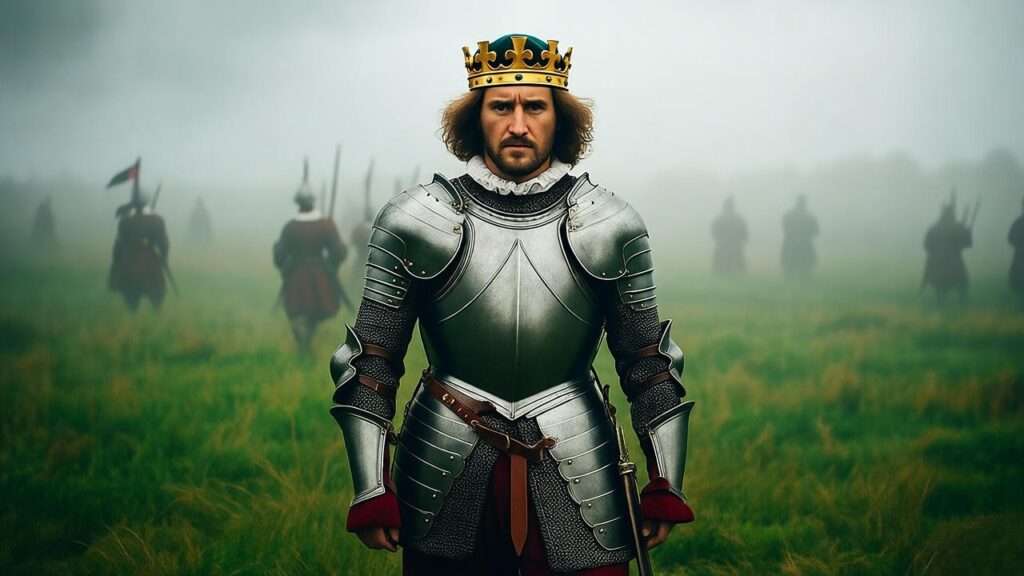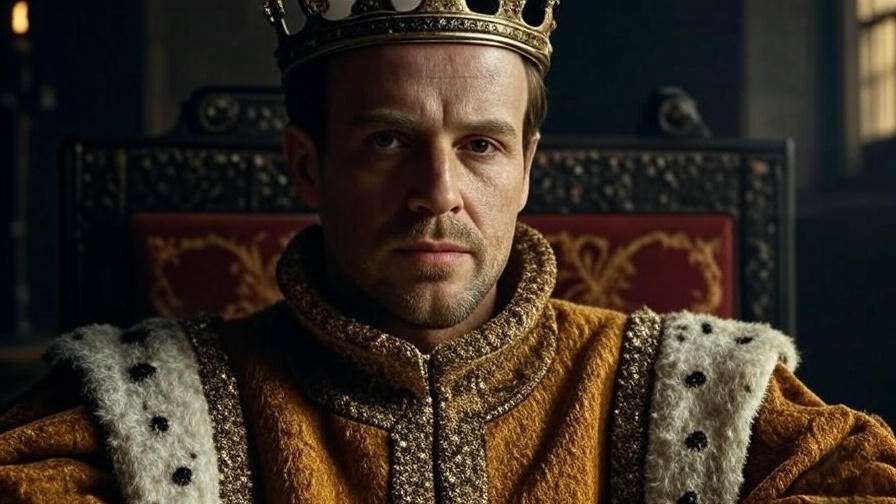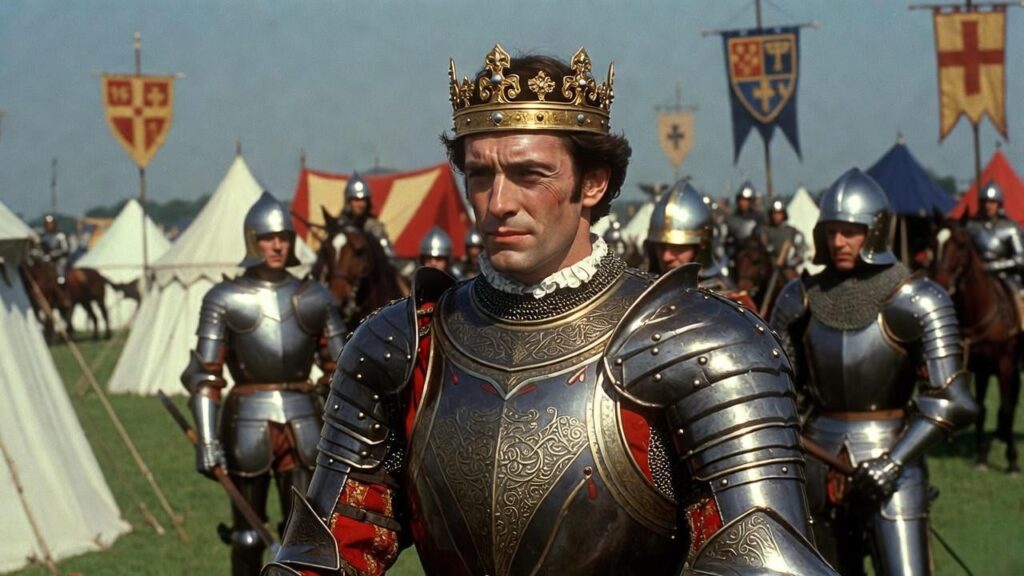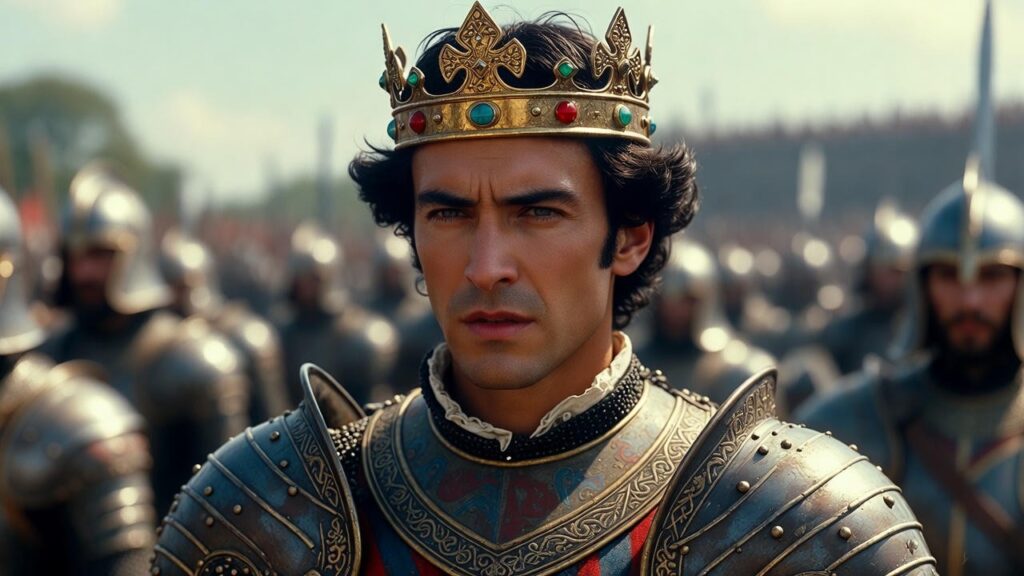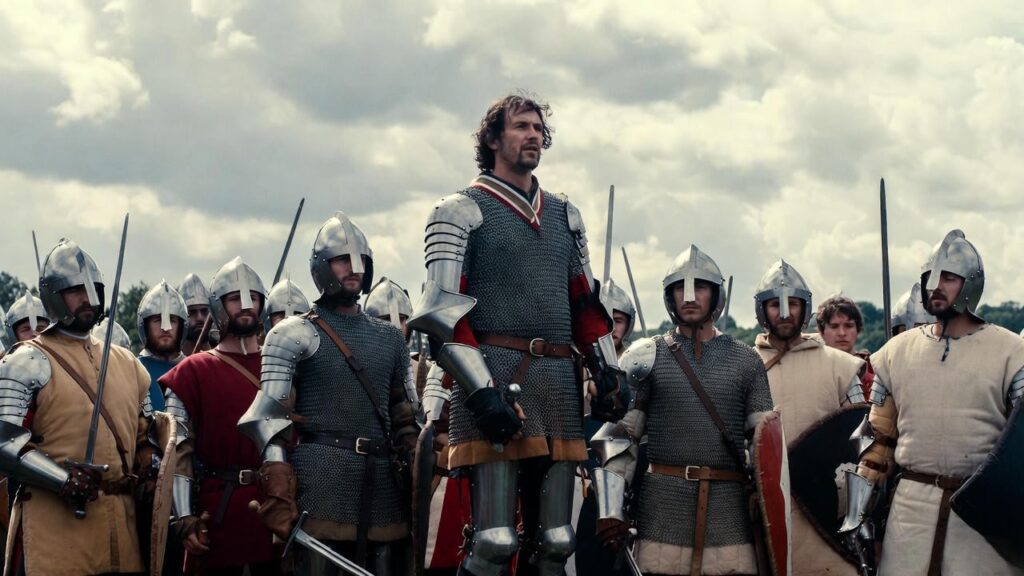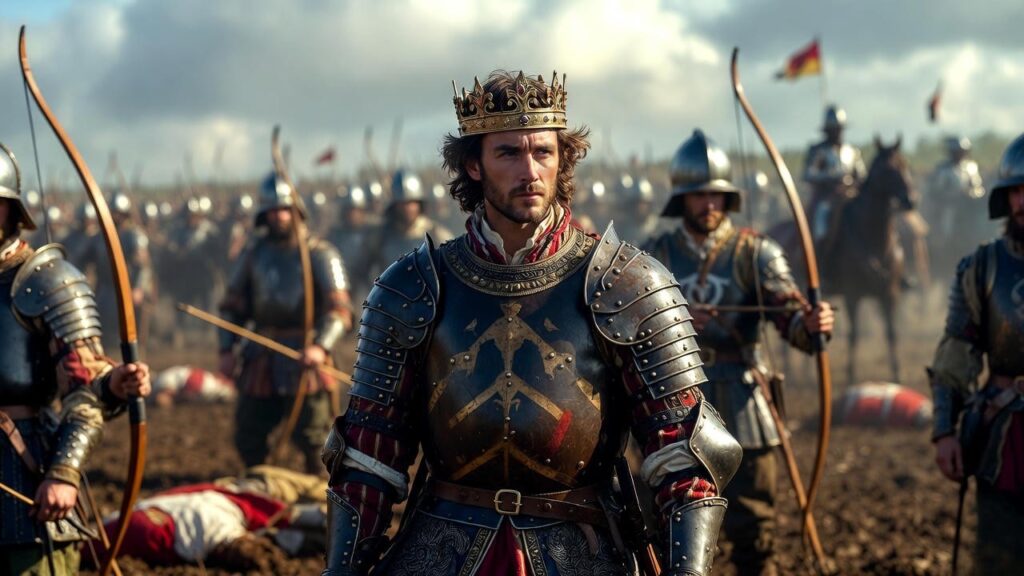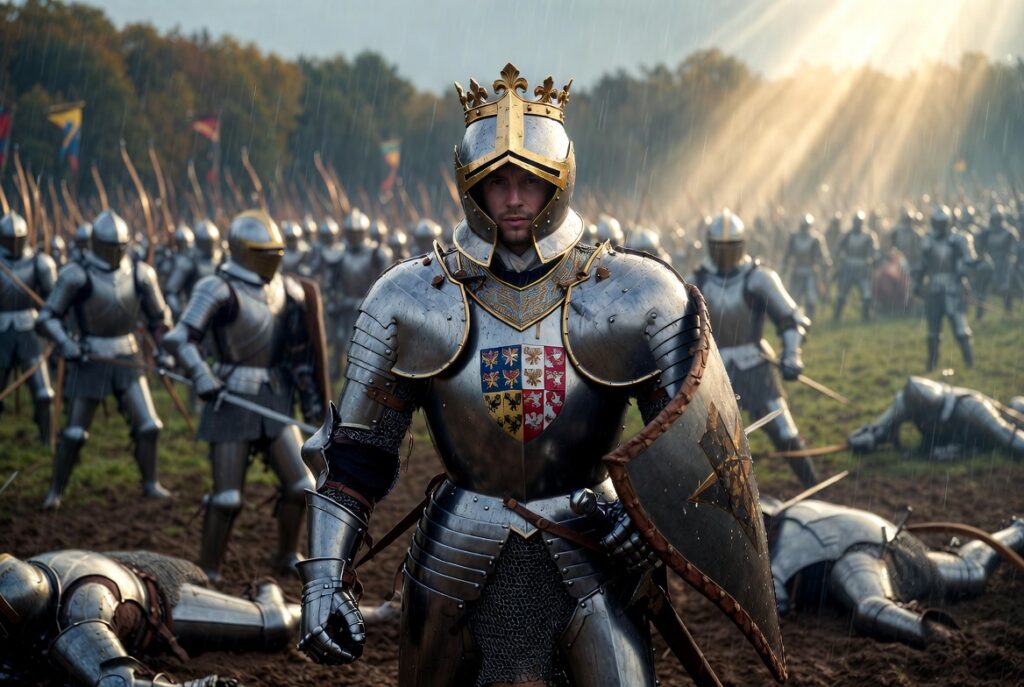
Imagine the roar of “Once more unto the breach!” echoing across a rain-soaked field in northern France on 25 October 1415. King Henry V, the very man who would inspire Shakespeare’s immortal words, stands shoulder-to-shoulder with his outnumbered English troops—not in flowing robes or theatrical costume, but encased in henry v armor: 50 to 60 pounds of expertly forged steel plate that turned him into a living fortress amid the mud and carnage of Agincourt.
While Shakespeare’s Henry V immortalizes the king’s leadership and rhetoric, it leaves the physical reality of his battle gear largely to the imagination. Modern readers, theater professionals, history enthusiasts, and reenactors searching for “henry v armor” often encounter romantic myths or Hollywood exaggerations. Yet the truth—drawn from primary sources like the Gesta Henrici Quinti, royal wardrobe accounts, Westminster Abbey’s funeral achievements, and groundbreaking reconstructions by the Royal Armouries—reveals a far more compelling story. This article delivers the definitive, evidence-based guide to exactly what Henry V wore at Agincourt, how it differed from Shakespeare’s dramatic world, and why that steel-clad image of resilience continues to resonate in 2026 and beyond.
By the end, you’ll understand not only the technical anatomy of 15th-century English royal plate armor but also its symbolic power in Shakespeare’s play, practical lessons for today’s directors and costume designers, and the enduring metaphor of “armor” as leadership under pressure. This is more than historical trivia—it solves the real need for accurate context when staging, studying, or simply appreciating one of Shakespeare’s greatest history plays.
The Historical Henry V and the Battle That Forged His Legend
Who Was the Real Henry V Before Shakespeare Made Him Immortal?
Born Henry of Monmouth in 1386, the future king was no stranger to combat long before Agincourt. As Prince Hal, he honed his skills in the Welsh wars and at the Battle of Shrewsbury in 1403, where he was wounded in the face yet refused to leave the field. By 1413, crowned Henry V, he inherited a fractured England and immediately turned his gaze to France, reviving claims to the French throne under the Hundred Years’ War.
From Prince Hal to Victor of Agincourt Henry’s 1415 campaign was a high-stakes gamble. With roughly 8,500–9,000 men (many exhausted and sick after the siege of Harfleur), he marched toward Calais, only to be intercepted by a French force estimated at 12,000–36,000—vastly superior in numbers and heavy cavalry. The English king deliberately chose battle on ground that favored his longbowmen and dismounted men-at-arms.
The 1415 Campaign: Logistics, Numbers, and the Odds Against Him Contemporary chronicles, including the eyewitness Gesta Henrici Quinti written by a royal chaplain, describe Henry’s army as disciplined but desperately low on supplies. The French, by contrast, arrived with the flower of their chivalry—noblemen in the latest plate armor expecting an easy victory. Instead, Henry’s tactical genius and the terrain turned the tide.
Armor as a Battlefield Necessity at Agincourt How Plate Armor Changed Medieval Warfare By 1415, European armor had evolved dramatically from the chain-mail hauberks of the 12th century to sophisticated full-plate harnesses. A complete suit protected nearly every inch of the body while remaining flexible enough for hand-to-hand combat. English armorers, influenced by Italian Milanese and German styles, produced “pairs of plates” (breast- and backplates), pauldrons, vambraces, and greaves that distributed weight evenly across the frame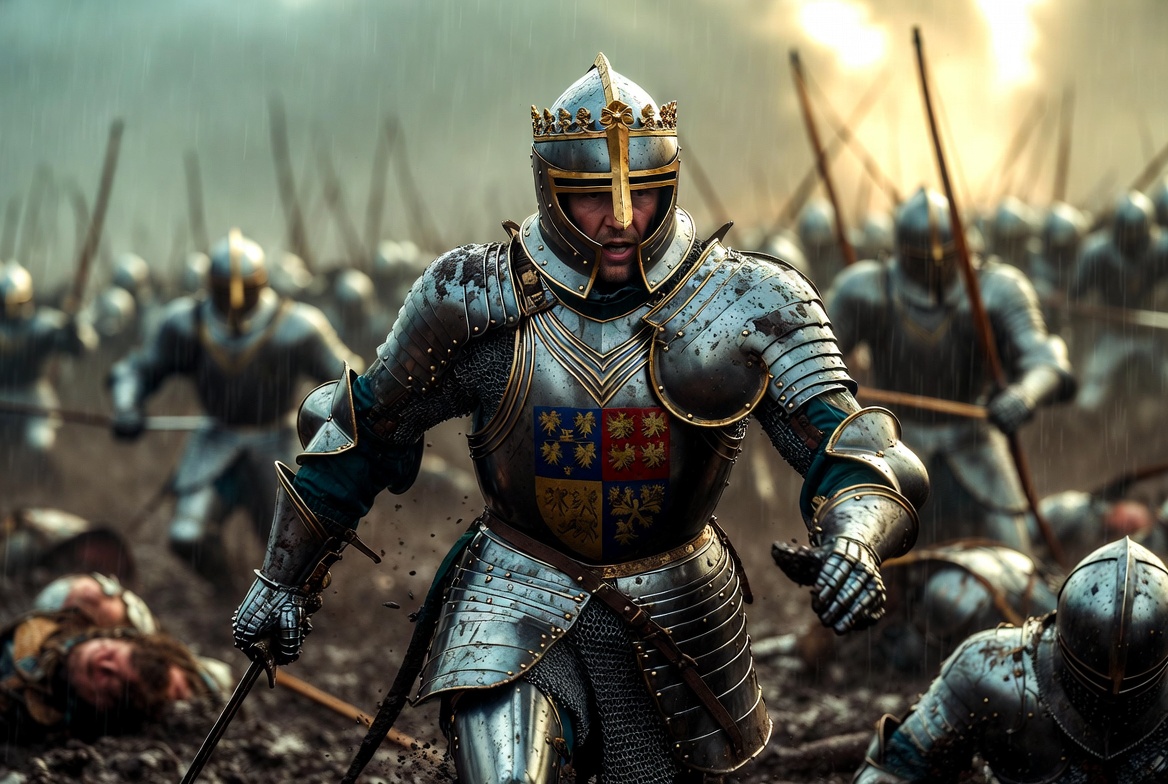 .
.
The King’s Personal Risk — Henry V Fought in the Front Lines Unlike many monarchs who directed from the rear, Henry V placed himself in the thick of the melee. The Gesta Henrici Quinti records that French knights nearly killed him; the Duke of Alençon struck a blow that damaged the king’s helmet and nearly felled him before English guards intervened. Henry’s decision to fight dismounted alongside his men-at-arms in full armor was both a statement of solidarity and a calculated risk that boosted morale.
Shakespeare’s Henry V: Literary Armor vs. Historical Reality
How Shakespeare Uses Armor Symbolically (Even When He Doesn’t Show It)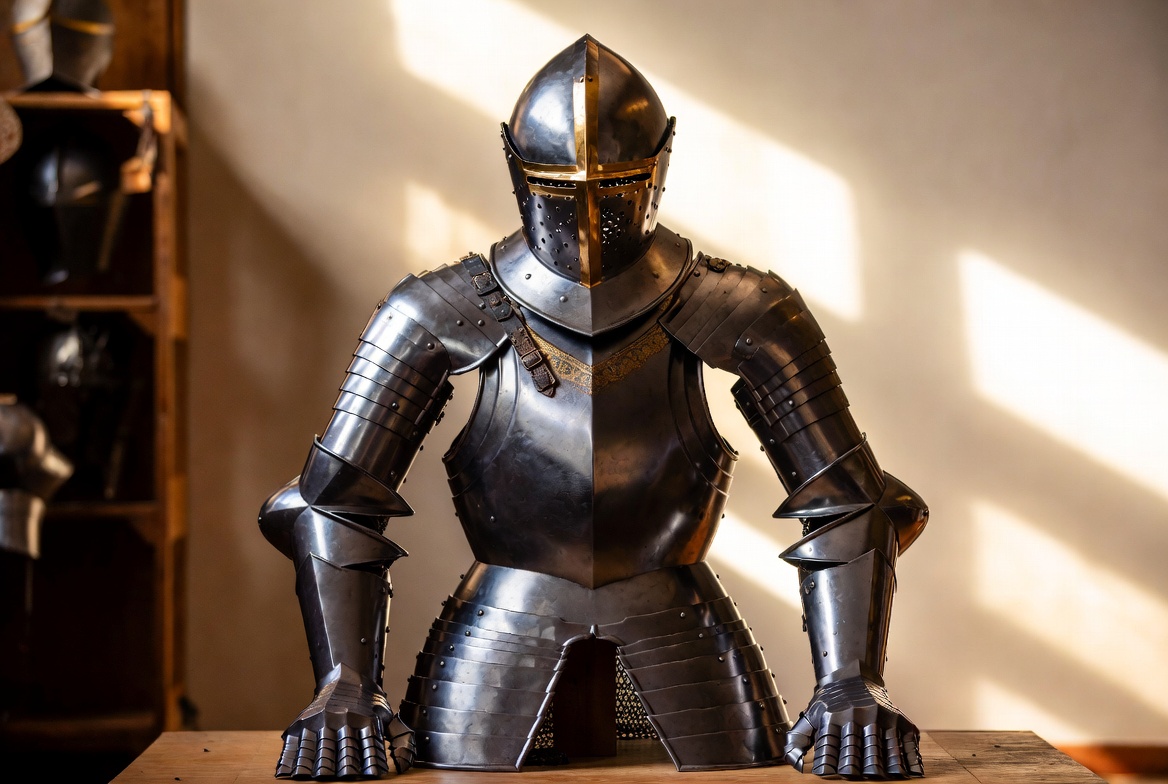
Shakespeare wrote Henry V around 1599, more than 180 years after Agincourt. The play contains no detailed stage directions describing the king’s armor, yet the imagery of “bruised arms” and martial readiness permeates the text. Armor becomes a metaphor for the weight of kingship, the armor of resolve, and the physical cost of war. Lines like “We few, we happy few” gain extra power when we picture the speaker encased in steel, marching through knee-deep mud.
Stage Directions and the Elizabethan Audience’s Expectations Elizabethan playgoers were familiar with armor from court pageants and real military service. Shakespeare assumes his audience understands the visual language: the glint of plate, the creak of straps, the vulnerability of a raised visor. The armor is implied rather than described, allowing the poetry to take center stage.
Key Scenes Where Armor Matters: Harfleur, Agincourt, and the “Once More Unto the Breach” Speech At Harfleur, Henry’s call to “once more unto the breach” evokes men scaling ladders in full harness—physically punishing work. At Agincourt, the famous St. Crispin’s Day speech is delivered by a king who has already fought in the front line, his armor dented and muddied. Shakespeare compresses history to heighten dramatic tension, but the underlying reality of armored combat grounds the rhetoric.
From Page to Stage — Armor in Famous Productions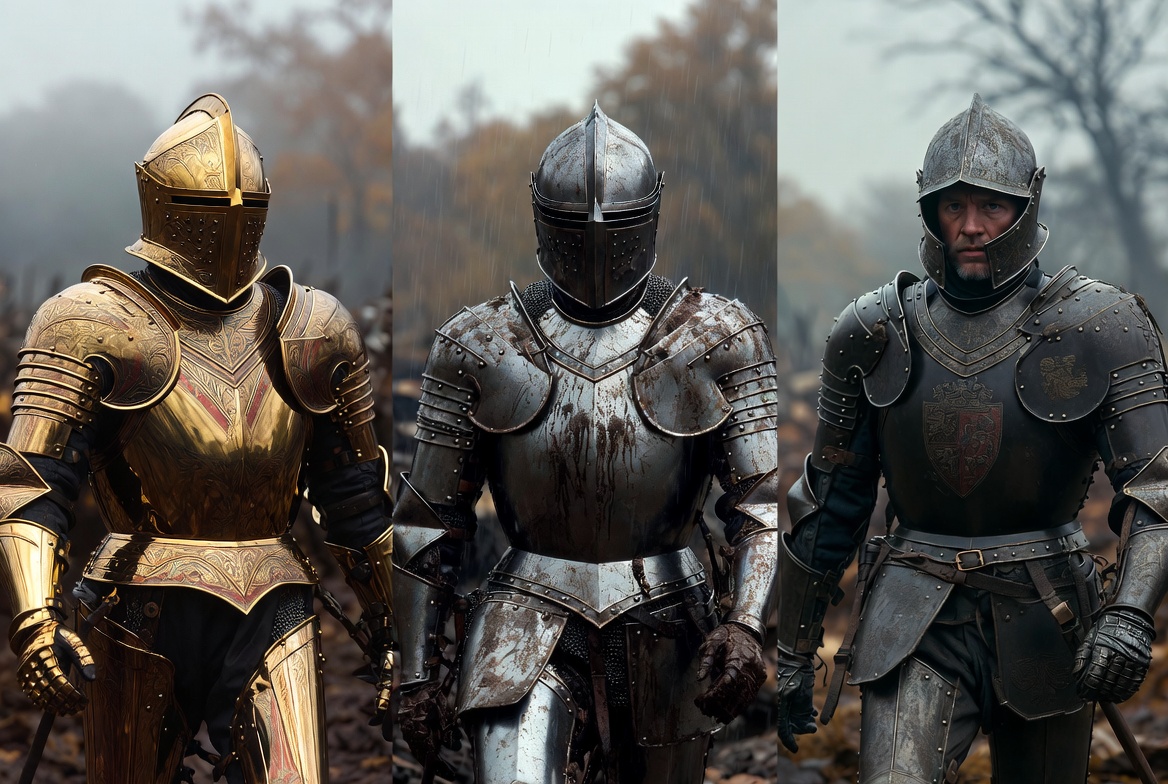
Laurence Olivier (1944) vs. Kenneth Branagh (1989) vs. The Hollow Crown (2012) Olivier’s wartime film presents gleaming, colorful plate armor as patriotic spectacle—polished and heroic. Branagh’s 1989 version introduces grit: rain-soaked steel, visible dents, and the weight of exhaustion. The 2012 Hollow Crown adaptation with Tom Hiddleston goes further, using darker, more functional-looking harnesses that echo modern military realism, stripping away unnecessary ornamentation to emphasize the brutality of close-quarters fighting.
Modern Directorial Choices: Accuracy vs. Dramatic Effect Today’s productions often consult armor historians. Directors balance historical fidelity (Milanese-style bascinets with visors) against theatrical needs: lighter stage armor that allows actors to move and project voice while still conveying the king’s martial presence.
15th-Century English Royal Armor: A Technical Deep Dive
The Anatomy of Henry V Armor – What a King Actually Wore in 1415
No complete original suit belonging to Henry V survives, yet we can reconstruct it with high confidence from royal wardrobe accounts, contemporary art, and surviving comparable harnesses. The king’s armourers, Martin Pull and John Hill, recorded supplying “complete pairs of plates,” pauldrons, vambraces, rerebraces, greaves, and bascinet-style helmets for the 1415 campaign—totaling nearly £950 in expenses, a fortune in medieval terms.
Evolution from Mail to Full Plate: Why 1415 Was a Turning Point Early 15th-century armor represented the peak of the transition. Mail shirts still protected gaps, but the dominant defense was articulated steel plates. English royal armor blended Italian influence (smooth, rounded Milanese plates for glancing blows) with practical English adaptations suited to dismounted fighting.
Complete Harness Breakdown (with functions and weights)
- Helmet: Likely a bascinet with a movable visor (or great helm for added protection). The famous funeral helm at Westminster Abbey—a heavy great helm with jousting reinforcement—is not the Agincourt battle piece; it was a funerary symbol. Henry’s actual battle helmet was almost certainly lighter and more practical, possibly crowned for visibility.
- Gorget and Bevor: Neck and chin protection, often hinged for breathing and vision.
- Breastplate and Backplate: The “pair of plates”—rigid, well-fitted steel that could deflect arrows and lances.
- Pauldrons, Vambraces, and Gauntlets: Shoulder, forearm, and hand defenses; gauntlets allowed grip on sword or axe.
- Cuisses, Greaves, and Sabatons: Thigh, shin, and foot plates, often with mail skirts underneath.
- Shield and Sword: A heater shield (smaller than earlier kite shields) and a practical Oakeshott Type XVIII sword optimized for cutting and thrusting in crowded melee.
Materials, Weight, and Mobility – Debunking Hollywood Myths A full harness weighed 40–60 pounds (18–27 kg), far less than the 100+ pounds often claimed in films. Weight was distributed across the body, allowing a fit knight to run, mount a horse, or fight for hours. Modern tests by the Royal Armouries confirm that a trained wearer retained surprising agility—even in mud.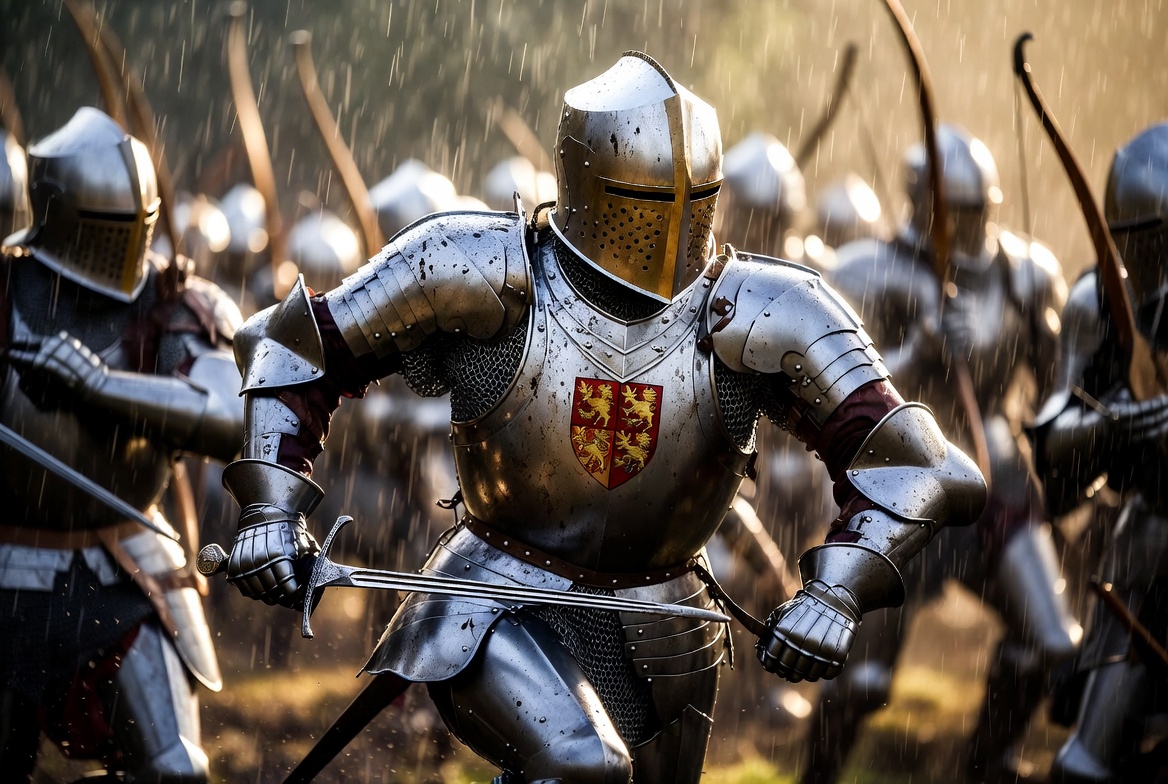
Royal Distinctions: Gilding, Heraldry, and the English Royal Style Henry’s armor featured subtle royal touches: gilding on edges, the royal arms of England and France quartered, and possibly a crowned helmet. It was functional first, magnificent second—understated compared to French ostentation.
| Armor Piece | Typical Weight | Function at Agincourt | Shakespearean Symbolism |
|---|---|---|---|
| Helmet | 8–12 lbs | Head protection; visor for visibility | “Armour of resolve” |
| Breastplate | 10–15 lbs | Vital organ defense; arrow resistance | Weight of kingship |
| Full Limb Harness | 20–25 lbs | Mobility in mud; glancing blows | Physical cost of leadership |
| Total Harness | 45–60 lbs | Full-body protection for prolonged melee | “We few” endurance |
This table highlights why Henry V armor was both practical and powerfully symbolic.
Reconstructing Henry V’s Armor: Evidence, Artifacts, and Modern Science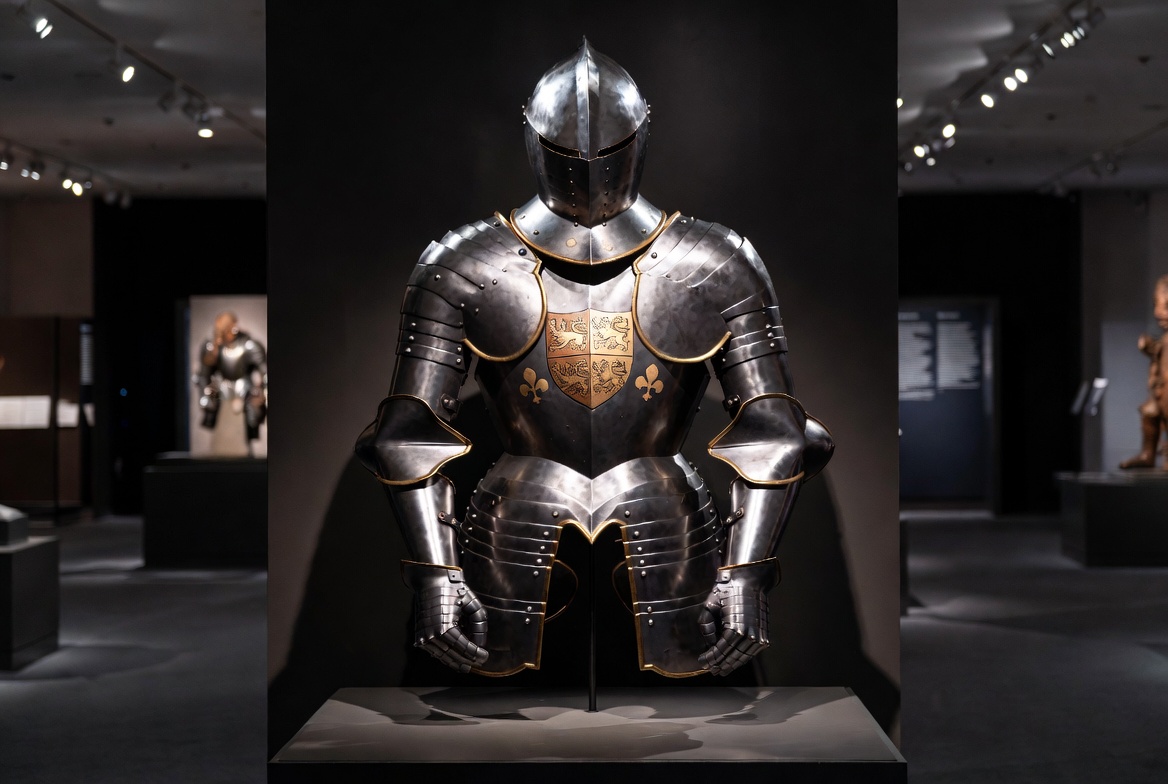
What the Historical Record Actually Tells Us
Primary Sources and Contemporary Descriptions The Gesta Henrici Quinti describes the press of armored bodies and heaps of fallen French knights whose heavy plate trapped them in the mud. English accounts emphasize Henry’s personal armor enabling him to fight effectively despite the conditions.
Surviving Related Artifacts (Tower of London, Westminster Abbey effigy, royal inventories) Henry V’s tomb effigy at Westminster Abbey depicts him in full plate, though the original silver-gilt elements were looted long ago. The funeral achievements (helm, shield, saddle) survive in the Abbey museum and were studied with CT scans and chemical analysis for the 600th anniversary. They are funerary symbols rather than battle-worn items, yet they confirm the style of high-status English armor circa 1415–1422.
Expert Reconstructions and Forensic Analysis
Work by the Royal Armouries and Leading Armor Historians The Royal Armouries’ 2015 Agincourt exhibition and diorama (featuring thousands of accurately armored miniatures) drew on wardrobe accounts and contemporary sculptures, such as the St. George figure from St. Albans Cathedral, to depict authentic 1415 English knight armor.
21st-Century Testing — How Accurate Reproductions Perform in Mud and Arrow Fire Modern replicas tested at the Royal Armouries prove that plate armor could deflect longbow arrows at distance and remain functional in muddy conditions—exactly as Henry experienced. A trained wearer could fight for extended periods without the immobility Hollywood often portrays.
Why Henry V Armor Still Matters in 2026 and Beyond
Henry V’s armor is far more than a historical artifact or a theatrical prop. It embodies the intersection of medieval military technology, royal leadership, and Shakespeare’s dramatic genius. In an era of rapid technological change and shifting global conflicts, the image of a king who chose to fight in the front lines—protected yet exposed—offers timeless lessons in resilience, responsibility, and the physical as well as moral cost of command.
Cultural Legacy – From Shakespeare to Video Games and Reenactments
Shakespeare transformed the historical Henry into a symbol of English unity and martial valor. The play’s enduring popularity has kept the visual language of henry v armor alive across centuries. Modern adaptations amplify this: video games like Chivalry 2, Mount & Blade, and Total War: Medieval II let players don plate harnesses inspired by Agincourt-era designs, while historical reenactment groups across the UK, Europe, and North America painstakingly recreate full harnesses for living-history events.
The Royal Armouries’ 2015 Agincourt exhibition and its permanent diorama in Leeds brought this world to life with thousands of accurately armored miniature figures, drawing on wardrobe accounts and contemporary sculptures such as the St. George figure from St. Albans Cathedral. These reconstructions show English men-at-arms in articulated “white armour” (harnois blanc)—breastplates, gorgets, pauldrons, and greaves—optimized for dismounted combat in muddy conditions.
Influence on Modern Media (films, games, theater costumes)
Film versions illustrate evolving interpretations:
- Laurence Olivier’s 1944 Henry V presented polished, brightly colored plate as heroic spectacle, aligning with wartime morale needs. Armor gleams; the king appears almost invincible.
- Kenneth Branagh’s 1989 version introduced grit—rain-soaked steel, visible dents, and the exhausting weight of prolonged fighting—making the armor feel functional and burdensome.
- The Hollow Crown (2012) with Tom Hiddleston went further toward realism, using darker, practical-looking harnesses that emphasize vulnerability and the brutality of melee combat. Costume designers often combined rubber or lightweight composites for actor mobility while suggesting authentic steel.
These choices reflect a broader cultural shift: audiences now demand greater historical fidelity alongside emotional truth. Theater directors increasingly consult armor historians to balance authenticity with the demands of live performance—lighter stage armor that allows vocal projection and movement without sacrificing the visual impression of a steel-clad warrior-king.
Leadership Metaphor: “Armor” as Resilience in Today’s World
Beyond the literal metal, Henry V armor serves as a powerful metaphor. The king who bore 45–60 pounds of steel through mud and arrow fire while delivering one of literature’s greatest motivational speeches models steadfastness under pressure. In 2026, as leaders in business, politics, and the military face complex challenges, the image resonates: true leadership often requires donning “armor”—preparation, discipline, and personal risk—while remaining connected to those you lead.
Shakespeare understood this duality. The play contrasts the weight of the crown with the shared burden of the common soldier. Henry’s decision to fight in the front ranks, his armor dented by French blows (as recorded in the Gesta Henrici Quinti), humanizes him and elevates the “band of brothers.”
Practical Value for Shakespeare Fans and History Buffs
For theater professionals and educators, understanding henry v armor improves staging and teaching. Directors can make informed choices about costume weight, movement, and symbolism. Costume designers benefit from knowing that authentic harnesses distributed weight across shoulders, hips, and limbs, allowing surprising mobility—facts that prevent anachronistic “tin can” portrayals.
History enthusiasts and students gain deeper appreciation of the play when they see how material culture grounds Shakespeare’s poetry. The mud at Agincourt was not just dramatic backdrop; it interacted lethally with heavy French plate armor, trapping fallen knights, while English forces in well-fitted harnesses maintained better footing.
Tips for Theater Directors and Costume Designers
- Prioritize mobility testing: Modern replicas prove a fit wearer can run, kneel, and fight effectively in 15th-century plate. Use this to choreograph realistic battle scenes.
- Layer symbolism: Show armor accumulating damage and mud across acts to mirror the army’s exhaustion and ultimate triumph.
- Consult primary sources: Royal wardrobe accounts detail supplies from armourers Martin Pull and John Hill, including pairs of plates, pauldrons, and greaves.
- Balance accuracy and practicality: Stage armor can use lightweight materials while incorporating accurate silhouettes and heraldry.
Where to See Authentic 1415-Era Armor Today (museum guide)
- Royal Armouries, Leeds and Tower of London: Home to the Agincourt diorama and extensive collections of medieval plate armor. The 2015 exhibition objects remain influential.
- Westminster Abbey: View Henry V’s funeral achievements—helm, shield, and saddle—in the Queen’s Diamond Jubilee Galleries. Recent studies confirm these as high-status items from his era, though the helm is a jousting/funerary piece rather than the exact Agincourt battle helmet. The shield, made of limewood with textile lining, weighs about 1.75 kg and shows evidence of prior use.
- Wallace Collection, London: Fine examples of comparable 15th-century European armor.
- Online resources: Royal Armouries digital collections and scholarly publications like The Funeral Achievements of Henry V at Westminster Abbey (2023) offer detailed analysis.
The steel that once protected Henry V at Agincourt no longer exists in its original battle-worn form, yet its legacy endures through Shakespeare’s words and centuries of interpretation. What the king wore was not theatrical fantasy but sophisticated, functional engineering—articulated plate weighing roughly 45–60 pounds (20–27 kg), blending Italian and northern European influences, designed to deflect arrows and blades while permitting the mobility needed for a dismounted melee in muddy terrain.
Shakespeare, writing 184 years later, wisely left detailed description to the imagination, allowing armor to function as potent symbol: the physical burden of kingship, the shared hardship of soldiers, and the armor of resolve that turns “we few” into victors. Modern reconstructions by the Royal Armouries and forensic studies confirm the historical reality was even more impressive than romantic depictions suggest—a king who risked everything in the front line, his harness enabling both protection and leadership by example.
For readers of Shakespeare, students of history, theater practitioners, or anyone drawn to the enduring power of leadership under pressure, exploring henry v armor bridges literature and material culture. It reveals how a medieval battlefield artifact illuminates one of English literature’s greatest plays and continues to inspire questions about courage, duty, and human endurance today.
Whether you are preparing a new production of Henry V, researching the Hundred Years’ War, or simply rereading the St. Crispin’s Day speech with fresh eyes, remember the king was not speaking from safety. He spoke while encased in steel, standing in the same mud as his men. That image—rooted in historical fact—gives the poetry its lasting force.
The armor may have rusted away, but the lessons it represents remain as relevant in the 21st century as they were on 25 October 1415.
Key Takeaways
- 15th-century English royal plate armor was advanced, flexible, and weighed far less than Hollywood myths suggest.
- Henry V fought in the front ranks, his harness enabling both survival and symbolic solidarity.
- Shakespeare uses armor metaphorically to deepen themes of leadership and shared sacrifice.
- Accurate reconstructions enhance appreciation of the play and inform modern productions.
FAQ
What type of armor did Henry V wear at Agincourt? Henry V wore a complete harness of articulated plate armor, often called “white armour,” including a bascinet-style helmet with visor, breast- and backplate (“pair of plates”), pauldrons, vambraces, gauntlets, cuisses, greaves, and sabatons. Mail protected gaps. Royal accounts show supplies of such items for the 1415 campaign.
Did Shakespeare describe Henry V’s armor in the play? No detailed description appears. Shakespeare implies martial readiness through phrases like “bruised arms” and focuses on rhetoric and human drama rather than technical specifics, trusting Elizabethan audiences to visualize armored warriors.
How heavy was 15th-century kingly plate armor? A full harness typically weighed 40–60 pounds (18–27 kg). Weight was well distributed, allowing trained wearers significant mobility. Tests of replicas confirm functionality even in muddy conditions similar to Agincourt.
Where can I see a real Henry V armor reconstruction? Visit the Royal Armouries in Leeds (permanent Agincourt diorama) or the Tower of London. Westminster Abbey displays the king’s funeral achievements (helm, shield, saddle) in the Queen’s Diamond Jubilee Galleries.
How accurate are modern film depictions of Henry V armor? Accuracy varies. Olivier’s 1944 film is stylized and heroic; Branagh’s 1989 version adds realism and grit; The Hollow Crown (2012) leans toward functional, darker aesthetics. Recent productions increasingly consult historians for better fidelity.
What happened to Henry V’s actual armor? No complete original suit survives. Funeral achievements (helm, shield, saddle) were preserved at Westminster Abbey and studied extensively. Royal inventories and armourer accounts provide the best evidence for what was worn in 1415.
Why is armor important in understanding Shakespeare’s history plays? Armor grounds the poetry in physical reality. It highlights themes of vulnerability versus strength, the cost of war, and leadership by example—elements central to Henry V and the broader Henriad.
Can you buy or rent accurate Henry V armor replicas? Yes. Specialist armorers produce museum-quality reproductions for reenactors and theaters. Search for makers referencing Royal Armouries standards or Agincourt-era designs. Stage versions often use lighter materials for safety and performance needs.