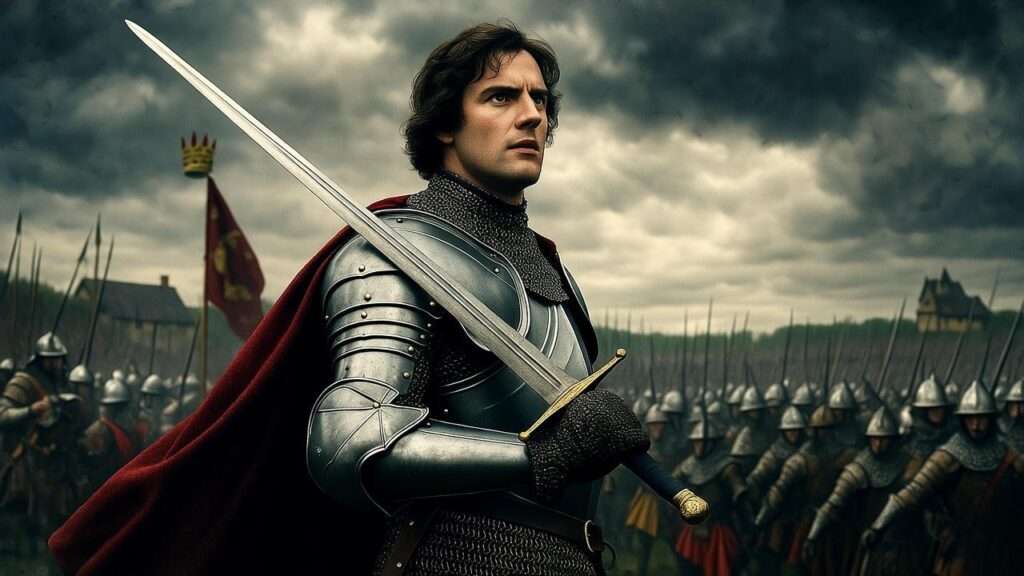
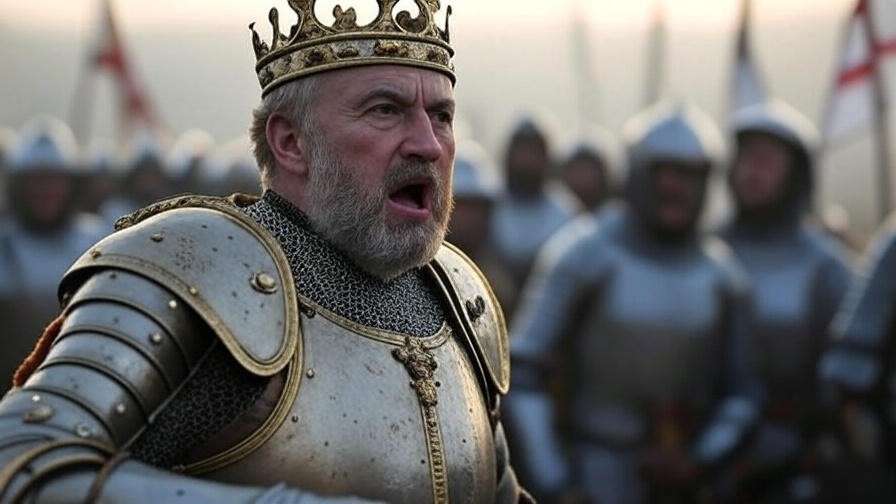
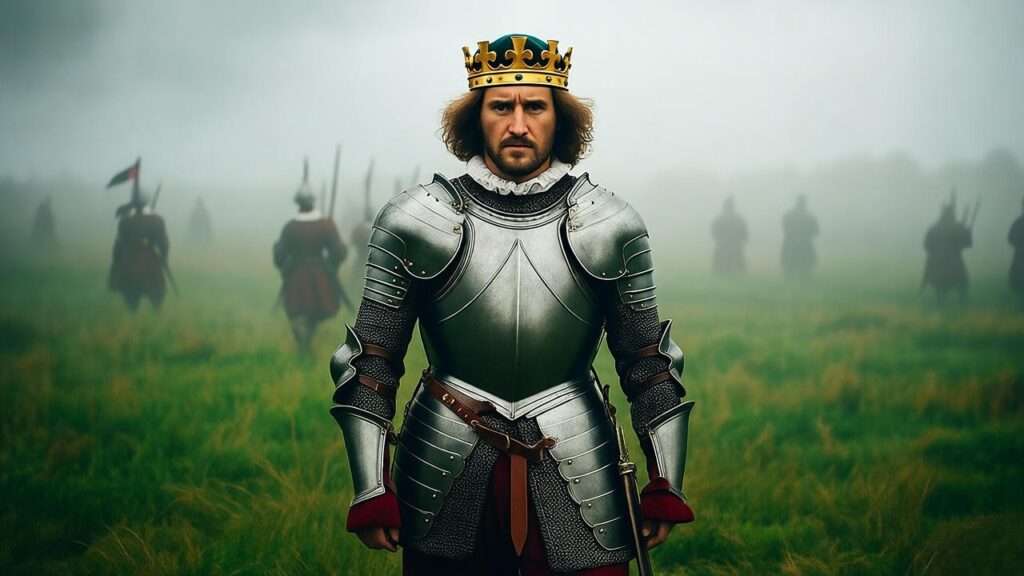
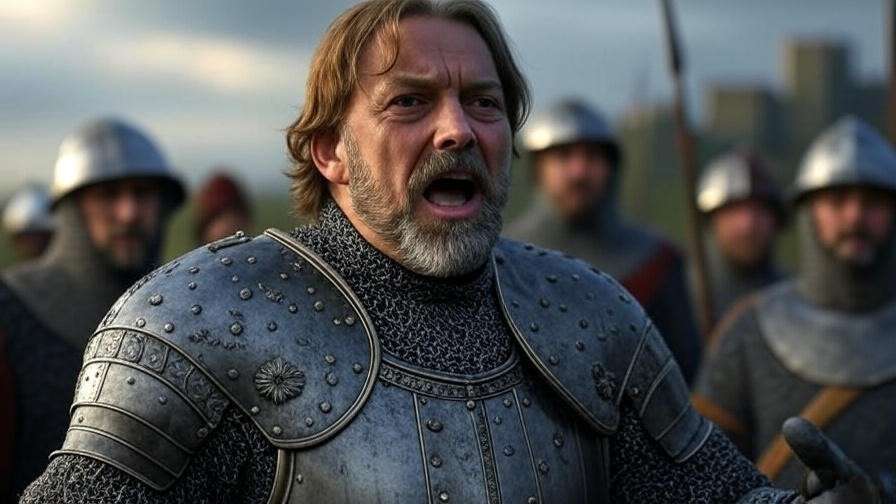
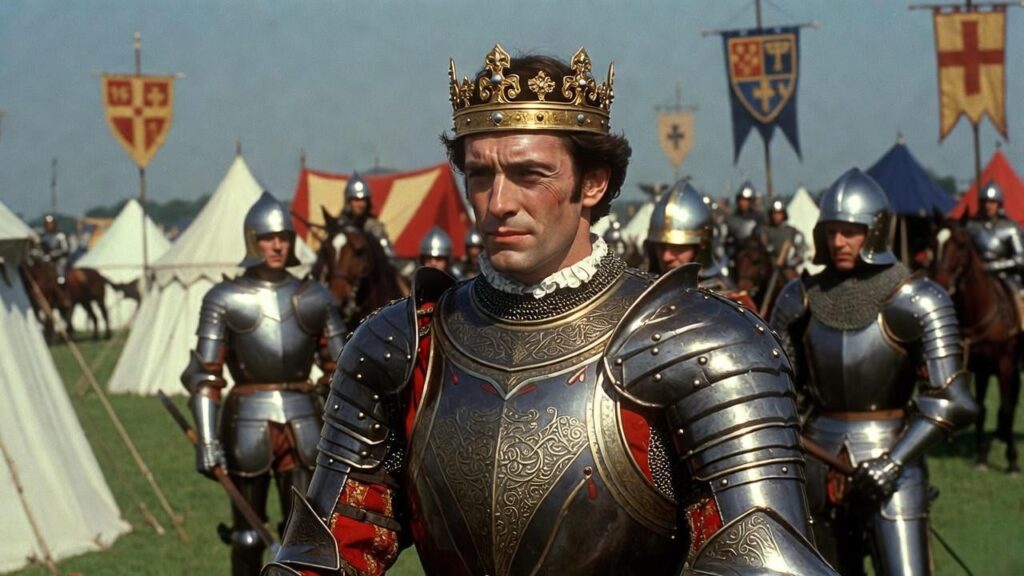
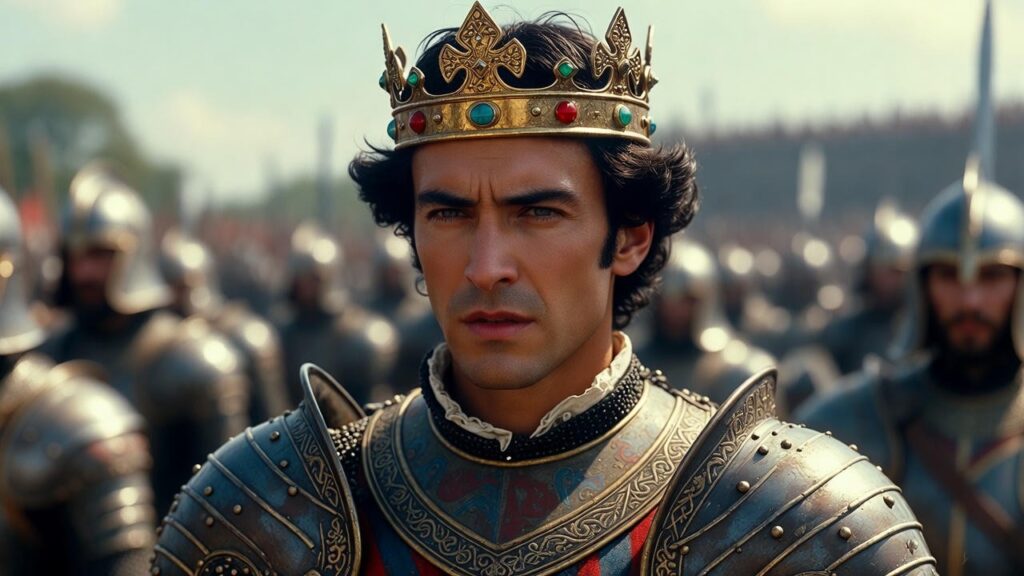
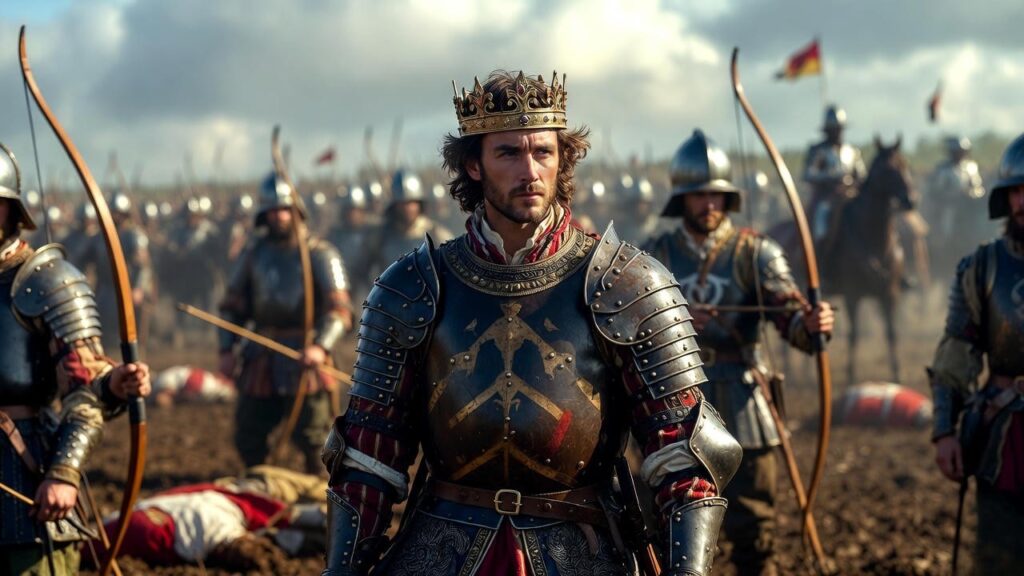
Imagine the thunder of hooves, the clash of steel, and the desperate cries of men locked in mortal combat on a rain-soaked field in northern France. On October 25, 1415, King Henry V of England led a weary, outnumbered army to one of history’s most improbable victories at Agincourt. Shakespeare immortalizes this moment in his play Henry V, where the Chorus famously declares: “Now thrive the armorers, and honor’s thought / Reigns solely in the breast of every man.” These lines capture a nation arming itself for war, but they also invite a deeper question: What did Henry V armor actually look like? What protective gear shielded the king and his men as they faced overwhelming French forces? And how does the historical reality of 15th-century plate armor compare to the dramatic symbolism Shakespeare weaves into his portrayal of the warrior king?
For history enthusiasts, Shakespeare scholars, theatergoers, and reenactors alike, understanding Henry V’s armor bridges the gap between gritty medieval battlefield truth and poetic stagecraft. This comprehensive guide draws on royal wardrobe accounts, surviving artifacts, scholarly analyses from experts like Anne Curry and Tobias Capwell, and modern reconstructions to reveal the practical, protective, and symbolic role of armor in 1415—and its echoes in Shakespeare’s timeless drama.
The Historical Reality: What Armor Did Henry V and His Army Wear in 1415?
By the early 15th century, European warfare had entered the age of full plate armor, often called “white armour” or harnois blanc due to its polished steel surface. This marked a dramatic evolution from earlier chainmail-dominated suits, offering superior protection against swords, lances, and arrows while allowing remarkable mobility when properly fitted.
The Rise of Full Plate Armor in the Early 15th Century
The transition to articulated plate began in the late 14th century, with large steel plates gradually replacing or supplementing mail. By 1415, a complete suit for a man-at-arms typically included:
- Helmet: A bascinet, rounded and often fitted with a pivoting visor for vision and ventilation, plus a chainmail aventail protecting the neck.
- Body armor: Breastplate and backplate (cuirass), articulated pauldrons (shoulder defenses), vambraces (forearms), and gauntlets.
- Leg armor: Cuisses (thighs), poleyns (knees), greaves (shins), and sabatons (feet).
These components were riveted and hinged for flexibility. Contrary to popular myth, a full suit weighed 45–60 pounds (20–27 kg), distributed across the body so trained wearers could run, mount horses, and fight effectively—though mud and fatigue took their toll, as at Agincourt.
Modern studies, including treadmill tests on replica armor by experts at the Royal Armouries, show it doubled energy expenditure compared to unarmored movement, explaining why heavily armored French knights struggled in the plowed, muddy field.
Henry V’s Personal Armor — Insights from Royal Accounts
Henry V’s Great Wardrobe accounts, meticulously kept by armorers like Martin Pull and John Hill, provide rare details. Entries mention new bascinets with multiple visors, complete pairs of plates (front and back), poleyns, pauldrons, besagews (round shoulder guards), and full harnesses. The king invested heavily in Milanese and English craftsmanship, reflecting his status as a warrior monarch who personally led charges.
A legendary artifact is the bascinet helmet associated with Henry V, now preserved as part of his funeral achievements in Westminster Abbey. Historical accounts describe a severe blow from a French axe during the battle that dented the helmet and dislodged part of the crown attached to it—yet the king survived, thanks to the sturdy design and the skill of his armorer.
Henry also wore a surcoat or jupon quartered with English lions and French fleurs-de-lis, boldly asserting his claim to the French throne even in battle.
Armor for the English Men-at-Arms vs. French Knights
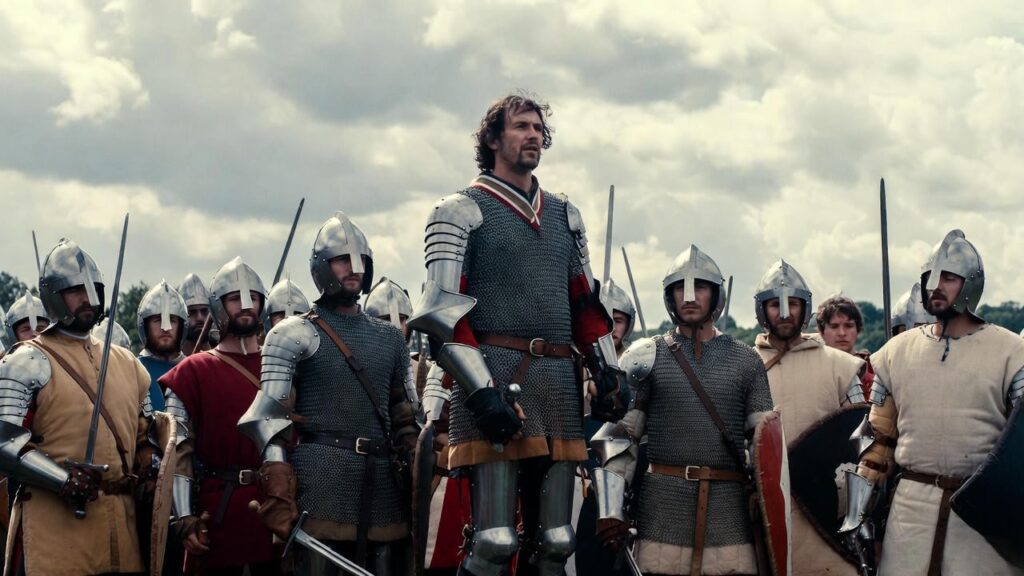
English forces emphasized practicality: nobles wore full plate, but many men-at-arms used lighter brigandines or jacks over mail for mobility—crucial when fighting dismounted alongside longbowmen. The French, often on horseback initially, favored heavier, more ornate suits that contributed to exhaustion in the mud. This contrast in design and tactics helped tip the scales at Agincourt, where English archers and disciplined infantry outmaneuvered the cumbersome French chivalry.
Armor in Shakespeare’s Henry V — Symbolism Over Spectacle
Shakespeare’s Henry V (written around 1599) relies on the Chorus to paint vivid pictures of preparation and battle, yet the play rarely describes armor in detail. Instead, it uses the idea of armor as a metaphor for honor, national unity, and the burdens of leadership.
The Chorus and the “Thriving Armorers” — Setting the Martial Tone
The Chorus opens Act 1 with: “Now all the youth of England are on fire, / And silken dalliance in the wardrobe lies: / Now thrive the armorers…” This line evokes a sense of national mobilization, where armorers work tirelessly to equip the army. Shakespeare uses this to stir the audience’s imagination, turning the practical act of arming into a symbol of England’s awakening resolve.
Dramatic References to Armor — From French Boasts to English Resilience
Shakespeare subtly incorporates armor to highlight character and contrast. The French Dauphin boasts of his “best armor of the world” (Act 3, Scene 7), embodying arrogance and reliance on outward show. In contrast, Henry’s leadership is internal—his “heart” and rhetoric inspire, not his gear.
Post-battle reports imply battered armor, but Shakespeare focuses on the human cost: exhaustion, wounds, and camaraderie. The king’s famous “band of brothers” speech (Act 4, Scene 3) elevates the common soldier above noble trappings.
Stage vs. History — How Directors Interpret Armor
In Shakespeare’s day, productions used minimal props—armor might be suggested by a breastplate or helmet. Modern adaptations vary: Kenneth Branagh’s 1989 film features realistic 15th-century plate, emphasizing grit. Laurence Olivier’s 1944 version opts for stylized, colorful armor to evoke patriotism. The Royal Shakespeare Company often uses simplified designs to highlight the play’s themes over historical accuracy.
Historical Accuracy vs. Dramatic License — Bridging the Gap
Shakespeare drew from Raphael Holinshed’s Chronicles and other sources, capturing the broad events of Agincourt accurately. However, he condenses timelines, omits complexities, and amplifies heroism. Armor in the play serves symbolism rather than realism—representing chivalric ideals while hinting at their obsolescence in the face of gunpowder and longbows.
Scholars like Anne Curry note that Shakespeare was remarkably accurate about the battle’s dynamics, including the role of mud and fatigue. Yet by avoiding detailed descriptions, he keeps the focus on leadership and morale.
Modern Reconstructions and Why They Matter Today
Museums like the Royal Armouries in Leeds and the Wallace Collection in London house authentic 15th-century armor. Reenactments by groups such as the Agincourt Project demonstrate how plate armor allowed surprising agility. Studies show that fatigue, not weight alone, doomed the French—reinforcing why English tactics succeeded.
For enthusiasts, visiting Westminster Abbey to see Henry V’s funeral helmet or trying on replicas at events offers tangible insight into the king’s world.
The Enduring Power of Henry V’s Armor
From the polished steel that protected Henry V at Agincourt to the symbolic “armor of honor” in Shakespeare’s play, this gear represents courage, leadership, and the clash between reality and myth. Whether you’re studying the history, performing the play, or simply fascinated by medieval warfare, understanding Henry V armor deepens appreciation for both the warrior king and the playwright who immortalized him.
Re-read Henry V, watch a production, or visit a museum—each encounter brings the past to life.
FAQs
What type of helmet did Henry V wear at Agincourt? Henry V wore a bascinet with a pivoting visor and chainmail aventail. A surviving example in Westminster Abbey shows a dent from a battle blow.
Did Shakespeare describe Henry V’s armor in detail? No. Shakespeare uses armor symbolically through the Chorus and brief mentions, focusing on rhetoric and character rather than physical description.
How heavy was 15th-century plate armor? A full suit weighed 45–60 pounds (20–27 kg), distributed across the body for mobility. Modern tests confirm it allowed running and fighting.
Why was French armor a disadvantage at Agincourt? Heavier, ornate suits contributed to fatigue in the muddy field, while English forces prioritized mobility and fought dismounted.