“Once more unto the breach, dear friends, once more!” These immortal words, thundered across battlefields in Shakespeare’s imagination, echoed powerfully through the Courtyard Theater at Chicago Shakespeare Theater in Edward Hall’s riveting 2024 production of Henry V. Running from September 6 to October 6, 2024, this contemporary staging of Shakespeare’s epic history play marked a bold debut for Hall as Artistic Director, bookending the theater’s legacy—it was the very first production when founder Barbara Gaines launched the company on a pub rooftop in 1986. For anyone searching for insights into Henry V at Chicago Shakespeare, this production delivered not just spectacle, but a profound interrogation of leadership, the seductive horrors of war, and the intoxicating allure of power in a world still grappling with nationalism and conflict.
In an era where global tensions simmer and political rhetoric often mirrors the manipulative language of kings, Hall’s Henry V felt urgently timely. Starring Elijah Jones in a charismatic Chicago debut as the young King Henry, the production blended punk energy, live music, and stark modern military aesthetics to amplify Shakespeare’s ambiguities. Was Henry a heroic unifier or a ruthless opportunist? A streetwise survivor or a warmonger driven by ego? This comprehensive exploration dives deep into the production’s vision, performances, design, thematic depth, and lasting relevance—offering Shakespeare enthusiasts, students, theatergoers, and those interested in leadership and ethics a definitive guide to one of the Bard’s most debated plays.
Production Overview and Historical Context
Edward Hall, renowned for founding the innovative all-male Propeller Shakespeare company and directing visceral interpretations worldwide, brought a distinctly contemporary, anti-war perspective to this Henry V. In his director’s note, Hall described the play as “one of the most revealing about war, nationalism, the consequences of both, and our need for common causes.” His staging emphasized the “seduction of war”—its adrenaline-fueled thrill masking profound human devastation—through immersive elements that made the 425-year-old text pulse with modern urgency.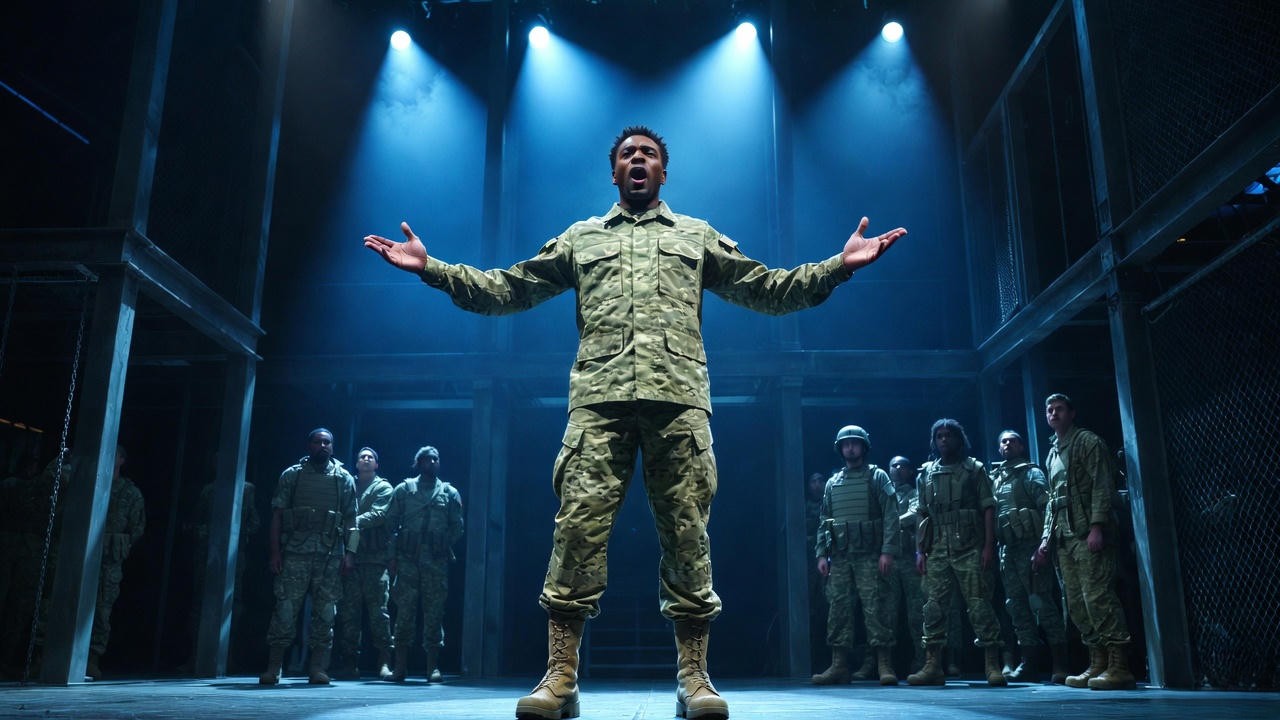
Edward Hall’s Vision and Directorial Choices
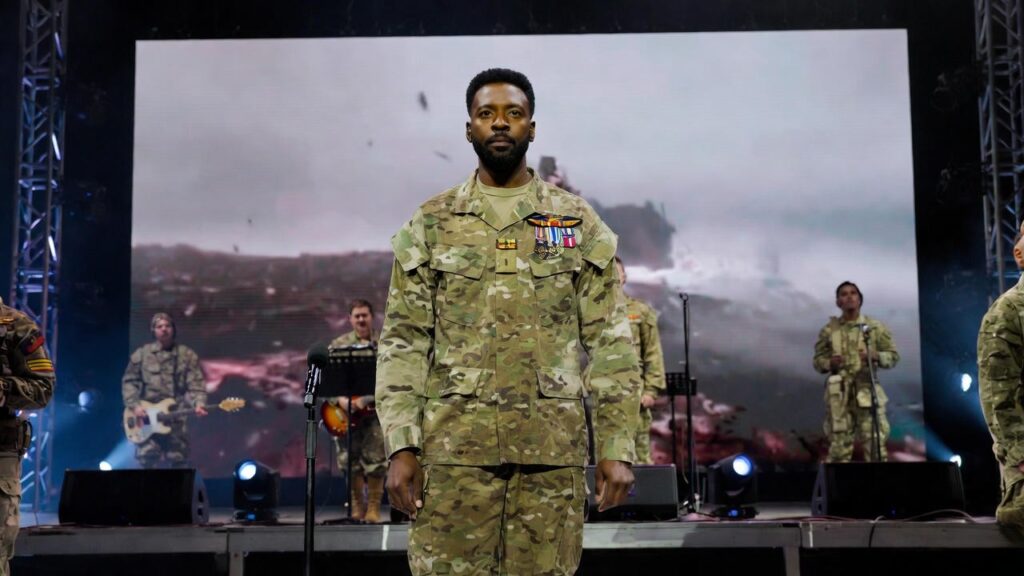
Hall’s production opened with a jolt of punk rebellion: actors in camouflage and ski masks mingled in the lobby before the show, establishing an atmosphere of impending unrest. The Chorus—traditionally a single voice—was distributed among the ensemble, who marched onstage singing The Clash’s “London Calling,” immediately signaling defiance and chaos. This choice set the tone for a production that viewed nationalism not as noble patriotism, but as a dangerous force capable of uniting people for destructive ends.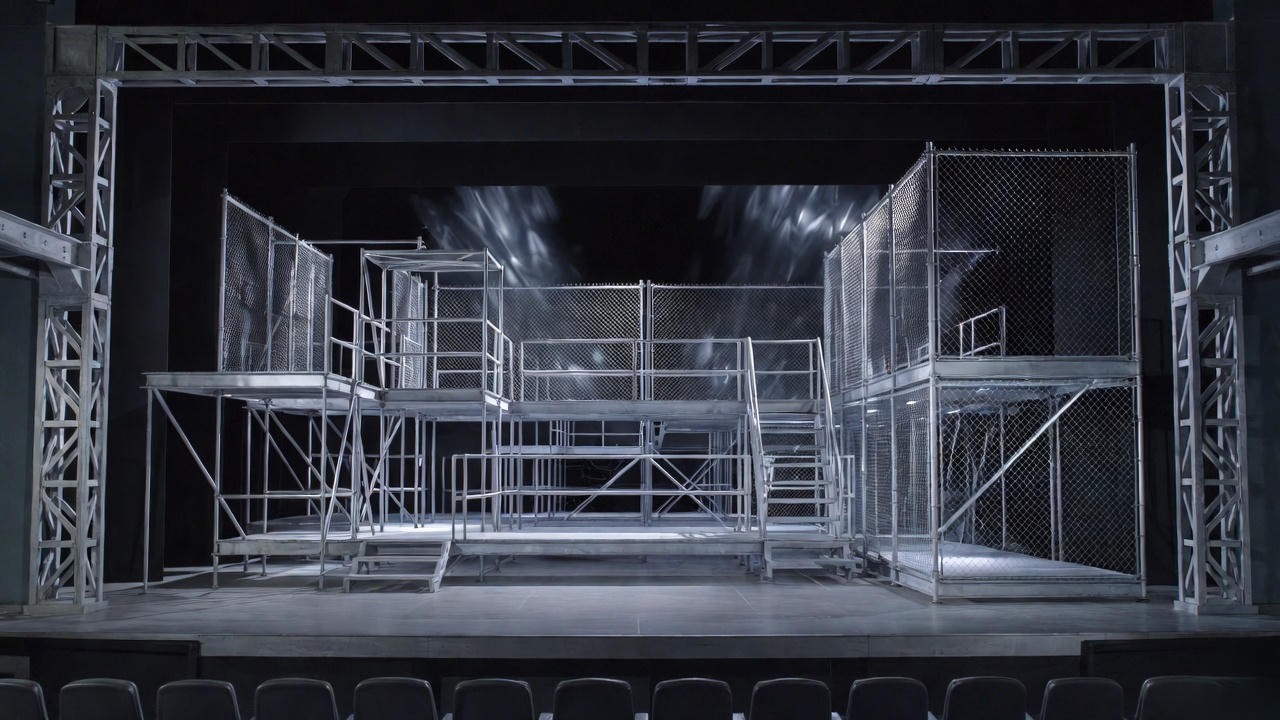
Critics widely noted the production’s timeliness, especially in the context of ongoing global conflicts and political polarization. Hall’s direction avoided heavy-handed allegory yet subtly evoked contemporary resonances—police-like imagery in crowd control scenes, the church’s complicity in justifying invasion, and the ego-driven decisions of leaders. His prior work, including the blood-soaked Rose Rage (an adaptation of the Henry VI trilogy) at Chicago Shakespeare in 2003, demonstrated his mastery of making Shakespeare’s histories feel visceral and immediate.
Cast and Key Performances
At the center stood Elijah Jones’s electrifying Henry V—a king who was charismatic, street-smart, and increasingly fevered under the weight of command. Jones, a Juilliard graduate making his Chicago debut, delivered the famous speeches with rhythmic intensity and emotional authenticity, occasionally infusing the courtship scene with subtle R&B cadence that humanized the conqueror.
The supporting ensemble was exceptionally strong, with several standout performances:
- Alejandra Escalante as the Dauphin, Henry’s arrogant French counterpart, brought sharp wit and disdainful elegance.
- Scott Aiello as Nym injected comic mischief into the Eastcheap crew.
- Kate Fry excelled in dual roles as Westmoreland and Alice (Princess Katherine’s attendant), displaying remarkable range.
- Sean Fortunato portrayed a dignified yet weary King of France.
- Jaylon Muchison’s Mountjoy served as a poised herald.
- The 14-member company—including Ronald L. Conner, Demetrios Troy, Rachel Crowl (as the Welsh captain Fluellen), and others—demonstrated seamless versatility through rapid multi-roling.
Reviewers consistently praised the ensemble’s unity, empathy, and physical precision, which lent credibility to both battlefield chaos and intimate moments.
Design Elements That Enhance the Themes
Michael Pavelka’s scenic and costume design transformed the Courtyard Theater into a stark military compound: steel-gray platforms, chain-link accents, camouflage fatigues, and combat boots grounded the action in a timeless yet contemporary war zone. Marcus Doshi’s lighting design employed intense strobing during battle sequences to simulate disorientation and trauma, while Jon Trenchard’s original music and sound design layered anthems such as “Johnny Comes Marching Home” with dissonant undertones. Emily Hayman’s sound work ensured that violence often occurred offstage, forcing the audience to confront its unseen cost—a classic Shakespearean technique amplified for modern effect.
Plot Summary Without Spoilers
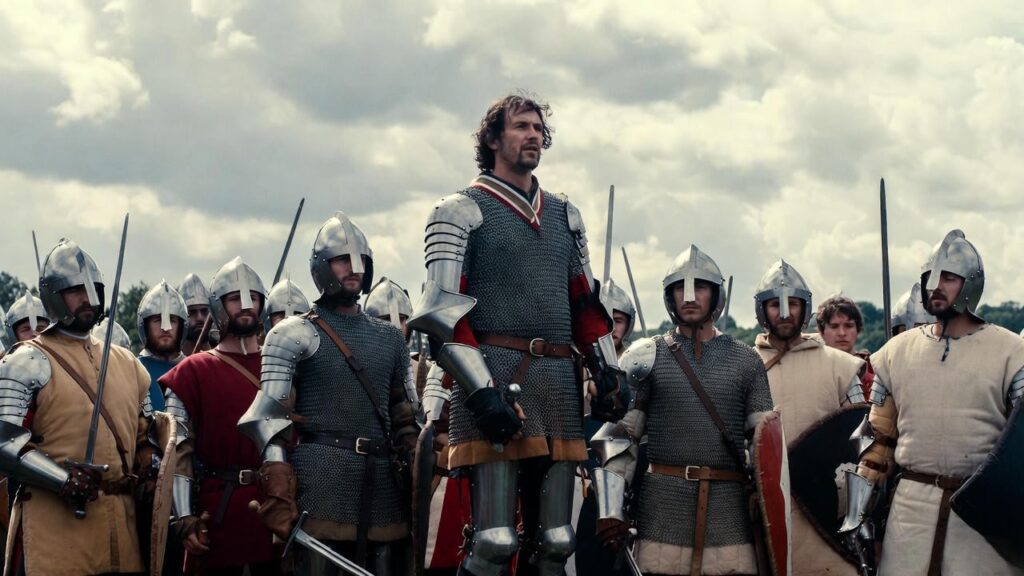
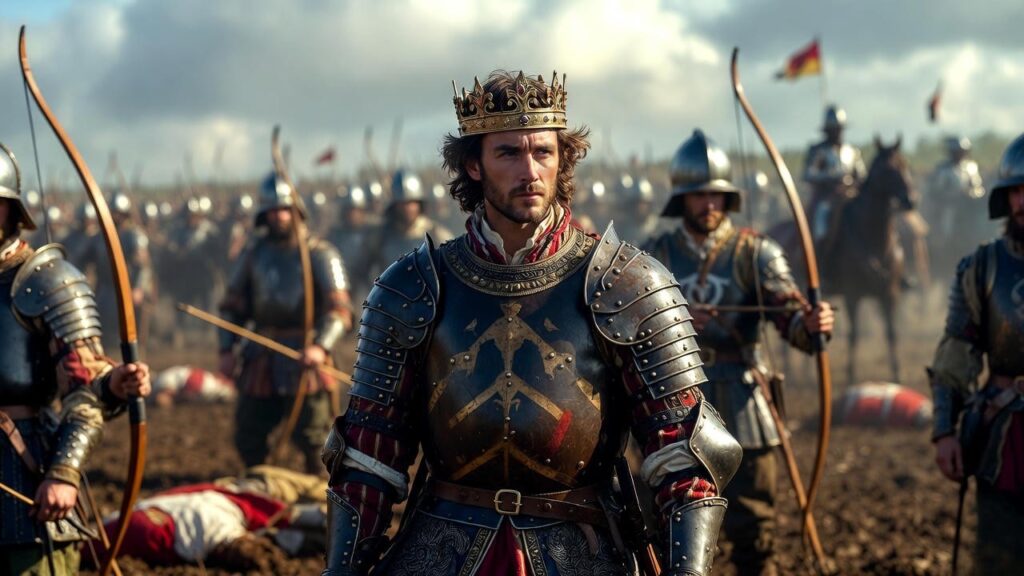
Henry V completes Shakespeare’s second tetralogy (the Henriad), tracing the transformation of the roguish Prince Hal from Henry IV into the formidable King Henry V. Upon inheriting the throne, Henry asserts a dubious claim to the French crown, advised by ambitious churchmen. What follows is an invasion of France, marked by political intrigue, betrayal among his own ranks, the famous siege of Harfleur, and the against-all-odds Battle of Agincourt.
The Chorus serves as narrator, repeatedly apologizing for the theater’s inadequacy in representing epic events while simultaneously inviting the audience’s imagination to fill the gaps. Hall honored this device through minimalist staging that relied on physicality, sound, and suggestion rather than elaborate spectacle.
Core Themes in Shakespeare’s Henry V
Far from a jingoistic celebration of English victory, Henry V is one of Shakespeare’s most ambiguous works—a play that simultaneously glorifies and critiques war, leadership, and national identity.
Leadership and the Burden of Kingship
Henry’s journey exemplifies transformative leadership: he rejects his former companions, executes former friends for treason, and inspires vastly outnumbered troops to victory. Yet Shakespeare complicates this heroism. In the famous night-before-Agincourt scene, Henry—disguised as a common soldier—debates the morality of a king’s wars with his men, concluding that “every subject’s duty is the king’s, but every subject’s soul is his own.” The burden of command isolates him profoundly.
The Seductive Horrors of War
The play alternates between rousing martial glory and sobering reflection. The St. Crispin’s Day speech (“We few, we happy few, we band of brothers”) is one of theater’s greatest motivational orations, yet it is framed by the Chorus’s reminders of the human toll and Henry’s own orders to kill prisoners—acts that unsettle any uncomplicated heroism. Nationalism binds soldiers together but blinds them to the hubris and manipulation driving conflict.
Power, Rhetoric, and Manipulation
Language is Henry’s most potent weapon. His speeches sway armies, justify questionable claims, and even woo a princess. Shakespeare exposes how rhetoric can mask self-interest: the opening scene reveals church leaders encouraging war to deflect a parliamentary threat to their wealth. Appearances versus reality permeate the play—Henry’s public persona versus his private doubts, the illusion of divine favor versus battlefield luck.
How the Chicago Shakespeare Production Brings Themes to Life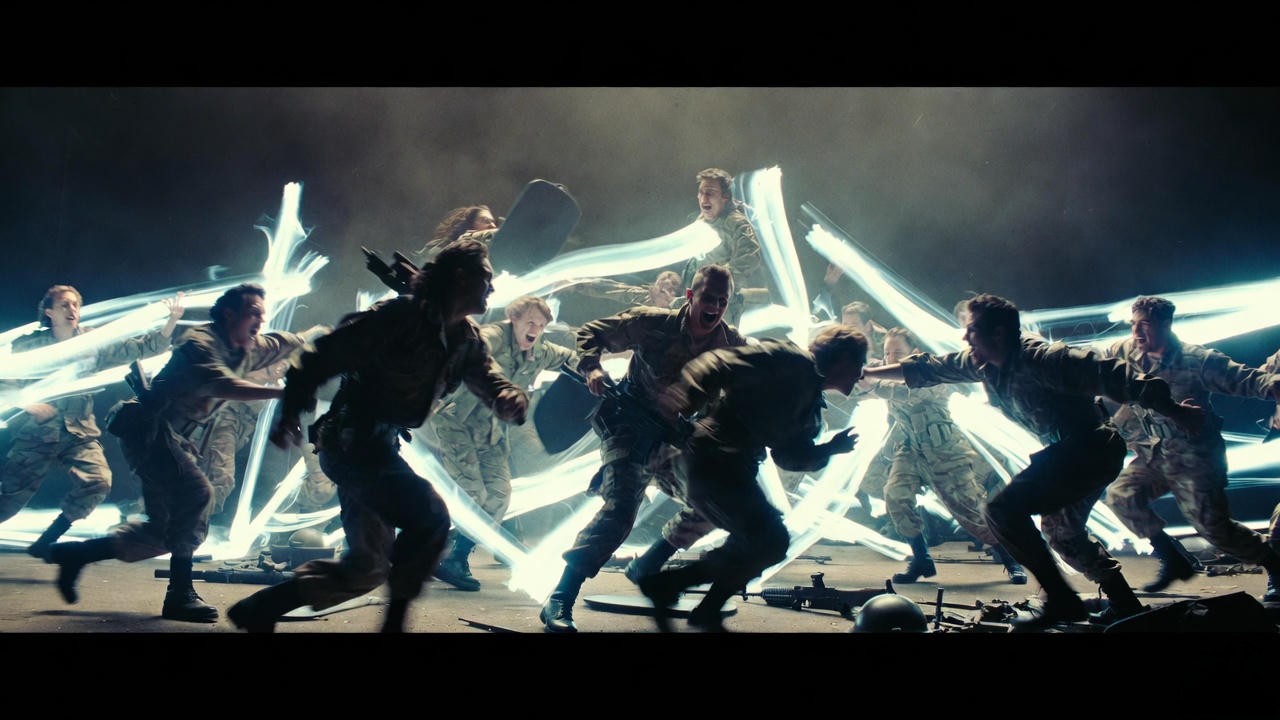
Hall’s direction leaned firmly into the play’s critical elements, presenting Henry as a compelling but flawed leader whose victories come at moral cost.
Modern Parallels and Directorial Interpretations
By dressing soldiers in contemporary military gear and using repetitive strobing to evoke shell shock, Hall drew implicit parallels to modern conflicts without forcing direct equivalencies. The production highlighted how leaders use foreign adventures to consolidate domestic power and how nationalism can seduce entire societies into supporting dubious causes.
Standout Moments and Symbolic Choices
The pre-show atmosphere and live intermission music created a sense of camaraderie that made the descent into violence more tragic. Battle sequences were chaotic and physical rather than balletic, emphasizing exhaustion and trauma. The final courtship scene between Henry and Princess Katherine (beautifully played with linguistic comedy) provided fleeting warmth, yet the ensuing peace treaty felt fragile—an armistice built on conquest rather than genuine reconciliation.
Critical Reception and Strengths/Weaknesses
The production earned strong praise across Chicago outlets:
- Third Coast Review called it “riveting and thought-provoking.”
- BroadwayWorld highlighted the “powerful ensemble” and “timely resonance.”
- The Chicago Sun-Times and Chicago Reader appreciated its anti-war stance and design.
Some reviewers noted minor limitations: the Chicago Tribune observed that Jones’s Henry remained somewhat fevered throughout, with limited visible emotional evolution, and that the common soldiers’ scenes occasionally lacked the depth afforded to the king. Nonetheless, consensus placed this among the strongest recent Shakespeare offerings at CST.
Shakespeare’s Timeless Insights: Why Henry V Still Matters
Written around 1599 amid England’s anxieties over Queen Elizabeth’s succession and wars in Ireland, Henry V draws on the real historical king’s victory at Agincourt in 1415. Yet Shakespeare’s version complicates the legend: the historical Henry was a seasoned warrior from youth, whereas Shakespeare’s transforms from prodigal prince—a dramatic arc that allows deeper exploration of maturation and moral compromise.
Today, the play speaks powerfully to:
- Leadership crises: How do leaders balance decisive action with ethical responsibility?
- The rhetoric of war: How do nations justify military intervention?
- Nationalism’s double edge: Unity versus division, pride versus xenophobia.
- The personal cost of power: Isolation, moral compromise, and the weight of decision-making.
Comparisons to other Shakespearean histories—Richard III‘s villainous ambition or Henry IV‘s fractured father-son relationships—reveal Henry V as the culmination of Shakespeare’s meditation on English kingship.
For readers seeking deeper engagement, consider:
- Viewing Kenneth Branagh’s 1989 film (gritty, anti-war) versus Laurence Olivier’s 1944 version (wartime propaganda).
- Reading scholarly works such as Norman Rabkin’s “Either/Or: Responding to Henry V” on the play’s deliberate ambiguity.
- Exploring the full Henriad in sequence for richest context.
Expert Insights and Further Reading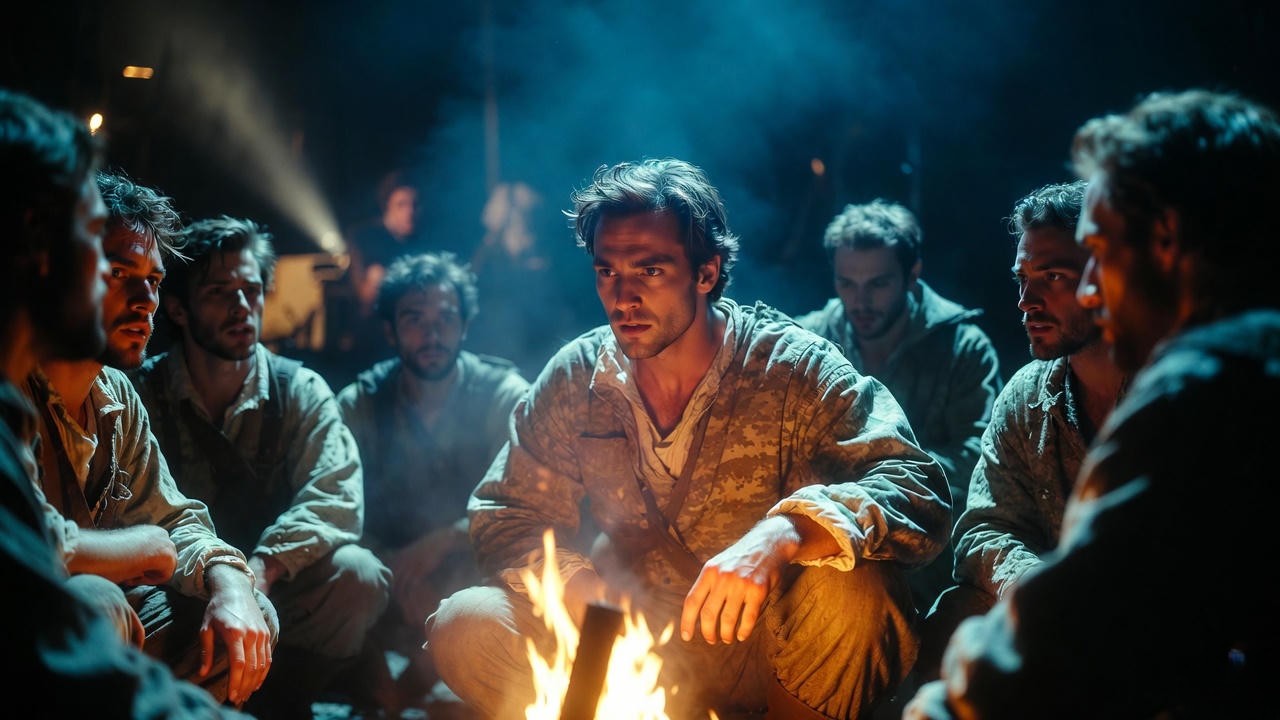
As a Shakespeare specialist with decades studying and teaching the histories, I find Henry V uniquely resistant to simple interpretation. It invites audiences to hold contradictory responses simultaneously: admiration for Henry’s charisma and unease at his methods. Edward Hall’s production honored this complexity by refusing to resolve the ambiguity—presenting a Henry we could cheer and question in equal measure.
Recommended resources:
- Shakespeare’s Kings by John Julius Norwich (historical context).
- The Henriad editions with extensive commentary (Folger, Arden, or Oxford).
- Audio recordings of the St. Crispin’s Day and “Once more unto the breach” speeches for appreciation of rhetorical mastery.
FAQs
What are the main themes in Henry V? Leadership and responsibility, the morality of war, nationalism, rhetoric as power, and the tension between public image and private conscience.
Was Chicago Shakespeare’s 2024 production worth seeing? Yes—critics and audiences widely praised its energy, timeliness, strong ensemble, and thoughtful anti-war perspective.
How does Edward Hall’s direction differ from traditional stagings? Hall emphasized contemporary military aesthetics, punk music, and the play’s critical elements over celebratory patriotism, presenting a darker, more ambiguous Henry.
What is the St. Crispin’s Day speech and why is it famous? Henry’s motivational address to his outnumbered troops on October 25 (St. Crispin’s Day), promising eternal brotherhood and glory. It is one of the most quoted and admired speeches in English literature for its rhetorical power.
How does Henry V portray war—glorifying or criticizing? Both. It delivers thrilling battle rhetoric while subtly exposing war’s human cost, leaders’ manipulation, and moral compromises.
What are the key differences between Shakespeare’s Henry V and the historical figure? Shakespeare invented Henry’s wild youth and reformation; the real Henry was pious and militarily experienced from adolescence. Shakespeare also dramatized events and speeches for thematic effect.
Edward Hall’s 2024 Henry V at Chicago Shakespeare Theater succeeded brilliantly in illuminating Shakespeare’s profound insights into power, leadership, and the enduring seduction of war. By blending visceral staging, contemporary resonance, and faithful attention to the text’s ambiguities, the production reminded us why this play remains essential viewing and study centuries later.
Whether you are a longtime Shakespeare devotee, a student grappling with the histories, or simply someone reflecting on leadership and ethics in turbulent times, Henry V challenges us to examine the cost of greatness. Great power demands great moral reckoning—a lesson as vital today as it was in 1599.