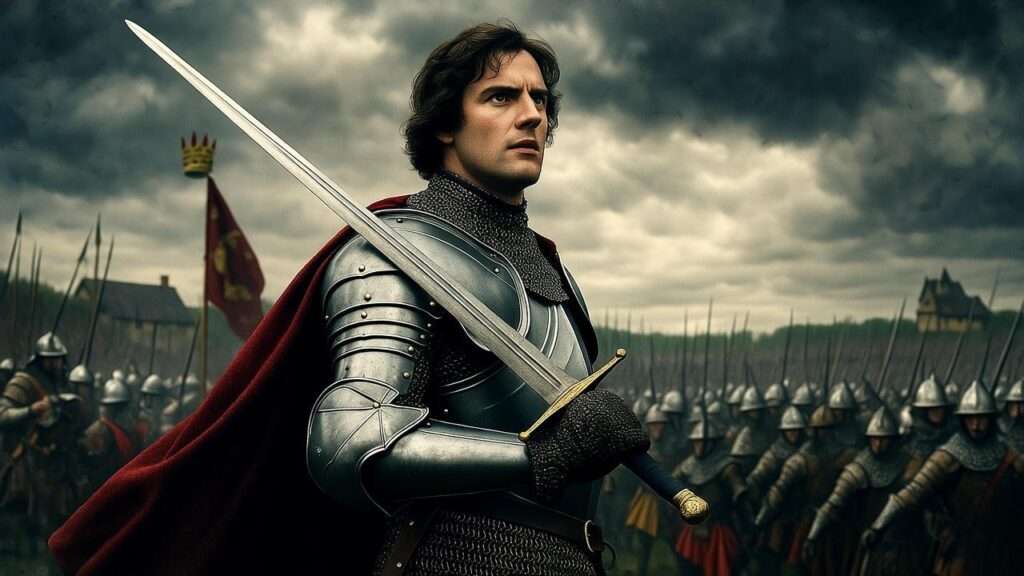
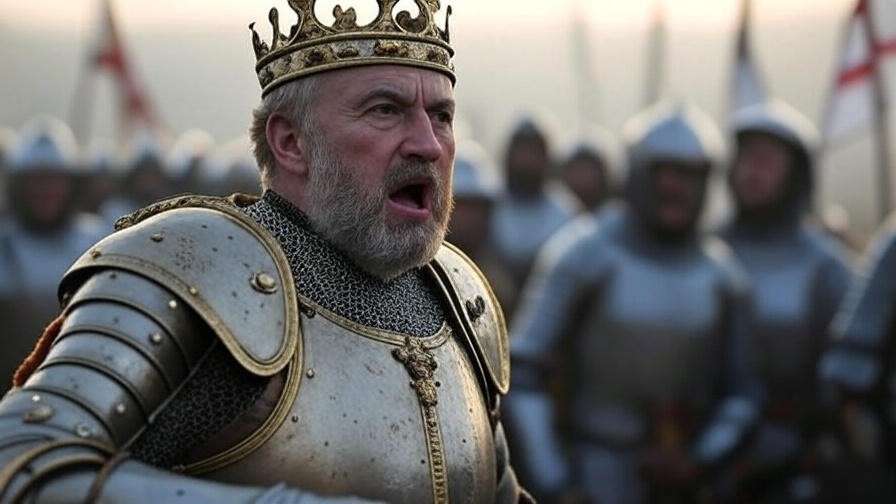
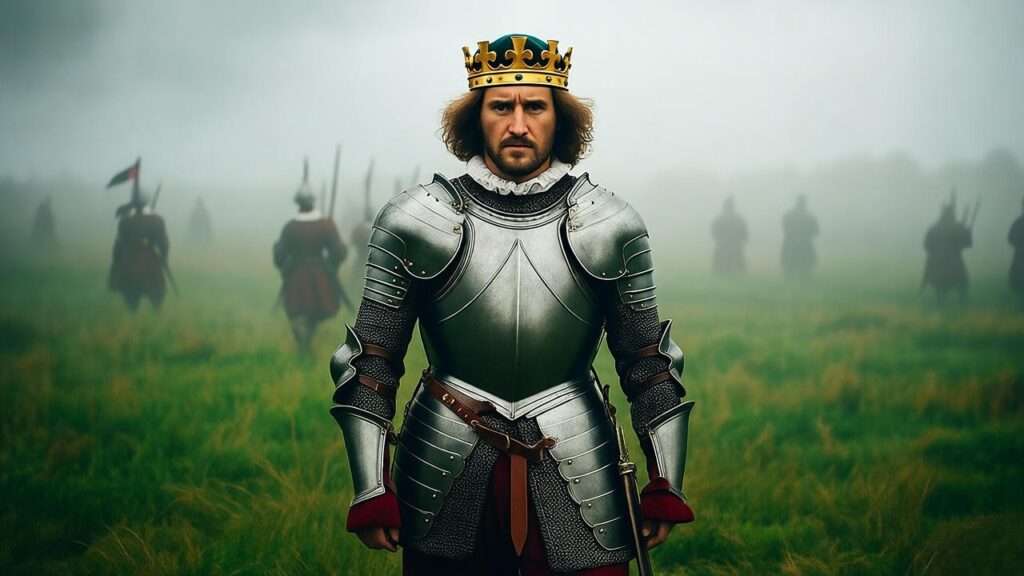
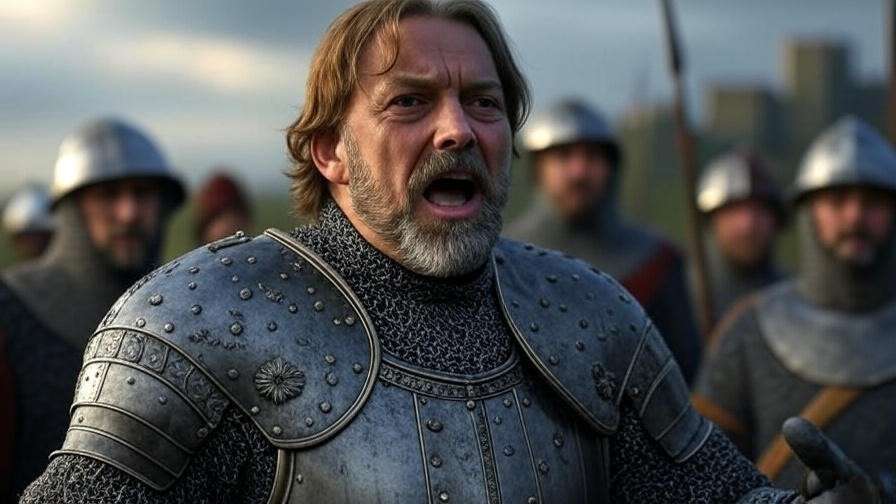
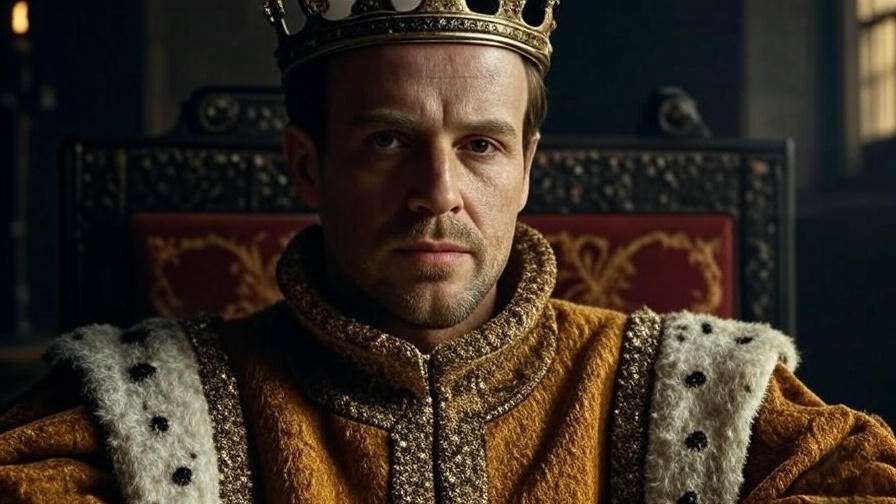
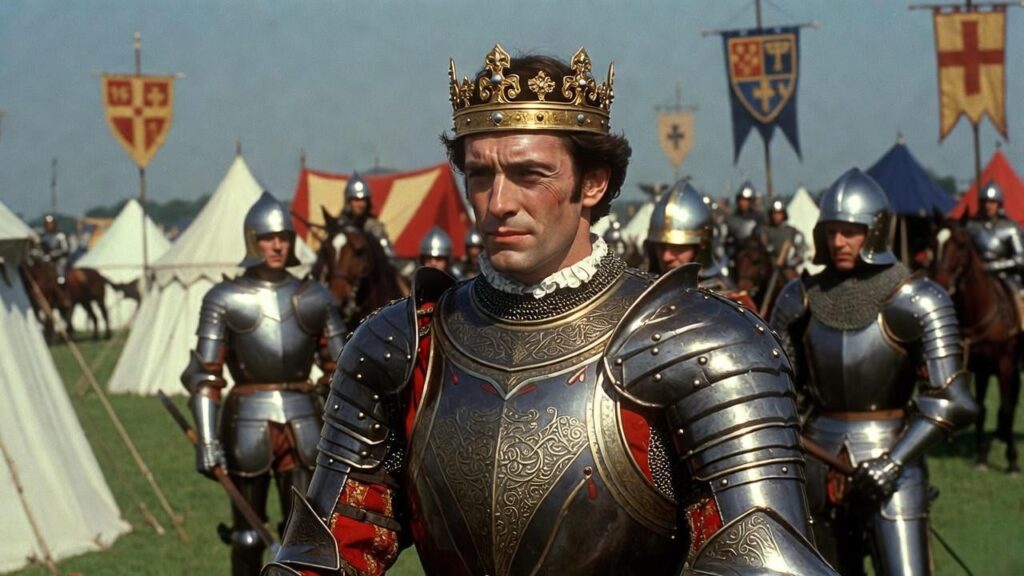
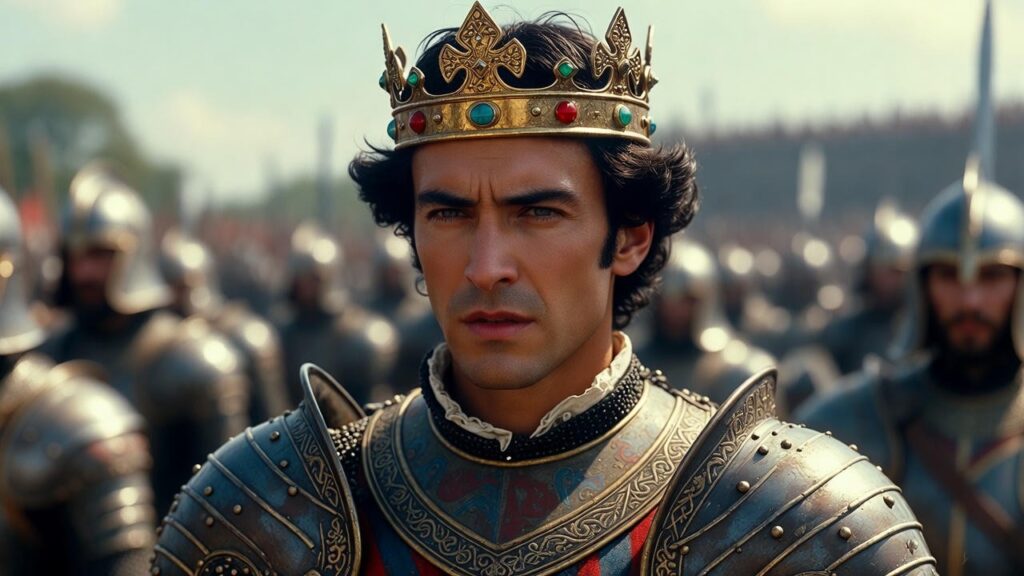
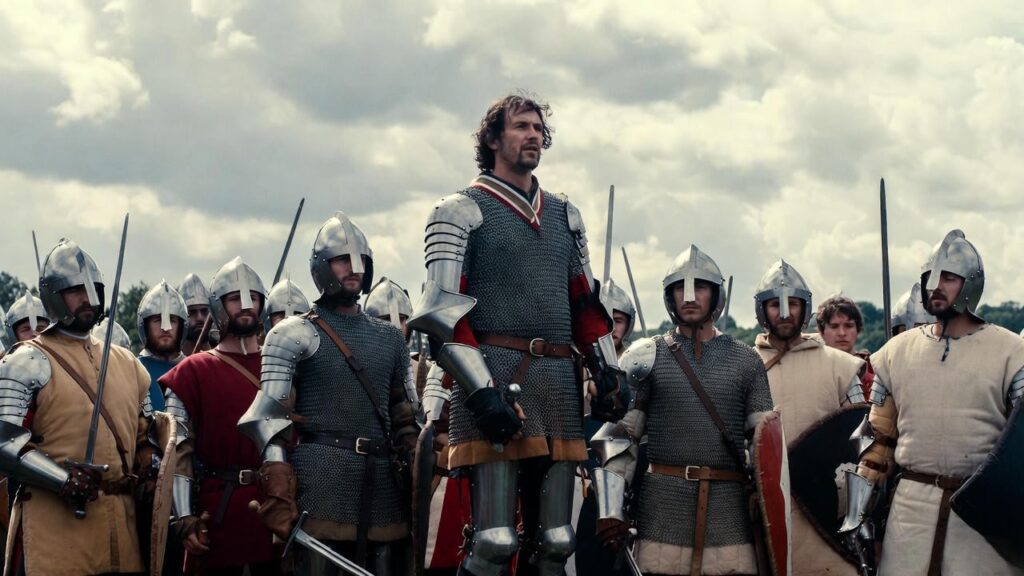
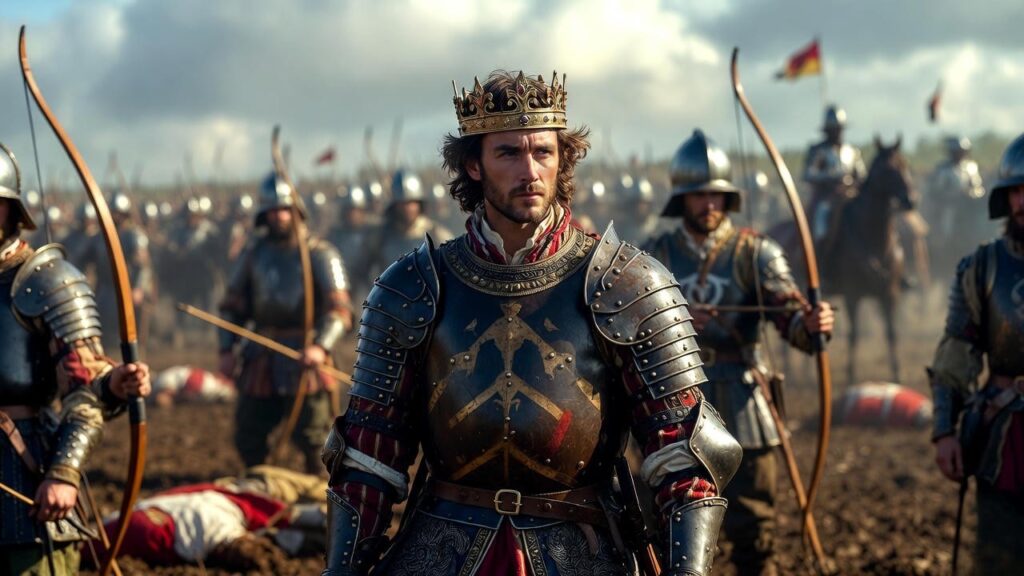
Imagine the roar of thousands of rain-soaked English archers unleashing a storm of arrows on a muddy field in northern France. A young king, battle-worn armor gleaming under fleeting sunlight, stands among his exhausted troops and delivers words that rally them to impossible victory. This is the immortal scene from William Shakespeare’s Henry V—the charismatic, reformed rogue turned divine warrior, inspiring his “band of brothers” before the Battle of Agincourt.
But what if the real Henry V was not the tavern-haunting Prince Hal of legend? What if he was a far more consistent, disciplined, and formidable figure from youth onward—one shaped by brutal apprenticeships in war and governance long before the crown? Dan Jones’s 2024 biography, Henry V: The Astonishing Triumph of England’s Greatest Warrior King, peels back the layers of Shakespearean drama to reveal a sober, pious, strategically ruthless medieval monarch whose achievements reshaped England and France.
For Shakespeare enthusiasts and history lovers alike, this contrast creates a fascinating puzzle: How much of the play’s heroism is myth, and how does the historical truth enhance our appreciation of the Bard’s genius? In this comprehensive exploration, we separate fact from fiction, drawing on primary chronicles, Jones’s meticulous research, and Shakespeare’s own dramatic craft. By the end, you’ll not only understand the real Henry V but also see why Shakespeare’s version endures as timeless theater—while Jones’s portrait offers a more grounded, complex view of leadership in crisis.
Who Was the Historical Henry V? A Brief Overview
Henry V (1386–1422) ruled England for just nine years and four months, yet his brief reign stands as a pinnacle of medieval kingship. Born Henry of Monmouth in a Wales still scarred by rebellion, he grew up amid the fallout of his father’s usurpation of Richard II’s throne in 1399. This Lancastrian dynasty was fragile, built on deposition and murder, and Henry inherited a kingdom fractured by factionalism, economic strain, and border threats.
Early Life and Apprenticeship as Prince Hal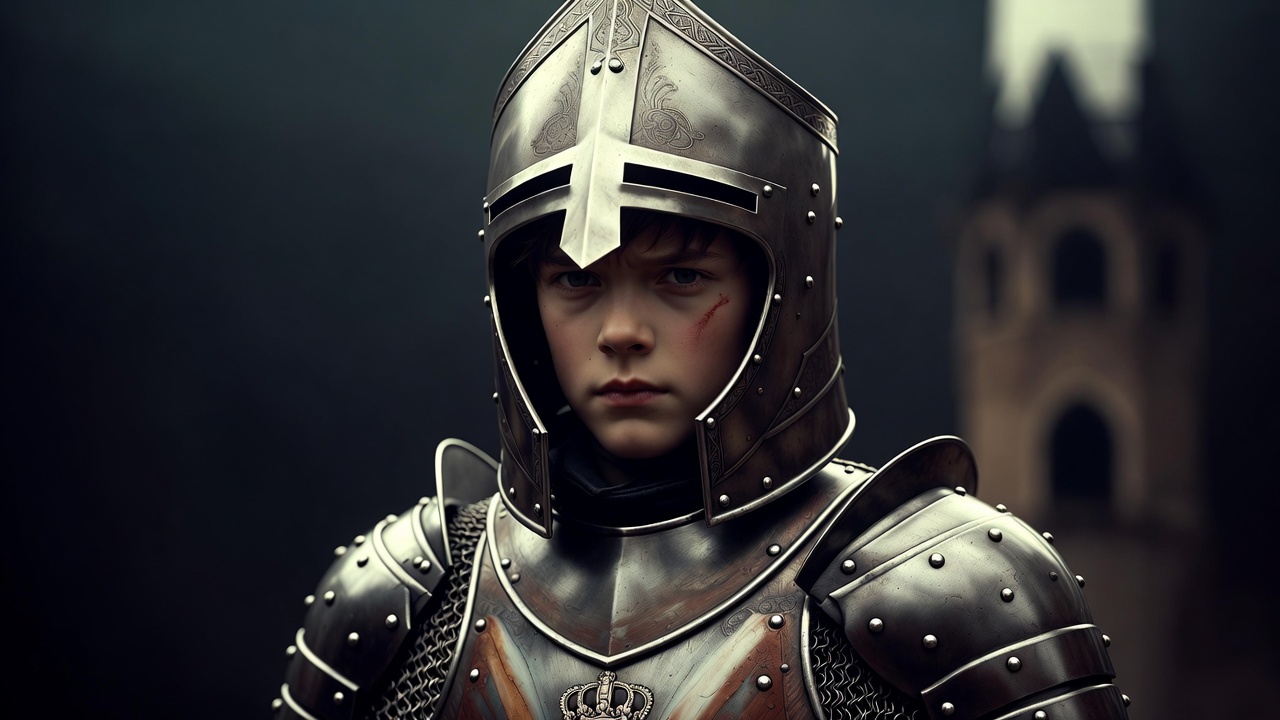
Shakespeare paints Prince Hal as a wayward youth carousing in Eastcheap taverns with Falstaff, only to reject folly upon kingship. Dan Jones dismantles this myth decisively. From age 13, Henry served as his father’s deputy in Wales, suppressing Owain Glyndŵr’s revolt with harsh efficiency. At 14, he ordered the execution of Welsh prisoners—a grim but pragmatic act in a brutal campaign.
By 16, at the Battle of Shrewsbury (1403), Henry suffered a near-fatal arrow wound to the face, the iron head lodged six inches deep near his skull. Surgeon John Bradmore’s innovative extraction—using a custom tool and honeyed ointment—saved him, leaving a scar that marked his resilience. Far from the dissolute prince, historical records show a diligent heir: politically active, administratively sharp, and militarily seasoned. Jones devotes nearly half his book to this “apprenticeship,” emphasizing continuity in Henry’s character—he was always the capable leader, not a reformed one.
Ascension to the Throne and Immediate Challenges
Henry became king in 1413 at age 26, inheriting a realm on the brink. Public finances were in ruins, rebellions simmered, and religious tensions (Lollardy) threatened unity. He moved swiftly: pardoning former enemies to build consensus, reforming administration, and projecting piety through pilgrimages and church support. His coronation emphasized legitimacy, erasing the stain of his father’s coup.
The Short but Spectacular Reign (1413–1422)
In nine whirlwind years, Henry revitalized England. He crushed domestic threats, secured borders, and launched the Hundred Years’ War renewal—claiming the French throne via Edward III’s lineage. Victories culminated in Agincourt (1415) and the Treaty of Troyes (1420), making him heir to France and marrying Catherine of Valois. He died at 35 from dysentery during a siege, leaving an infant son and a legacy contemporaries hailed as the “English Alexander.”
Shakespeare’s Henry V: The Mythic Hero We All Know
Shakespeare’s Henry V (1599) crowns the Henriad tetralogy, transforming history into stirring national epic. The play focuses on the king’s French campaign, emphasizing redemption and divine favor.
The Transformation Arc in the Henriad
In Henry IV Parts 1 & 2, Prince Hal idles with lowlifes, plotting his “reformation” to dazzle the realm. Upon ascension, he rejects Falstaff (“I know thee not, old man”) and becomes the inspirational leader. The play Henry V delivers iconic moments: the tennis balls insult, the siege of Harfleur (“Once more unto the breach”), and St. Crispin’s Day speech (“We few, we happy few, we band of brothers”).
Shakespeare’s Dramatic License and Purpose
Writing under Tudor patronage, Shakespeare amplified propaganda. The real Henry was pious and dutiful from youth; Shakespeare invents the misspent youth for dramatic contrast, creating a compelling arc of folly to virtue. This served Elizabethan audiences: unifying a nation post-Armada, celebrating English valor against France.
The play compresses events, heightens rhetoric, and adds humor (Pistol, Fluellen), prioritizing theater over chronicle accuracy.
Enduring Cultural Impact
From Laurence Olivier’s wartime film (1944) to Kenneth Branagh’s gritty 1989 version, Shakespeare’s Henry inspires leadership ideals. Yet this mythic lens often overshadows the historical man.
Dan Jones’s Biography: A Fresh, Unflinching Look
Dan Jones, bestselling author of The Plantagenets and The Hollow Crown, waited years to tackle his “white whale.” Written in vivid present tense (“Henry fights. He prays. He plans.”), the book immerses readers in real time.
Jones’s Approach and Unique Strengths
Jones draws on primary sources—chronicles (Adam of Usk, Walsingham), letters, and records—to build a balanced portrait. He avoids hagiography, acknowledging Henry’s ruthlessness while admiring his genius. Half the narrative covers pre-kingship years, showing a consistent leader.
Key Revelations About the Real Henry V
- No Rogue Youth: Chroniclers attribute tavern tales to brothers Thomas and John; Henry was sober, artistic (loving music, books), and pious—described as a “warrior monk.”
- Deep Faith and Humility: He credited God for victories, undertook pilgrimages, and showed mercy selectively.
- Ruthless Pragmatism: From Welsh executions to Agincourt prisoner killings (a calculated act amid false alarms), Henry prioritized victory.
- Creative Side: A bookish king who valued learning alongside warfare.
Why Jones Calls Him England’s Greatest Warrior King
Beyond Agincourt, Henry conquered Normandy, became French regent/heir, and unified a fractured realm. Jones compares him to Alexander for ambition and execution, calling him the “acme of kingship.”
Head-to-Head: Major Differences Between Shakespeare and Dan Jones
To truly appreciate both the play and the biography, a direct comparison is essential. Shakespeare crafted a theatrical masterpiece; Dan Jones reconstructs a historical life with forensic precision. Below is a structured breakdown of the most significant divergences:
- Prince Hal’s Youth and Character Shakespeare: A deliberate wastrel who spends his time drinking, plotting, and consorting with lowlifes in the Boar’s Head Tavern. His famous soliloquy in Henry IV, Part 1 (“I know you all…”) reveals this as a calculated act—he is “imitating the sun” to make his eventual reformation shine brighter. Dan Jones: No credible contemporary evidence supports the image of a dissolute prince. Chroniclers such as Thomas Walsingham and the Dieulacres Chronicle describe a serious, hardworking heir who was politically and militarily active from his early teens. Jones argues that stories of youthful excess likely originated with Henry’s younger brothers (Thomas and John) and were later projected onto him by Tudor-era chroniclers and dramatists seeking a redemptive arc.
- Personality and Leadership Style Shakespeare: Charismatic, rhetorically brilliant, emotionally expressive. He delivers soaring speeches that unite disparate social classes and inspire near-miraculous victories. His leadership is performative and inspirational. Dan Jones: Methodical, pious, disciplined, and quietly ruthless. Jones emphasizes Henry’s administrative competence, deep religious devotion (daily masses, pilgrimages, generous church patronage), and a preference for calculated strategy over theatrical flair. The real king was more “warrior monk” than showman—crediting God and his men for successes rather than claiming personal glory.
- The Battle of Agincourt (1415) Shakespeare: The climactic moment. The famous St. Crispin’s Day speech transforms a desperate, outnumbered army into a band of brothers ready to fight for honor and memory. Henry’s words are poetic, egalitarian, and emotionally charged. Dan Jones: Agincourt remains a stunning tactical triumph, but Jones places it in a longer campaign context. The real pre-battle address (reconstructed from chroniclers) was far more pragmatic: Henry reminded his men of their duty, the justice of their cause, and the rewards of victory. No evidence exists for the “band of brothers” phrasing or the sweeping promise of shared glory. The king’s leadership relied on discipline, logistics, and archer dominance rather than purely inspirational oratory.
- Treatment of Falstaff and Rejection Scene Shakespeare: One of the most heartbreaking moments in English drama—Henry publicly disowns his old companion (“I know thee not, old man”) to demonstrate his transformation into a responsible monarch. Dan Jones: No historical Falstaff existed, and no equivalent rejection scene is recorded. Henry maintained lifelong relationships with trusted retainers from his youth. The scene is pure Shakespearean invention, designed to underscore the cost of kingship and the necessity of shedding youthful folly.
- Overall Portrayal and Moral Framing Shakespeare: A heroic redemption narrative that celebrates English exceptionalism, divine right, and national unity. The play functions as Tudor propaganda. Dan Jones: A more morally complex figure—brilliant, pious, and effective, yet capable of calculated brutality (mass executions of prisoners at Agincourt, harsh treatment of French civilians, destruction of Caen). Jones admires Henry’s achievements without sanitizing the medieval realities of conquest and power.
These differences do not diminish Shakespeare; they highlight his genius. He took a remarkable but not mythic historical figure and transformed him into an archetype of leadership and national identity.
Leadership Lessons from the Real Henry V (for Modern Readers)
Even stripped of Shakespeare’s poetic grandeur, the historical Henry V offers timeless lessons in crisis leadership, especially relevant in an era of political division, economic strain, and international tension.
- Mastery of Preparation and Apprenticeship Henry did not suddenly become competent upon taking the throne—he had spent over a decade learning governance, warfare, and diplomacy under intense pressure. Modern takeaway: True excellence rarely arrives overnight; sustained preparation and real-world experience build lasting capability.
- Unifying a Fractured Realm Upon accession, Henry deliberately pardoned former enemies, projected piety to win over the church, and built consensus across factions. He understood that legitimacy and unity are prerequisites for ambitious projects. In today’s polarized environments, this deliberate coalition-building remains a powerful model.
- Inspirational Discipline Over Theatrical Charisma While Shakespeare gives us soaring speeches, the real Henry motivated through example, logistical excellence, and consistent justice. His men followed him because they trusted his competence and piety—not because he was the most eloquent speaker on the battlefield.
- Strategic Ruthlessness Balanced with Mercy Henry was capable of terrible acts (executions, sieges, prisoner killings), yet he also showed selective clemency and generosity toward loyal subjects. He understood when severity preserved order and when mercy secured loyalty—a difficult but essential balance for any leader facing existential threats.
- Long-Term Vision Over Short-Term Glory Agincourt was spectacular, but Henry’s greater achievement was the Treaty of Troyes and his marriage alliance—securing the French crown for his line. Modern leaders often chase viral moments; Henry prioritized structural, generational gains.
These lessons are not endorsements of medieval brutality—they are observations of what worked in an extraordinarily challenging context.
Why This Biography Matters to Shakespeare Fans
For readers who first fell in love with Henry through Shakespeare’s words, Dan Jones’s book is not a debunking—it is an enrichment. Understanding the historical figure illuminates the playwright’s craft: how he compressed decades of competence into a single dramatic arc, how he amplified rhetoric to create national myth, and how he used selective fiction to explore universal questions of power, responsibility, and identity.
Jones’s biography answers questions Shakespeare leaves open: Was Henry truly “great”? How much of his success depended on divine favor versus human strategy? Was his piety genuine or performative? The answers deepen appreciation of both the man and the myth.
If you love the Henriad, pair Shakespeare’s text with Jones’s biography. Read the play for its poetry and drama; read Jones for context, nuance, and a fuller portrait of one of England’s most extraordinary kings.
Key Takeaways and Final Thoughts
Dan Jones restores Henry V to his proper stature: not a reformed playboy, but a formidable, pious, strategically brilliant monarch who rose from a precarious childhood to become the architect of England’s greatest late-medieval triumph. Shakespeare gave us the mythic hero we still quote and admire; Jones gives us the real warrior king—more consistent, more complex, and in many ways more astonishing.
Both versions matter. Shakespeare’s Henry inspires us with ideals of leadership and national spirit. Jones’s Henry reminds us that greatness is built through relentless preparation, disciplined execution, and hard choices in impossible circumstances.
For Shakespeare lovers seeking historical depth, Henry V by Dan Jones is essential reading. It does not replace the play—it completes it.
FAQs
How accurate is Shakespeare’s Henry V compared to history? Shakespeare prioritizes drama and Tudor propaganda over strict accuracy. He invents the dissolute youth, compresses timelines, and heightens rhetoric, but many core events (Agincourt, the tennis balls, the marriage to Catherine) are rooted in fact.
What makes Dan Jones’s book different from other Henry V biographies? Its immersive present-tense narrative, extensive use of primary sources, and equal attention to Henry’s pre-kingship years set it apart. Jones balances admiration with unflinching acknowledgment of brutality, avoiding both hagiography and cynicism.
Did the real Henry V have a “band of brothers” moment? No direct equivalent exists. His leadership relied more on discipline, logistics, and shared purpose than on egalitarian rhetoric.
Is Henry V worth reading if I love Shakespeare’s play? Absolutely. It enriches the play by showing what Shakespeare transformed and why—turning a remarkable but human king into an enduring archetype.
Where can I buy Dan Jones’s Henry V? Available in hardcover, audiobook, and e-book from major retailers including Amazon, Barnes & Noble, Bookshop.org, and directly from the publisher (Viking/Penguin Random House).