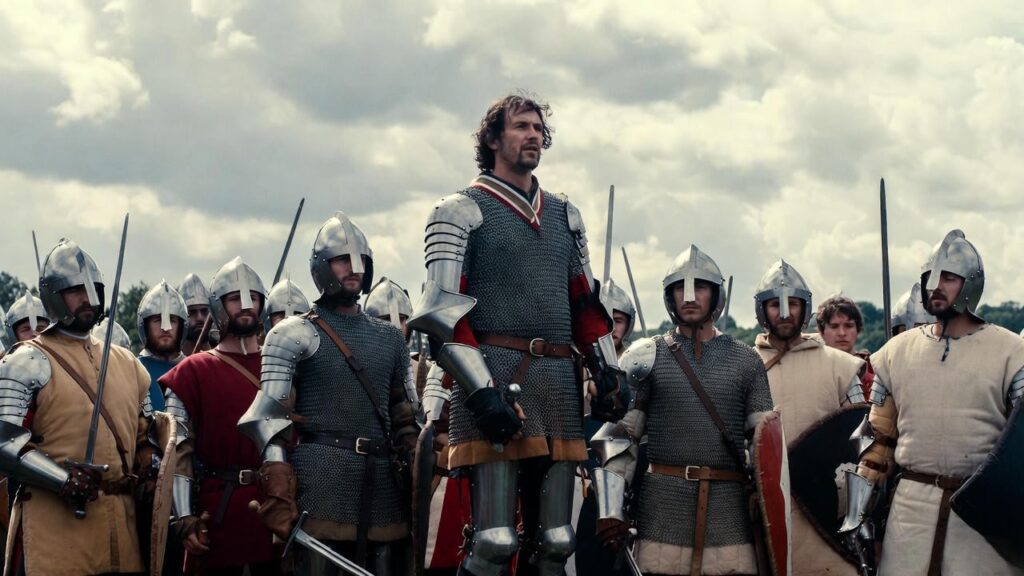
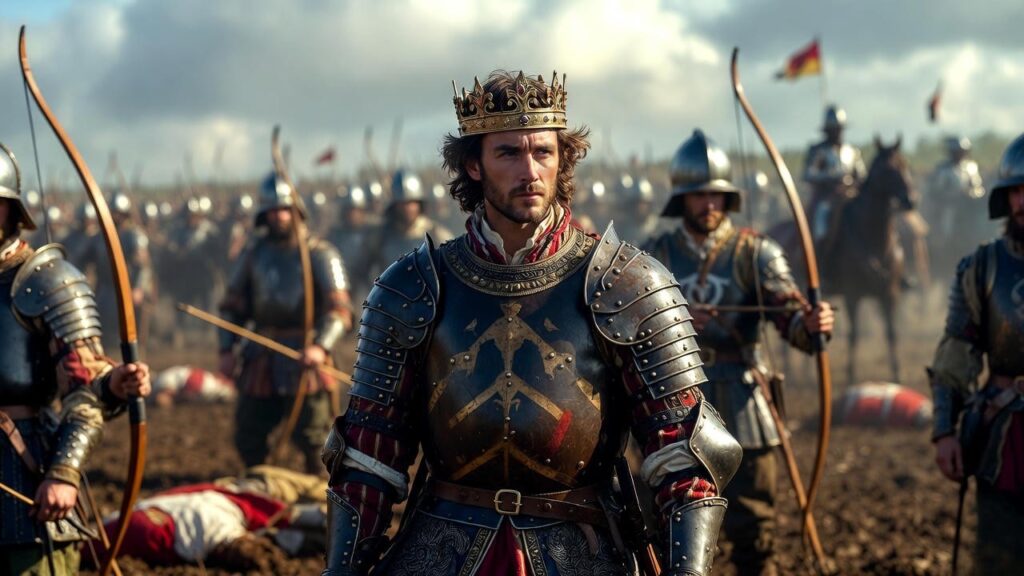
“Once more unto the breach, dear friends, once more…” These iconic words from William Shakespeare’s Henry V have echoed through centuries, capturing the raw thrill of leadership in crisis and the brutal cost of war. In the fall of 2024, Chicago Shakespeare Theater (CST) brought this rallying cry to vivid life under the direction of its new Artistic Director, Edward Hall. The production of Henry V Chicago Shakespeare Theater marked a bold debut for Hall, transforming Shakespeare’s history play into an immersive, contemporary exploration of youthful ambition, the seductive power of nationalism, and the horrors that follow unchecked conflict.
Whether you’re a longtime Shakespeare devotee revisiting the Henriad, a theater enthusiast in the Chicago area seeking insightful reviews and analysis, or someone drawn to timeless themes of leadership amid modern global tensions, this production offered fresh urgency. Hall’s staging—running from September 6 to October 6, 2024, in the Courtyard Theater at Navy Pier—didn’t merely recount the English victory at Agincourt. It dissected the duality of war: its capacity to unite and inspire, and its inevitable trail of destruction, doubt, and moral ambiguity.
As experts at williamshakespeareinsights, we’ve analyzed Shakespeare’s texts alongside major productions worldwide. Drawing from primary sources, historical context, and critical reception from outlets like the Chicago Tribune, Chicago Sun-Times, Chicago Reader, and more, this in-depth guide provides comprehensive insights into Hall’s vision. You’ll discover why this rendition stands out, how it resonates today, and what deeper lessons it holds about power, patriotism, and humanity—offering more substance than standard reviews or plot summaries.
Overview of the Production – Edward Hall’s Vision at Chicago Shakespeare Theater
Edward Hall’s appointment as Artistic Director in 2023 signaled a new chapter for Chicago Shakespeare Theater, a venue long celebrated for its innovative, ensemble-driven interpretations of the Bard. Choosing Henry V—the very play that inaugurated CST in 1986—as his first self-directed production was symbolic: a declaration of intent to blend classical rigor with modern relevance.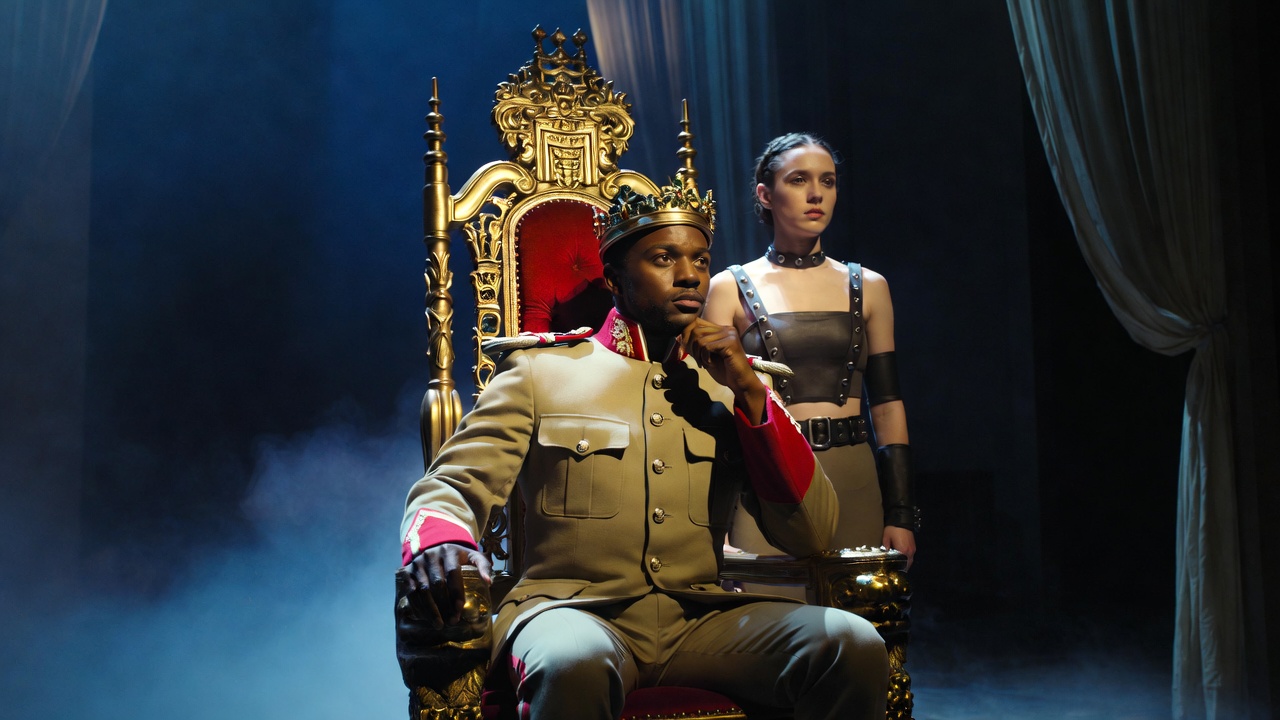
Hall, known for his work with Propeller Shakespeare and acclaimed stagings like Richard III, brought an immersive, actor-centric approach. He emphasized the play’s exploration of language as a weapon and tool for transformation, noting in his director’s notes how Henry uses rhetoric to rally disparate troops while grappling with his own inexperience.
Edward Hall’s Debut as Artistic Director – A Bold Choice
Hall’s direction avoided straightforward heroism, instead highlighting the play’s ambiguities. He described nationalism as a force that “can sometimes bind us together, but the side effect of nationalistic energy can also result in brutal, cruel, and deeply destructive wars.” This perspective framed the production amid contemporary conflicts, evoking parallels to ongoing wars without overt didacticism.
The result was a fluid, mostly engaging staging that used the Courtyard Theater’s thrust configuration to blur boundaries between audience and action—actors spilled into aisles, creating intimacy and unease.
Key Production Details
- Run: September 6 – October 6, 2024, in the Jentes Family Courtyard Theater at Navy Pier.
- Cast Highlights: Elijah Jones made a commanding CST debut as Henry V, praised for his charisma, powerful voice, and range—from vulnerable introspection to authoritative command. Jones, a recent Juilliard graduate, brought youthful earnestness to the role, evolving from an eager leader to a war-weary hero.
- Ensemble: A versatile company including Scott Aiello, Donté Bonner, Ronald L. Conner, Kate Fry, Sean Fortunato, Gregory Linington, Jaylon Muchison, Adam Poss, and others handled multiple roles—from chorus members to soldiers, nobles, and clerics. Standouts included Kate Fry’s comic yet poignant turns and the ensemble’s choral work.
- Creative Team: Scenic and costume design by Michael Pavelka featured modern military fatigues, punk-inspired elements for the chorus, and an immersive set. Lighting by Marcus Doshi created pulsing battle atmospheres with strobing effects; sound and fight direction amplified intensity.
Innovative Staging Elements
Hall reimagined the chorus as anarchic, riff-raffish figures—starting with pre-show lobby presence and punk anthems like nods to “London Calling” by The Clash. This set a disquieting tone: Were they menacing or protective? The ambiguity mirrored the play’s themes.
Battles were visceral, using fight intimacy techniques (directed by Rachel Flesher) with baseball bats on punching bags for symbolic violence—no direct contact, yet raw energy. Music, lighting, and ensemble movement made the production feel explosive and contemporary.
Shakespeare’s Henry V – Plot Summary and Key Moments
Shakespeare’s Henry V (c. 1599) chronicles the young king’s 1415 campaign against France, blending heroism with sobering realism. The play opens with the Chorus inviting the audience to imagine vast battlefields, then dives into Henry’s court.
After the Dauphin’s mocking gift of tennis balls insults him, Henry claims the French throne, invading amid clerical support motivated by self-interest. Key moments include:
- The siege of Harfleur: Henry’s rousing “Once more unto the breach” speech motivates exhausted troops.
- The hanging of Bardolph: Henry enforces discipline, even against old friends.
- St. Crispin’s Day speech: The famous “band of brothers” oration unites outnumbered English forces before Agincourt.
- Victory at Agincourt: Miraculous triumph despite odds.
- Wooing of Princess Katherine: A lighter, comedic close amid conquest.
The play’s genius lies in its tonal shifts—glorious rhetoric juxtaposed with soldierly doubts, camp followers’ cynicism, and the human cost of war.
Deep Dive into Timeless Themes – Leadership, War, and Nationalism
At its core, Henry V interrogates what makes an effective leader and the price of glory.
The Duality of Leadership – Henry’s Transformation
Henry evolves from perceived youthful folly (echoing his Hal persona in Henry IV) to decisive ruler. Hall’s production emphasized this arc: Jones portrayed a king who roots out deception, inspires loyalty, yet weeps privately for losses. Language becomes Henry’s greatest weapon—he shifts from clerical justification to stirring oratory that forges unity.
Critics noted Jones’s command: “He shows each side of this paradoxical monarch—a king who can make a deal with money-hungry clerics while still believing his victory is from God” (Newcity).
The Thrill and Destructive Power of War
The play glorifies battle through speeches but undercuts it with horrors: soldiers’ fears, senseless deaths, and Henry’s orders. Hall amplified this duality—thrilling rallies contrasted with brutal, chaotic fights. Reviews described it as “riveting” yet “extolling the horrors of war,” with contemporary aesthetics reminding viewers of conflicts in Ukraine and the Middle East.
Nationalism’s Double Edge
Hall’s vision highlighted patriotism’s binding force (“We few, we happy few”) against its destructive potential. The chorus embodied this—unruly energy channeled into military might, but with underlying menace.
Standout Performances and Directorial Highlights
The heart of any great Shakespeare production lies in its performances, and Edward Hall’s Henry V at Chicago Shakespeare Theater delivered powerfully on this front. Leading the charge was Elijah Jones in his CST debut as the titular king. Critics across the board praised Jones for his commanding presence, charisma, and vocal power. He embodied Henry’s complex evolution—from a young monarch tentatively assuming the crown to a decisive leader who inspires unwavering loyalty while privately wrestling with doubt and grief.
Jones brought nuance to iconic moments: His “Once more unto the breach” speech crackled with urgency, while the St. Crispin’s Day oration felt genuinely unifying yet laced with the weight of impending sacrifice. Reviews highlighted his ability to show “each side of this paradoxical monarch”—a king who negotiates with self-interested clerics, executes old friends like Bardolph for discipline, and weeps for losses even as he orders them. As one critic noted, “Jones is a remarkably charismatic actor with a powerful voice, a presence who commands every scene he’s in.”
The ensemble proved equally vital, with actors doubling (and tripling) roles to create a sense of a cohesive, battle-hardened unit. Kate Fry stood out for her versatility—shifting from the comic relief of Alice in the French scenes to the authoritative Earl of Westmoreland. Ronald L. Conner, Sean Fortunato, and others brought depth to soldiers, nobles, and the Chorus, whose punk-inspired, anarchic energy set a tone of menace and camaraderie. The Chorus didn’t merely narrate; they embodied the play’s unruly underbelly—riff-raff turned warriors—adding layers to themes of nationalism.
Hall’s directorial highlights shone in the battle sequences. Rather than realistic combat, he used symbolic violence: baseball bats pounding punching bags, strobing lights, and ensemble choreography that conveyed chaos without glorifying gore. Fight director Rachel Flesher emphasized intimacy and impact, making the violence feel personal and harrowing. Music and sound design amplified the tension, turning the Courtyard Theater into an immersive war zone where audience members felt the pulse of conflict.
These elements elevated the production beyond a standard revival, creating a visceral experience that lingered long after the final bow.
Critical Reception and Why It Resonates Now
Edward Hall’s Henry V earned widespread acclaim for its timeliness and theatrical boldness. Reviewers described it as “riveting,” “explosive,” “powerfully fierce,” and “highly creative, pulsing, never-dull-for-a-second.” The Chicago Theatre Review called it a production that “extols the horrors of war,” while the Chicago Sun-Times praised the “artistry in the margins”—subtle ensemble work and staging choices that distinguished it. BroadwayWorld highlighted Jones’s “strikingly charismatic yet grounded” performance in a study of nationalism’s excitement and danger.
Some critiques noted minor flaws: The Chicago Reader described the battle scenes as “overstuffed” with repetitive strobing, and a few felt the militarized aesthetic occasionally overwhelmed emotional depth. Yet the consensus leaned positive—Hall’s debut as Artistic Director was seen as a strong, provocative start, amplifying Shakespeare’s ambiguities rather than resolving them into simple heroism.
In 2024 (and still relevant today), the production resonated deeply amid ongoing global conflicts and debates over leadership and patriotism. Hall’s emphasis on war’s “thrill and destructive power” mirrored real-world tensions, from Ukraine to the Middle East, without forcing direct analogies. It prompted reflection on how leaders use rhetoric to rally support, the human cost of victory, and nationalism’s potential to unite or destroy. In an era of polarized politics and endless news cycles, Shakespeare’s play—and this staging—asked urgent questions: What price do we pay for glory? How do we distinguish inspiration from manipulation?
Historical Context – The Real Henry V and Shakespeare’s Sources
To fully appreciate Hall’s production, it’s helpful to ground it in history. The real Henry V (1386–1422) was a warrior king whose victory at Agincourt in 1415 became legendary. Outnumbered English forces, aided by longbow archers, decimated the French nobility in one of the Hundred Years’ War’s most famous battles. Henry portrayed himself as a divinely favored ruler, using propaganda to consolidate power after a turbulent youth.
Shakespeare drew primarily from Raphael Holinshed’s Chronicles (1577/1587), which romanticized Henry while including darker details—like the execution of traitors and the hanging of looters. The playwright added nuance: Henry’s moral complexities, soldierly doubts (e.g., Williams’s debate on the king’s responsibility for souls lost), and ironic elements (clerics pushing war for financial gain).
Unlike Laurence Olivier’s 1944 film (patriotic wartime propaganda) or Kenneth Branagh’s 1989 version (grittier, more introspective), Hall’s staging leaned into anti-war undertones while preserving the play’s thrilling rhetoric. It echoed modern adaptations that question heroism, much like the 2012 BBC Hollow Crown series or recent RSC productions.
Practical Guide – Experiencing Henry V Today
Though the 2024 Chicago run has concluded, you can still engage deeply with this production and the play.
- Revisit the Text: Read Henry V alongside Hall’s emphases—focus on Act 4’s St. Crispin’s Day speech and the Chorus’s meta-theatrical appeals.
- Watch Adaptations: Branagh’s film captures the speeches’ power; Olivier’s offers historical contrast. Check for any CST archival footage or related talks.
- Study Themes: Discuss modern parallels—leadership in crisis, war’s propaganda, nationalism’s risks—in book clubs or classrooms.
- Plan Future Visits: Chicago Shakespeare Theater continues innovative stagings; watch for the next Henriad cycle or similar history plays.
Expert Insights and Analysis – What Makes This Production a Must-Study
As Shakespeare scholars and enthusiasts at williamshakespeareinsights, we see Hall’s Henry V as exemplary for balancing spectacle with substance. It avoids reducing the king to saint or villain, instead presenting a leader whose charisma masks flaws. Jones’s performance humanized Henry: a man who inspires “band of brothers” unity yet orders executions and woos Katherine amid conquest.
The production excels in showing language’s transformative power—Henry’s speeches turn fear into resolve, doubt into duty. Yet it never lets us forget the cost: dead soldiers, broken families, moral compromises. In today’s world, where leaders still deploy stirring words to justify conflict, this staging serves as a cautionary mirror.
Hall’s immersive choices—Chorus in aisles, symbolic violence—remind us theater can make ancient texts feel immediate. It’s a must-study for understanding Shakespeare’s enduring relevance: not as propaganda, but as profound inquiry into power, war, and humanity.
Edward Hall’s Henry V at Chicago Shakespeare Theater was more than a revival—it was a bold, immersive interrogation of Shakespeare’s most provocative history play. Through Elijah Jones’s magnetic performance, innovative staging, and unflinching exploration of leadership’s dualities, war’s allure and horrors, and nationalism’s perils, it offered fresh insights into timeless questions.
Whether you caught it live or are discovering it now, this production deepens appreciation for why Henry V endures: It celebrates human potential while exposing its darkest impulses. Dive into the text, compare adaptations, and reflect on its lessons—they remain as urgent as ever.
Subscribe to williamshakespeareinsights for more in-depth Shakespeare analysis, from the Henriad to modern productions.
FAQs
What is Henry V about? Shakespeare’s play follows young King Henry’s invasion of France, culminating in the Battle of Agincourt. It blends heroic speeches with the grim realities of war, leadership challenges, and moral ambiguities.
Who played Henry in the Chicago Shakespeare 2024 production? Elijah Jones, in his CST debut, delivered a charismatic, commanding performance widely praised by critics.
Is this production modernized? Yes—contemporary military aesthetics, punk-inspired Chorus, symbolic violence, and immersive staging gave it a fresh, relevant feel while staying true to the text.
Why see (or study) Henry V now? Its themes of war’s costs, charismatic leadership, and nationalism resonate amid current global events, making Hall’s version particularly provocative and insightful.