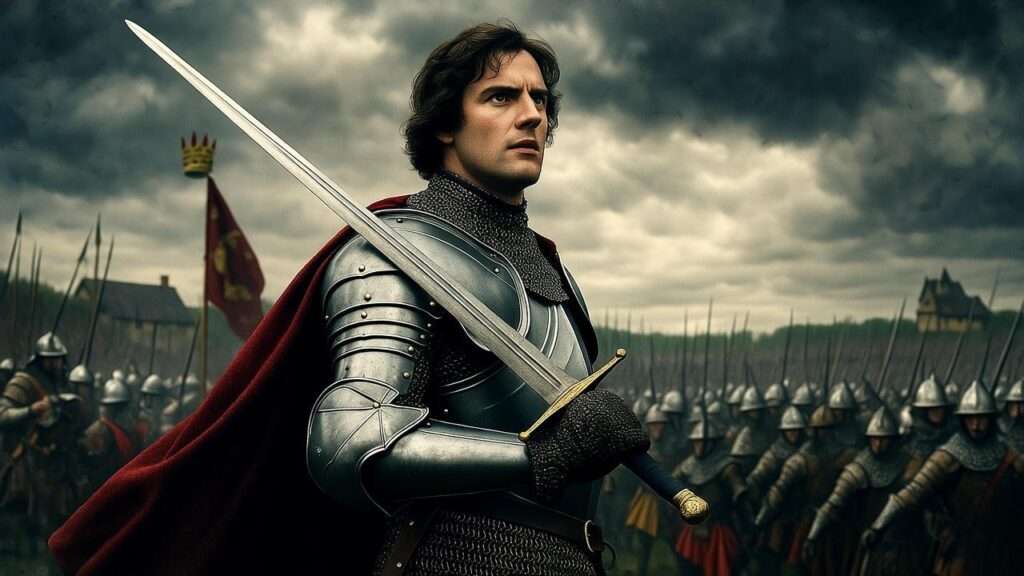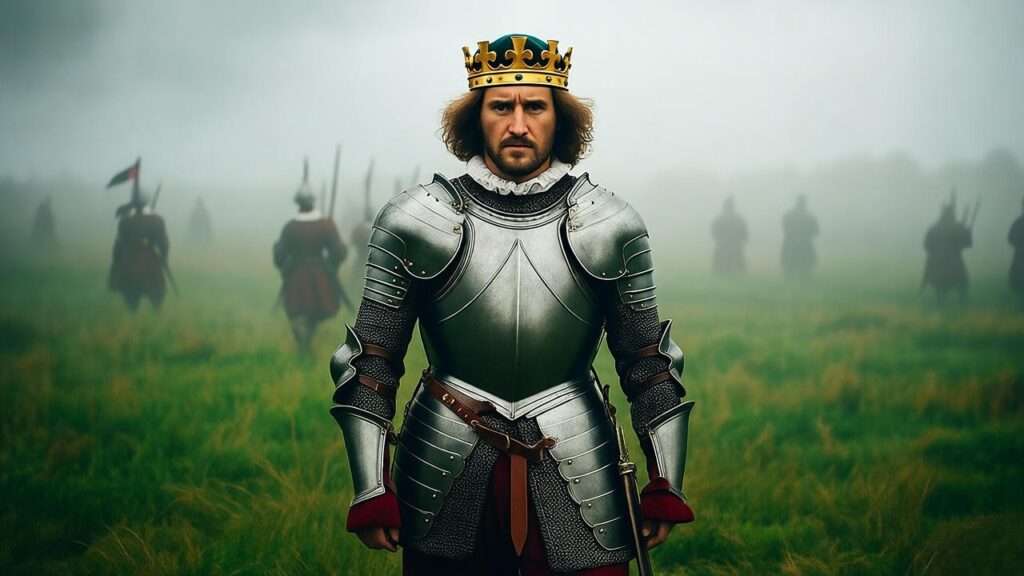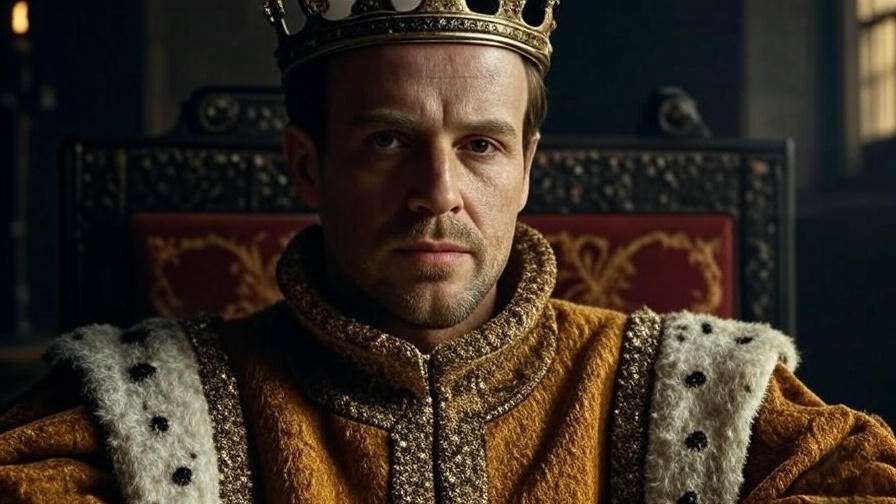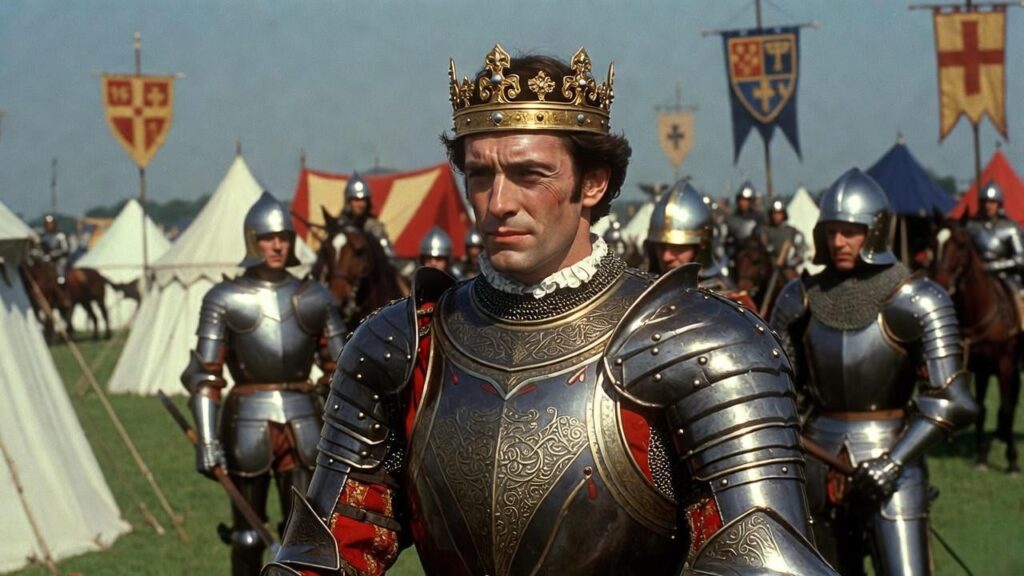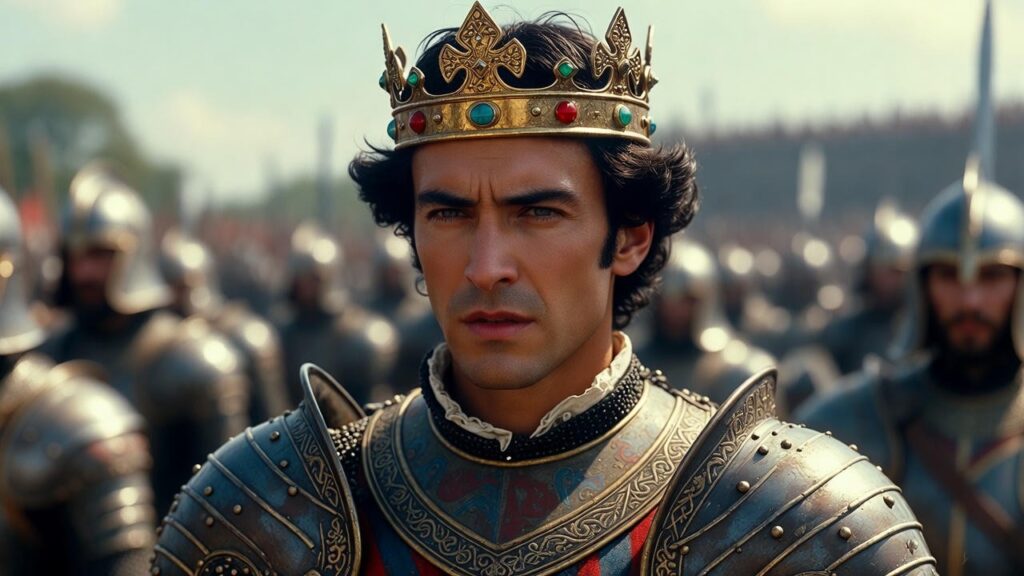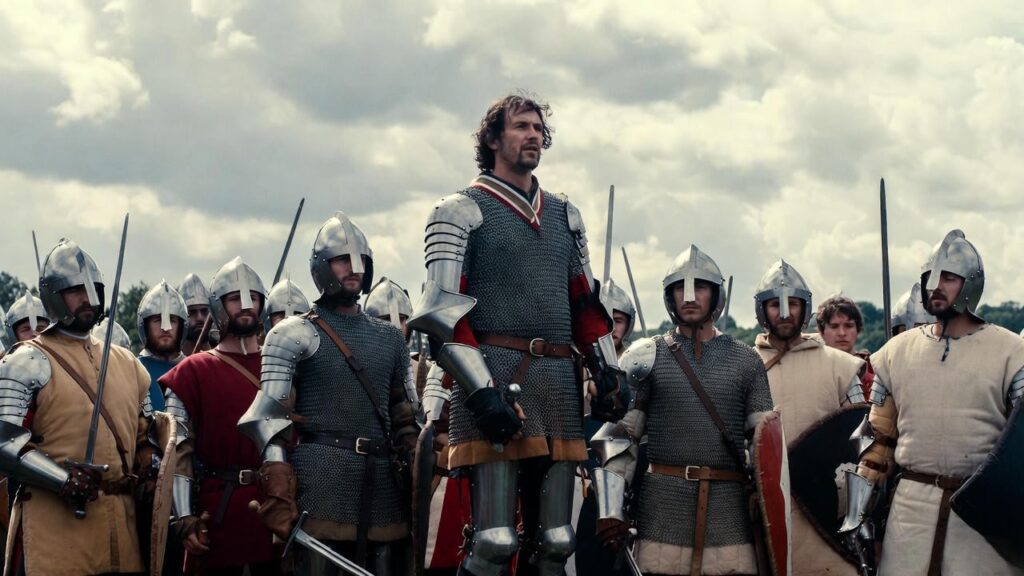
Imagine a young English prince, once known for his wild nights and tavern brawls, stepping onto the throne and immediately adopting a severe, almost monastic hairstyle that made him look more like a humble priest than a conquering hero. This drastic change wasn’t mere vanity—it was a calculated statement of piety, discipline, and transformation. Centuries later, that same Henry V haircut—the iconic medieval bowl cut—captivated modern audiences when Timothée Chalamet debuted it in Netflix’s The King (2019), sparking memes, debates, and renewed fascination with the historical figure immortalized in William Shakespeare’s Henry V.
For Shakespeare enthusiasts, history buffs, and anyone intrigued by how personal appearance reflects inner change, the Henry V haircut offers a fascinating lens into themes of leadership, redemption, and kingship. Why did a warrior king choose this unflattering style? What does it reveal about the real Henry V versus Shakespeare’s dramatic portrayal? And how has this “bowl cut” endured as a symbol of medieval masculinity and humility?
In this comprehensive exploration, we’ll delve into historical sources, Shakespearean analysis, and modern adaptations to uncover the truth behind one of history’s most distinctive royal looks—providing deeper insights than scattered blog posts or Wikipedia entries.
Who Was the Real Henry V? A Historical Portrait
Henry V of England (1386–1422), born Henry of Monmouth, ascended the throne in 1413 after the death of his father, Henry IV. He transformed from a rebellious prince—rumored to have caroused with figures like the inspiration for Shakespeare’s Falstaff—into one of England’s most celebrated warrior kings. His short reign culminated in the stunning victory at Agincourt in 1415 during the Hundred Years’ War, where his outnumbered forces defeated the French through superior tactics, leadership, and sheer determination.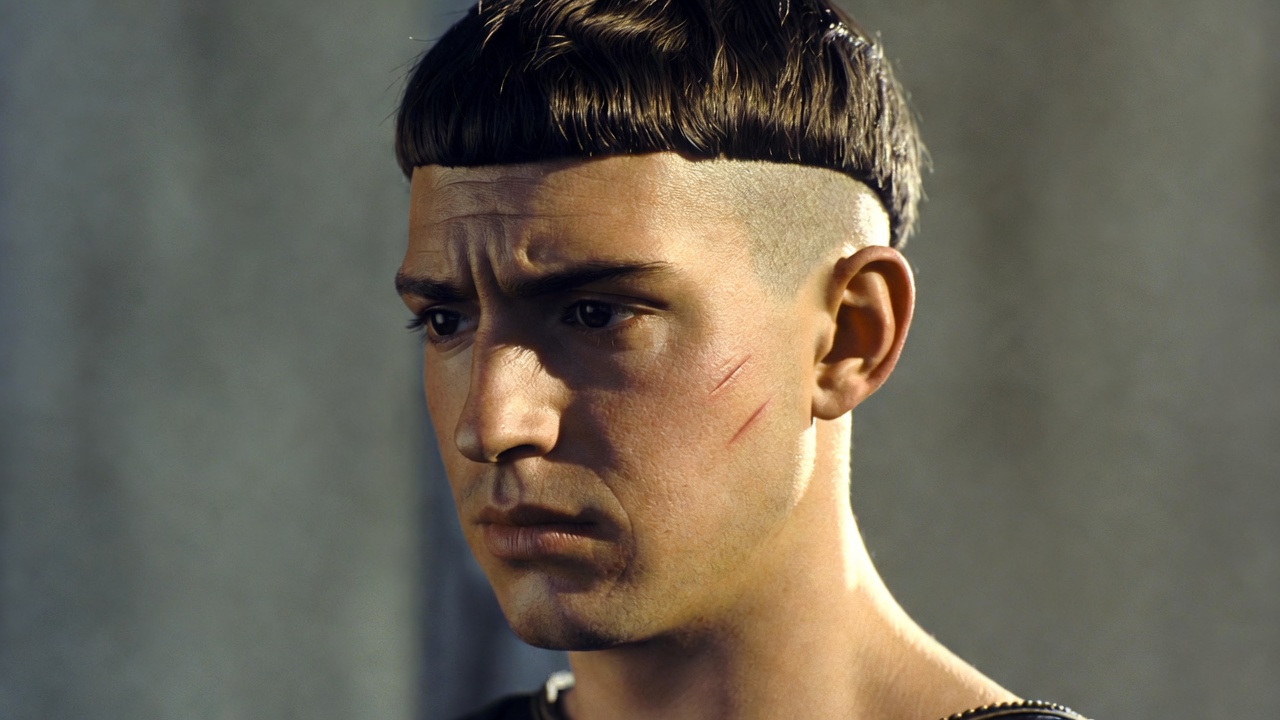
Contemporary descriptions paint a vivid physical picture. Henry stood an imposing 6 feet 3 inches tall—exceptional for the era—with a slim, athletic build, ruddy complexion, clean-shaven face, and a prominent pointed nose. His most striking feature was his hair: “dark hair cropped in a ring above the ears,” as noted in multiple historical accounts, including Wikipedia’s summary drawn from primary sources and echoed by historians like Ian Mortimer in Henry V: The Warrior King of 1415. Mortimer describes him as having “thick brown hair… cut short at the sides and the back,” with a long face, straight nose, and broad forehead that gave him an air of earnest innocence despite his battle-hardened life.
A defining mark was the scar on his right cheek (or near the nose), sustained at the Battle of Shrewsbury in 1403 when an arrow struck him as a 16-year-old prince. The wound penetrated six inches into his skull; royal surgeon John Bradmore ingeniously extracted it using a specially crafted tool and honey as an antiseptic. Henry refused to leave the field, fighting on to inspire his troops—a moment of raw courage that foreshadowed his later kingship.
This scar, often omitted in portraits and adaptations (including many Shakespearean stagings), symbolized his transition from youthful recklessness to mature resolve. His eyes were said to shift from “the mildness of a dove’s to the brilliance of a lion’s” depending on his mood, underscoring a duality that Shakespeare would amplify.
The Scar and the Soldier
The Shrewsbury wound wasn’t just physical trauma; it was a turning point. Historians note how it hardened Henry, reinforcing his military prowess while reminding him of mortality. In Shakespeare’s Henry IV, Part 1, the prince’s battlefield heroism is dramatized, though the scar itself goes unmentioned—perhaps to preserve the heroic image.
Piety and Public Image
Upon becoming king, Henry underwent a dramatic personal reformation. He vowed chastity, practiced thrift, and cultivated an image of piety. Chroniclers observed that he appeared “priest-like,” a deliberate contrast to his princely excesses. This shift aligned with late medieval trends where nobility emulated clerical humility to legitimize rule amid religious fervor.
His haircut played a key role in this image-making. Far from accidental, it signaled rejection of worldly vanity, aligning him with monastic ideals and projecting moral authority.
What Exactly Was the Henry V Haircut? Defining the Medieval Bowl Cut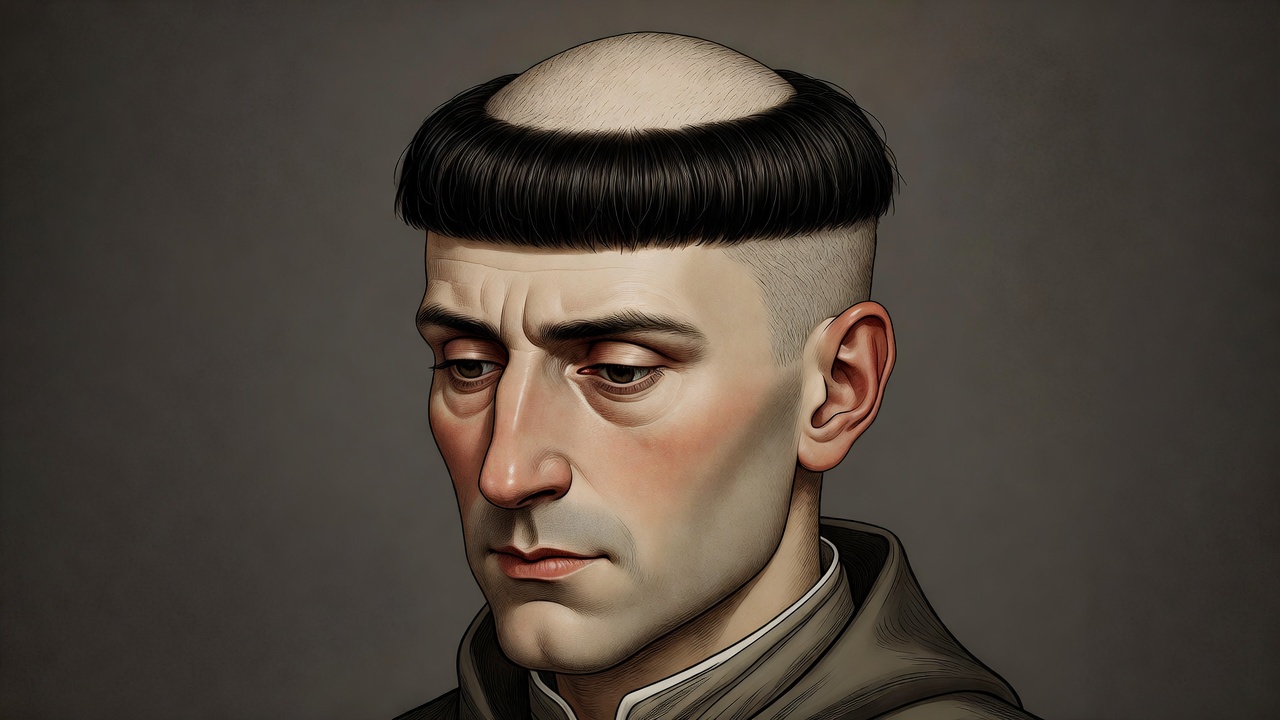
The Henry V haircut is often called a “bowl cut” today, but historically it was more precise: hair cropped short in a ring or circular fashion above the ears, with the sides and back shaved or clipped very close, leaving a fringe on top that resembled an inverted bowl or high pageboy. This created a distinctive “ring” effect around the head.
It wasn’t a perfect bowl placed on the head for cutting (a modern myth); rather, it was a practical, structured style achieved with shears and razors.
Origins and Influences
The style drew heavily from monastic tonsure, the ritual shaving of the head symbolizing humility and dedication to God—evoking the crown of thorns worn by Christ. While full tonsure shaved the crown entirely (leaving a ring of hair), Henry’s version was a secular adaptation: shorter sides for practicality, with enough length on top for nobility.
In the early 15th century, such cropped styles gained favor among English and French nobility, especially those in military or religious-adjacent roles. It contrasted with earlier longer hairstyles of the 14th century and reflected influences from clerical fashion.
Was It Common? Fashion vs. Reality
Not universal—longer hair persisted in some circles—but it was fashionable among warrior-nobles for helmet compatibility and hygiene during campaigns. Henry was among the first English kings to adopt it prominently, making it a signature look. Comparisons include Joan of Arc’s short-cropped style or manuscript illustrations of nobles from the period.
Symbolism and Significance: Why a Warrior King Chose This Look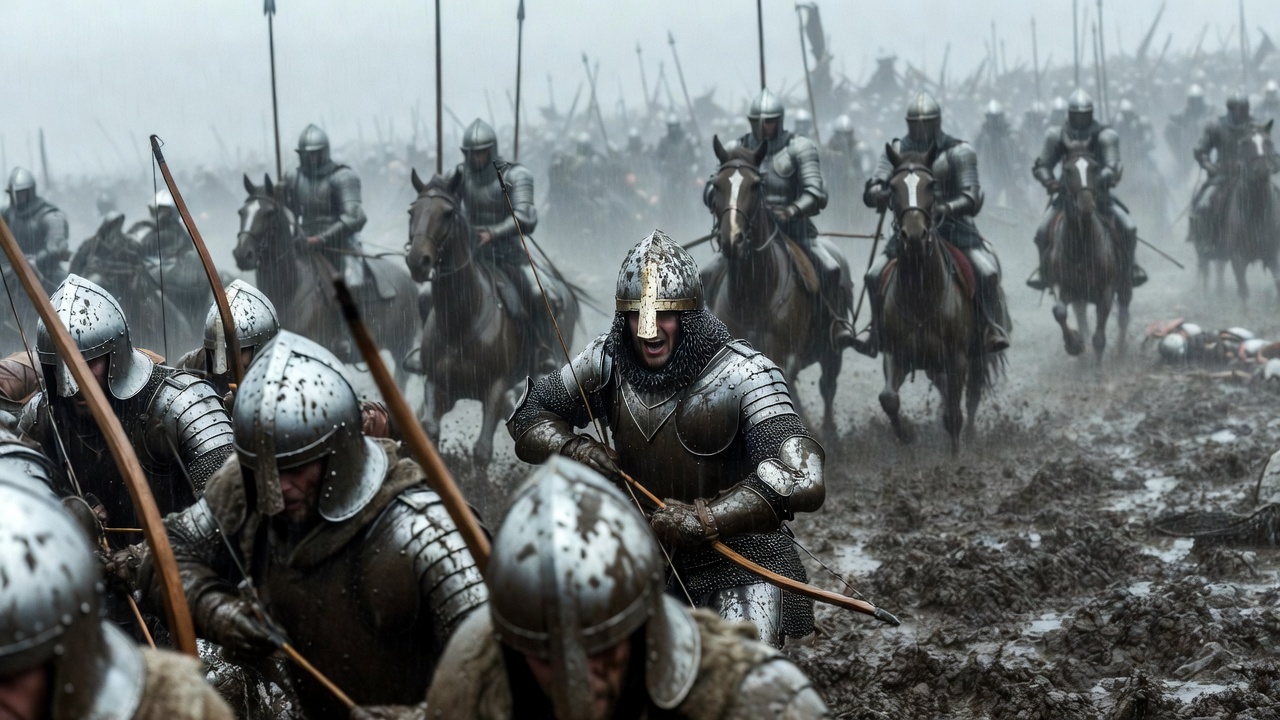
The Henry V haircut was far more than a practical choice for a soldier—it was a powerful piece of political and personal theater. In an age when kings were expected to embody both martial strength and divine favor, appearance became a carefully curated message. Henry’s cropped, ring-like style served multiple layers of meaning.
First, the practical dimension cannot be overstated. Long hair, fashionable in earlier medieval periods, posed real hazards on the battlefield. It could become entangled in armor, helmets, or weapons; it collected dirt, lice, and sweat during long campaigns. A short, close-cropped style minimized these issues, allowing better fit for the great bascinet helmet that dominated early 15th-century warfare. Chroniclers note that English soldiers at Agincourt often wore their hair short for exactly these reasons.
Yet practicality alone does not explain why Henry made the style so distinctive and uniform. The deeper symbolism lies in its deliberate evocation of monastic austerity. By adopting a haircut reminiscent of the clerical tonsure, Henry signaled a complete break from his princely past. The tonsure—whether the full Roman style (shaved crown) or the Celtic fringe—had long symbolized renunciation of worldly vanity and total dedication to God. While Henry did not take full monastic vows, his cropped ring of hair echoed this ideal closely enough to impress contemporaries.
French ambassadors and chroniclers remarked on the change with astonishment. One observer described the new king as looking “more like a priest than a prince,” a comment preserved in later historical compilations. This priestly appearance helped legitimize his rule during a time of religious tension and dynastic insecurity. After the turbulent reign of his father Henry IV (who had usurped the throne from Richard II), the young king needed to project moral and spiritual authority. The haircut became visual proof of his reformation: the wild Prince Hal was dead; a disciplined, God-fearing ruler had taken his place.
Historians such as Ian Mortimer emphasize this transformation as both genuine and strategic. Mortimer writes that Henry “cultivated an image of earnest piety” and that his appearance “reflected a deliberate rejection of the excesses of youth.” Similarly, Juliet Barker in Conquest: The English Kingdom of France 1417–1450 notes how Henry’s personal austerity—simple dress, modest living, and short hair—set him apart from the ostentatious French nobility he would soon face in battle.
The haircut also reinforced the medieval ideal of the “just warrior.” In chivalric literature and religious thought, the ideal knight combined martial prowess with Christian humility. By looking austere yet resolute, Henry embodied this duality: a lion in battle, a lamb in devotion.
Expert Insights
Modern scholars continue to debate the extent to which the haircut was Henry’s personal choice versus a broader cultural trend. Historian Anne Curry, a leading expert on the Hundred Years’ War, points out that short hair was becoming more common among English fighting men by the 1410s, partly influenced by contact with continental military fashions. Yet Henry’s adoption of the style before his major campaigns suggests he was ahead of the curve—or at least exceptionally deliberate in using it for image-making.
Another layer of interpretation comes from art historians who study surviving portraits. The famous profile portrait in the National Portrait Gallery (late 16th or early 17th century, but based on earlier likenesses) shows Henry with the characteristic ring crop. While idealised, it aligns closely with contemporary written descriptions, lending credibility to the idea that the style was a defining feature of his public persona.
The Henry V Haircut in Shakespeare’s Play
William Shakespeare never explicitly describes Henry V’s haircut in the text of Henry V (1599). Yet the hairstyle’s historical reality resonates powerfully with the play’s central themes of transformation, kingship, and the rejection of youthful folly.
Shakespeare drew heavily on Raphael Holinshed’s Chronicles (1577/1587) and other sources that preserved accounts of Henry’s physical change upon accession. In Holinshed, we read that the new king “was so changed in maners, that he seemed to be another man,” with chroniclers noting his sudden sobriety, piety, and austere appearance. Shakespeare dramatizes this metamorphosis most famously in the rejection of Falstaff at the end of Henry IV, Part 2 and in the opening chorus of Henry V, where the Archbishop of Canterbury marvels:
“The breath no sooner left his father’s body But that his wildness, mortified in him, Seemed to die too.”
The haircut, though unspoken, becomes a silent visual metaphor for this “mortification” of wildness. On stage and screen, directors have often used costume and hairstyle to underscore the contrast between the tavern-haunting prince and the crowned king.
In Shakespeare’s history plays, physical appearance frequently symbolizes inner change. Prince Hal’s earlier disguises—slumming in Eastcheap, adopting low company—are deliberate performances. His coronation haircut becomes the final, irreversible costume: the tonsure-like crop that declares, “I am no longer playing at being king. I am the king.”
Comparisons to Other Adaptations
Different productions have handled the haircut in revealing ways:
- Laurence Olivier’s 1944 film keeps Henry’s hair relatively short but neatly styled—more heroic than austere, reflecting wartime propaganda needs.
- Kenneth Branagh’s 1989 version opts for a slightly longer, windswept look that emphasizes youthful vigor over monastic severity.
- The 2019 Netflix film The King, directed by David Michôd and starring Timothée Chalamet, commits fully to historical accuracy with the severe bowl cut—an artistic choice that became one of the film’s most discussed elements.
Shakespeare’s text leaves room for interpretation, but the historical haircut enriches any reading or viewing by reminding us how deliberately Henry—and later Shakespeare—used appearance to convey authority and redemption.
Modern Revivals – Timothée Chalamet and The King (2019)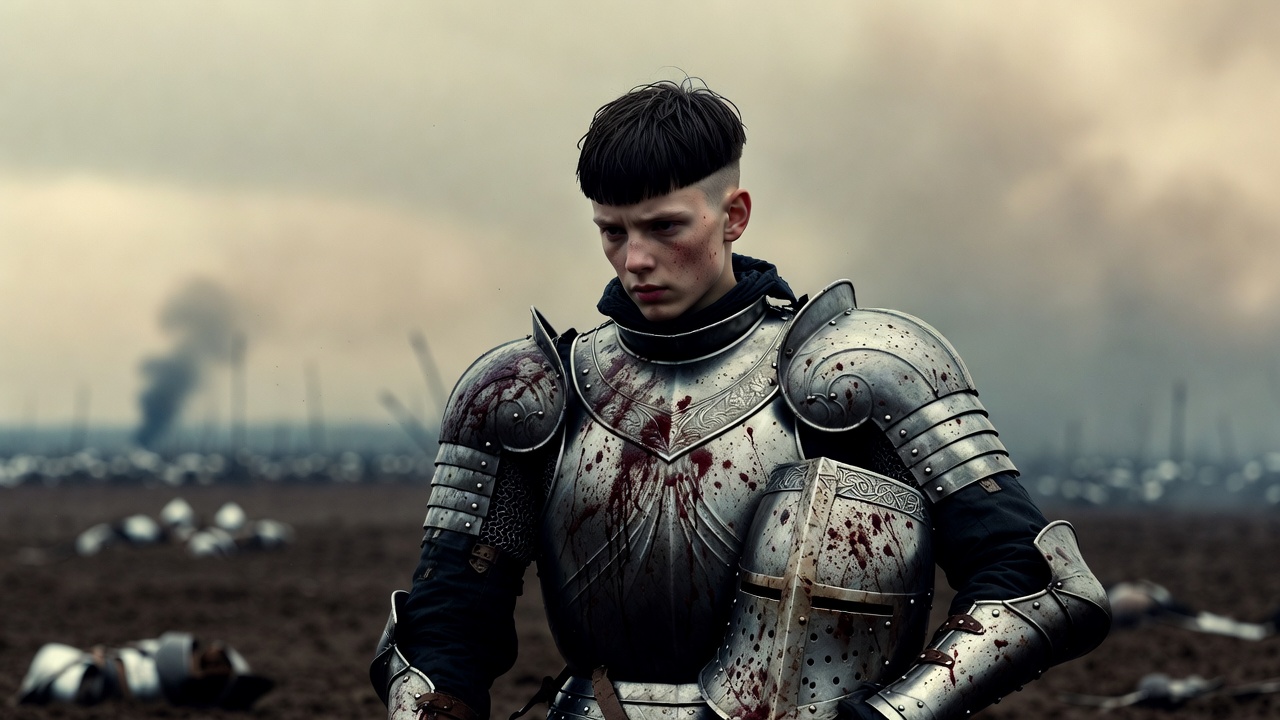
The Henry V haircut experienced one of its most dramatic modern revivals in 2019 when Timothée Chalamet appeared in David Michôd’s Netflix film The King. Chalamet, then riding high on the success of Call Me by Your Name and known for his signature tousled curls, underwent a complete transformation for the role—cutting his hair into the severe, ring-cropped bowl style that historical sources attribute to the real Henry V.
The decision was not cosmetic. Hair designer Alessandro Bertolazzi, who worked on the film, explained in interviews that the production team deliberately chose historical fidelity over conventional Hollywood attractiveness. “We looked at every surviving portrait, every description,” Bertolazzi said. “Henry was not trying to look handsome in the modern sense—he was trying to look serious, pious, almost severe.” Chalamet himself admitted to initial anxiety about the drastic cut. In a 2019 press interview, he recounted asking Michôd, “Are we sure about this?” only to receive the firm reply: “Yes. This is who he was.”
The result was one of the most talked-about elements of the film. Social media lit up with reactions ranging from admiration for the commitment to historical accuracy to playful memes comparing the look to everything from medieval monks to 1990s childhood bowl cuts. The hairstyle became a shorthand for the film’s broader approach: gritty, muddy realism over romanticized pageantry. Unlike previous adaptations, The King leaned into the brutal, unglamorous side of medieval warfare—rain-soaked fields, heavy armor, and exhausted soldiers. The bowl cut fit perfectly into that aesthetic.
Historical Accuracy in The King
Critics and historians largely praised the haircut as one of the most accurate depictions of Henry V on screen. While Olivier (1944) and Branagh (1989) favored more conventionally heroic hairstyles, Michôd’s team consulted experts and primary sources. The ring-cropped style—with shaved or very short sides and a fringe on top—matches descriptions from the period, including the “dark hair cropped in a ring above the ears” noted in contemporary chronicles.
Other details in the film reinforced this commitment: the great bascinet helmet (correct for the 1410s), the use of longbows at Agincourt, and the muddy, chaotic battle sequences that avoided clean, choreographed swordplay. The haircut, in this context, was not just a visual quirk—it was part of a larger effort to strip away centuries of mythologizing and present Henry as a complex, calculating young man rather than a flawless hero.
Cultural Impact
The Chalamet bowl cut became a minor cultural phenomenon. It sparked renewed interest in medieval hairstyles, with barbers reporting requests for “the Henry V cut” or “Timothée Chalamet medieval bowl.” Fashion blogs and TikTok creators experimented with modern interpretations, often blending the historical ring crop with contemporary undercuts or fades.
More importantly, the hairstyle reintroduced the idea that historical figures made deliberate, sometimes unflattering choices about their appearance for reasons of power, piety, and propaganda. In an era dominated by carefully curated social-media images, Henry V’s austere look—revived through a major streaming platform—offered a reminder that leadership has always involved performance, and that performance can include embracing severity over vanity.
The film’s reception was mixed—some praised its grounded approach, others criticized its departures from Shakespeare—but the haircut became one of the few elements almost universally acknowledged as spot-on.
The Henry V Haircut Through the Ages – Evolution and Legacy
After Henry V’s death in 1422, the severe ring-cropped style gradually fell out of favor among English nobility. By the late 15th century, longer hair returned as a marker of status and courtly elegance, especially under the Tudors. The bowl-like crop survived longer in clerical and military contexts but largely disappeared from royal fashion.
Its legacy, however, proved enduring. The hairstyle came to symbolize a particular moment in medieval history: the transition from chivalric romance to pragmatic, disciplined kingship. It also left a visual imprint in art and literature—illuminated manuscripts, portraiture, and later historical dramas all returned to the image of the short-cropped warrior-king.
In the 20th and 21st centuries, the Henry V haircut has been rediscovered whenever filmmakers or writers want to evoke gritty medieval authenticity. From Chalamet’s turn to occasional appearances in video games, historical reenactments, and fantasy media inspired by the period, the style remains instantly recognizable.
What makes it endure is its layered meaning. It is simultaneously practical (battle-ready), symbolic (pious humility), and dramatic (a visual marker of personal transformation). Few historical hairstyles carry so much narrative weight.
FAQs About the Henry V Haircut
Was the Henry V haircut really a bowl cut? Yes, in modern terms it is commonly described as a bowl cut or bowl-style crop, though historically it was a structured ring cut with shaved sides—more precise than the casual “place a bowl on the head” method sometimes associated with the term.
Did Shakespeare describe Henry V’s hair? No, Shakespeare never mentions the haircut explicitly in Henry V or the Henry IV plays. However, the transformation from wild prince to austere king is a central theme, and the historical hairstyle aligns perfectly with that arc.
Why did Timothée Chalamet cut his hair for The King? To achieve historical accuracy. Director David Michôd and the production team prioritized fidelity to contemporary descriptions and portraits over conventional leading-man aesthetics.
Is the bowl cut historically accurate for 15th-century nobility? Yes, especially among English warrior-nobles in the early 1400s. While not universal, it was fashionable in military and pious circles, and Henry V adopted it prominently.
How does it compare to tonsure? The Henry V haircut was a secular adaptation of monastic tonsure. Full tonsure shaved the crown entirely (leaving a ring), symbolizing complete dedication to God. Henry’s version kept more hair on top but evoked the same humility and rejection of vanity.
The Henry V haircut is far more than a curious footnote in royal fashion history. It is a physical embodiment of one of the most dramatic personal and political transformations in English history: from reckless prince to pious, battle-tested king. Shakespeare seized on that transformation to explore timeless questions of leadership, responsibility, and the performance of power. Centuries later, adaptations like The King reminded modern audiences that even the most unflattering choices can carry profound meaning.
Whether you’re studying Shakespeare’s history plays, researching medieval England, or simply fascinated by how appearance shapes perception, the Henry V haircut offers rich insight. It shows us that true authority often lies not in looking impressive, but in looking purposeful.