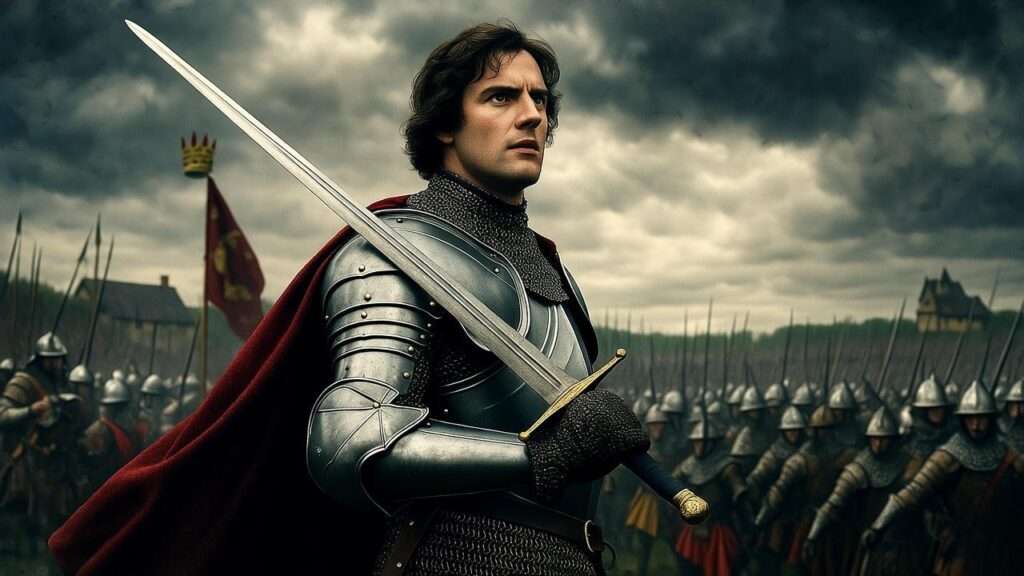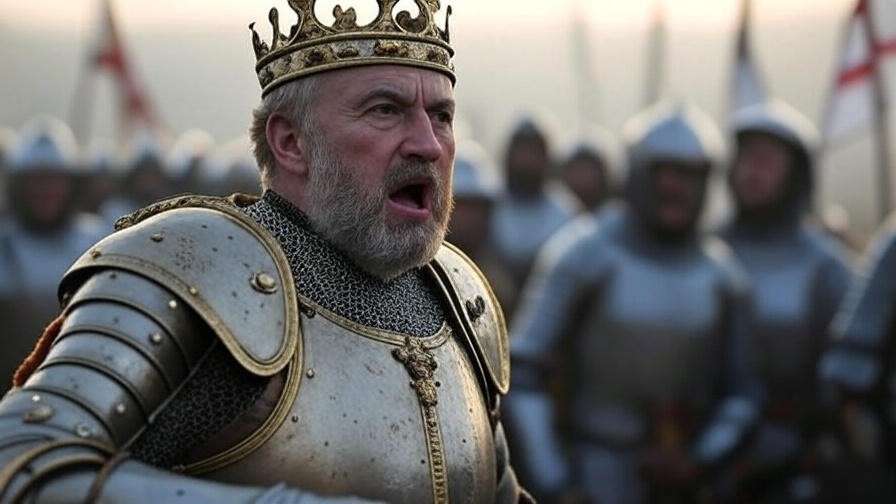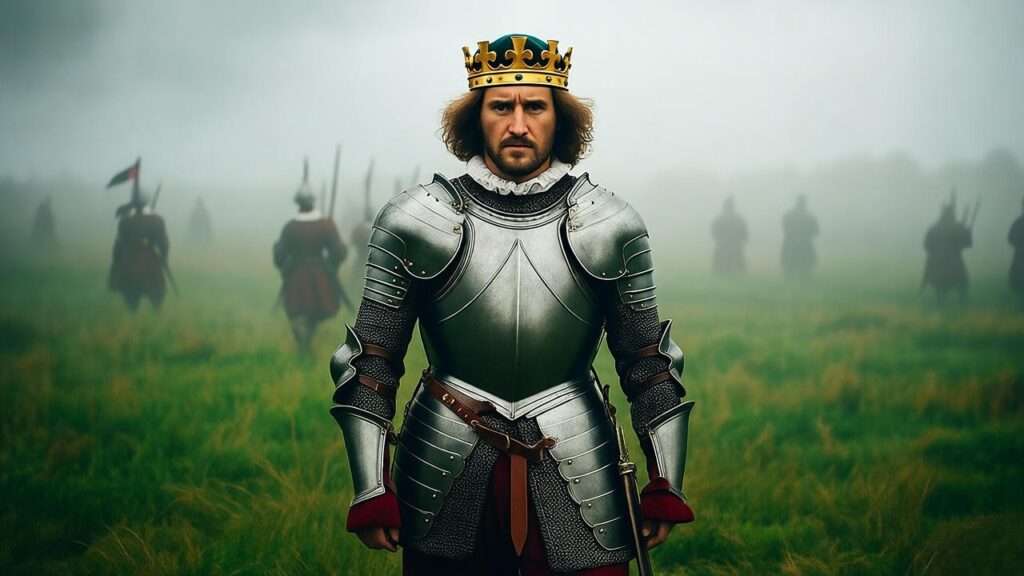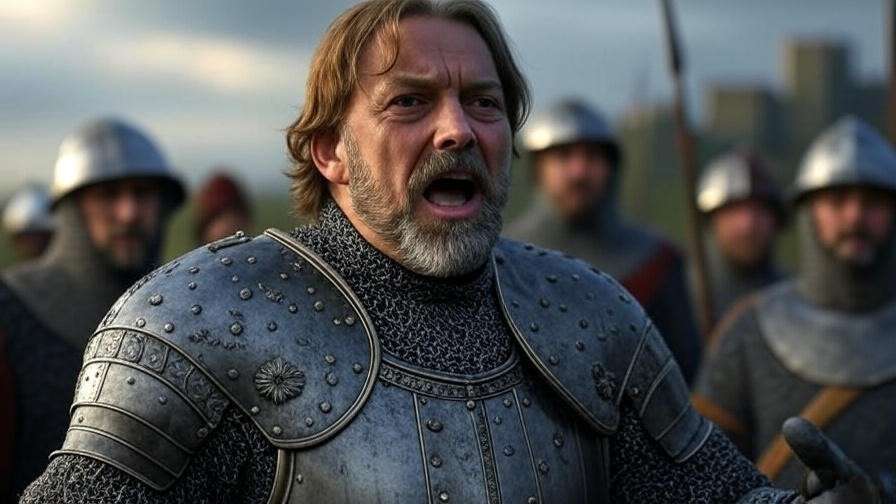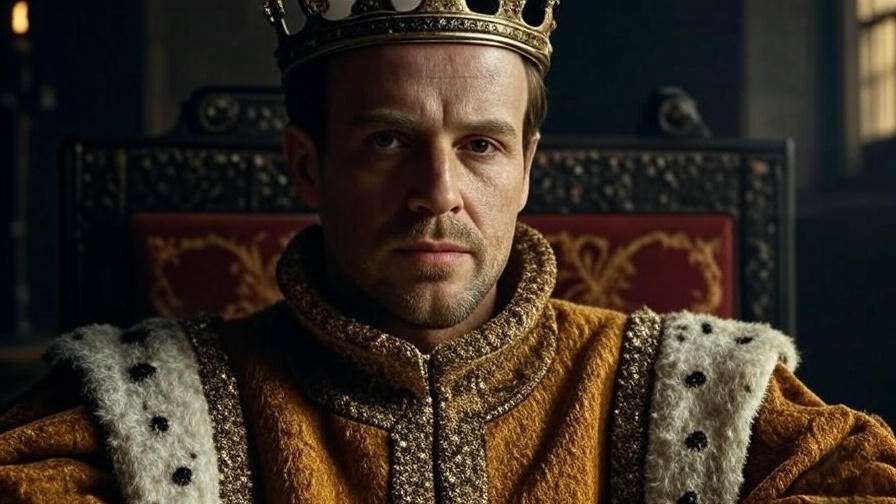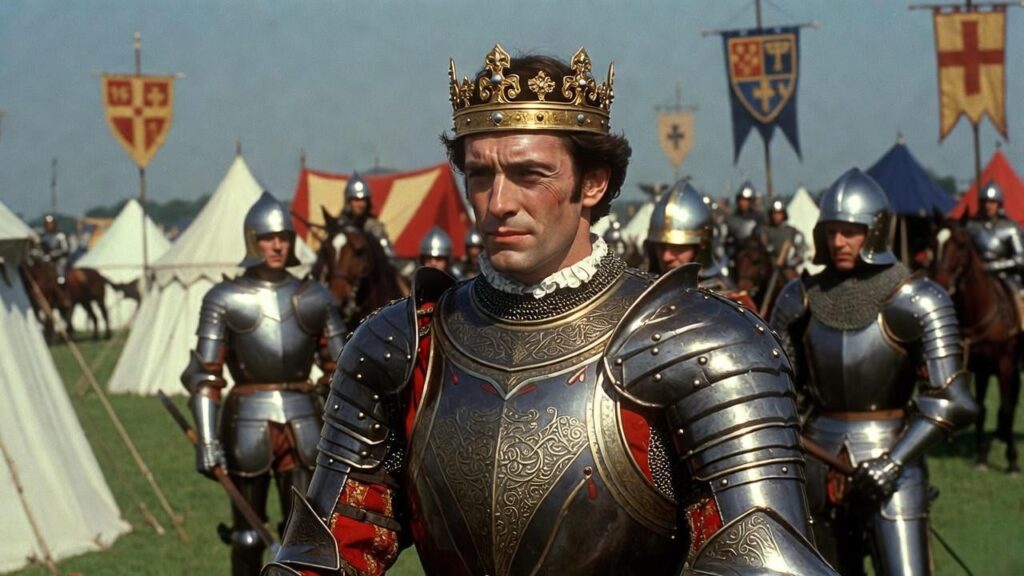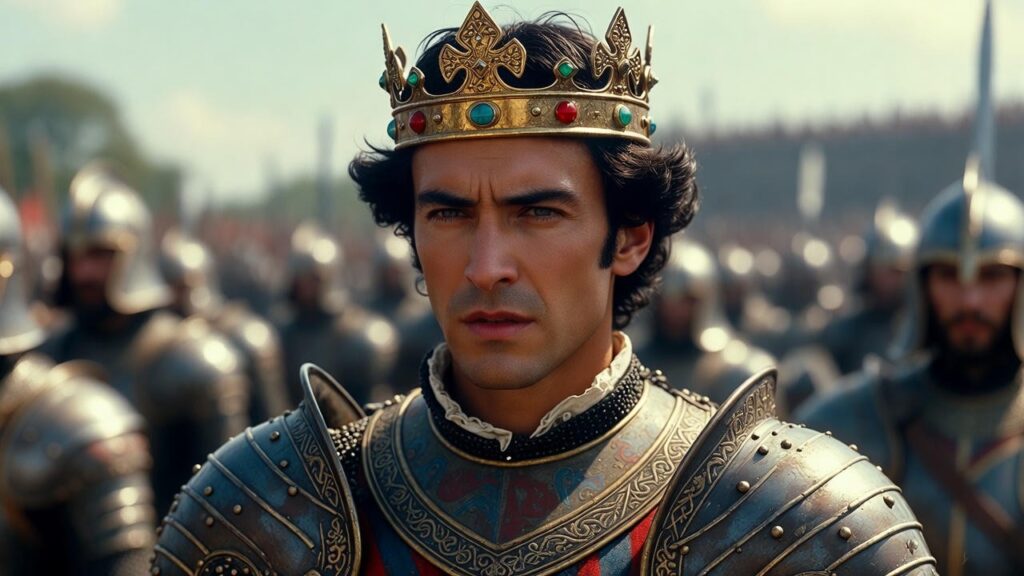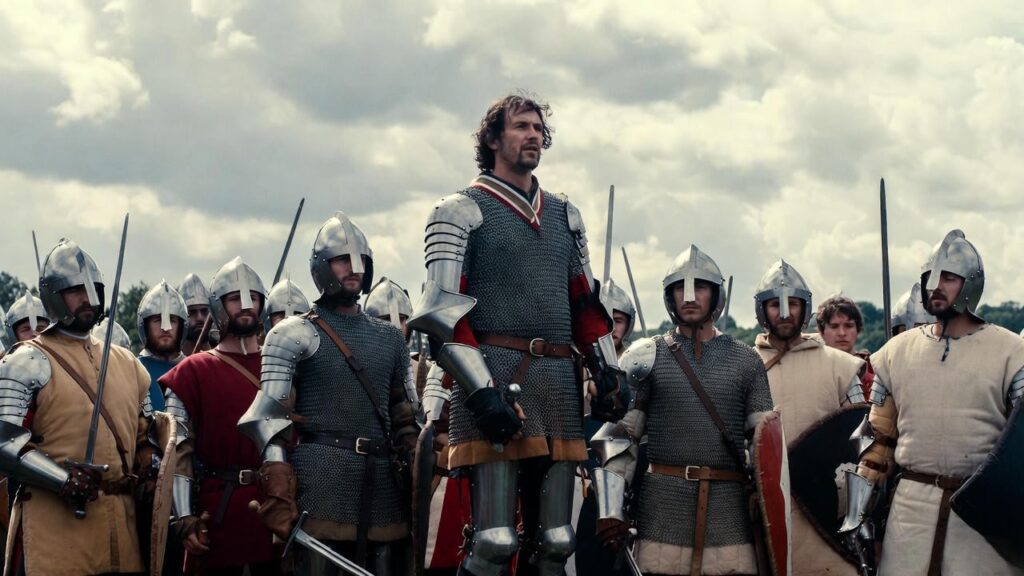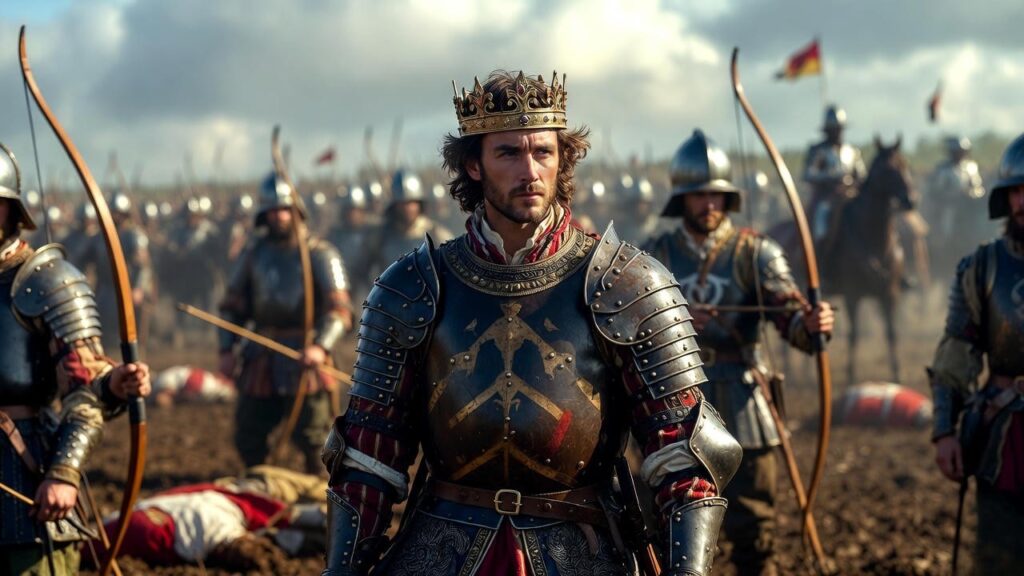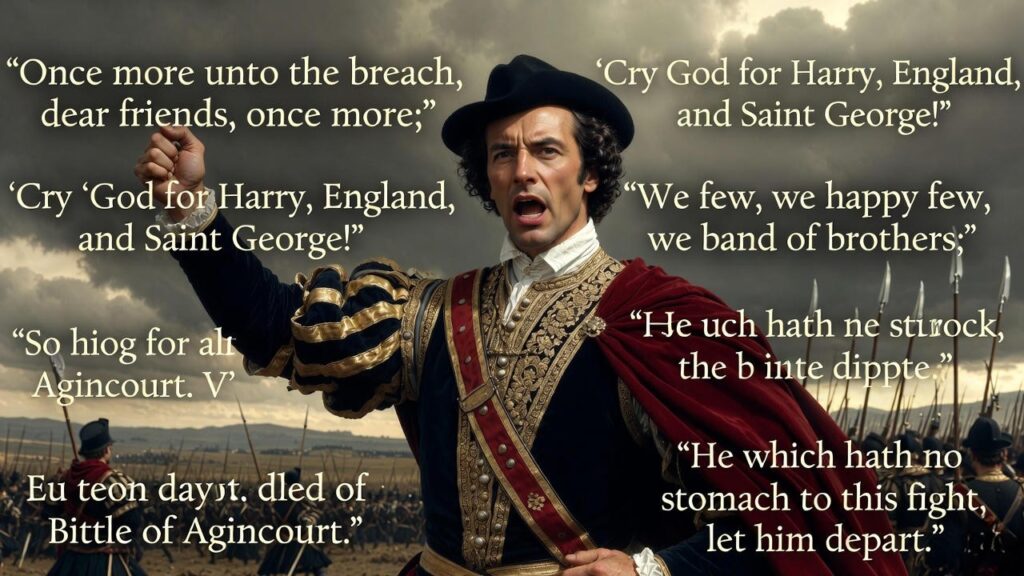
These immortal words, spoken by King Henry V on the eve of the Battle of Agincourt, have echoed through centuries, inspiring leaders, soldiers, and ordinary people facing impossible odds. In Shakespeare’s Henry V, one of his most celebrated history plays, the young king transforms from a reckless prince into a charismatic ruler whose rhetoric ignites courage and unity. If you’re searching for the most powerful Henry V play quotes—those timeless lines on leadership, bravery, war, and honor—this curated collection delivers exactly what you need.
Written around 1599, Henry V dramatizes the real King Henry V’s triumphant 1415 campaign against France, culminating in the miraculous victory at Agincourt despite overwhelming French numbers. Shakespeare drew from chronicles like Holinshed’s, blending historical fact with poetic invention to explore the burdens of kingship and the human spirit in wartime. These Henry V play quotes aren’t just dramatic flourishes; they probe deep themes that resonate today, from motivational leadership to the moral costs of conflict.
In this comprehensive guide, we’ll countdown the top 20 most inspiring quotes, ranked by their cultural impact, rhetorical power, and modern relevance. Each includes the full text, context, analysis, and real-world applications—making this the ultimate resource for Shakespeare enthusiasts, students, public speakers, and anyone seeking motivation from the Bard’s genius.
Understanding the Power of Henry V’s Language
Historical and Literary Context of the Play
Henry V completes Shakespeare’s second tetralogy of history plays (Richard II, Henry IV Parts 1 and 2, and Henry V), tracing the rise of the House of Lancaster. The play opens with a Chorus invoking a “Muse of fire” to elevate the humble stage to epic heights, acknowledging theater’s limitations while inviting the audience’s imagination.
Historically, Henry V (1386–1422) was a warrior king who reopened the Hundred Years’ War, claiming the French throne through his great-grandfather Edward III. His 1415 invasion led to the siege of Harfleur and the against-all-odds victory at Agincourt (English archers decimated French knights in muddy fields). Shakespeare, writing during Queen Elizabeth I’s reign amid threats from Spain and Ireland, infused the play with patriotic fervor—yet subtly questions war’s glorification.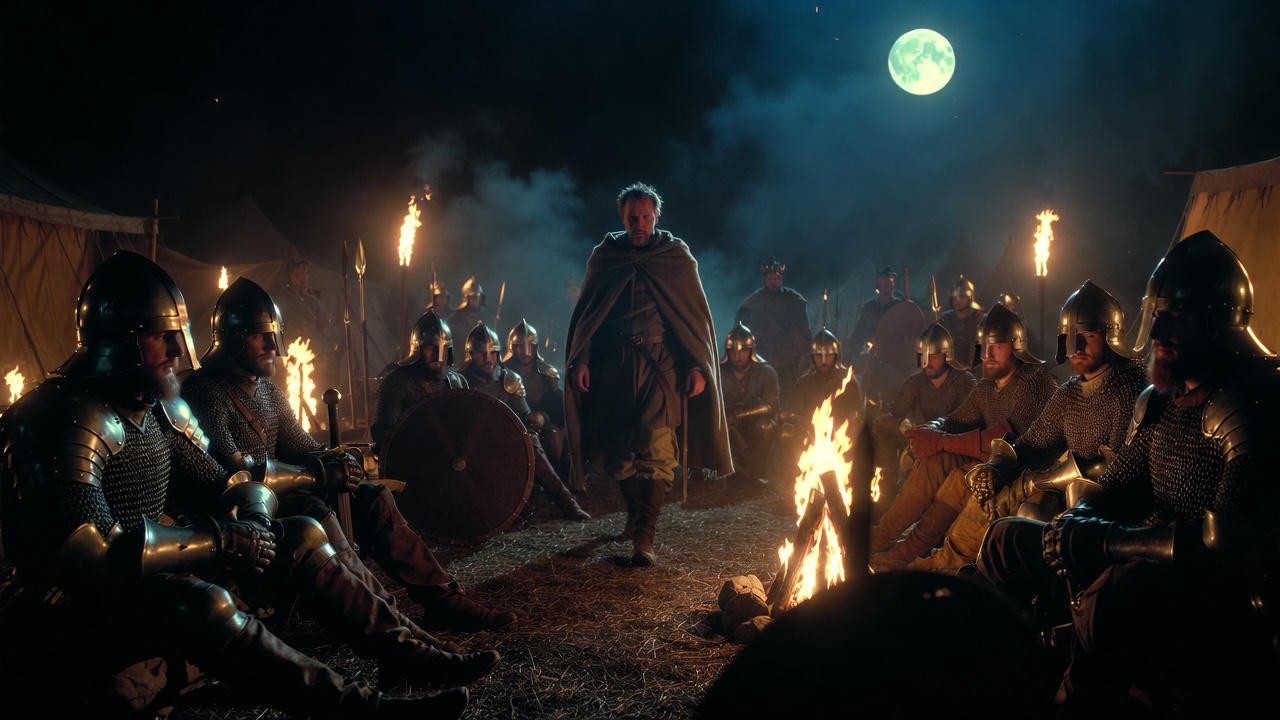
The language shifts masterfully: soaring blank verse for Henry’s speeches, prose for common soldiers, highlighting class contrasts and the universality of fear and valor.
Themes That Make These Quotes Enduring
Shakespeare weaves recurring motifs that elevate these lines beyond their era:
- Leadership and Responsibility: Henry’s evolution from wild youth to ideal king explores how power demands sacrifice and moral accountability.
- Courage vs. Fear: Quotes confront raw terror, transforming it into defiant resolve.
- Unity and National Identity: The play forges “Englishness” through shared struggle, epitomized in brotherhood imagery.
- Mercy and Justice: Henry shows leniency (e.g., toward soldiers) but ruthless pragmatism in war.
- The Cost of War: Beneath triumph lies loss, questioning glory’s price.
These themes, backed by scholars like Harold Bloom (who called Henry V Shakespeare’s profoundest exploration of kingship) and Marjorie Garber, ensure the play’s quotes endure as tools for inspiration and reflection.
The Top 20 Most Inspiring Henry V Play Quotes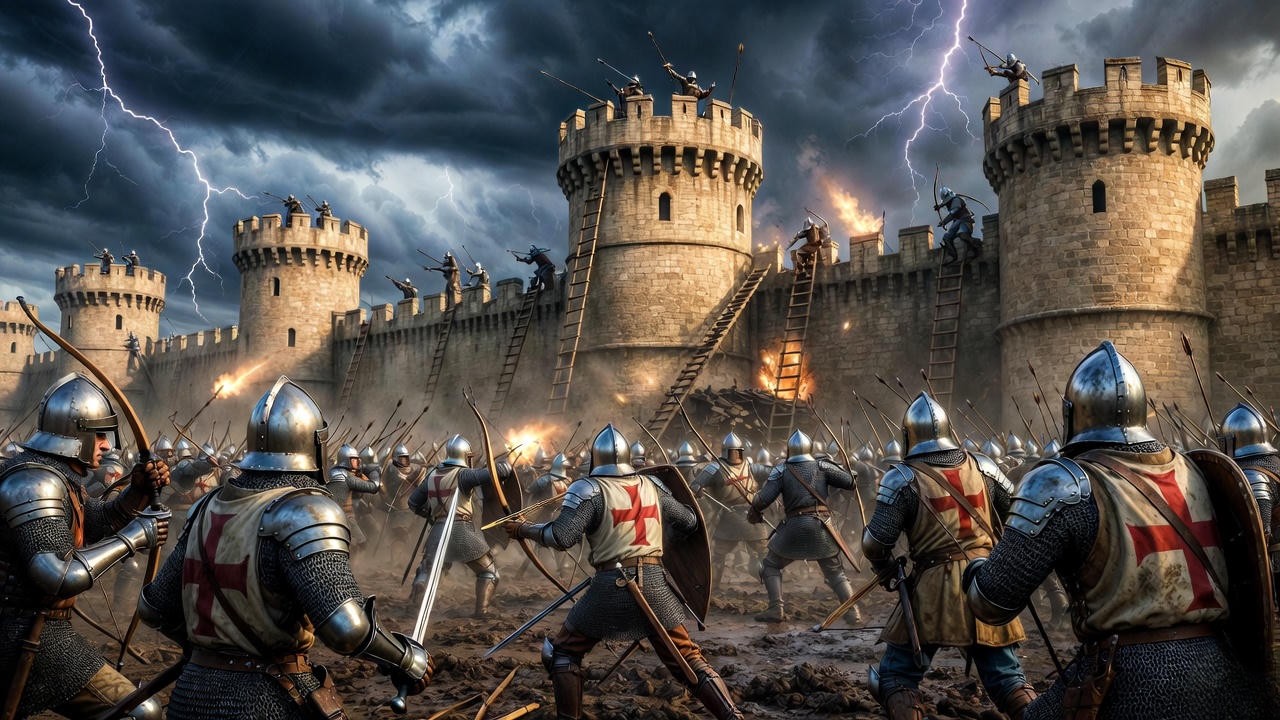
Here is our ranked selection, building to the most iconic. Each entry provides the quote, citation, context, analysis, historical notes, and modern relevance.
20. “A little touch of Harry in the night” (Act 4, Prologue)
The Chorus describes Henry walking among his troops disguised, boosting morale before Agincourt.
Analysis: This phrase captures humble, approachable leadership—Henry as a “touch” of inspiration in darkness. It humanizes the king, contrasting ceremonial isolation.
Modern Relevance: Used in military contexts for leaders connecting with troops; evokes quiet encouragement in crises.
19. “Every subject’s duty is the king’s, but every subject’s soul is his own” (Act 4, Scene 1)
Henry, disguised, debates soldier Williams on war responsibility.
Analysis: Deflects blame from the king to individual conscience, yet reveals Henry’s private burden. Highlights personal morality amid obedience.
Modern Relevance: Cited in leadership ethics discussions; reminds managers that while tasks are delegated, personal integrity remains individual.
18. “I think the king is but a man, as I am” (Act 4, Scene 1)
Henry soliloquizes on the shared humanity beneath royalty.
Analysis: Demystifies power, showing Henry’s vulnerability. The violet smells the same to king and commoner—equality in senses, inequality in burdens.
Modern Relevance: Popular in motivational speaking; underscores empathetic leadership, used by executives to build team rapport.
17. “O God of battles, steel my soldiers’ hearts” (Act 4, Scene 1)
Henry’s prayer before Agincourt.
Analysis: Invokes divine aid, blending piety with pragmatism. “Steel” evokes hardening for battle.
Modern Relevance: Echoed in pre-game prayers or high-stakes preparations; symbolizes mental fortification.
16. “All things are ready, if our minds be so” (Act 4, Scene 3)
Henry responds to news of French superiority.
Analysis: Mindset over material odds—pure motivational psychology.
Modern Relevance: Staple in sports psychology and business; mindset training often references this.
15. “Disguise fair nature with hard-favour’d rage” (Act 3, Scene 1)
From the “Once more unto the breach” speech at Harfleur.
Analysis: Urges soldiers to mask peaceful instincts with ferocious persona—performative courage.
Modern Relevance: Used in acting, public speaking, and negotiation training.
14. “But if the cause be not good, the king himself hath a heavy reckoning” (Act 4, Scene 1)
Williams warns of royal accountability for unjust war.
Analysis: Challenges divine right; king answers to God for soldiers’ souls.
Modern Relevance: Invoked in debates on war ethics (e.g., Iraq, Afghanistan); underscores just war theory.
13. “Once more unto the breach, dear friends, once more” (Act 3, Scene 1)
Full speech excerpt: Rally at Harfleur siege.
Full text: “Once more unto the breach, dear friends, once more; / Or close the wall up with our English dead. / In peace there’s nothing so becomes a man / As modest stillness and humility: / But when the blast of war blows in our ears, / Then imitate the action of the tiger…”
Analysis: Anaphora (“once more”), animal imagery (tiger, greyhounds), ancestral appeals—masterful rhetoric building fury.
Historical: Harfleur surrendered after siege; disease weakened English army.
Modern Relevance: Iconic motivational line; used in films, sports (e.g., NFL rallies).
12. “The game’s afoot” (Act 3, Scene 1)
From same speech: “The game’s afoot: Follow your spirit…”
Analysis: Hunting metaphor turns battle into thrilling pursuit.
Modern Relevance: Common phrase for starting action; business, gaming.
11. “We are in God’s hand, brother, not in theirs” (Act 3, Scene 6)
Henry on fate vs. French threat.
Analysis: Surrenders to providence, calming fear.
Modern Relevance: Resilience in uncertainty.
10. Tennis balls response (Act 1, Scene 2)
“When we have match’d our rackets to these balls, / We will in France, by God’s grace, play a set / Shall strike his father’s crown into the hazard.”
Analysis: Witty threat turning insult into prophecy.
Modern Relevance: Deflecting mockery with confidence.
9. “O, for a Muse of fire” (Prologue)
Chorus’s opening invocation.
Analysis: Meta-theatrical; apologizes for stage limitations while elevating story.
8. “Upon the king! … What infinite heart’s-ease / Must kings neglect” (Act 4, Scene 1)
Henry’s soliloquy on ceremony’s burden.
Analysis: Envies slave’s rest; profound on leadership isolation.
7. “This day is called the feast of Crispian” (Act 4, Scene 3)
Opening St. Crispin’s Day speech.
6. “God for Harry, England, and Saint George!” (Act 3, Scene 1)
War cry.
5. “Men of few words are the best men” (Act 3, Scene 2)
Bardolph, ironically.
4. “We band of brothers” buildup (Act 4, Scene 3)
3. Full St. Crispin’s Day excerpt
2. “We few, we happy few…” partial
1. “We few, we happy few, we band of brothers; / For he to-day that sheds his blood with me / Shall be my brother…” (Act 4, Scene 3)
The pinnacle: Full St. Crispin’s Day speech transforms numerical disadvantage into eternal glory.
Analysis: Rhetorical masterpiece—repetition, future nostalgia, social elevation (“gentle his condition”). Turns fear into privilege.
Historical: Agincourt victory attributed to longbows, terrain; Shakespeare amplifies underdog myth.
Modern Relevance: Title of WWII book/miniseries Band of Brothers; quoted by coaches (Jim Harbaugh), politicians, military. Symbol of camaraderie.
Deep Dive into the Most Famous Speeches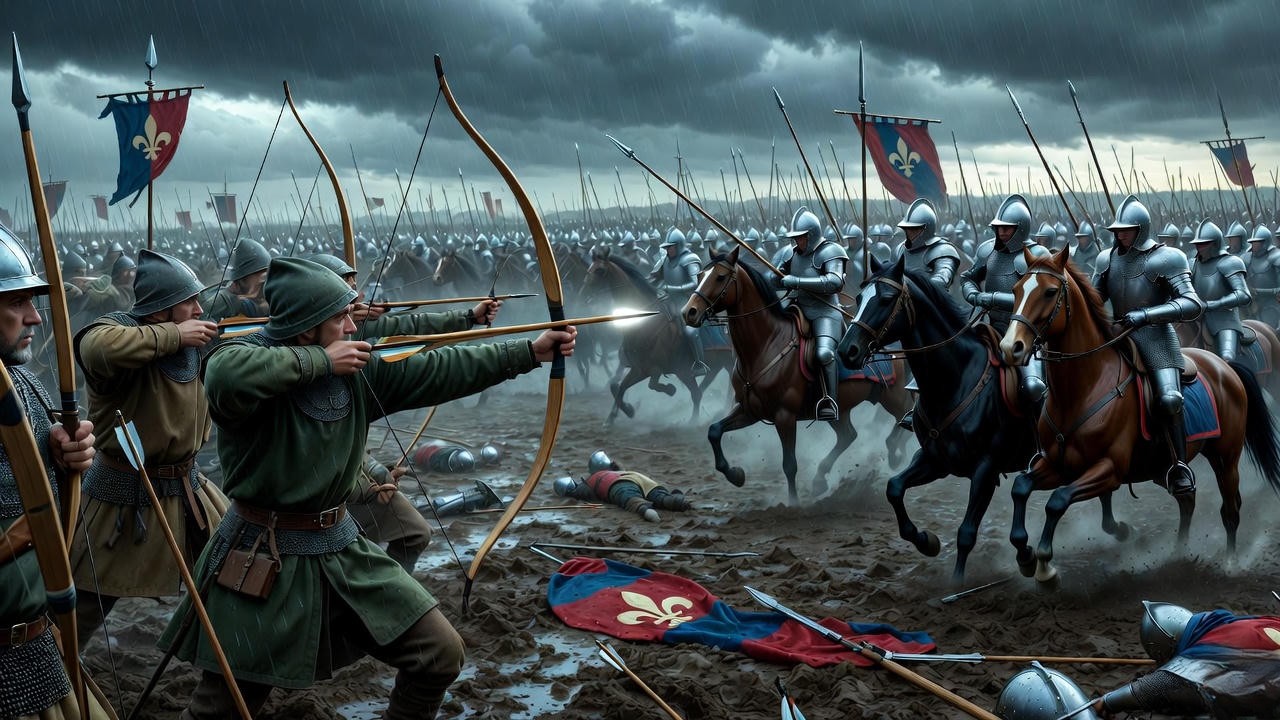
The “Once More Unto the Breach” Speech (Act 3, Scene 1)
Full text: [as above]
Rhetorical Analysis: Anaphora, imperative verbs, vivid imagery (tiger stiffening sinews, greyhounds straining). Contrasts peace/humility with war/rage.
The St. Crispin’s Day Speech (Act 4, Scene 3)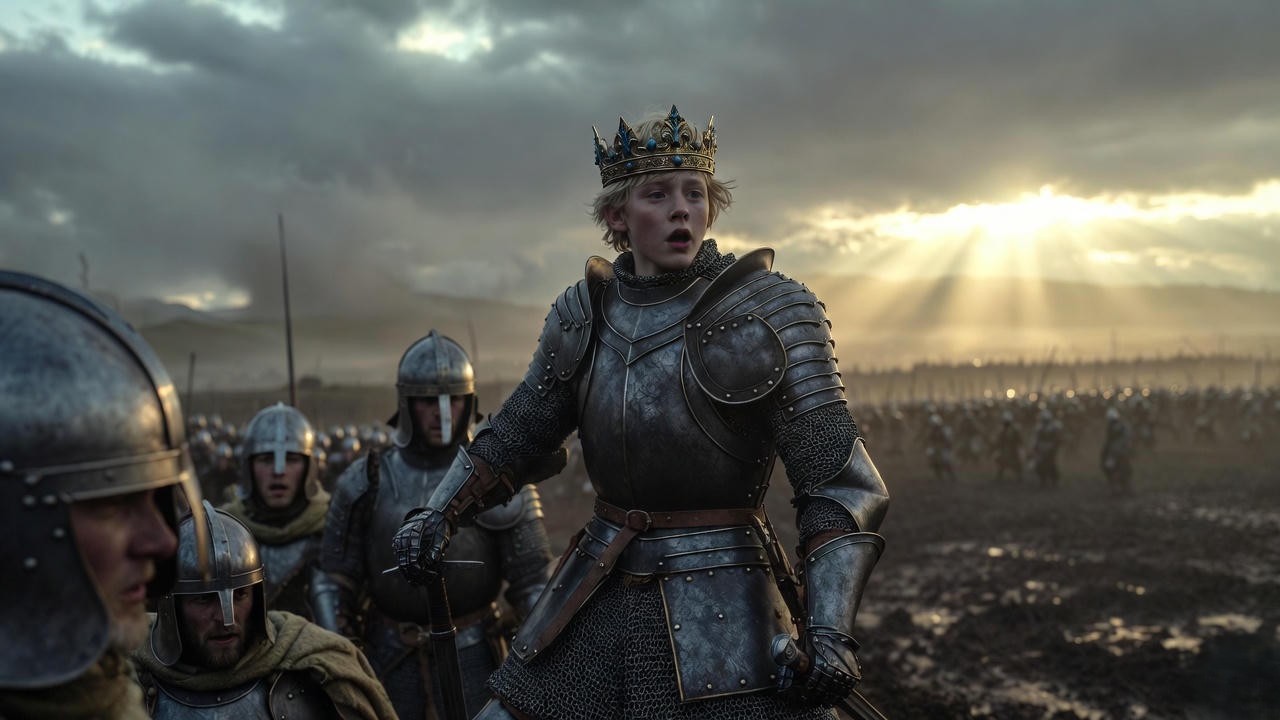
Full text: “Westmoreland: O that we now had here / But one ten thousand of those men in England / That do no work to-day!
King Henry: What’s he that wishes so? / My cousin Westmoreland? No, my fair cousin; / If we are mark’d to die, we are enow / To do our country loss; and if to live, / The fewer men, the greater share of honour… [culminating in band of brothers]”
Why Greatest: Considered English literature’s top motivational speech; compares to Lincoln, Churchill.
Henry’s Soliloquy on Ceremony (Act 4, Scene 1)
Explores leadership’s loneliness.
Henry V Quotes in Modern Culture
- Films: Laurence Olivier’s 1944 version (WWII propaganda boost); Kenneth Branagh’s 1989 gritty adaptation; Tom Hiddleston’s in The Hollow Crown (2012); Timothée Chalamet in The King (2019).
- Military/Sports: “Band of brothers” in WWII (Ambrose book, Spielberg series); coaches quote for team unity.
- Politics/Business: Leadership seminars use speeches for inspiration.
Why These Quotes Inspire Leaders Today
Henry exemplifies transformational leadership: vision, empathy, rhetoric. Modern studies (e.g., Wharton on Shakespearean management) highlight his innovation (longbow tactics), example-setting.
Practical Tips: Use “band of brothers” for team-building; apply mindset from “all things ready if minds be so” in goal-setting.
Frequently Asked Questions
What is the most famous quote from Henry V? “We few, we happy few, we band of brothers.”
Who delivers the “band of brothers” speech? King Henry V.
Is Henry V based on a true story? Yes, loosely on Henry V’s 1415 campaign.
What is the meaning behind “Once more unto the breach”? Rally to assault a wall gap.
How does Shakespeare portray leadership in Henry V? As charismatic yet burdensome.
Where can I read the full text of Henry V? Folger Shakespeare Library or MIT Shakespeare site.
Shakespeare’s Henry V endures because its quotes capture the essence of human resilience, leadership, and shared struggle. From the rallying cry at Harfleur to the immortal brotherhood at Agincourt, these lines remind us that true inspiration arises not from superiority, but from unity and courage in adversity.
Revisit the play, watch an adaptation, or apply a quote today. What’s your favorite? Share below—and explore more Shakespeare insights here.