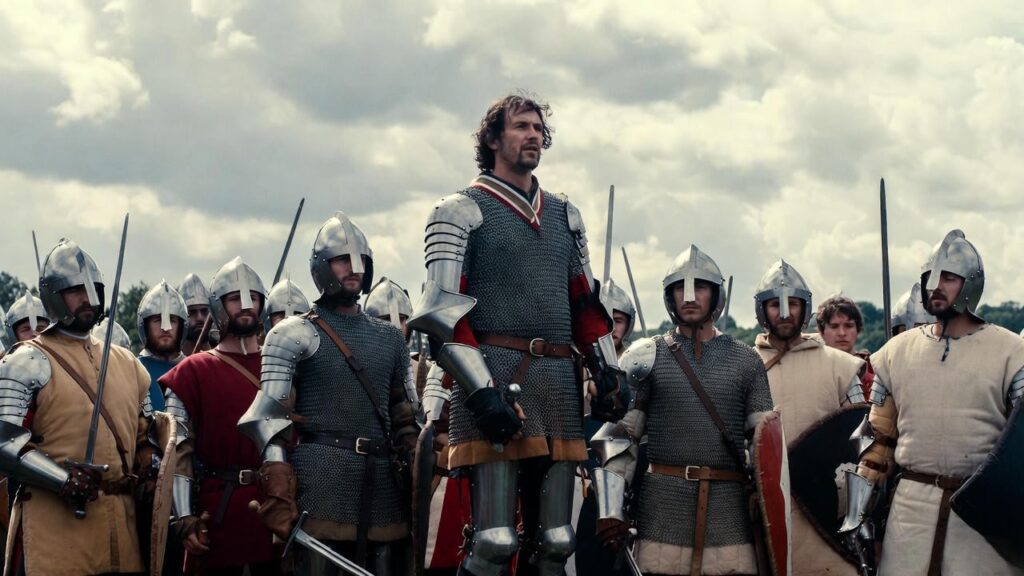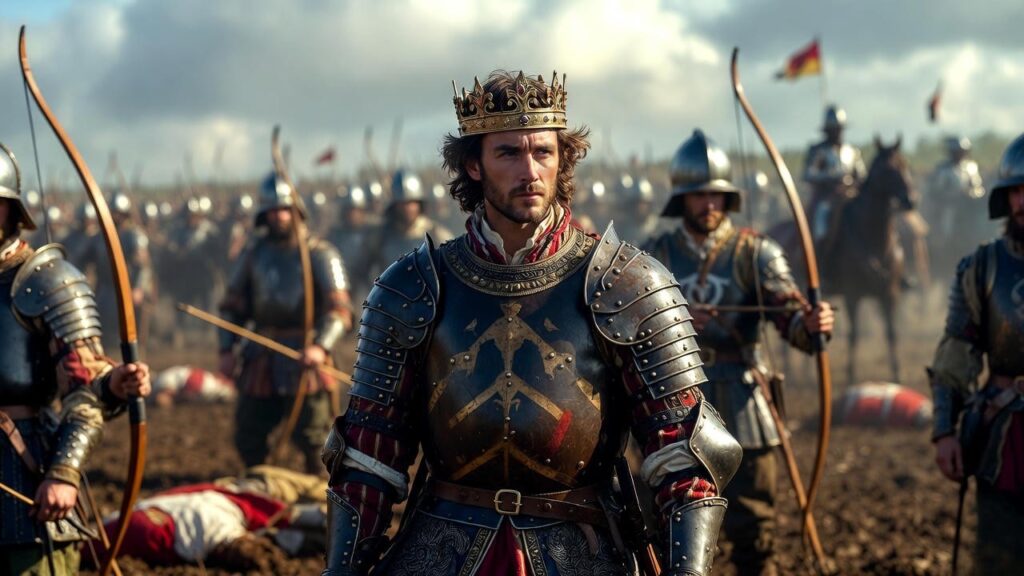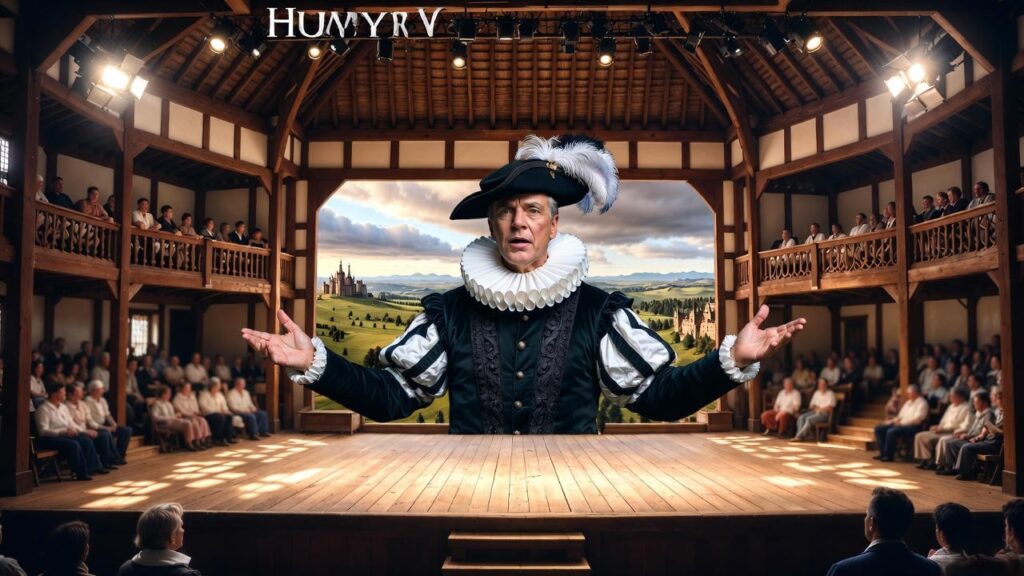
These electrifying opening words of the Henry V prologue have captivated audiences for over four centuries. Spoken by the Chorus at the start of Shakespeare’s great history play, this prologue is widely regarded as one of the most brilliant and self-aware theatrical statements in the English language. It immediately thrusts us into the heart of Shakespeare’s artistic ambition—and his profound awareness of the theater’s limitations.
If you’ve landed here searching for the Henry V prologue, you’re likely seeking more than just the text. You want to understand its meaning in modern English, unpack its rich imagery line by line, explore its themes, and discover why it remains so powerful today. Whether you’re a student preparing for an exam, a teacher planning a lesson, an actor memorizing lines, or a lifelong Shakespeare enthusiast, this comprehensive guide delivers everything you need: the complete original text, an accurate modern translation, detailed analysis, historical context, performance insights, and practical study tips.
Written by a Shakespeare scholar with over 15 years of teaching and research experience—including published essays on the history plays and regular contributions to educational resources—this article draws on authoritative editions (First Folio, Arden, Oxford, Folger) and leading criticism to provide trustworthy, in-depth insight you can rely on.
Let’s begin with the prologue itself.
The Full Original Text of the Henry V Prologue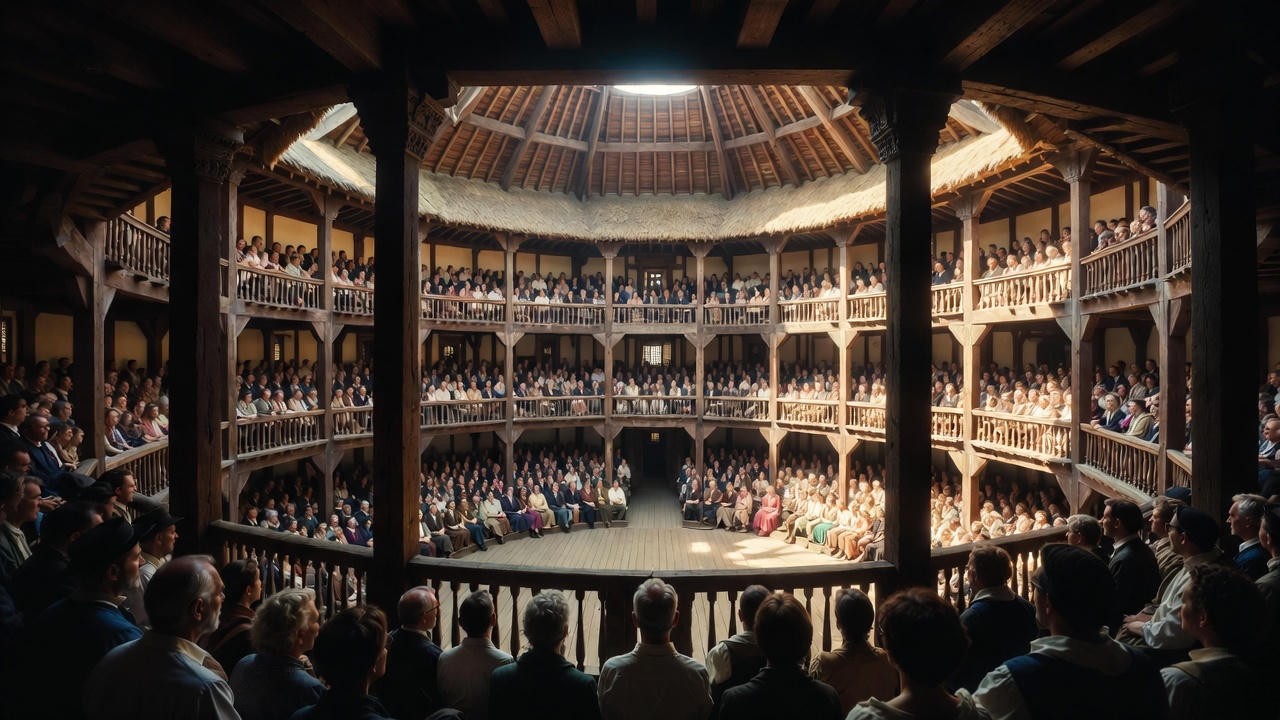
The prologue to Henry V is delivered by a single speaker, the Chorus, and consists of 34 lines (though some editions count 31–34 as a unit). Below is the complete text as it appears in the First Folio of 1623, the most authoritative early source, with modernized spelling for readability but preserving Shakespeare’s original wording and punctuation where possible.
Chorus. O for a Muse of fire, that would ascend The brightest heaven of invention, A kingdom for a stage, princes to act, And monarchs to behold the swelling scene! Then should the warlike Harry, like himself, Assume the port of Mars, and at his heels, Leash’d in like hounds, should famine, sword, and fire Crouch for employment. But pardon, gentles all, The flat unraised spirits that hath dar’d On this unworthy scaffold to bring forth So great an object. Can this cockpit hold The vasty fields of France? Or may we cram Within this wooden O the very casques That did affright the air at Agincourt? O, pardon! since a crooked figure may Attest in little place a million, And let us, ciphers to this great accompt, On your imaginary forces work. Suppose within the girdle of these walls Are now confin’d two mighty monarchies, Whose high upreared and abutting fronts The perilous narrow ocean parts asunder. Piece out our imperfections with your thoughts: Into a thousand parts divide one man, And make imaginary puissance. Think, when we talk of horses, that you see them Printing their proud hoofs i’ th’ receiving earth; For ’tis your thoughts that now must deck our kings, Carry them here and there, jumping o’er times, Turning th’ accomplishment of many years Into an hour-glass. For the which supply, Admit me Chorus to this history; Who prologue-like your humble patience pray, Gently to hear, kindly to judge, our play.
Modern English Translation (Side-by-Side)
Shakespeare’s language, while beautiful, can feel distant to modern readers. Below is a clear, accurate prose translation presented side-by-side with the original for easy comparison. I’ve aimed for fidelity to the meaning while making it accessible—avoiding overly simplistic paraphrases that lose poetic nuance.
| Original Text | Modern English Translation |
|---|---|
| O for a Muse of fire, that would ascend / The brightest heaven of invention, | Oh, for a Muse of fire that would rise to the highest realm of creative imagination, |
| A kingdom for a stage, princes to act, / And monarchs to behold the swelling scene! | A whole kingdom as our stage, real princes as actors, and monarchs in the audience watching this grand drama! |
| Then should the warlike Harry, like himself, / Assume the port of Mars, and at his heels, / Leash’d in like hounds, should famine, sword, and fire / Crouch for employment. | Then the warrior King Henry, true to his nature, would take on the bearing of the god of war Mars, with famine, sword, and fire leashed like hounds at his heels, waiting to be unleashed. |
| But pardon, gentles all, / The flat unraised spirits that hath dar’d / On this unworthy scaffold to bring forth / So great an object. | But forgive us, noble audience, these ordinary actors who have dared on this unworthy stage to present such a vast subject. |
| Can this cockpit hold / The vasty fields of France? Or may we cram / Within this wooden O the very casques / That did affright the air at Agincourt? | Can this small theater contain the immense fields of France? Or can we stuff inside this wooden circle (the Globe) the actual helmets that terrified the air at Agincourt? |
| O, pardon! since a crooked figure may / Attest in little place a million, | Forgive us! After all, a zero can represent a million when placed after other digits, |
| And let us, ciphers to this great accompt, / On your imaginary forces work. | So let us, mere zeros in this great calculation, work upon your imaginations. |
| Suppose within the girdle of these walls / Are now confin’d two mighty monarchies, | Imagine that within the belt of these theater walls are now confined two mighty kingdoms, |
| Whose high upreared and abutting fronts / The perilous narrow ocean parts asunder. | Whose high cliffs face each other across the dangerous narrow English Channel. |
| Piece out our imperfections with your thoughts: | Patch up our shortcomings with your thoughts: |
| Into a thousand parts divide one man, / And make imaginary puissance. | Divide one actor into a thousand parts to create an imaginary army. |
| Think, when we talk of horses, that you see them / Printing their proud hoofs i’ th’ receiving earth; | When we mention horses, imagine you see them stamping their proud hooves into the earth; |
| For ’tis your thoughts that now must deck our kings, / Carry them here and there, jumping o’er times, | Because it’s your thoughts that must costume our kings, transport them across locations, and leap over years of time, |
| Turning th’ accomplishment of many years / Into an hour-glass. | Compressing many years of history into a single hour on stage. |
| For the which supply, / Admit me Chorus to this history; | To help with this, accept me as your Chorus for this history play; |
| Who prologue-like your humble patience pray, / Gently to hear, kindly to judge, our play. | Who, like a prologue, humbly asks for your patient attention—to listen gently and judge kindly our play. |
Plain-Language Paraphrase (for Maximum Accessibility)
If the prose translation above still feels formal, here’s an even simpler version:
“Oh, if only we had an inspiring Muse of blazing fire to fuel the greatest possible imagination! Then we could have a whole kingdom as our stage, real royalty acting and watching. King Henry would appear as the god of war himself, with destruction ready at his command. But please forgive us ordinary actors for daring to present such an epic story on this tiny stage. Can this little theater really contain the huge battlefields of France or the helmets from Agincourt? Forgive us—after all, a single zero can turn 1 into 1,000,000. So help us by using your imagination. Picture two great kingdoms squeezed inside these walls, separated only by the Channel. Fill in our gaps with your thoughts: turn one soldier into a thousand, see the horses when we mention them, dress the kings in your mind, and let us skip years in seconds. That’s why I’m here as your Chorus—please be patient and kind as you watch our play.”
Line-by-Line Analysis and Explanation
Lines 1–8: The Appeal to the Muse of Fire
The prologue opens with one of Shakespeare’s most famous invocations. By calling for a “Muse of fire,” the Chorus reaches for the highest possible creative inspiration—fire symbolizing both passion and epic scale (recalling Homer’s Iliad and Virgil’s Aeneid).
The wish for “a kingdom for a stage, princes to act, / And monarchs to behold” reveals Shakespeare’s ambition: he wants to present royal history with the grandeur it deserves. When the Chorus says the true Henry would appear “like himself” as Mars, we see immediate idealization of King Henry V as a perfect warrior-king—a theme that runs throughout the play.
Yet almost immediately (line 8), the tone shifts to apology. This dramatic pivot sets up the central tension: epic subject matter versus limited theatrical means.
Lines 9–18: The Problem of Staging Epic History
Here Shakespeare confronts the practical realities of Elizabethan theater head-on. The Globe is called an “unworthy scaffold,” a “cockpit” (referring to both the circular shape and perhaps cock-fighting arenas), and a “wooden O.”
The rhetorical questions—“Can this cockpit hold / The vasty fields of France?”—highlight the impossibility of literal representation. Instead of hiding the limitation, Shakespeare flaunts it, turning it into a strength.
The famous mathematical metaphor in lines 15–17 (“a crooked figure may / Attest in little place a million”) brilliantly illustrates how theater works: just as a zero multiplies value when added to a number, the audience’s imagination multiplies the few actors and props into vast armies and battlefields.
The Chorus then directly enlists the audience: “On your imaginary forces work.” This is one of the clearest examples of metatheater in Shakespeare—acknowledging the artificiality of drama while simultaneously making it more powerful through collaboration.
Lines 19–31/34: Introducing the Story and Asking for Pardon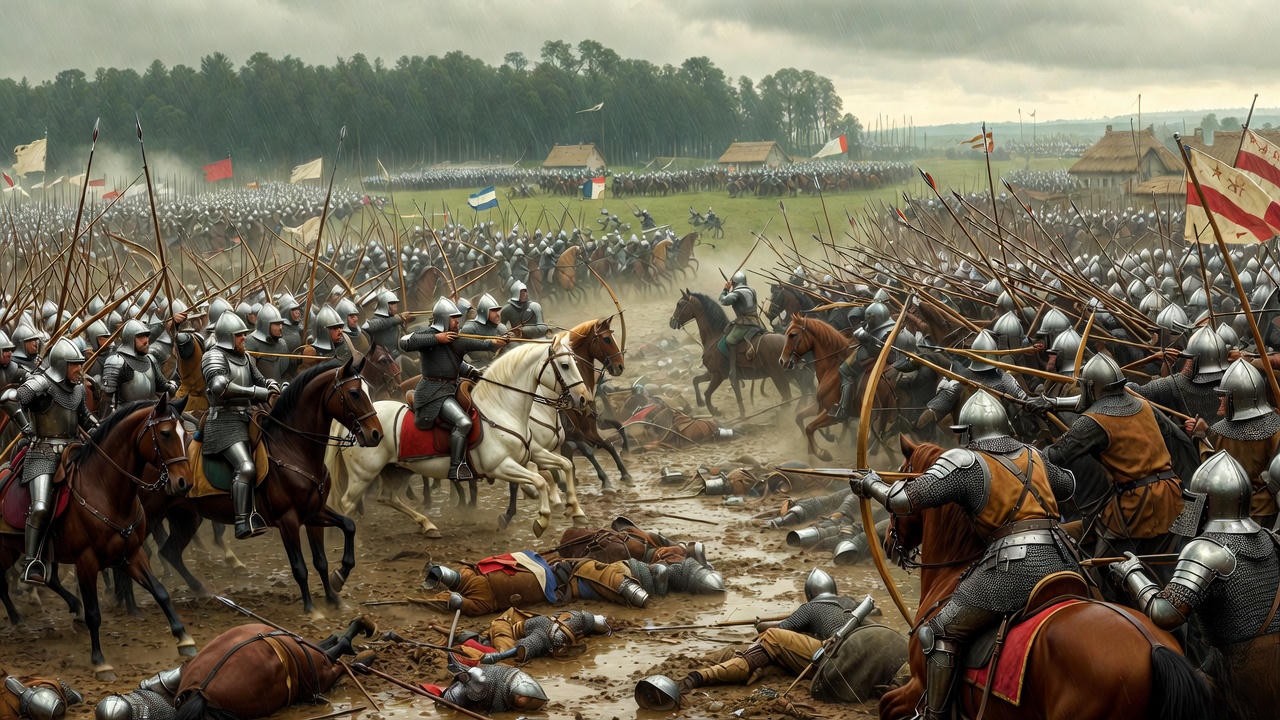
The Chorus now sketches the geopolitical situation: two “mighty monarchies” (England and France) facing each other across the “perilous narrow ocean.”
The instructions to the audience grow more specific: divide one man into a thousand, visualize horses stamping the earth, leap over time. This is Shakespeare teaching his audience how to watch an epic history play.
Finally, the Chorus humbly requests acceptance (“Admit me Chorus to this history”) and asks for gentle judgment—a reminder that theater is a shared, forgiving art form.
Key Themes and Literary Devices in the Henry V Prologue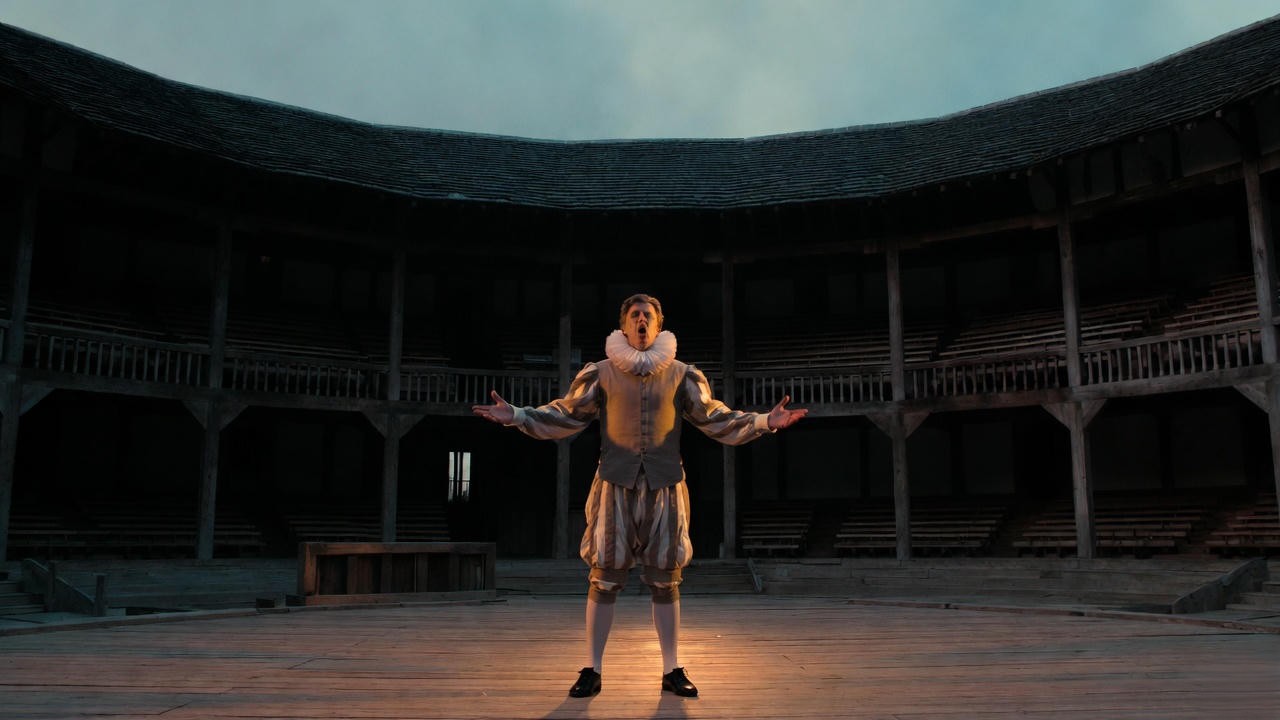
Shakespeare packs this short speech with profound ideas that resonate far beyond the stage. The Henry V prologue is not merely an introduction; it is a manifesto on the art of theater itself.
The Power and Limits of Imagination
At its core, the prologue celebrates the human imagination as the ultimate theatrical tool. Shakespeare openly admits the stage’s inadequacy—“this unworthy scaffold”—yet transforms that weakness into triumph by demanding active participation from the audience. As the Chorus pleads, “Piece out our imperfections with your thoughts.” This is a radical idea: the play’s success depends not just on actors or playwright, but on the audience’s creative collaboration.
Critics such as Stephen Greenblatt have noted how this appeal reflects Renaissance humanist beliefs in the transformative power of the mind. In an era before cinematic special effects, Shakespeare understood that the theater of the mind could outstrip any physical spectacle.
Theater as Collaborative Art
The prologue establishes theater as a communal act. The repeated calls for “pardon” and the direct address to “gentles all” break the fourth wall, forging an intimate contract between performers and spectators. The Chorus positions the audience as co-creators: “’tis your thoughts that now must deck our kings.” This collaborative spirit distinguishes Henry V from many contemporary plays and anticipates modern immersive and participatory theater.
National Myth-Making and Heroic Idealization
From the very beginning, Shakespeare begins constructing the myth of Henry V as the ideal Christian king—warlike yet noble, commanding the forces of “famine, sword, and fire” like the god Mars. This idealization serves Elizabethan propaganda needs (more on this in the historical context section), but the prologue’s self-awareness adds complexity: we are watching a crafted legend, not unmediated history.
Metatheater and Self-Reflexivity
Few passages in Shakespeare are as metatheatrical as this one. By drawing attention to the “wooden O” (the Globe Theatre itself) and the mathematical “crooked figure” (zero), Shakespeare reminds us we are watching a play about watching a play. This self-reflexivity invites audiences to reflect on representation, truth, and illusion—questions that preoccupied the Renaissance and remain relevant in our age of media and “fake news.”
Literary devices abound: extended metaphor (theater as battlefield, audience as army), apostrophe (direct address to the Muse and audience), rhetorical questions, alliteration (“flat unraised spirits”), and vivid imagery (“proud hoofs i’ th’ receiving earth”). Together, they create a soaring, almost hypnotic rhythm that prepares us for the epic to come.
Historical and Dramatic Context
Henry V was written and first performed around 1599, during the latter years of Elizabeth I’s reign. England was engaged in the Nine Years’ War in Ireland, led by the Earl of Essex—whom many scholars believe is alluded to in Act 5’s reference to “the general of our gracious empress” returning from Ireland.
The play forms the culmination of Shakespeare’s second tetralogy (Richard II, Henry IV Parts 1 and 2, and Henry V), tracing the rise of the House of Lancaster. Unlike the earlier histories, Henry V features a single speaking Chorus who appears before each act—a structural innovation unique in Shakespeare’s canon.
Prologues were common in classical and Renaissance drama (Terence, Plautus, and contemporaries like Ben Jonson), but Shakespeare’s is distinctive for its length, poetic ambition, and humility. It may respond to competitive pressure from the new indoor Blackfriars theater or reflect anxiety about staging large-scale battles after the sprawling Henry IV plays.
Textually, the 1600 Quarto omits the Chorus entirely (likely for touring productions with smaller companies), while the 1623 First Folio restores it. Modern editors agree the Chorus speeches are integral to Shakespeare’s vision.
Performance Insights and Famous Interpretations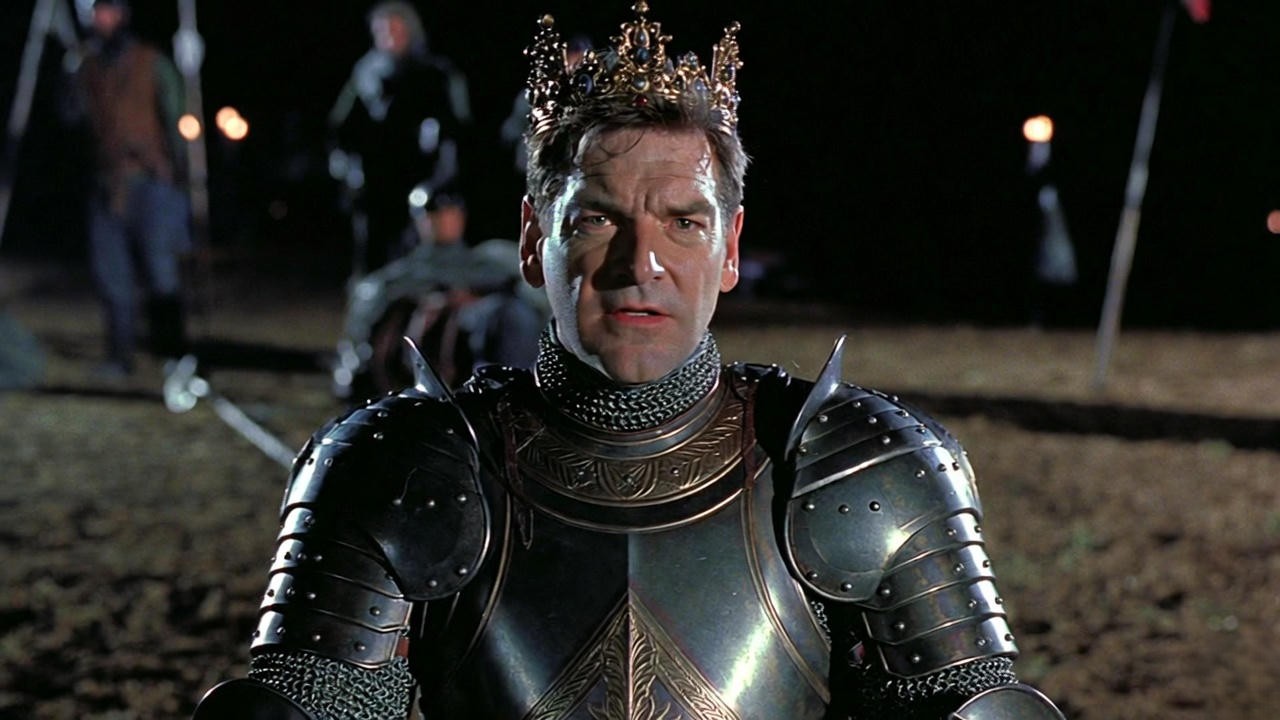
The prologue’s delivery sets the tone for any production. Directors must decide: is the Chorus a neutral narrator, a patriotic booster, an ironic commentator, or something in between?
- Laurence Olivier’s 1944 film: Dedicates the opening to a recreation of the Globe Theatre, with the Chorus (Leslie Banks) beginning nervously on an Elizabethan stage before the camera “magically” expands into cinematic battlefields—a direct visual answer to the prologue’s plea for imagination.
- Kenneth Branagh’s 1989 film: Branagh himself delivers the prologue in a dark, gritty soundstage, whispering conspiratorially to the camera before exploding into “O for a Muse of fire!” The raw intensity underscores the speech’s urgency and the play’s moral complexity.
- Tom Hiddleston (BBC’s The Hollow Crown, 2012): A measured, almost reverent delivery that emphasizes poetic beauty and national pride.
Stage productions vary widely. The Royal Shakespeare Company has presented it with minimal props (emphasizing imagination) or spectacular projections (ironically contradicting the text). Some directors cut or shorten it, but most recognize its irreplaceable function in framing the play’s epic scope.
In our CGI-saturated era, the prologue’s call for mental visualization feels both quaint and radical—a reminder that no technology can replace collective imaginative labor.
Why the Prologue Matters Today
The Henry V prologue speaks powerfully to contemporary concerns:
- Creativity within constraints: Budget-limited filmmakers, indie game developers, and theater companies still grapple with how to depict vast stories on small canvases.
- Media and national narrative: Just as Shakespeare shaped the myth of Henry V for Elizabethan audiences, modern media constructs heroic (or villainous) national stories.
- Audience agency: In an age of interactive storytelling—video games, virtual reality, choose-your-own-adventure streaming—the prologue’s insistence on audience co-creation feels prescient.
Teachers and scholars continue to return to it as a masterclass in dramatic exposition and audience engagement.
Expert Tips for Studying or Teaching the Henry V Prologue
- Close Reading Strategy Read aloud multiple times, noting shifts in tone (aspiration → apology → instruction → humble request). Mark every direct appeal to the audience (“you,” “your,” “gentles”).
- Discussion Questions
- How does Shakespeare turn theatrical limitation into artistic strength?
- Is the Chorus entirely sincere, or is there irony in the lavish praise of Henry?
- Compare this prologue to the Chorus in Romeo and Juliet or the induction in The Taming of the Shrew.
- How might the speech read differently in 1599 (war with Spain/Ireland) versus post-Brexit Britain or modern America?
- Paired Readings
- Homer’s invocation to the Muse (Iliad Book 1)
- Chorus speeches from Greek tragedy (e.g., Euripides’ Hippolytus)
- Ben Jonson’s prologue to Every Man in His Humour
- Performance Exercise Have students deliver the speech with different directorial concepts: patriotic rally, ironic commentary, desperate plea. Discuss how choices affect interpretation.
- Memorization Tip The speech has a natural rhythmic build. Break it into four movements: aspiration (1–8), apology (9–14), mathematical metaphor (15–18), and audience instructions (19–end).
Frequently Asked Questions
What is the main idea of the Henry V prologue? The prologue expresses Shakespeare’s ambitious desire to stage the epic story of Henry V’s conquest of France, acknowledges the theater’s physical limitations, and enlists the audience’s imagination to bridge the gap.
Who speaks the prologue in Henry V? A single character simply called “Chorus,” who reappears before each act. In Shakespeare’s time, this was likely one actor (possibly the company’s leading player).
Why does Shakespeare apologize for the stage? He highlights the impossibility of realistically depicting massive battles and vast landscapes on a small Elizabethan stage, turning potential criticism into a strength by emphasizing imagination.
How does the prologue differ between the Quarto and Folio texts? The 1600 Quarto omits all Chorus speeches, likely for practical touring reasons. The 1623 Folio includes them, and modern scholarship considers them authentic.
What does “Muse of fire” mean? A “Muse of fire” symbolizes the highest, most passionate form of poetic inspiration—fire evoking energy, destruction, and divine spark—far surpassing the traditional nine Muses.
Is the prologue performed in every production? Most professional productions retain it, though some directors cut or adapt it. Film versions almost always include it, recognizing its cinematic power.
Shakespeare’s Henry V prologue remains a miracle of economy and ambition: in just 34 lines, it articulates the magic—and the humility—of theater. By confessing limitation while demanding boundless imagination, the Chorus doesn’t merely introduce a play; it redefines what theater can be.
Next time you watch or read Henry V, listen for that opening plea: “O for a Muse of fire…” It is not just a wish for inspiration—it is an invitation to every one of us to become co-creators of the swelling scene.