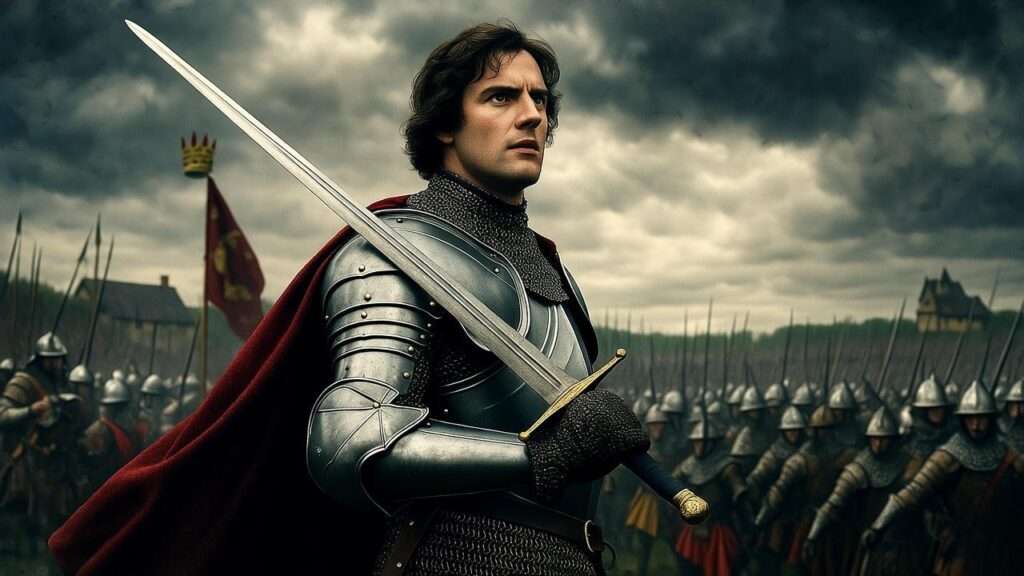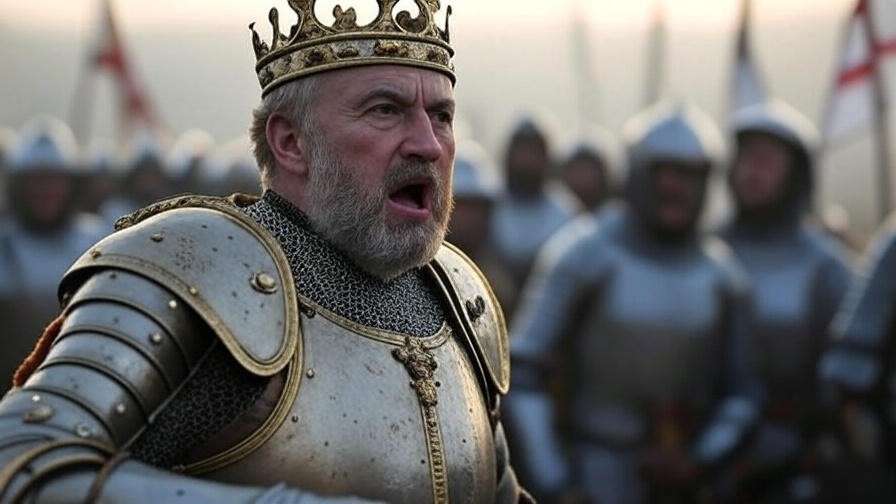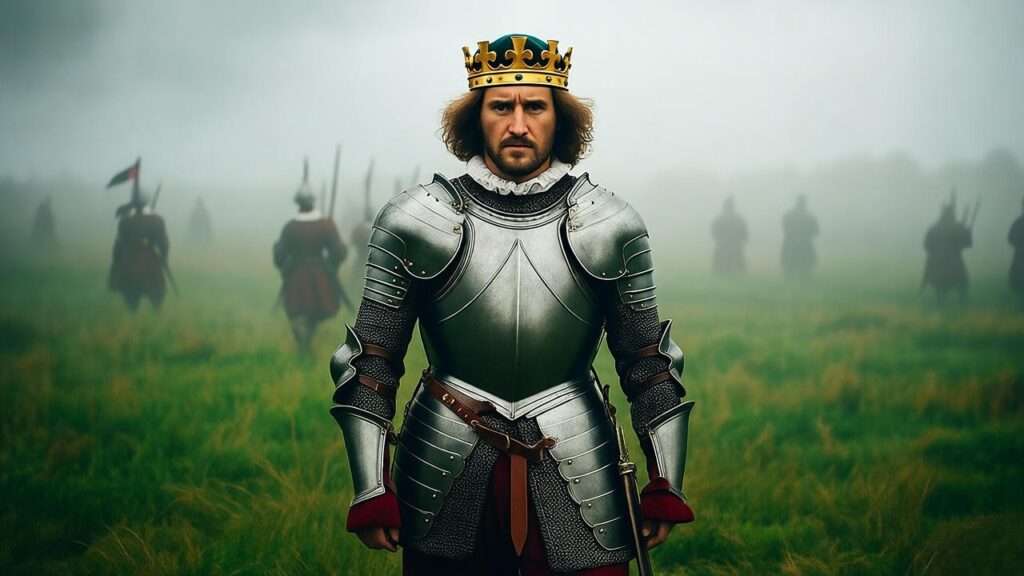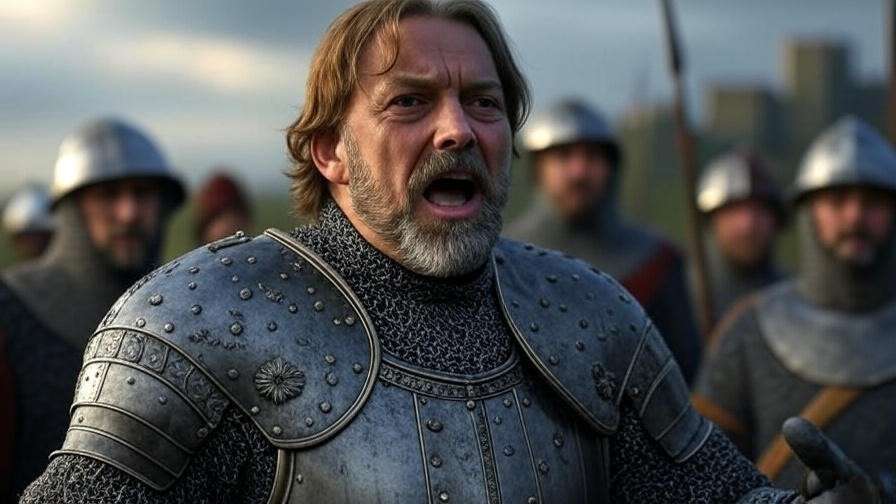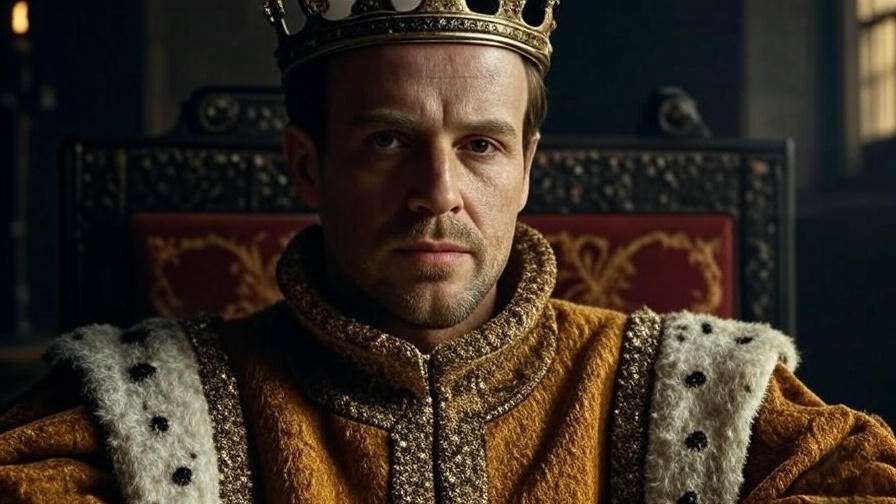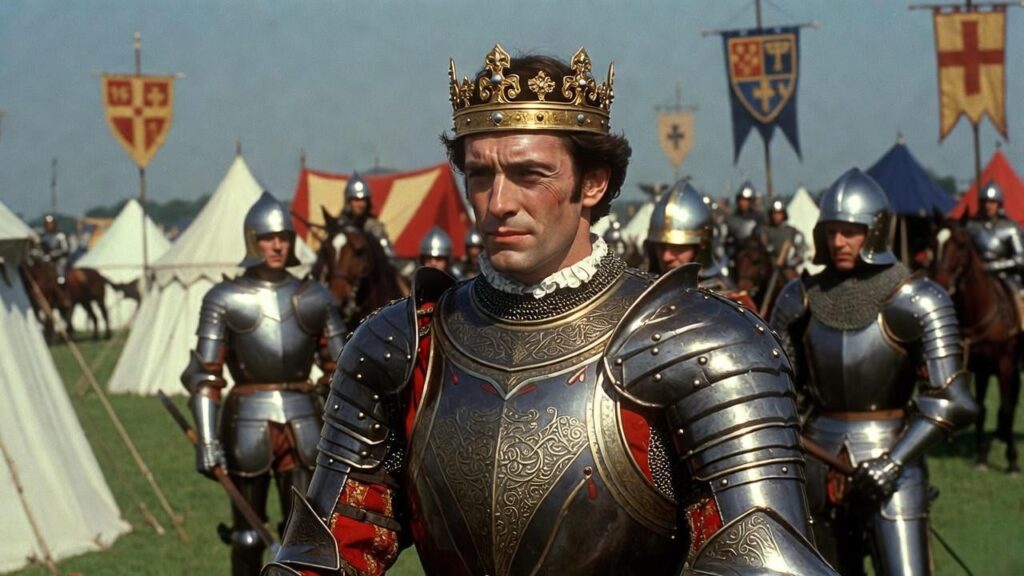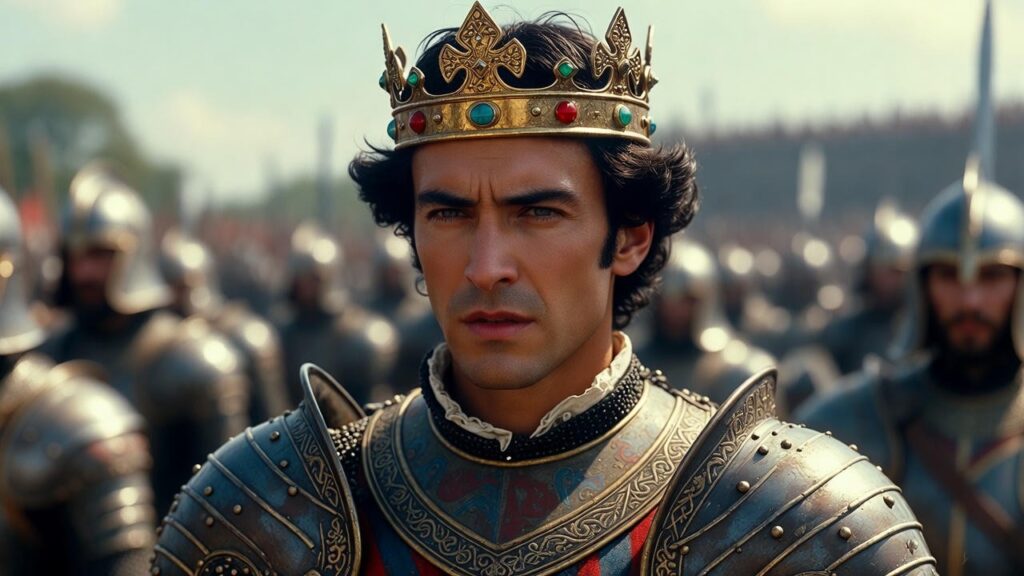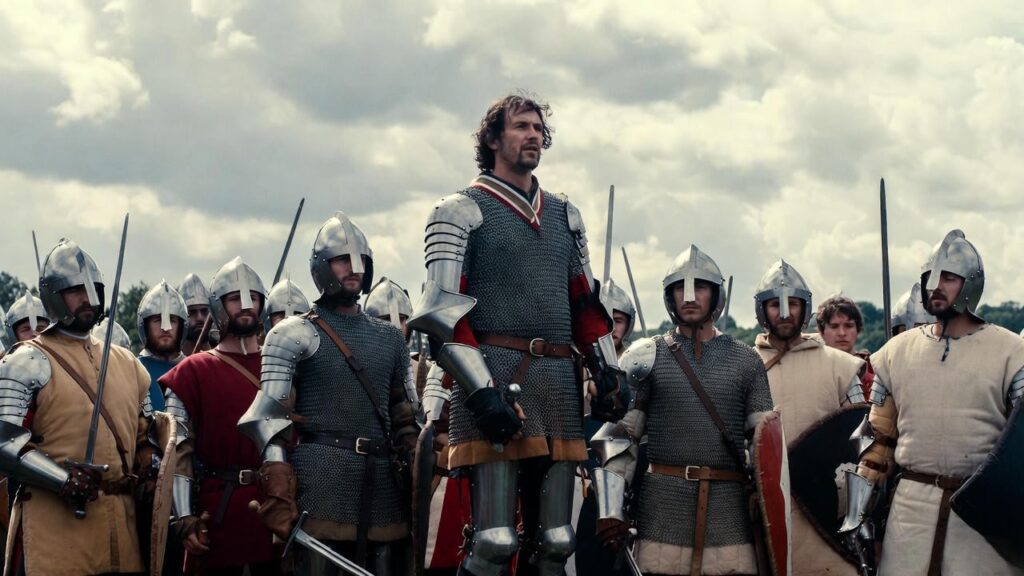
Imagine a young king, once dismissed as a wayward prince carousing in taverns, stepping onto the battlefield against impossible odds. His army is exhausted, outnumbered, and facing annihilation. Yet, in one of the most electrifying moments in all of literature, he turns to his men and declares: “We few, we happy few, we band of brothers.” These words from the St. Crispin’s Day speech in Henry V have echoed through centuries, inspiring soldiers, leaders, and audiences alike. They capture the essence of what makes Shakespeare’s Henry V (often searched as “Henry V Shakespere”) not just a history play, but a profound exploration of leadership, the brutal realities of war, and the complex forging of a hero-king.
Written around 1599, during the late Elizabethan era when England faced threats from Spain and internal divisions, Henry V concludes Shakespeare’s second tetralogy (the Henriad). It transforms Prince Hal from the rebellious youth of Henry IV Parts 1 and 2 into a mature monarch who claims the French throne, leads his forces to victory at Agincourt, and unites a fractured kingdom. But Shakespeare doesn’t offer simple heroism. The play celebrates triumphant leadership while subtly probing its moral costs—questions of just war, the burdens of power, and the human price of glory. For students analyzing the text, theater enthusiasts seeking deeper insight, or modern leaders drawing timeless lessons, this article provides a comprehensive guide far beyond basic summaries. We’ll examine historical context, character development, iconic speeches, thematic ambiguities, and enduring relevance to deliver genuine value: a clearer understanding of why Henry V remains Shakespeare’s most stirring and debated history play.
Historical Context – The Real Henry V and Shakespeare’s Sources
To appreciate Shakespeare’s artistry, we must first understand the historical foundation. The real Henry V (1386–1422) ascended the throne in 1413 after his father, Henry IV, usurped it from Richard II. His short reign focused on renewing England’s claim in the Hundred Years’ War (1337–1453), a prolonged conflict over territorial and dynastic rights.
Henry’s most famous triumph was the Battle of Agincourt on October 25, 1415. Despite being vastly outnumbered (estimates suggest 6,000–9,000 English against 20,000–30,000 French), the English longbowmen and disciplined tactics decimated the French cavalry in muddy terrain. Casualties were staggering: thousands of French dead versus a few hundred English. This victory boosted Henry’s prestige and led to the Treaty of Troyes (1420), naming him heir to the French throne.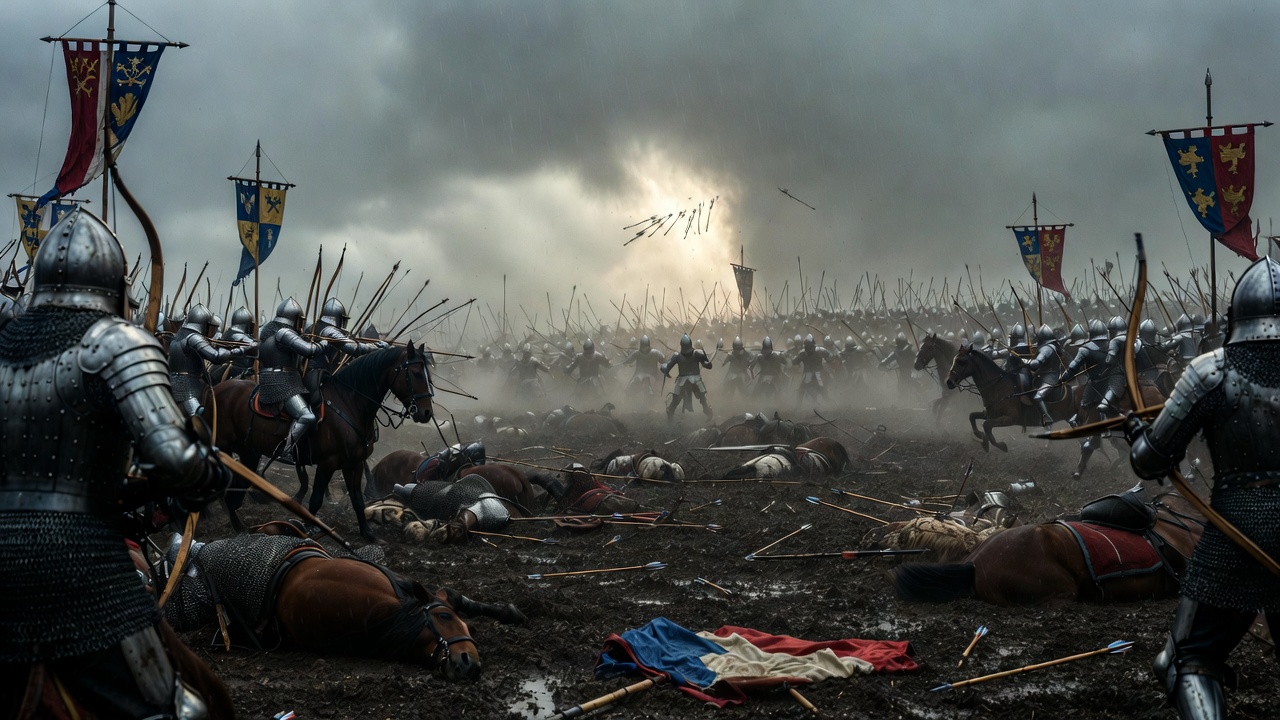
Shakespeare drew primarily from Raphael Holinshed’s Chronicles of England, Scotland, and Ireland (second edition, 1587), supplemented by Edward Hall’s earlier chronicle and possibly Samuel Daniel’s poems. Holinshed portrays Henry as a reformed, heroic figure whose youthful excesses give way to wise kingship. Shakespeare amplifies this for drama: he exaggerates the underdog status at Agincourt, invents or adapts speeches (like St. Crispin’s Day), and uses the Chorus to acknowledge the stage’s limitations in depicting epic events.
Yet Shakespeare departs from strict accuracy to heighten tension and ambiguity. For instance, the historical Henry was pragmatic and sometimes ruthless—executing traitors and enforcing discipline—but Shakespeare adds layers of introspection, such as Henry’s disguised wander among his troops on the eve of battle, revealing private doubts. Written amid Elizabethan patriotism (post-Armada, with ongoing Irish campaigns), the play reflects both triumphalism and unease about conquest. The Chorus’s final epilogue reminds us of the eventual Lancastrian collapse under Henry VI, underscoring the fragility of heroic victories.
This historical grounding allows Shakespeare to explore leadership not as flawless myth but as a human endeavor shaped by circumstance, morality, and rhetoric.
Plot Summary – A Concise Yet Insightful Overview
Henry V unfolds across five acts, framed by the Chorus—a meta-theatrical device that urges the audience to imagine grand scenes beyond the Globe Theatre’s wooden O.
- Acts 1–2: The play opens with the Archbishop of Canterbury justifying Henry’s claim to France via the Salic Law (excluding female inheritance). The Dauphin’s mocking gift of tennis balls provokes Henry’s declaration of war. A treason plot by Cambridge, Scroop, and Grey is uncovered and punished, showcasing Henry’s resolve. Meanwhile, comic figures like Pistol, Nym, and Bardolph (Falstaff’s old companions) enlist, providing low-life contrast.
- Acts 3–4: The siege of Harfleur tests the army; Henry delivers the rousing “Once more unto the breach” speech. After the city’s surrender (with threats of massacre), the English march to Agincourt. The eve-of-battle scene features Henry’s incognito conversations with soldiers, exposing fears and the king’s isolation (“Upon the king” soliloquy). The St. Crispin’s Day speech unites the troops before the miraculous victory.
- Act 5: Peace negotiations lead to Henry’s courtship of Princess Katherine in a charming, linguistically playful scene. The Chorus epilogue foreshadows tragedy: Henry’s early death and the loss of France.
The Chorus bridges epic scope and intimate drama, reminding us: “Can this cockpit hold / The vasty fields of France?”
The Making of a Hero King – Henry’s Character Arc
Henry’s transformation is the play’s heart—from “wild” Prince Hal to ideal king—yet Shakespeare presents it with nuance.
From Prince Hal to Warrior King – Redemption or Reinvention? Henry rejects his past explicitly, banishing Falstaff in Henry IV, Part 2. In Henry V, he channels tavern-honed cunning into statesmanship: disguising himself to gauge morale, using rhetoric to inspire, and executing justice swiftly (e.g., hanging Bardolph for theft to maintain discipline). Is this redemption or calculated reinvention? Critics debate; some see genuine growth, others Machiavellian pragmatism.
Key Traits of Leadership – Wisdom, Ruthlessness, and Charisma Henry balances mercy and severity. He pardons a drunken railer but executes traitors without hesitation. His charisma shines in uniting diverse forces—English, Welsh (Fluellen), Scottish, Irish—into a “band of brothers.”
The Burden of Kingship – “Upon the King” Soliloquy Deep Dive In Act 4, Scene 1, Henry laments: “We must bear all. O hard condition!” He envies commoners’ sleep while kings bear responsibility. This soliloquy reveals vulnerability, humanizing the hero and questioning divine right.
Leadership Lessons from Henry V – Timeless Insights for Today
Henry exemplifies inspirational leadership.
Inspirational Rhetoric – Mastering Motivation in Crisis Henry uses ethos (credibility), pathos (emotion), and logos (logic). He addresses men as equals, invokes shared honor, and reframes disadvantage as opportunity.
Famous Speeches Analyzed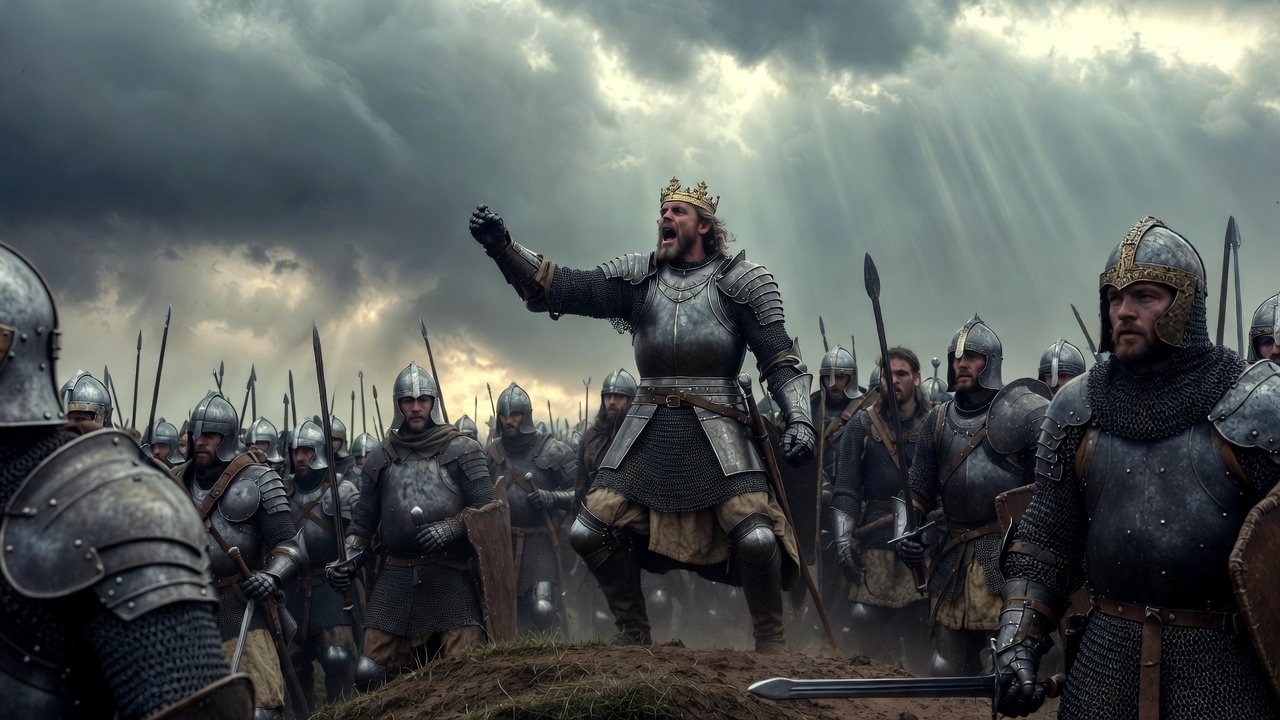
- “Once More Unto the Breach” (Act 3, Scene 1): During Harfleur’s siege, Henry urges: “Once more unto the breach, dear friends, once more; / Or close the wall up with our English dead.” He invokes animal ferocity (“imitate the action of the tiger”) and heritage (“fathers that, like so many Alexanders”). It transforms exhaustion into resolve, ending with “God for Harry, England, and Saint George!”
- St. Crispin’s Day Speech (Act 4, Scene 3): Facing overwhelming odds, Henry reframes scarcity: “The fewer men, the greater share of honour.” He promises eternal memory: “We few, we happy few, we band of brothers.” This builds unity, legacy, and brotherhood—turning potential defeat into mythic triumph.
Modern Applications – What Leaders Can Learn Henry’s techniques apply today: foster unity in diverse teams, use storytelling for motivation, balance authority with empathy. In business, sports, or military contexts, leaders echo his ability to connect personally and inspire purpose amid adversity. His speeches emphasize shared sacrifice and glory—lessons in turning crisis into collective strength.
War and Its Realities – Glory vs. Brutality
Shakespeare refuses to romanticize war entirely. While the play delivers rousing calls to arms, it juxtaposes them with unflinching glimpses of suffering, fear, and moral compromise.
The Dual Portrayal of War – Heroic Triumph and Human Cost The famous battles—Harfleur’s siege and Agincourt—are depicted with heroic energy, yet Shakespeare includes the grim underbelly. Henry’s threats at Harfleur are chilling: he warns of infants impaled on pikes and virgins violated if the town resists. This isn’t sanitized glory; it’s a reminder that victory demands atrocity. The common soldiers’ banter (Pistol’s bombast, Bates and Williams’ skepticism) grounds the epic in human reality—war as exhaustion, hunger, and doubt rather than pure valor.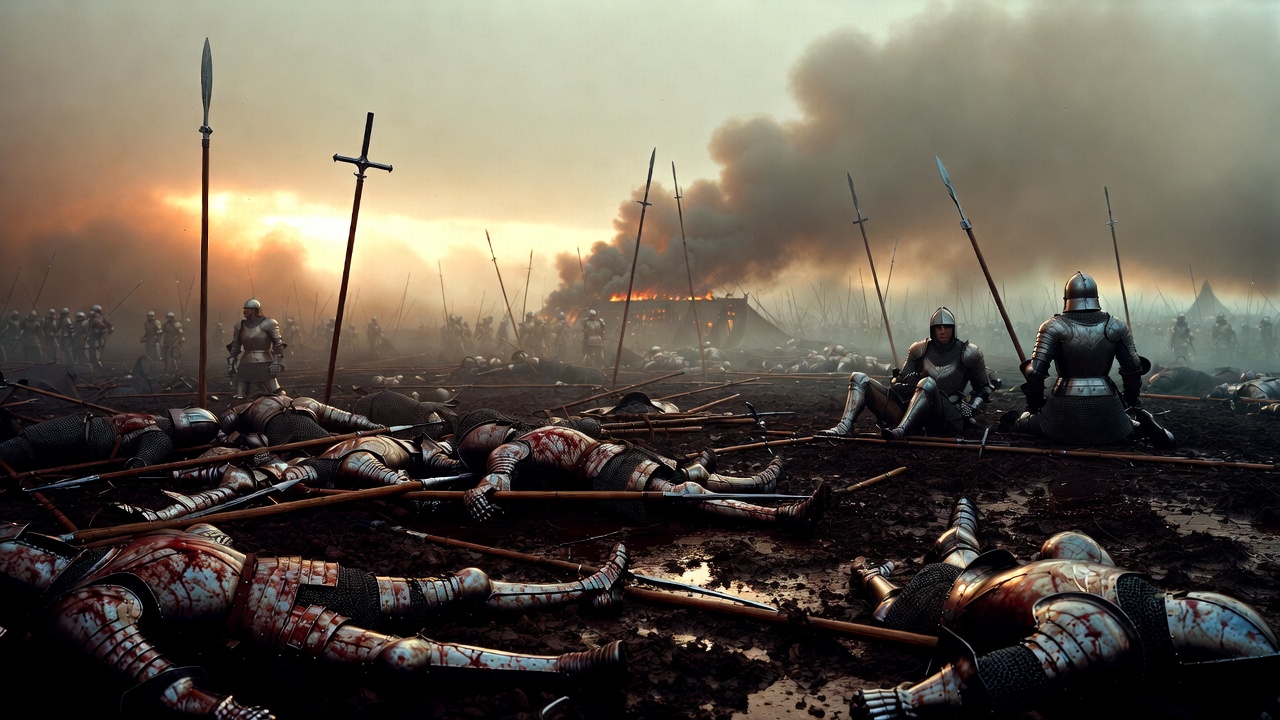
Nationalism and Unity – “Band of Brothers” in a Divided Kingdom Henry’s greatest achievement is forging unity from division. His army includes English, Welsh (Fluellen’s pride in leeks), Scottish (Jamy), and Irish (Macmorris) soldiers—mirroring Elizabethan England’s composite identity. The “band of brothers” rhetoric transcends class and nation, creating shared purpose. Yet Shakespeare subtly critiques: unity is forged through conquest, and the play’s epilogue recalls how quickly it unraveled.
Moral Ambiguities – Is the War Just? The Salic Law justification feels tenuous, a legal pretext for invasion. Henry’s private prayer before battle pleads for forgiveness for his father’s usurpation, suggesting guilt. The play questions whether divine favor (the “miraculous” victory) endorses the cause or merely rewards cunning. Modern readers often see anti-war undertones, especially in the soldiers’ debate: “If the cause be not good, the king himself hath a heavy reckoning to make.”
Key Supporting Characters and Their Roles
Supporting figures enrich the portrait of kingship and war.
The Chorus – Shakespeare’s Narrative Voice The Chorus apologizes for the stage’s limitations while expanding imagination: “Piece out our imperfections with your thoughts.” This meta-device bridges audience and epic, reminding us theater is collaborative illusion—yet it also underscores the constructed nature of heroic narrative.
Common Soldiers and Comic Relief – Pistol, Fluellen, and the “Low” Perspective Pistol’s bluster and Bardolph’s fate humanize the ranks. Fluellen’s pedantic honor (comparing Henry to Alexander) adds humor and loyalty. These voices contrast noble rhetoric, showing war’s absurdity and everyday heroism.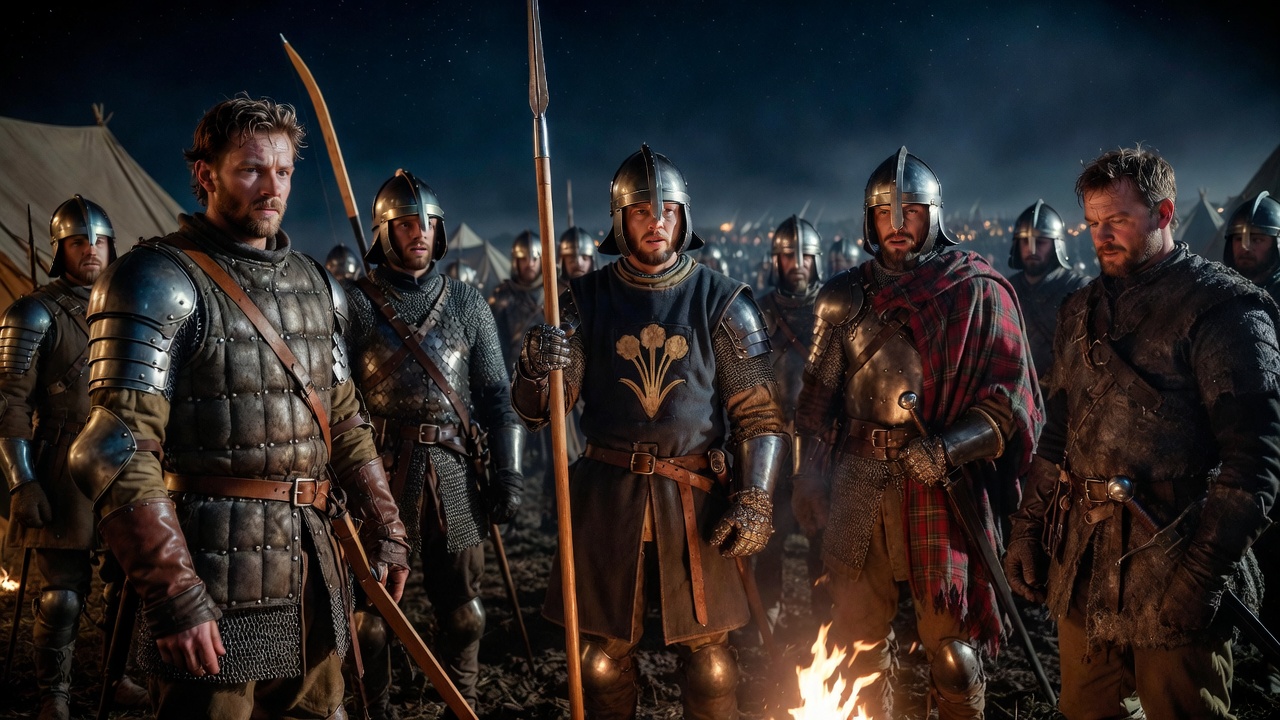
Katherine and the Wooing Scene – Romance Amid Conquest Act 5’s courtship is light-hearted yet poignant. Henry’s awkward French and Katherine’s limited English highlight cultural barriers. The scene softens the conqueror, suggesting peace through marriage—but it’s conquest by other means.
Themes Explored in Depth
Honor, Heroism, and the Hero-King Ideal Henry embodies the Renaissance ideal of the prince: learned, pious, brave. Yet his heroism is performative—calculated for effect.
Power, Politics, and Manipulation Henry masters persuasion, from parliamentary justification to battlefield oratory. Power requires performance.
Language and Rhetoric as Weapons Speeches are Henry’s true arsenal—more potent than swords.
Identity and Brotherhood in Wartime War forges identity, but at what cost to individuality?
Why Henry V Remains Shakespeare’s Greatest History Play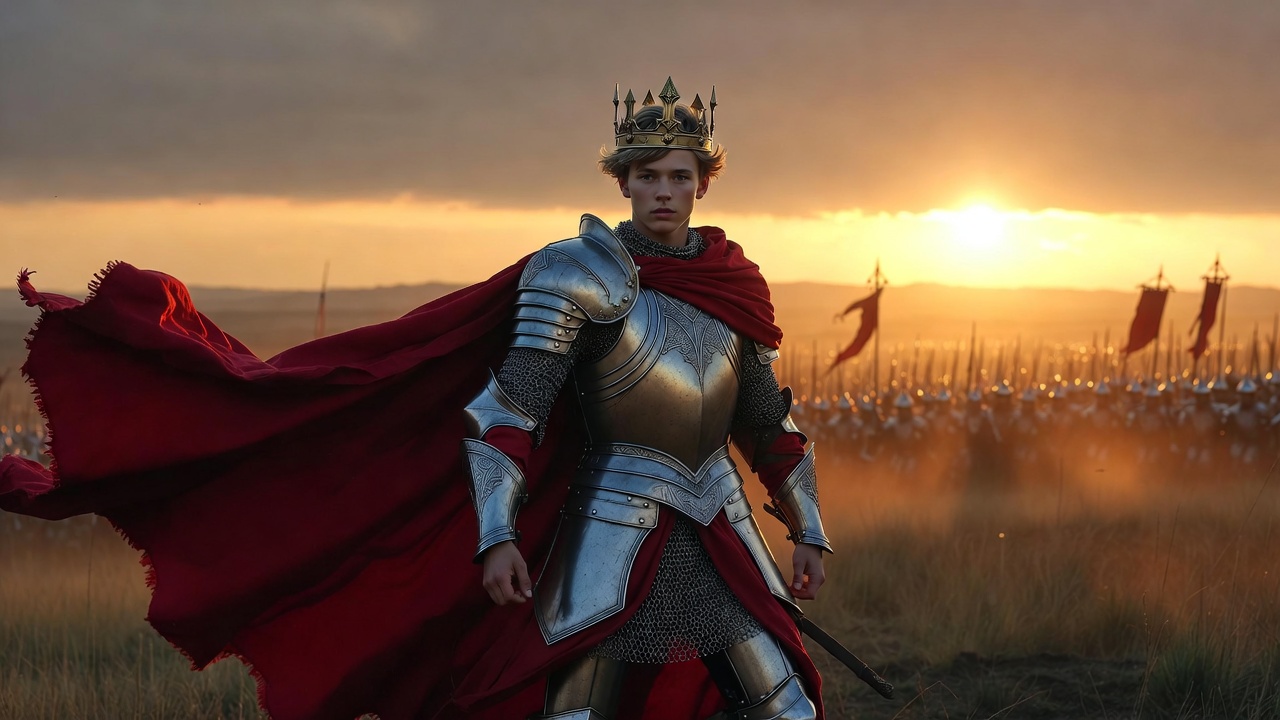
Compared to Richard II‘s lyrical tragedy or Henry IV‘s comic depth, Henry V achieves epic sweep with psychological nuance. It balances patriotism and doubt, making it timeless. Adaptations—like Branagh’s 1989 film or Olivier’s 1944 version—reinforce its relevance, from WWII morale to modern leadership seminars.
The Enduring Legacy of Henry V
Henry V celebrates leadership’s heights while exposing its shadows. Henry’s heroism inspires, yet invites scrutiny: Is true greatness possible without moral compromise? The play endures because it mirrors our own leaders—flawed, charismatic, burdened.
Revisit the text, watch a strong adaptation, or reflect: What “band of brothers” moments define your own challenges? Shakespeare’s insight remains vital in any era.
Key Quotes from Henry V
- “Once more unto the breach, dear friends, once more…” (Act 3, Scene 1)
- “We few, we happy few, we band of brothers” (Act 4, Scene 3)
- “Upon the king! Let us our lives, our souls, our debts, our careful wives… all laid upon the king” (Act 4, Scene 1)
- “God for Harry, England, and Saint George!” (Act 3, Scene 1)
- “I see you stand like greyhounds in the slips” (Act 3, Scene 1)
FAQs
What is the main theme of Henry V? Leadership’s triumphs and burdens, war’s glory and cost, and the forging of national unity through rhetoric and resolve.
Is Henry V a hero or a villain? Neither purely—he’s a complex hero-king: inspiring yet ruthless, redemptive yet calculating.
Why is the St. Crispin’s Day speech so famous? It masterfully transforms disadvantage into honor, creating lasting brotherhood and legacy—widely quoted in motivation and leadership contexts.
How historically accurate is Shakespeare’s Henry V? Partially: Agincourt’s victory is real, but Shakespeare dramatizes numbers, invents speeches, and adds moral depth absent in chronicles.
What leadership lessons does Henry V teach? Inspire through shared purpose, use rhetoric ethically, balance justice with mercy, and lead by example in crisis.