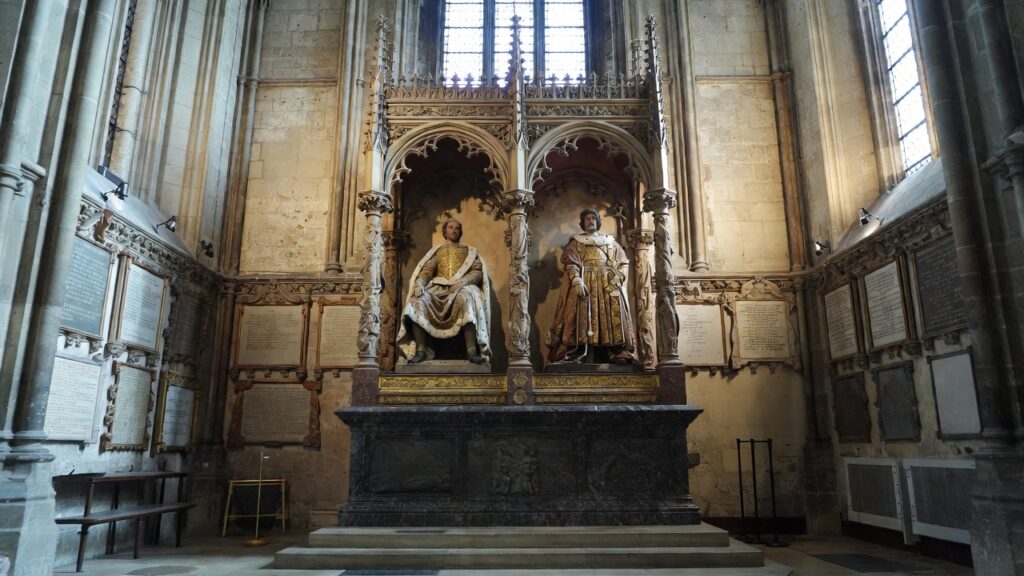
Imagine standing in the hushed ambulatory of Westminster Abbey, the air thick with centuries of history, as your eyes lift to an elevated stone cage suspended above the tombs below. This is the chantry chapel of Henry V — a soaring late-Gothic masterpiece that guards the Henry V tomb, the final resting place of the warrior king whose victories at Agincourt Shakespeare transformed into one of the most stirring calls to courage in English literature: “Once more unto the breach, dear friends, once more…”
For Shakespeare enthusiasts, history lovers, literature students, and anyone planning a pilgrimage to Westminster Abbey, the Henry V tomb represents far more than a medieval monument. It is the physical anchor for the real man behind the mythic hero of Henry V — a place where stone, armour, and lost silver meet the dramatic rhetoric of leadership, brotherhood, and divine right that Shakespeare immortalized. Yet most online guides offer only surface-level facts: a location note, a single photo, or a brief mention of the funeral armour. This in-depth exploration goes further — detailing the tomb’s construction timeline, architectural symbolism, rare 1953 examination findings, surviving funeral achievements, direct ties to Shakespeare’s play, and practical visiting advice — to deliver the comprehensive resource searchers truly need.
Henry V (r. 1413–1422) died at just 35 from dysentery during his French campaigns, yet his legacy endures in both the Abbey’s sacred precincts and on the stage. Let’s step inside this majestic memorial and uncover the layers of history and literature it holds.
The Historical Henry V: From Warrior King to Early Death
Understanding the Henry V tomb begins with the king himself. Born in 1386, Henry of Monmouth (later Prince Hal) inherited a fractured kingdom from his father, Henry IV. Contemporary chronicles, including those by Adam of Usk and the Gesta Henrici Quinti, portray a remarkable transformation: the reputedly wayward prince became a disciplined, pious, and strategically brilliant monarch.
His nine-year reign focused on reviving English claims in the Hundred Years’ War. In 1415, despite being vastly outnumbered, Henry led his army to a stunning victory at Agincourt — an event Shakespeare would later dramatize as the pinnacle of English martial spirit. By 1420, the Treaty of Troyes secured Henry’s marriage to Catherine de Valois and named him heir to the French throne. Tragically, dysentery claimed him at Vincennes on August 31, 1422. His embalmed body was returned to England, lying in state before burial near St. Edward the Confessor’s shrine on November 7, 1422.
Henry’s will explicitly requested burial in Westminster Abbey close to the Confessor and the establishment of a chantry for perpetual masses for his soul. This directive shaped not just a grave, but a perpetual site of intercession and royal remembrance. Shakespeare drew on Raphael Holinshed’s Chronicles (1587 edition), amplifying Henry’s heroism for Tudor propaganda while downplaying pragmatic decisions (such as executing prisoners at Agincourt or the calculated diplomacy of the French campaigns). The real Henry was both a devout Christian king and a ruthless military commander — dualities reflected in the pious yet martial design of his tomb.
Location and Construction: Why This Spot in Westminster Abbey?
Westminster Abbey has served as England’s coronation church and royal mausoleum since the 11th century, its sanctity heightened by the shrine of St. Edward the Confessor (canonized 1161), the last Anglo-Saxon king and patron saint of England.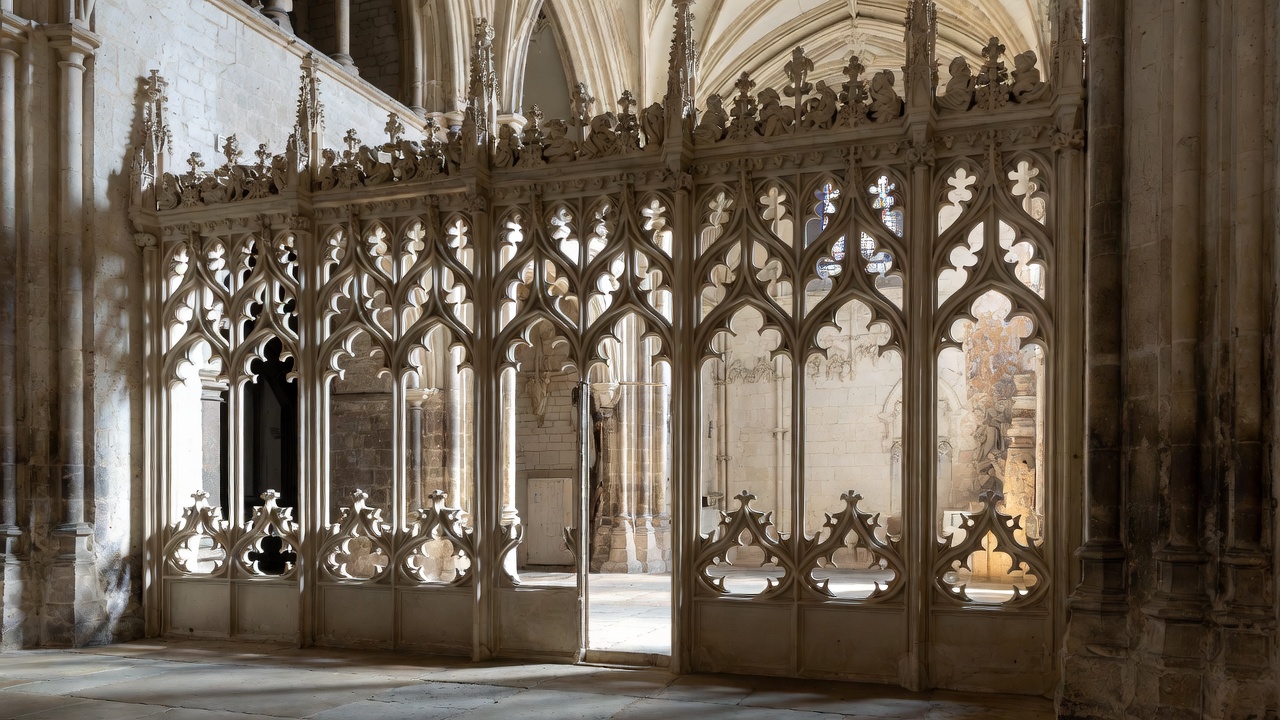
Sacred Positioning Near St. Edward the Confessor
Henry deliberately chose a site in the eastern ambulatory encircling the Confessor’s shrine. This placement ensured spiritual proximity: masses at the high altar and shrine would benefit his soul. It also positioned him among England’s saint-kings, reinforcing his image as a holy warrior.
Building Timeline and Architects
The tomb chest was completed around 1431 under Henry’s executors. The elaborate chantry chapel above was constructed between 1437 and 1450, supervised by master mason John Thirsk (also spelled Thirske or Thirsk), a prominent figure in the king’s works who also contributed to the nave and other Abbey elements. Construction slightly overlapped the adjacent tomb of Eleanor of Castile (d. 1290), a pragmatic choice reflecting the priority given to Henry’s memorial.
Architectural Highlights
The chantry is a stunning example of late Perpendicular Gothic — often described as a “stone cage” or miniature chapel elevated above the ambulatory. Two narrow spiral staircases (their treads deeply worn by centuries of priests) lead to an upper platform with the Altar of the Annunciation. Perforated traceried screens allow partial views inside, where dense sculpture includes unnamed saints, child saints, regal figures, and heraldic motifs. The design masterfully blends martial pride (shields, regal emblems) with deep piety (sacred imagery, chantry purpose), making it one of the Abbey’s most visually striking royal monuments.
Examining the Tomb Up Close: Effigy, Structure, and Artifacts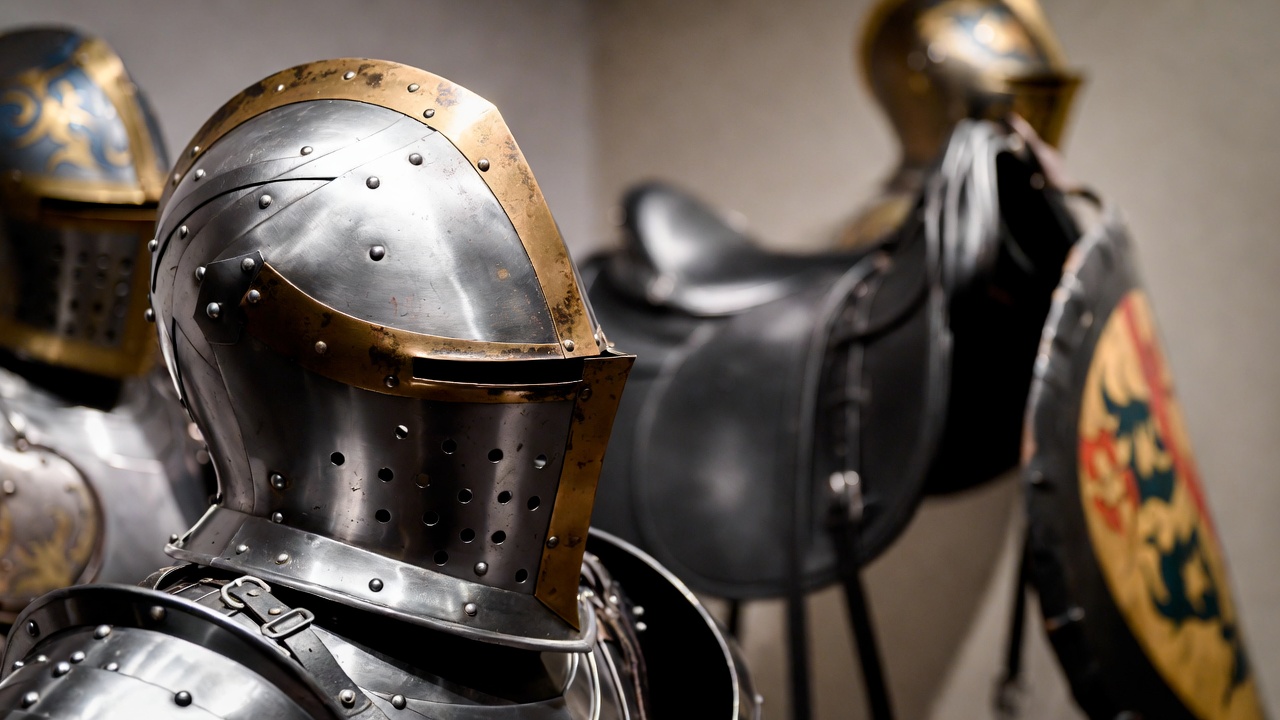
The Henry V tomb consists of a lower stone sarcophagus and the upper chantry chapel. Public access is from below, as the interior remains restricted to preserve the site.
The Tomb Chest and Lost Effigy The original effigy featured a wooden body clad in silver-gilt head, hands, and sceptre — luxurious elements befitting a king. These precious parts were stripped, likely during the Reformation or earlier iconoclastic periods, leaving a headless wooden replacement. Despite the losses, the surviving form still conveys royal dignity and the original intent of a lifelike memorial.
Surviving Funeral Achievements Among the most remarkable features are Henry’s funeral “achievements”: a tilting helm (tournament helmet), saddle, shield, and sword carried in his funeral procession to symbolize knightly honour and martial success. For centuries these items were displayed in or above the chantry; today they are preserved in the Queen’s Diamond Jubilee Galleries or Abbey collections. The helm shows signs of use, directly linking to Agincourt and offering rare insight into 15th-century royal funeral practices.
(One of Henry V’s surviving funeral achievements — the helm — displayed in Westminster Abbey, a tangible link to his warrior legacy.)
The 1953 Tomb Opening: Scientific Insights In 1953, the tomb was opened for scientific examination — a rare event that yielded significant discoveries. Researchers confirmed Henry’s remains and found the unexpected presence of Richard Courtenay, Bishop of Norwich and Henry’s close friend and chancellor, who had died of dysentery at Harfleur in 1415. Courtenay had been buried in a cavity beneath what became Henry’s tomb site; his bones were incorporated when the monument was built. The examination also provided evidence of medieval embalming techniques. While some modern speculation has arisen about the relationship, historical records emphasize deep loyalty and friendship rather than anything more.
Links to Catherine de Valois Henry’s queen, Catherine de Valois, lies nearby in the Lady Chapel. Her wooden effigy (once publicly displayed and later restored) and separate monument reflect dynastic priorities, yet together the sites evoke their brief, triumphant marriage and the birth of Henry VI.
Shakespeare’s Immortalization: Bridging Tomb and Stage
The Henry V tomb stands not only as a medieval monument but as a silent counterpoint to Shakespeare’s dramatic portrait. In Henry V (written c. 1599), Shakespeare crafts one of the most celebrated heroic figures in English literature — a king who inspires loyalty through stirring oratory, unites disparate classes under a shared cause, and triumphs through apparent divine favour. Yet the physical tomb reminds us of the historical realities Shakespeare selectively shaped.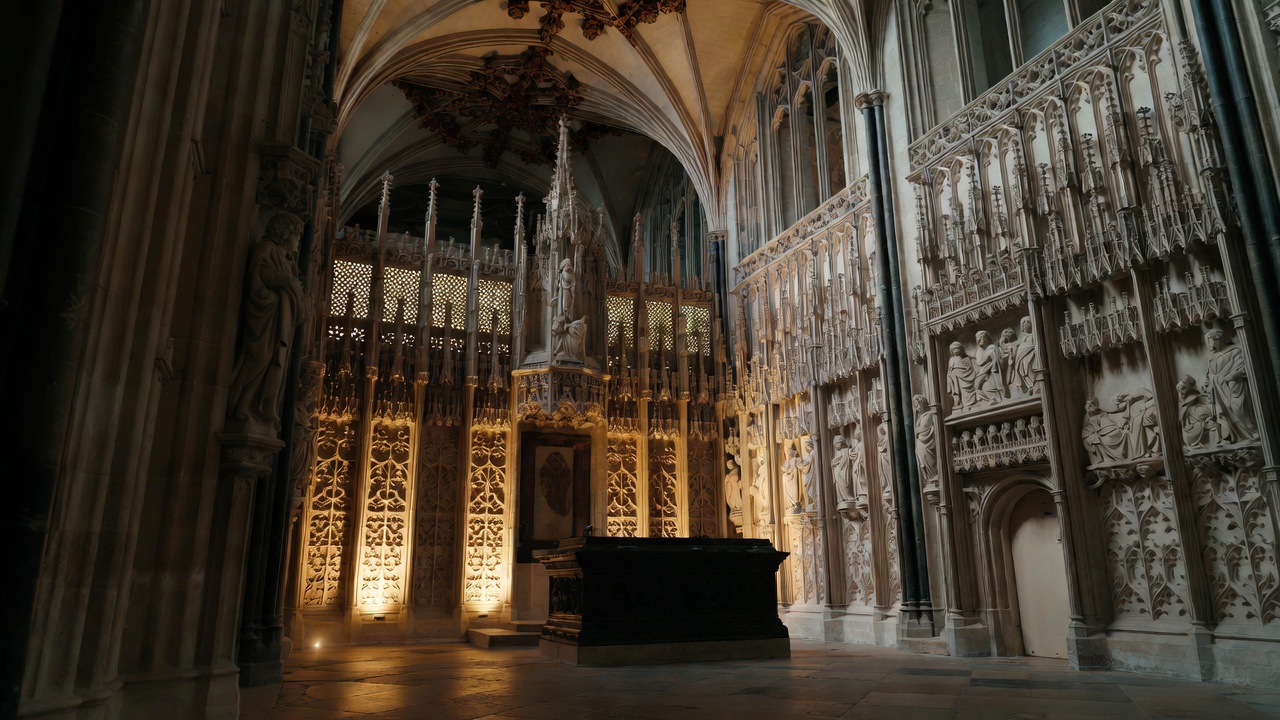
Sources and Dramatic Liberties Shakespeare’s primary source was the 1587 edition of Raphael Holinshed’s Chronicles of England, Scotland, and Ireland, supplemented by Edward Hall’s earlier chronicle and possibly oral traditions. These texts already portrayed Henry as a reformed prince and brilliant commander, but Shakespeare heightened the drama for theatrical effect and Tudor political purposes. The Chorus speeches frame the play as a grand national epic, while key scenes — the tennis-ball insult, the night before Agincourt, and the St. Crispin’s Day speech — amplify Henry’s charisma and moral authority far beyond what chronicles record.
For example, the historical Agincourt victory owed much to tactical brilliance (longbow deployment, muddy terrain) and French overconfidence rather than purely inspirational leadership. Shakespeare, however, transforms it into a moment of near-miraculous brotherhood: “We few, we happy few, we band of brothers; / For he to-day that sheds his blood with me / Shall be my brother.” The play glosses over darker episodes, such as the execution of prisoners, to present an idealized Christian king.
Parallels Between Play and Monument The chantry chapel’s design echoes several Shakespearean themes. Its combination of martial heraldry (shields, regal emblems) and sacred sculpture (saints, Annunciation altar) mirrors the play’s portrayal of a ruler who is both warrior and pious servant of God. Henry’s frequent invocations of divine right and providence in the play (“God for Harry, England, and Saint George!”) find a visual parallel in the tomb’s deliberate proximity to St. Edward the Confessor’s shrine — a saint-king whose holiness Henry sought to emulate.
The chantry’s purpose — perpetual masses for the king’s soul — also resonates with the play’s preoccupation with memory, legacy, and the burdens of kingship. Henry’s famous reflection before Agincourt (“Upon the king! / Let us our lives, our souls, / Our debts, our careful wives, / Our children, and our sins lay on the king!”) captures the isolation of rule; the chantry, built to ensure prayers long after his death, serves as a real-world response to that isolation.
Contrasts and Modern Interpretations Where Shakespeare presents a triumphant arc culminating in victory and marriage, history records a swift, unglamorous end from dysentery and a fragile dual monarchy that collapsed under Henry VI. The tomb — stripped of its silver, housing unexpected remains — quietly undercuts the play’s heroic gloss. Modern adaptations have leaned into these contrasts: Laurence Olivier’s 1944 film used the play as wartime morale-booster, while Kenneth Branagh’s 1989 version introduced grittier realism. Both directors, however, still draw emotional power from the same speeches that the chantry’s martial-pious symbolism seems to echo across centuries.
In this sense, the Henry V tomb functions almost as a physical “Chorus” — grounding Shakespeare’s soaring rhetoric in the materiality of stone, armour, and loss, reminding us that even the greatest dramatic hero was mortal.
Symbolism and Enduring Legacy
The chantry chapel of Henry V is rich in layered symbolism. At its core lies the medieval belief in the efficacy of intercessory prayer: the priests who once climbed the narrow staircases to celebrate mass at the upper altar were ensuring the king’s soul progressed through purgatory. This pious function coexists with overt martial pride — the heraldic shields, the funeral achievements once hung above, and the very act of claiming space near the Confessor proclaim Henry as England’s pre-eminent warrior-king.
Over time, the monument influenced perceptions of Henry V. In the Victorian era, romantic historians and artists revived him as an ideal of chivalric masculinity; the tomb became a pilgrimage site for those seeking tangible proof of England’s heroic past. In the 20th and 21st centuries, the site has drawn Shakespeare enthusiasts eager to stand where history and literature converge.
The Henry V tomb also fits within the broader narrative of Westminster Abbey’s royal tombs — from Edward the Confessor to later Plantagenets, Tudors, and Stuarts — each reflecting shifting ideals of kingship. Henry’s chantry, with its blend of piety and power, remains one of the most eloquent expressions of late medieval royal identity.
Visiting the Henry V Tomb: Practical Guide for 2026
Planning a visit to see the Henry V tomb in person? Here’s everything you need to know.
Location The tomb and chantry chapel are in the eastern ambulatory, encircling the shrine of St. Edward the Confessor. Look for the elevated stone structure with traceried screens; you view it from below, as the upper chapel is closed to the public.
Best Viewing Tips
- Stand in the ambulatory near the Confessor shrine for the clearest angle upward.
- Early morning or late afternoon offers softer light and fewer crowds.
- Combine your visit with the Queen’s Diamond Jubilee Galleries (accessed via separate stairs/ticket), where the funeral helm, saddle, and shield are displayed.
- Nearby highlights include Catherine de Valois’s monument in the Lady Chapel, the Coronation Chair, and Poets’ Corner (with Shakespeare’s memorial).
Practical Advice
- Tickets: Book timed entry in advance via the official Westminster Abbey website (prices vary; concessions available).
- Accessibility: The ambulatory is level, but the Abbey has steps and uneven floors overall; wheelchairs and audio guides are available.
- Photography: Allowed without flash in most areas; no tripods or selfie sticks.
- Time needed: Allow 2–3 hours for a thorough visit, especially if combining with the galleries.
- Best season: Spring or autumn for milder weather and fewer tourists.
Whether you’re retracing Shakespeare’s inspiration or simply marvelling at medieval craftsmanship, the Henry V tomb rewards close attention.
Frequently Asked Questions
Where exactly is the Henry V tomb in Westminster Abbey? It is located in the eastern ambulatory, surrounding the shrine of St. Edward the Confessor. The elevated chantry chapel is unmistakable due to its stone screens and spiral staircases.
What happened to the original effigy and silver parts? The silver-gilt head, hands, and sceptre were likely removed and melted down during the Reformation or earlier periods of iconoclasm. A wooden replacement (now headless) remains.
Was the tomb opened in modern times — what was found? Yes, in 1953. The examination confirmed Henry’s remains and revealed the unexpected presence of Richard Courtenay’s bones, buried beneath the tomb site. It also provided evidence of medieval embalming practices.
How does Shakespeare’s Henry V compare to the real king and monument? Shakespeare amplified Henry’s heroism and piety for dramatic effect, drawing on chronicles but downplaying pragmatic and ruthless decisions. The tomb’s martial-pious design mirrors the play’s idealised portrait while quietly reminding us of the king’s mortality.
Is the chantry chapel accessible to visitors? No — the interior is restricted to preserve the structure. Visitors view it from the ambulatory below.
Are there any legends or hidden features associated with the tomb? No major legends survive, but the 1953 discovery of Richard Courtenay’s remains sparked scholarly interest and occasional speculation about their relationship (understood today as close friendship and loyalty).
The Henry V tomb at Westminster Abbey is far more than a historical curiosity. It is a living intersection of medieval piety, royal ambition, and literary genius — a place where the warrior-king felled by dysentery in 1422 continues to inspire through stone and through Shakespeare’s immortal words.
In the quiet of the ambulatory, with the chantry chapel rising above, you can almost hear echoes of both the real Henry’s strategic mind and the dramatic Henry’s call to brotherhood. Whether you stand there in person, reread the play, or simply reflect on leadership across centuries, this majestic memorial reminds us that great figures live on not only in chronicles and drama, but in the enduring power of memory itself.
Thank you for exploring this comprehensive guide to the Henry V tomb. If it has deepened your appreciation of Shakespeare’s history plays or enriched your next visit to Westminster Abbey, its purpose is fulfilled.