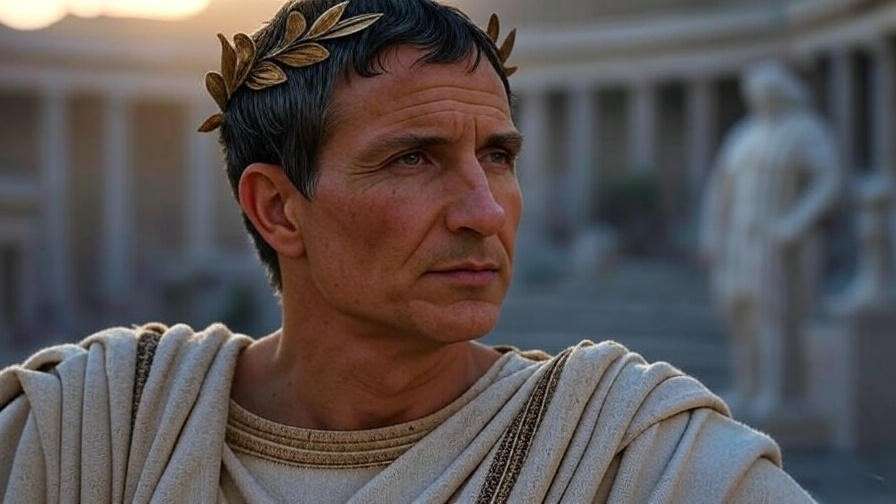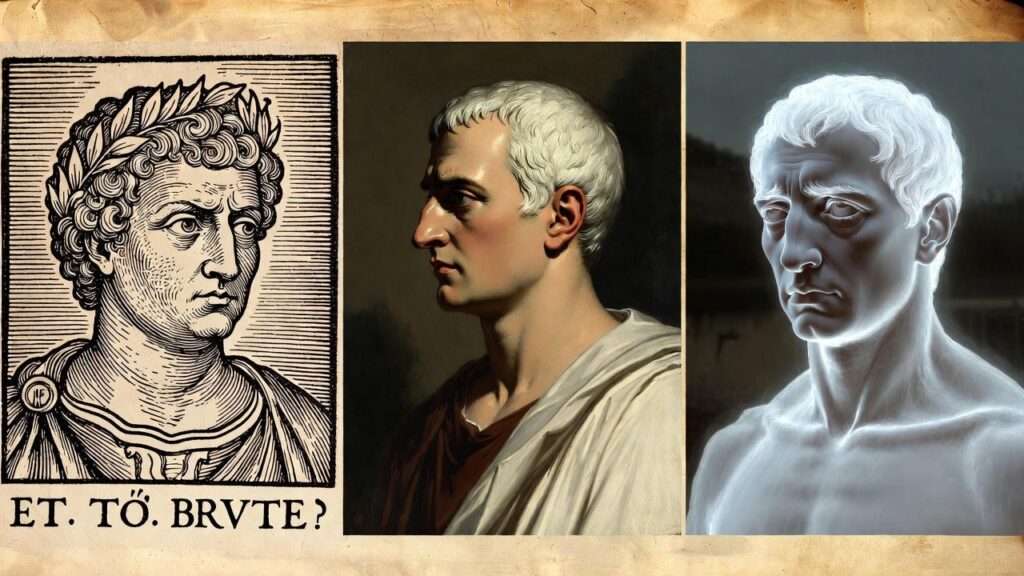
Picture yourself holding a silver coin, its worn edges whispering tales of a Rome where Julius Caesar’s ambition reshaped history. The Julius Caesar Roman coin is more than a relic; it’s a portal to the empire that inspired William Shakespeare’s timeless tragedy, Julius Caesar. These coins, minted over 2,000 years ago, carry the weight of Caesar’s legacy—his divine image, his political triumphs, and the betrayal that immortalized him. For Shakespeare enthusiasts, historians, and collectors, these artifacts offer a tangible link to the Roman world that fueled the Bard’s imagination. In this article, we’ll explore the historical significance, intricate designs, and literary connections of these coins, while offering practical tips for collectors and insights for those captivated by Shakespeare’s portrayal of power and betrayal. Drawing on numismatic expertise, literary scholarship, and historical records, we’ll uncover why these coins remain a vital bridge between ancient Rome and Renaissance drama.
The Historical Significance of Julius Caesar Roman Coins
A Glimpse into Caesar’s Rome
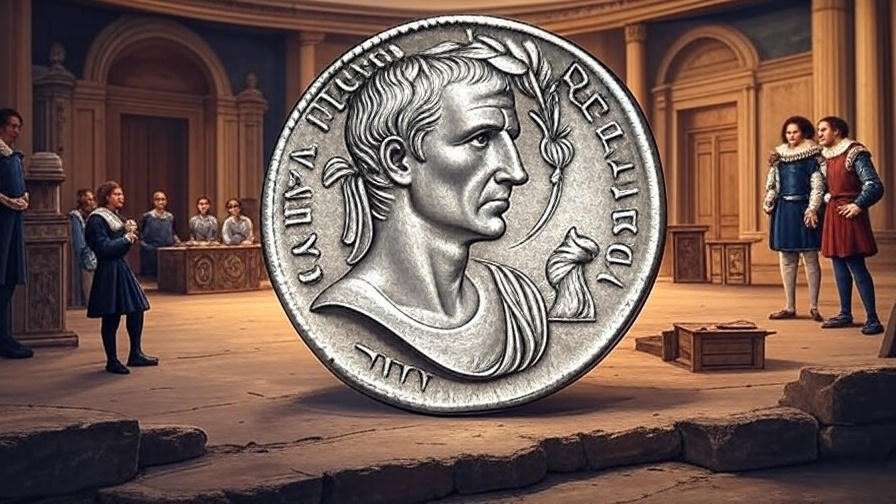
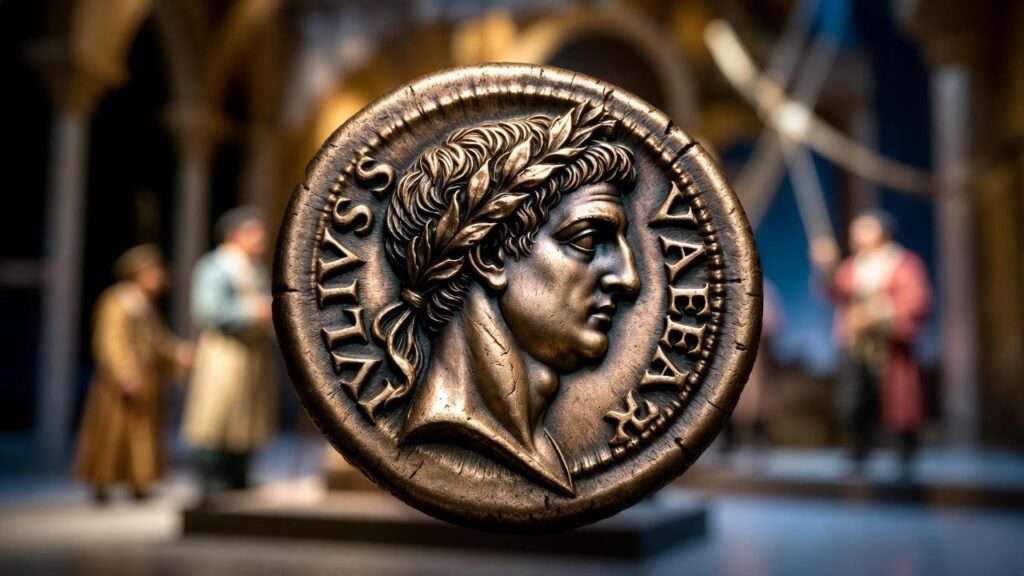
In the late Roman Republic, coins were more than currency—they were tools of power, propaganda, and prestige. Julius Caesar, a master of self-promotion, revolutionized Roman coinage by becoming the first living figure to feature his own portrait on coins around 44 BCE. This bold move, documented by historians like Suetonius, signaled his unprecedented authority as Dictator Perpetuo (Dictator for Life). The silver denarius, often bearing Caesar’s laureate head, became a symbol of his dominance, circulating from Gaul to Egypt.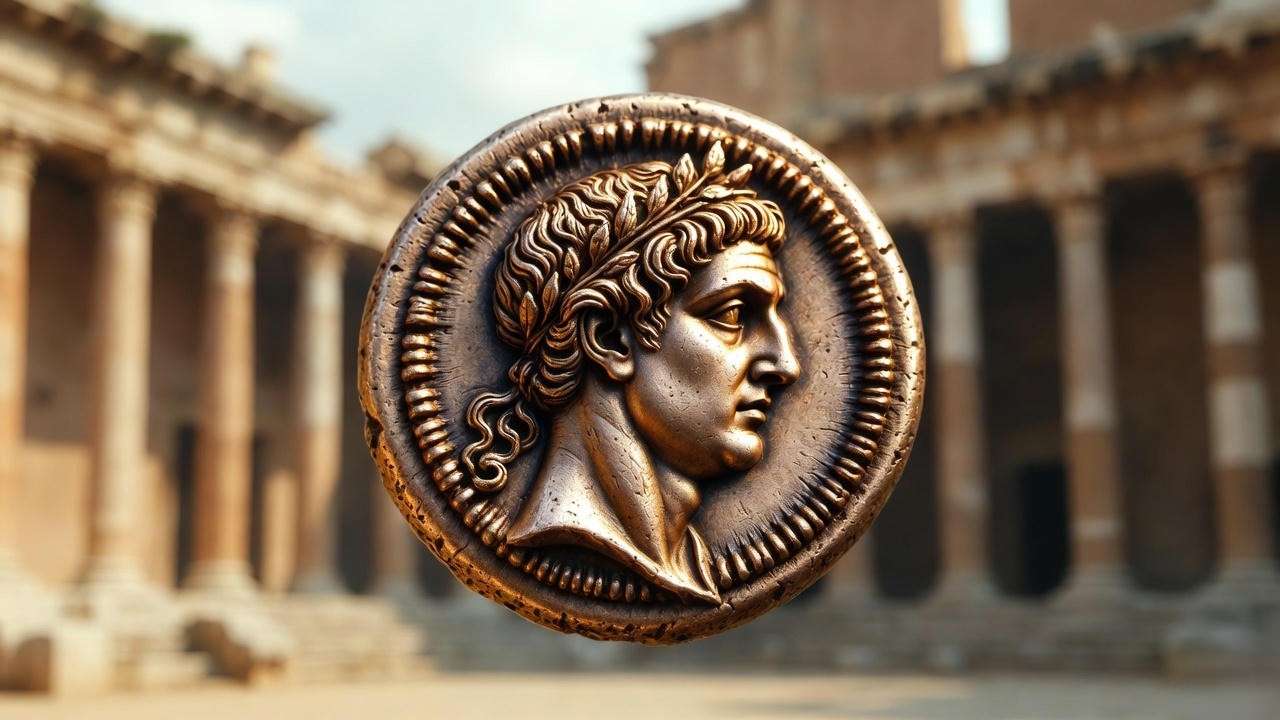
These coins were struck in vast quantities, with mints producing millions to fund Caesar’s military campaigns and public works. According to the British Museum’s numismatic archives, the denarius was the backbone of Roman commerce, valued for its purity and consistency. For Shakespeare fans, these coins offer a window into the Rome of Julius Caesar, where ambition and public perception clashed—themes central to the play’s exploration of leadership.
Expert Insight: The American Numismatic Society notes that Caesar’s coinage marked a shift toward imperial iconography, setting a precedent for emperors like Augustus. This historical context enriches our understanding of Shakespeare’s Caesar, who is portrayed as a larger-than-life figure teetering on divinity.
Coins as Political Tools
Caesar’s coins were not just economic instruments; they were political weapons. By placing his image on the denarius, Caesar ensured his face was seen by every merchant, soldier, and citizen across the empire. Inscriptions like CAESAR DICT PERPETVO or DIVI IVLI (Divine Julius) reinforced his god-like status, a theme Shakespeare amplifies in Julius Caesar when characters debate Caesar’s ambition. For example, Cassius’s lament in Act 1, Scene 2—“Why, man, he doth bestride the narrow world / Like a Colossus”—echoes the larger-than-life image Caesar cultivated through coinage.
These coins also served practical purposes, funding the legions that secured Caesar’s power. After his assassination in 44 BCE, his adopted heir, Octavian (later Augustus), minted coins honoring the “divine” Caesar, further cementing his legacy. For collectors, identifying coins from Caesar’s lifetime versus posthumous issues is crucial, as the former are rarer and more valuable.
Tip: When collecting, prioritize coins with clear inscriptions and consult certified numismatists to avoid counterfeits, which are common in the antiquities market.
The Design and Symbolism of Julius Caesar Roman Coins
Iconography and Inscriptions
The artistry of Julius Caesar Roman coins is a testament to Roman craftsmanship. A typical denarius features Caesar’s profile, often wearing a laurel wreath, symbolizing victory and divine favor. The reverse might depict Venus, Caesar’s mythical ancestor, or an elephant trampling a snake, representing his conquests. Inscriptions, such as CAESAR or IMPERATOR, highlight his titles and achievements.
Post-assassination coins, minted by the Second Triumvirate, often include DIVI IVLI to deify Caesar, reflecting Rome’s tradition of elevating leaders to godhood. The British Museum’s collection showcases examples like the 42 BCE denarius with a star symbolizing Caesar’s divine ascent. These designs offer a visual narrative of Caesar’s rise and fall, paralleling the dramatic arc of Shakespeare’s play.
Visual Aid: High-resolution images of Caesar’s coins, sourced from institutions like the Getty Museum, can enhance reader understanding. Always ensure proper permissions for reproduction.
Artistic Influence on Shakespeare’s Imagery
Shakespeare, though writing centuries later, was steeped in Roman history through sources like Plutarch’s Lives. The god-like imagery on Caesar’s coins likely informed the playwright’s portrayal of a leader obsessed with his public image. In Act 3, Scene 1, when Caesar declares, “I am constant as the northern star,” he echoes the divine permanence of his coin portraits. Similarly, the play’s focus on betrayal—culminating in the Ides of March—mirrors the shift in coinage after Caesar’s death, as his allies and enemies vied for control of his legacy.
Literary scholar Marjorie Garber, in Shakespeare After All, argues that Roman symbols like coins and statues were central to Shakespeare’s depiction of power. For readers, understanding these coins deepens appreciation of the play’s themes, from ambition to the fragility of leadership.
The Connection Between Julius Caesar Coins and Shakespeare’s Play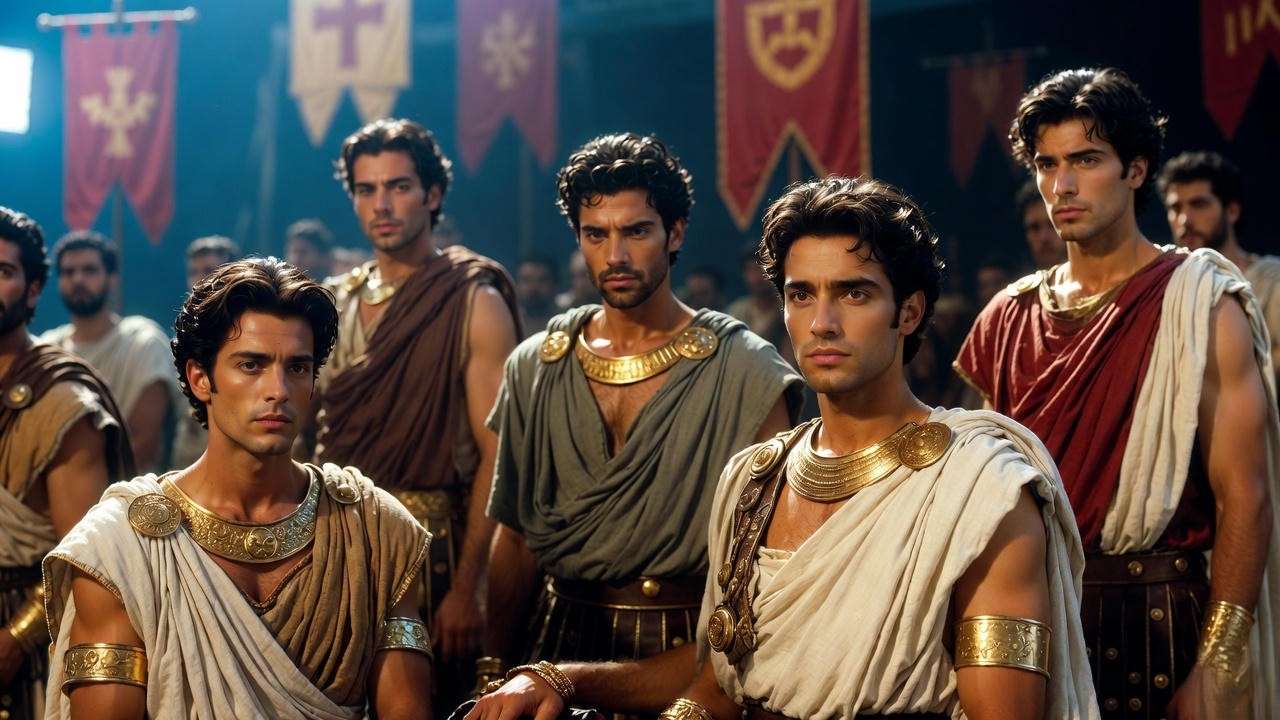
Power and Betrayal in Julius Caesar
Shakespeare’s Julius Caesar is a meditation on power, loyalty, and betrayal, themes vividly reflected in Caesar’s coinage. The coins’ propaganda—proclaiming Caesar’s divinity—parallels his portrayal as a leader who inspires both awe and resentment. In Act 3, Scene 2, Antony’s famous speech (“Friends, Romans, countrymen”) manipulates public perception, much like Caesar’s coins shaped his image in life.
The play’s pivotal moment—the assassination on the Ides of March—resonates with the numismatic shift that followed. Coins minted by Brutus and Cassius briefly celebrated the “liberation” of Rome, only to be overshadowed by Octavian’s deification of Caesar. This tug-of-war over legacy underscores the play’s question: Who controls the narrative of a leader’s life?
Example: In Act 2, Scene 1, Brutus muses, “Shall Rome stand under one man’s awe?” This line could apply to Caesar’s omnipresent coin portraits, which symbolized his grip on Rome.
Shakespeare’s Historical Sources
Shakespeare drew heavily on Plutarch’s Lives, which chronicles Caesar’s rise and fall. Plutarch describes Caesar’s public displays of power, including statues and temples, which coins complemented by spreading his image to the masses. While Plutarch doesn’t mention coins explicitly, their cultural significance likely informed his accounts, indirectly shaping Shakespeare’s vision of Rome.
Academic works like Shakespeare and the Classics by Charles Martindale highlight how Renaissance writers used Roman artifacts to ground their narratives. For Shakespeare enthusiasts, tracing these connections reveals the depth of the play’s historical roots.
Collecting Julius Caesar Roman Coins Today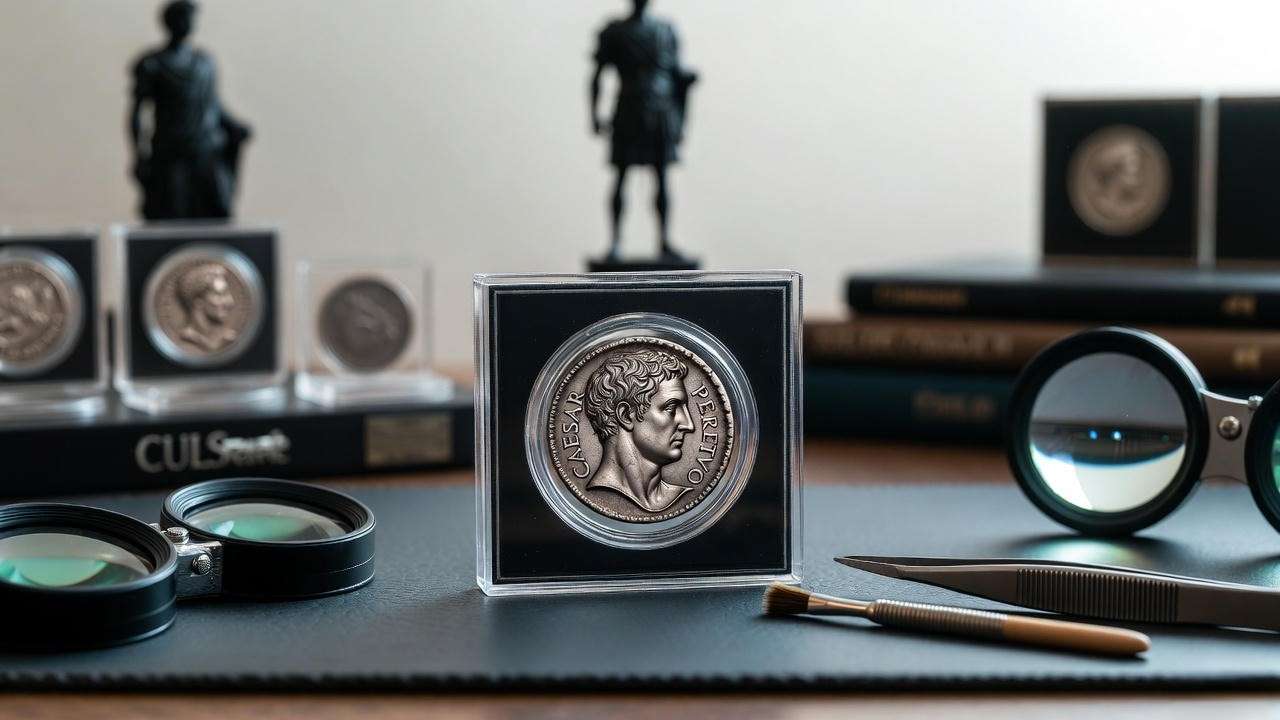
Rarity and Value
Julius Caesar Roman coins are among the most coveted artifacts in numismatics, with prices reflecting their rarity and historical weight. A well-preserved denarius from 44 BCE can fetch $1,000 to $10,000, while exceptional specimens, like the “Ides of March” coin sold at Heritage Auctions for $3.5 million in 2020, command millions. According to Sotheby’s, condition, provenance, and historical context drive value.
Only a few thousand authentic Caesar coins survive, many held in museums like the Metropolitan Museum of Art. For collectors, the challenge lies in sourcing coins with verifiable origins, as the market is rife with reproductions.
Tip: Always request a certificate of authenticity from dealers and check auction records for price benchmarks.
How to Start Collecting
Collecting Roman coins is a rewarding pursuit, but it requires diligence. Follow these steps:
- Research Reputable Dealers: Work with established firms like Harlan J. Berk or CNG Coins, which specialize in ancient numismatics.
- Verify Authenticity: Consult services like the Numismatic Guaranty Corporation (NGC) or Professional Coin Grading Service (PCGS) for certification.
- Learn Grading Standards: Familiarize yourself with terms like “Fine” or “Extremely Fine” to assess coin condition.
- Store Properly: Use acid-free holders and climate-controlled storage to preserve coins.
Example: A collector shared on CoinTalk how they acquired a Caesar denarius after months of research, emphasizing the thrill of owning a piece of history.
Why Julius Caesar Coins Matter to Shakespeare Enthusiasts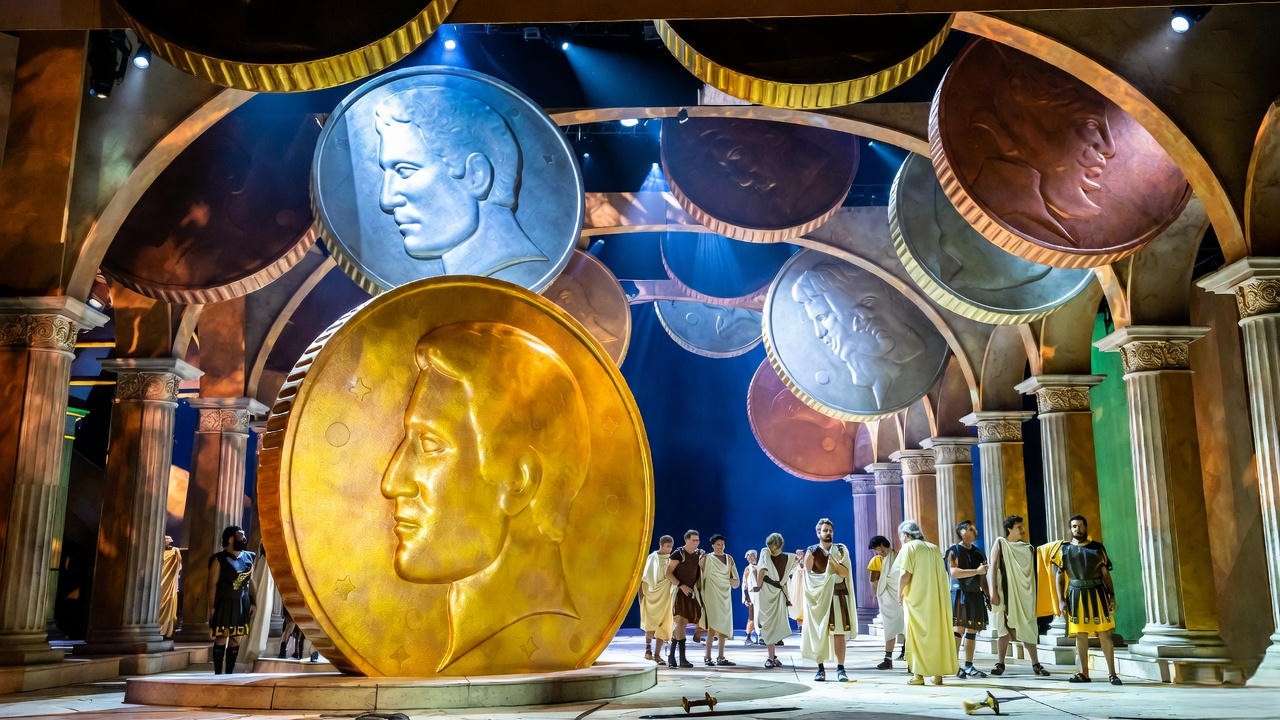
Bridging History and Literature
For fans of William Shakespeare, Julius Caesar Roman coins are more than collectibles—they are a tangible connection to the world of Julius Caesar. These artifacts embody the Rome that Shakespeare brought to life, a city of ambition, intrigue, and spectacle. Holding a denarius with Caesar’s portrait allows readers to visualize the historical figure behind the play’s towering protagonist, whose refusal of a crown (Act 1, Scene 2) and assassination on the Ides of March remain iconic.
Educators and students can use these coins to deepen their study of the play. For instance, discussing how Caesar’s coinage projected divine authority enriches classroom analyses of his character. Theater practitioners, too, benefit from understanding Roman iconography, as it informs costume and set design. The Metropolitan Museum of Art’s numismatic collection, for example, offers public access to such artifacts, making them ideal for educational outings.
Engagement Idea: Visit a museum exhibit featuring Roman coins or explore virtual collections online, such as those hosted by the British Museum, to see Caesar’s legacy firsthand.
Coins in Modern Adaptations
Modern productions of Julius Caesar often draw on Roman imagery to ground their storytelling. Directors may incorporate coin-inspired props or set pieces to evoke the play’s historical context. For example, the Royal Shakespeare Company’s 2017 production used oversized replicas of Roman coins in its stage design to symbolize Caesar’s omnipresence. Similarly, the Globe Theatre’s 2020 adaptation featured coin motifs in costumes, reflecting the play’s themes of power and betrayal.
Theater historian Emma Smith, in This Is Shakespeare, notes that props like coins help audiences connect with the play’s Roman roots. For enthusiasts, recognizing these details enhances appreciation of how directors interpret Shakespeare’s vision for contemporary audiences.
Expert Insight: Directors often consult numismatic experts to ensure historical accuracy, underscoring the coins’ role in bridging ancient and modern storytelling.
Common Myths and Misconceptions About Caesar’s Coins
Julius Caesar Roman coins are steeped in fascination, but myths abound. Let’s debunk some common misconceptions:
- Myth: All Caesar coins are made of gold. Reality: Most coins from Caesar’s era, like the denarius, were silver, though gold aurei existed in smaller quantities. Gold coins are rarer and pricier, often exceeding $50,000 at auction.
- Myth: Caesar coins are easy to find. Reality: Authentic coins are scarce, with many held in museums or private collections. The market is flooded with replicas, making expert verification essential.
- Myth: All coins with Caesar’s name were minted during his lifetime. Reality: Posthumous coins, issued by Octavian and others, often honored the “divine” Caesar, distinguishable by inscriptions like DIVI IVLI.
FAQ Section:
- Are Julius Caesar coins legal to own? Yes, provided they’re acquired through reputable sources with clear provenance. Check local antiquities laws.
- How can I tell if a coin is authentic? Look for natural wear patterns, consult certified numismatists, and request grading from NGC or PCGS.
- Why are some coins so expensive? Rarity, condition (e.g., “Mint State”), and historical significance drive prices, as seen in the $3.5 million “Ides of March” coin sale.
Clarifying these points ensures collectors and enthusiasts approach the market with confidence, avoiding costly mistakes.
Preserving and Displaying Your Coin Collection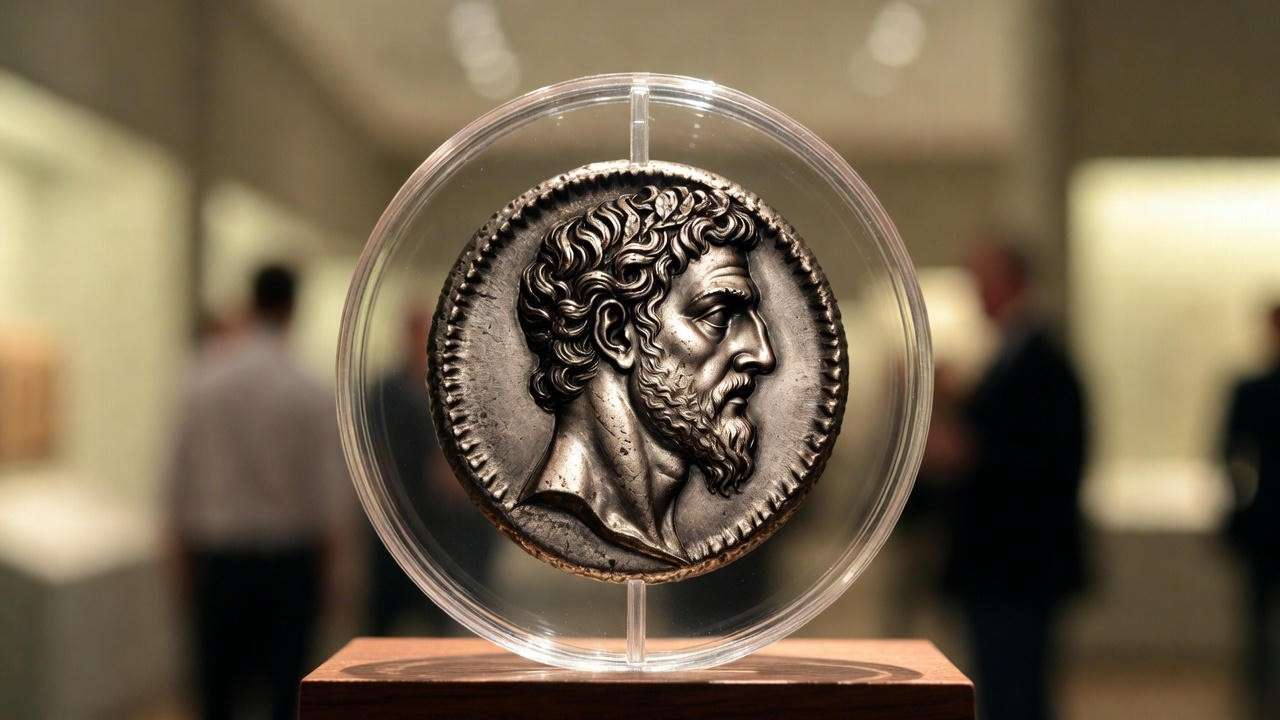
Storage and Care Tips
Proper care is essential to maintain the value and condition of Julius Caesar Roman coins. Ancient coins are delicate, susceptible to corrosion and damage from improper handling. Follow these best practices:
- Use Acid-Free Holders: Store coins in archival-quality holders to prevent chemical reactions.
- Avoid Direct Contact: Handle coins by their edges, wearing cotton gloves to prevent oil transfer from skin.
- Control Environment: Keep coins in a climate-controlled space (50–60% humidity, 65–70°F) to avoid tarnishing.
- Protect from Light: Use UV-protective cases for display to prevent fading or discoloration.
Tip: Invest in a safe or lockbox for high-value coins to deter theft, and document your collection for insurance purposes.
Sharing Your Collection
Displaying and sharing your collection can be as rewarding as acquiring it. Consider these approaches:
- Local History Clubs: Present your coins at numismatic or history societies, where enthusiasts exchange knowledge.
- Online Forums: Platforms like CoinTalk or Reddit’s r/AncientCoins allow collectors to share photos and stories safely.
- Exhibitions: Partner with local museums or libraries to showcase your collection in temporary displays.
Engagement Idea: Share your collection on social media with a hashtag like #CaesarCoinLegacy to connect with fellow enthusiasts and spark discussions about Shakespeare and Roman history.
Julius Caesar Roman coins are more than artifacts—they are storytellers, weaving together the history of Rome and the literary genius of Shakespeare’s Julius Caesar. From their role as propaganda in Caesar’s empire to their influence on the play’s themes of power and betrayal, these coins offer a unique lens for understanding both history and art. For collectors, they represent a thrilling pursuit, blending historical significance with tangible beauty. For Shakespeare enthusiasts, they illuminate the Roman world that inspired one of the Bard’s greatest works.
Whether you’re a historian, a theatergoer, or an aspiring numismatist, these coins invite you to explore Caesar’s legacy with fresh eyes. Visit a museum, dive into Julius Caesar with a new perspective, or start your own collection to hold history in your hands. Share your thoughts below: What’s your favorite Julius Caesar quote, or do you have a coin-collecting tip to inspire others?