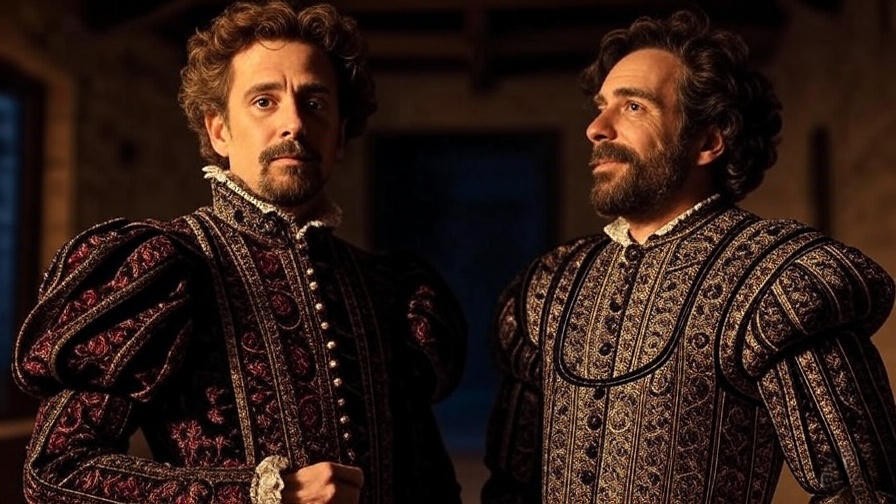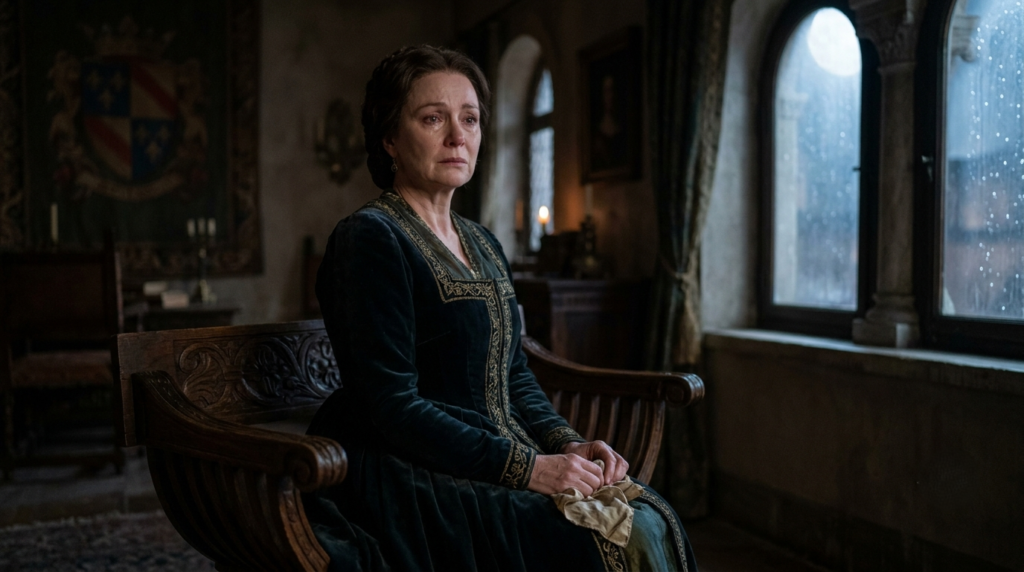
In the bloody, sun-drenched streets of Renaissance Verona, violence is a spectator sport, and ancient grudges dictate the fate of the young. Yet amid the clash of steel and the roar of patriarchal pride, one voice quietly pleads for peace. Lady Montague from Romeo and Juliet may possess fewer lines than almost any other named adult in William Shakespeare’s famous tragedy, but her emotional weight reverberates through every act.
As the matriarch of House Montague and the devoted mother of Romeo, she represents the tragic human cost of a senseless blood feud—a mother whose heart literally breaks under the weight of her son’s exile. While casual readers often overlook her in favor of the star-crossed lovers or the bombastic Mercutio, a closer examination reveals that Shakespeare crafted Lady Montague as the ultimate moral counterweight to Verona’s toxic masculinity.
Whether you are a student preparing an essay, an actor researching a role, or a Shakespeare scholar analyzing structural motifs, this comprehensive guide provides an in-depth analysis of Lady Montague’s traits, key quotes, thematic importance, and dramatic function.
Quick Reference: Lady Montague Character Cheat Sheet
To understand her place within the narrative architecture, here is an at-a-glance breakdown of her profile:
| Feature | Details |
| Role/Title | Matriarch of House Montague; Wife to Lord Montague; Mother to Romeo |
| First Appearance | Act 1, Scene 1 (Intervening in the opening street brawl) |
| Final Mention | Act 5, Scene 3 (Reported deceased by Lord Montague) |
| Primary Motivation | Protecting her family, preserving peace, safeguarding Romeo’s well-being |
| Cause of Death | Grief/Heartbreak over Romeo’s banishment to Mantua |
| Core Themes | Maternal love, the casualty of feud violence, grief, restraint vs. aggression |
| Key Foil | Lady Capulet (Matriarch of House Capulet) |
Who Is Lady Montague in Romeo and Juliet?
Lady Montague is the noble wife of Lord Montague and the mother of Romeo. Within the socio-political hierarchy of Elizabethan drama, she holds a position of high status, yet her domestic authority is severely circumscribed by the patriarchal norms of her era.
Unlike her husband, who is quick to draw his sword despite his advancing age, Lady Montague displays an immediate and instinctive revulsion to civil violence. From her very first line in the play, Shakespeare establishes her not as a passive bystander, but as a active voice of restraint.
She embodies the suffering of Veronese mothers whose lives, families, and emotional stability are continually collateral damage in a feud fought for reasons long forgotten.
                  THE HOUSE OF MONTAGUE

                    Lord Montague  ===  LADY MONTAGUE
                                   |
                                   |
                                 Romeo
                                   |
                       (Betrothed in Secret)
                                   |
                                Juliet
Character Profile & Personality Traits
Despite her brief physical presence on stage, Shakespeare infuses Lady Montague’s character with distinct personality traits that set her apart from the surrounding cast.
1. The Peacekeeper Matriarch
In a play dominated by hot-headed youth (Tybalt, Mercutio) and stubborn patriarchs (Lord Capulet, Lord Montague), Lady Montague stands out for her unwavering commitment to peace. She does not care about family pride, territorial dominance, or ancestral honor; her primary concern is the physical and emotional preservation of her loved ones.
When the opening brawl erupts in Act 1, Scene 1, Lord Montague calls for his blade to join the fray. Lady Montague immediately steps between her husband and the violence, refusing to let him indulge in tribal hatred. Her refusal to sanction violence highlights the absurdity of the conflict—the men fight for honor, while the women suffer the casualties.
2. Maternal Devotion and Vulnerability
Lady Montague’s defining psychological trait is her intense maternal love for Romeo. Unlike Lady Capulet, who relies heavily on the Nurse to raise Juliet and exhibits a cold, distant relationship with her daughter, Lady Montague is intimately attuned to her son’s emotional state.
When the street fight subsides in Act 1, Scene 1, her immediate thought is not the political fallout with Prince Escalus, but her son’s whereabouts:
“O, where is Romeo? saw you him to-day? Right glad I am he was not at this fray.”
This line reveals two crucial aspects of her character: her instinctive relief that her son avoided bloodshed, and her active awareness of his daily habits. When Benvolio informs her that Romeo has been wandering alone in the sycamore grove weeping, her reaction is one of deep, empathetic concern rather than frustration.
3. Emotional Fragility and Tragic Fate
Lady Montague’s deep capacity for love is also her ultimate vulnerability. In early modern medical theory and Shakespearean drama, intense grief was believed to have physical, lethal consequences on the human body—a concept modern medicine recognizes as stress-induced cardiomyopathy or “broken heart syndrome.”
Lady Montague cannot endure the trauma of her son’s banishment. When Romeo is exiled to Mantua following the deaths of Mercutio and Tybalt, her grief overwhelms her. She dies off-stage in Act 5, making her the silent casualty of the feud—a victim who never drew a sword, yet was slain by the violence nevertheless.
Scene-by-Scene Breakdown and Dramatic Function
To fully appreciate how Shakespeare utilizes Lady Montague, we must analyze her specific stage appearances and off-stage presence across the play’s structural arc.
ACT 1, SCENE 1             ACT 3, SCENE 1             ACT 5, SCENE 3
[On Stage]                 [Off-Stage Impact]         [Posthumous Reveal]
Stops husband from         Romeo's exile triggers     Lord Montague announces
joining street fight;      her lethal surge of        her death from grief
inquires of Romeo.         maternal sorrow.           at the Capulet tomb.
Act 1, Scene 1: The Voice of Reason
-
The Context: Servants from both houses ignite a massive riot in the public square. Capulet and Montague arrive, eager to join the slaughter.
-
Lady Montague’s Action: As Lord Montague demands his sword (“Hold me not, let me go!”), Lady Montague physically holds him back, declaring:
“Thou shalt not stir a foot to seek a foe.”
-
Dramatic Function: This moment serves a dual purpose. First, it establishes a stark contrast between her maturity and her husband’s reckless foolishness. Second, it demonstrates her protective instinct, which extends even to her aging husband.
-
The Transition to Maternal Concern: Once Prince Escalus restores order, she immediately turns her focus to Romeo’s psychological health, questioning Benvolio about his recent melancholy. Her presence in this scene frames the Montagues not merely as factional warlords, but as a real family with genuine anxieties.
Act 3, Scene 1: The Turning Point (Off-Stage Presence)
-
The Context: The climax of the play’s tragic pivot. Tybalt kills Mercutio; Romeo kills Tybalt in retaliation. Prince Escalus decrees Romeo’s immediate exile to Mantua under penalty of death.
-
Lady Montague’s Absence: Notably, Lady Montague is absent from the public confrontation following the deaths of Mercutio and Tybalt. While Lady Capulet screams for blood and demands Romeo’s execution (“Romeo slew Tybalt, Romeo must not live”), Lady Montague’s absence highlights her inability to participate in revenge culture.
-
The Narrative Impact: Her inability to prevent her son’s banishment marks the beginning of her fatal decline. Cut off from her only child, her maternal role is forcibly stripped away, leading directly to her off-stage breakdown.
Act 5, Scene 3: The Silent Casualty
-
The Context: The tragic climax at the Capulet tomb. Romeo, believing Juliet dead, drinks poison. Juliet awakens, finds Romeo dead, and stabs herself. The Prince, the Capulets, and Lord Montague arrive to discover the bodies.
-
The Reveal: Lord Montague enters the tomb carrying news that adds another layer of tragedy to the scene:
“Grief of my son’s exile hath stopp’d her breath; / What further woe conspires against mine age?”
-
Dramatic Function: Shakespeare purposefully saves the reveal of Lady Montague’s death for the final scene. Her death ensures that the tragedy touches every generation and every level of the Montague household. Just as Juliet’s death destroys the Capulet line, Romeo’s exile destroys the Montague matriarch. Her death proves that peace bought through banishment is an illusion; the feud’s collateral damage reaches into the quiet privacy of the home.
Literary Significance & Thematic Analysis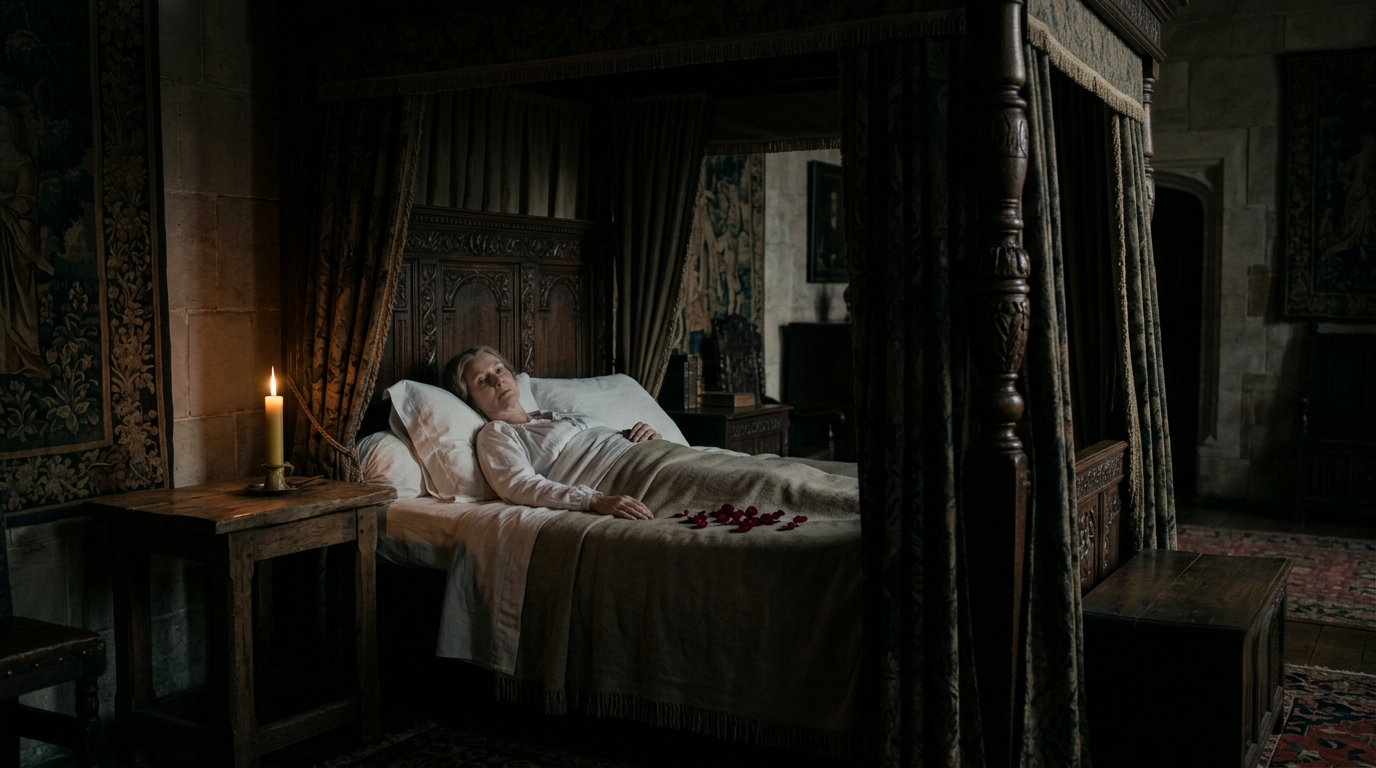
1. The Maternal Cost of Patriarchal Feuds
At its core, Romeo and Juliet is an exploration of how institutionalized, patriarchal conflict destroys future generations. The feud between the Capulets and Montagues is sustained by old men (Capulet and Montague) and fueled by young men seeking social validation through violence (Tybalt, Mercutio).
Women in Verona are largely powerless within this system. Juliet is treated as property to be traded in marriage; Lady Capulet submits to her husband’s explosive anger; and Lady Montague can only attempt to physically restrain her husband from entering the street fights.
By having Lady Montague die of grief, Shakespeare presents a devastating critique of toxic masculinity. The men fight for “honor,” but the consequences of their pride are borne by the women who love them. Lady Montague does not die from a steel blade, but from the emotional ruin caused by a society that prioritizes vengeance over human life.
2. Character Foil: Lady Montague vs. Lady Capulet
Shakespeare frequently employs character foils—characters placed in direct contrast to highlight specific traits—to sharpen his thematic commentary. Comparing the two matriarchs reveals a powerful commentary on Elizabethan motherhood:
| Character Aspect | Lady Montague | Lady Capulet |
| Temperament | Gentle, protective, peaceful, empathetic | Rigid, status-conscious, vengeful, anxious |
| Response to Feud | Seeks to stop violence (“Thou shalt not stir…”) | Demands execution and blood (“Romeo must not live”) |
| Maternal Bond | Deeply connected to Romeo’s emotional wellbeing | Distant from Juliet; relies on Nurse; demands obedience |
| Reaction to Crisis | Internalizes grief; dies of a broken heart | Externalizes grief; demands external retribution |
| Role in Tragedy | Passive victim of patriarchal violence | Active enforcer of patriarchal expectations |
While Lady Capulet embodies the rigid social expectations of Veronese nobility—urging Juliet to marry Paris for social advancement and demanding blood for blood—Lady Montague represents pure, unconditioned maternal love.
3. Grief as a Fatal Force in Shakespearean Tragedy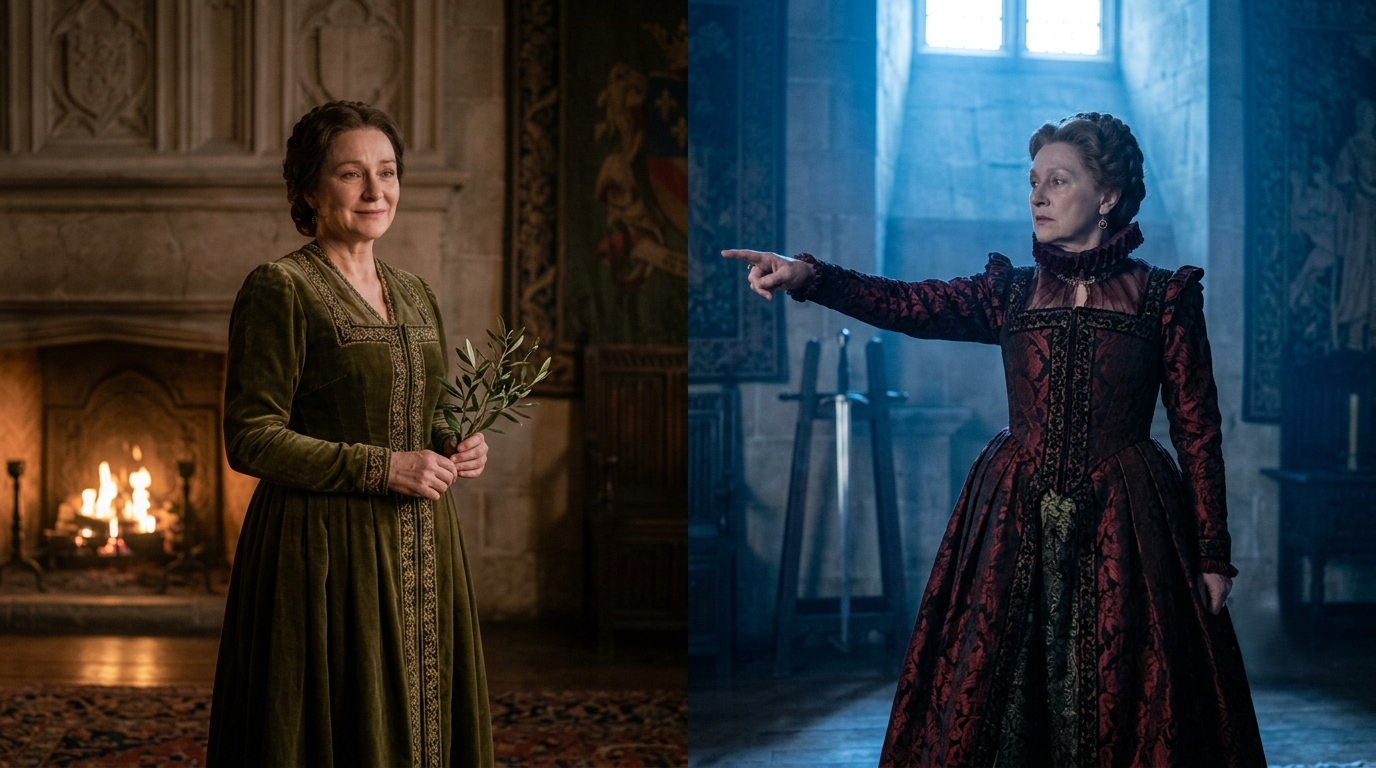
Lady Montague’s death via heartbreak is not an isolated narrative trick in the Shakespearean canon. In early modern England, emotions were seen as physiological events governed by the four humors. Extreme sorrow was believed to literally freeze the heart or drain the vital spirits.
By attributing her death to “grief of my son’s exile,” Shakespeare elevates her sorrow to a fatal force comparable to poison or a dagger. This narrative choice mirrors other Shakespearean works where overwhelming emotional trauma proves fatal, such as King Lear dying of heartbreak over Cordelia, or Ophelia drowning under the weight of madness and grief in Hamlet.
Key Quotes Analysis
To earn top marks on literature essays or gain deeper insight into the play’s language, it is essential to analyze the specific rhetorical choices in quotes by and about Lady Montague.
Quote 1: The Call for Restraint
“Thou shalt not stir a foot to seek a foe.”
— Lady Montague, Act 1, Scene 1
-
Context: Spoken directly to Lord Montague as he demands his sword to join the initial street brawl.
-
Literary Analysis: The imperative syntax (“Thou shalt not”) echoes biblical commandment language, positioning Lady Montague as a voice of divine moral law against her husband’s unholy wrath.
-
Significance: This single line immediately sets her apart from all other adult characters in the play. While Lord Capulet demands his “long-sword,” Lady Montague uses her physical presence and authoritative phrasing to deny the legitimacy of the fight.
Quote 2: Maternal Anxiety
“O, where is Romeo? saw you him to-day? / Right glad I am he was not at this fray.”
— Lady Montague, Act 1, Scene 1
-
Context: Spoken to Benvolio immediately after Prince Escalus breaks up the riot and disperses the crowds.
-
Literary Analysis: The sentence structure begins with an anxious question (“O, where is Romeo?”) before shifting to a declaration of relief (“Right glad I am…”). The use of the word “fray” trivializes the noble feud as a petty, dangerous scuffle.
-
Significance: Demonstrates that her primary focus is not political standing or house pride, but the safety and emotional state of her son. It highlights her active role as a caring parent, contrasting sharply with the Capulets’ relative ignorance regarding Juliet’s internal world.
Quote 3: The Fatal Toll of Exile
“Grief of my son’s exile hath stopp’d her breath; / What further woe conspires against mine age?”
— Lord Montague, Act 5, Scene 3
-
Context: Spoken by Lord Montague upon arriving at the Capulet tomb, just before discovering Romeo’s corpse.
-
Literary Analysis: The metaphor “stopp’d her breath” frames grief as an active, suffocating force. Personifying exile as a murderer highlights how political decisions made by authority figures (Prince Escalus) have lethal domestic consequences.
-
Significance: This quote confirms that the tragedy of Romeo and Juliet extends beyond the titular lovers. The feud claims three generations in the end: the young (Romeo, Juliet, Tybalt, Mercutio, Paris), and the old (Lady Montague).
Performance and Adaptational Insights
For actors and theater directors, staging Lady Montague presents a unique set of artistic choices due to her brief stage time.
The Challenge of Minor Roles
Because Lady Montague only appears in person during Act 1, Scene 1, an actor must establish a complete character arc in a matter of minutes. Key directorial choices include:
-
Physicality during the Brawl: Does she physically throw her body between Lord Montague and his weapons, or does she pull him back with quiet, regal dignity?
-
Reaction to Benvolio: How does she react when Benvolio describes Romeo’s depression? Showing visible distress sets up the emotional foundation for her off-stage death in Act 5.
Adaptational History: Film vs. Stage
Directors throughout cinema history have handled Lady Montague in wildly varying ways:
+-------------------------------------------------------------------+
|                     FILM ADAPTATION COMPARISON                    |
+-------------------------------------------------------------------+
|  Franco Zeffirelli (1968)   |  Baz Luhrmann (1996)                |
|  - Period-accurate Renaissance|  - Modernized "Verona Beach"      |
|  - Draped in dark robes      |  - Named "Caroline Montague"       |
|  - Emphasizes maternal pain  |  - High-society matriarch         |
|  - Faithful to classic text  |  - Scene presence expanded        |
+-------------------------------------------------------------------+
-
Franco Zeffirelli (1968): Esmeralda Ruspoli plays Lady Montague with classical Renaissance nobility. Draped in dark, heavy robes, her performance focuses on understated maternal anxiety and aristocratic restraint.
-
Baz Luhrmann (1996 – Romeo + Juliet): Christina Pickles portrays her (renamed “Caroline Montague”) as a high-society, heavily stylized matriarch in modern Verona Beach. Luhrmann amplifies her presence visually through television news broadcasts, emphasizing how elite families process private grief in the public eye.
-
Stage Cutting Tendency: In many condensed stage productions, Lady Montague’s death in Act 5 is frequently cut to streamline the final scene. However, modern scholars and directors increasingly argue that cutting her death diminishes the total tragic scale of the play, removing the crucial evidence that the feud destroyed both households entirely.
Student Essay Resource & Study Prompts
If you are writing a critical essay on Romeo and Juliet, integrating Lady Montague’s character can elevate your argument by demonstrating a nuanced understanding of Shakespeare’s minor characters.
Sample Essay Questions & Thesis Guide
Essay Prompt 1:
“Analyze how minor characters in Romeo and Juliet contribute to the overall tragedy of the play.”
-
Sample Thesis: Although Lady Montague appears briefly on stage, her role as an anti-feud matriarch and her subsequent death from grief serve as vital structural elements that demonstrate the fatal, far-reaching consequences of Verona’s patriarchal violence beyond the central lovers.
Essay Prompt 2:
“Compare and contrast the representation of motherhood in Romeo and Juliet through Lady Montague and Lady Capulet.”
-
Sample Thesis: Shakespeare contrasts Lady Capulet’s distant, status-driven parenting with Lady Montague’s instinctual, protective maternal love, ultimately using both mothers to illustrate how Verona’s rigid social hierarchy corrupts and destroys family bonds.
Essay Prompt 3:
“How does Shakespeare use the concept of grief as a dramatic tool in Romeo and Juliet?”
-
Sample Thesis: By portraying Lady Montague’s death as a direct physiological result of Romeo’s exile, Shakespeare elevates grief from a passive emotional state to a lethal, narrative force that underscores the inescapable destruction of the Montague-Capulet feud.
Frequently Asked Questions
How does Lady Montague die in Romeo and Juliet?
Lady Montague dies off-stage from intense grief (“broken heart syndrome”) caused by Romeo’s banishment to Mantua following his killing of Tybalt. Her death is announced by Lord Montague in Act 5, Scene 3 at the Capulet tomb.
What are Lady Montague’s first and last lines in the play?
-
First Line: “Thou shalt not stir a foot to seek a foe” (Act 1, Scene 1), spoken to restrain her husband from joining the street brawl.
-
Last Line: “O, where is Romeo? saw you him to-day? / Right glad I am he was not at this fray” (Act 1, Scene 1), spoken to Benvolio. She does not speak again on stage for the remainder of the play.
Why is Lady Montague’s death significant to the play’s ending?
Her death ensures that the tragedy impacts both families equally. While the Capulets lose Juliet and Tybalt, the Montagues lose Romeo, Mercutio (their kin), and Lady Montague. It underscores the total devastation brought on by civil strife, demonstrating that no one escapes the feud unharmed.
Is Lady Montague’s first name ever mentioned by Shakespeare?
No. In Shakespeare’s original text, she is identified only by her title, “Lady Montague” or “Wife to Montague.” Modern adaptations sometimes invent a first name for her (such as “Caroline” in Baz Luhrmann’s 1996 film), but Shakespeare left her unnamed to emphasize her symbolic role as the Montague matriarch.
How does Lady Montague differ from Lady Capulet?
Lady Montague is protective, gentle, and explicitly anti-violence, actively attempting to keep her husband from fighting. In contrast, Lady Capulet is younger, cold, eager for revenge (“Romeo must not live”), and distant from her daughter Juliet.
The Legacy of Lady Montague
Lady Montague may not possess the iconic poetic soliloquies of Juliet or the flamboyant wit of Mercutio, but her structural importance in Romeo and Juliet is undeniable.
She stands as a beacon of quiet sanity in a world consumed by madness—a mother who sees through the empty bravado of family honor and recognizes violent rivalry for what it truly is: a generator of pointless death.
When Lord Montague stands in the tragic dimness of the Capulet vault in Act 5 and reveals that his wife’s heart has stopped, Shakespeare delivers his final critique on the feud. The violence did not merely claim the star-crossed lovers in their youth; it shattered the heart of the home itself. In remembering Lady Montague, we remember that in Shakespeare’s greatest tragedy, the quietest casualties often carry the heaviest pain.