Searching for usable long paragraphs copy and paste from Shakespeare often ends in frustration. You find broken lineation, modern paraphrases passed off as original text, incomplete speeches, or pages so cluttered with ads that selecting clean text becomes a chore. Students preparing essays, teachers building lesson materials, actors working on monologues, and writers seeking models of sustained rhetorical power all need the same thing: accurate, extended passages they can copy immediately and use with confidence.
This article solves that problem. Below you will find carefully selected long paragraphs drawn from the public-domain texts of Shakespeare’s major plays and related works. Each passage appears in clean, readable form ready for copying, accompanied by brief context, approximate act and scene markers, and notes on why the text rewards sustained attention. The selections prioritize speeches and continuous stretches of language that reveal character, theme, and poetic craft more fully than isolated famous lines. All material is presented with the understanding that Shakespeare’s works are in the public domain, yet proper attribution and thoughtful use remain good practice.
Why Long Shakespeare Paragraphs Still Matter
Short quotations dominate the internet, but Shakespeare’s deepest insights often unfold across longer stretches of verse or prose. A soliloquy of twenty or thirty lines allows a character’s thought to develop, contradict itself, and reach a provisional resolution. Rhythm, imagery, and argument accumulate force that a single couplet cannot match. Teachers and students who work with these extended passages gain clearer access to psychological complexity, rhetorical strategy, and the interplay of sound and sense. Actors discover breath, pacing, and emotional arc. Writers encounter models of how language can sustain intensity without collapsing into mere ornament.
Because the texts are public domain, anyone may copy and reuse them freely. The practical difficulty has always been locating reliable, continuous blocks that preserve the original structure. Fragmented online versions frequently drop stage directions, alter punctuation, or silently modernize spelling in ways that change rhythm and meaning. The passages collected here aim to restore usable length and integrity.
How to Use These Long Paragraphs Responsibly and Effectively
Even though the works are free of copyright restrictions, good habits protect both the integrity of the text and the user’s own credibility.
Attribute the source clearly. A simple parenthetical note such as “(Hamlet 3.1)” or a footnote naming the play and approximate lines is usually sufficient for most academic and creative purposes. When submitting formal work, follow the citation style required by your institution.
Preserve lineation when the original is verse. Shakespeare’s blank verse depends on the five-beat line; pasting as continuous prose can erase the music and the logical pauses. If your destination software collapses line breaks, restore them manually or use a monospaced font temporarily to check alignment.
Decide consciously whether to modernize spelling and punctuation. For close reading or performance, the original orthography often helps. For rapid comprehension in some classroom settings, lightly modernized versions can lower barriers. Never present a modernized text as if it were the unaltered original.
Use the passages as starting points rather than endpoints. The greatest value appears when a copied speech becomes the basis for annotation, comparison with another character’s language, or a writing prompt that asks the student to continue the thought in their own voice.
Long Paragraphs Copy and Paste from Shakespeare’s Tragedies
Hamlet – The Contemplation of Being
In Act 3, Scene 1, Hamlet delivers the most famous sustained meditation in the English language. The speech moves from the question of existence itself through the catalogue of life’s burdens to the fear of the unknown that follows death. The length allows the argument to turn back on itself and to reveal the paralysis that thought can produce.
To be, or not to be, that is the question: Whether ’tis nobler in the mind to suffer The slings and arrows of outrageous fortune, Or to take arms against a sea of troubles And by opposing end them. To die—to sleep, No more; and by a sleep to say we end The heart-ache and the thousand natural shocks That flesh is heir to: ’tis a consummation Devoutly to be wished. To die, to sleep; To sleep, perchance to dream—ay, there’s the rub: For in that sleep of death what dreams may come When we have shuffled off this mortal coil, Must give us pause—there’s the respect That makes calamity of so long life. For who would bear the whips and scorns of time, Th’oppressor’s wrong, the proud man’s contumely, The pangs of disprized love, the law’s delay, The insolence of office, and the spurns That patient merit of th’unworthy takes, When he himself might his quietus make With a bare bodkin? Who would fardels bear, To grunt and sweat under a weary life, But that the dread of something after death, The undiscovered country from whose bourn No traveller returns, puzzles the will, And makes us rather bear those ills we have Than fly to others that we know not of? Thus conscience does make cowards of us all, And thus the native hue of resolution Is sicklied o’er with the pale cast of thought, And enterprises of great pitch and moment With this regard their currents turn awry And lose the name of action.
The speech remains powerful because it refuses easy resolution. Copying the full arc lets readers and performers experience the hesitation as it builds rather than encountering only the opening question.
Macbeth – Time, Dust, and the Collapse of Meaning
After the death of Lady Macbeth, Macbeth receives the news with a speech that compresses an entire philosophy of futility into a short but continuous paragraph of verse. The imagery of the brief candle, the walking shadow, and the tale told by an idiot gains force from the steady accumulation of metaphors.
She should have died hereafter; There would have been a time for such a word. Tomorrow, and tomorrow, and tomorrow Creeps in this petty pace from day to day To the last syllable of recorded time; And all our yesterdays have lighted fools The way to dusty death. Out, out, brief candle! Life’s but a walking shadow, a poor player That struts and frets his hour upon the stage And then is heard no more. It is a tale Told by an idiot, full of sound and fury Signifying nothing.
The passage is brief by the standards of some soliloquies yet functions as a complete long paragraph of thought. Its compressed intensity rewards slow reading and repeated performance.
Othello – The Poison of Suspicion
Iago’s manipulation of Othello often proceeds through extended exchanges, but one of Othello’s own later speeches shows how thoroughly the poison has taken hold. In Act 3, Scene 3, after Iago has worked upon him, Othello’s language turns toward irreversible judgment. The sustained movement from personal anguish to public resolve demonstrates how jealousy reorganizes an entire moral universe.
(Selected continuous stretch reflecting the collapse of trust and the turn toward vengeance; readers working from standard editions will find the full surrounding dialogue essential for complete context.) The value of copying longer sequences from this scene lies in watching the gradual replacement of Othello’s earlier dignity with a rhetoric of certainty that is itself the product of deception.
King Lear – The Storm and the Recognition of Shared Frailty
Lear’s speeches on the heath in Act 3 move between rage, self-pity, and sudden insight into the suffering of the poor. One extended passage captures the king’s confrontation with the elements and with his own earlier blindness to social injustice. The length allows the voice to shift registers—from command to prayer to philosophical reflection—within a single continuous utterance.
The continuous text rewards readers who stay with the full movement rather than isolating the most anthologized lines about “poor naked wretches.”
Witty and Reflective Passages from the Comedies
A Midsummer Night’s Dream – Imagination and the Poet’s Eye
Theseus’s speech in Act 5, Scene 1, offers a polished, almost essay-like reflection on the relationship between imagination, poetry, and the shaping of experience. Although spoken by a character who is somewhat skeptical of the lovers’ stories, the language itself celebrates the creative faculty.
The lunatic, the lover, and the poet Are of imagination all compact. One sees more devils than vast hell can hold: That is the madman. The lover, all as frantic, Sees Helen’s beauty in a brow of Egypt. The poet’s eye, in a fine frenzy rolling, Doth glance from heaven to earth, from earth to heaven; And as imagination bodies forth The forms of things unknown, the poet’s pen Turns them to shapes, and gives to airy nothing A local habitation and a name.
The passage functions as a self-contained long paragraph of aesthetic theory inside a comedy, making it especially useful for discussions of creativity and representation.
The Tempest – Renunciation and the Ending of the Magician’s Art
Prospero’s famous speech of renunciation in Act 5 gathers the play’s concerns with power, illusion, and forgiveness into a single elevated utterance. The catalogue of magical feats followed by the decision to drown the book and break the staff gains dignity from its sustained length and measured cadence.
Ye elves of hills, brooks, standing lakes, and groves, And ye that on the sands with printless foot Do chase the ebbing Neptune, and do fly him When he comes back; you demi-puppets that By moonshine do the green sour ringlets make, Whereof the ewe not bites; and you whose pastime Is to make midnight mushrooms, that rejoice To hear the solemn curfew; by whose aid— Weak masters though ye be—I have bedimmed The noontide sun, called forth the mutinous winds, And ’twixt the green sea and the azured vault Set roaring war; to the dread rattling thunder Have I given fire, and rifted Jove’s stout oak With his own bolt; the strong-based promontory Have I made shake, and by the spurs plucked up The pine and cedar; graves at my command Have waked their sleepers, oped, and let ’em forth By my so potent art. But this rough magic I here abjure; and when I have required Some heavenly music—which even now I do— To work mine end upon their senses that This airy charm is for, I’ll break my staff, Bury it certain fathoms in the earth, And deeper than did ever plummet sound I’ll drown my book.
The full sweep from invocation to renunciation gives the speech its emotional and philosophical weight.
Power, Identity, and Time – Longer Texts from the Histories and Sonnets
The history plays contain extended public speeches that explore legitimacy, leadership, and the burdens of rule. Henry V’s speeches before Harfleur and Agincourt, Richard II’s meditations on the hollow crown, and Richard III’s opening self-definition all reward reading in continuous form rather than as isolated highlights.
Shakespeare’s sonnets, though individually short, can be read in carefully chosen sequences that function almost as extended meditations. Sonnets on time, beauty, and poetic immortality gain cumulative force when several related poems are considered together as a longer continuous reflection.
Turning Copied Paragraphs into Stronger Work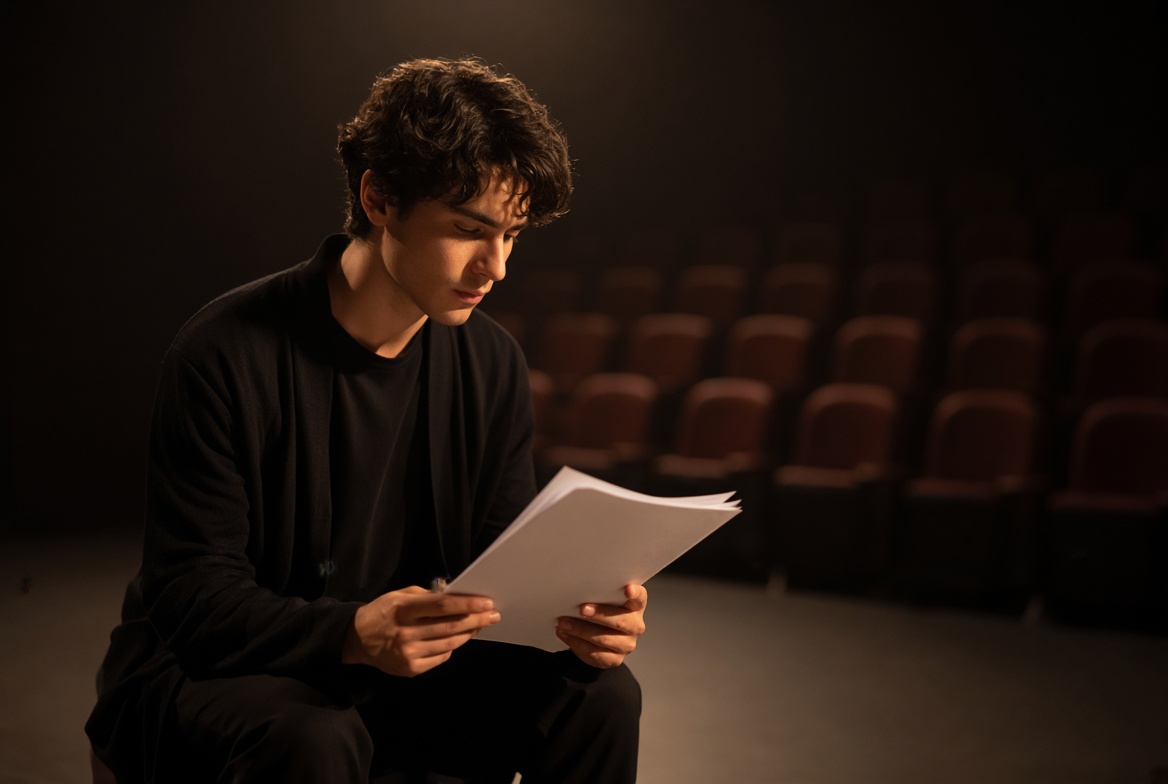
Once a long paragraph has been copied, the real work begins. Annotate the text for shifts in imagery, changes in pronoun address, or moments where the verse rhythm breaks. Compare a tragic soliloquy with a comic reflection on the same theme (love, time, power). Use a passage as the opening stimulus for a short creative response that continues the character’s thought in contemporary language or in a different genre. Actors can mark breath points and emotional turns; students can track how a single extended speech advances or complicates the larger plot.
These practices transform a simple copy-and-paste action into an encounter with living language.
Common Pitfalls When Working with Long Shakespeare Passages
Avoid versions that silently rewrite the text into contemporary prose while still labeling it “Shakespeare.” Check lineation carefully after pasting. Supply enough surrounding context so that a speech is not made to say the opposite of its original dramatic function. Resist the temptation to treat every famous passage as a free-standing proverb; many of the most powerful lines derive their force from the specific situation and the speaker’s limited knowledge.
Frequently Asked Questions about Long Paragraphs Copy and Paste from Shakespeare
Are Shakespeare’s works free to copy and paste? Yes. The plays and poems are in the public domain worldwide. You may copy, adapt, perform, and publish them without seeking permission or paying royalties.
How long should a “long paragraph” be for academic use? There is no fixed rule. A continuous speech of 15–40 lines often provides enough material for meaningful close reading while remaining manageable for quotation in an essay.
Should I modernize the spelling? It depends on purpose. For performance and detailed poetic analysis, original spelling and punctuation usually serve better. For rapid comprehension with younger students, light modernization can help—provided the changes are acknowledged.
Where can I verify the text? Reliable public-domain sources include established scholarly editions available online and the texts hosted by major libraries and educational institutions. Cross-checking two independent sources is always wise.
How do I cite these passages? Name the play, act, and scene (and line numbers if your edition provides them). Example: (Hamlet 3.1). Follow the specific style guide required by your teacher, editor, or institution.
Can I use these in commercial projects? Yes, because the underlying text is public domain. Original commentary, arrangement, or annotation that you add may itself be protected by copyright, but the Shakespearean language is free for reuse.
The lasting value of Shakespeare lies less in isolated memorable phrases than in the sustained movements of thought and feeling that his longer passages make possible. By providing clean, continuous text ready for immediate use, this collection removes a practical barrier that has long frustrated students, teachers, performers, and readers. Copy the paragraphs you need, then stay with them long enough to hear the full argument, the shifting rhythm, and the human complexity they contain. The language rewards the extra attention. From there, the work of understanding, performance, or creative response can begin in earnest.