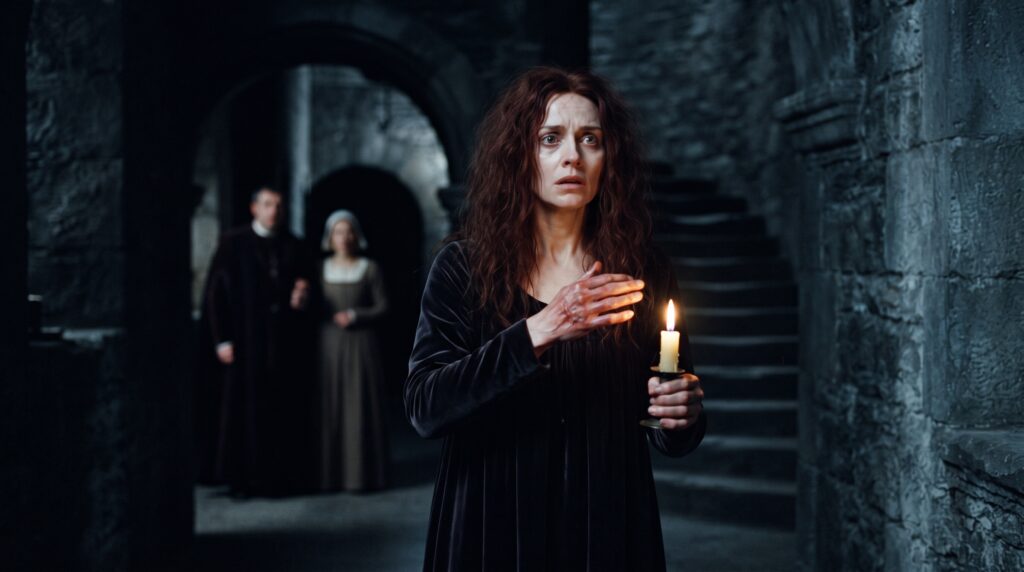
There is a terrifying finality in the quiet hours of the night when the defenses we build during the day finally crumble. Long before modern clinical psychology mapped the contours of trauma, moral injury, and repressed grief, William Shakespeare captured the agonizing collapse of the human conscience in one of the most haunting scenes in theatrical history. When Lady Macbeth sleepwalks through Dunsinane Castle in Act 5, Scene 1, clutching a flickering taper and scrubbing frantically at her invisible blemishes, she utters the immortal cry: “Out, damned spot! out, I say!”
This iconic line is far more than a memorable dramatic exclamation; it is the psychological epicenter of Macbeth. For students, literature enthusiasts, and scholars alike, decoding the exact meaning behind macbeth out damned spot reveals a masterclass in theatrical realism, early modern medicine, and universal human truths.
Why does the architect of a regicide, a woman who once commanded her husband to “screw your courage to the sticking-place,” break down into a terrified, compulsive hand-washer? In this comprehensive guide, we will dissect the dramatic setup, the textual evolution of blood and water motifs, the historical and Elizabethan context of sleepwalking, and the profound psychoanalytic lens through which Sigmund Freud and modern therapists view this literary masterpiece.
II. Setting the Scene: Macbeth Act 5, Scene 1 Explained
To truly appreciate the weight of Lady Macbeth’s breakdown, one must examine the dramatic architecture of Act 5, Scene 1. The scene shifts away from the thundering battle preparations and the tyrannical chaos of Macbeth’s fortress to a dim, eerie antechamber where two watchful observers wait in silence: a doctor of physic and a gentlewoman.
+-----------------------------------------------------------------+
|                        THE OBSERVING EYE                        |
+-----------------------------------------------------------------+
|  The Gentlewoman: Reports the strange phenomenon of nocturnal   |
|                   sleepwalking and confumed confession.         |
|  The Doctor:      Represents scientific and medical authority,  |
|                   ultimately admitting human science is blind   |
|                   to spiritual and moral trauma.                 |
+-----------------------------------------------------------------+
The gentlewoman has summoned the doctor not to cure a physical malady, but to witness a supernatural mystery. For consecutive nights, the Queen has risen from her bed, unlocked her closet, taken forth writing paper, folded it, written upon it, read it, afterwards sealed it, and all the while fast asleep—yet with her eyes open.
This stagecraft is deliberate. By stripping Lady Macbeth of her waking authority, Shakespeare exposes her raw, unprotected subconscious. She carries a light continuously—not because she welcomes illumination, but because, as the gentlewoman notes, “she is afeard of the dark.” The darkness that she once invoked in Act 1 (“Come, thick night, and pall thee in the dunnest smoke of hell”) has turned against her, becoming a suffocating chamber of mirrors reflecting her unforgiven deeds.
III. The Exact Line & Its Immediate Literary Context
When Lady Macbeth finally speaks in her slumber, her dialogue shatters the rigid control she maintained throughout the middle acts of the tragedy.
“Out, damned spot! out, I say! One: two: why, then ’tis time to do’t. Hell is murky. Fie, my lord, fie! a soldier, and afeard? What need we fear who knows it, when none can call our power to account? Yet who would have thought the old man to have had so much blood in him?”
This passage is a masterclass in dramatic irony and psychological recursion. Every line collapses her past arrogance into present torment:
-
The Illusion of Control: “One: two: why, then ’tis time to do’t.” She is reliving the assassination night of King Duncan, mentally synchronizing the striking clock with the execution of the crime.
-
The Reversal of Hubris: “Fie, my lord, fie! a soldier, and afeard?” Here, she unconsciously reenacts the very bullying tactics she used to goad Macbeth into murder, unaware that she is now the one paralyzed by existential terror.
-
The Shock of Reality: “Yet who would have thought the old man to have had so much blood in him?” This sentence strikes at the heart of her tragic disillusionment. She had calculated the political necessity of regicide, but she utterly failed to calculate the visceral, psychological aftermath of human slaughter.
The Irony of Blood and Water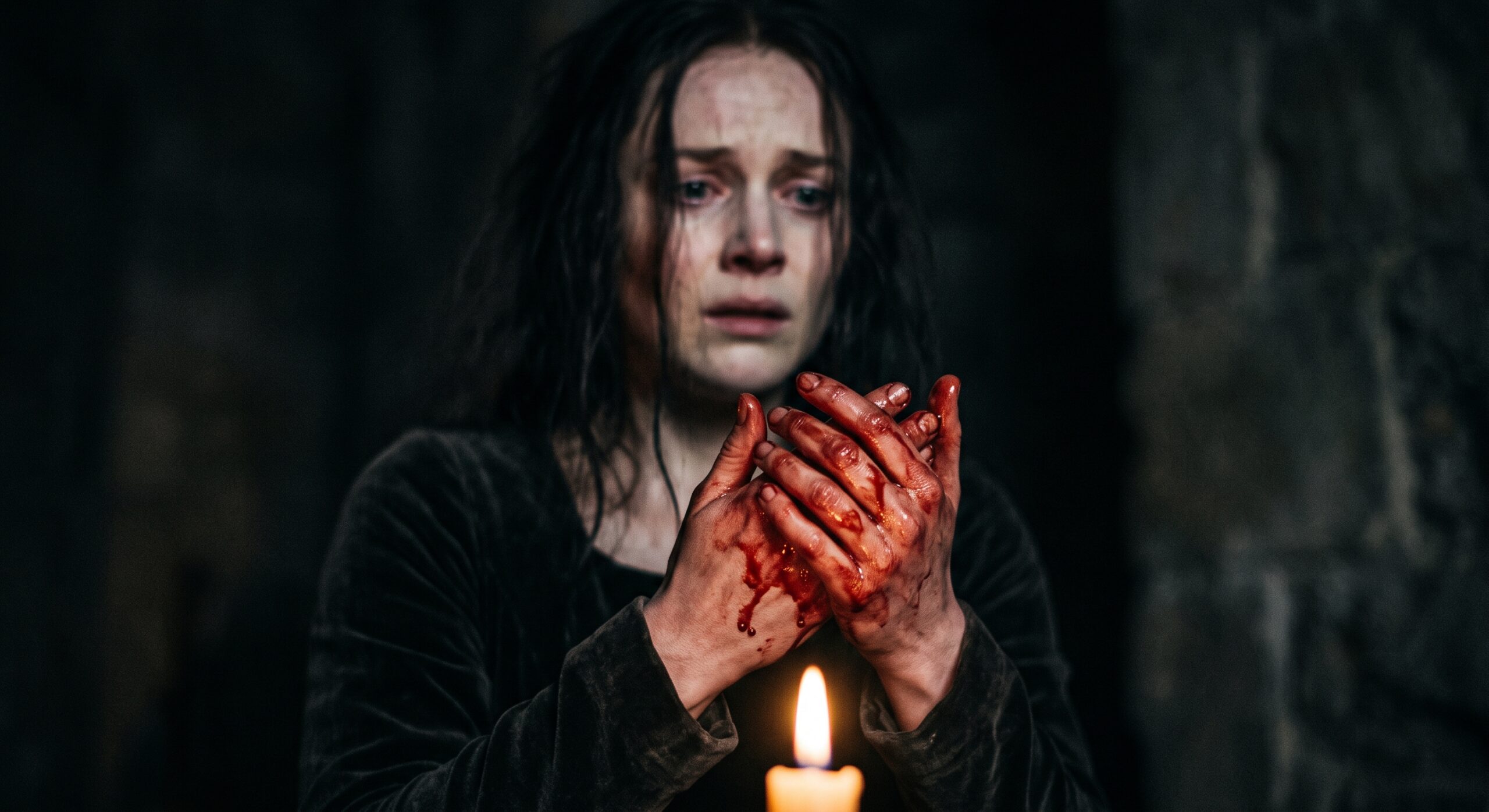
The evolution of the blood motif serves as the moral spine of the play. In Act 2, Scene 2, immediately following Duncan’s murder, Macbeth stares at his crimson hands in panic, asking, “Will all great Neptune’s ocean wash this blood clean from my hand?”
To which Lady Macbeth dismissively replies:
“A little water clears us of this deed:”
In Act 5, that casual dismissal comes back to destroy her. The physical water of the nightly basin cannot wash away the metaphorical stain etched into her psyche. The sensory hallucination of the scent of blood drives her to despair:
“Here’s the smell of the blood still: all the perfumes of Arabia will not sweeten this little hand. Oh, oh, oh!”
Shakespeare leverages hyperbole here with devastating effect. Arabia—symbolizing luxury, exoticism, and limitless wealth—is rendered entirely impotent against the olfactory memory of a single murder.
IV. Historical and Cultural Context of Elizabethan Madness
To an Elizabethan or Jacobean audience watching the play in the early 17th century, Lady Macbeth’s condition held specific cultural, medical, and theological meanings that modern viewers might miss.
Renaissance Conceptions of Sleepwalking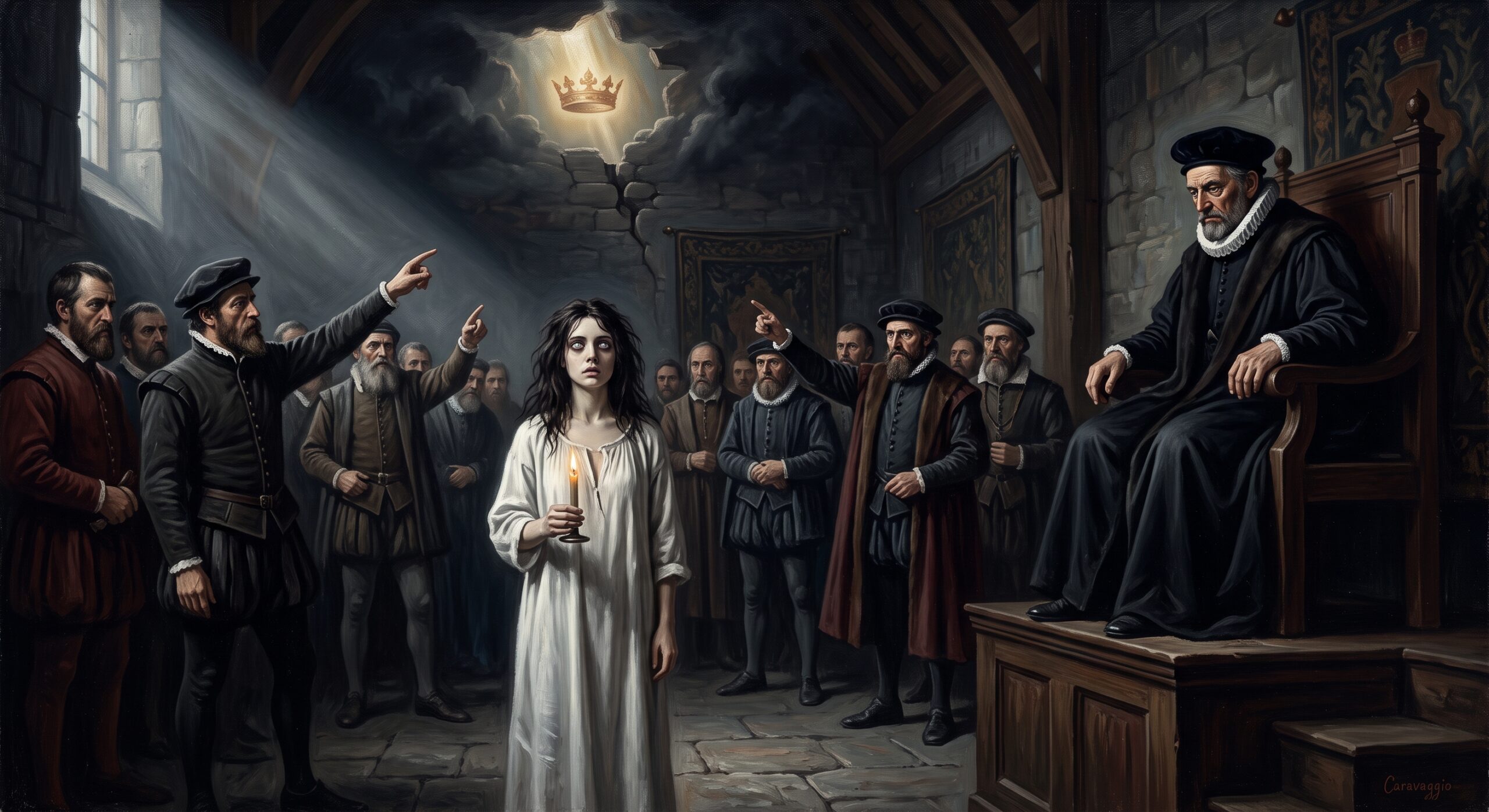
In early modern medicine, sleepwalking (somnambulism) was viewed with deep suspicion and fascination. It was widely believed that during sleep, the rational soul stepped back, allowing the imagination and the conscience to operate unchecked. Without the guardrails of waking reason, hidden sins, suppressed guilts, and spiritual corruption rose directly to the surface. Sleepwalking was thus seen as a window through which divine justice exposed secret crimes.
The Limitations of Renaissance Medicine
The inclusion of the doctor is crucial. When the doctor declares, “More needs she the divine than the physician,” Shakespeare is engaging in a sophisticated cultural dialogue about the limits of science versus the demands of the soul. Renaissance medicine, rooted in the humoral theory of the body, could treat physical imbalances, but it had no lexicon for post-traumatic psychological collapse or moral injury. The doctor recognizes that Lady Macbeth’s affliction belongs to a higher, more terrible court: the tribunal of an unrepentant conscience.
The Stigma of Regicide
King James I, for whom the play was heavily tailored, was deeply invested in the doctrine of the Divine Right of Kings—the belief that monarchs derived their authority directly from God. Killing a king (regicide) was not merely a political crime or a felony; it was a cosmic disruption, a sin against nature that unraveled the moral fabric of the universe. Lady Macbeth’s descent into madness underscores this theological reality: society and nature demand restitution, and the human mind fractures under the weight of cosmic violation.
V. A Deep Dive Psychoanalytic Perspective: Freud and Beyond
Centuries after Shakespeare’s death, the father of psychoanalysis, Sigmund Freud, turned his analytical gaze toward this very scene. In his short 1916 essay Some Character-Types Met in Psycho-Analytical Work, Freud explored the psychology of those wrecked by success.
Freud’s Reading of Lady Macbeth
Freud made a fascinating observation about the psychological trajectory of the Macbeths. Initially, it is Macbeth who exhibits hesitation, paralyzing moral qualms, and hallucinatory visions (the floating dagger, Banquo’s ghost), while Lady Macbeth appears cold, pragmatic, and utterly devoid of remorse. Yet, as the play progresses, an extraordinary psychological inversion takes place: Macbeth hardens into a ruthless, numb tyrant, while Lady Macbeth collapses into catastrophic guilt.
Freud argued that Lady Macbeth’s breakdown is the classic result of repressed trauma meeting delayed moral realization. She diverted her conscience during the active phase of ambition, absorbing her husband’s guilt into her own ego structure to keep the enterprise afloat. Once the crown was secured and the immediate adrenaline faded, the psychological defense mechanisms collapsed. The repressed material returned with demonic force during sleep, bypassing her waking ego entirely.
Modern Psychological Interpretations: PTSD and Moral Injury
Through a modern clinical lens, Lady Macbeth exhibits textbook symptoms of what we now classify as Post-Traumatic Stress Disorder (PTSD) and Moral Injury:
-
Intrusive Recollections & Flashbacks: Reliving the night of the murder step-by-step during her nocturnal episodes.
-
Compulsive Rituals: The continuous hand-washing serves as an early literary representation of Obsessive-Compulsive Disorder (OCD) triggered by acute trauma—an effort to achieve impossible purification.
-
Insomnia and Hyper-Arousal: The total breakdown of restorative sleep, leading directly to psychological disintegration.
VI. Thematic Counterparts: Guilt, Conscience, and Fate
To fully grasp the scope of Act 5, Scene 1, we must contrast Lady Macbeth’s internal collapse with her husband’s evolving state of mind.
| Character | Manifestation of Guilt | Ultimate Psychological State |
| Lady Macbeth | Sensory hallucinations, compulsive physical rituals (hand-washing), sleepwalking | Complete psychological fragmentation, leading to self-destruction. |
| Macbeth | Intellectualized fatalism, emotional numbness, bravado | Cynical detachment (“Life’s but a walking shadow”), leading to reckless defiance. |
While Lady Macbeth’s conscience physically manifests through sensory torture (smelling blood, seeing spots), Macbeth’s conscience corrodes his emotional capacity. By the time he hears of her death in Act 5, Scene 5, he delivers one of the most chillingly detached soliloquies in literature:
“She should have died hereafter; / There would have been a time for such a word.”
Macbeth has become so desensitized by violence that grief is reduced to an inconvenient scheduling conflict. This divergence highlights Shakespeare’s psychological genius: guilt does not wear a single face. It can shatter the spirit through acute remorse (Lady Macbeth) or calcify the soul into nihilistic despair (Macbeth).
VII. Cultural Legacy and Modern Interpretations
The phrase “Out, damned spot!” has transcended the boundaries of Elizabethan drama to become a universal cultural shorthand for inescapable guilt, hidden hypocrisy, and the stain of compromised ethics.
In Literature and Public Discourse
Writers, journalists, and historians regularly invoke the imagery of Lady Macbeth’s unwashed hands when examining political scandals, corporate corruption, and personal cover-ups. The metaphor resonates because it taps into a fundamental human anxiety: the fear that no matter how thoroughly we sanitize our public image, the internal record of our wrongdoing remains indelible.
On Stage and Screen
Great dramatic interpreters of Lady Macbeth—from classical stage legends like Dame Judi Dench to cinematic powerhouses—have approached Act 5, Scene 1 as the ultimate test of acting stamina. Rather than portraying her as a shrieking madwoman, modern directors often emphasize her profound vulnerability, quiet devastation, and ghost-like fragility. In these interpretations, the candle she carries is a pathetic shield against a universe she can no longer control.
VIII. Frequently Asked Questions (FAQs)
What does “Out, damned spot!” actually mean?
In its literal context, Lady Macbeth is sleepwalking and hallucinating a spot of King Duncan’s blood on her hand that she believes will never wash away. Figuratively, it represents her unshakeable guilt, contaminated conscience, and the psychological trauma of participating in regicide.
Why is Lady Macbeth sleepwalking in Act 5?
Sleepwalking represents the breakdown of her waking psychological defenses. During the day, she maintains a composed, regal exterior, but as her mind unravels under the weight of guilt, her repressed trauma breaks through when her conscious control ceases during sleep.
Did Lady Macbeth die by suicide, and how does her death relate to this scene?
Although Shakespeare does not explicitly show her death on stage, Malcolm announces in Act 5, Scene 8 that she died by “self-and violent hands,” pointing to suicide. Her sleepwalking breakdown in Act 5, Scene 1 serves as the direct psychological precursor to this tragic end, showing a mind completely consumed by despair and unable to endure the reality of its own actions.
How does Shakespeare use blood as a recurring motif in Macbeth?
Blood serves as a shifting symbol throughout the tragedy. Early in the play, it is viewed as a badge of honor (“brave Macbeth”). Following Duncan’s murder, it transforms into a symbol of guilt and spiritual contamination that cannot be washed away by physical water or earthly power.
IX. The Timeless Resonance of Shakespearean Guilt
William Shakespeare’s Macbeth endures across centuries not merely because of its thrilling plot of ambition, witchcraft, and political betrayal, but because of its astonishingly modern insight into the human mind. Long before the advent of psychoanalysis, clinical psychology, or trauma research, Shakespeare understood that human beings cannot violate their own moral codes without paying a devastating internal toll.
Lady Macbeth’s desperate plea—“Out, damned spot! out, I say!”—remains one of literature’s most powerful warnings against the illusion that evil deeds can be committed without consequence. It reminds us that while ambition may build a throne, conscience will always claim the final reckoning in the quiet chambers of the night.