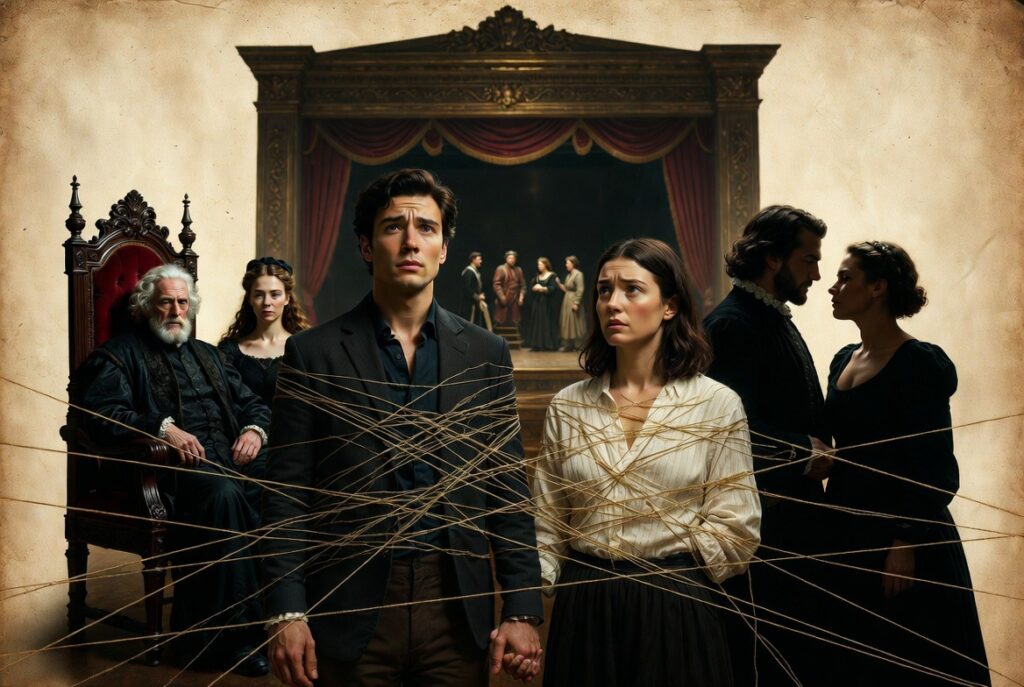
Imagine this: You’ve fallen deeply in love with someone who makes your world feel complete. The future looks bright—until you meet their family. Suddenly, every decision, every holiday, every emotional moment seems filtered through an invisible web where individual boundaries barely exist. Loyalty to the family unit overrides everything else, and as the newcomer, you start to feel like an intruder rather than a welcomed partner.
Marrying into an enmeshed family can transform what should be a joyous union into a source of ongoing stress, resentment, and identity erosion. If you’re experiencing this, you are far from alone. This article explores these challenging dynamics through the lens of William Shakespeare—the greatest observer of human relationships in literary history—offering timeless lessons that remain strikingly relevant today.
As a scholar of Shakespearean literature with a strong understanding of family systems theory, I’ve analyzed how the Bard’s dysfunctional families mirror the struggles many face in modern marriages. Drawing from structural family therapy concepts pioneered by Salvador Minuchin and real-world relationship patterns, this guide provides practical insights, red-flag checklists, boundary-setting strategies, and hopeful paths forward. Whether you’re dating, engaged, or already married into such a system, these Shakespearean lessons can help you protect your marriage and reclaim your sense of self.
What Is an Enmeshed Family? A Clear Definition and Modern Context
Family enmeshment occurs when emotional and psychological boundaries between family members become blurred or nonexistent. Coined in the field of family therapy, the term describes systems where individual autonomy is sacrificed for extreme closeness and interdependence. In enmeshed families, parents may treat adult children as emotional extensions of themselves, siblings compete for parental approval, and outsiders (including spouses) are often viewed with suspicion or outright hostility.
Origins in Psychology
Psychologist Salvador Minuchin developed the concept within structural family therapy in the 1970s. Enmeshment stands in contrast to “disengaged” families (where members are overly distant) and healthy families, which maintain clear but flexible boundaries. Key characteristics include:
- Over-involvement in each other’s lives
- Emotional guilt used as a control mechanism
- Difficulty accepting new members into the family system
- Resistance to change or differentiation (when a member tries to establish independence)
How Enmeshment Differs from Close, Healthy Families
A close family celebrates milestones together and offers support during hardship. An enmeshed family, however, demands constant emotional fusion. Privacy is seen as betrayal. Disagreement equals disloyalty. For someone marrying into an enmeshed family, this often manifests as pressure to spend every holiday with in-laws, constant unsolicited opinions on your marriage, or subtle (and not-so-subtle) campaigns to pull your partner back into the family orbit.
Why Marrying Into an Enmeshed Family Feels So Overwhelming
The impact is profound. Research in family psychology links enmeshed dynamics to higher rates of marital dissatisfaction, anxiety, depression, and even physical health issues due to chronic stress. The newcomer often faces a painful choice: conform and lose yourself, or assert independence and trigger family conflict. Your partner may feel torn between you and their family of origin, creating loyalty binds that strain the marriage.
LSI keywords integrated here naturally: toxic in-laws, family boundaries in marriage, emotional enmeshment signs, in-law interference.
Recognizing the Warning Signs Before You Say “I Do”
Early detection is crucial. Here is a practical checklist of common red flags:
- Your partner receives daily calls or texts from parents about minor decisions.
- Family members frequently drop by unannounced or expect unlimited access to your living space.
- There is heavy emphasis on “family first” above all other relationships.
- Past partners were rejected for not fitting the family mold.
- Emotional blackmail is common (“After all we’ve done for you…”).
- Sibling rivalry is fueled by parental favoritism.
- Your opinions are dismissed unless they align with family consensus.
- Holidays and major life events allow no flexibility.
- Your partner feels intense guilt when setting even minor limits.
- The family has a history of rejecting outsiders or “breaking up” previous relationships.
Shakespeare’s plays are filled with these patterns, offering dramatic but insightful mirrors to help you recognize them early.
Shakespeare’s Brilliant Portrayal of Dysfunctional Families
William Shakespeare wrote during the late 16th and early 17th centuries, yet his understanding of family power dynamics feels almost prophetic. Across tragedies, comedies, and romances, he repeatedly examined how families can become emotional prisons—where love twists into control, loyalty becomes weaponized, and individual happiness is sacrificed on the altar of family identity.
Shakespeare understood that families are systems. When one member tries to differentiate (as modern therapists call it), the entire system reacts, often destructively. His characters reveal universal truths about enmeshed family dynamics that psychology later formalized. By studying them, we gain both warning and wisdom for our own lives.
Hamlet – The Destructive Power of Mother-Son Enmeshment
One of Shakespeare’s most famous examples of enmeshment appears in Hamlet. The relationship between Prince Hamlet and his mother, Gertrude, exemplifies emotional incest—a hallmark of enmeshed families.
Gertrude and Hamlet: Emotional Incest at Its Core
After King Hamlet’s death, Gertrude quickly marries Claudius, Hamlet’s uncle. Hamlet’s rage is not just about the hasty marriage but about the violation of boundaries. Gertrude’s emotional dependence on her son—and Hamlet’s obsessive focus on her sexuality and choices—creates a suffocating dyad. The famous “closet scene” (Act 3, Scene 4) crackles with inappropriate intimacy as Hamlet confronts his mother in her bedroom.
This dynamic leaves little room for healthy external relationships. Enter Ophelia—the ultimate outsider who becomes collateral damage.
Ophelia’s Fate as the Outsider
Ophelia, in love with Hamlet, is caught between her father Polonius’s commands, her brother Laertes’s expectations, and Hamlet’s emotional volatility. She has no space to develop her own identity. Her tragic end—madness and suicide—serves as a cautionary tale for anyone marrying into an already enmeshed system. The family’s dysfunction consumes her.
Key Lessons for Modern Readers:
- Never compete directly with a parent for emotional primacy in your partner’s life.
- Watch how your partner speaks about and interacts with their opposite-sex parent. Excessive closeness or criticism often signals enmeshment.
- Protect your mental health. Like Ophelia, outsiders can absorb the family’s unresolved trauma if boundaries aren’t established early.
King Lear – Conditional Love, Favoritism, and Loyalty Tests
Few plays illustrate the dangers of enmeshed family dynamics as powerfully as King Lear. Shakespeare presents a father who demands absolute emotional devotion from his daughters, turning love into a public performance and a tool of manipulation.
How Lear Weaponizes Family Bonds
King Lear demands his daughters publicly declare their love for him in exchange for shares of his kingdom. While Goneril and Regan play the game with flowery falsehoods, Cordelia refuses, saying she loves him “according to my bond, no more nor less.” Her honest boundary-setting shatters the enmeshed system, resulting in her disinheritance.
This scene reveals a classic enmeshed pattern: love is conditional and must be proven repeatedly. Parents in such families often create loyalty tests—choosing sides in conflicts, demanding preferential treatment, or using guilt to maintain control.
The Danger of Public Declarations and Emotional Blackmail
In modern terms, this mirrors families where adult children are expected to prioritize parents over spouses, attend every family event regardless of personal cost, or make major life decisions only after family approval. Shakespeare shows how such dynamics breed resentment, sibling rivalry, and eventual family collapse.
Cordelia’s Stand – The High Cost (and Necessity) of Healthy Boundaries
Cordelia’s exile demonstrates the painful truth: setting boundaries in an enmeshed family can come at great personal cost. Yet her integrity ultimately proves redemptive. For those marrying into these families, the lesson is clear—true partnership requires your spouse to choose you without constant negotiation with their parents.
Modern Parallels: Inheritance disputes, holiday obligations, and parental favoritism frequently echo Lear’s kingdom division. Couples therapy often reveals these patterns when one partner feels pulled in two directions.
Romeo and Juliet – When Two Enmeshed Families Collide
Shakespeare’s most famous tragedy offers the ultimate warning about what happens when two enmeshed families refuse to accept outsiders.
Tribal Identity Over Individual Happiness
The Montagues and Capulets are not merely feuding houses—they are emotionally enmeshed tribes where family honor supersedes personal desire. Romeo and Juliet’s love threatens the group identity, making their union impossible without betrayal of their respective families.
The Deadly Cost of Inability to Accept Outsiders
The play’s tragic ending underscores the destructive power of rigid family systems. Neither set of parents can envision their child as an autonomous individual capable of choosing a partner from the “enemy” camp. The result is unnecessary death and profound regret.
Lessons for Intercultural, Interfaith, or Feuding Families
For readers facing cultural, religious, or ethnic differences with in-laws, Romeo and Juliet provides sobering insight. Enmeshed families often view the newcomer as a threat to cultural continuity or family cohesion. Successful navigation requires a strong spousal alliance that prioritizes the marriage over extended family approval.
Practical Reflection: Ask yourself—does my partner’s family see me as an addition to their unit, or as a competitor for their child’s loyalty?
Additional Shakespearean Case Studies of Enmeshment
Shakespeare offers many more mirrors for those marrying into challenging family systems.
Prospero and Miranda in The Tempest
Prospero’s intense, controlling relationship with his daughter Miranda represents overprotective parental enmeshment. Isolated on the island, he delays her independence and manipulates events to control her romantic choices. The lesson: parents who resist their children’s adult autonomy create barriers to healthy marriage.
The Macbeths – Toxic Spousal Enmeshment
While not a biological family example, Macbeth and Lady Macbeth demonstrate how enmeshment can exist within a marriage itself—shared ambition and mutual guilt binding them in a destructive cycle. This warns couples entering enmeshed families to guard against their own relationship becoming overly fused as a defense mechanism.
Leontes in The Winter’s Tale
King Leontes’ jealous paranoia destroys his family, showing how unchecked emotional issues in one member can ripple through an enmeshed system. The play’s redemptive ending, however, offers hope: with time, distance, and self-reflection, healing is possible.
Other plays like Coriolanus (maternal dominance) and The Merchant of Venice (family loyalty vs. individual choice) further enrich our understanding.
7 Timeless Shakespearean Lessons for Surviving Enmeshed Families
- Boundaries Are Sacred “This above all: to thine own self be true” (Hamlet). Shakespeare repeatedly shows that without clear boundaries, individuals lose themselves.
- Loyalty Tests Reveal Character True love does not require choosing between spouse and family of origin indefinitely.
- Individual Identity Must Be Claimed Differentiation is essential. Shakespeare’s heroes who fail to establish autonomy meet tragic ends.
- Manipulation Thrives in Silence Open communication—however uncomfortable—disrupts toxic patterns, as seen when characters confront deception.
- Strengthen Your Marriage First A united front between partners is the strongest defense against external family pressure.
- Forgiveness Has Limits While reconciliation is ideal, Shakespeare shows some relationships require healthy distance.
- Redemption and Change Are Possible Plays like The Tempest and The Winter’s Tale demonstrate that awareness and deliberate action can break cycles of enmeshment.
Practical Strategies and Actionable Advice
Pre-Marriage Decision Framework
- Have explicit conversations about family expectations before engagement.
- Observe family interactions over multiple visits and holidays.
- Ask: Can my partner set boundaries with their parents? Are they willing to prioritize our marriage?
- Non-negotiables: Respect for your privacy, no unannounced visits, and support during conflicts with in-laws.
Post-Marriage Survival Guide
Build a strong spousal alliance first. Present as a united team when interacting with the enmeshed family. Use “we” statements: “We have decided…” rather than allowing division.
Setting Boundaries with Shakespearean Wisdom:
- Be clear and consistent, like Cordelia.
- Expect pushback, as systems resist change.
- Sample scripts: “We love spending time together, but we need to balance that with our own plans as a couple.”
Managing Holidays and Grandchildren
Create new traditions as a couple. Limit visits if needed. Prepare for guilt trips and have responses ready.
When to Seek Professional Help
If your partner cannot defend the marriage or you experience anxiety, depression, or resentment, consult a licensed marriage and family therapist familiar with enmeshment. Individual therapy can help you maintain your identity.
Self-Care and Identity Protection
Maintain your own friendships, hobbies, and career. Regular self-reflection prevents losing yourself in the family drama.
Real-World Success Stories and Cautionary Tales
Many couples have successfully navigated enmeshed families by drawing firm lines early. One common pattern: the spouse from the enmeshed family gradually differentiates after consistent support and therapy, leading to healthier extended family relationships.
Cautionary tales abound where ignoring red flags led to divorce or chronic unhappiness. The common thread in successful cases is a partner willing to do the hard work of individuation.
Frequently Asked Questions (FAQ)
What are the biggest red flags of enmeshed families? Constant interference, guilt-tripping, resistance to your relationship, and poor boundaries between parents and adult children.
Can an enmeshed family change after marriage? Change is possible but difficult. It requires the family member’s commitment to differentiation and often professional guidance.
Should I marry my partner if their family is clearly enmeshed? Only if your partner demonstrates willingness and ability to prioritize your marriage. Otherwise, proceed with extreme caution.
How do I set boundaries without destroying relationships? Start small, remain consistent, communicate with empathy, and focus on “we” decisions as a couple.
Which Shakespeare play best matches my situation? Hamlet for parent-child enmeshment, King Lear for favoritism and loyalty tests, Romeo and Juliet for family rejection of outsiders.
Is it possible to have a happy marriage in this dynamic? Yes. Many couples thrive by creating a strong nuclear family unit while maintaining appropriate distance from the enmeshed system.
Marrying into an enmeshed family presents real challenges that can test even the strongest relationships. Yet, as Shakespeare masterfully demonstrated across his canon, awareness of these patterns is the first step toward freedom. His characters reveal both the destructive potential of blurred boundaries and the possibility of redemption through courage, clarity, and commitment to healthier ways of relating.
You do not have to become Ophelia, Cordelia in exile, or a tragic lover caught between feuding houses. By studying these timeless lessons, implementing practical strategies, and prioritizing your marriage, you can write a different ending—one defined by mutual respect, personal autonomy, and genuine love.
Remember Prospero’s final act of releasing control in The Tempest: true strength lies in letting go of dysfunctional patterns. Seek support when needed, communicate openly with your partner, and never underestimate your right to a healthy, balanced life.
The family you create together can be stronger and wiser than the one you married into. Shakespeare’s mirror shows us the drama—but you hold the pen to your own story.