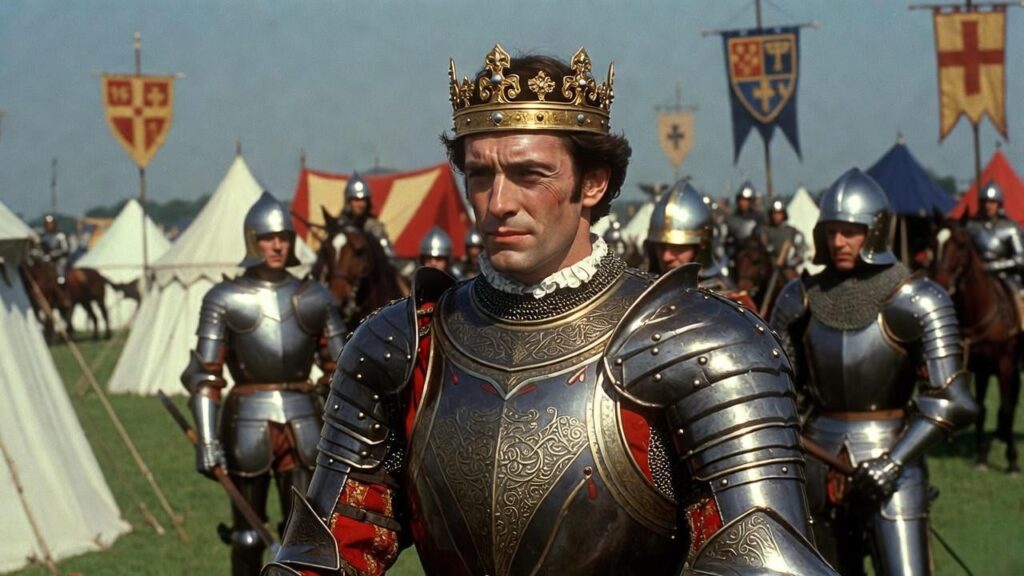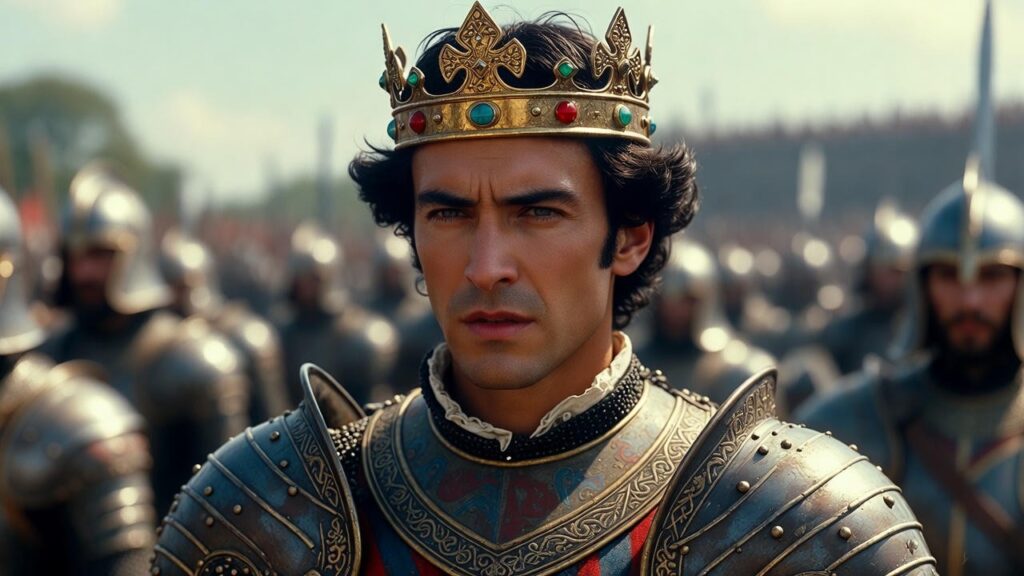
King Henry V stands as one of William Shakespeare’s most immortalized heroes, a towering figure of English martial glory and rhetorical brilliance. From the tavern-crawling days of his youth to his miraculous victory at Agincourt, the evolution of “Prince Hal” is a cornerstone of English literature. Yet, the woman who gave him his life, his Lancastrian claim, and perhaps his famously pious nature is entirely erased from the theatrical narrative. To truly understand the psychological depths of Shakespeare’s famous monarch, we must first look to Mary Bohun, his historically pivotal but theatrically absent mother.
Shakespearean audiences and readers often misunderstand Prince Hal’s rebellious youth because they lack the historical context of his maternal background and early tragic loss. While she never appears on Shakespeare’s stage, her historical legacy, massive inheritance, and premature death profoundly shaped the real Henry V and, by extension, the legendary king depicted in the Henriad.
For those dedicated to dissecting the complex family dynamics of the Plantagenets, recovering her story is not just an exercise in history—it is a vital lens for literary analysis.
Who Was Mary Bohun? The Historical Reality
To understand her impact on the House of Lancaster, one must step away from the wooden O of the Globe Theatre and look at the brutal, transactional realities of 14th-century English nobility.
The Heiress of Hereford: A Pawn in Plantagenet Politics
Born around 1369 or 1370, she was the younger daughter and co-heiress of Humphrey de Bohun, 7th Earl of Hereford, 6th Earl of Essex, and 2nd Earl of Northampton. When her father died in 1373, he left behind no male heirs, making his two daughters—Eleanor and Mary—the inheritors of one of the most substantial and lucrative estates in all of England.
In medieval aristocratic politics, an heiress of this magnitude was essentially a political pawn, highly vulnerable to the ambitions of the royal family. Her older sister, Eleanor, was married to Thomas of Woodstock, the Duke of Gloucester and the youngest son of King Edward III. Driven by intense greed, Woodstock devised a sinister plot to secure the entirety of the vast Bohun inheritance for himself and his wife. His strategy was ruthlessly simple: he intended to force his young sister-in-law into a convent, compelling her to take holy orders as a nun, thereby legally stripping her of her half of the estates.
A Strategic Child Marriage
Her salvation from the cloister came not from altruism, but from a rival royal ambition. John of Gaunt, the Duke of Lancaster and Woodstock’s older brother, caught wind of the scheme. Recognizing the immense wealth and strategic power of the Bohun lands, Gaunt intervened. He essentially abducted the young girl from her sister’s custody and brought her to his own household.
Gaunt’s motive was to secure her hand—and her inheritance—for his own heir, Henry Bolingbroke (the future King Henry IV). In 1381, at Marylebone, the two were married. The reality of medieval royal unions was stark: she was roughly 11 or 12 years old at the time of the wedding. Through this union, she brought the Earldoms of Northampton and Hereford to the Lancastrian line, dramatically increasing the wealth and power that would eventually allow Bolingbroke to usurp the English throne.
Test Your Knowledge:
Understanding the Plantagenet family tree is crucial for navigating Shakespeare’s histories. The intertwining branches of the descendants of Edward III—specifically the Houses of Lancaster and York—form the very foundation of the Wars of the Roses. Consider reviewing interactive lineage charts or taking a character relationship quiz before diving deeper into the Henriad to fully map out these royal rivalries.
The Mother of a Warrior King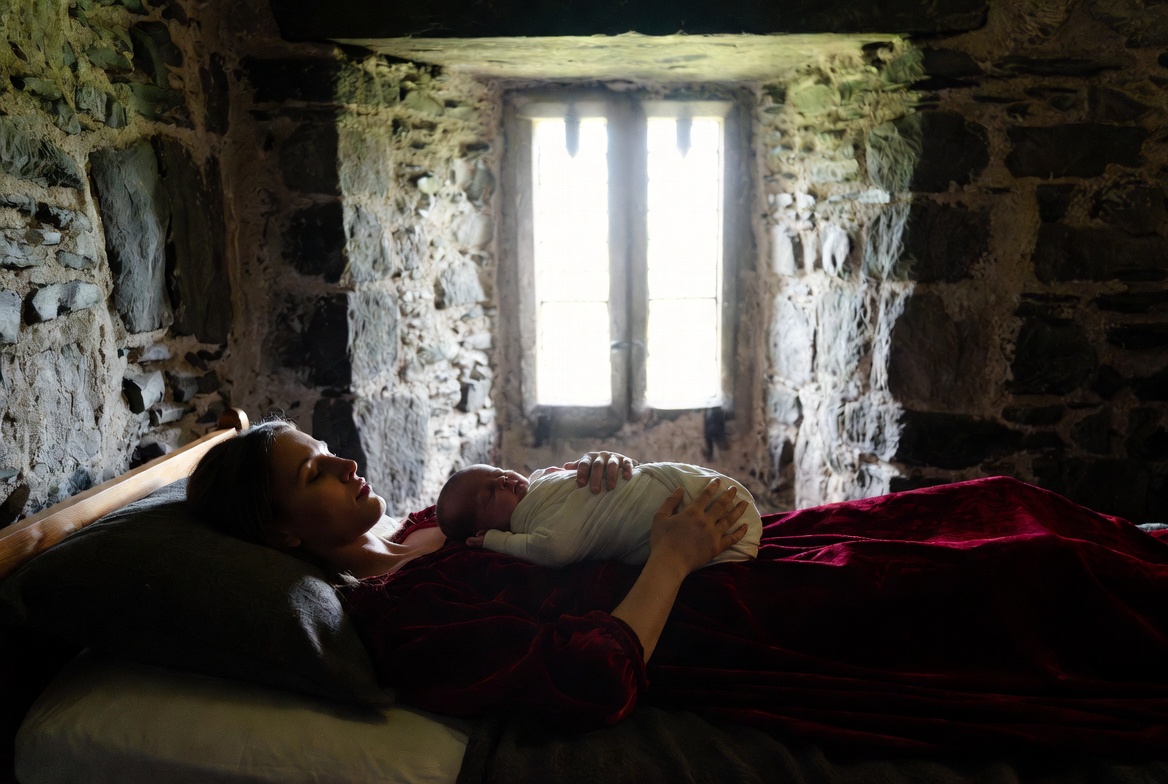
Despite the political machinations that defined her early life, she fulfilled the primary, harrowing duty expected of medieval noblewomen: securing the dynastic line through childbirth.
Giving Birth to Prince Hal
She and Henry Bolingbroke spent the early years of their marriage at various Lancastrian strongholds. In 1386, at Monmouth Castle in Wales, she gave birth to a son, Henry of Monmouth—the boy who would grow up to become King Henry V.
The physical toll of medieval childbearing was immense. Following the birth of the future king, she went on to have five more surviving children with Bolingbroke in rapid succession: Thomas (Duke of Clarence), John (Duke of Bedford), Humphrey (Duke of Gloucester), Blanche, and Philippa. Within a mere decade, she provided the House of Lancaster with a robust, unshakeable succession, entirely securing Bolingbroke’s legacy.
A Tragic, Untimely Death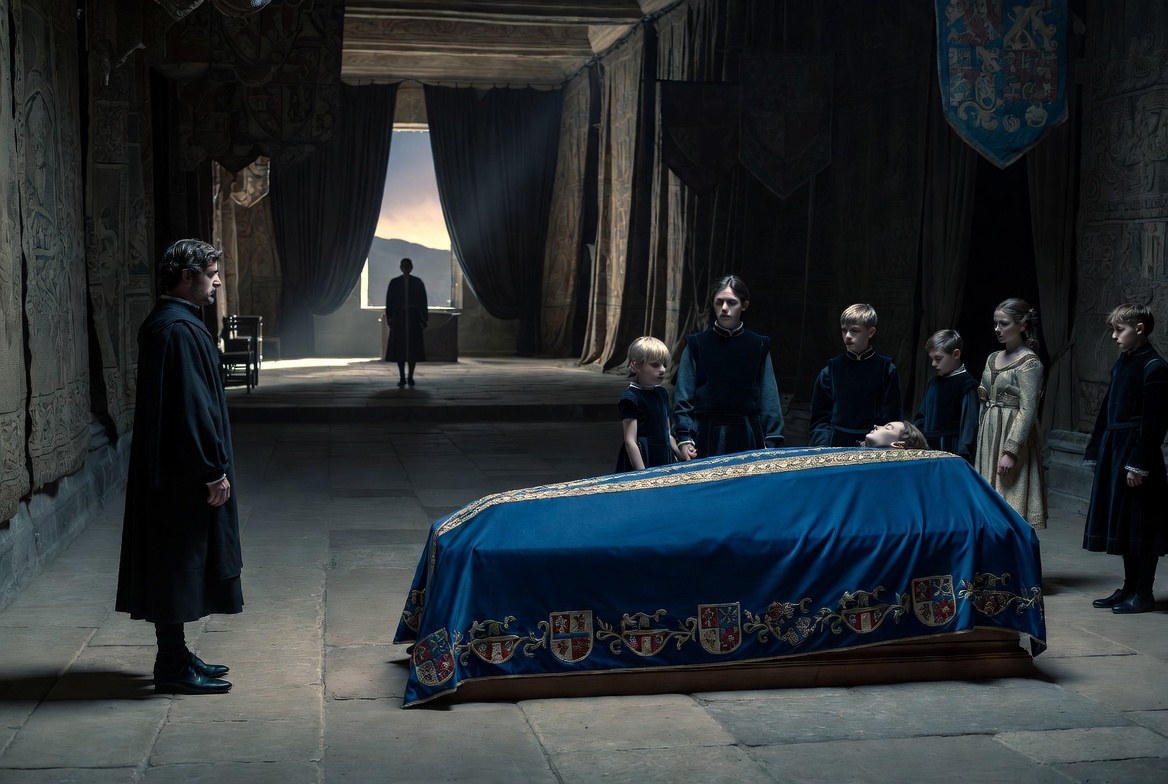
Tragically, the immense physical strain of perpetual pregnancy claimed her life. In 1394, at Peterborough Castle, she died following the birth of her final child, Philippa. She was only 24 or 25 years old. She was buried at the Collegiate Church of the Annunciation of Our Lady of the Newarke in Leicester.
The deep historical irony of her life is that she provided the financial foundation and the heirs that secured the Lancastrian dynasty, yet she never lived to see its ultimate triumph. Five years after her death, her husband usurped the throne from his cousin, King Richard II, becoming King Henry IV. Because she perished before this usurpation, she was never crowned Queen of England, remaining a shadow behind the throne her son would eventually inherit.
Why Shakespeare Left Mary Bohun Off the Stage
Given her vital role in the creation of Henry V, why is she completely absent from Shakespeare’s legendary history plays? The answer lies in a combination of historical timelines and deliberate dramatic architecture.
The Constraints of the Historical Timeline
From a purely structural standpoint, Shakespeare was bound by the chronological realities of his source material, primarily Raphael Holinshed’s Chronicles. Shakespeare’s Richard II—the first play in the tetralogy—begins its action in 1398, a full four years after her death. To include her, Shakespeare would have had to radically alter the historical timeline or rely on heavy-handed flashbacks, a device he rarely employed in his histories.
The Thematic Focus on Fathers and Sons
Beyond the timeline, her absence serves a profound thematic purpose. The Henriad (Richard II, Henry IV Part 1, Henry IV Part 2, and Henry V) is overwhelmingly concerned with patriarchal anxiety, the divine right of kings, and masculine legacy.
By removing maternal figures from the primary narrative, Shakespeare forces the dramatic tension entirely onto the relationships between fathers and sons. Henry IV is haunted by the guilt of how he obtained the crown, and he projects that anxiety onto his heir, Prince Hal. The political is deeply personal. Had a maternal figure been present to mediate, comfort, or intervene, the stark, isolating pressure placed upon Hal by his father would have been diluted. The absence of a mother sharpens the patriarchal blade, making the question of succession a strictly male, high-stakes psychological battlefield.
The Psychological Impact on Prince Hal: Reading Between the Lines
While she does not exist in the text of the plays, acknowledging her historical reality allows readers and directors to uncover new psychological layers in Prince Hal’s characterization.
The Motherless Prince
Historically, Henry of Monmouth lost his mother when he was only seven or eight years old. Shortly thereafter, his father was exiled by Richard II. This left the young boy effectively orphaned, raised in the volatile court of the very king his father would eventually depose.
When we meet Prince Hal in Henry IV, Part 1, he is acting out. He is rebelling against the expectations of his distant, demanding, and guilt-ridden father by carousing in Eastcheap taverns. Viewing Hal through the lens of early maternal loss adds a poignant dimension to his wayward youth. His rejection of the royal court is not just political rebellion; it can be read as a search for warmth, connection, and belonging that was abruptly severed in his childhood.
Falstaff as the Surrogate Parent
This brings us to one of the most fascinating psychological interpretations of the Henriad: Does Sir John Falstaff fill a maternal void?
Falstaff is undeniably a surrogate father figure, standing in sharp contrast to the cold, calculating King Henry IV. However, Falstaff is also characterized by his sheer physicality, his gluttony, his emotional warmth, and his protective (if deeply flawed) affection for Hal. In the famous tavern play-acting scene, Falstaff begs Hal not to banish him: “Banish plump Jack, and banish all the world.”
Where Henry IV offers only conditional approval tied to duty and statecraft, Falstaff offers unconditional, chaotic love. By understanding that Hal was a motherless child raised in a hyper-masculine, dangerous political arena, his deep attachment to the maternal warmth and unrestrained emotional excess of Falstaff becomes far more tragic and understandable.
Traces of the Bohun Legacy in Shakespeare’s Henry V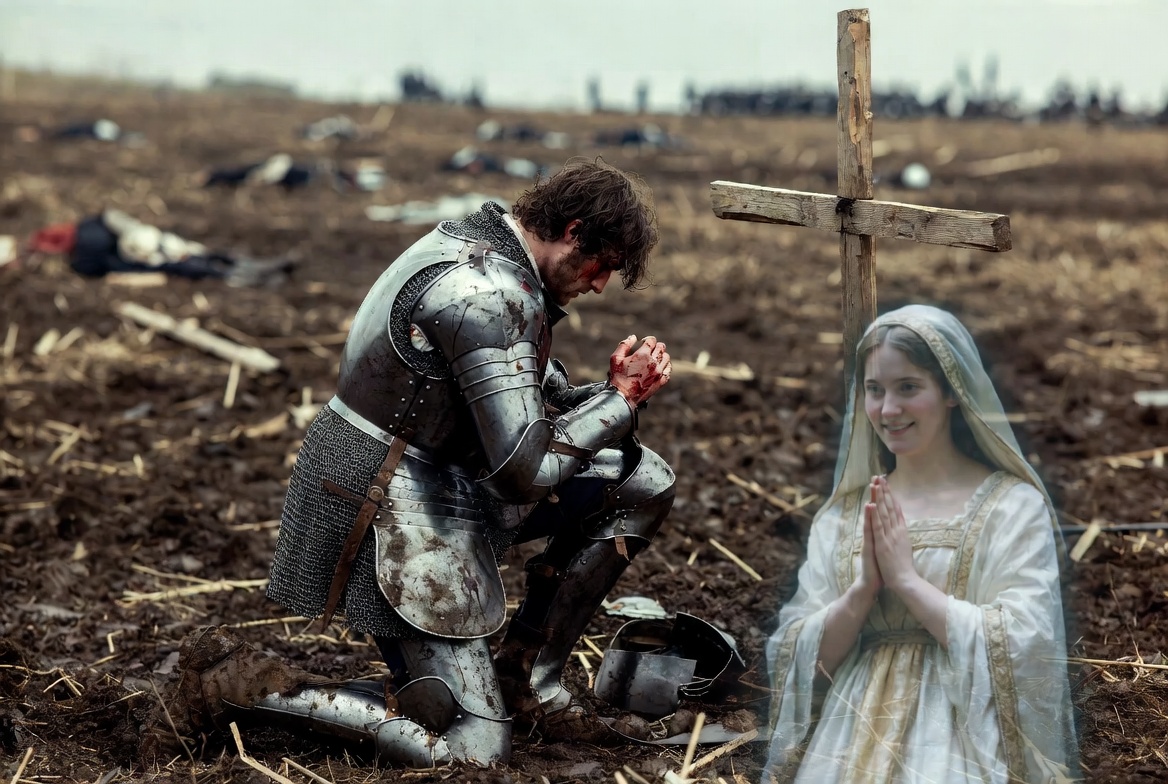
Even if Mary Bohun is physically absent, echoes of her life resonate through Shakespeare’s final portrait of her son in Henry V.
The “Welsh” Connection at Monmouth
In Act 4, Scene 7 of Henry V, the King speaks with the Welsh captain Fluellen and proudly declares his heritage:
“For I am Welsh, you know, good countryman.”
This line is a direct reference to his birthplace at Monmouth Castle in Wales. The only reason the Lancastrians held Monmouth—and the only reason Henry was born there—was because it was part of the vast Bohun inheritance brought to the marriage by his mother. Whenever Shakespeare highlights Henry V’s Welsh connection, an attribute the King leverages to build camaraderie among his diverse troops, he is indirectly invoking the geographical and political legacy of the Heiress of Hereford.
Piety and the Warrior King
Shakespeare’s Henry V is depicted as a deeply Christian king. He attributes his astonishing victory at Agincourt entirely to God (“Non nobis, Domine, non nobis / Sed nomini tuo da gloriam”). Before the battle, he is seen praying fervently, grappling with the spiritual weight of his father’s sins.
Historically, records indicate that Mary Bohun was a woman of intense piety. Surviving household accounts note her regular almsgiving and her participation in humble religious rites, such as washing the feet of poor women. While historians often debate the genuine nature of Henry V’s piety versus his political pragmatism, it is highly probable that the deep-seated religious devotion that defined the historical king—and which Shakespeare adapted into dramatic gold—was a direct inheritance from his pious mother.
Bridging the gap between historical fact and theatrical fiction is essential for a comprehensive appreciation of Shakespeare’s works. Mary Bohun may be an invisible ghost in the text of the Henriad, but her influence is foundational. She provided the wealth that fueled the Lancastrian rise, she bore the physical cost of securing the royal succession, and her early death left a psychological void that her son sought to fill in the taverns of Eastcheap.
Without her, there is no Prince Hal, no Agincourt, and no Henry V. By restoring her to her rightful place in the historical narrative, we gain a richer, more nuanced understanding of the forces that forged one of literature’s greatest kings.
Frequently Asked Questions (FAQ)
Did Mary Bohun ever become Queen of England?
No. She died in 1394, five years before her husband, Henry Bolingbroke, deposed Richard II and was crowned King Henry IV. Because she did not survive to see his reign, she was never crowned Queen.
Is Mary Bohun mentioned in any of Shakespeare’s plays?
No, she is not mentioned. The timeline of Shakespeare’s Lancastrian tetralogy begins in 1398 with Richard II, which is four years after her death.
How old was Mary Bohun when she married Henry IV?
She was approximately 11 or 12 years old when she was married to Henry Bolingbroke in 1381, a common practice for high-stakes dynastic alliances in the medieval period.
Where is Mary Bohun buried?
She is buried at the Collegiate Church of the Annunciation of Our Lady of the Newarke in Leicester, England.
Did her sister Eleanor also marry into the royal family?
Yes, her older sister Eleanor de Bohun was married to Thomas of Woodstock, Duke of Gloucester, who was Henry IV’s uncle. This complex web of marriages was designed to keep the massive Bohun fortune within the royal Plantagenet family.