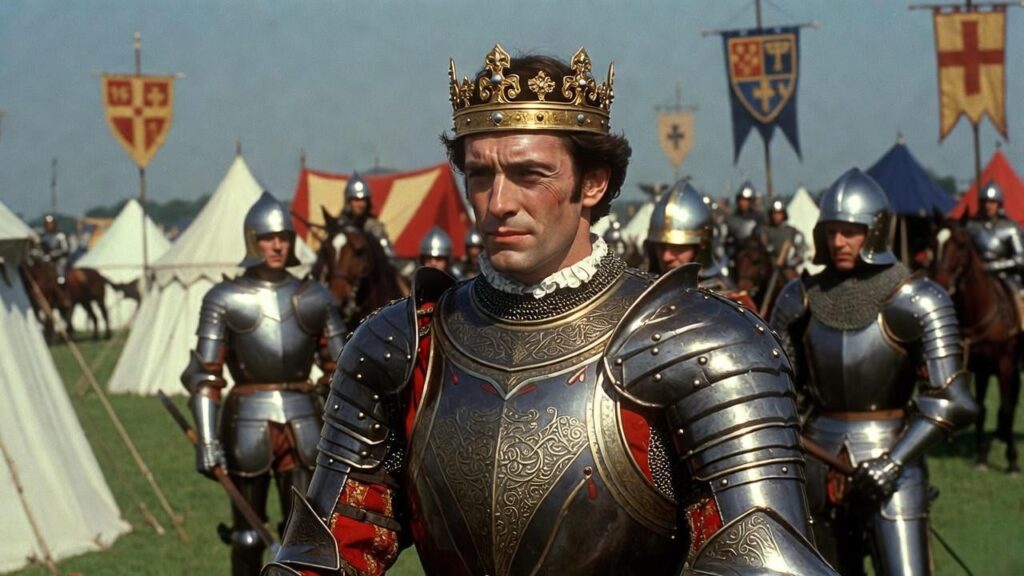
Imagine a lone rider cutting through the fog-shrouded fields of northern France, his tabard emblazoned with the fleur-de-lis, carrying words that could ignite or avert slaughter. This is Montjoy, the French herald in William Shakespeare’s Henry V, a figure often overlooked amid the play’s rousing speeches and epic battles. Yet Montjoy in Henry V stands as one of the drama’s most elegant contrasts: a symbol of chivalric dignity amid the chaos of war, delivering taunts, demands, and ultimately humble requests that reveal profound truths about leadership, honor, and the human cost of ambition.
Many readers and students encounter Montjoy as a mere messenger, skimming past his appearances in Acts 3 and 4. But dismissing him misses Shakespeare’s genius. Through this minor character, the playwright explores the tension between courtesy and carnage, French pride and English resolve, and the fragile codes that govern even mortal enemies. Montjoy’s exchanges with King Henry V are not just plot devices—they are diplomatic duels in verse, showcasing Henry’s evolving kingship and the play’s nuanced portrayal of war. In this in-depth analysis, we’ll examine Montjoy’s historical roots, his pivotal scenes with detailed quotes and close readings, his thematic weight as a foil to Henry, insights from stage and screen, and why this understated herald still resonates today.
Who Is Montjoy? Understanding the Role of the Herald in Shakespeare’s World
To appreciate Montjoy fully, we must first understand the herald’s place in medieval society and how Shakespeare adapts it for dramatic effect.
The Historical and Dramatic Function of Heralds
In the Middle Ages, heralds were far more than couriers. They were officers of arms—neutral diplomats trained in chivalry, genealogy, heraldry, and protocol. Protected by international custom, heralds could traverse battle lines unharmed to deliver challenges, negotiate truces, or tally the dead. Harming one violated the laws of war, making their role sacred amid savagery.
Shakespeare draws on this tradition authentically. Montjoy’s name itself evokes French royal pride: “Montjoie Saint Denis!” was the ancient war cry of French kings, invoking the banner (or oriflamme) of Saint Denis and the hill of Montjoie. By naming his herald Montjoy, Shakespeare signals French arrogance from the outset while grounding the character in historical realism.
In Henry V, Montjoy serves the French king Charles VI (historically the mad but symbolically proud monarch). Unlike the Dauphin’s mocking tennis-ball gift in Act 1, Montjoy’s messages carry official weight—his words are the king’s. This elevates his scenes from mere exposition to moments of high-stakes diplomacy.
Montjoy’s Position in the Play
Montjoy appears sparingly but strategically: primarily in Act 3, Scene 6 (after Harfleur’s fall), Act 4, Scene 3 (on the eve of Agincourt), and Act 4, Scene 7 (post-victory). His recurrence marks the play’s turning points—from French overconfidence to English triumph—mirroring the shift in power dynamics.
Contrast him with comic messengers like Pistol or the Boy: Montjoy remains dignified, professional, and eloquent. His language is formal, courtly, never descending to insult. This professionalism makes his eventual humility all the more striking, underscoring Shakespeare’s theme that true honor endures defeat.
As a Shakespeare scholar who has studied the histories extensively, I note that Montjoy draws from Holinshed’s Chronicles (a key source for Henry V), where a herald named Mountjoy (or similar) parleys with Henry. Shakespeare refines this into a character of subtle nobility, using him to humanize both sides of the conflict.
Montjoy’s Key Appearances and Exchanges with King Henry
The heart of Montjoy’s significance lies in his three major interactions with Henry—each a masterclass in rhetoric, character revelation, and dramatic tension.
First Encounter – Act 3, Scene 6: Delivering Defiance After Harfleur
After the brutal siege of Harfleur, the French—emboldened—send Montjoy to taunt Henry. He enters with a tucket (trumpet fanfare), announcing: “You know me by my habit.”
Montjoy delivers his king’s message: “Though we seemed dead, we did but sleep: advantage is a better soldier than rashness.” The French claim they spared Harfleur out of mercy, not weakness, and warn Henry to prepare for retribution.
Henry’s response is a blend of candor, humor, and veiled threat. He admits his army’s weakness—”My people are with sickness much enfeebled”—yet boasts that one Englishman could match three Frenchmen in health. He tips Montjoy (“There’s for thy labour, Montjoy”)—a gesture of respect for duty—and warns: “We shall your tawny ground with your red blood / Discolour.”
This exchange establishes mutual regard. Henry praises Montjoy’s fairness (“Thou dost thy office fairly”), while Montjoy remains impassive, loyal to his role. It foreshadows Agincourt while highlighting Henry’s strategic honesty—he understates his strength to unsettle the enemy.
The Pivotal Moment – Act 4, Scene 3: Ransom Demand on the Eve of Agincourt
On the morning of St. Crispin’s Day, as Henry’s outnumbered troops await battle, Montjoy returns. He offers ransom once more: “Once more I come to know of thee, King Harry, / If for thy ransom thou wilt now compound.”
Henry refuses emphatically, delivering one of the play’s most famous retorts: “Bid them achieve me and then sell my bones.” He paints a vivid, gruesome picture of English dead plaguing France—”Their valiant bones in France… / Shall be famed… / Leaving their earthly parts to choke your clime, / The smell whereof shall breed a plague in France.”
This defiant speech catalyzes Henry’s St. Crispin’s Day oration to his troops. Montjoy’s arrival heightens the stakes, turning potential despair into rallying resolve. Henry’s dismissal—”Herald, save thou thy labour; / Come thou no more for ransom”—marks his confidence in divine favor and English valor.
Montjoy exits with quiet dignity: “I shall, King Harry. And so fare thee well: / Thou never shalt hear herald any more.” The line carries ironic weight—he will return, but humbled.
Final Humble Return – Act 4, Scene 7: Acknowledging Defeat and Requesting Truce
After the miraculous English victory, Montjoy reappears—not as a proud envoy, but a petitioner: “Great King! I come to thee for charitable license / That we may wander o’er this bloody field / To book our dead and then to bury them.”
His tone has transformed. He describes the carnage poignantly: “For many of our princes—woe the while!— / Lie drowned and soaked in mercenary blood.” Henry, gracious in triumph, grants permission and inquires about the outcome. Montjoy concedes: “The day—is yours.”
Henry names the field Agincourt, praising God. Montjoy’s humility underscores the play’s moral: hubris falls, mercy rises. His final appearance humanizes the French defeat, balancing the English celebration.
In performance, actors often emphasize Montjoy’s evolving restraint—Christopher Ravenscroft in Kenneth Branagh’s 1989 film delivers these lines with quiet gravitas, making the herald’s dignity shine through defeat.
Thematic Significance: What Montjoy Reveals About Honor, War, and Leadership
Montjoy transcends his role as messenger to illuminate core themes.
Montjoy as Foil to Henry V
Where Henry evolves from calculated candor to inspirational leadership, Montjoy embodies consistent chivalric duty. Their mutual respect—Henry tipping him, addressing him as “gentle herald”—highlights shared codes of honor across national lines. Montjoy’s professionalism contrasts French aristocratic arrogance (e.g., the Constable, Dauphin), making Henry’s kingship appear more grounded and merciful.
Chivalry and Courtesy in Wartime
Amid scenes of brutality (e.g., Henry’s order to kill prisoners), Montjoy upholds idealized diplomacy. His protected status reminds audiences of medieval war’s “rules,” which Shakespeare uses to critique endless conflict.
Broader Play Themes
Montjoy frames the English “miracle” victory, echoing Elizabethan anxieties about invasion (post-Armada) and divine right. His name and role tie to French royal mythology, humbled by Henry’s providential success.
Montjoy in Performance: Insights from Stage and Screen
On stage, Montjoy offers actors a chance for subtlety in limited lines. In Laurence Olivier’s 1944 film, the herald is stately; Branagh’s version adds emotional depth, with Montjoy’s final plea conveying genuine sorrow.
For actors today: Emphasize dignity—Montjoy never breaks character, even in defeat. His restraint amplifies Henry’s rhetoric.
Why Montjoy Matters Today: Lessons from a Minor Character
In an era of polarized discourse, Montjoy reminds us of professional duty and respect across divides—qualities vital in diplomacy, journalism, or mediation. His arc shows how pride yields to reality, offering hope that courtesy can survive conflict.
Understanding Montjoy enriches Henry V: he humanizes history’s epic scope, proving Shakespeare’s minor characters often carry the deepest insights.
Montjoy begins as the voice of French defiance and ends as the witness to English glory, his exchanges with Henry tracing the play’s arc from threat to triumph. Through this herald, Shakespeare masterfully blends history, character, and theme—showing that true leadership respects even enemies who fulfill their office with honor.
Revisit these scenes in your next reading or viewing. You’ll discover how Montjoy, though minor, unlocks a fuller appreciation of Henry V‘s genius.
FAQs
Who is Montjoy in Henry V? Montjoy is the French herald, a neutral messenger delivering official communications from King Charles VI to King Henry V.
What does Montjoy say to Henry before Agincourt? He offers ransom terms, warning of defeat, prompting Henry’s defiant response and St. Crispin’s Day speech.
Why does Henry tip Montjoy? To honor his professional duty and courtesy, despite enmity—showing Henry’s chivalric respect.
How does Montjoy change throughout the play? From confident and taunting to humbled and petitioning, reflecting the shift from French overconfidence to defeat.
What is the significance of Montjoy’s name? Derived from “Montjoie Saint Denis,” the French royal war cry, symbolizing national pride that is ultimately humbled.
Key Quotes Summary
- “Though we seemed dead, we did but sleep…” (Montjoy, Act 3.6) — French taunt.
- “My ransom is this frail and worthless trunk…” (Henry, Act 3.6) — Honest defiance.
- “Bid them achieve me and then sell my bones.” (Henry, Act 4.3) — Refusal of ransom.
- “The day—is yours.” (Montjoy, Act 4.7) — Concession of defeat.