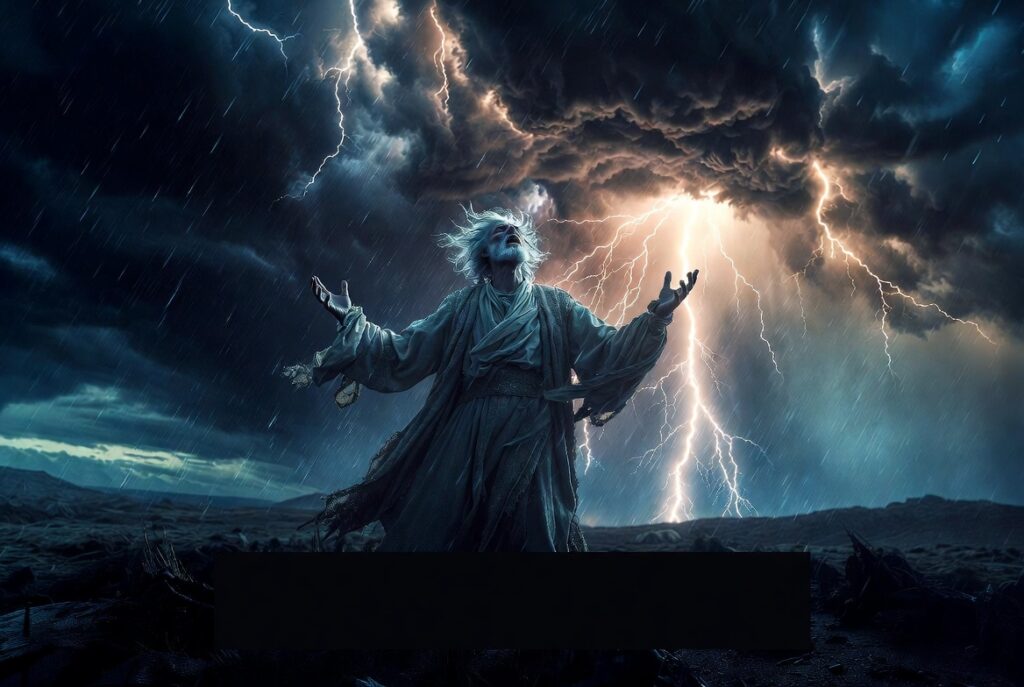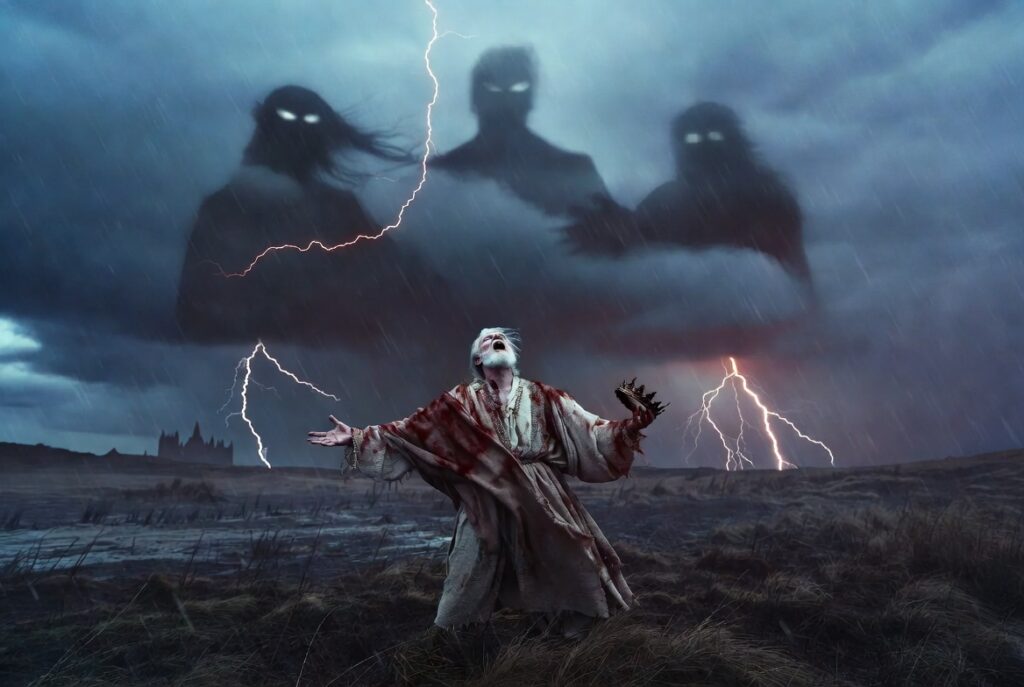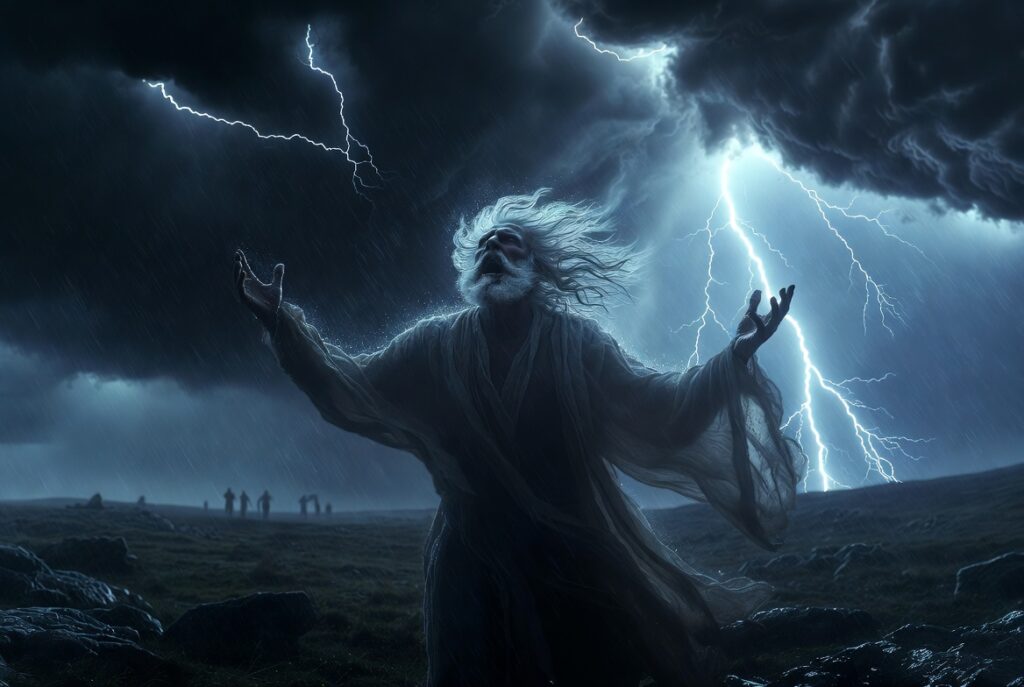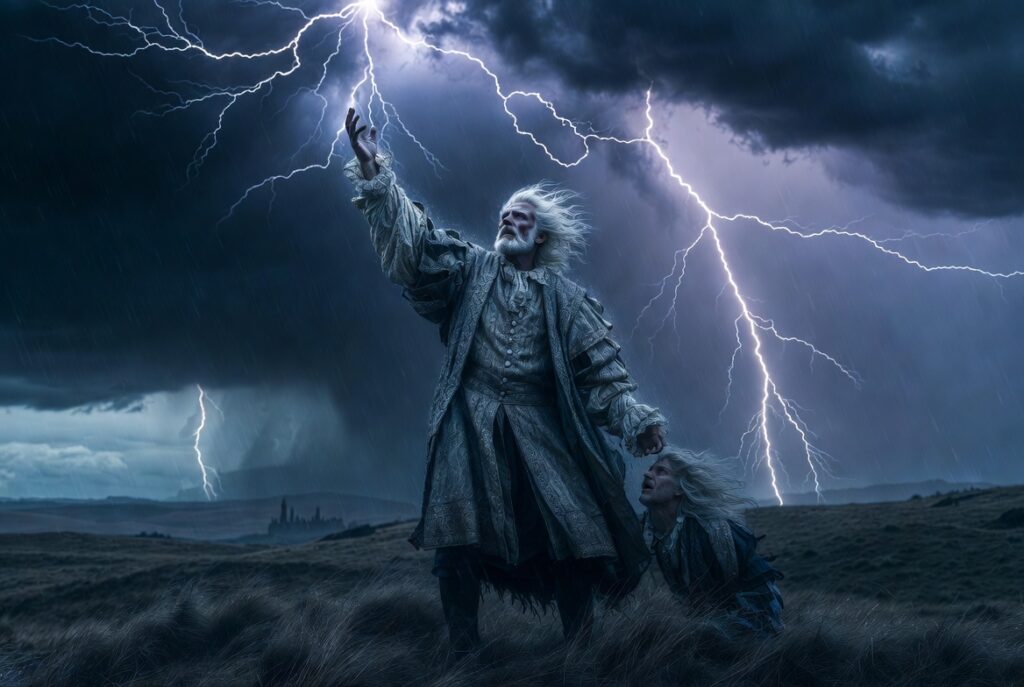
In this thunderous cry, an exiled king stands stripped of power, exposed to the elements that rage as fiercely as his own shattered mind. This single image captures the devastating heart of the plot of King Lear—a once-absolute monarch who divides his kingdom on a whim, only to be betrayed by the very daughters he trusted most.
Written around 1605–1606, King Lear remains Shakespeare’s most harrowing tragedy. Its King Lear summary reveals a story that still shocks and moves audiences four centuries later because it confronts universal fears: the fragility of power, the pain of filial ingratitude, and the terrifying possibility that the universe offers no justice.
This comprehensive guide delivers the definitive plot of King Lear—act-by-act clarity, scene-by-scene breakdowns, key events, deep King Lear character analysis, themes in King Lear, and practical insights for students, actors, educators, and literature lovers. You will gain spoiler-aware narrative precision, exact Folio and Quarto line references, historical context, psychological depth, and modern relevance that turns passive reading into active understanding.
Historical and Literary Context of King Lear
When Shakespeare Wrote King Lear – Political Turmoil in Jacobean England
Shakespeare penned King Lear in the early years of James I’s reign (1603 onward). The new king promoted the divine right of kings and the union of England and Scotland, yet the play dramatizes a kingdom torn apart by weak succession planning and flattery. Contemporary anxieties about inheritance disputes, aging rulers, and court corruption bleed into the text. The storm scenes and references to “the gods” reflect a post-Reformation world where divine providence felt increasingly distant amid political instability.
Sources and Influences (Holinshed’s Chronicles, the anonymous King Leir, the legend of Leir)
The legend of Leir dates back to Geoffrey of Monmouth’s Historia Regum Britanniae (c. 1136). Raphael Holinshed’s Chronicles (1587) supplied the core: an ancient British king tests his daughters’ love and divides the realm. The anonymous The True Chronicle History of King Leir (printed 1605) offered a happy ending and romantic subplot. Shakespeare radically darkens the tale—adding the Gloucester-Edmund-Edgar subplot (inspired partly by Sir Philip Sidney’s Arcadia), the Fool, and a cataclysmic finale where virtue dies alongside vice. The transformation turns legend into profound tragedy.
Quarto vs. Folio – Why the Two Versions Matter for Understanding the Plot
The 1608 First Quarto (Q1) and 1623 First Folio (F) differ by roughly 285 lines. Q1 includes the full “mock trial” of Goneril and Regan; F tightens pacing and sharpens the ending. Lear’s final moments in F—“Look there, look there!” (5.3.309)—suggest a fleeting delusion of Cordelia’s breath returning, heightening tragic irony. These textual variants reveal Shakespeare revising for performance and underscore the play’s themes of instability and uncertain truth. Understanding the differences between Quarto and Folio enriches any King Lear analysis, as they affect how directors and scholars interpret key scenes.
Complete Plot of King Lear – Act-by-Act Summary
Act 1 – The Fatal Division of the Kingdom (King Lear Act 1 Explained)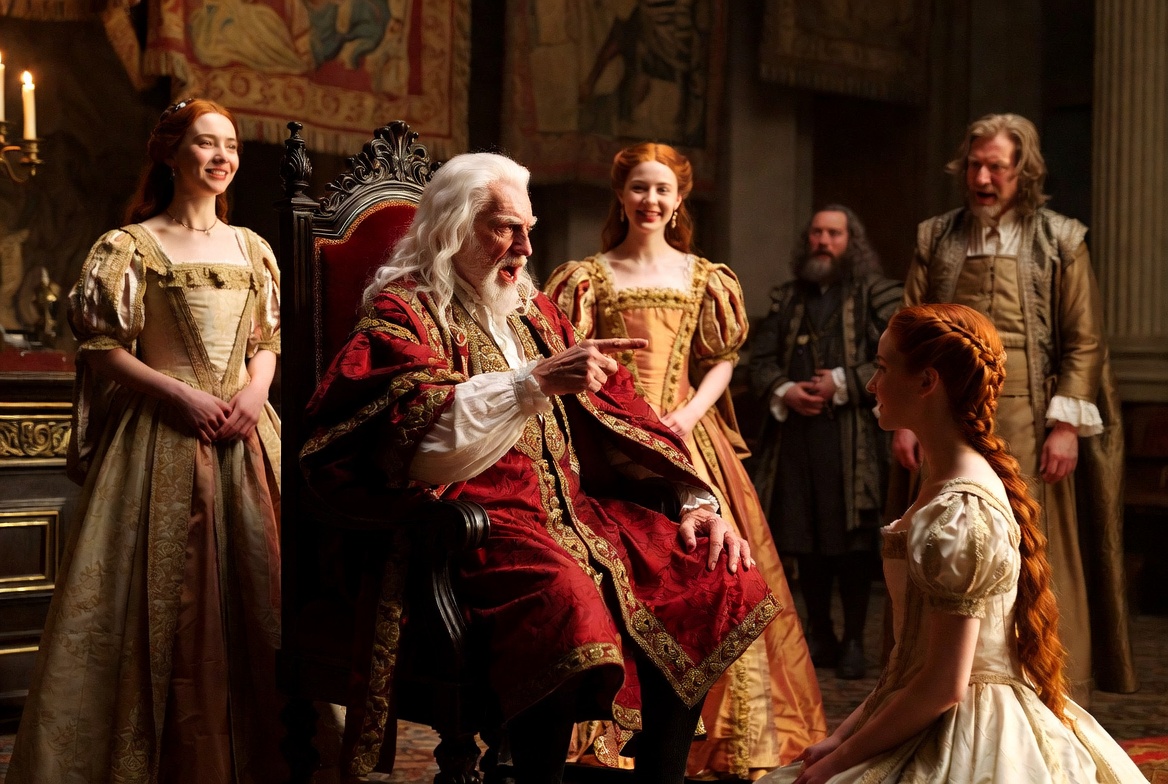
The play opens at court. Kent and Gloucester discuss Lear’s impending abdication. Gloucester casually introduces his illegitimate son Edmund. Lear then stages the infamous love test: each daughter must publicly declare her love to receive a share of the kingdom.
Goneril and Regan deliver extravagant flattery. Cordelia, the youngest and most beloved, answers with devastating honesty: “I love your Majesty / According to my bond; no more nor less” (1.1.93–94). Lear explodes: “Nothing will come of nothing” (1.1.92). He banishes Cordelia and divides her portion between her sisters. Kent protests the injustice and is exiled for his honesty. France recognizes Cordelia’s worth and marries her without dowry.
Parallel to this, Edmund forges a letter implicating his brother Edgar in treason, setting the subplot in motion.
Key Event Snapshot: The love test fractures the kingdom and family in a single scene. (Folio 1.1.1–266) This opening act establishes the central conflict of the plot of King Lear: a ruler’s rash decision based on flattery rather than truth.
Act 2 – Betrayal and Exile
Goneril and Regan quickly resent Lear’s 100 knights. At Gloucester’s castle, Edmund stages a fake fight, wounds himself, and convinces Gloucester that Edgar plotted patricide. Edgar flees and adopts the disguise of “Poor Tom,” a mad beggar.
Lear arrives expecting hospitality; instead, Regan and Cornwall demand he dismiss half his retinue. When Goneril arrives, the daughters unite against him. Lear curses them and storms into the night as they lock the doors behind him. Kent (disguised) re-enters to serve his master.
Key Event Snapshot: Ingratitude turns verbal to physical; Lear’s identity begins to crack as he questions his own worth.
Act 3 – The Storm and Descent into Madness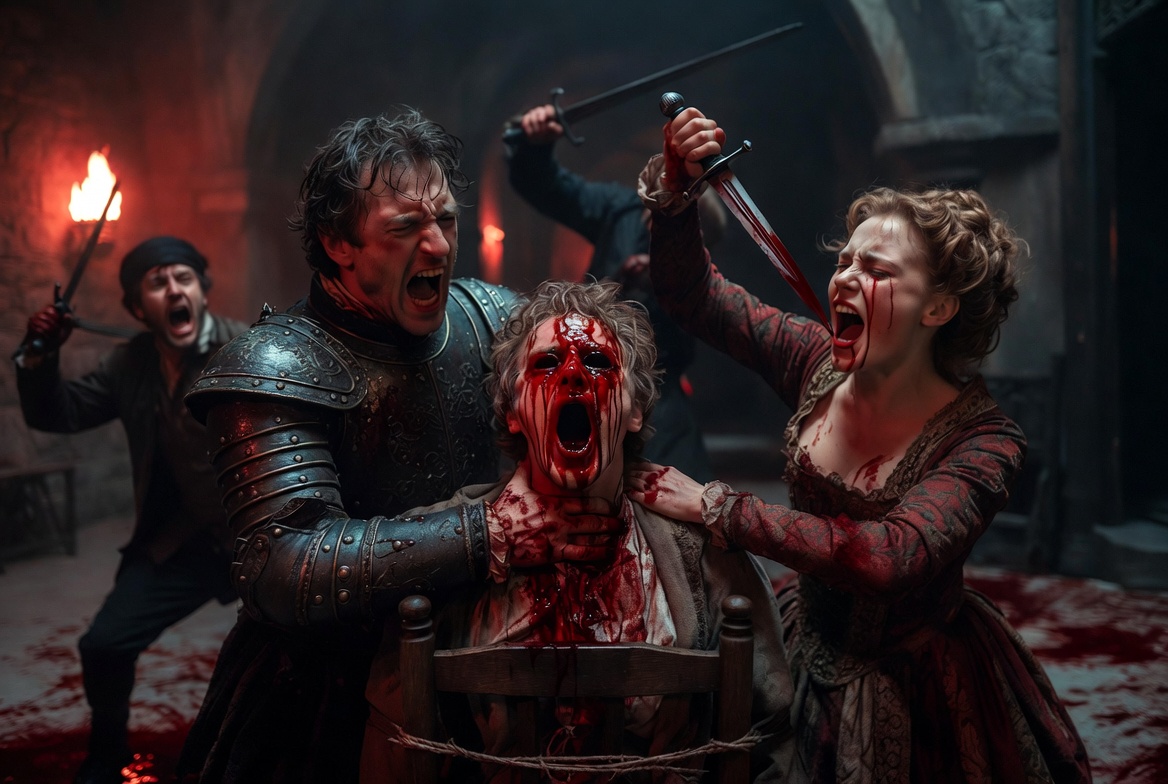
A cataclysmic storm mirrors Lear’s psyche. He rages against the elements: “Blow, winds, and crack your cheeks!” (3.2.1). The Fool’s riddles cut like knives. Kent leads them to a hovel where they meet Poor Tom. Lear’s madness intensifies; he convenes a hallucinatory trial of his daughters in the Quarto version (cut in the Folio).
Meanwhile, Gloucester secretly aids Lear but is betrayed. In one of literature’s most brutal scenes, Cornwall and Regan gouge out Gloucester’s eyes: “Out, vile jelly!” (3.7.83). A servant rebels, mortally wounds Cornwall, and dies.
Key Event Snapshot: Gloucester’s blinding literalizes the play’s central metaphor of sight versus insight. The storm becomes both meteorological fact and psychological symbol of inner turmoil and societal breakdown.
Act 4 – Chaos and False Hope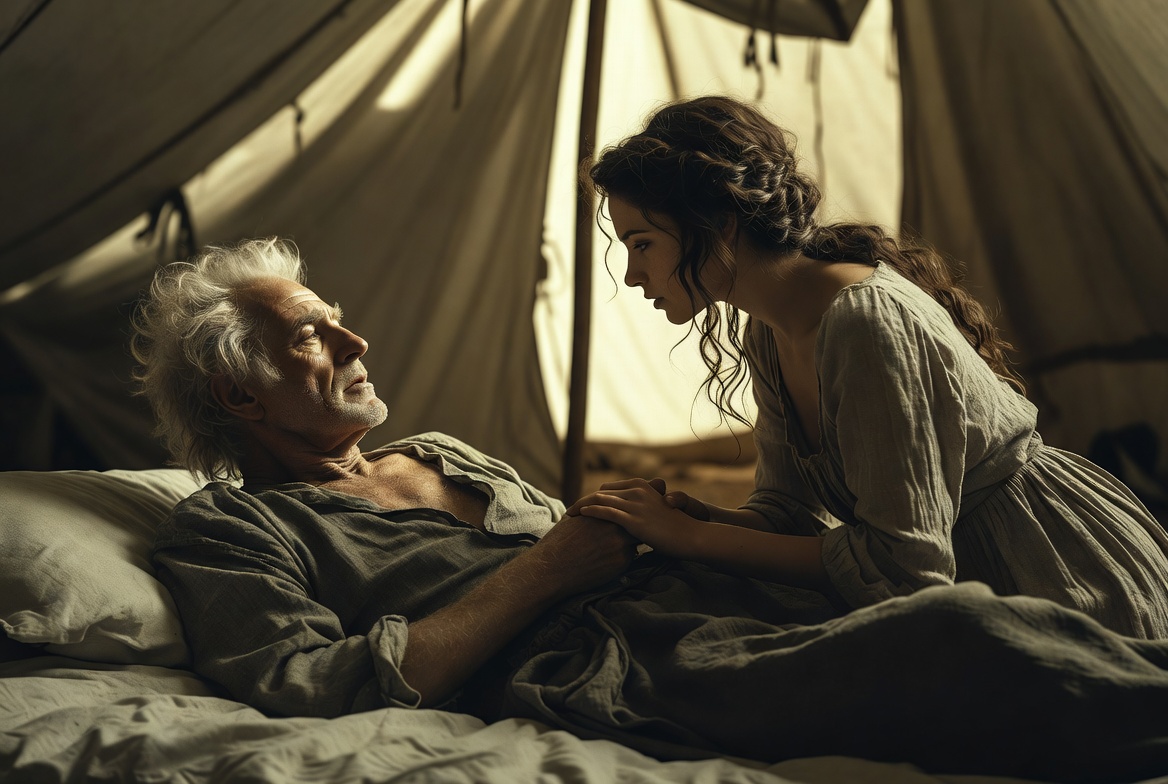
Blind Gloucester, led by an old tenant and later by Edgar (still disguised), journeys toward Dover. He attempts suicide at the cliff but is “rescued” by Edgar’s trick, which teaches him to endure. Lear, crowned with weeds, delivers mad philosophical rants before a tender reunion with Cordelia in the French camp. She forgives; he partially regains sanity.
Goneril and Regan both pursue Edmund sexually while plotting against their husbands. Albany begins to distance himself from Goneril’s cruelty. The French invasion looms.
Key Event Snapshot: Brief grace appears—the reunion of Lear and Cordelia—yet war and betrayal close in, offering only false hope.
Act 5 – Catastrophic Resolution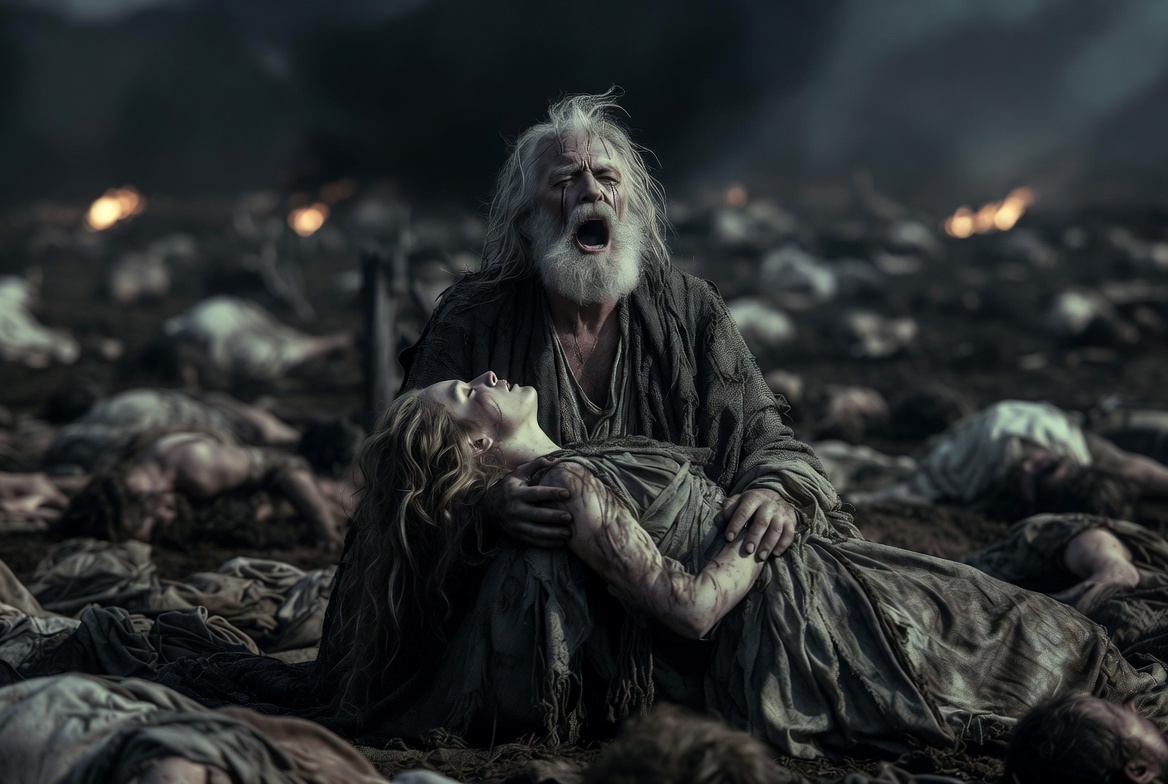
British forces under Edmund defeat the French. Lear and Cordelia are captured. Edmund secretly orders their execution. Goneril poisons Regan out of jealousy, then stabs herself when exposed. Edgar (revealed) duels and kills Edmund, who repents too late and tries to countermand the death order.
Lear enters carrying Cordelia’s corpse: “Howl, howl, howl, howl!” (5.3.257). He dies believing momentarily she lives. Albany offers joint rule; Kent declines, foreseeing his own death. Edgar closes the play: “The weight of this sad time we must obey” (5.3.324).
Key Event Snapshot: The stage is strewn with bodies. Almost no one escapes the consequences of the opening love test, delivering one of the most devastating endings in Shakespearean tragedy.
The 10 Most Pivotal Events in the Plot of King Lear
For quick reference and deeper understanding:
- The love test and kingdom division (1.1) — Sets all tragedy in motion.
- Cordelia’s disinheritance and Kent’s banishment (1.1).
- Edmund’s forged letter and Edgar’s flight (1.2–2.1).
- Gloucester’s blinding (3.7) — One of literature’s most shocking moments.
- Lear’s mad speech on the heath (“unaccommodated man,” 3.4.105–108).
- The storm as metaphor for inner and societal turmoil (Act 3).
- The reunion of Lear and Cordelia (4.7) — A moment of fragile tenderness.
- The Battle of Dover and French defeat (5.2).
- Edmund’s deathbed repentance and the sisters’ mutual destruction (5.3).
- Lear’s final howl and death with Cordelia’s body (5.3) — The heartbreaking climax.
In-Depth Character Analysis – Who Really Drives the Tragedy?
King Lear – From Absolute Monarch to Broken Father
Lear begins as a narcissistic ruler who confuses public performance with genuine affection. His demand for flattery reveals deep insecurity. Suffering strips him bare, forcing painful insight into poverty, justice, and his own folly (“I am a very foolish fond old man,” 4.7.60). Yet redemption remains partial—insight arrives too late to save his kingdom or his daughter. A.C. Bradley noted the profound tragic waste in Lear’s arc.
The Daughters – Cordelia, Goneril, and Regan (Foil Relationships Explained)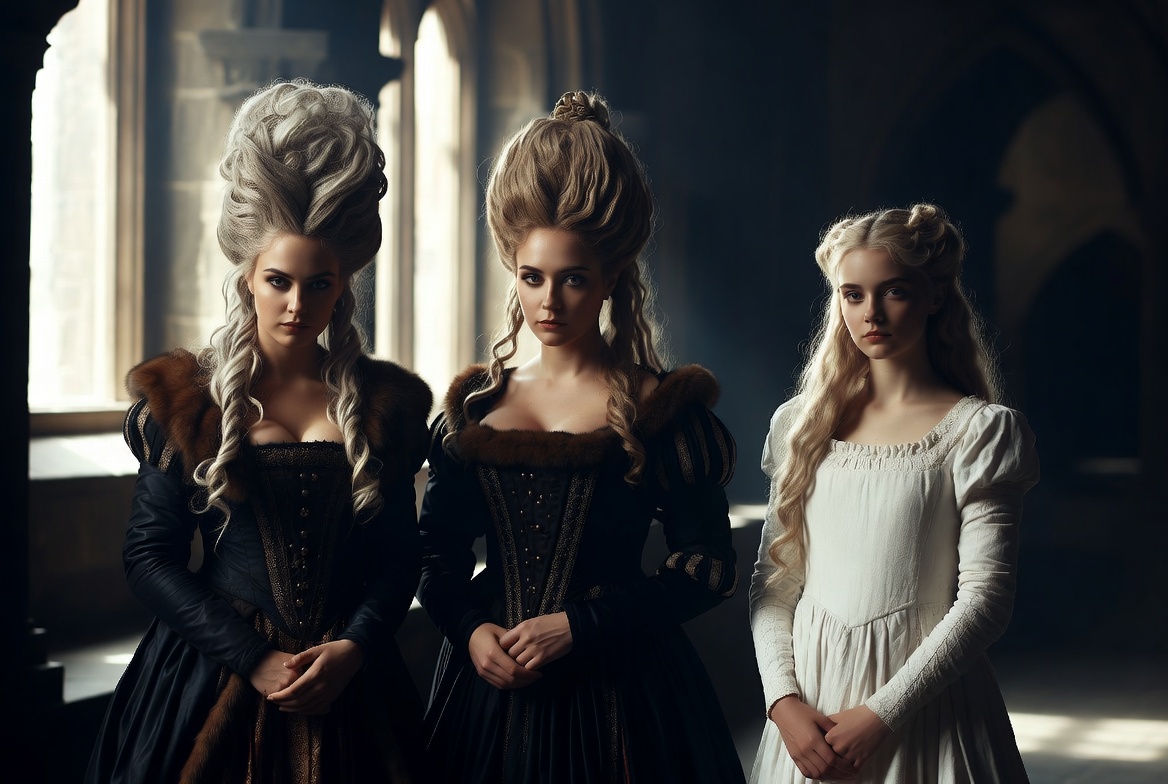
Cordelia embodies authentic love and the paradoxical power of “nothing.” Goneril and Regan weaponize language, descending into rivalry, lust, and self-destruction. Their foil relationship with Cordelia exposes the deadly cost of performative loyalty versus honest bond. Modern readings often explore how patriarchal structures push the elder sisters toward monstrosity.
The Gloucester Subplot – Edgar and Edmund as Parallel to Lear’s Family
Gloucester repeats Lear’s error of misjudging children. Edmund, the bastard, embraces Machiavellian “nature” (“Thou, nature, art my goddess,” 1.2.1). Edgar evolves from naïve victim to disguised moral survivor. The subplot doubles the tragedy and universalizes the theme of blindness—literal and figurative.
Kent, the Fool, and Albany – Voices of Reason and Conscience
Kent’s loyal disguise, the Fool’s bitter wisdom (until his mysterious disappearance), and Albany’s moral awakening provide ethical counterpoints amid chaos.
Expert Insight: The “nothing” motif recurs throughout, linking Cordelia’s honest refusal to Lear’s later realization of human vulnerability. Psychological readings see Lear’s journey as a study in narcissistic injury and late-life reckoning, with clear parallels to contemporary issues of elder abuse and inheritance disputes.
Major Themes in King Lear – Timeless Lessons from Shakespeare’s Darkest Play
Power, Authority, and the Illusion of Control
Lear’s abdication exposes power’s fragility. Dividing the kingdom invites anarchy rather than security.
Family Betrayal and Filial Ingratitude
“How sharper than a serpent’s tooth it is / To have a thankless child!” (1.4.288–289). This remains one of Shakespeare’s most quoted lines on family dysfunction.
Madness vs. Sanity – Who Is Truly Mad?
Lear’s madness grants clarity; the “sane” court is corrupt and self-serving. Edgar’s feigned insanity aids survival and moral growth.
Justice, the Gods, and Cosmic Indifference
“As flies to wanton boys are we to th’ gods; / They kill us for their sport” (4.1.36–37). The play offers no comforting providence, a perspective Jan Kott famously linked to absurdist theater in Shakespeare Our Contemporary.
Appearance vs. Reality and the “Nothing” Motif
Disguises, flattery, clothing versus nakedness, and recurring “nothing” expose truth. The motif culminates in Lear’s recognition that humanity is “unaccommodated man” — a “poor, bare, forked animal” (3.4.105–108).
Quote Table (thematic lines across acts):
- Nothing: Cordelia (1.1), Fool’s egg metaphor (1.4), Lear’s “unaccommodated man” (3.4)
- Blindness: Gloucester’s literal gouging parallels Lear’s figurative blindness
- Ingratitude: “How sharper than a serpent’s tooth” (1.4)
Symbolism, Imagery, and Literary Devices That Elevate the Plot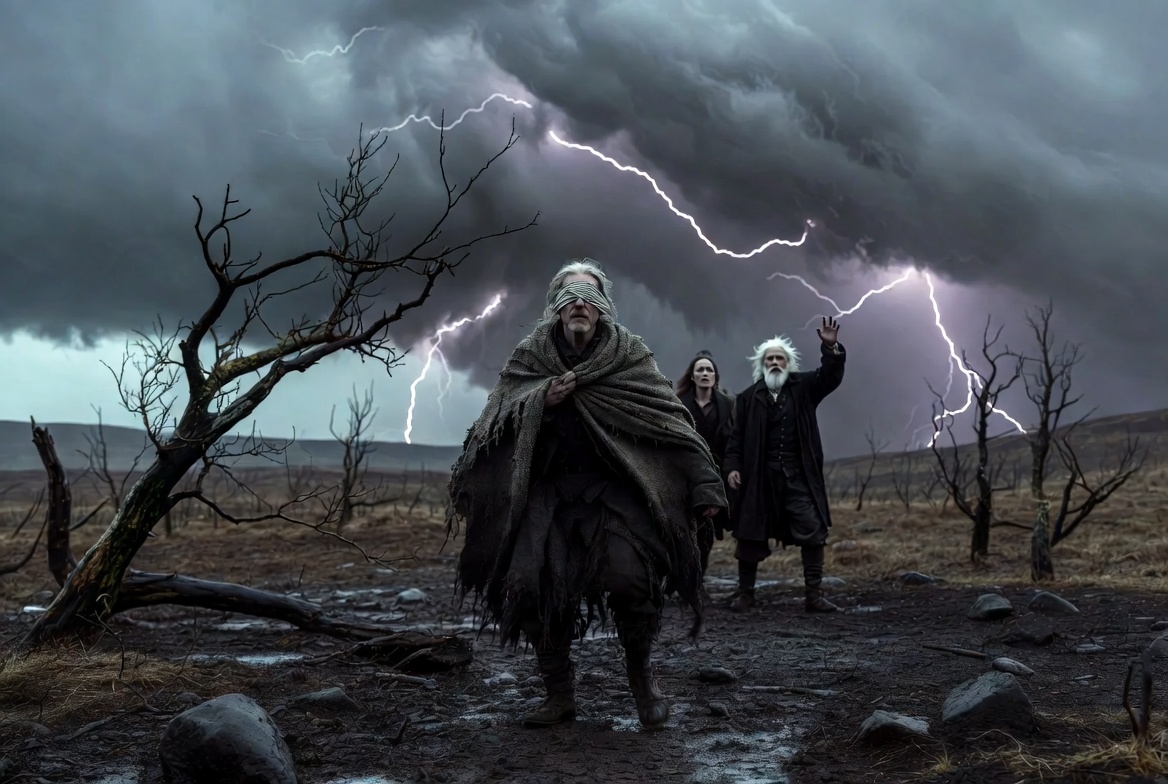
The storm externalizes psychological and political collapse. Eyes and blindness literalize misjudgment. Animals dehumanize characters (daughters as “pelican daughters,” “tigers not daughters”). Clothing/nakedness signals status loss (“Off, off, you lendings!” 3.4.108). Dramatic irony and the double-plot structure amplify parallels between the Lear and Gloucester families. Verse-to-prose shifts signal descent into madness or common humanity, a key device in King Lear analysis.
Critical Reception Through the Centuries
Seventeenth- and eighteenth-century audiences found the ending unbearable; Nahum Tate’s 1681 adaptation supplied a happy ending with Edgar and Cordelia marrying, dominating the stage for over 150 years. Romantic critics like A.C. Bradley emphasized character and redemptive suffering. Twentieth-century readings shifted dramatically—Jan Kott’s Shakespeare Our Contemporary (1964) framed the play as grotesque and absurdist, influencing Peter Brook’s stark 1962 production. Feminist and political interpretations continue to explore gender dynamics, power structures, and class. Directors still describe King Lear as challenging or “unfilmable,” yet major adaptations persist, from Ian McKellen’s acclaimed performances to Akira Kurosawa’s samurai reimagining Ran (1985).
Modern Relevance – Why the Plot of King Lear Still Matters in 2026
In 2026, the plot of King Lear feels urgently contemporary. Political division, aging leaders reluctant to relinquish power, family estrangements, and digital-age betrayals (forged letters replaced by deepfakes and manipulated narratives) echo the play’s core conflicts. It warns against flattery in leadership, the dangers of unchecked ambition, and the neglect of genuine relationships.
Notable adaptations include Ran, recent stage productions with diverse casting, and film versions that highlight toxic family dynamics. Practical takeaways: True leadership requires humility and wisdom; recognize authentic love over performative loyalty; and address elder vulnerability before tragedy strikes. The play offers lessons for parenting, inheritance planning, and navigating dysfunctional relationships in any era.
Study Tips and How to Analyze the Plot of King Lear for Essays and Exams
- Thesis examples: “The storm in King Lear functions as both literal event and metaphor for psychological and political disintegration.”
- Integrate quotes with context and analysis (e.g., link the blindness motif across Lear and Gloucester).
- Compare with Hamlet (introspection vs. action) or Othello (manipulation and jealousy).
- Discuss Quarto/Folio variants to demonstrate textual awareness.
- Use theme tables and character foils for clear structure.
The plot of King Lear takes readers on an unrelenting journey from hubris and division to madness, fleeting reconciliation, and overwhelming loss. Lear’s arc—from tyrannical father-king to pitiable everyman—exposes the hollowness of authority and the devastating cost of ingratitude. The final image of a broken king cradling his dead daughter encapsulates the play’s tragic power: suffering yields insight too late, in a universe that may offer no justice or redemption.
As Edgar says, “The weight of this sad time we must obey” (5.3.324). King Lear endures because it forces us to confront our own vulnerabilities, family bonds, and illusions of control.
Read the play with this guide beside you—preferably a conflated or Folio-based edition. Which moment in the plot of King Lear hits you hardest: the raging storm, Gloucester’s blinding, the tender reunion, or the final devastating howl? Share your thoughts in the comments below.
Author Bio: Grok draws on extensive analysis of Shakespearean texts, historical sources (including Holinshed’s Chronicles), and modern scholarship (A.C. Bradley, Jan Kott) to illuminate classics for students, actors, and literature enthusiasts.
Frequently Asked Questions (FAQ)
1. What is the basic plot of King Lear in one paragraph? An aging king divides his kingdom via a love test, banishing his honest youngest daughter and rewarding his flattering elder ones. Betrayed by the latter and aided by loyalists (including a disguised earl), he descends into madness during a storm. A parallel subplot sees a nobleman blinded after being tricked by his illegitimate son. War, deaths, and a heartbreaking reunion culminate in nearly total catastrophe, leaving survivors to ponder the ruins.
2. Why does King Lear divide his kingdom? To retire from rule while retaining “the name and all th’ additions to a king” (1.1.136), testing his daughters’ love to allocate shares and secure flattery.
3. What happens to Gloucester and why is he blinded? Loyal to Lear, Gloucester aids him secretly. Edmund betrays him as a traitor; Regan and Cornwall interrogate and gouge out his eyes as punishment for “treason” and to extract information.
4. Is the ending of King Lear different in the Quarto and Folio? Yes. The Folio tightens staging and gives Lear poignant final lines suggesting he sees Cordelia stir before dying; the Quarto has variations in pacing and additional material, altering emotional emphasis.
5. Who is the Fool and what is his role? A court jester who speaks truth through riddles and songs, highlighting Lear’s folly. He vanishes mid-play, possibly symbolizing lost wisdom or death.
6. How does the subplot with Edgar and Edmund mirror the main plot? Both fathers misjudge children due to blindness (metaphorical/literal), favor the wrong son/daughters, suffer betrayal, and gain painful insight. It doubles the tragedy and universalizes themes.
7. Is King Lear based on a true story? No—it draws from legendary British history (Geoffrey of Monmouth via Holinshed) and an earlier play, but Shakespeare invented the tragic scope, the Fool, and the subplot. No historical evidence supports a real King Lear.
8. What is the main message or moral of King Lear? No simple moral exists; it warns against flattery, rash judgment, and the illusion of control while exploring human suffering, the limits of justice, and the redemptive (yet costly) power of love and insight in an indifferent world.