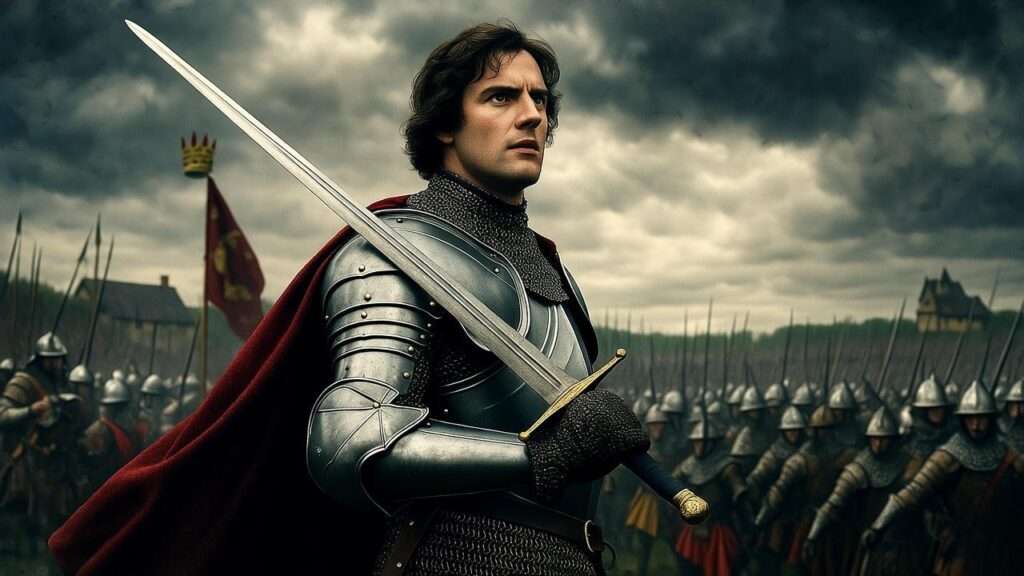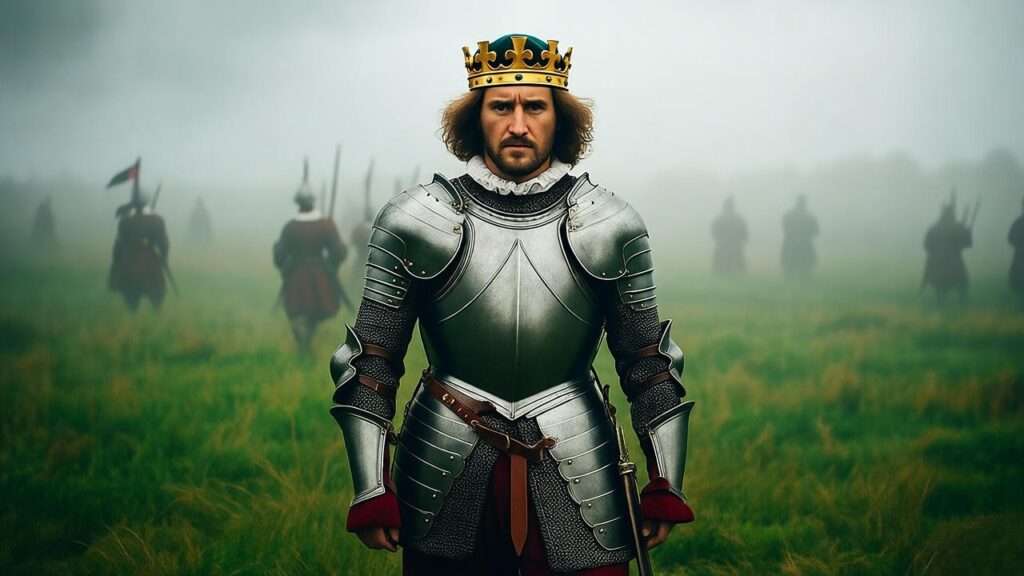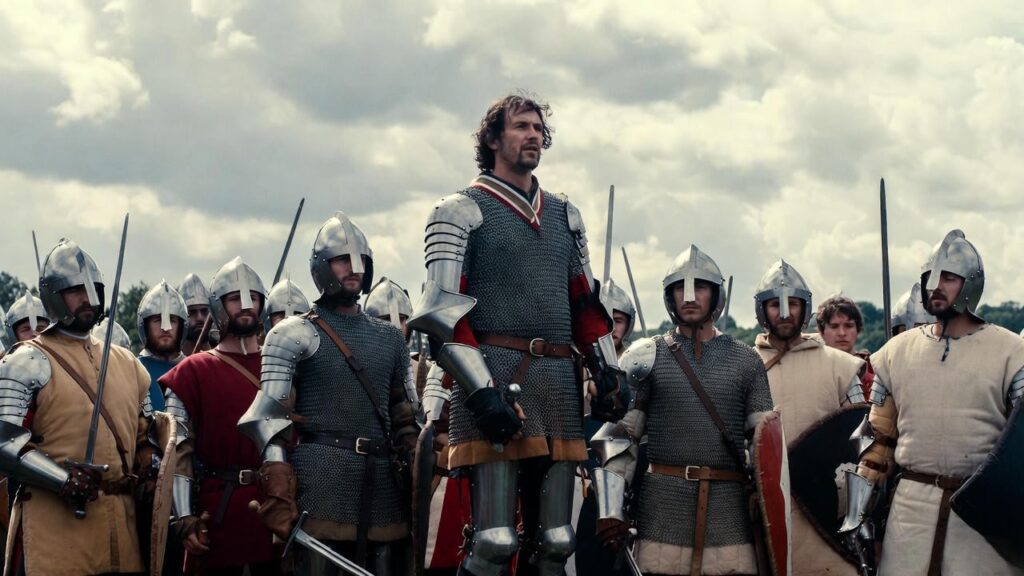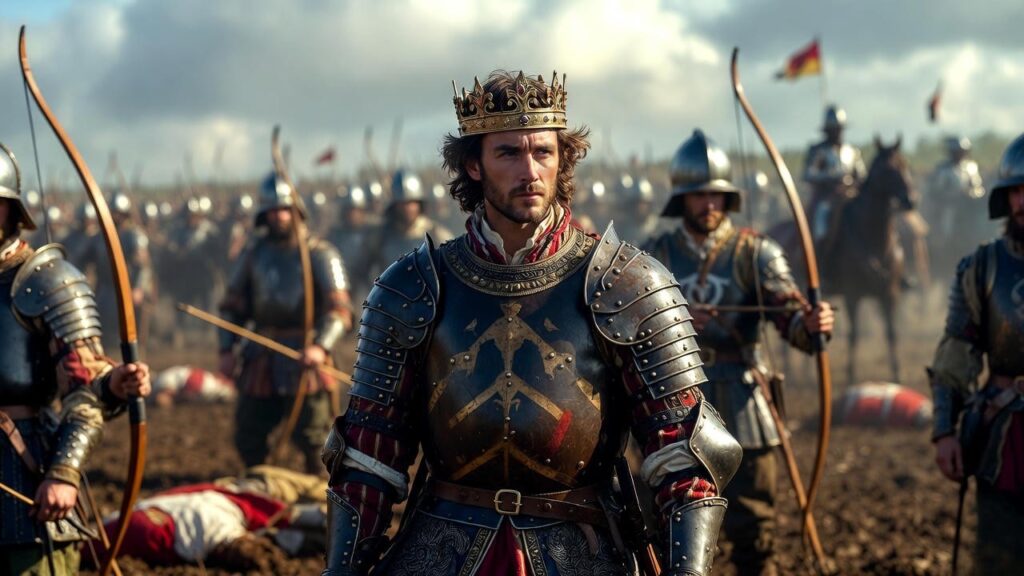
“Once more unto the breach, dear friends, once more…”
These stirring words, delivered by King Henry V as his exhausted troops falter before the walls of Harfleur, capture the electrifying spirit of Shakespeare’s Henry V. They ignite the imagination, summoning courage from despair and transforming ordinary soldiers into legends. If you’ve ever wondered how a young king, once dismissed as a wayward prince, could rally a outnumbered army to one of history’s most improbable victories—or why this play continues to inspire leaders, soldiers, and audiences centuries later—this comprehensive summary of Henry V provides the full picture.
Henry V (written around 1599) stands as the triumphant finale to Shakespeare’s second historical tetralogy, the Henriad. Following Richard II and Henry IV Parts 1 and 2, it traces the dramatic transformation of Prince Hal into a model of kingship. At its heart lies a profound exploration of leadership under extreme pressure, the dual nature of war as both glorious and brutal, and the forging of national identity amid conflict. This in-depth guide offers a complete plot overview, scene-by-scene breakdowns, character insights, thematic analysis, historical context, and the play’s enduring relevance—far more detailed and insightful than standard summaries, helping students, teachers, theater enthusiasts, and literature lovers gain a deeper appreciation of Shakespeare’s masterpiece.
Historical and Literary Context
Henry V emerges from a specific moment in English history and Shakespeare’s career. Composed circa 1599, during the late Elizabethan era, the play reflects anxieties over succession, national unity, and threats from Catholic powers like Spain. The real King Henry V (r. 1413–1422) was a charismatic warrior-king whose victory at the Battle of Agincourt in 1415 became legendary: an English force of roughly 6,000–9,000, mostly longbowmen, defeated a French army estimated at 20,000–30,000 knights and men-at-arms. The mud-soaked field, English archery dominance, and Henry’s personal leadership turned the tide.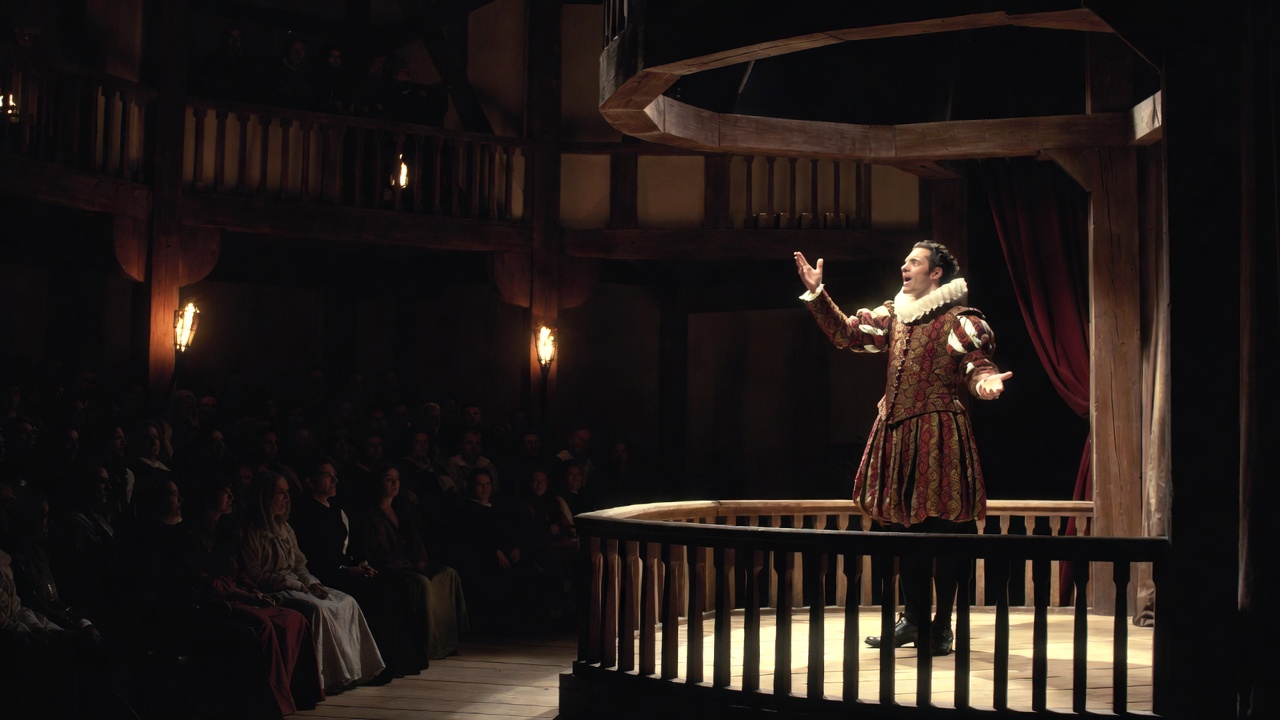
Shakespeare drew primarily from Raphael Holinshed’s Chronicles (1587), condensing decades of the Hundred Years’ War into a focused narrative around Agincourt. He innovated by introducing the Chorus—a meta-theatrical narrator who apologizes for the stage’s limitations while urging the audience’s imagination to “piece out our imperfections with your thoughts.” This device bridges epic scope and intimate theater, acknowledging the play’s artificiality while heightening its patriotic fervor.
In the broader Henriad, Henry V completes Prince Hal’s arc: from tavern-roaming rogue in Henry IV to pious, decisive monarch. Yet Shakespeare adds nuance—Henry’s claim to France rests on tenuous Salic law interpretations, and the Chorus’s epilogue foreshadows the chaos under Henry VI. Written amid Elizabeth I’s Irish campaigns (echoed in the Chorus’s reference to Essex), the play balances triumphalism with subtle questioning of war’s costs.
Act-by-Act Detailed Summary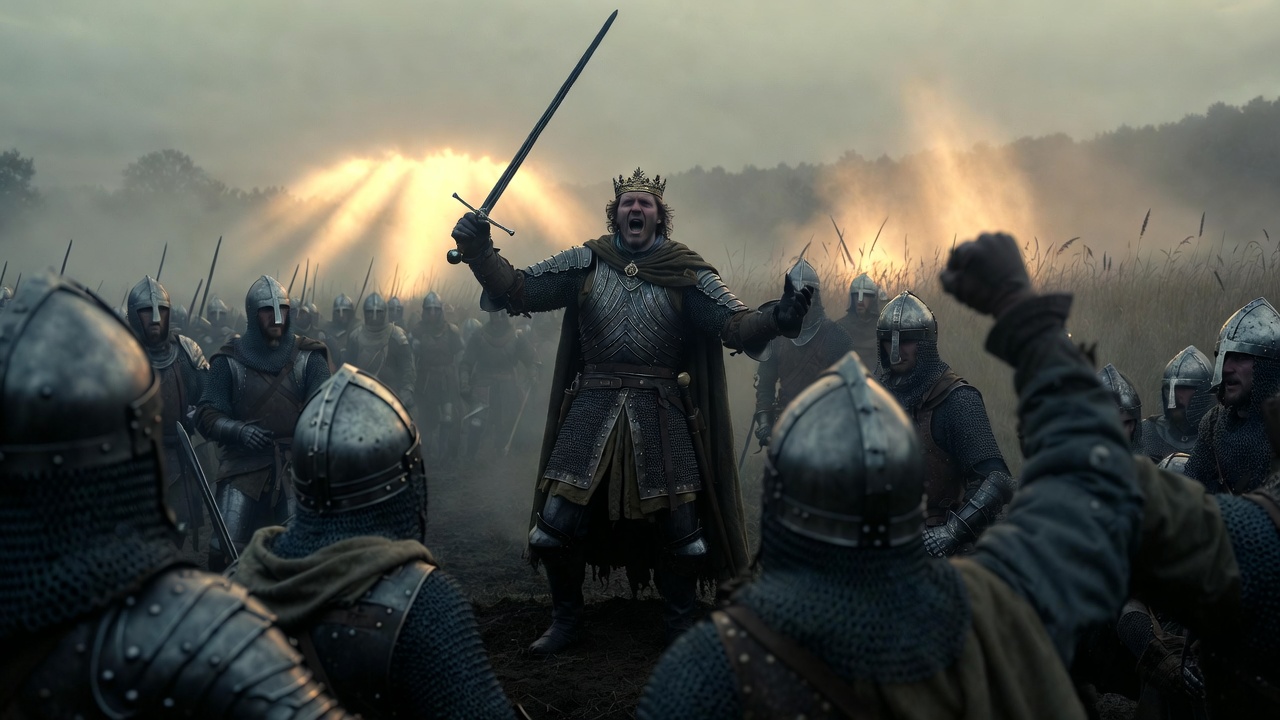
Shakespeare structures Henry V in five acts, with the Chorus advancing time and location.
Act 1: The Road to War The play opens with the Chorus invoking a “muse of fire” to stage grand events on the humble Globe stage. In London, the Archbishop of Canterbury and Bishop of Ely discuss Henry’s matured character: “The breath no sooner left his father’s body / But that his wildness, mortified in him, / Seemed to die too.” They justify Henry’s claim to the French throne via ancient Salic law, fearing church taxes if peace prevails.
Henry, now king, consults advisors. The French Dauphin sends a mocking gift of tennis balls, belittling Henry’s youthful reputation. Henry responds fiercely: “And tell the pleasant prince this mock of his / Hath turn’d his balls to gun-stones.” He declares war, organizing the invasion while ensuring England’s defenses against Scotland.
Act 2: Treachery and Farewell The Chorus describes England’s youth “on fire” for war. In Southampton, traitors Cambridge, Scroop, and Grey—bribed by France—are exposed and executed by Henry, showcasing his vigilance and ruthlessness.
Comic relief follows with Pistol, Nym, Bardolph, and the Boy—former Falstaff associates—preparing for France. Pistol’s bombast contrasts the king’s gravity. The Chorus reports Falstaff’s offstage death, with Mistress Quickly’s poignant “plague” lament evoking loss. The English fleet sails.
Act 3: Siege and Rhetoric At Harfleur, Henry delivers his iconic speech: “Once more unto the breach, dear friends, once more, / Or close the wall up with our English dead!” He urges troops to “imitate the action of the tiger.” The town surrenders after bombardment.
Subplots include Fluellen’s Welsh discipline clashing with Pistol’s cowardice, and international captains (Welsh, Scottish, Irish, English) symbolizing British unity. In France, the court mocks the English, while Katherine learns basic English in a humorous scene foreshadowing her role.
Act 4: The Battle of Agincourt The night before battle, Henry disguises himself to gauge morale. He debates Williams on the king’s responsibility for soldiers’ souls: “Every subject’s duty is the king’s; but every subject’s soul is his own.” Henry prays, reflecting on his father’s usurpation.
Dawn brings the St. Crispin’s Day speech: “We few, we happy few, we band of brothers… This day shall gentle his condition.” Despite odds, English longbows and mud win the day. French nobles die in droves; Henry orders no prisoners initially (a ruthless moment), then shows mercy. The Chorus notes the victory’s scale.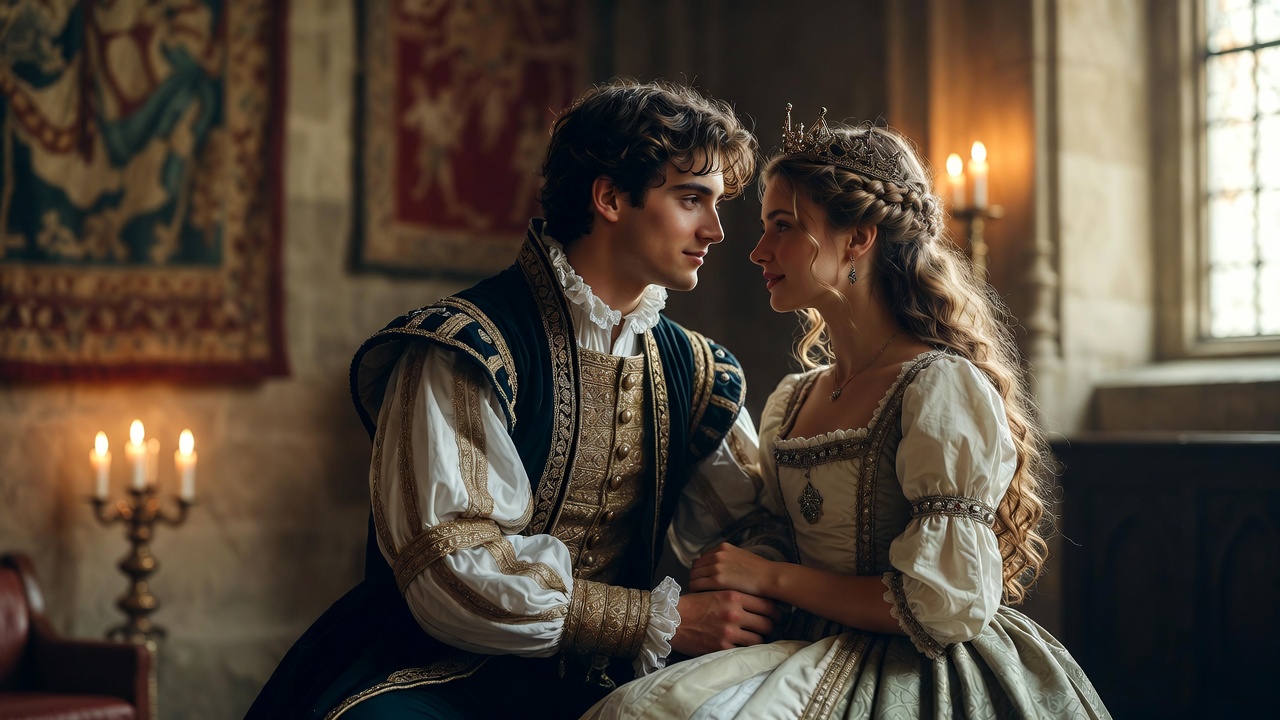
Act 5: Peace and Union After more victories, Henry negotiates peace. In a charming yet pragmatic wooing scene, he courts Katherine: “I know no ways to mince it in love, but directly to say ‘I love you.'” They betroth, sealing alliance. The Chorus epilogues, reminding audiences of Henry VI’s losses: “Their growth was short, their reign but brief.”
Key Characters and Their Arcs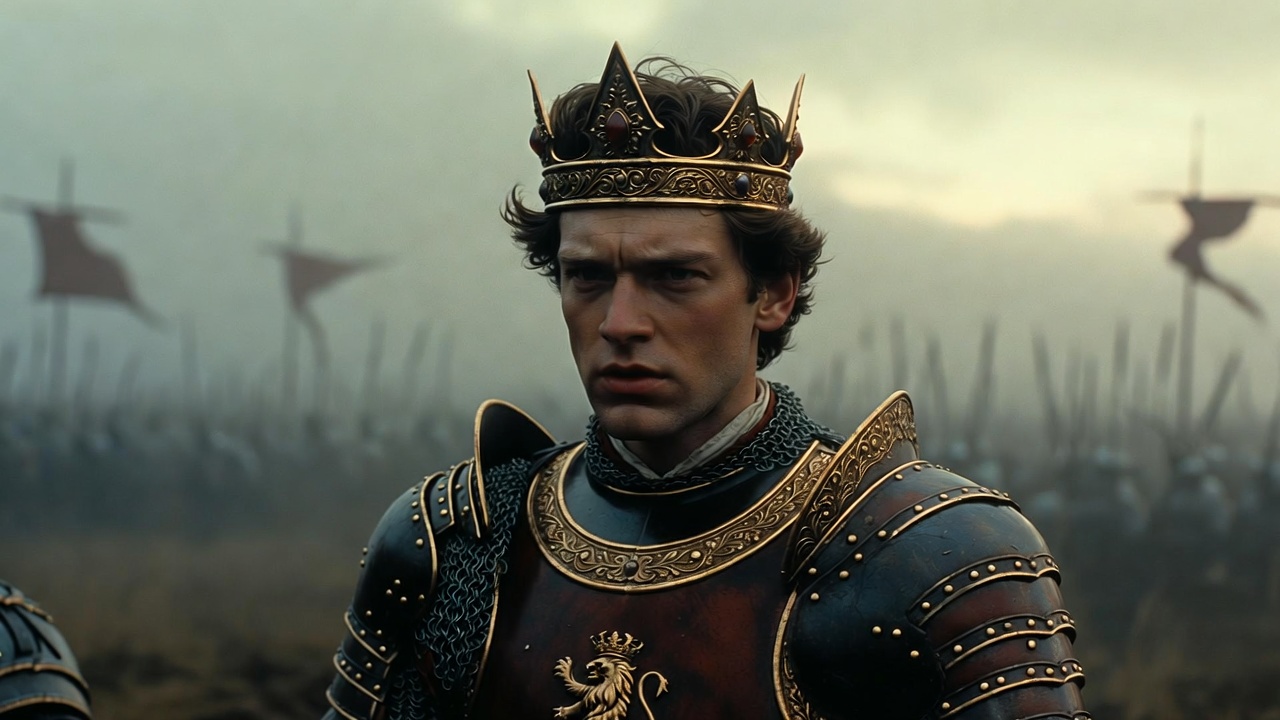
- King Henry V: The protagonist evolves from reformed prince to inspirational leader. Intelligent, charismatic, and decisive, he balances mercy with severity—executing traitors yet praying for his men. His complexity lies in pragmatism: heroic yet calculating.
- The Chorus: A unique device, bridging audience and action, apologizing for theater’s limits while amplifying epic feel.
- Pistol, Nym, Bardolph: Comic lowlifes provide contrast, highlighting war’s human cost through their opportunism and eventual downfall.
- Fluellen: Loyal Welsh captain embodies discipline and honor, adding multicultural unity.
- Katherine: French princess symbolizes peace; her broken English lesson humanizes the “enemy.”
- The Dauphin: Arrogant foil whose mockery spurs Henry’s resolve.
Major Themes and Analysis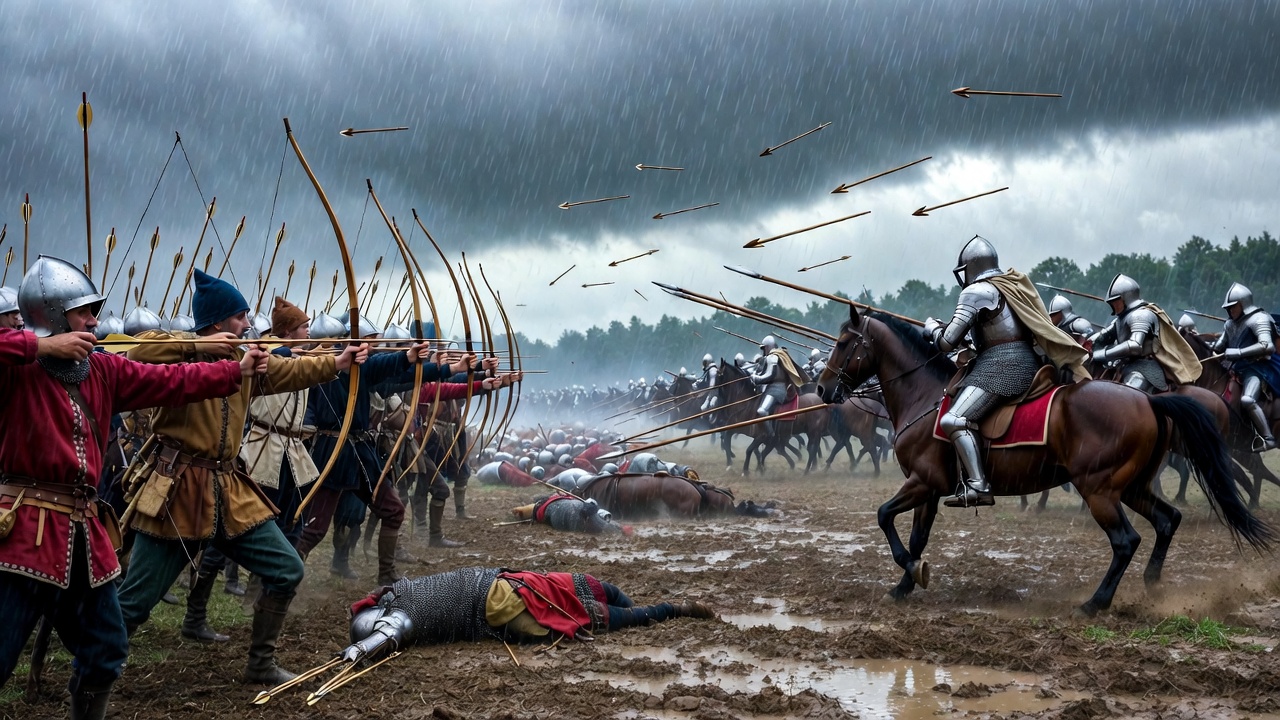
Leadership and Kingship: Henry embodies ideal Renaissance ruler—motivational, strategic, burdened. His speeches show rhetoric’s power, yet private doubts reveal “uneasy lies the head that wears a crown.”
War: Glorified in choruses and victories, yet brutal: soldiers fear death, Henry orders executions. The play questions glory versus horror, patriotism versus human cost.
National Identity: Unity across classes and regions (English, Welsh, etc.) contrasts French division, reflecting Elizabethan hopes.
Language and Rhetoric: Henry’s oratory inspires; Chorus engages meta-theatrically.
Ambiguity: Hero or opportunist? Shakespeare leaves room for debate—propaganda or critique?
Famous Speeches and Quotes
- Prologue Chorus: “O, for a muse of fire…” – Sets epic tone.
- Tennis Balls Response (1.2): “His jest will savour but of shallow wit…”
- Once More Unto the Breach (3.1): Iconic rally cry.
- St. Crispin’s Day (4.3): “We few, we happy few, we band of brothers” – Defines camaraderie.
- Wooing Katherine (5.2): Blends humor and sincerity.
These endure for motivational power and poetic brilliance.
Why Henry V Still Matters Today
Henry’s leadership lessons—motivating underdogs, decisive action, empathy—apply to modern executives, coaches, and military leaders. The play’s war portrayal resonates in debates over nationalism and conflict costs. Films (Olivier 1944, Branagh 1989) keep it alive, proving timeless appeal.
Henry V remains Shakespeare’s epic masterpiece, blending heroism, nuance, and spectacle. It celebrates leadership triumph while subtly probing war’s price. Dive into the full text or watch adaptations—you’ll discover why it inspires generations.
FAQs
What is the main plot of Shakespeare’s Henry V? Henry V invades France, wins at Agincourt against odds, and secures peace through marriage.
Who is the protagonist in Henry V? King Henry V, the transformed Prince Hal.
What is the significance of the Battle of Agincourt in the play? It showcases English victory through leadership and unity, symbolizing improbable triumph.
Does Henry V glorify war? It celebrates victories but includes horrors and moral questions.
How does Henry V connect to Henry IV Parts 1 and 2? It completes Hal’s redemption arc from wild prince to ideal king.
What are the most famous lines from Henry V? “Once more unto the breach…” and “We few, we happy few, we band of brothers.”