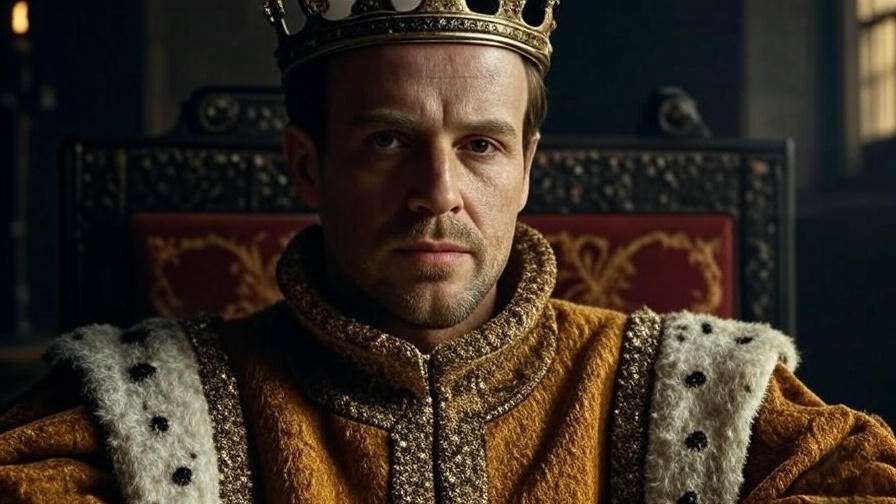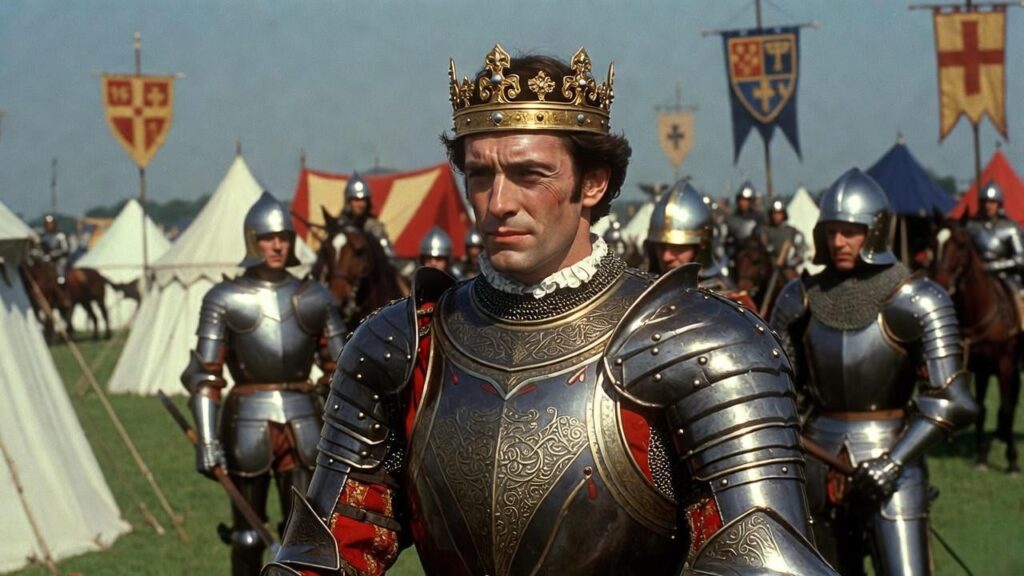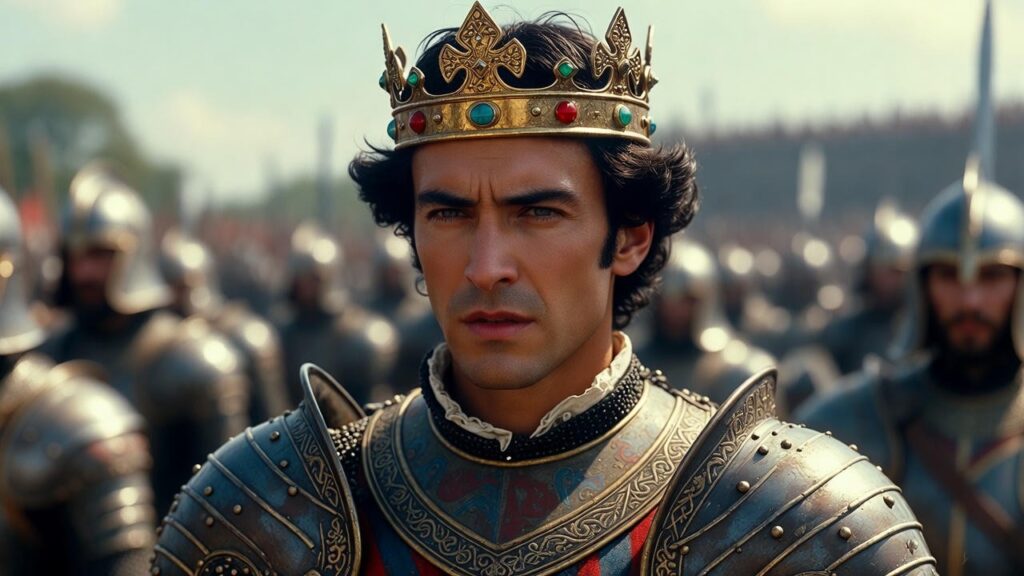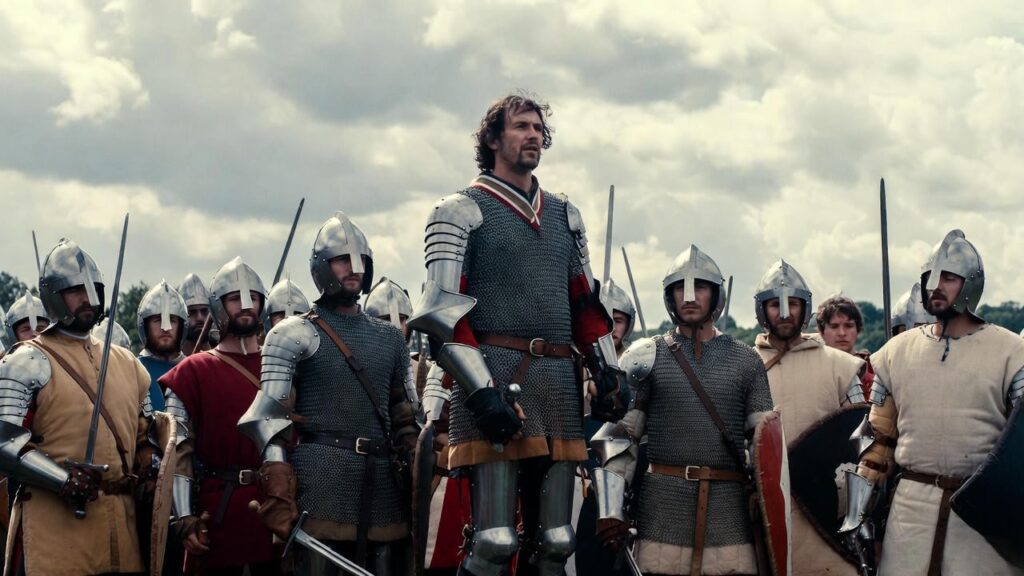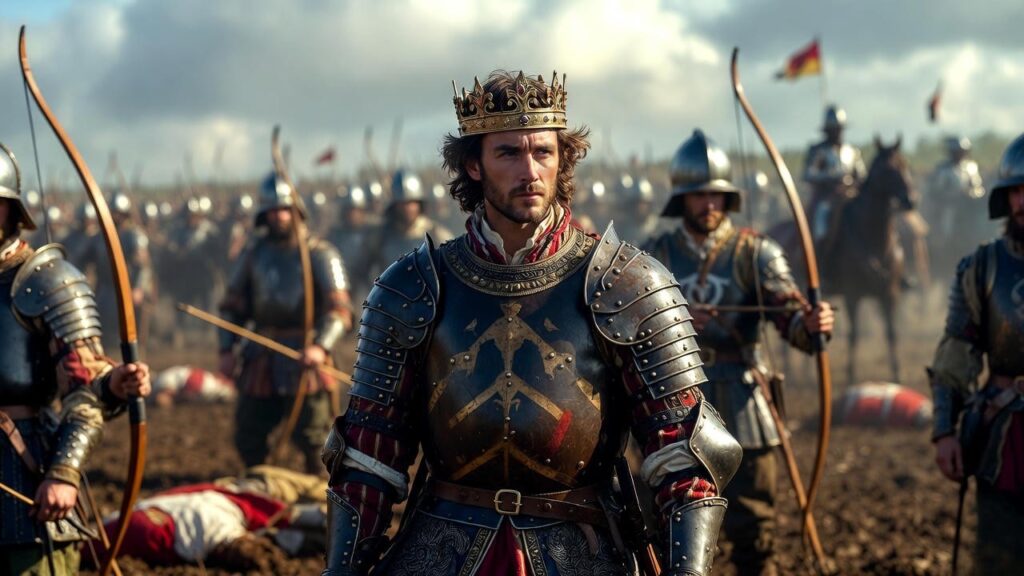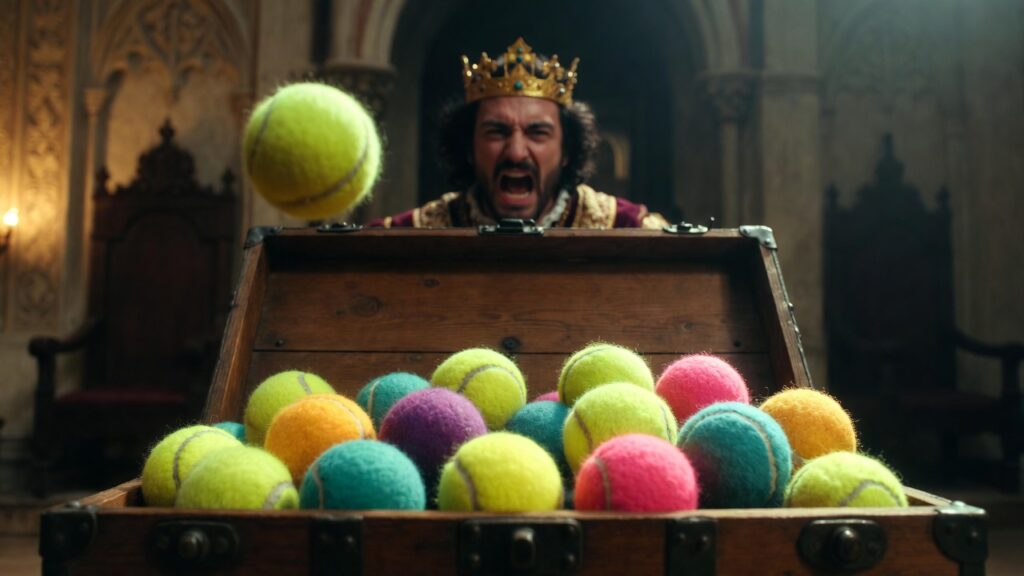
Imagine a royal ambassador arriving at the English court bearing a lavish “gift” from the heir to the French throne—a heavy chest, or tun, supposedly filled with treasure to acknowledge a king’s rightful claims. Instead, the lid opens to reveal hundreds of tennis balls. This is no diplomatic courtesy; it’s a calculated mockery, a slap in the face to England’s young monarch, suggesting he belongs on the court playing games rather than claiming territories or leading nations.
In William Shakespeare’s Henry V, this infamous tennis balls scene (Act 1, Scene 2) transforms a seemingly trivial insult into the dramatic spark that ignites the invasion of France and propels one of literature’s greatest warrior-kings toward glory at Agincourt. The focus keyword “tennis balls henry v” captures one of the play’s most quoted and analyzed moments, where a childish taunt becomes a catalyst for war, leadership revelation, and Shakespeare’s brilliant exploration of power, perception, and rhetoric.
For students dissecting the text, theater enthusiasts revisiting adaptations, or anyone puzzled by why a simple sports item carries such weight, this scene holds the key to understanding Henry’s transformation from the wayward Prince Hal to the formidable King Henry V. In this comprehensive guide, we unpack the historical roots, close-read the dialogue, explore the rich symbolism, and trace its echoes through adaptations and modern leadership lessons—offering deeper insights than standard summaries to truly illuminate Shakespeare’s genius.
Historical and Dramatic Context of the Tennis Balls Scene
Shakespeare’s histories often blend fact with theatrical invention, and the tennis balls incident draws from real medieval chronicles while amplifying the drama for the stage.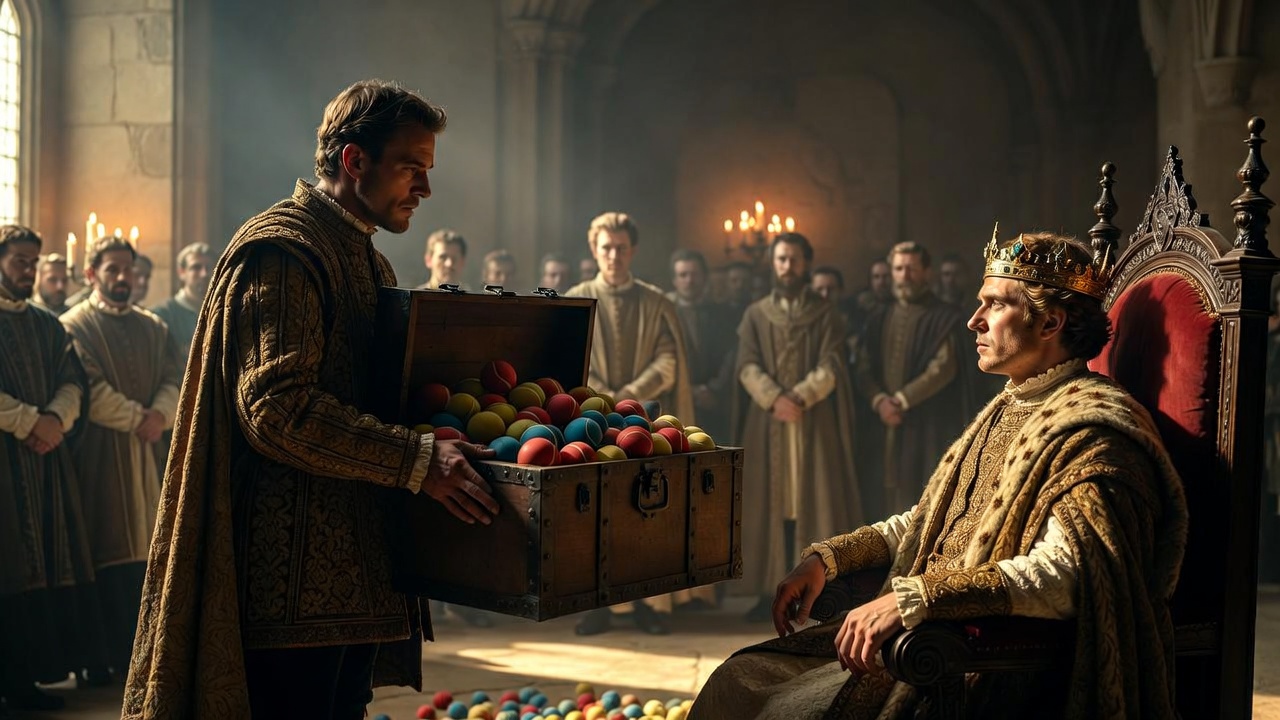
The Real Historical Inspiration – Fact vs. Shakespearean Invention
The anecdote appears in Raphael Holinshed’s Chronicles (1587), Shakespeare’s primary source for the history plays. Holinshed recounts that during negotiations over Henry’s claim to French territories (rooted in the Salic law debate), the French sent an insulting “token” of tennis balls, signifying that the English king was better suited to “childish exercise” than worthy exploits. Earlier chroniclers like Thomas Elmham (a chaplain present at Agincourt) and John Strecche (a canon connected to Kenilworth Priory) mention similar mocking gifts, sometimes placed at Kenilworth or Paris, involving barrels or chests of balls sent to belittle Henry’s youth.
Shakespeare innovates by attributing the gift explicitly to the Dauphin (Louis, Duke of Guyenne), heightening personal rivalry, and positioning it right after the Archbishop of Canterbury’s legal justification for war. This timing turns the insult into an immediate trigger, condensing historical timeline for dramatic tension. While the exact event’s veracity is debated—some historians view it as legend embellished over time—Shakespeare uses it masterfully to symbolize French arrogance and English resolve.
Royal Gift-Giving Customs in the Medieval/Renaissance Era
In medieval diplomacy, gifts were potent symbols of respect and alliance. A king might send gold, jewels, or rare artifacts to affirm status and goodwill. Sending something trivial or mocking—like toys to an adult ruler—constituted deliberate humiliation, violating protocol and signaling contempt.
Here, the Dauphin subverts this custom. Henry’s ambassadors seek acknowledgment of his claim to dukedoms; the response is a “tun of treasure” that mocks his past as a reveler. It implies Henry remains the frivolous Prince Hal from the Henry IV plays, unfit for serious statecraft. Shakespeare contrasts this with the preceding scene’s solemn debate on Salic law, making the gift’s arrival a shocking pivot from legality to personal affront.
The Role of the Dauphin (Louis, Duke of Guyenne)
Historically, the Dauphin was Charles VI’s heir, known for ambition and occasional overconfidence. In the play, he embodies French underestimation of Henry—arrogant, dismissive, and blind to England’s growing strength. His scorn reflects broader Hundred Years’ War tensions, where France viewed England as upstart and inferior. Shakespeare uses him as a foil: while Henry grows into divine-right kingship, the Dauphin’s jest foreshadows French downfall.
Close Reading of the Tennis Balls Scene (Act 1, Scene 2)
The scene’s power lies in Shakespeare’s language—witty, layered, and explosive.
Key Dialogue and Shakespeare’s Language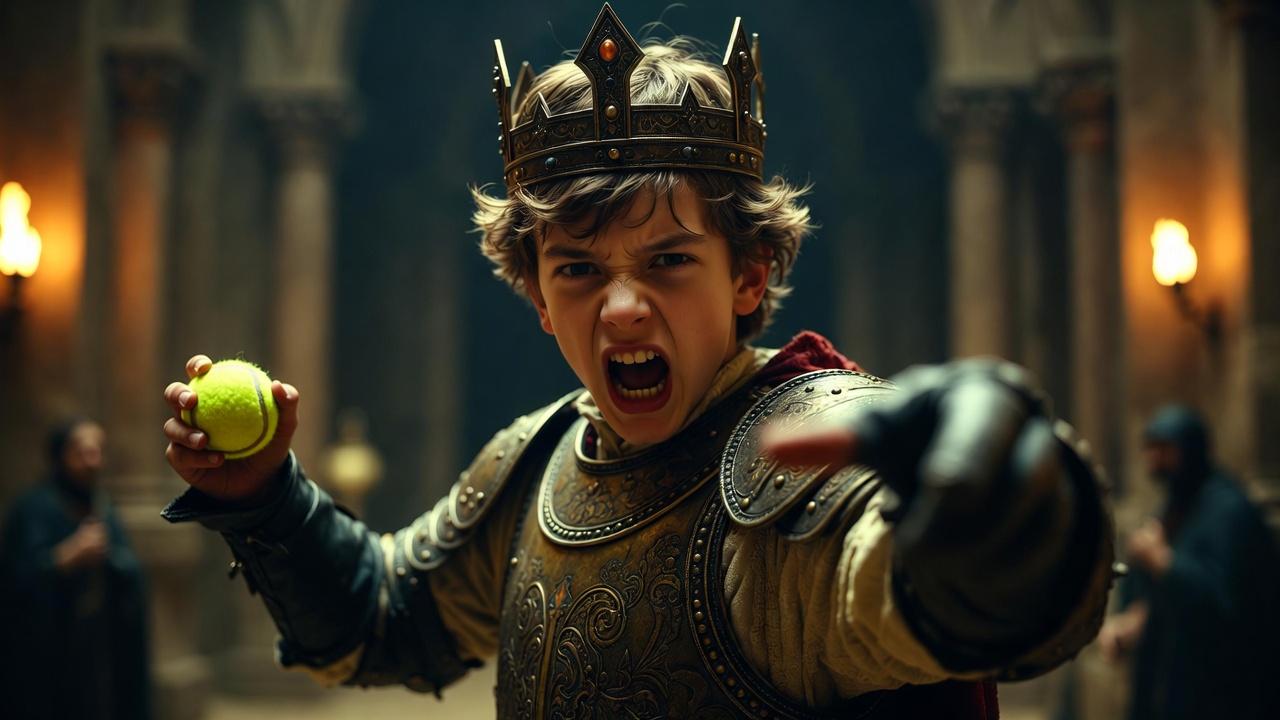
The ambassadors deliver the Dauphin’s message: Henry cannot “revel into dukedoms,” and they present a “tun” more suited to his spirit. Exeter announces: “Tennis-balls, my liege.”
Henry responds with calculated calm: “We are glad the Dauphin is so pleasant with us; His present and your pains we thank you for…”
This ironic politeness masks fury, echoing his earlier “veiled” wildness.
Then comes the thunder: “When we have match’d our rackets to these balls, We will in France, by God’s grace, play a set Shall strike his father’s crown into the hazard. …And tell the pleasant prince this mock of his Hath turn’d his balls to gun-stones; and his soul Shall stand sore chargèd for the wasteful vengeance That shall fly with them…”
The Metaphor Unpacked – From Play to War
Shakespeare draws on real tennis (then called jeu de paume), an indoor game played with wooden rackets and leather balls on asymmetric courts with walls, penthouses, and hazards. Terms like “rackets,” “set,” “hazard” (a scoring area or risk), and “chases” (pursuit points) infuse the speech.
Henry flips the symbol: balls become “gun-stones” (cannonballs), play becomes invasion. “Hazard” evokes both court danger and war’s gamble; “chases” suggests pursuit across French courts (territories). The pun on “balls” adds edge—Elizabethan slang linked it to masculinity, so the insult questions Henry’s virility, while his retort asserts dominance.
This rhetoric transforms mockery into justification, invoking God’s grace and divine right.
Henry’s Rhetorical Mastery
Henry’s speech showcases controlled anger and strategic brilliance. He acknowledges the “wilder days” reference but reframes it: his youth was preparation, not weakness. By turning the insult into war rhetoric, he unites his court, shifts from defense to offense, and positions the conflict as righteous vengeance.
Symbolism and Themes Embodied in the Tennis Balls
The tennis balls are far more than a prop in Shakespeare’s staging—they function as a dense symbol carrying multiple layers of meaning that resonate throughout Henry V and connect backward to the entire Henriad tetralogy.
Mockery of Youth and the Prince Hal Legacy
The Dauphin’s gift directly targets Henry’s public image as the former Prince Hal—the tavern-haunting, riotous youth immortalized in Henry IV, Part 1 and Part 2. Falstaff’s old companion is now king, yet the French prince refuses to acknowledge the change. The balls scream: “You are still that boy who played at crowns rather than wore one.”
Henry’s response is therefore not just military—it is deeply personal. By declaring that the mockery “hath turn’d his balls to gun-stones,” he symbolically destroys the old identity the Dauphin seeks to impose. Scholars frequently note that this moment completes the arc begun in Henry IV, Part 1 when Hal famously soliloquized:
“I know you all, and will awhile uphold The unyoked humour of your idleness…”
The tennis balls force Hal’s reformation into the open, compelling him to prove—publicly and violently—that his youthful “wildness” was deliberate disguise, not inherent character. The insult becomes the final test of that reformation.
Play as Metaphor for War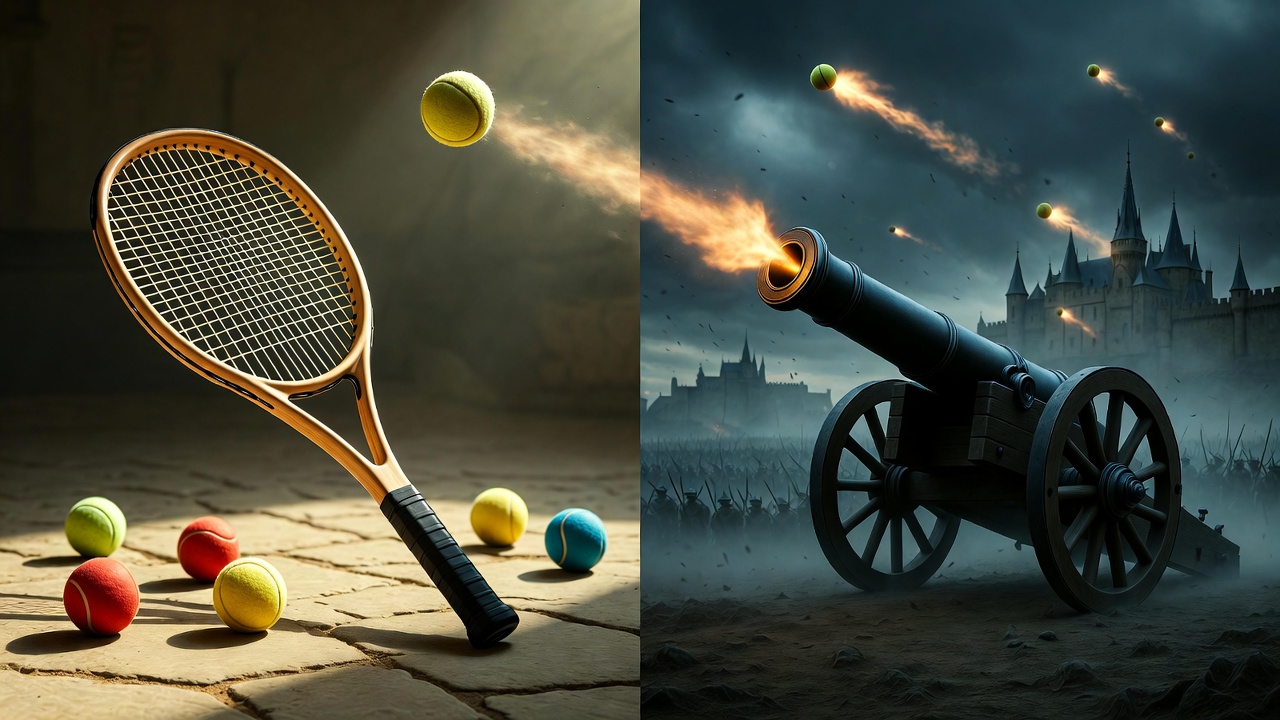
Shakespeare repeatedly uses gaming metaphors to describe warfare in the play. The most famous is Henry’s later promise before Harfleur: “Once more unto the breach, dear friends, once more; / Or close the wall up with our English dead!”—itself a kind of grim game. But the tennis metaphor is the purest and earliest.
- Rackets → English army (weapons/tools of aggression)
- Balls / gun-stones → Projectiles of destruction
- Set → Campaign / battle sequence
- Hazard → Risk of war, chance of death, and literal court feature
- Chases → Pursuit of French territories (“all the courts of France will be disturbed”)
This conceit transforms an aristocratic leisure sport into a blueprint for conquest. Real tennis in Shakespeare’s time was an elite, physically demanding game played in enclosed courts—often by royalty. By appropriating its language, Henry claims mastery over both the symbolic and literal battlefield.
Masculinity, Honor, and Power Dynamics
Elizabethan audiences would have caught the bawdy undertone immediately. “Balls” carried the same double meaning then as now. The Dauphin’s gift can be read as an attack on Henry’s manhood: “You are not man enough to rule; go play with your toys.” Henry’s furious counter—“his soul / Shall stand sore chargèd for the wasteful vengeance”—reclaims phallic and martial authority. The gun-stones become instruments of masculine retribution.
This gendered reading aligns with broader themes in the history plays: kingship as performative masculinity, the necessity of violence to prove legitimacy, and the cost of pride (French hubris vs. English righteous anger).
The Scene’s Impact on Henry’s Character Arc and the Play’s Structure
Catalyst for Invasion and Leadership Demonstration
Before the tennis balls arrive, Henry is still in consultative mode—listening to the Archbishop’s long-winded justification of the Salic law claim. The gift changes everything. It personalizes the conflict, galvanizes the court, and gives Henry the moral high ground to declare war. From this point forward, he speaks and acts with unhesitating authority.
The scene also unites fractious English nobles. The earlier legal debate risked exposing divisions; the insult creates a shared enemy and shared purpose.
Foreshadowing Agincourt and Themes of Unity
The tennis metaphor reappears subtly throughout:
- The siege of Harfleur uses battering imagery reminiscent of tennis strokes.
- The Chorus’s descriptions of vast armies crossing the Channel echo the “set” Henry promises.
- St. Crispin’s Day speech transforms outnumbered English troops into heroic “band of brothers,” turning apparent disadvantage (like the Dauphin’s mockery) into strength.
The balls scene plants the seed of the play’s central paradox: apparent weakness (youth, small army, mocked king) becomes divine favor and ultimate victory.
Dramatic Irony and Audience Perspective
The Chorus repeatedly reminds us that we are watching a theatrical “mockery” of great events—“Can this cockpit hold / The vasty fields of France?” The tennis balls, therefore, operate on two levels: within the fiction as deadly insult, and meta-theatrically as part of the play’s self-conscious artifice. Shakespeare invites us to reflect on how perception shapes power—both on stage and in history.
Comparisons in Adaptations and Modern Interpretations
Iconic Film Versions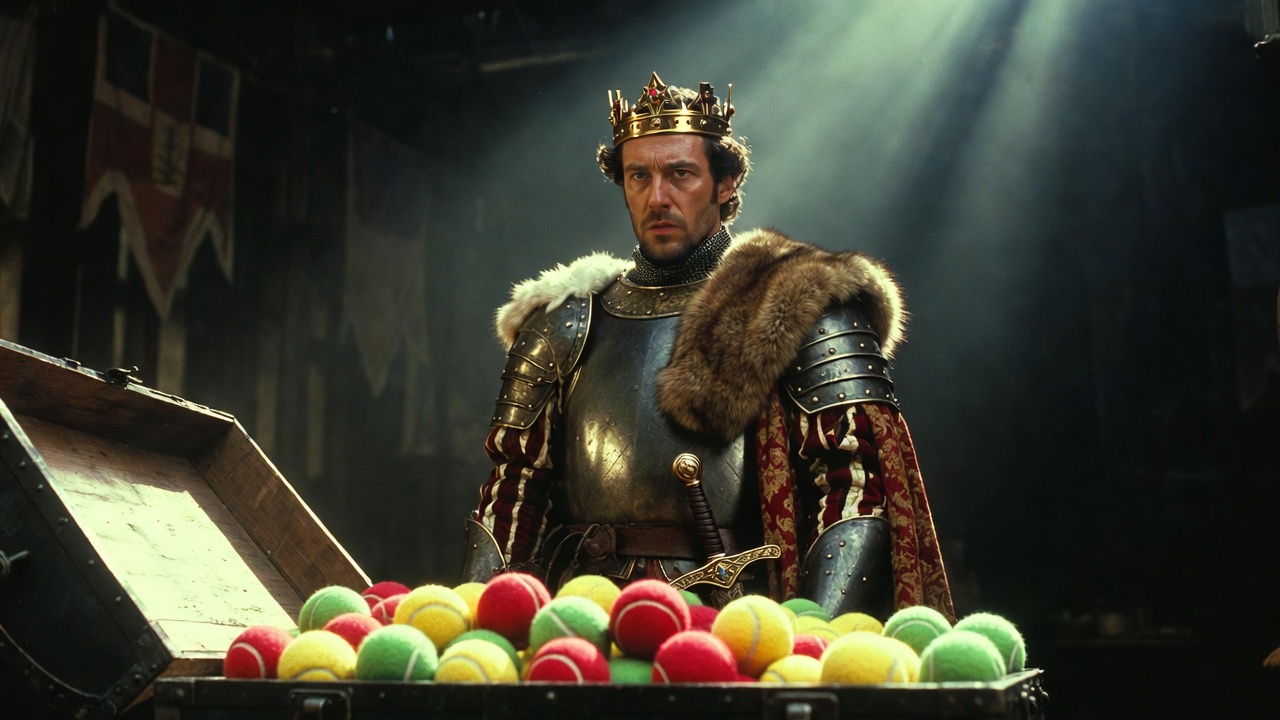
- Laurence Olivier (1944) Filmed during World War II, Olivier’s version emphasizes patriotic fervor. The tennis balls scene is bright and theatrical; Henry’s anger is controlled, almost cheerful, turning the insult into motivational rhetoric. The colorful Globe Theatre framing reinforces English resilience.
- Kenneth Branagh (1989) Branagh darkens the tone dramatically. Henry’s initial calm cracks into visible fury; the camera lingers on his clenched jaw. The scene feels personal and dangerous—closer to psychological warfare. This version is widely regarded as the definitive cinematic treatment of the moment.
- The Hollow Crown (2012) Tom Hiddleston’s Henry is introspective and quietly lethal. The gift is delivered with sneering ceremony; his response is measured but icy. The adaptation highlights the scene’s emotional undercurrent—hurt pride beneath the royal mask.
Each director chooses how much to emphasize humor, rage, or strategic brilliance, reflecting changing cultural attitudes toward war and leadership.
Contemporary Relevance
Today the tennis balls incident resonates in politics and business:
- Leaders underestimated because of age, background, or unconventional paths (think young tech founders mocked by established corporations).
- Public figures turning insults into motivation (“They laughed at me… now they’re asking for favors”).
- Diplomatic slights weaponized in modern international relations—mocking tweets, symbolic gestures, or public humiliations reframed as casus belli.
The scene remains a timeless study in how to convert contempt into advantage.
Expert Insights and Lesser-Known Facts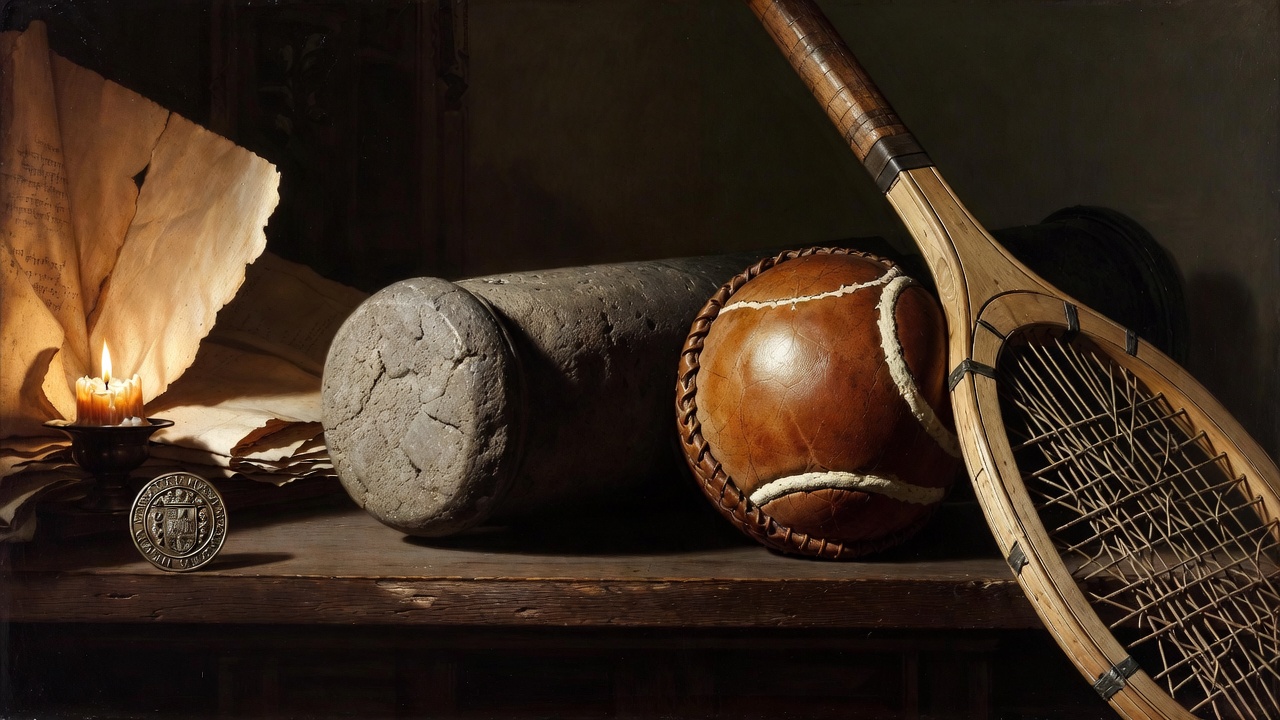
- Real tennis equipment: Shakespeare’s audience knew jeu de paume well. Balls were leather-covered, stuffed with hair or wool, and quite heavy—closer to modern handballs than fuzzy tennis balls. “Gun-stones” were actual early cannon projectiles, often stone or iron.
- Elizabethan slang: “To play at tennis” could mean frivolous activity, but also carried sexual connotations (“to sport”). The Dauphin’s gift is therefore doubly insulting.
- Wartime propaganda: During both World Wars, Henry V was revived as patriotic text. Churchill reportedly quoted the play frequently; the tennis balls scene symbolized Britain’s ability to turn mockery into resolve.
- Scholarly debate: Some critics (e.g., Gary Taylor in the Oxford edition) argue the scene’s humor undercuts Henry’s heroism, presenting him as dangerously vengeful. Others see it as proof of his rhetorical and moral superiority.
The tennis balls scene in Henry V is deceptively simple: a box of toys becomes the pretext for one of Shakespeare’s greatest wars. Yet in that transformation lies the playwright’s genius—his ability to turn a single prop into a symbol of perception, power, masculinity, divine right, and the thin line between jest and catastrophe.
Henry does not merely answer an insult; he rewrites the narrative of his own life and of England’s destiny. The Dauphin meant to diminish him. Instead, he armed him.
For anyone studying, performing, or simply loving Shakespeare, this moment is essential. It reveals how a great king is not born, but forged—in the heat of public scorn and private resolve.
Revisit Act 1, Scene 2. Watch Branagh’s fury or Hiddleston’s ice. Consider how often history turns on a single, seemingly trivial gesture. And ask yourself: when someone hands you tennis balls instead of respect, what will you turn them into?
Frequently Asked Questions About Tennis Balls in Henry V
Why were tennis balls an insult? They implied Henry was still a frivolous boy unfit for kingship—better suited to games than governance or war.
Did this really happen historically? Chronicles (Holinshed, Elmham, Strecche) record a similar mocking gift of balls or toys, though details vary and Shakespeare dramatizes it for effect.
What does “gun-stones” mean? Early cannonballs, often made of stone or iron. Henry transforms the playful balls into instruments of deadly war.
How does this scene connect to the Henry IV plays? It directly references (and refutes) the Dauphin’s view of Henry as the old tavern prince, completing his reformation arc.
Thank you for reading this deep dive into one of Shakespeare’s most electric moments. If this analysis helped clarify the scene—or sparked new thoughts—feel free to share in the comments below.