In William Shakespeare’s darkest tragedy, noblemen plot, kings fall, and witches weave fate in the shadows. Yet amidst the violent rise and fall of tyrants, one figure quietly navigates every major political tremor in Scotland. Search for ross macbeth in any standard study guide, and you will likely find him dismissed as a secondary noble or a convenient plot device—a nameless messenger whose primary duty is to deliver bad news.
However, reducing Ross to a mere plot courier ignores one of Shakespeare’s most brilliant dramatic constructs. Ross is present at virtually every turning point of the play: he announces Macbeth’s initial triumph, witnesses the unnatural omens after King Duncan’s assassination, sits at the horrific banquet where Banquo’s ghost appears, warns Lady Macduff before her murder, and delivers the devastating news of that massacre to Macduff in England.
Why does a character with relatively few lines occupy such pivotal real estate on stage? Far from an insignificant character, Ross functions as the play’s moral atmospheric gauge, a chorus reflecting Scotland’s decay, and a poignant study in political survival under a ruthless dictatorship. Understanding his role reveals how Shakespeare explores the complex, uncomfortable space between self-preservation and moral complicity.
Ross’s Core Identity: Character Overview & Family Tree
To fully grasp Ross’s function in Macbeth, one must first examine his placement within the Scottish aristocracy. Shakespeare constructs a tight-knit web of nobility where familial bonds and feudal oaths dictate survival, making Ross’s shifting allegiances all the more significant.
Social Status and Lineage
Ross holds the title of Thane, a hereditary rank of Scottish nobility directly beneath the king. As a lord, he serves in King Duncan’s inner circle alongside his fellow nobles, including Lennox, Angus, Caithness, and Menteith.
Crucially, Ross is closely connected to the play’s central figures of resistance:
-
Relationship to Macduff: Ross is Macduff’s cousin. This kinship adds a layer of intense personal tragedy to Act 4, where Ross must look his own relative in the eye and report the brutal execution of Macduff’s wife and children.
-
Standing in Duncan’s Court: At the start of the play, Ross is one of King Duncan’s most trusted emissaries, entrusted with reports from the battlefield and the execution of state honors.
-
Position Under Macbeth: Following Duncan’s murder, Ross maintains his royal standing, choosing to attend Macbeth’s coronation at Scone and remain at court long after other nobles begin to suspect foul play.
Quick Reference Data Table: Ross’s Key Appearances Across the Play
| Scene / Act | Primary Action | Key Quote | Dramatic Function |
| Act 1, Scene 2 & 3 | Reports victory over Norway; bestows title of Thane of Cawdor. | “The King hath happily received, Macbeth, / The news of thy success…” | Unintentional catalyst; fulfills the Witches’ first prophecy. |
| Act 2, Scene 4 | Discusses unnatural omens with the Old Man after Duncan’s death. | “Thou seest, the heavens, as troubled with man’s act, / Threaten his bloody stage.” | Acts as a choral voice illustrating nature’s revolt against regicide. |
| Act 3, Scene 4 | Attends royal banquet; attempts to manage Macbeth’s breakdown. | “His absence, sir, / Lays blame upon his promise.” | Navigates political diplomacy amidst royal instability and terror. |
| Act 4, Scene 2 | Visits Lady Macduff in Fife to offer a cryptic warning before fleeing. | “But cruel are the times when we are traitors / And do not know ourselves…” | Highlights the psychological dread and paranoia under tyranny. |
| Act 4, Scene 3 | Travels to England; delivers the news of the Fife massacre to Macduff. | “Your castle is surprised; your wife and babes / Savagely slaughter’d…” | Drives the emotional turning point; transforms grief into rebellion. |
| Act 5, Scene 8 | Reports the honorable death of Young Siward to his father. | “He’s worth more sorrow, / And that I’ll spend for him.” | Marks the restoration of legitimate feudal order and honorable loss. |
The Primary Dramatic Function: Ross as the Cosmic and Political Messenger
Throughout Macbeth, Shakespeare uses off-stage action to drive on-stage psychological tension. Because massive battles, royal assassinations, and widespread national decay cannot always be staged directly, Ross serves as the vital bridge connecting the audience to the broader state of Scotland.
       [ Off-Stage Chaos & Violence ]
                     │
                     ▼
           [ Ross The Messenger ]
                     │
       ┌─────────────┴─────────────┐
       ▼                           ▼
[ Psychological Tension ]   [ Plot Advancement ]
(e.g., Prophecy Fulfillment)  (e.g., Escalation to War)
The Catalyst of Prophecy (Act 1, Scenes 2 & 3)
When Ross first enters the narrative in Act 1, Scene 2, he arrives fresh from the battlefield at Fife, describing Macbeth’s heroic stand against the traitorous Thane of Cawdor and the King of Norway. King Duncan, overjoyed by the report, commands Ross to see Cawdor executed and pronounce his title upon Macbeth: “What he hath lost noble Macbeth hath won.”
In Scene 3, Ross meets Macbeth and Banquo on the heath immediately after the Weird Sisters deliver their prophetic greeting: “All hail, Macbeth! hail to thee, thane of Cawdor!” When Ross speaks the words—“He bade me, from him, call thee thane of Cawdor”—he unknowingly seals Macbeth’s belief in the supernatural.
Ross is the physical instrument through which fate moves. Without his delivery of Duncan’s decree, Macbeth might have dismissed the Witches’ words as mere hallucination. By delivering factual verification of an impossible prediction, Ross sets Macbeth’s murderous ambition in motion.
The Chorus of Nature’s Upset (Act 2, Scene 4)
Following the assassination of King Duncan, Shakespeare shifts Ross from a bearer of military news to a commentator on cosmic disorder. In Act 2, Scene 4, Ross converses with an Old Man outside Macbeth’s castle, framing the unnatural horrors that accompanied the King’s death.
Shakespeare relied heavily on the Elizabethan concept of the Great Chain of Being—the belief that the monarch was God’s anointed representative on Earth. To murder a king was to break the natural order, causing the universe itself to collapse into chaos. Ross acts as the primary speaker describing this cosmic revolt:
“Ah, good father,
Thou seest, the heavens, as troubled with man’s act,
Threaten his bloody stage: by the clock, ’tis day,
And yet dark night strangles the travelling lamp.”
— (Act 2, Scene 4, Lines 5–8)
Ross catalogues the terrifying anomalies sweeping the countryside: daytime turned to pitch darkness, a falcon hunted down and killed by an owl, and Duncan’s prized royal horses breaking from their stalls to devour one another. Through Ross, Shakespeare informs the audience that Scotland is no longer merely suffering political upheaval; it has entered a state of spiritual and ecological damnation under an illegitimate ruler.
The Morality of Survival: Is Ross a Pragmatist or a Coward?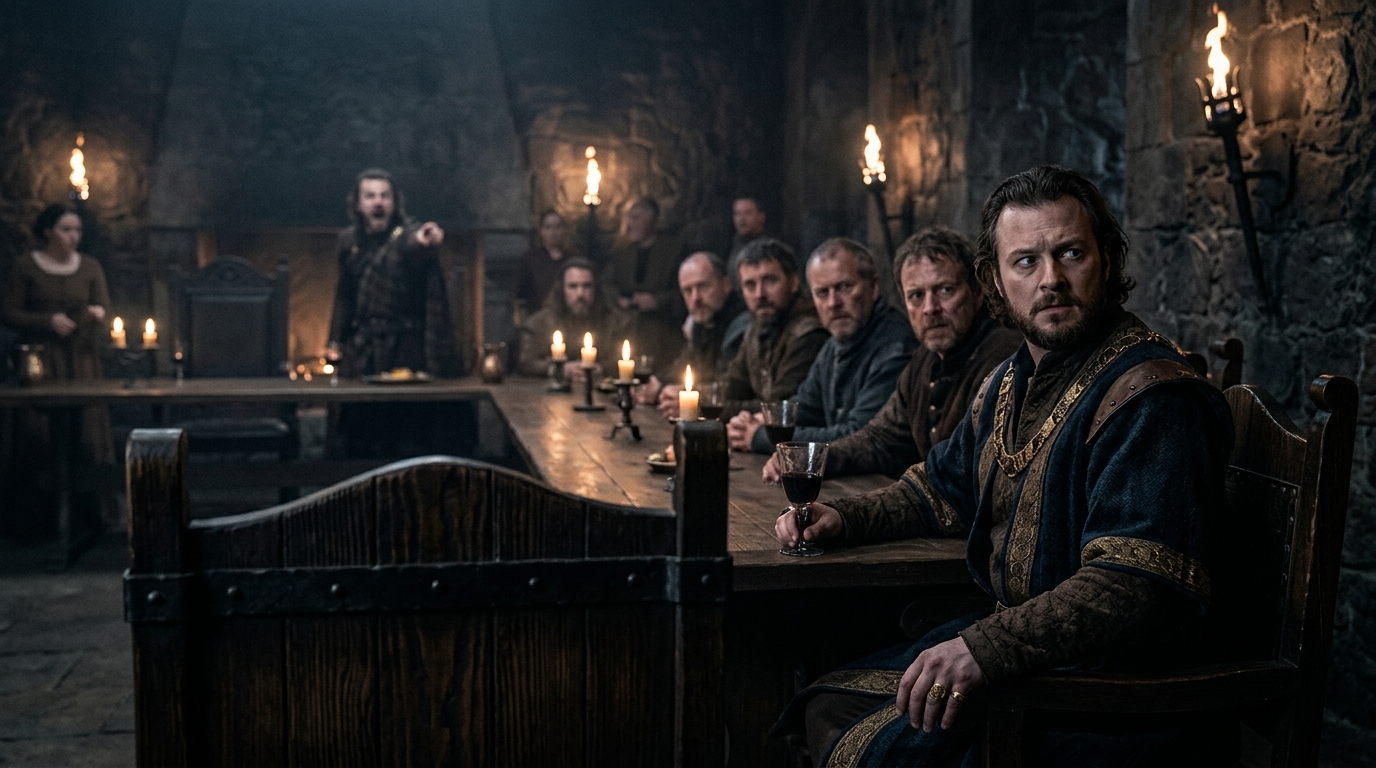
As Macbeth consolidates power and Scotland descends into a reign of terror, Ross’s continued presence at court raises significant moral questions. Why does he remain in the tyrant’s service when others flee or quietly rebel?
                      [ MORAL DILEMMA ]
                             │
            ┌────────────────┴────────────────┐
            ▼                                 ▼
    [ Pragmatic Survival ]           [ Active Resistance ]
   - Attends Macbeth's Court        - Macduff Flees to England
   - Maintains Diplomacy            - Openly Challenges Tyranny
   - Observes in Silence            - High Risk of Execution
            │                                 │
            └────────────────┬────────────────┘
                             ▼
                [ The Cost of Dictatorship ]
Navigating Tyranny: Attendance at the Royal Banquet (Act 3, Scene 4)
In Act 3, Scene 4, Macbeth hosts a grand banquet to celebrate his coronation, an event intended to project stability and authority. When Banquo’s bloody ghost appears—visible only to Macbeth—the new king unravels in front of his nobility.
Here, Ross’s instinct for political diplomacy is on full display. As Macbeth shouts at empty air, Ross attempts to smooth over the crisis, urging the lording guests: “Gentlemen, rise: his highness is not well.” When Lady Macbeth tries to cover for her husband’s outburst by claiming he suffers from a momentary fit, Ross attempts to maintain decorum. However, as Macbeth’s hallucinations intensify, it is Ross who recognizes the imminent danger of remaining in the room, ultimately obeying Lady Macbeth’s frantic order to clear the hall.
Ross’s actions at the banquet showcase his role as a survivalist. He is neither a fanatical loyalist to Macbeth nor a reckless martyr. He operates within the high-stakes landscape of a totalitarian court, carefully watching for signs of collapse while attempting to protect himself and his peers from a paranoid dictator.
The Complicity of Silence
For literature scholars and students analyzing character motivation, Ross presents a compelling ethical dilemma. While Macduff immediately refuses to attend Macbeth’s coronation at Scone—drawing a line in the sand—Ross chooses to go: “Well, I will thither.”
This decision highlights the dilemma faced by citizens under autocratic rule:
-
The Cost of Defiance: Outright rebellion against a murderous tyrant guarantees swift execution, as seen in the eventual destruction of Macduff’s household.
-
The Price of Accommodation: By remaining silent, attending banquets, and serving the crown, nobles like Ross inadvertently legitimize the dictator’s authority.
Ross is neither evil nor heroically brave; he is fundamentally human. He represents the silent majority within a compromised state—those who witness injustice, feel deep moral distress, yet remain quiet out of a rational fear for their own lives.
The Escape to England: A Shifting Allegiance
Ross’s tolerance for survival-by-silence reaches its absolute limit in Act 4. Recognizing that Macbeth’s paranoia has metastasized into outright madness, Ross abandons the court and makes the dangerous journey to England to join Prince Malcolm and Macduff. His defection signifies that Macbeth’s regime has lost all remaining aristocratic credibility. When even the ultimate political pragmatist flees, the dictator’s downfall is imminent.
The Tragic Peak: Act 4, Scenes 2 & 3 and the Breaking of News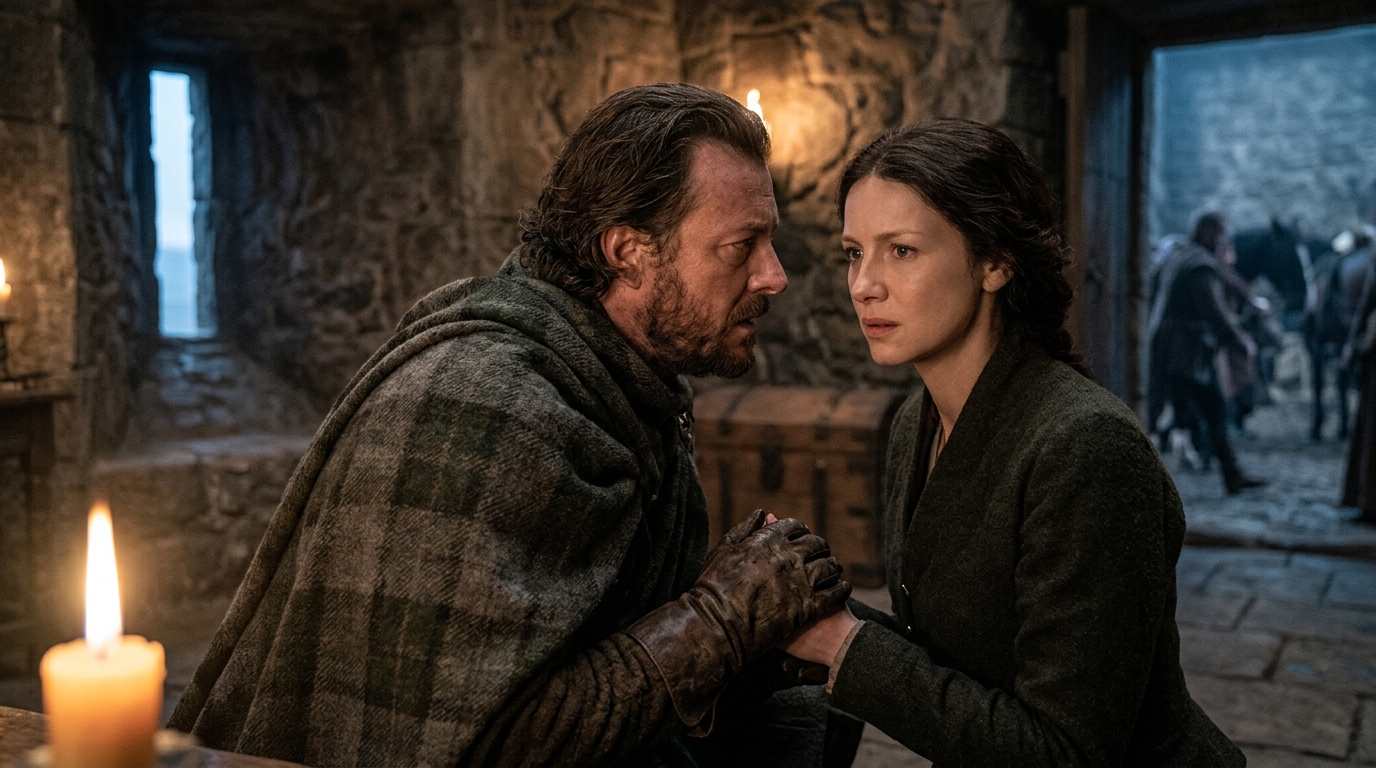
Ross’s character arc reaches its dramatic and emotional climax in Act 4. Here, Shakespeare shifts him from a detached observer into the bearer of the play’s most devastating personal tragedy, putting his moral conflicts under an intense microscopic lens.
The Final Visit to Fife (Act 4, Scene 2)
Act 4, Scene 2 opens with Ross visiting his cousin, Lady Macduff, at her castle in Fife immediately after Macduff has fled to England. Lady Macduff is furious, interpreting her husband’s sudden flight as cowardice and abandonment: “His flight was madness: when our actions do not, / Our fears do make us traitors.”
Ross finds himself in an agonizing position. He understands the mortal danger surrounding the house of Fife, yet he cannot fully explain Macduff’s secret political mission without betraying the anti-Macbeth alliance. Instead, he tries to balance comfort with hard political reality:
“My dearest coz,
I pray you, school yourself: but, for your husband,
He is noble, wise, judicious, and best knows
The fits o’ the season. I dare not speak much further;
But cruel are the times, when we are traitors
And do not know ourselves…”
— (Act 4, Scene 2, Lines 14–19)
Notice Ross’s poignant diagnosis of life under a police state: “when we are traitors / And do not know ourselves.” He articulates the psychological disorientation caused by tyranny, where rumors spread, trust evaporates, and innocent people are branded rebels without understanding why.
However, Ross’s departure right before Macbeth’s hired assassins arrive creates a sharp moral debate. Does Ross suspect the impending massacre? His sudden exit—“I take my leave of you: / Shall not be long but I’ll be here again”—feels to some audience members like self-preservation at its most tragic. He offers comfort, but he cannot—or will not—stay to defend them.
Evasion and Grief in England (Act 4, Scene 3)
When Ross arrives at the English court in Act 4, Scene 3, he carries news that will alter the course of the war. Yet, when Macduff immediately asks about his family, Ross hesitates:
-
Macduff: “How does my wife?”
-
Ross: “Why, well.”
-
Macduff: “And all my children?”
-
Ross: “Well too.”
-
Macduff: “The tyrant has not batter’d at their peace?”
-
Ross: “No; they were well at peace when I did leave ’em.”
To a modern reader, Ross’s initial answers might seem cruel or deceptive. However, in Elizabethan drama, this linguistic hesitation represents deep emotional trauma and grief. Ross uses a tragic double entendre: the dead are indeed “at peace,” freed from the terror of Macbeth’s reign. He stammers with euphemisms because the raw truth is too horrific to speak aloud the moment he steps off his horse.
Only after Prince Malcolm urges Macduff to rally an army to invade Scotland does Ross find the strength to break the horrific truth:
“Your castle is surprised; your wife and babes
Savagely slaughter’d: to relate the manner,
Were, on the quarry of these murder’d deer,
To add the death of you.”
— (Act 4, Scene 3, Lines 204–207)
Psychological Impact on Macduff and Malcolm
Ross’s delivery of this news acts as the primary emotional catalyst for the play’s final movement. Up to this point, Macduff’s opposition to Macbeth was largely political. Ross’s news transforms Macduff’s mission into a deeply personal revenge quest.
When Malcolm encourages Macduff to “Ne’er pull your hat upon your brows; give sorrow words,” and tells him to “Convert it to anger; blunt not the heart, enrage it,” it is Ross’s tragic testimony that fuels the fire to march on Dunsinane. Ross bridges the gap between Scottish suffering and English military intervention.
The “Third Murderer” Theory: Scholarly Debate & Staging Choices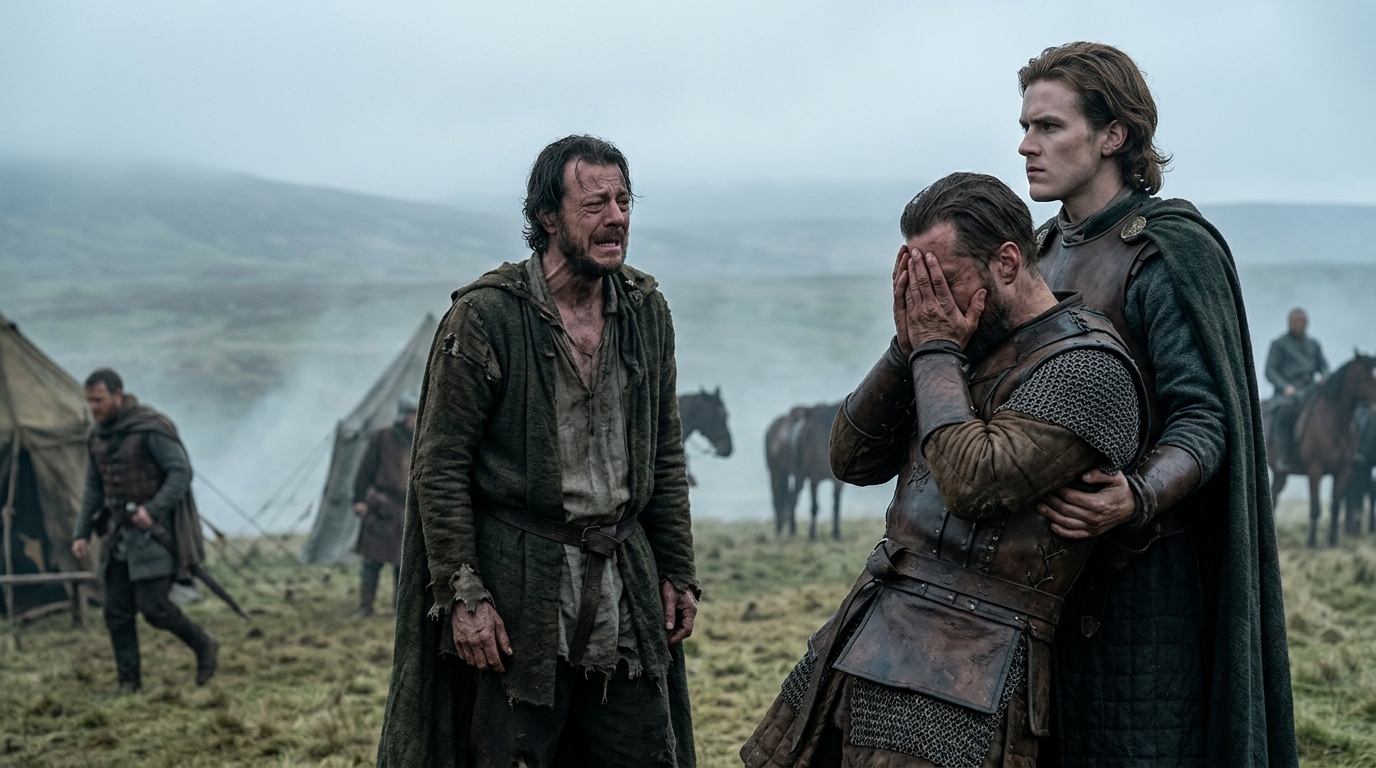
One of the most enduring mysteries in Shakespearean scholarship concerns Act 3, Scene 3. Macbeth hires two assassins to murder Banquo and his son, Fleance. Yet, when the ambush occurs in the woods, a mysterious Third Murderer appears, stating that Macbeth sent him to join the strike.
Who is this third figure? For over a century, directors, actors, and literary critics have argued that Shakespeare intended the Third Murderer to be none other than Ross.
                [ THE THIRD MURDERER QUESTION ]
                               │
            ┌──────────────────┴──────────────────┐
            ▼                                     ▼
 [ Case FOR Ross ]                     [ Case AGAINST Ross ]
 • Knows Banquo's travel plans         • Deep shock/grief in later acts
 • Present at court before/after attack • Familial ties to Macduff
 • Explains Polanski/Coen film choices • Dramatically unnecessary duplication
Arguments For Ross as the Third Murderer
-
Intimate Knowledge of the Court: In Act 3, Scene 1, Ross is present when Macbeth inquires about Banquo’s afternoon riding plans. He knows exactly where and when Banquo will be returning.
-
Familiarity with the Location: The Third Murderer recognizes Banquo by his voice and knows the layout of the palace grounds, noting: “The west yet glimmers with some streaks of day: / Now spurs the lated traveller apace.”
-
Macbeth’s Paranoia: Macbeth famously states in Act 3, Scene 4 that he keeps paid spies in every noble’s house (“There’s not a one of them but in his house / I keep a servant fee’d”). Sending Ross to oversee the assassination ensures the hit-men do not fail.
Arguments Against Ross as the Third Murderer
-
Inconsistent Characterization: If Ross actively participated in Banquo’s slaughter, his subsequent distress over Lady Macduff’s murder and his grief in England seem hypocritical rather than tragic.
-
Lack of Textual Explicit Confirmation: Shakespeare explicitly names minor roles throughout his folios. Leaving a major noble’s involvement in a murder unmentioned in the dialogue would be an anomaly even for Shakespeare’s ambiguous stagecraft.
Notable Stage and Film Adaptation Portrayals
Because the text leaves room for interpretation, modern film directors have leaned heavily into the “Ross as Villain/Operative” theory to create cinematic tension:
-
Roman Polanski (1971 Film): Polanski explicitly casts Ross (played by John Stride) as a ruthless, opportunistic villain. In Polanski’s vision, Ross is not only the Third Murderer who strikes down Banquo, but he also personally unlocks the gates of Fife to let Macbeth’s assassins into Macduff’s castle, aiming to curry favor with whoever holds power.
-
Joel Coen (2021 The Tragedy of Macbeth): Alex Hassell plays Ross as a shadowy, almost supernatural figure in a sleek black cloak. Coen presents Ross as an enigmatic political operative who manipulates both sides—saving Fleance after Banquo’s murder and playing a double game between Macbeth and Macduff to ensure his own survival regardless of who wins the crown.
Essential Quotes by Ross (with Textual Context & Breakdown)
For students and literary analysts dissecting Macbeth, Ross provides some of the play’s most memorable lines regarding power, chaos, and grief.
1. The Delivery of Title
“The King hath happily received, Macbeth,
The news of thy success; and when he reads
Thy personal venture in the rebels’ fight,
His wonders and his praises do contend
Which should be thine or his.”
— Act 1, Scene 3, Lines 89–93
-
Context & Significance: Ross addresses Macbeth right after the Witches disappear.
-
Analysis: Ross represents the public voice of honor. His language elevates Macbeth to hero status, making Macbeth’s subsequent treason against King Duncan all the more monstrous by contrast.
2. The Great Chain of Being Unravels
“Ah, good father,
Thou seest, the heavens, as troubled with man’s act,
Threaten his bloody stage: by the clock, ’tis day,
And yet dark night strangles the travelling lamp.”
— Act 2, Scene 4, Lines 5–8
-
Context & Significance: Spoken to the Old Man the morning after Duncan’s murder.
-
Analysis: Ross connects human sin directly to cosmic disorder. The metaphor of night “strangling” the sun foreshadows the dark, suffocating nature of Macbeth’s upcoming reign.
3. Living Under Dictatorship
“But cruel are the times, when we are traitors
And do not know ourselves; when we hold rumour
From what we fear, yet know not what we fear,
But float upon a wild and violent sea
Each way and move.”
— Act 4, Scene 2, Lines 18–22
-
Context & Significance: Spoken to Lady Macduff right before she is killed.
-
Analysis: This is Ross’s philosophical masterpiece. He captures the paralysis of living under an unpredictable tyrant, comparing the citizenry to ships tossed helplessly on a stormy sea.
Frequently Asked Questions About Ross in Macbeth
Is Ross related to Macduff?
Yes, Ross and Macduff are cousins. This familial connection highlights the personal stakes for Ross when he must flee to England and inform Macduff that his entire household has been slaughtered.
Why does Ross tell Macduff his family is “well” in Act 4, Scene 3?
Ross uses “well” as a devastating, grief-stricken euphemism. In early modern English drama, saying the dead are “at peace” or “well” was a way to stall before delivering heartbreaking news. Ross hesitates because he struggles to find the words to confess the sheer horror of the massacre.
Is Ross loyal to Macbeth or King Duncan?
Ross begins the play as a fiercely loyal noble to King Duncan. After Duncan’s death, Ross temporarily submits to Macbeth’s rule out of political survival and feudal duty. However, once Macbeth’s reign devolves into tyranny and madness, Ross defects to England to support Prince Malcolm’s rightful claim to the throne.
What is Ross’s primary dramatic purpose in the play?
Ross serves three major functions: he acts as the primary news-bearer who advances the plot, he serves as a chorus reflecting Scotland’s moral decay, and he illustrates the ethical dilemmas of self-preservation faced by ordinary nobles under an autocratic regime.
Ross as the Ultimate Symbol of Survival
While characters like Macbeth, Lady Macbeth, and Macduff operate in extremes of ambition, guilt, and vengeance, Ross represents something far more common: the human struggle to survive an extraordinary crisis. He is not a superhero, nor is he an absolute villain. He is a nobleman trying to navigate a crumbling world where doing the right thing often means immediate death.
By tracking Ross throughout Macbeth, we gain a richer understanding of Shakespeare’s masterpiece. Through this silent observer and frequent messenger, the play reveals that tyranny does not merely destroy kings and traitors—it warps the very fabric of society, forcing good men to weigh their silence against their souls.