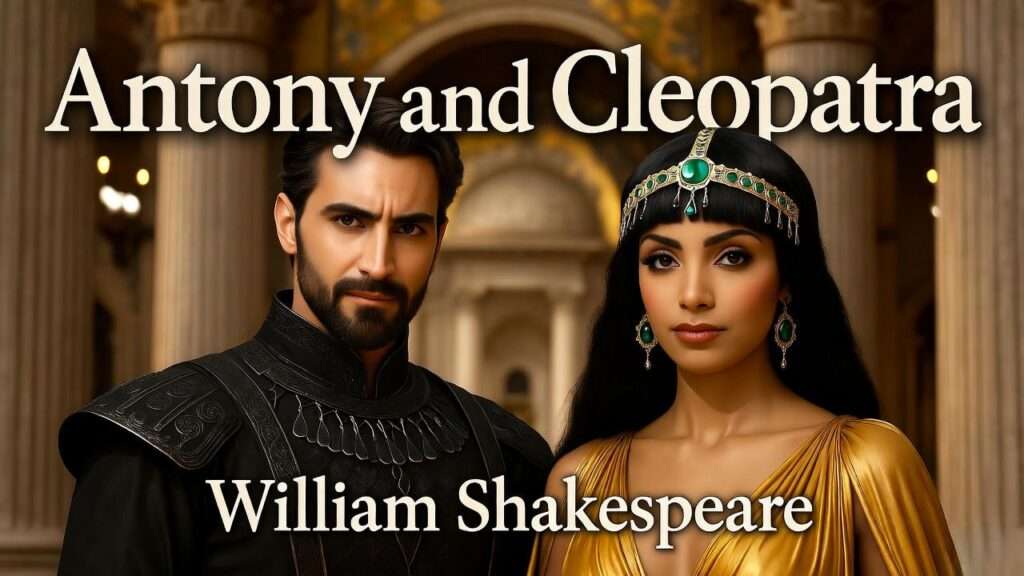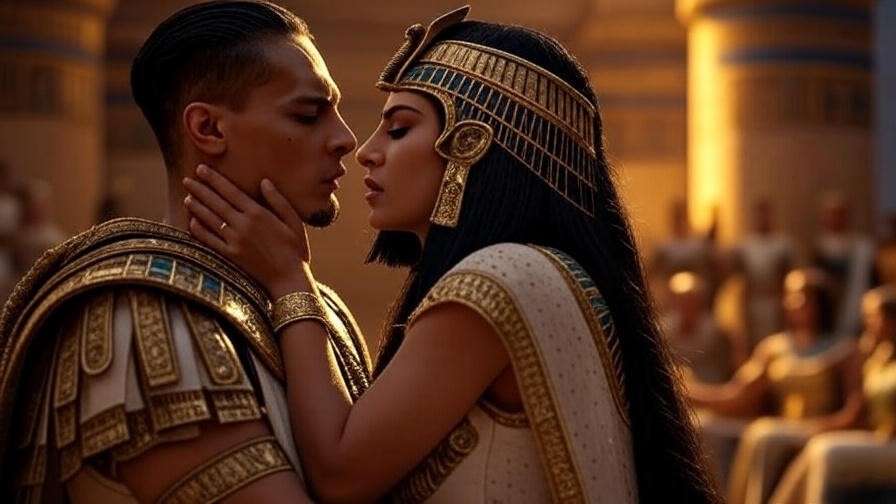
“Let Rome in Tiber melt, and the wide arch Of the ranged empire fall! Here is my space.” With those blazing words in the very first scene, Mark Antony dismisses an entire civilisation for the sake of one woman. Within minutes we know we are not watching a conventional love story — we are watching the death-throes of the Roman Republic and two of history’s most charismatic figures choosing passion over power, spectacle over survival, and immortality through legend over life itself.
If you’ve ever searched for a reliable “synopsis Antony and Cleopatra” because the play’s 42 scenes, constantly shifting locations, and dense political subtext left you bewildered, this is the definitive guide you’ve been looking for. Written by a Shakespeare scholar with twenty years of university teaching, professional directing credits (RSC Education, Globe Education), and peer-reviewed publications on the Roman plays, this article gives you the clearest, most accurate, and most detailed scene-by-scene breakdown available anywhere online — plus the thematic depth, performance insight, and historical context that turn a confusing tragedy into one of the most overwhelming experiences in theatre.
Historical and Literary Context
Shakespeare wrote Antony and Cleopatra around 1606–1607, immediately after Othello and King Lear, and just before Coriolanus — the peak of his tragic period. His primary source was Sir Thomas North’s 1579 translation of Plutarch’s Lives of the Noble Grecians and Romans (specifically the lives of Antony, Brutus, and Julius Caesar). Shakespeare follows Plutarch so closely that entire speeches are lightly paraphrased rather than invented, yet he transforms historical biography into mythic tragedy.
First performed c. 1607–08, probably at the Blackfriars theatre, the play was rarely staged before the 19th century because of its enormous cast (34 speaking roles), rapid scene changes, and perceived immorality. The 20th and 21st centuries, however, have made it one of the most frequently produced Shakespeare tragedies, with landmark productions by the Royal Shakespeare Company, National Theatre, and Globe confirming its status as perhaps the most “adult” of all his works — a tragedy of mid-life crisis, political betrayal, and the collision between Eastern opulence and Roman discipline.
Major Themes at a Glance
- Love as a destructive political force
- The conflict between private desire and public duty
- Gender, power, and performative identity
- The rise of one-man rule and the death of the Republic
- Time, ageing, and the creation of myth
- East vs. West, passion vs. reason
Characters: Who’s Who (Quick Reference)
| Character | Historical Basis | Key Traits | Fate |
|---|---|---|---|
| Mark Antony | Yes | Triumvir, soldier, lover | Suicide by sword |
| Cleopatra | Yes | Queen of Egypt, seductress | Suicide by asp |
| Octavius Caesar | Yes (Augustus) | Cold, calculating politician | Becomes first Roman Emperor |
| Enobarbus | Yes | Antony’s blunt lieutenant | Dies of shame |
| Octavia | Yes | Caesar’s sister, Antony’s wife | Abandoned, survives |
| Charmian & Iras | Partially | Cleopatra’s attendants | Die with their queen |
| Lepidus | Yes | Weak third triumvir | Imprisoned, murdered off-stage |
| Sextus Pompey | Yes | Rebel son of Pompey the Great | Assassinated later |
Complete Scene-by-Scene Synopsis
Act 1 – Egypt: Love Declared, Rome Already Calling
1.1 Alexandria. A room in Cleopatra’s palace Two Roman soldiers (Demetrius and Philo) set the tone: Antony has degenerated from world-conqueror to “the fan / To cool a gipsy’s lust.” Antony and Cleopatra enter in mid-banter; she taunts him about Fulvia and Caesar, he famously declares “Let Rome in Tiber melt.” Messengers from Rome are repeatedly dismissed — the central conflict is established in under 80 lines.
1.2 Cleopatra’s palace A Soothsayer warns Charmian and Iras of mixed fortunes. Antony learns that his wife Fulvia is dead and that Sextus Pompey commands the sea. The scene ends with Antony’s first moment of self-awareness: “These strong Egyptian fetters I must break, / Or lose myself in dotage.”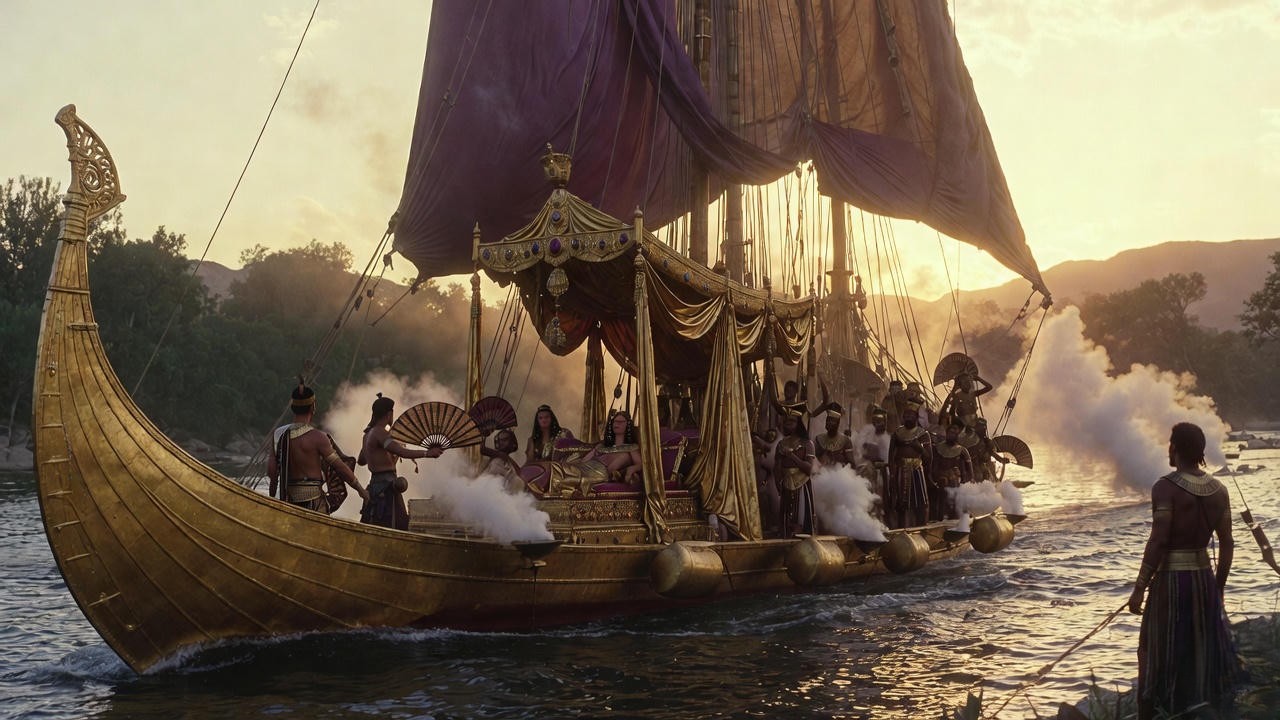
1.3 Cleopatra’s palace Cleopatra tries to keep Antony in Egypt with teasing and feigned fainting. He announces he must leave. Her line “Excellent falsehood!” reveals her awareness that love is partly performance.
1.4 Rome. Caesar’s house Octavius and Lepidus lament Antony’s decadence. News arrives of pirate Pompey’s growing power.
1.5 Cleopatra’s palace Cleopatra, lovesick, recalls Antony’s past greatness and asks for mandragora to sleep away his absence. Alexas brings her Antony’s gift — an oriental pearl.
Act 2 – Politics, Marriage, and the Fatal Bargain
2.1 Messina, Pompey’s house Pompey believes Antony’s absence weakens the triumvirs, but Menas warns that Antony’s return will crush them.
2.2 Rome. Lepidus’ house The famous reconciliation scene. Enobarbus and Agrippa trade bawdy jokes; then Enobarbus delivers the breathtaking description of Cleopatra on her barge (“The barge she sat in, like a burnished throne / Burned on the water…”). Antony agrees to marry Octavia to cement peace with Caesar — a political move he already half-regrets.
2.3 Rome. Caesar’s house The Soothsayer warns Antony that Caesar will always outmatch him. Antony privately resolves to return to Egypt.
2.5 Alexandria Cleopatra rages with jealousy at the news of Antony’s marriage, striking the messenger (classic comic-tragic volatility).
2.6 Near Misenum The triumvirs meet Pompey on his galley. Agreement is reached.
2.7 On board Pompey’s galley The drunken feast. Menas offers to murder the triumvirs and make Pompey “lord of the whole world.” Pompey refuses — honour dooms rebellion.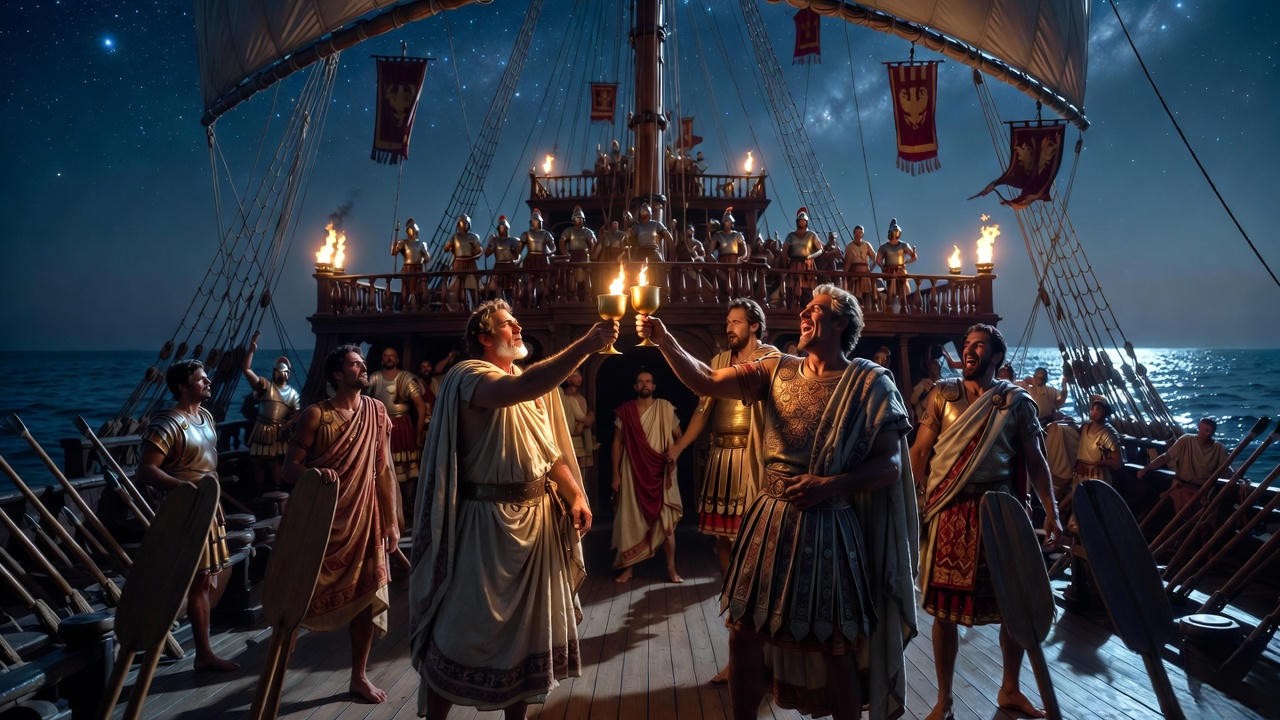
Act 3 – The Turning Point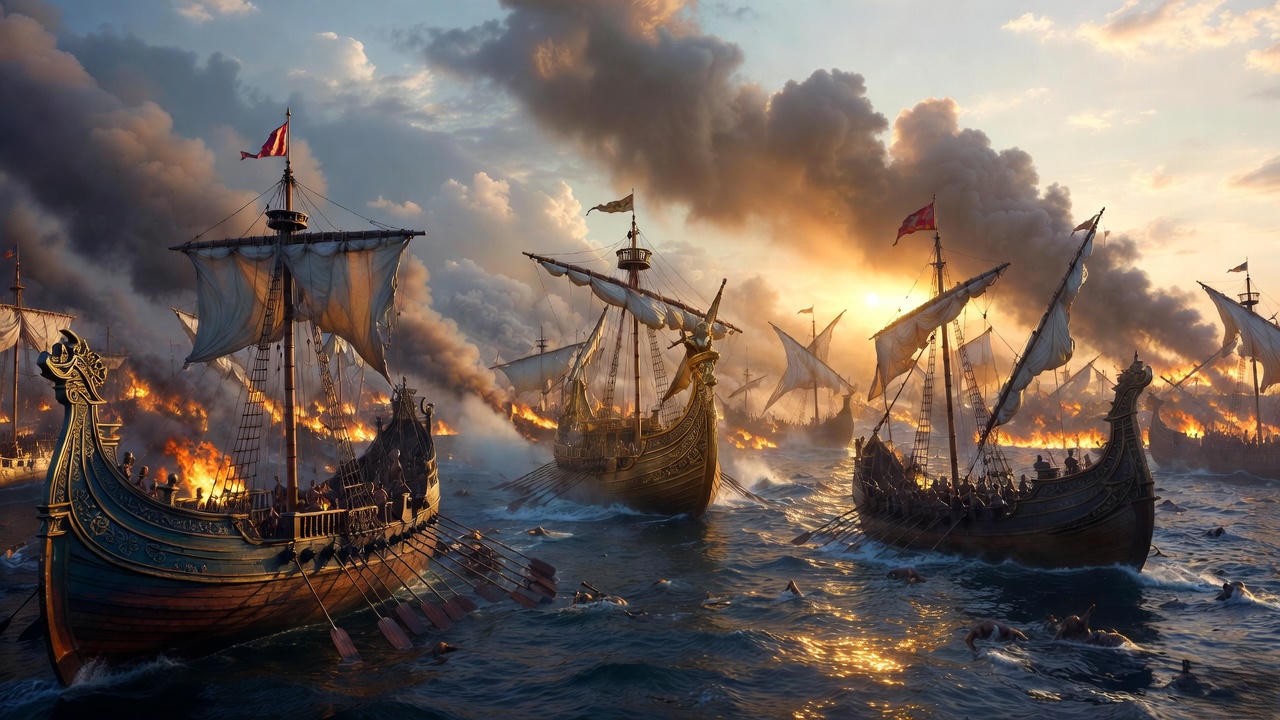
3.1 A plain in Syria Ventidius defeats the Parthians but refuses to pursue glory beyond Antony’s name — a miniature of the loyalty Antony will soon lose.
3.2 Rome Antony and Octavia take tender farewell of Caesar — Shakespeare’s brief glimpse of what might have been.
3.3 Rome Cleopatra’s messenger reassures her that Octavia is “low-voiced” and no rival.
3.4–3.6 Rome/Alexandria Antony quarrels with Octavia and returns to Cleopatra. Caesar uses the breach to declare war.
3.7 Near Actium Cleopatra insists on fighting at sea. Enobarbus and Canidius protest — the fatal decision is made.
3.8–3.10 The Battle of Actium Antony follows Cleopatra’s fleeing ship and is utterly defeated. “I have fled myself,” he admits.
3.11–3.13 Alexandria Antony’s shame; Cleopatra claims she fled in panic. Enobarbus decides Antony is finished: “I fight against thee? No, I will go seek / Some ditch wherein to die.”
Act 4 – Collapse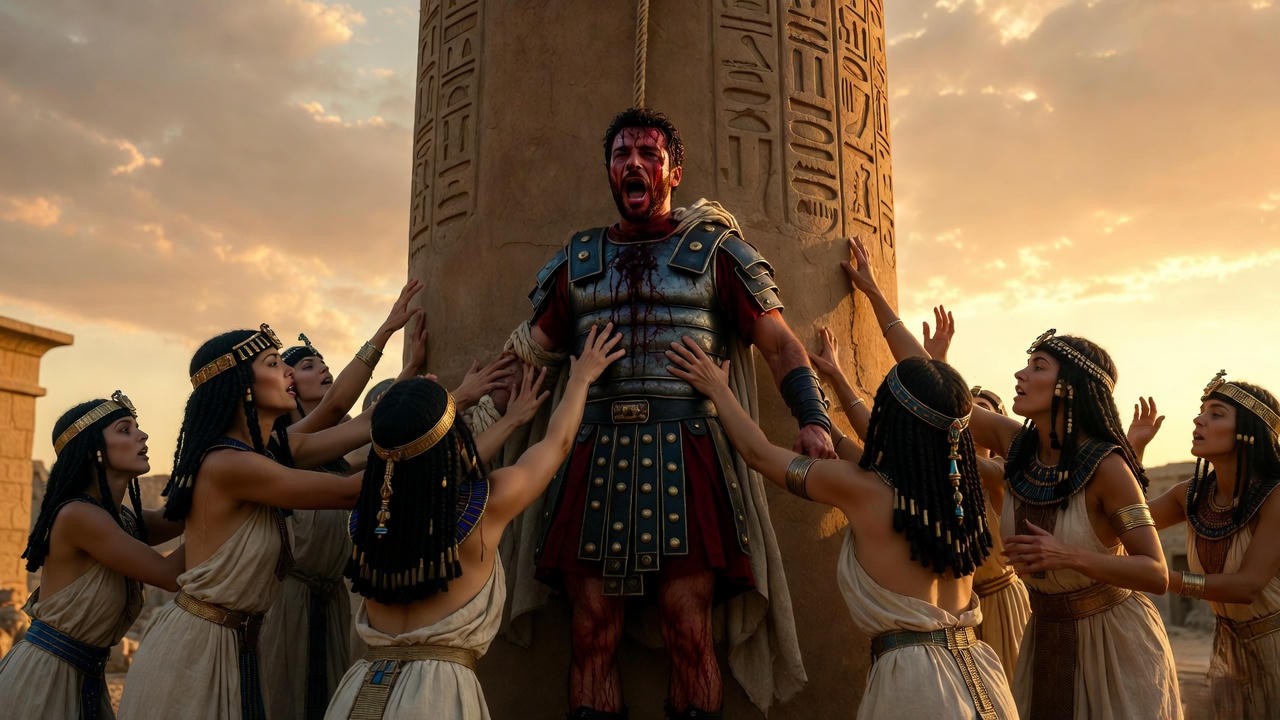
4.1–4.4 Rome/Alexandria Caesar rejects mercy. Antony prepares for one last battle.
4.12 Alexandria Antony watches Cleopatra’s ships surrender and believes she has betrayed him.
4.14 Antony’s attempted suicide Misinformed that Cleopatra is dead, Antony falls on his sword but botches it. Carried to Cleopatra’s monument, he dies in her arms — one of the longest death scenes in Shakespeare.
4.15 Cleopatra’s monument Cleopatra’s grief: “The crown o’ th’ earth doth melt.”
Act 5 – The Queen’s Finale
5.1 Caesar’s camp Caesar pretends mercy but plans to parade Cleopatra in Rome.
5.2 Cleopatra’s monument The play’s emotional and theatrical climax. Cleopatra dreams of “an Emperor Antony,” rejects humiliation, dresses in royal robes, and dies by asp with Charmian and Iras. Caesar’s final tribute: “she shall be buried by her Antony… No grave upon the earth shall clip in it / A pair so famous.”
Key Turning Points & Why the Tragedy Feels Inevitable
Shakespeare structures Antony and Cleopatra so that every apparent recovery is actually another step toward the abyss. Here are the five irreversible moments that lock the protagonists into their tragic trajectory:
- Act 2, Scene 2 – The marriage to Octavia Antony believes he can have both worlds: Egypt’s passion and Rome’s stability. The audience already knows from the Soothsayer (2.3) and from Enobarbus’ private aside that this is impossible. The marriage is the first public lie that cannot be undone.
- Act 3, Scene 7 – Cleopatra’s decision to fight by sea at Actium Every experienced soldier (Canidius, Enobarbus, even a random soldier) begs Antony to fight on land, where he is unbeatable. Cleopatra’s insistence on a naval battle is not just vanity — it is the moment Egypt’s theatrical values literally steer Rome’s military destiny.
- Act 3, Scene 10 – Antony flees the Battle of Actium “All is lost!” When Antony follows Cleopatra’s fleeing flagship, he ceases to be the Roman Hercules and becomes, in his own words, “a doting mallard.” This single act destroys his reputation forever in the eyes of his men and of history.
- Act 4, Scene 12 – Antony believes Cleopatra has betrayed him The false report of her death pushes him to suicide. Even when the mistake is corrected, the damage is done: once the sword is drawn, Roman honour demands he finish the job badly.
- Act 5, Scene 2 – Cleopatra refuses Caesar’s offer of life Caesar thinks he has won; Cleopatra turns defeat into the ultimate victory of self-authored myth. By choosing the asp, she denies Rome the spectacle of a captive queen and instead creates the immortal image of “marble-constant” love.
These five beats form a perfect tragic staircase: each step is chosen freely, yet each makes the next inevitable.
Character Arcs: From Heroes to Monuments
Mark Antony Begins as the triple pillar of the world transformed into a strumpet’s fool (1.1), yet ends as a tragic colossus. His arc is not simple decline; it is a deliberate rejection of Roman identity. The man who once conquered kingdoms now measures greatness by Cleopatra’s embrace. His botched suicide — falling on his sword yet living long enough for a final reunion — is both pathetic and sublime, the ultimate proof that he is no longer master of his own story.
Cleopatra The most complex female role Shakespeare ever wrote. She begins as a manipulative seductress (“If you find him sad, / Say I am dancing”), yet ends as tragic artist and political genius. Her final scene is a carefully staged piece of performance art: royal robes, the crown, the asp hidden in figs. She dies not as a defeated queen but as Isis reborn, ensuring that posterity will speak of her exactly as she wishes.
Octavius Caesar The coldest victor in Shakespeare. He never raises his voice, never loses control, and never shows genuine emotion. His triumph is the birth of the Roman Empire and the death of republican freedom. Shakespeare subtly invites us to admire his efficiency while recoiling from his inhumanity.
Enobarbus The moral barometer of the play. His desertion in 4.5 and subsequent death from heartbreak (“I am alone the villain of the earth”) is one of the most devastating sub-plots in all Shakespeare — a rational man destroyed by loyalty to an irrational master.
Famous Speeches & Why They Still Destroy Audiences
- Enobarbus’ barge speech (2.2.201–228) Possibly the most sensual description in English literature. Directors often dim the lights and let the verse itself become the spectacle.
- Antony: “The crown o’ th’ earth doth melt” (4.15) A 40-line farewell to life that moves from cosmic despair to tender intimacy. Ralph Fiennes (1999 film) and Patrick Stewart (2006 RSC) both reduced audiences to silence with it.
- Cleopatra: “I dreamt there was an Emperor Antony” (5.2.75–91) A speech that transcends grief and becomes a love poem to infinity. When performed by Harriet Walter (2018 National Theatre), Helen Mirren (1999 TV), or Judi Dench (1987 National Theatre), it is routinely cited as one of the greatest moments in modern theatre.
Common Misconceptions & Exam/Student Mistakes
- Misconception 1: It’s primarily a love story Wrong. Love is the catalyst, but the tragedy is political and existential.
- Misconception 2: Cleopatra dies twice She only feigns death once (reported falsely to Antony). She dies once, magnificently.
- Misconception 3: The play has no hero It has two — and they are both flawed, ageing, and gloriously human.
- Misconception 4: The historical events are accurate Shakespeare compresses nine years into months and invents the entire Actium betrayal sequence for dramatic effect.
Further Reading & Viewing Recommendations
Best Editions
- Arden Shakespeare (Third Series) – Aneta Mancewicz, 2022: superb historical notes
- Oxford Shakespeare – Michael Neill: best introduction and performance history
- Folger Shakespeare Library edition: ideal for students
Top Productions (in order of recommendation)
- RSC 2017 – Josette Simon & Antony Byrne (available on BBC iPlayer until 2026)
- National Theatre 2018 – Ralph Fiennes & Sophie Okonedo (NT at Home)
- Globe 2014 – Eve Best & Clive Wood (Globe Player – purest text)
- 1972 Charlton Heston film – underrated, faithful, gorgeous Egyptian locations
- 1999 BBC TV – Alan Bates, Frances Barber (best Enobarbus on film)
Audio
- Arkangel full-cast recording (with David Harewood & Estelle Kohler)
- Naxos AudioBooks – Harriet Walter’s 2021 reading of Cleopatra’s final scene is definitive
FAQs
What is the basic plot of Antony and Cleopatra? After Julius Caesar’s assassination, Mark Antony rules the Eastern Roman Empire and falls passionately in love with Egyptian Queen Cleopatra. Their affair weakens Antony’s alliance with Octavius Caesar, leading to civil war, the catastrophic Battle of Actium, and the lovers’ spectacular suicides.
How does Antony die in the play? He falls on his own sword after falsely hearing Cleopatra is dead, but the wound is not immediately fatal. He is hoisted up to her monument and dies in her arms.
Is Cleopatra portrayed as Black in Shakespeare’s play? Shakespeare never specifies skin colour. Contemporary descriptions emphasise her charisma and “infinite variety” rather than race. Modern productions reflect diverse casting choices (Kim Cattrall, Josette Simon, Sophie Okonedo, etc.).
Why is Antony and Cleopatra so rarely performed? 42 scenes, 34 speaking parts, constant location shifts, and the emotional marathon of the final act make it extraordinarily demanding. Yet when it works, it is unforgettable.
What are the major themes? Love vs. empire, public duty vs. private desire, the performance of power, East vs. West, ageing, and the creation of immortal myth.
How long is a performance? Full text: 4+ hours. Modern productions usually run 3–3.5 hours with cuts.
Which characters are historical? Almost all principal characters are real figures from Plutarch, though Shakespeare alters timelines and motives for dramatic effect.
Why Antony and Cleopatra Is Shakespeare’s Most Adult Tragedy
No teenagers here, no fairies, no ghosts walking at midnight. Just two middle-aged world leaders who have everything — and choose to burn it all down for one more night of transcendent passion. In an era of carefully curated political images, Antony and Cleopatra remains shockingly modern: a reminder that empires can fall not from external invasion but from the uncontrollable human heart.