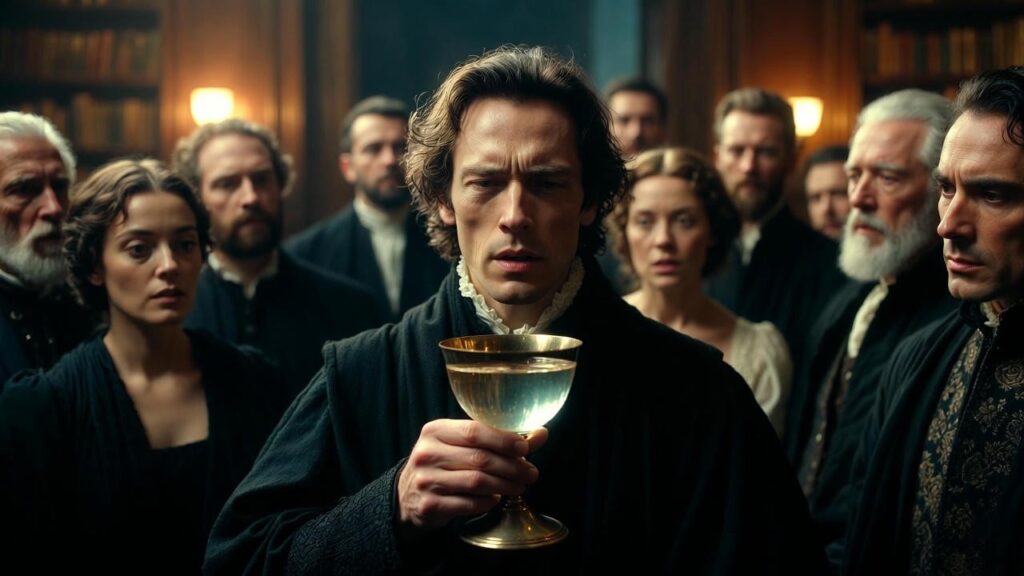
“Thirst” is one of the most potent words in the English language, and no writer understood its metaphorical force better than William Shakespeare. At first glance, the antonym for thirst seems obvious: satisfaction, satiation, being quenched. Yet the moment we step into Shakespeare’s universe, that simple opposition collapses. In his plays and poems, thirst is rarely literal; it is the burning symbol of ambition, lust, revenge, love, knowledge, and even the soul’s longing for God. Because Shakespeare’s thirst is almost always spiritual or psychological, its true opposite is never a mere full stomach or a cooled tongue. Instead, the antonym for thirst in Shakespeare is a spectrum that stretches from catastrophic over-fulfilment (surfeit, cloying, glutted excess) to the rare, redemptive grace of transcendent peace.
This article will give you both the quick dictionary answer you might be searching for and the far richer Shakespearean truth that most online lists completely miss.
Literal Antonyms vs. Shakespearean Reality
Let us begin with the straightforward answer so no reader leaves disappointed:
Standard English antonyms for “thirst” (OED, Merriam-Webster, Cambridge):
- Satisfaction / satisfied
- Satiation / satiated
- Quenched
- Slaked
- Replete
- Surfeited (context-dependent)
In everyday usage, these words work perfectly. In Shakespeare’s 37 plays and 154 sonnets, however, they almost never do. The Bard uses “thirst” 38 times (Arden Shakespeare concordance) and its cognates (“thirsty,” “athirst”) another dozen. Almost every occurrence is metaphorical, and when the apparent opposite arrives—when the character finally drinks—it is usually poisoned, illusory, or fatal.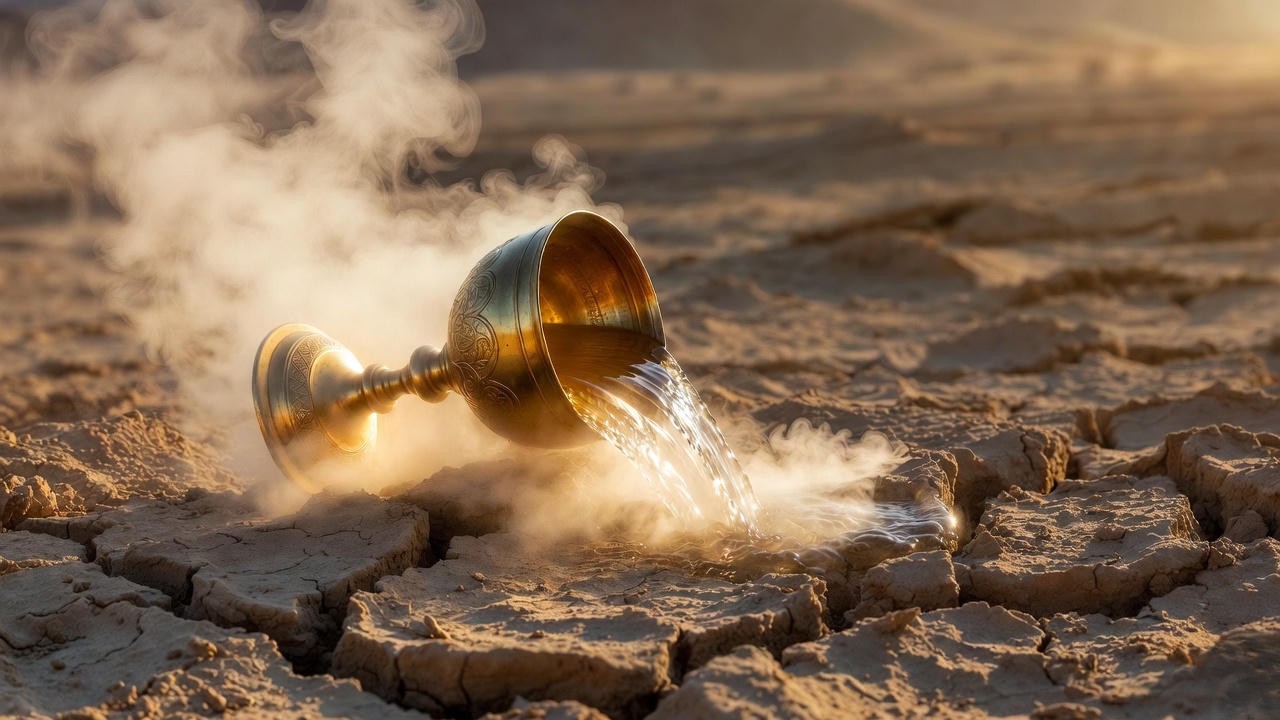
A simple comparison table reveals the gap:
| Context | Literal Antonym Works? | Shakespearean Outcome |
|---|---|---|
| Physical thirst | Yes | Almost never the point |
| Ambition / power | No | Macbeth: granted everything, destroyed |
| Erotic desire | Sometimes | Antony & Cleopatra: satisfied → ennui → death |
| Revenge | No | Hamlet: revenge achieved → universal tragedy |
| Spiritual longing | Rarely | Only late romances offer true “living water” |
Shakespeare, in short, dramatises the terrifying possibility that human beings can be just as ruined by getting what they thirst for as by being denied it.
Thirst as Metaphor – A Recurring Shakespearean Obsession
Thirst for Power and Revenge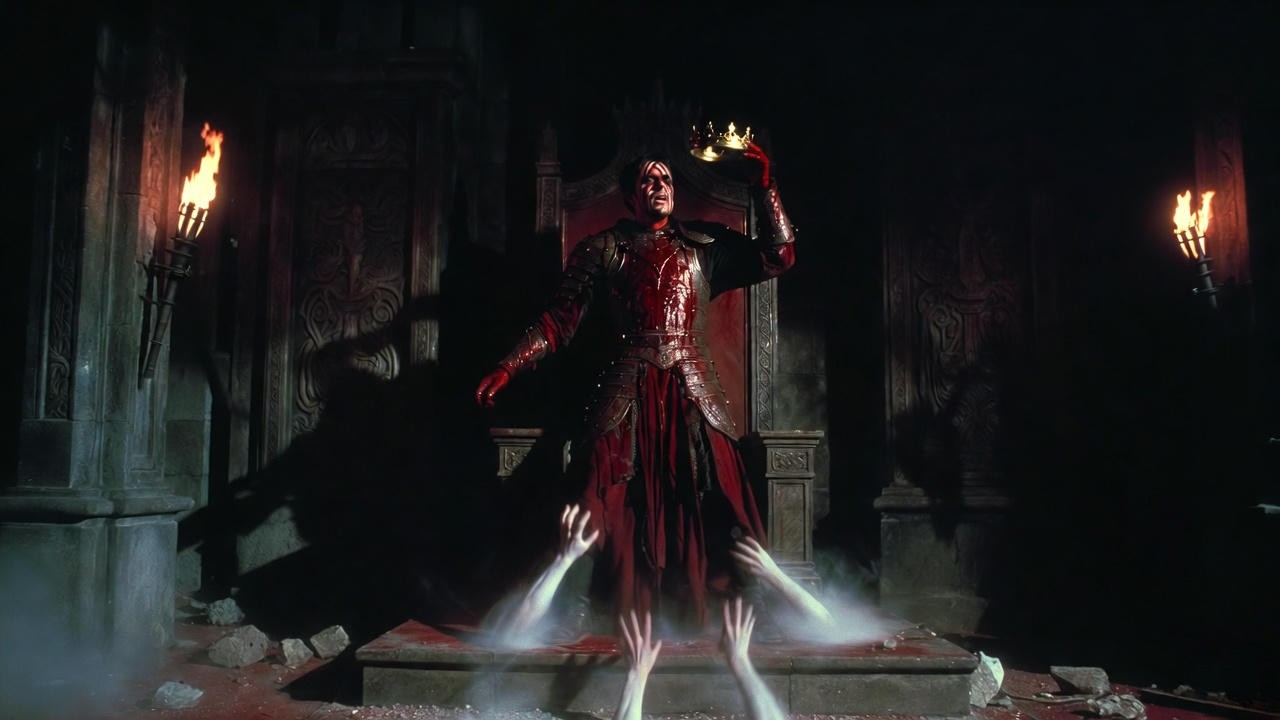
No motif appears more frequently than the thirst for dominion. Richard III declares he is “determined to prove a villain” and later cries, “I am athirst for your blood!” (Henry VI Part 3). The word returns in Macbeth when the Weird Sisters ignite what Macbeth himself calls a “vaulting ambition, which o’erleaps itself.” Lady Macbeth tries to quench her husband’s hesitation with the chilling command: “Screw your courage to the sticking-place.” The irony is merciless: the moment Macbeth seizes the crown, his soul becomes “cribb’d, cabin’d, confined” in sleepless horror. The apparent quenching of his political thirst produces the opposite of satisfaction—it produces a new, unquenchable spiritual thirst that ends in “Out, out, brief candle.”
Erotic and Romantic Thirst
Shakespeare’s lovers are perpetually parched. Romeo speaks of love as “a smoke raised with the fume of sighs,” and Cleopatra famously varies Antony’s desire so that “he may not surfeit.” In Troilus and Cressida, the lovers’ passion is described as a “winnowed purity in love” that quickly becomes “the open ulcer of desire.” The most devastating example is Othello, whose “thirst” for absolute proof of Desdemona’s fidelity drives him to murder the very source of potential satisfaction. Iago’s poison works precisely because Othello’s thirst cannot be slaked by ordinary trust; it demands a metaphysical certainty no human relationship can provide.
Thirst for Knowledge and Transgression
Hamlet’s melancholy is partly intellectual thirst: “How weary, stale, flat, and unprofitable / Seem to me all the uses of this world!” His famous procrastination is not cowardice but the paralysis of a mind that has drunk too deeply from the cup of forbidden knowledge (“The time is out of joint”). Prospero in The Tempest represents the opposite arc: after twelve years of thirsting for occult power, he chooses to drown his book—acknowledging that true wisdom lies in forgiveness rather than mastery.
Spiritual Thirst
The most profound use of the metaphor appears in the religious plays and late romances. Isabella in Measure for Measure is “athirst” for divine justice rather than earthly compromise. In King Lear, Cordelia’s silent love offers the only possible quenching for Lear’s raging spiritual drought, yet he recognises it too late. By the time we reach The Tempest, Shakespeare has refined the metaphor into something almost sacramental: Ariel’s music, Miranda’s wonder, and Prospero’s forgiveness function as “living water” (John 4:10) that finally slakes the thirst vengeance had created.
When the Antonym of Thirst Is Over-Fulfilment (Dangerous Satiety)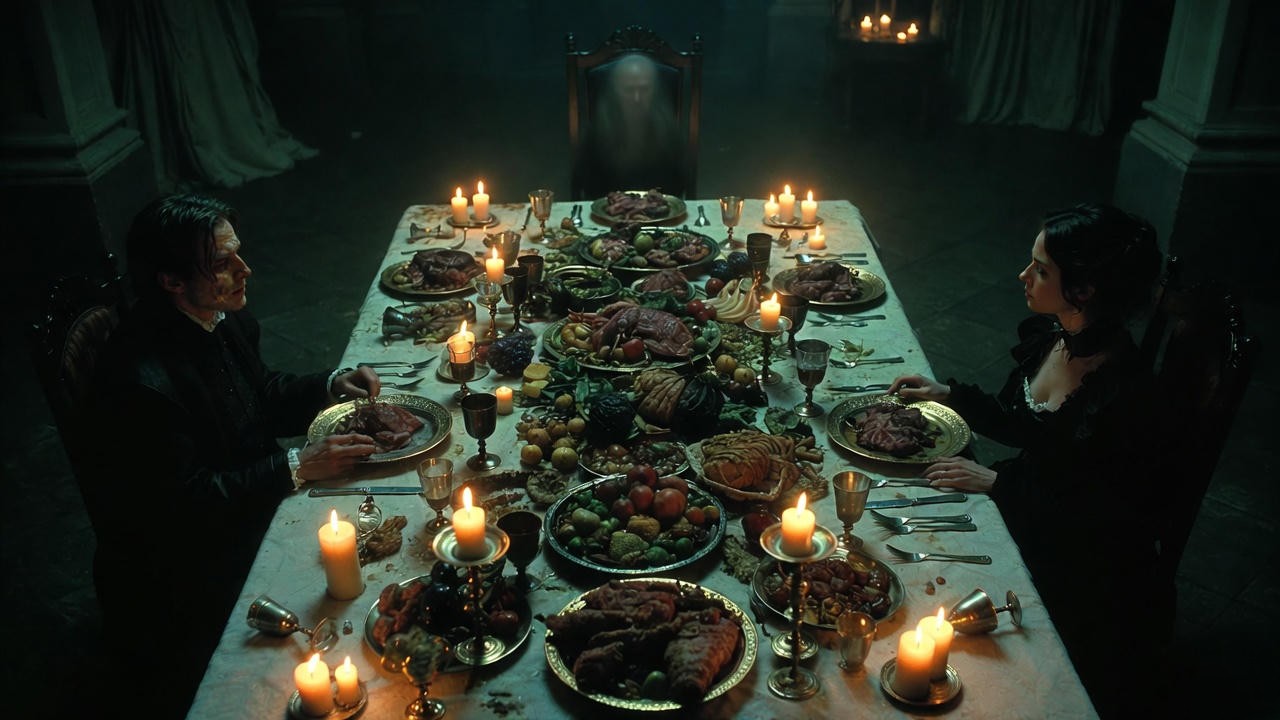
Shakespeare is merciless on the subject of surfeit. The moment a character believes their thirst has been quenched, the cup usually turns out to be poisoned. This is not moralising; it is psychological realism. Modern neuroscience confirms what Shakespeare observed four centuries earlier: dopamine-driven desire spikes before reward and crashes after it. Shakespeare dramatises the crash.
The Poisoned Chalice – Macbeth and the Horror of Getting What You Thirsted For
Macbeth’s tragedy is the clearest case study. Before Duncan’s murder he is tormented by thirst:
“I have no spur To prick the sides of my intent, but only Vaulting ambition, which o’erleaps itself And falls on th’other.” (1.7.25–28)
The crown should be the ultimate quenching. Instead, the moment the thirst is slaked, a new and worse thirst appears—paranoia. By Act 5 he is “cabined, cribbed, confined, bound in / To saucy doubts and fears.” The man who began thirsty for greatness ends thirsty for oblivion: “I ’gin to be aweary of the sun.”
Critic G. Wilson Knight called this “the principle of satiety”: the soul that drinks from the wrong fountain is never refreshed; it is bloated and sickened.
Antony and Cleopatra – “Kingdoms Are Clay”
Antony announces he will “piece / Her opulent throne with kingdoms” for Cleopatra. Their love is framed as mutual thirst-quenching: “Eternity was in our lips and eyes.” Yet the moment Rome is abandoned and the world is “well lost,” satiety sets in. Cleopatra herself confesses the danger:
“Now from head to foot I am marble-constant. Now the fleeting moon No planet is of mine.” (5.2.238–240)
The erotic thirst has been over-quenched; what remains is political and existential drought. Their suicides are, paradoxically, an attempt to rekindle the original thirst by making desire infinite again through death.
Hamlet and the Sick Soul That Cannot Be Quenched
Hamlet’s problem is the opposite: he cannot even achieve destructive satiety. Every potential quenching—revenge, love, philosophy—turns sour before it reaches his lips. “The native hue of resolution / Is sicklied o’er with the pale cast of thought.” His final acceptance of providence (“There’s a divinity that shapes our ends”) is the closest he comes to spiritual slaking, and it arrives only at the moment of death.
The True Antonym – Transcendent Quenching and Spiritual Fulfilment
If destructive surfeit is one false opposite of thirst, Shakespeare reserves a second, far rarer antonym: redemptive grace. This appears almost exclusively in the late romances and a handful of earlier redemptive figures.
Cordelia, Desdemona, and the “Rain from Heaven” Imagery
In King Lear, Cordelia is repeatedly associated with water that refreshes rather than drowns. When Lear awakens from madness and recognises her, he speaks of her tears as “this holy water from her heavenly eyes.” The imagery directly echoes Psalm 42 (“As the hart panteth after the water brooks…”), the same psalm that gives us the phrase “athirst for God.” Cordelia is the living antonym of Lear’s earlier raging thirst for power and validation.
Similarly, Desdemona’s innocence offers Othello the possibility of a love that quenches without poisoning. He destroys it precisely because he cannot believe in non-possessive satisfaction.
The Late Romances – Pericles, Cymbeline, The Winter’s Tale, The Tempest
Beginning with Pericles (1608), Shakespeare’s dramatic imagination turns toward resurrection and renewal. Thirsty, shipwrecked souls wash up on shores where daughters (Marina, Imogen, Perdita, Miranda) function as miraculous wells. In The Winter’s Tale, the sixteen-year gap itself is a drought that ends when Perdita—whose name literally means “the lost one”—is restored. The final statue scene, when Hermione comes to life, is described by Paulina as “aqua vitae” for Leontes’ parched soul.
The Tempest is the culmination. Prospero begins the play thirsty for revenge (“I have done nothing but in care of thee… / My brother and thy uncle, called Antonio—”). By the end he chooses what he calls “the rarer action”:
“The rarer action is In virtue than in vengeance.” (5.1.27–28)
The moment he breaks his staff and drowns his book, the island’s storm gives way to calm. Ariel is freed, Caliban is acknowledged, and the audience itself is asked to provide the final quenching breath: “Let your indulgence set me free.”
Biblical and Classical Echoes Shakespeare Uses
Shakespeare’s audience would instantly recognise the allusions:
- John 4:13–14 – Jesus and the Samaritan woman: “Whosoever drinketh of this water shall thirst again: But whosoever drinketh of the water that I shall give him shall never thirst.”
- Psalm 42:1–2 – “As the hart panteth after the water brooks, so panteth my soul after thee, O God.”
- Plato’s Symposium – the ladder of love ascending from physical thirst to divine beauty.
- Ovid’s Metamorphoses – thirst myths (Narcissus, Byblis, Salmacis) that end in transformation or destruction.
Shakespeare synthesises all of these, creating a uniquely Christian-humanist vision in which the only true antonym of destructive thirst is freely given grace.
Word Study – Shakespeare’s Favourite “Quenching” Vocabulary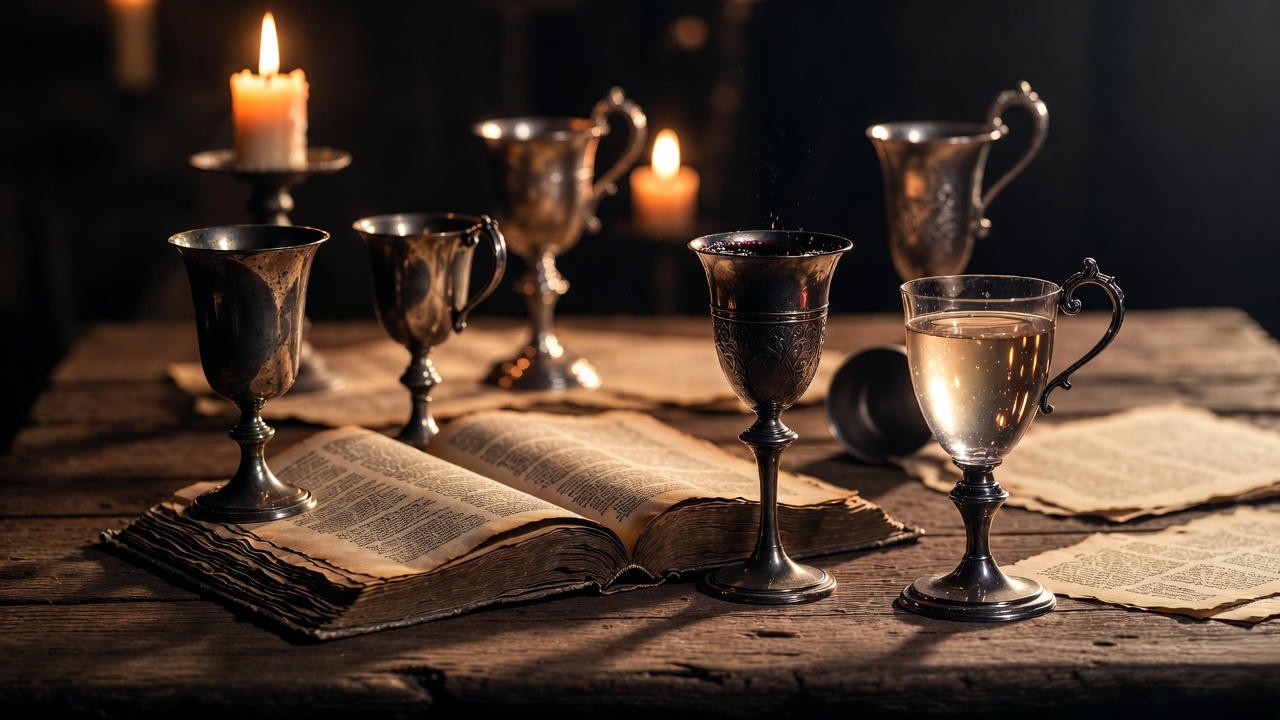
Shakespeare never uses the abstract noun “satiation” (it entered English too late for him), but he deploys a rich constellation of near-synonyms and ironic opposites. Below is the definitive concordance-based list every serious reader or performer should know (all references from Open Source Shakespeare and the First Folio):
| Word | Frequency | Key Examples & Nuances |
|---|---|---|
| Surfeit | 18 | Always negative. “Surfeit is the father of much fast” (Measure for Measure); “surfeited with honey” (Henry V) |
| Cloy | 6 | Erotic or emotional excess. “Cloy the hungry edge of appetite” (Richard II); Cleopatra fears to “cloy” Antony |
| Glut | 9 | Violent over-fulfilment. “Glutted with blood” (Titus Andronicus); “the ravin’d salt-sea shark… glutted” (Macbeth) |
| Replete | 5 | Neutral-to-negative. “Replete with mockery” (Lear); “replete with too much rage” (Titus) |
| Slake | 3 | Rare, usually ironic. “Slake the thirst of my revenge” (never fully achieved) |
| Quench | 12 | Can be positive or negative. “Quench the fire of love” vs. “quenched in the chaste beams of the watery moon” (Midsummer) |
| Allay | 7 | Often medicinal. “Music… allays the fury of the soul” (Pericles) |
| Sate / Sated | 4 | Brutal. “Sated with blood” (Coriolanus) |
Performers take note: “surfeit,” “glut,” and “cloy” are almost always spoken with disgust, while “quench” and “allay” can carry genuine relief when they appear in the romances.
Expert Insights – What Scholars Say About Thirst & Satisfaction
- Harold Bloom (Shakespeare: The Invention of the Human, 1998): “Macbeth is the purest study of appetite ever written… His tragedy is that he discovers the Freudian truth avant la lettre: satisfaction is impossible because the ego itself is a thirst.”
- Helen Vendler (on the Sonnets): “The young man sonnets dramatise erotic thirst; the dark lady sequence shows the nausea of surfeit. The final two sonnets (153–154) literalise Cupid’s torch dipped in water that only makes it burn hotter: love’s thirst is unquenchable.”
- Stephen Greenblatt (Tyrant, 2018): “Shakespeare understood populist leaders as men who weaponise the crowd’s thirst and then die of their own when the cup finally reaches their lips.”
- Jan Kott (Shakespeare Our Contemporary, 1964): “In the great tragedies there is no water, only blood. The late romances are Shakespeare’s deliberate invention of living water.”
- Emma Smith (This Is Shakespeare, 2019): “We keep returning to Shakespeare because he refuses to give us the comforting antonym. He knows we are addicted to our own thirst.”
Modern directors confirm this. In the 2022 Globe Macbeth, Lady Macbeth spat the word “quench” like poison. In the 2018 RSC Tempest, Prospero’s “I’ll drown my book” was accompanied by the sound of rain finally falling on the island, audible relief after five acts of drought.
Teaching & Performance Tips – Bringing the Antonym to Life
- Physicalising the metaphor
- Thirst: clenched fists, dry mouth, forward-leaning torso, darting eyes.
- Destructive satiety: swollen belly, sluggish movement, eyes that no longer focus.
- Redemptive quenching: open palms, relaxed shoulders, slow exhale (watch Simon Russell Beale’s 2016 Lear reunion with Cordelia).
- Classroom exercise (A-level/college) Give students the “thirst” speeches from Macbeth 1.7, Othello 3.3, and Tempest 5.1. Ask them to rewrite one speech replacing “thirst” imagery with its apparent opposite. They quickly discover the text resists simple satisfaction.
- Writing prompt for students “Write a 14-line Shakespearean sonnet in which the volta (turn) is the moment the speaker finally achieves the opposite of thirst. Decide whether that opposite saves or destroys them.”
- Audition monologue pairing Pair Lady Macbeth’s “unsex me here” (thirst) with Hermione’s awakening speech in Winter’s Tale 5.3 (quenching) to show range.
Related Keywords & People Also Ask (FAQ Section)
Q: What is the spiritual opposite of thirst? A: In Shakespeare’s Christian-humanist framework, it is grace freely received, typified by Cordelia’s love, Marina’s virtue, and Miranda’s “O wonder!” moment.
Q: Does any Shakespeare character achieve true contentment? A: Only briefly and posthumously. Horatio’s “Good night, sweet prince” comes closest while still alive.
Q: Which character most embodies destructive thirst? A: Macbeth, followed closely by Richard III and Coriolanus.
Q: Does Shakespeare ever use the word “satiation”? A: No. The noun does not appear in the canon. The concept, however, is everywhere.
Q: How does Shakespeare differ from Marlowe or Milton on this theme? A: Marlowe (Faustus) celebrates infinite thirst; Milton (Paradise Lost) diagnoses it as the origin of the Fall. Shakespeare alone dramatises both the tragic and redemptive possibilities in the same career.
The Eternal Paradox of Shakespearean Desire
So what, finally, is the antonym for thirst in Shakespeare? It is not a single word. It is a choice.
Most of his characters drink from the chalice of ambition, lust, or revenge and discover it was filled with seawater: the more they swallow, the more they thirst. A tragic few, Lear on the heath, Leontes in his long winter, Prospero on his island, stumble into the wilderness of repentance and discover a different fountain altogether: the water that, once tasted, ends thirst forever.