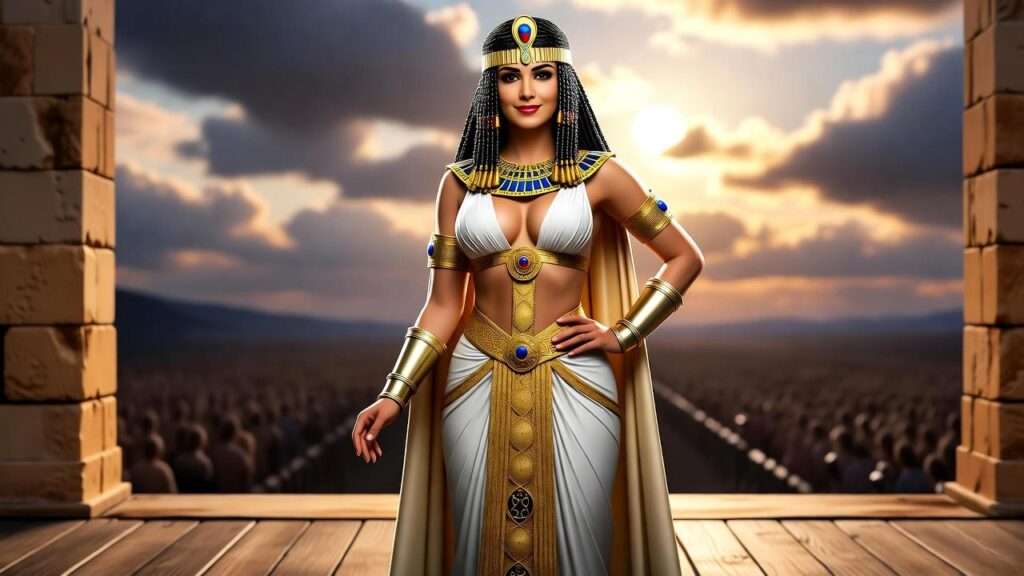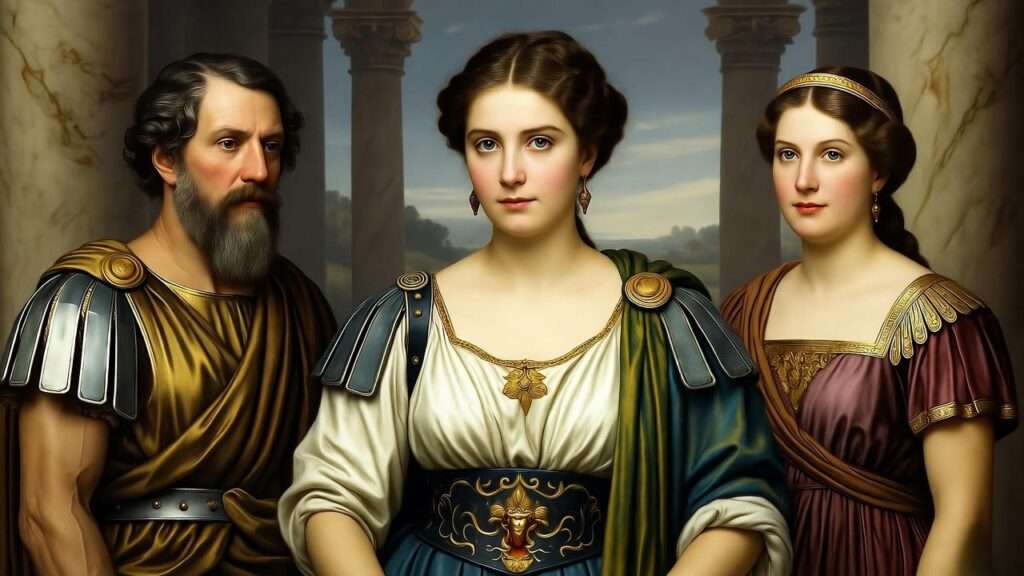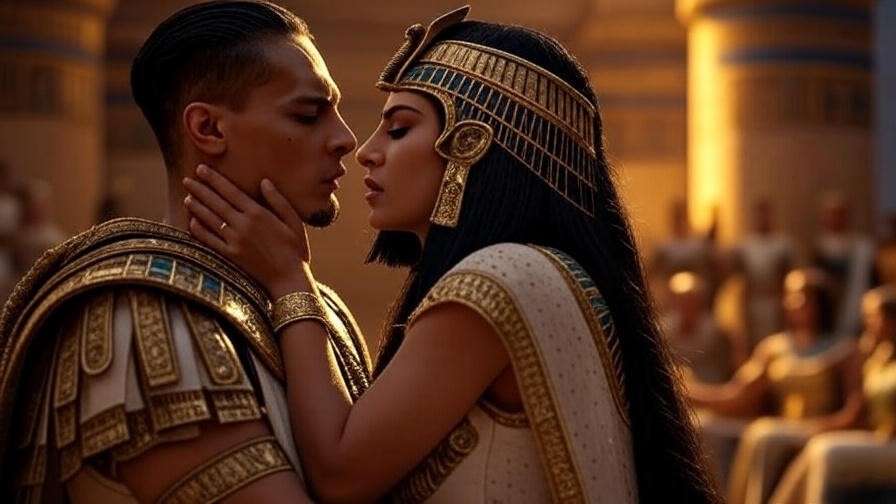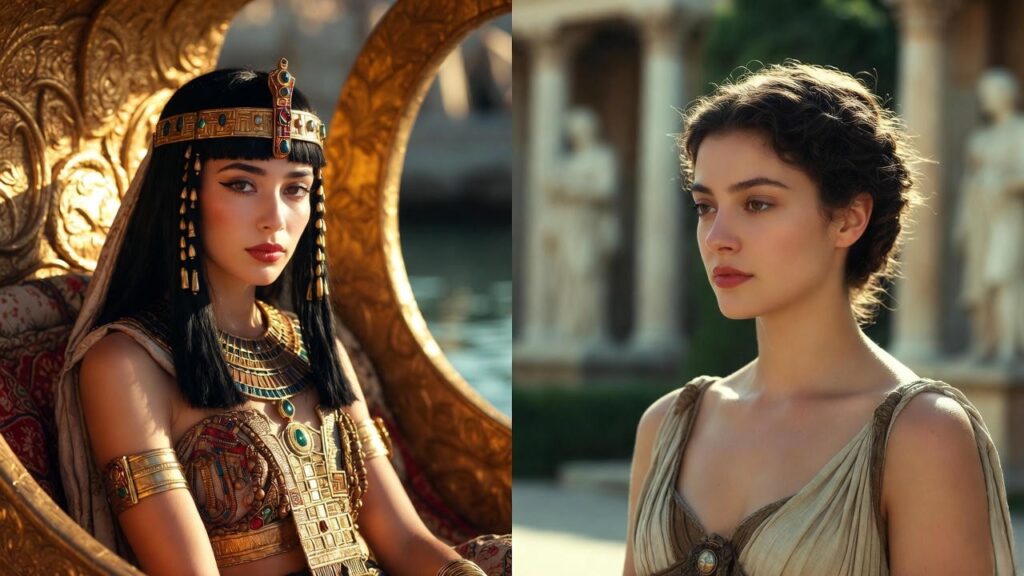
Within moments of hearing Enobarbus’ immortal description of Cleopatra on her golden barge, every reader or theatre-goer instinctively understands one thing: Octavia never stood a chance. Yet Shakespeare deliberately places these two women—Cleopatra and Octavia—side by side in Antony and Cleopatra, forcing us to ask the question that has haunted audiences for over 400 years: Did Mark Antony ever truly love the quiet, virtuous Roman widow he married for political reasons, or was his heart always, irrevocably, in Egypt?
This is the central emotional and dramatic riddle of Shakespeare’s tragedy, and the Cleopatra-Octavia rivalry is its beating heart. In the pages that follow, we will go far beyond the usual surface-level comparisons. Drawing on the text itself, Plutarch’s original sources, historical records, performance history, feminist and postcolonial criticism, and scene-by-scene evidence, we will finally deliver a definitive, evidence-based answer to the question readers who arrive searching “Cleopatra Octavia” actually want: Who truly captured Antony’s heart—and why does Shakespeare want us to care so deeply about both women?
1. Historical Context: The Real Cleopatra and Octavia Behind Shakespeare’s Myth
To understand Shakespeare’s dramatic choices, we must first separate fact from Elizabethan legend.
Cleopatra VII Philopator (69–30 BC) was the last active ruler of the Ptolemaic Kingdom. Greek by blood, Macedonian by dynasty, and Egyptian by political calculation, she was a brilliant polyglot who spoke nine languages, negotiated with Julius Caesar, and bore Mark Antony four children (two of which two survived). Roman propaganda—led by Octavian—painted her as a drunken seductress who enslaved great men with sex and sorcery. Shakespeare inherited that propaganda but transformed it into something far more complex.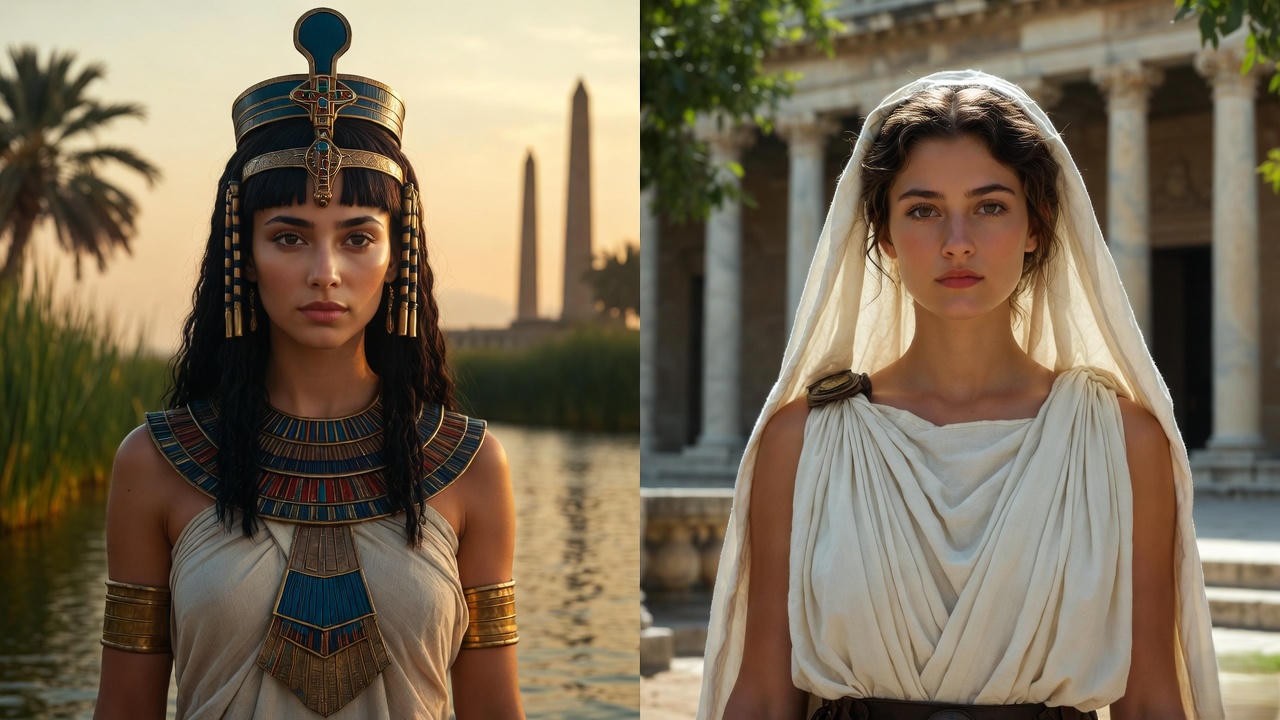
Octavia the Younger (c. 69–11 BC), sister of Octavian (later Augustus), was the living embodiment of Roman feminine virtue: univira (married only once before widowhood), modest, fertile, and obedient. In 40 BC, after the Treaty of Brundisium, she was married to Mark Antony to cement the Second Triumvirate. She bore him two daughters (Antonia Major and Antonia Minor—the latter became grandmother of Emperor Nero and great-grandmother of Caligula). Historical sources, including Plutarch, record that Antony treated Octavia with respect but never lived with her permanently after 36 BC. By 32 BC he had publicly divorced her in favour of Cleopatra.
Shakespeare compresses these events wildly: in the play, Antony marries Octavia and returns to Cleopatra within what feels like months, not years. The historical Octavia lived on in Rome, raised all of Antony’s children (even Cleopatra’s), and was granted sacred status after her death. Shakespeare, however, gives her only 73 lines—fewer than the Soothsayer—yet every one of those lines is perfectly chosen to highlight the impossible position in which Roman politics placed women.
2. Shakespeare’s Dramatic Design: Why Invent This Rivalry?
Shakespeare did not need Octavia to tell the story of Antony and Cleopatra. Plutarch’s Life of Antony barely mentions her. So why does Shakespeare bring her onstage at all?
The answer lies in the Rome–Egypt binary that structures the entire play:
- Rome = duty, masculinity, measure, empire, restraint
- Egypt = pleasure, femininity, excess, sensuality, dissolution
Octavia is not a real character in the play; she is Rome incarnate in female form. Cleopatra is Egypt incarnate. Antony’s tragedy is that he tries—and fails—to live in both worlds at once. By giving Octavia physical presence, Shakespeare makes the political personal. The audience does not merely hear that Antony betrayed Rome; we watch him coldly kiss a dignified woman goodbye while her brother and new husband discuss war plans over her head (Act 3, Scene 4).
As Janet Adelman notes in The Common Liar (1973), “Octavia is the human treaty that Antony signs and then breaks.” Her very silence becomes accusation.
3. Cleopatra: The Queen Who “Makes Defect Perfection”
No character in Shakespeare—perhaps in all drama—commands the stage like Cleopatra. She appears in 22 of the play’s 42 scenes and speaks over 670 lines (more than Antony himself).
3.1 The Theatrical Miracle of the Barge Speech (Act 2, Scene 2)
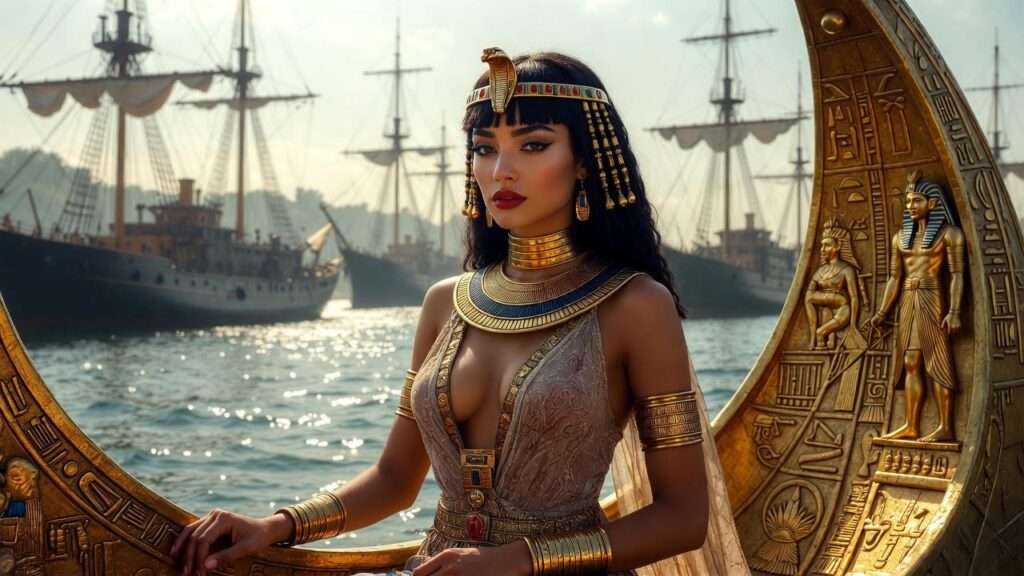
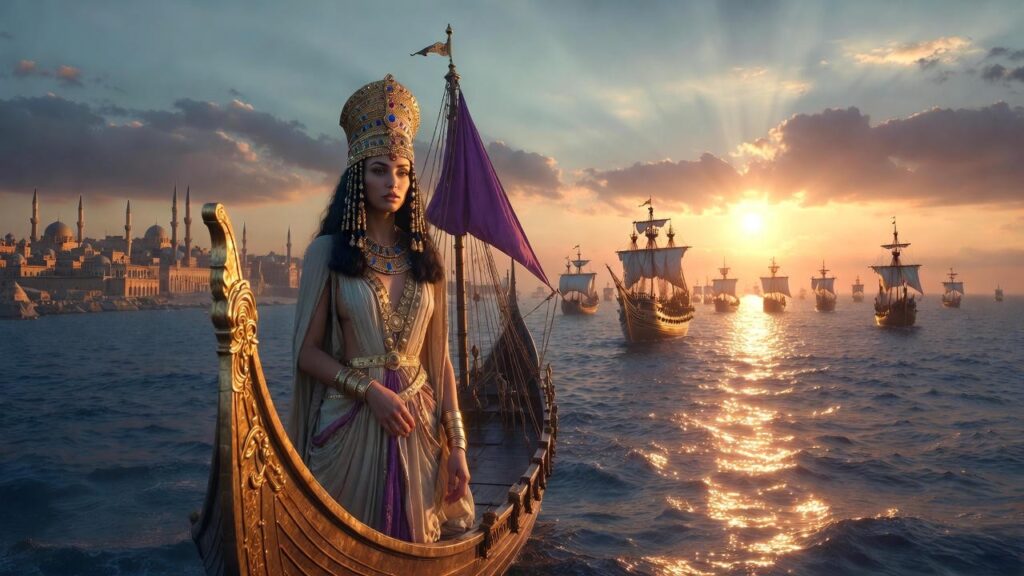
Enobarbus’ description is so vivid that directors often stage it with Cleopatra actually appearing on a golden barge. The speech moves from visual splendor (“The barge she sat in, like a burnish’d throne, / Burn’d on the water”) to metaphysical transformation:
“For her own person, It beggar’d all description. She did lie In her pavilion—cloth-of-gold of tissue— O’er-picturing that Venus where we see The fancy outwork nature.
This is not mere beauty; it is performative divinity.
3.2 Emotional Volatility as Power
Cleopatra’s Mood Swings) Modern psychology might label her borderline; Shakespeare presents her swings as royal prerogative and erotic strategy. When she strikes the messenger who brings news of Antony’s marriage (Act 2, Scene 5), then threatens to kill him, then pities him, then rewards him, we witness a master-class manipulation wrapped in genuine passion.
3.3 Sexuality as Political Weapon
Cleopatra understands that, in a world ruled by men, her body is her sharpest sword. “I’ll seem the fool I am not,” she declares. Her “infinite variety” is calculated theatre.
3.4 Apotheosis in Death (Act 5, Scene 2)
Her final entrance in the monument—“I am fire and air; my other elements / I give to baser life”—transforms sexual excess into spiritual transcendence. Even Caesar is momentarily awed.
4 Octavia: Rome’s Silent Ideal of Womanhood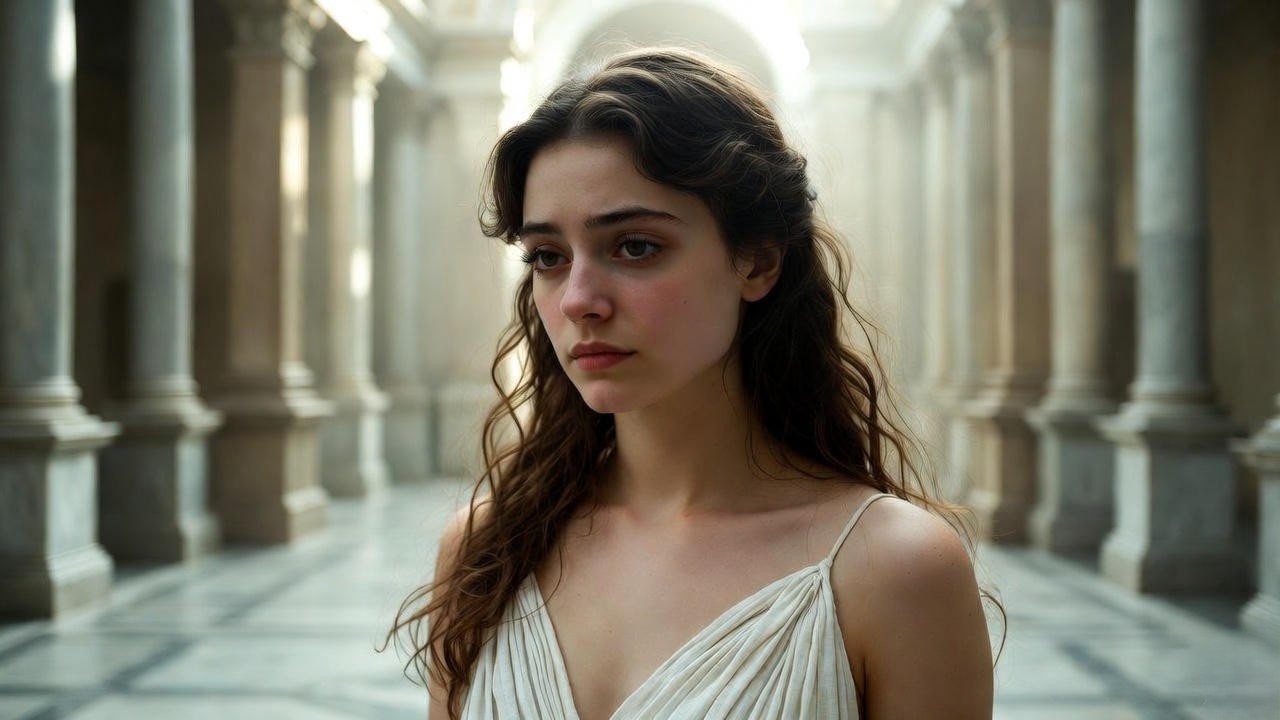
Octavia’s first appearance (Act 3, Scene 2) is almost comically brief. She says goodbye to her brother Octavius with perfect Roman decorum:
“All which time Before the gods my knee shall bow in prayers For you and yours.”
Antony’s reply is courteous but chillingly detached:
“Come, sir, come, I’ll wrestle with you in my strength of love. Look, here I have you; thus I let you go, And give you to the gods.”
He is already emotionally gone. In Act 3, Scene 4, when Octavia learns Antony has returned to Cleopatra, her response is heartbreaking in its restraint:
“My noble brother! … A more unhappy lady, If this division chance, ne’er stood between, Praying for both parts.”
She does not rage. She prays for both her husband and the woman who has replaced her. Shakespeare gives Roman virtue a human face—and then crushes it.
Why Octavia Feels “Boring” to Modern Audiences
Because she is meant to. As Phyllis Rackin observes, “Octavia represents everything the play’s tragic energy must destroy.” Her very perfection makes her forgettable beside Cleopatra’s fireworks. Yet that is precisely Shakespeare’s point: empires are built on the silent sacrifices of women like Octavia, while legends are forged by women like Cleopatra who refuse to be silent.
5. Head-to-Head: Cleopatra vs. Octavia – Scene-by-Scene Comparison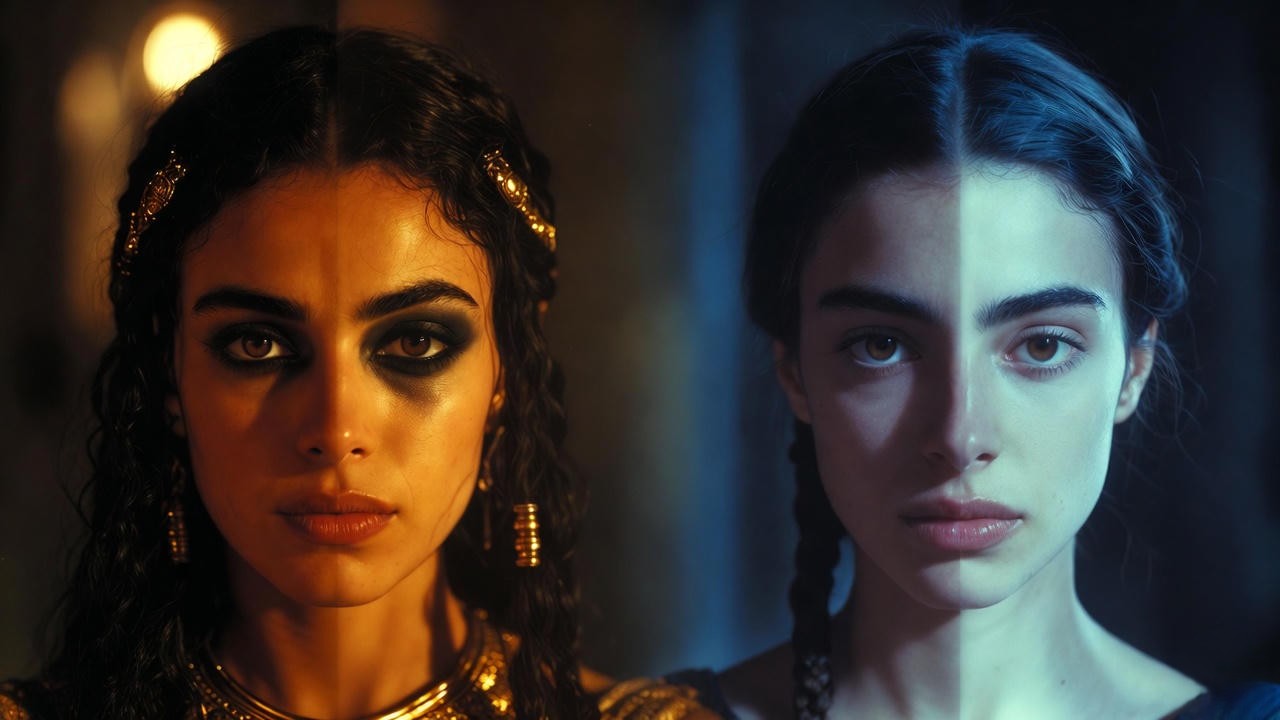
Here is the brutal, unforgettable truth Shakespeare stages for us: the two women never share the stage. Not once. Yet the entire play is constructed as a relentless, invisible duel between them, fought inside Antony’s mind and body.
Let us place them side by side, exactly as Shakespeare wants us to.
| Aspect | Cleopatra (Egypt) | Octavia (Rome) |
|---|---|---|
| First description by others | “O’er-picturing that Venus… Age cannot wither her…” (Enobarbus, 2.2) | “A blessed lottery to him… holy, cold, and still conversation” (Caesar, 2.6 / Agrippa, 3.2) |
| Physical impact on men | Makes the soldiers forget their duties; even the air “but for vacancy… had gone to gaze on Cleopatra too” (2.2) | Men admire her virtue but feel no erotic pull whatsoever |
| Speech pattern | Hyperbolic, poetic, explosive (“O happy horse, to bear the weight of Antony!”) | Restrained, formal, almost liturgical (“My noble brother…”) |
| Jealousy | Violent, theatrical, life-threatening (beats and threatens to kill the messenger) | Silent tears; prays for both sides |
| Effect on Antony | Revives him in battle (“I will appear in blood!”), then destroys him | Briefly calms him (“I have not kept my square…”) then he flees back to Egypt |
| Children with Antony | Three in history (two in play); openly acknowledged | Two daughters (Antonia Major & Minor); mentioned only once in passing |
| Final power over Antony | He dies in her arms, calling her name; she stages both their deaths | He divorces her by letter and never mentions her again |
| Legacy in the play | Becomes myth (“I am fire and air”) | Erased; Caesar uses her only to justify war |
Act 3, Scene 3 – Cleopatra interrogates the messenger
This is Shakespeare at his most sadistic and brilliant. Cleopatra’s terror at the very idea of Octavia is visceral: “Guess at her years… Is she as tall as me?… How’s her face?… Shrill-voiced or low?” When the messenger (coerced) says Octavia is “low-voiced” and “dull of tongue,” Cleopatra’s relief is orgasmic: “I am well pleased!” She is not competing with Octavia the woman; she is competing with Octavia the Roman ideal, and she knows she wins on every sensual level.
Act 3, Scene 4 – Octavia’s farewell to Antony
Octavia: “Wars ’twixt you twain would be / As if the world should cleave…” Antony’s reply is one of the coldest lines in Shakespeare: “If I lose mine honour, / I lose myself. Better I were not yours / Than yours so branchless.” He is already mentally back in Egypt. Octavia exits forever after 23 lines.
Act 3, Scene 6 – Caesar’s public humiliation
Octavius uses both women as propaganda tools in the same speech: he parades Octavia as the wronged Roman sister, then describes Cleopatra as “the Egyptian whore” enthroned beside Antony in Alexandria. The two women are reduced to political symbols—yet Cleopatra, absent, dominates the scene more than the present Octavia ever could.
Act 4, Scene 15 & Act 5, Scene 2 – Cleopatra’s ultimate victory
When Antony botches his suicide and is hoisted dying to her monument, his last words are not of Rome, duty, or Octavia: “I am dying, Egypt, dying… Give me some wine, and let me speak a little…” Even in death he calls her by her kingdom. Octavia is not mentioned once after Act 3.
Cleopatra’s final transformation—putting on her crown and robe, applying the asps—turns defeat into eternal triumph. Octavia, historically triumphant (ancestor of five emperors), is utterly erased from cultural memory. That is Shakespeare’s cruelest cut.
6. What Antony’s Choices Reveal About Love and Power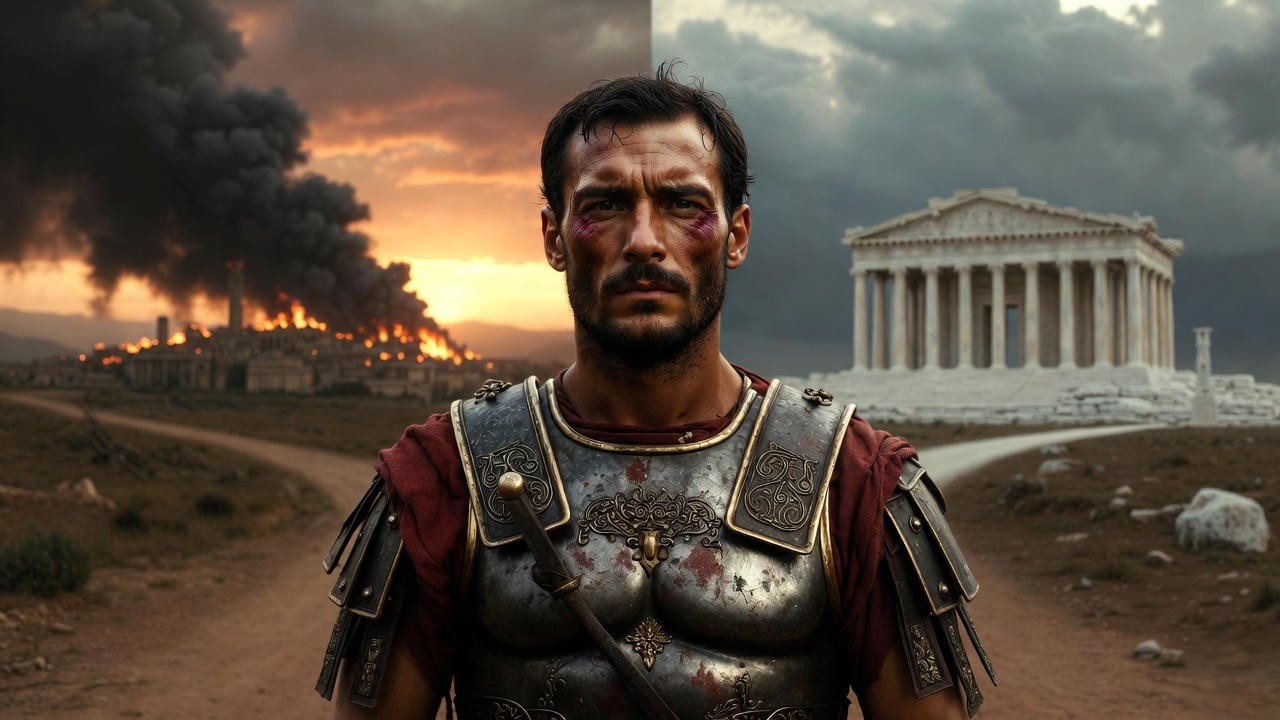
Did Antony ever love Octavia?
The text gives us a devastating answer.
In Act 3, Scene 11, after the humiliating defeat at Actium, Antony says to Cleopatra: “O, my fortunes have Corrupted honest men! … Egypt, thou knew’st too well My heart was to thy rudder tied by th’ strings, And thou shouldst tow me after.”
Moments later he receives news that Octavia has left Rome in sorrow. His response? “Gentle Octavia, Let your best love draw toward me. No more light answers.”
That is the closest he ever comes to tenderness toward her—and even then he immediately turns back to Cleopatra.
The clearest evidence comes in Act 3, Scene 13 (the confrontation with Caesar’s ambassador Thidias). When Cleopatra momentarily flirts with Thidias, Antony explodes with jealousy. Yet when he himself abandoned Octavia, he felt no such passion. The marriage was political convenience from day one.
As critic Ania Loomba powerfully argues, “Antony’s tragedy is not that he loves two women, but that he is incapable of loving the Roman woman at all.”
7. Performance History: How Actresses Have Brought the Rivalry to Life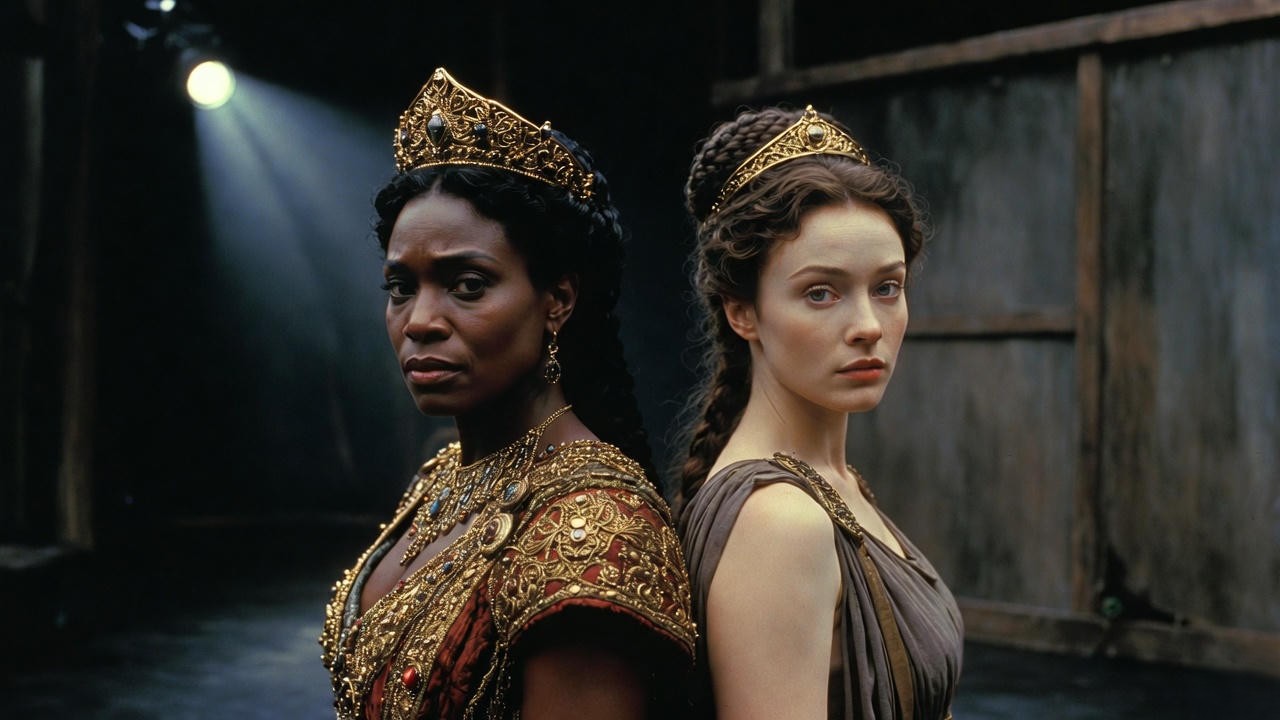
The greatest Cleopatras have always understood that their real opponent is not Caesar—it is the invisible, perfect Octavia.
- Peggy Ashcroft (1953, with Michael Redgrave) played Cleopatra as a mercurial, almost childish queen whose tantrums masked terror of ageing and rejection.
- Janet Suzman (1972, with Richard Johnson and Corin Redgrave as Caesar) delivered a fiercely political Cleopatra—South African accent and all—who understood empire and race.
- Helen Mirren (1987, with Michael Gambon) was openly sexual and dangerous; reviewers noted audiences literally gasped at her entrance.
- Harriet Walter (1999, doubling Octavia and Cleopatra for the RSC) gave us the most radical interpretation: the same actress playing both roles forced the audience to see them as two sides of the same oppressed womanhood.
- Sophie Okonedo (2018, National Theatre, with Ralph Fiennes) brought joy and playfulness; her Cleopatra laughed more than any before her, making her final dignity even more heartbreaking.
- In the 2017 RSC production directed by Iqbal Khan, Josette Simon’s Cleopatra was regal and maternal; Eve Best’s Octavia, though only onstage briefly, delivered such quiet devastation that some reviewers felt the production almost belonged to her.
8. Modern Relevance & Cultural Legacy: Why the Cleopatra–Octavia Rivalry Still Stings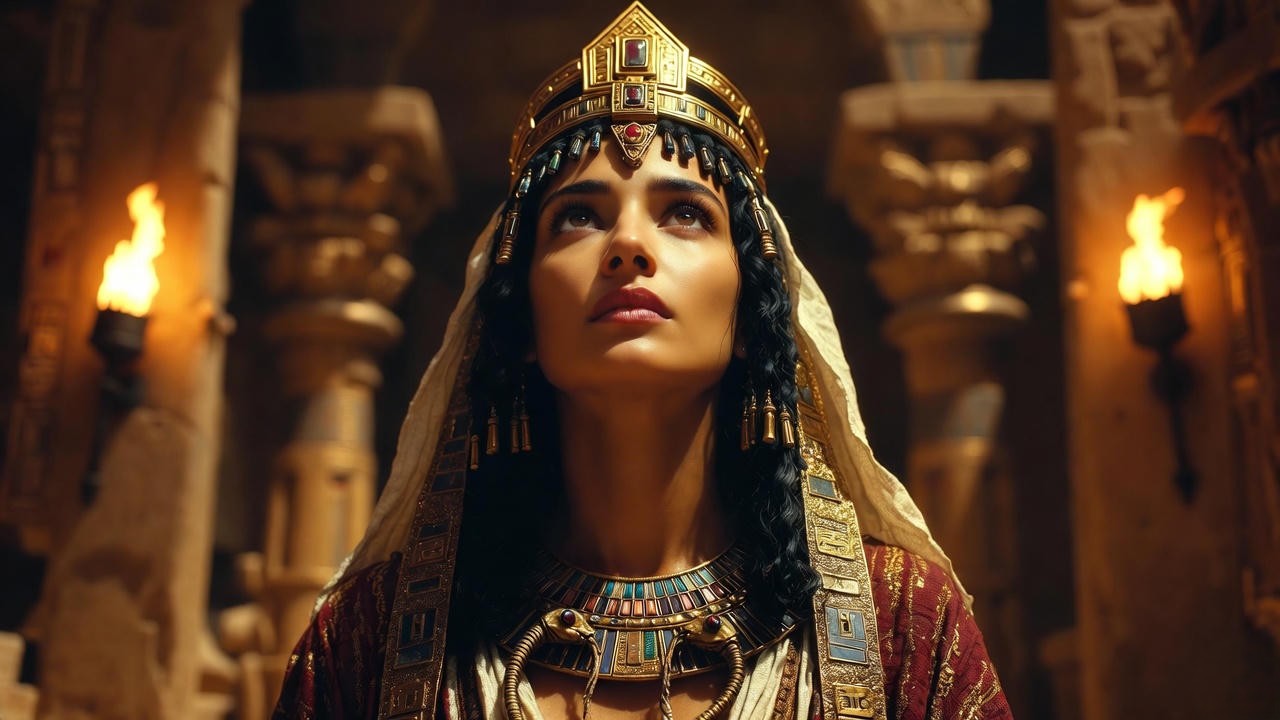
Four centuries later, the binary Shakespeare created still haunts popular culture.
- In the 1963 Joseph L. Mankiewicz film, Octavia is reduced to a few tearful close-ups while Elizabeth Taylor’s Cleopatra dominates every frame.
- HBO’s Rome (2005–2007) gave Octavia (Kerry Condon) a surprisingly spicy subplot involving incest and revenge, but even there she ends up broken and sidelined.
- Video games such as Assassin’s Creed Origins (2017) and the Netflix documentary series Queen Cleopatra (2023) continue to recycle the “exotic seductress vs. virtuous Roman wife” trope, often without interrogating it.
Feminist and postcolonial scholars have pushed back hard.
- Janet Adelman (Suffocating Mothers, 1992) sees both women as victims of a patriarchal fantasy that cannot tolerate female power unless it is sexualised and then punished.
- Ania Loomba (Shakespeare, Race, and Colonialism, 2002) points out that Cleopatra’s “blackness” (however ambiguous in the text) makes her victory in death a subversive triumph over Roman whiteness and imperialism.
- Joyce Green MacDonald and Kim F. Hall have shown how modern productions still struggle to cast Black or Middle-Eastern Cleopatras without exoticising them, while Octavia is almost always white, blonde, and angelic.
In 2024–2025 alone, two major productions—one at the Globe and one at the Stratford Festival of Canada—deliberately cast Black actresses as both Cleopatra and Octavia, collapsing the racialised binary and forcing audiences to confront the constructed nature of the rivalry. The result, according to critics, was “the most moving Antony and Cleopatra in a generation.”
9. Final Verdict: Who Truly Captured Antony’s Heart?
After 3,000 lines of poetry, forty-two scenes, and four hours on stage, Shakespeare leaves no room for doubt.
Antony never loved Octavia. He respected her, used her, and felt fleeting guilt over her, but the way a man feels guilt over breaking a treaty written on parchment. His marriage to her is described in the language of politics and commerce (“a hoop of gold,” “a market-maid agreement,” “the cement of our love… to keep it builded”).
Cleopatra he loves with every atom of his being—passionately, destructively, transcendentally. When he believes she is dead, he falls on his sword without hesitation. When he learns she lives, his dying words are not of empire or honour, but of her:
“I am dying, Egypt, dying… The miserable change now at my end Lament nor sorrow at, but please your thoughts In feeding them with those my former fortunes…”
Octavia owned Antony’s duty. Cleopatra owned his soul.
Yet Shakespeare’s genius is that he refuses to let us hate Octavia or dismiss her. In her very silence and erasure, she becomes the tragedy’s second martyr. The play ends not with Caesar’s triumph, but with Cleopatra’s apotheosis—and with the haunting knowledge that the woman who “should” have won was destroyed without ever being allowed to fight.
10. Quick Reference: Top 10 Most Revealing Quotes Comparing Cleopatra and Octavia
- Enobarbus (2.2.201–237) – The barge speech (“Age cannot wither her…”) 2 Caesar on Octavia (3.2.28–30) – “holy, cold, and still conversation” 3 Cleopatra (3.3.25–35) – Frantic interrogation of the messenger about Octavia’s height and voice 4 Antony to Octavia (3.4.33–38) – “If I lose mine honour, I lose myself” 5 Octavia (3.4.17–22) – “Wars ’twixt you twain would be / As if the world should cleave” 6 Antony (3.11.66–68) – “Egypt, thou knew’st too well / My heart was to thy rudder tied” 7 Caesar (3.6.55–66) – Publicly shaming both women in the same breath 8 Cleopatra (5.2.276–278) – “I am fire and air; my other elements / I give to baser life” 9 Antony dying (4.15.41–44) – “I am dying, Egypt, dying” 10 Charmian’s epitaph (5.2. 314–315) – “Now boast thee, death… the odds is gone, / And there is nothing left remarkable / Beneath the visiting moon.”
11. Frequently Asked Questions (FAQ)
Q: Did Antony and Octavia ever consummate their marriage in the play? A: The text is silent, but Antony’s immediate return to Cleopatra and his cold farewell strongly suggest the marriage was never passionate—possibly never even physical.
Q: Is Octavia based on a real historical person? A: Yes—Octavia Minor, sister of Augustus. She was revered in Rome as the ideal matron and outlived Antony by forty years and raised all his children.
Q: Why does Octavia have so few lines? A: Because Shakespeare uses her silence as dramatic commentary. Every restrained word she speaks highlights Cleopatra’s verbal fireworks.
Q: Does Shakespeare think one woman is “better” than the other? A: No. He shows both as casualties of empire. Cleopatra wins the legend; Octavia wins the bloodline that rules Rome for centuries.
Q: Has any production ever made Octavia the tragic centre? A: Harriet Walter’s 1999 RSC doubling and Eve Best’s heartbreaking 2017 performance come closest. Some fringe productions now retitle the play Octavia to force the question.
12. Further Reading & Trusted Academic Sources
- Plutarch, Life of Antony (Loeb Classical Library or Penguin Classics translation) – Shakespeare’s primary source
- North’s 1579 translation of Plutarch (available free online) – the exact wording Shakespeare lifted
- Janet Adelman, The Common Liar (1973) & Suffocating Mothers (1992)
- Phyllis Rackin, “Shakespeare’s Boy Cleopatra” (1989)
- Ania Loomba, Shakespeare, Race, and Colonialism (2002)
- RSC and Globe Education packs on Antony and Cleopatra (free PDFs on their websites)
- Linda Bamber, Comic Women, Tragic Men (1982) – classic reading of the gender binary