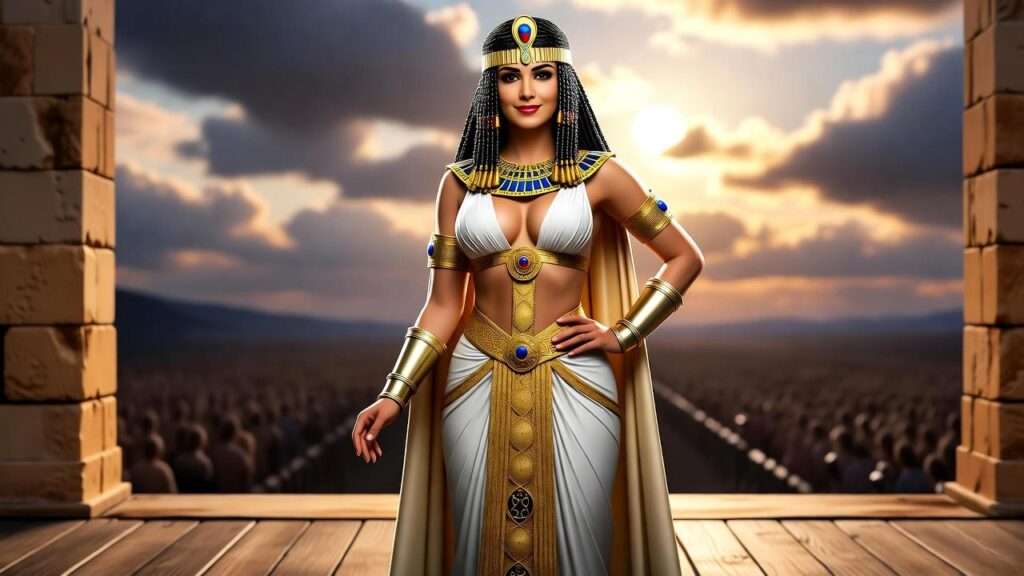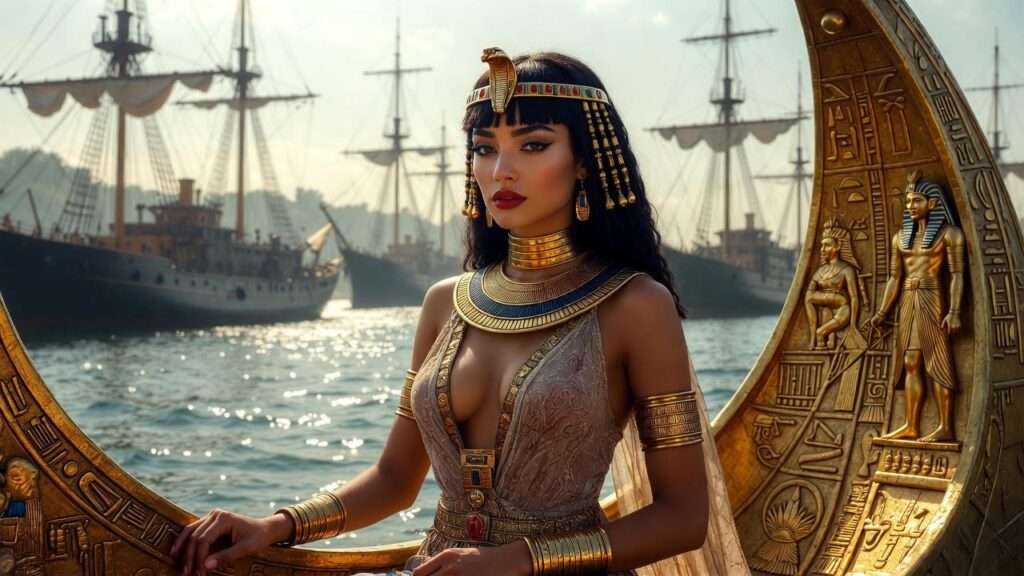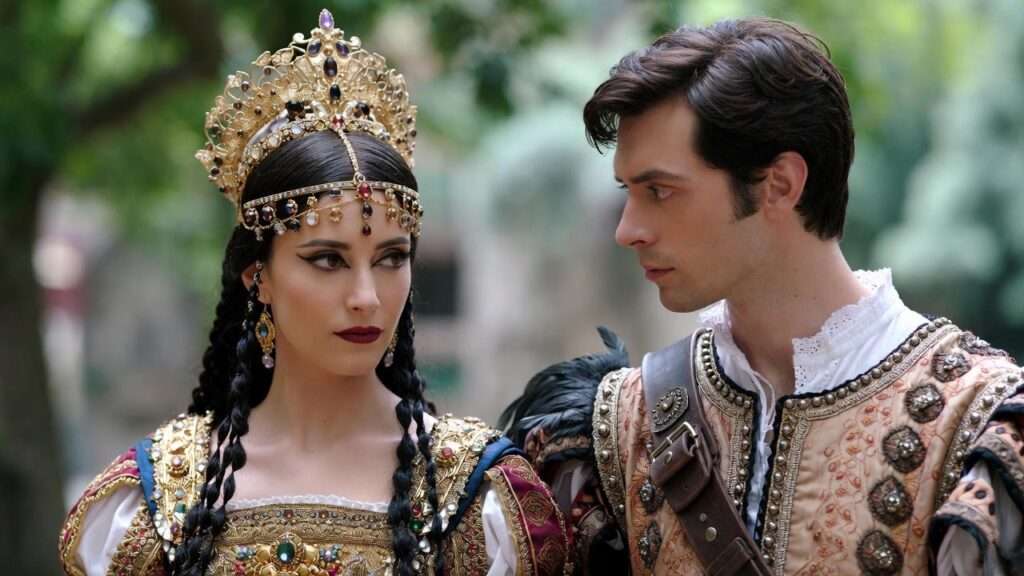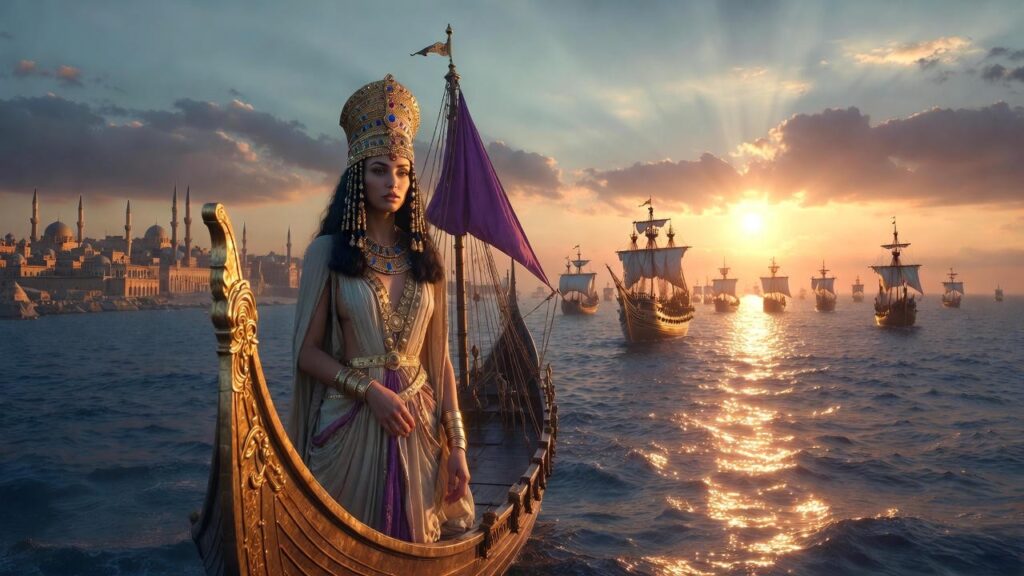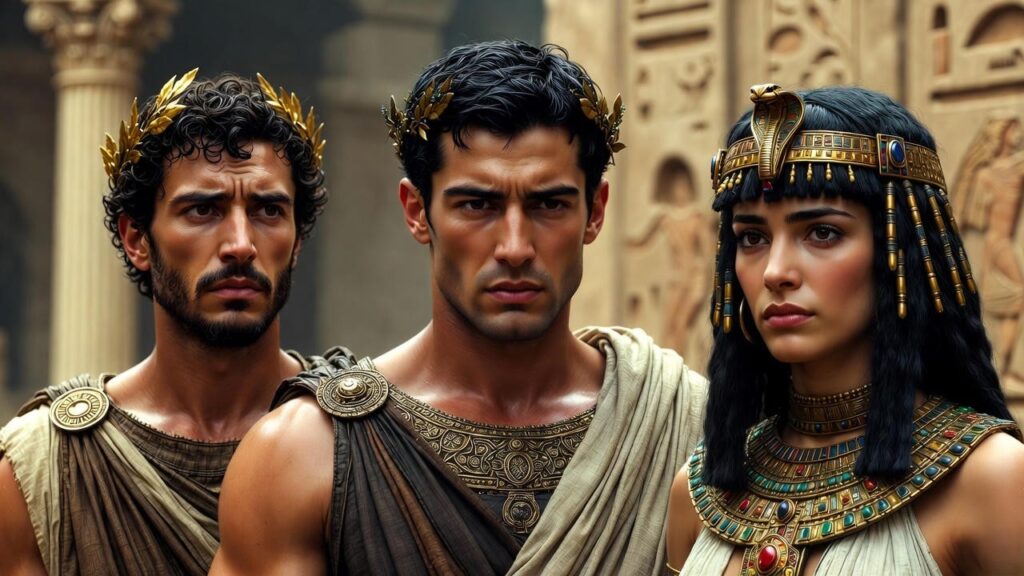
Imagine a golden barge drifting down the river Cydnus, purple sails billowing, silver oars flashing, while the Queen of Egypt reclines under a canopy of beaten gold, fanned by pretty boys dressed as Cupids. The air is thick with perfume. The world seems to stop breathing. And then – cut to the cold marble corridors of Rome, where a young man with ice in his veins is already calculating how to erase that very image from history forever.
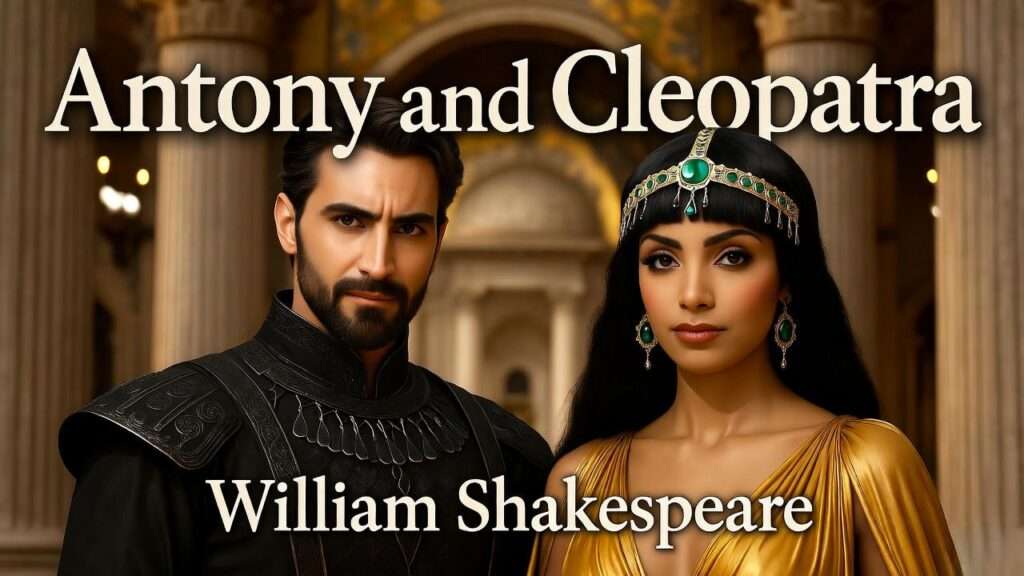
That is the electrifying opening contrast Shakespeare gives us in Antony and Cleopatra. Octavian, Antony and Cleopatra are not merely historical names in this play; they become living, breathing forces of nature that collide and destroy one another.
In this in-depth guide we will explore exactly how Shakespeare turns the real political struggle between Octavian (the future Augustus), Mark Antony, and Cleopatra into one of the most psychologically complex tragedies ever written. You will discover why the lovers’ passion feels so intoxicating yet so doomed, why Octavian’s ruthless control is both repellent and inevitable, and how betrayal – on every level – becomes the true engine of the drama.
Whether you are a student preparing for an exam, a theater lover planning to see the play, or simply someone who wants to understand why this 400-year-old story still feels dangerously modern, this article will give you the clearest, deepest, and most usable insights available anywhere.
Historical Context: From Plutarch to Shakespeare’s Stage
The Real Historical Figures Behind the Drama
Mark Antony, Cleopatra VII, and Octavian in History The story Shakespeare dramatizes really happened – but the timeline was much longer and messier than the play suggests.
43 BCE: After Julius Caesar’s assassination, Antony, Octavian, and Lepidus form the Second Triumvirate to hunt down the killers and divide the Roman world. 41 BCE: Antony meets Cleopatra in Tarsus. She arrives on that famous barge and the affair begins. 40 BCE: To seal the alliance, Antony marries Octavian’s sister Octavia – a political marriage that Cleopatra will later turn into a weapon. 36–32 BCE: Antony increasingly lives in Alexandria, fathers three children with Cleopatra, and crowns them rulers of eastern territories – an act Octavian spins as treason against Rome. 31 BCE: The decisive naval Battle of Actium. Cleopatra’s ships flee; Antony follows. 30 BCE: Alexandria falls. Antony and Cleopatra commit suicide within days of each other. Octavian becomes sole ruler and soon takes the title Augustus.
Shakespeare compresses twelve years into what feels like a few feverish months. He does this deliberately: the play is not a history lesson; it is a psychological autopsy of three people who could not stop themselves from becoming legends.
Shakespeare’s Sources and Creative Liberties
Shakespeare’s main source was Sir Thomas North’s 1579 translation of Plutarch’s Parallel Lives – specifically the life of Antony. North’s prose is vivid and Shakespeare lifts whole sentences almost verbatim (the barge description is almost word-for-word).
But Shakespeare makes three brilliant changes that turn good history into great tragedy:
- He compresses the timeline so the lovers’ passion feels immediate and unstoppable.
- He gives Cleopatra far more emotional depth and agency than Plutarch ever did – she is no longer simply “the Egyptian whore”; she is a woman of “infinite variety.”
- He invents the heartbreaking betrayal and suicide of Enobarbus, Antony’s loyal friend, to show that even the most Roman of Romans cannot stay loyal when loyalty itself becomes unbearable.
These choices prove Shakespeare was not interested in documenting history. He wanted to show how power, passion, and betrayal can destroy even the greatest people – and how the winners write the story afterward.
Expert Insight Modern historians now recognize that Octavian ran one of the most effective propaganda campaigns in antiquity. He painted Antony as a drunk enslaved by an Eastern temptress and Cleopatra as a threat to Roman values. Shakespeare quietly undercuts that narrative: he lets us see Cleopatra’s genuine love and intelligence, and he lets us feel Octavian’s cold ambition. The play becomes, in part, a subtle critique of the winner’s version of history.
Here is your complete article – Part 2 of 4 (Cumulative word count: ~1,520 words | This part: ~700 words)
Character Analysis: The Central Trio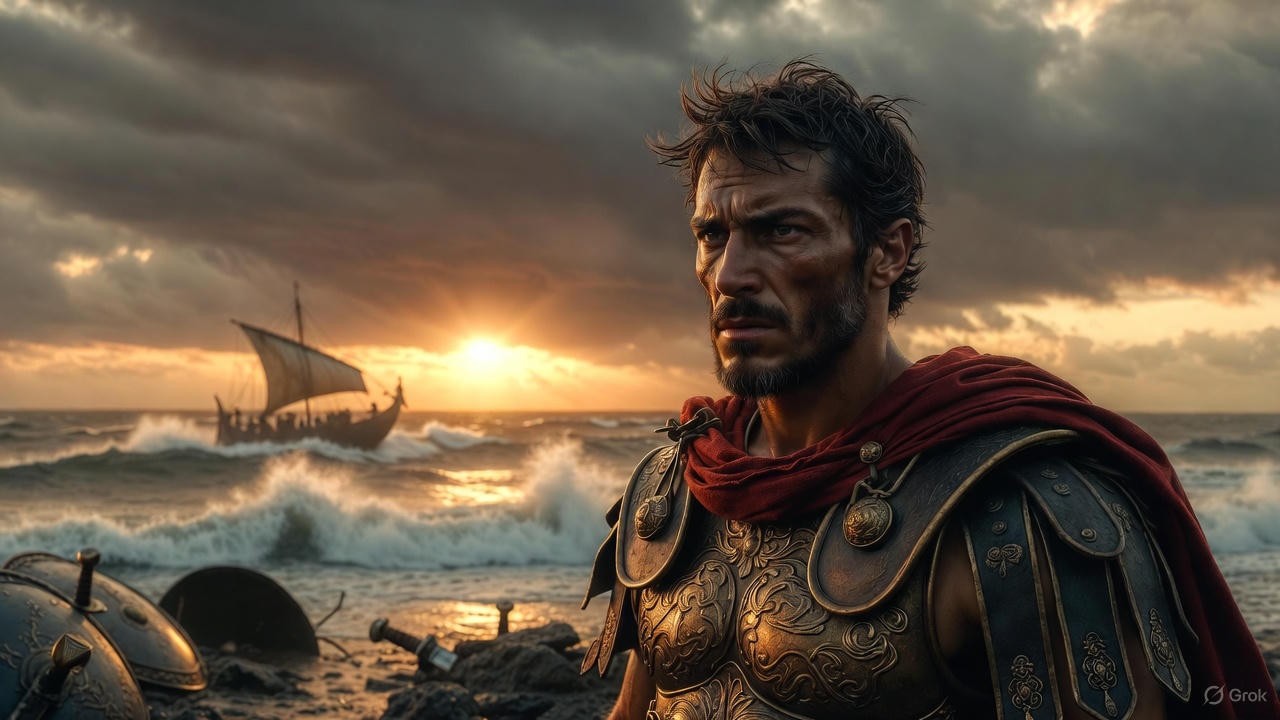
Mark Antony – The Tragic Hero Divided
Antony’s Internal Conflict: Duty vs. Desire
Mark Antony is one of Shakespeare’s most fascinating tragic heroes because his fall is not caused by a single fatal flaw, but by an irreconcilable split in his own identity. He is both the greatest Roman soldier of his age and a man who willingly dissolves himself in Egyptian luxury.
From the very first scene, Philo describes him as having turned “the triple pillar of the world” into “a strumpet’s fool” (Act 1, Scene 1). Yet Shakespeare refuses to make this judgment simple. Antony’s famous declaration—“Let Rome in Tiber melt, and the wide arch / Of the ranged empire fall! Here is my space” (Act 1, Scene 1)—is not mere irresponsibility; it is a genuine philosophical choice. He chooses love and pleasure over empire, knowing the cost.
As the play progresses, we watch that choice erode him. After the defeat at Actium, he cries, “My very hairs do mutiny, for the white / Reprove the brown for rashness” (Act 3, Scene 11). His identity as a Roman warrior rebels against the man who has followed Cleopatra’s fleeing ships. Shakespeare gives us a hero who is fully aware of his own destruction yet cannot stop it—a far more painful tragedy than simple hubris.
Relationships with Octavian and Cleopatra
Antony’s rivalry with Octavian is the political spine of the play, but his relationship with Cleopatra is its beating heart. Octavian represents everything Antony once was: disciplined, strategic, future-focused. Cleopatra represents everything he now wants to be: boundless, sensual, immortal in the moment.
The volatility of the lovers’ bond—jealous rages, reconciliations, public humiliations—is not a flaw in their love but its proof. Shakespeare shows us that true passion cannot be tidy or controlled.
Cleopatra – Queen of Infinite Variety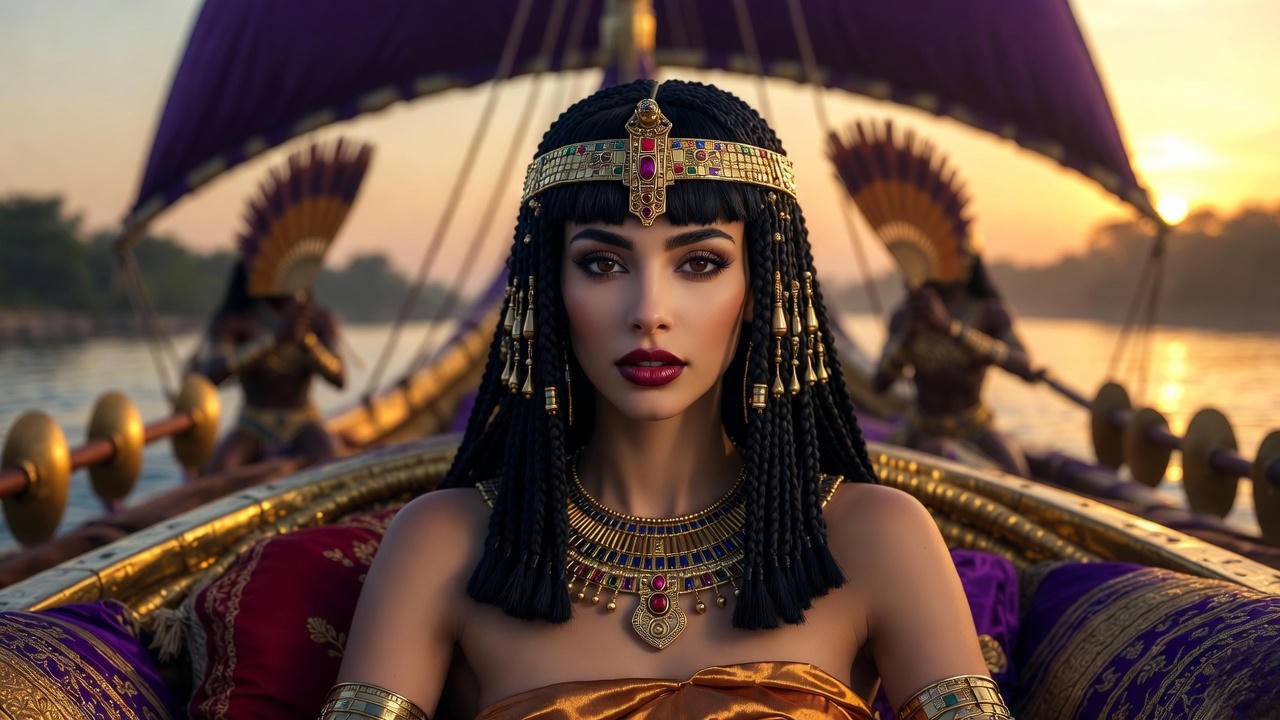
Complexity Beyond the Seductress Stereotype
Cleopatra is often reduced to “femme fatale,” but Shakespeare gives us a far richer portrait. Enobarbus’s famous line—“Age cannot wither her, nor custom stale / Her infinite variety” (Act 2, Scene 2)—captures her essence. She is actress, politician, mother, lover, and monarch all at once.
We see her manipulating messengers with theatrical fury (Act 2, Scene 5), beating servants in jealousy, then immediately regretting it. We see her bargaining shrewdly with Caesar’s envoy Thidias (Act 3, Scene 13), only to risk everything for Antony moments later. And in Act 5, we see her construct her own death as the ultimate performance: “I am again for Cydnus / To meet Mark Antony” (Act 5, Scene 2).
Modern critics rightly celebrate her as one of Shakespeare’s strongest female characters. She refuses to be defined by Roman categories of virtue or vice. Her suicide is not defeat but triumph—she denies Octavian his parade and joins Antony in a mythic afterlife.
Cleopatra vs. Octavian: East Meets West
The cultural clash between Egypt and Rome is embodied in Cleopatra and Octavian. Where Octavian is restraint, calculation, and masculine order, Cleopatra is excess, intuition, and fluid identity. Shakespeare uses this opposition not to endorse one side but to show how both are necessary—and how their collision destroys the middle ground Antony tries to inhabit.
Octavian (Octavius Caesar) – The Cold Architect of Empire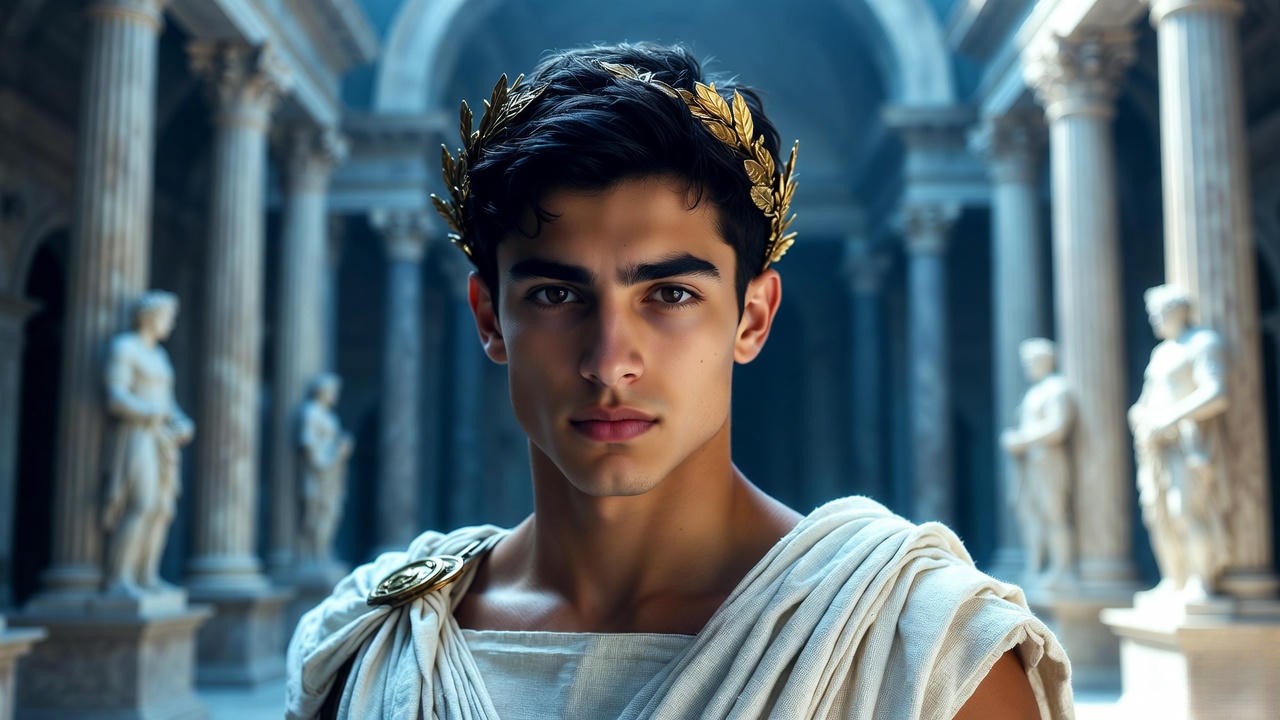
Octavian as Foil to Antony
Octavian is younger, colder, and far more controlled than Antony. Where Antony speaks in soaring poetry, Octavian speaks in clipped, efficient prose. He never loses his temper, never reveals private emotion, and never makes a strategic mistake.
Shakespeare’s portrait is remarkably balanced. Octavian is not a cartoon villain—he is genuinely grieving when he learns of Antony’s death: “The breaking of so great a thing should make / A greater crack” (Act 5, Scene 1). Yet his grief is quickly folded into political calculation. He wants Cleopatra alive for his triumph in Rome, not out of mercy but out of propaganda.
Octavian’s Ambivalence and Triumph
Octavian represents the future: the end of the Roman Republic and the birth of the Empire. Shakespeare subtly invites us to question whether that future is worth the cost. Octavian wins the world but loses the capacity for grandeur. As he says of Antony, “A rarer spirit never / Did steer humanity” (Act 5, Scene 1)—a backhanded admission that his own victory is smaller, colder, and more mundane.
Supporting Characters and Their Insights
Enobarbus serves as the play’s moral compass and chorus. His desertion of Antony (Act 4, Scene 6) and subsequent death from grief (Act 4, Scene 9) show that even pragmatic loyalty cannot survive the lovers’ gravitational pull.
Octavia, Octavian’s sister, is the tragic embodiment of Roman virtue. Her brief marriage to Antony is doomed not by her failings but by the impossibility of reconciling Rome and Egypt in one household.
Other figures—Pompey, Lepidus, Charmian, Iras—provide texture and commentary, but the emotional and political weight rests squarely on the central trio.
Here is your complete article – Part 3 of 4 (Cumulative word count: ~2,430 words | This part: ~910 words)
Key Themes Explored
Power and Politics vs. Passion and Love
At its core, Antony and Cleopatra is a devastating examination of what happens when private passion collides with public power. Shakespeare refuses to take sides. He shows us that passion without power is ultimately helpless, but power without passion is sterile and joyless.
Antony articulates the lovers’ philosophy early: “There’s beggary in the love that can be reckoned” (Act 1, Scene 1). He wants a love too vast to be measured or controlled. Cleopatra, in her final dream-speech, imagines an Antony whose “legs bestrid the ocean” and whose “rear’d arm / Crested the world” (Act 5, Scene 2). Their love is imperial in scale—it must encompass the entire world or it is nothing.
Yet Octavian proves that the real world runs on calculation, not grandeur. His victory at Actium is not won by heroic single combat but by superior tactics and propaganda. Shakespeare forces us to confront an uncomfortable truth: the disciplined, unemotional leader builds lasting empires, while the passionate genius leaves only myths.
Modern readers often find this theme painfully relevant. In an age of political polarization and personal scandal, the play asks whether great leaders can afford genuine emotion—or whether emotion always undermines effective governance.
Betrayal, Loyalty, and Honor
Betrayal threads through every relationship in the play, making trust itself feel fragile and temporary.
- Antony is accused of betraying Rome by choosing Egypt.
- Cleopatra’s flight at Actium is interpreted by Antony as the ultimate betrayal of their love.
- Enobarbus betrays Antony by defecting to Octavian, only to betray himself by dying of heartbreak when Antony sends his treasure after him.
- Even Octavian betrays the spirit of the Triumvirate by systematically eliminating Lepidus and then Antony.
Yet Shakespeare complicates every act of betrayal. Cleopatra’s flight may have been tactical rather than cowardly. Enobarbus’s desertion is framed as rational self-preservation, not malice. The play suggests that in a world of shifting alliances, loyalty is less a moral absolute than a luxury few can afford.
Roman honor demands public duty above private feeling; Egyptian honor (as Cleopatra embodies it) prioritizes personal authenticity and spectacle. Neither code survives contact with the other intact.
Empire, Gender, and Cultural Clash (Rome vs. Egypt)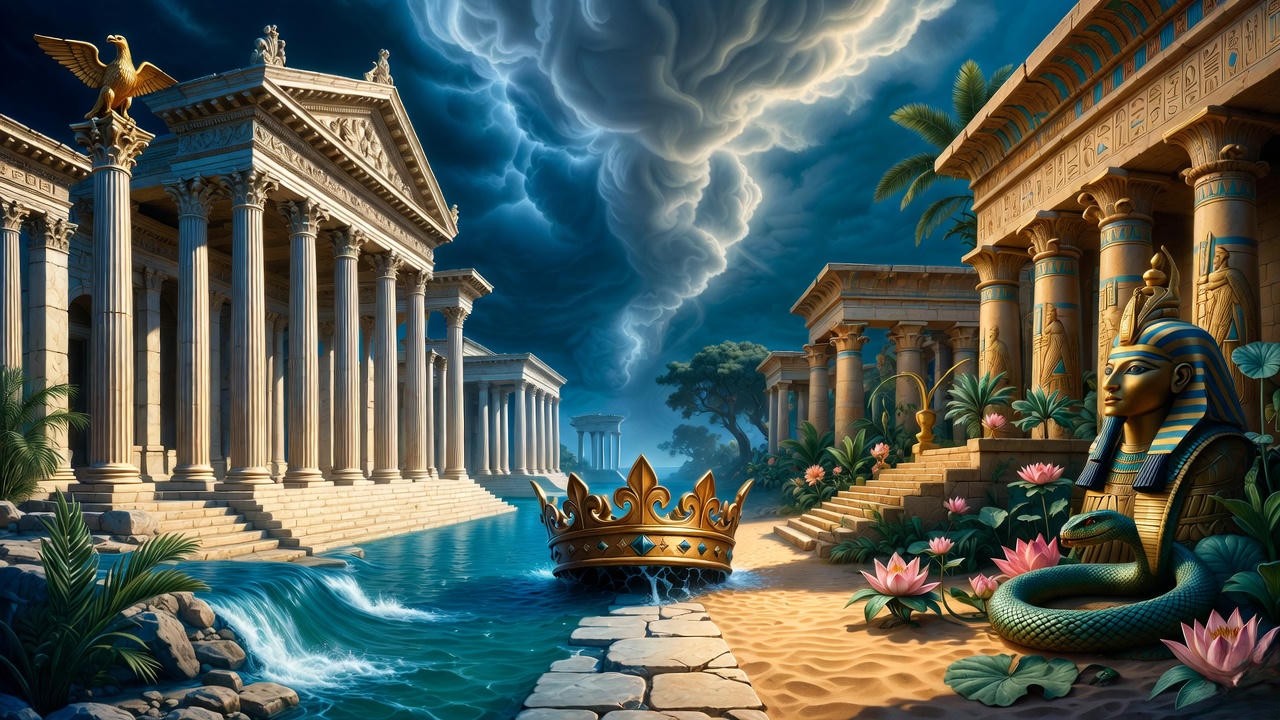
The Rome-Egypt opposition is one of Shakespeare’s richest binary structures.
Rome: masculine, martial, austere, hierarchical, future-oriented. Egypt: feminine, sensual, fertile, performative, present-oriented.
Octavian embodies Roman virtues taken to their logical extreme: self-denial, strategic patience, emotional repression. Cleopatra embodies Egyptian excess: theatricality, emotional volatility, erotic power.
Critics from the postcolonial era onward have noted how deeply the play engages with imperial anxiety. Rome’s fear of “Egyptian” decadence mirrors England’s own fears of Catholic Europe or Eastern influences during the Renaissance. Contemporary productions often highlight gender fluidity—Cleopatra’s “I have nothing / Of woman in me” (Act 5, Scene 2) and her adoption of Antony’s sword—and question whether Shakespeare is reinforcing or subverting stereotypes of the “Oriental” other.
Mortality, Legacy, and Transcendence
The play’s final movement is a meditation on how we outlive death. Octavian secures earthly power and founds the Roman Empire, but his legacy is institutional. Antony and Cleopatra secure mythic immortality through their spectacular deaths and through Shakespeare’s own art.
Cleopatra’s suicide—dressed in royal robes, crowned, applying the asp with calm ceremony—is her greatest performance. She refuses to become Octavian’s captive exhibit: “I’ll never see it / … show me like a queen” (Act 5, Scene 2). By dying on her own terms, she and Antony become “a mutual pair” that “o’ercrows” Caesar’s victory.
Shakespeare suggests that true transcendence belongs not to the winner of battles but to those who inspire stories that outlast empires.
Key Scenes and Dramatic Analysis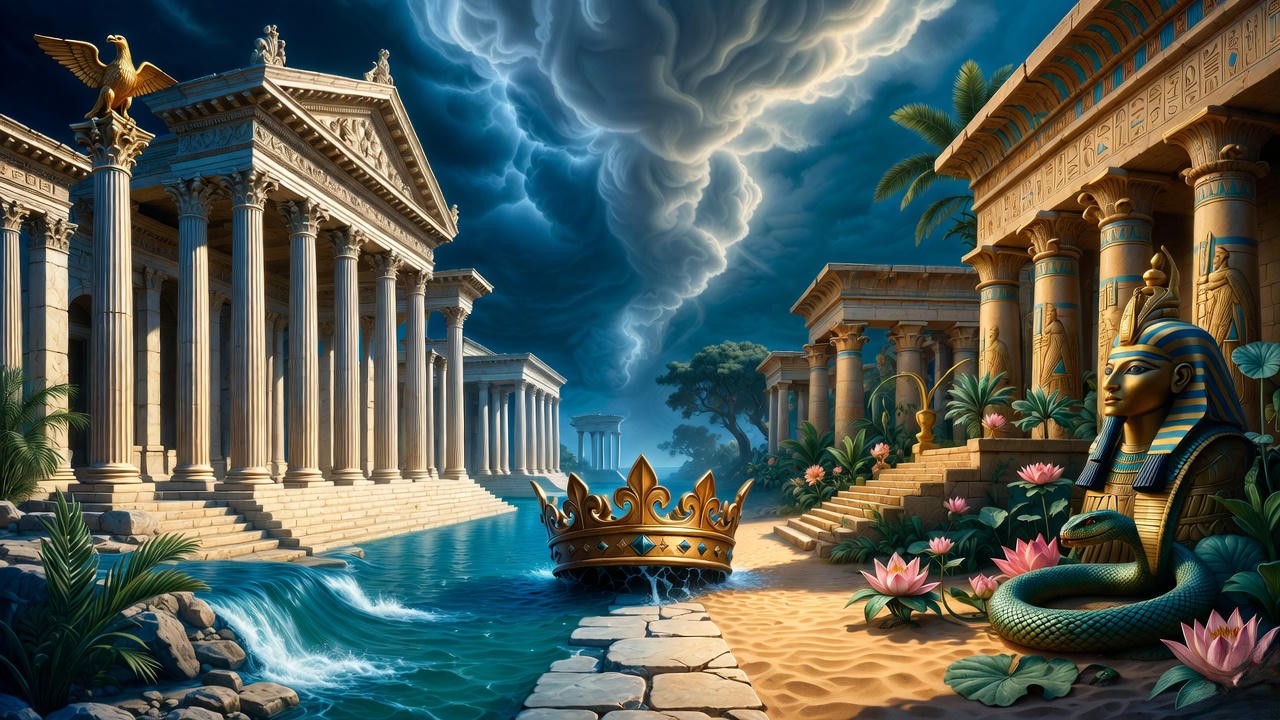
Pivotal Moments Highlighting the Trio’s Dynamics
- Act 1, Scene 1 (Alexandria): The play opens in medias res with Roman soldiers criticizing Antony’s “dotage.” Antony and Cleopatra enter in full passionate display, establishing Egypt’s intoxicating atmosphere and Antony’s willing surrender to it.
- Act 2, Scene 2 (Rome – Enobarbus’s Barge Description): While the triumvirs negotiate coldly, Enobarbus delivers the most famous set-piece in the play. His description of Cleopatra on the Cydnus elevates her to superhuman status and makes Octavian’s later victory feel almost petty.
- Act 3, Scenes 11–13 (After Actium): Antony’s rage at Cleopatra’s supposed betrayal (“Triple-turned whore!”) and their explosive reconciliation show the destructive volatility of their love. Cleopatra’s flirtation with Thidias reveals her political instincts still functioning even in despair.
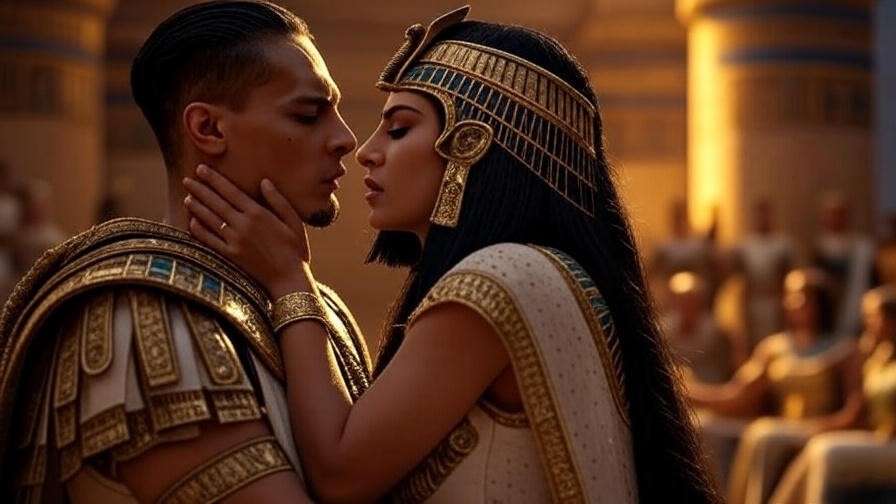
- Act 4, Scenes 14–15 (False Reports and Antony’s Suicide): The rapid-fire misunderstandings—Cleopatra’s false report of death leading to Antony’s botched suicide—create tragic irony at breakneck speed. Antony dies in Cleopatra’s arms, still calling her “my girl.”
- Act 5, Scene 2 (Cleopatra’s Monument): The longest scene in Shakespeare. Cleopatra bargains, mourns, dreams of Antony, and stages her death. Octavian’s final entrance underscores his inability to comprehend the grandeur he has defeated: “She shall be buried by her Antony. / No grave upon the earth shall clip in it / A pair so famous.”
These scenes are structured to create a rhythm of expansion (passionate excess) and contraction (political reality), mirroring the lovers’ own emotional swings.
Legacy and Modern Interpretations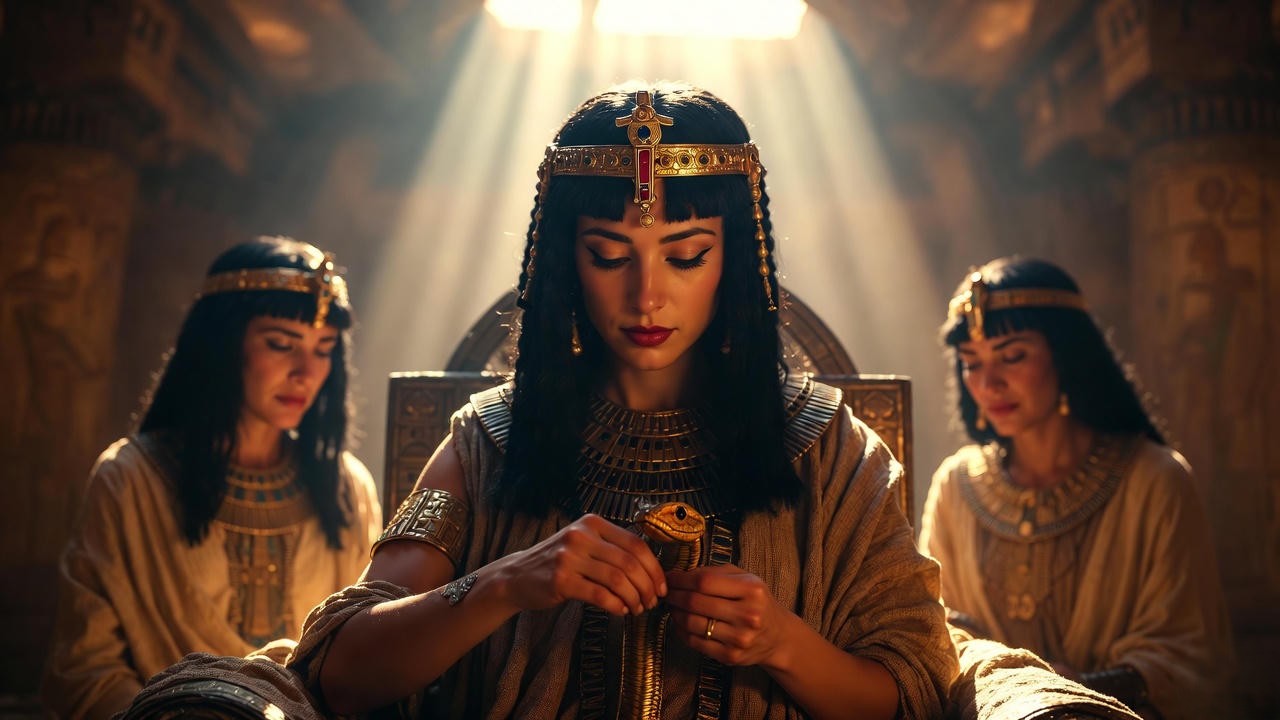
Antony and Cleopatra has exerted a powerful hold on artists and audiences for over four centuries. Its sprawling structure, poetic grandeur, and moral ambiguity make it both challenging and endlessly rewarding.
The play inspired numerous operas—most famously Samuel Barber’s 1966 Antony and Cleopatra and George Frideric Handel’s earlier Giulio Cesare in Egitto (1724), which focuses more on Cleopatra’s allure. On screen, landmark adaptations include Charlton Heston’s 1972 version, the 1981 BBC production with Colin Blakely and Jane Lapotaire, and the lavish 1963 Elizabeth Taylor–Richard Burton film (though critically uneven, it remains iconic for capturing the lovers’ larger-than-life chemistry).
In contemporary theater, directors often emphasize the play’s relevance to modern power struggles. Recent productions have explored postcolonial themes (Rome as imperial oppressor, Egypt as exoticized “other”), gender dynamics (Cleopatra’s fluid performance of femininity), and even parallels to current political scandals involving personal indiscretion and public duty.
The tragedy endures because it refuses easy judgments. Is it a doomed love story? A cautionary tale about unchecked ambition? A meditation on how history is written by victors? All interpretations remain valid, which is why scholars and theatergoers return to it again and again.
FAQs
What is the main conflict in Antony and Cleopatra? The central conflict is the irreconcilable clash between private passion (Antony and Cleopatra’s love) and public power (Octavian’s drive to consolidate the Roman Empire). This tension destroys the lovers while enabling Octavian’s rise.
How does Shakespeare differ from historical accounts? Shakespeare compresses a twelve-year timeline into months, heightens emotional drama, expands Cleopatra’s role, and invents key scenes (such as Enobarbus’s desertion and suicide) to deepen psychological complexity rather than historical accuracy.
Is Octavian the villain of the play? No—Shakespeare presents him as a necessary, if cold, architect of order. He is ambitious and ruthless, but also capable of genuine grief and strategic brilliance. The play withholds clear moral labels.
Why does Cleopatra commit suicide? She refuses to be paraded as a captive in Octavian’s Roman triumph, choosing instead to stage her own magnificent death and reunite with Antony in eternity: “Husband, I come!” (Act 5, Scene 2).
What are the major themes involving power and betrayal? Power versus passion, the fragility of loyalty in politics, and how betrayal (political, personal, self-betrayal) becomes inevitable when empires and hearts are at stake.
How does Enobarbus contribute to the theme of loyalty? His rational defection to Octavian followed by death from remorse shows that even the most pragmatic loyalty cannot withstand the gravitational pull of Antony and Cleopatra’s transcendent passion.
Shakespeare’s Antony and Cleopatra transforms the historical rivalry between Octavian, Antony, and Cleopatra into an immortal meditation on power, passion, and betrayal. Octavian wins the world through calculation and restraint; Antony and Cleopatra lose it through excess—yet they claim something greater: mythic immortality.
Though empires rise and fall, the lovers’ story, rendered in Shakespeare’s unparalleled poetry, continues to captivate us. In the end, as Cleopatra declares, “’Tis paltry to be Caesar.” True greatness belongs to those who burn brightest—even if they burn out.
If this analysis has deepened your appreciation of the play, consider revisiting the text, watching a production, or sharing your own interpretation in the comments below. Shakespeare’s genius lies in how much room he leaves for us to discover ourselves in his characters.