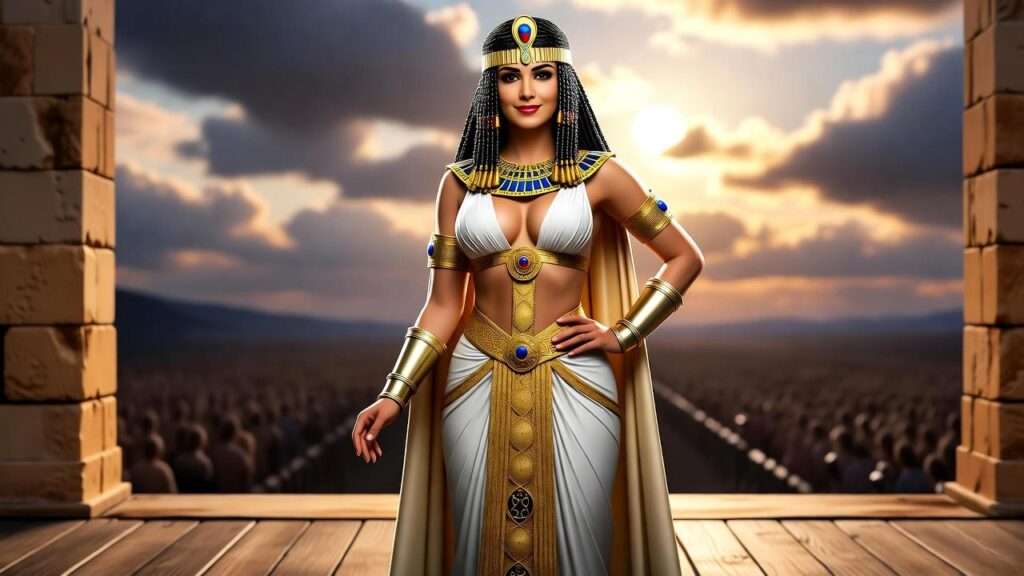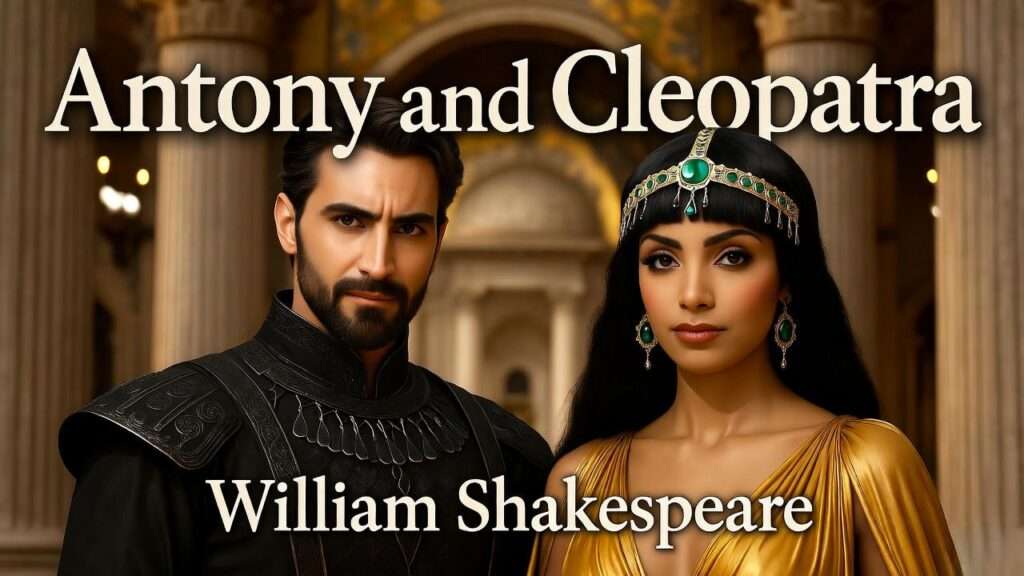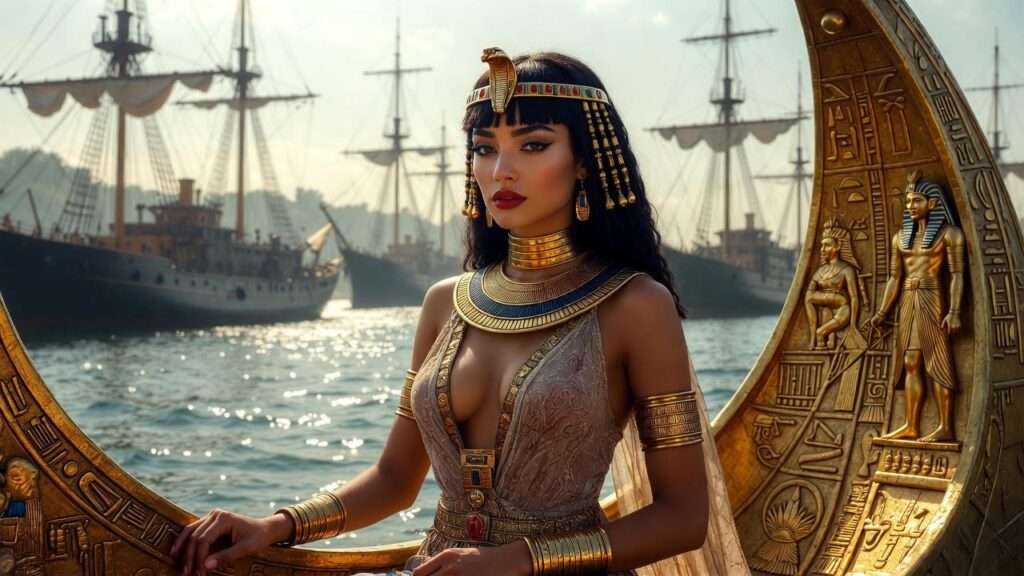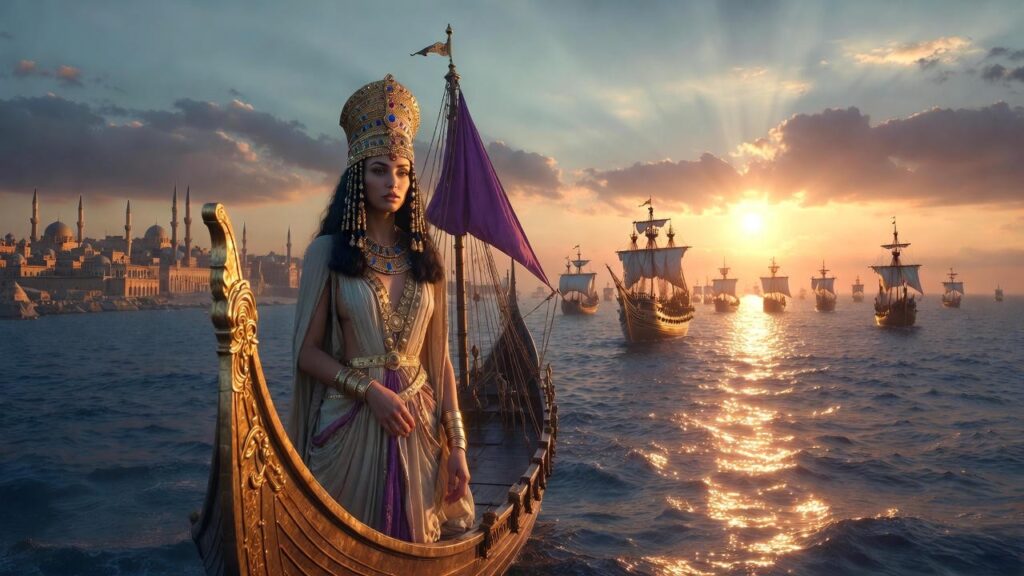
“Age cannot wither her, nor custom stale Her infinite variety. Other women cloy The appetites they feed, but she makes hungry Where most she satisfies.”
These unforgettable lines, spoken by Enobarbus in Antony and Cleopatra, have captivated readers and audiences for over four centuries. Why does the character of Cleopatra continue to fascinate us long after the curtains fall on Shakespeare’s tragedy? In a play filled with epic battles, political intrigue, and doomed romance, it is the Egyptian queen who steals every scene she inhabits. Far from the one-dimensional seductress often portrayed in popular culture, Cleopatra emerges as one of Shakespeare’s most psychologically complex and compelling creations—a woman of boundless passion, razor-sharp intellect, political cunning, and profound vulnerability.
This in-depth exploration delves into the true character of Cleopatra, moving beyond superficial summaries to reveal her “infinite variety.” Whether you’re a student preparing for an exam, a theatre enthusiast analyzing performances, or a lifelong reader seeking fresh insight, this article offers a comprehensive guide supported by close textual analysis, historical context, critical perspectives, and practical study tools. By the end, you’ll understand why Cleopatra defies easy categorization and remains an enduring icon of female power and complexity.
Who Is Cleopatra? Historical vs. Shakespearean Portrait
To fully appreciate Shakespeare’s character of Cleopatra, we must first distinguish between the historical figure and the dramatic masterpiece he crafted.
The Real Cleopatra VII: Queen, Strategist, and Survivor
Cleopatra VII Philopator (69–30 BC) was the last active ruler of the Ptolemaic Kingdom of Egypt. Far from the exotic temptress of legend, ancient sources portray her as a brilliant polyglot who spoke nine languages, a shrewd diplomat who maintained Egypt’s independence amid Roman expansion, and a charismatic leader who forged strategic alliances with Julius Caesar and later Mark Antony.
Roman propaganda, written by victors like Octavian (later Augustus), painted her as a dangerous seductress who corrupted noble Roman generals. Historians today, drawing on sources like Plutarch, Strabo, and Dio Cassius, recognize her as one of the ancient world’s most capable rulers. She stabilized Egypt’s economy, navigated complex court politics, and produced heirs with both Caesar and Antony. Her ultimate defeat was not due to personal weakness but overwhelming Roman military power.
Shakespeare’s Transformation
Shakespeare drew primarily from Plutarch’s Parallel Lives (translated by Sir Thomas North in 1579), yet he radically reimagined the queen. Where Plutarch presents a capable but ultimately defeated ruler, Shakespeare elevates Cleopatra to tragic heroine status. He amplifies her sensuality, emotional volatility, and theatrical flair while preserving her political acumen.
Key departures include:
- Heightened eroticism: Shakespeare invents scenes of lavish excess (the barge meeting, the lovers’ games on the Cydnus).
- Emotional intensity: Her rapid mood swings—charm to rage to despair—are dramatized far beyond Plutarch’s account.
- Tragic grandeur: Her suicide becomes a triumphant assertion of identity rather than mere escape.
As scholar Janet Adelman notes in The Common Liar (1973), Shakespeare “Egyptianizes” desire itself, making Cleopatra the embodiment of boundless imagination and appetite in opposition to Roman restraint.
Cleopatra’s Infinite Variety: Core Traits Revealed Through Key Scenes
The phrase “infinite variety” perfectly encapsulates Cleopatra’s character. She refuses to be pinned down—she is lover, queen, actress, strategist, child, and goddess all at once. Let’s examine this complexity through pivotal scenes.
Seductive Performer and Master of Role-Playing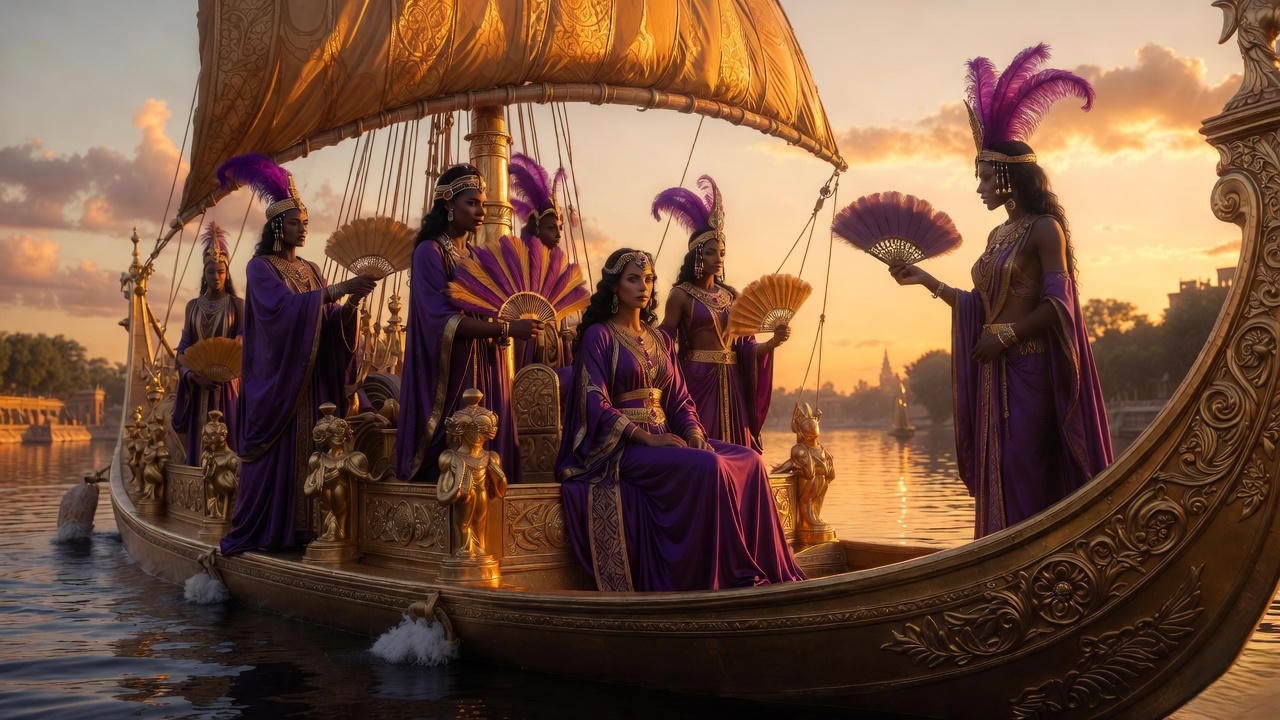
The most famous description comes in Act 2, Scene 2, when Enobarbus recounts Cleopatra’s first meeting with Antony on her golden barge:
The barge she sat in, like a burnish’d throne, Burn’d on the water: the poop was beaten gold; Purple the sails, and so perfumed that The winds were love-sick with them…
Enobarbus’s speech is not mere reportage; it is a poetic performance that mirrors Cleopatra’s own theatricality. She consciously stages herself—dressed as Venus, surrounded by cupids and nymphs—to overwhelm Antony’s senses. This scene establishes her as a master director of her own image, turning politics into spectacle.
Passionate Lover and Emotional Powerhouse
Cleopatra’s relationship with Antony reveals her capacity for consuming passion. In Act 1, Scene 3, she alternates between playful teasing and furious jealousy upon learning of Antony’s political marriage to Octavia:
Thou teachest like a fool: the way to lose him! … Melt Egypt into Nile, and kindly creatures Turn all to serpents!
Her rapid shifts—from cajoling to commanding to despairing—are often misread as instability. In truth, they demonstrate emotional authenticity and power. As critic Linda Bamber observes, Cleopatra’s volatility is a source of vitality in a play where Roman characters increasingly grow rigid and cold.
Sharp-Witted Ruler and Political Strategist
Cleopatra is no passive consort. She actively participates in military decisions (contributing ships to Actium) and negotiates directly with Roman envoys. In Act 3, Scene 13, she deftly manipulates Thidias, Caesar’s messenger, alternating flattery and defiance to test his intentions.
Even in defeat, her political mind remains acute. In Act 5, she hides treasure from Caesar, ensuring she retains some leverage. Shakespeare presents her as Antony’s equal partner in rule—a rarity among his female characters.
Vulnerable Woman Facing Mortality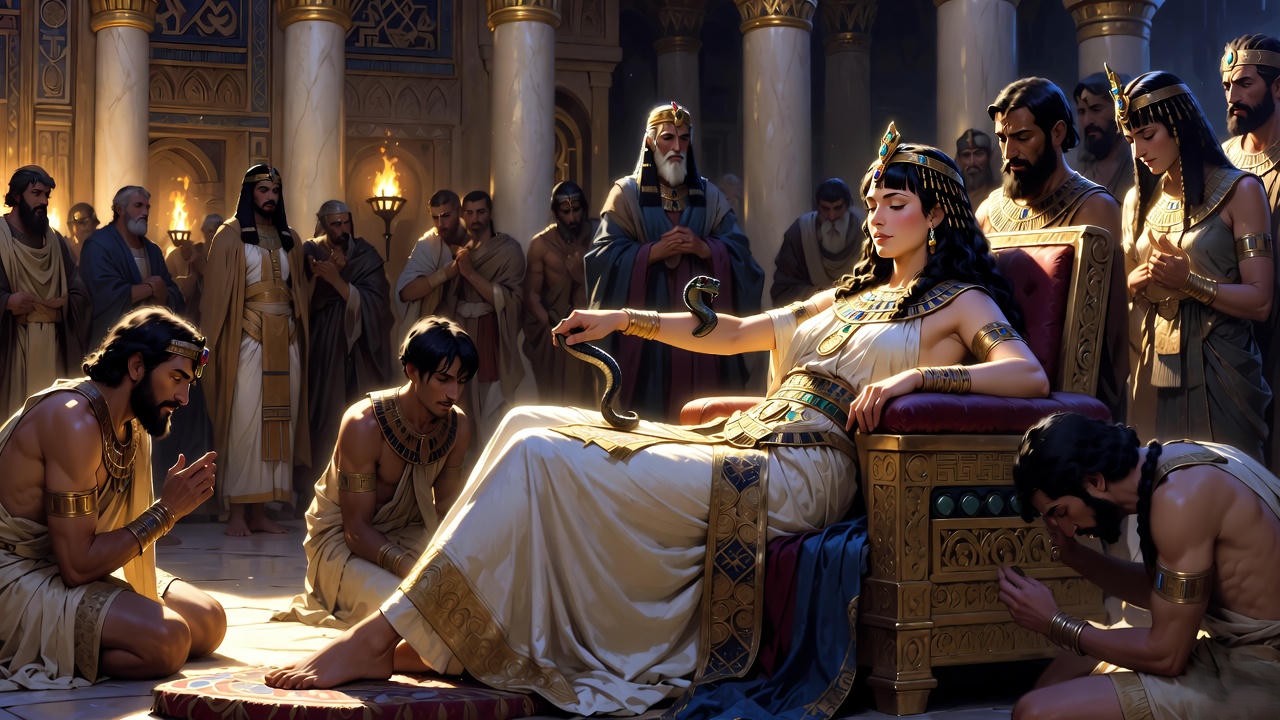
The play’s final act reveals Cleopatra’s deepest fears. When Dolabella confirms Caesar plans to parade her in Rome, she imagines the humiliation:
…the quick comedians extemporally will stage us, and present Our Alexandrian revels: Antony Shall be brought drunken forth, and I shall see Some squeaking Cleopatra boy my greatness I’ th’ posture of a whore.
This moment exposes her terror of losing control over her narrative. Her suicide—staged with royal regalia and the asp—reclaims that control, transforming defeat into transcendence.
Reader Tip: How to Spot “Infinite Variety” in Any Scene Ask yourself these three questions while reading:
- What role is Cleopatra performing in this moment (queen, lover, actress)?
- How does her language shift tone or imagery within a single speech?
- What contradiction does she embody here (power/vulnerability, playfulness/rage)?
Key Relationships That Define Her Character
Cleopatra’s complexity shines brightest in her interactions with others. These relationships reveal her as an equal partner, a loyal mistress, and a defiant adversary—never a subordinate figure.
With Antony: Equal Partners in Love and Power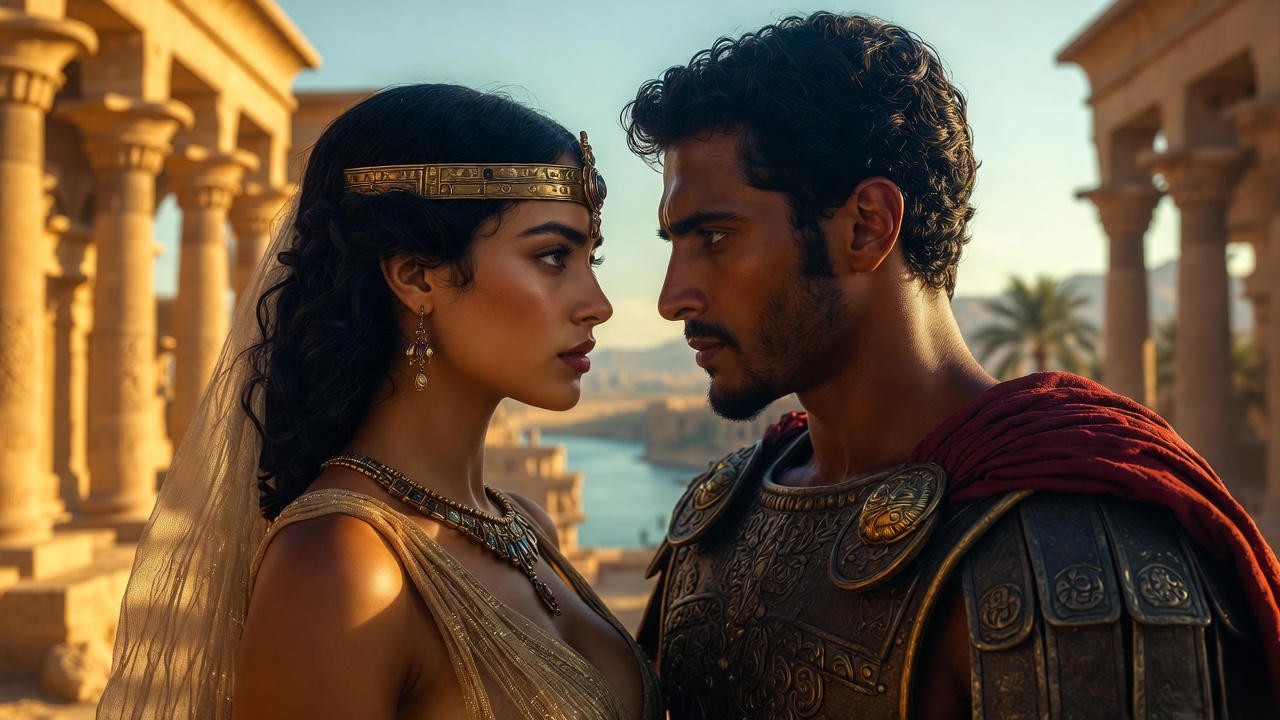
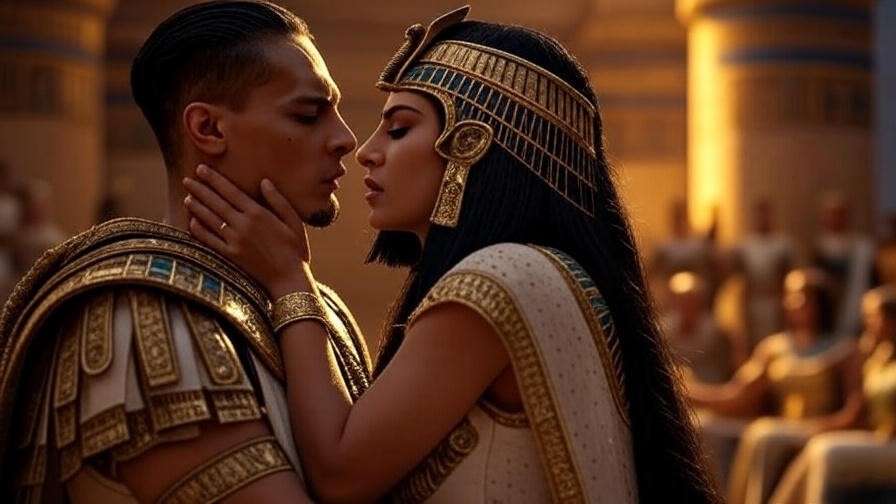
The central relationship in the play is, of course, the passionate union with Mark Antony. Shakespeare presents them as twin souls bound by mutual grandeur and appetite. Their love is not merely romantic; it is a political and existential alliance against the encroaching order of Rome.
In Act 1, Scene 1, Philo describes their relationship dismissively as “dotage,” but the lovers themselves celebrate its transcendence:
CLEOPATRA: If it be love indeed, tell me how much. ANTONY: There’s beggary in the love that can be reckon’d. CLEOPATRA: I’ll set a bourn how far to be belov’d. ANTONY: Then must thou needs find out new heaven, new earth.
This exchange establishes their shared language of excess and infinity. Moments of playfulness—dressing each other in the other’s clothes, fishing on the river, drinking contests—highlight their equality. Unlike many Shakespearean couples, neither dominates; they mirror and magnify each other.
Even in conflict, their bond endures. After the defeat at Actium, Cleopatra’s fleeting betrayal (fleeing with her fleet) is matched by Antony’s own strategic failures. Their reconciliation in Act 4, Scene 8, reaffirms their partnership:
ANTONY: Eternity was in our lips and eyes, Bliss in our brows’ bent; none our parts so poor But was a race of heaven.
Critics such as Harold Bloom have called them Shakespeare’s most mature lovers, embodying a love that encompasses both ecstasy and destruction.
With Her Attendants: Loyalty and Humanity
Cleopatra’s interactions with Charmian, Iras, and Mardian reveal her capacity for genuine affection and leadership. Far from treating them as mere servants, she banters, confides, and mourns with them.
In Act 1, Scene 5, she reminisces about past lovers with Charmian in a tone of sisterly intimacy. Their final scenes together are profoundly moving: Charmian and Iras die alongside their queen, framing her suicide as a collective act of devotion.
This loyalty reflects Cleopatra’s charismatic authority—she inspires fierce allegiance not through fear but through shared humanity.
With Caesar: Defiant Dignity
In contrast, her encounters with Octavius Caesar highlight her unyielding spirit. Caesar represents cold calculation; Cleopatra, boundless vitality. Their indirect confrontation in Act 5 crystallizes this opposition.
When Proculeius and Dolabella capture her, she maintains regal composure while probing for advantage. Upon learning Caesar intends to display her in triumph, her response is one of defiant self-authorship: she will stage her own exit. Her final words—“I am fire and air; my other elements / I give to baser life”—reject Caesar’s world entirely.
Comparison Table: Models of Femininity in the Play
| Character | Traits | Role in Power Structure | Outcome |
|---|---|---|---|
| Cleopatra | Passionate, theatrical, strategic, vulnerable | Co-ruler, equal partner | Transcendent suicide |
| Octavia | Dutiful, moderate, peaceful | Political pawn, Roman ideal | Survives but marginalized |
Octavia serves as a foil—everything Cleopatra is not—yet Shakespeare gives Cleopatra the poetic victory.
Major Themes Embodied in Cleopatra’s Character
Cleopatra does not merely participate in the play’s themes; she embodies them.
Love vs. Empire
The tragedy pits personal fulfillment against imperial duty. Cleopatra represents the private, sensual realm that ultimately proves incompatible with Rome’s public ethos. Yet Shakespeare refuses to moralize: her “Egyptian” values enrich life even as they lead to downfall.
East vs. West
The play dramatizes a cultural clash: Egypt’s fertility, fluidity, and excess versus Rome’s discipline, hierarchy, and restraint. Cleopatra becomes the living symbol of the East—associated with the Nile’s bounty, serpents, and transformative imagery.
Postcolonial critics like Ania Loomba (Gender, Race, Renaissance Drama) argue that Shakespeare both exoticizes and humanizes the East through Cleopatra, complicating simple binaries.
Performance and Reality
From her barge entrance to her death scene, Cleopatra is perpetually performing. The play questions where performance ends and authenticity begins. Her final act—dressing in royal robes, applying the asp—blurs theater and truth, suggesting identity itself is a conscious creation.
Gender and Power in Elizabethan England
Writing during a time when female monarchy (Elizabeth I) was both celebrated and anxiously scrutinized, Shakespeare grants Cleopatra extraordinary agency. She commands armies, negotiates with emperors, and controls her narrative to the end—challenging patriarchal assumptions while remaining undeniably feminine.
Cleopatra on Stage and Screen: Bringing Infinite Variety to Life
Translating Cleopatra’s complexity to performance is one of theatre’s greatest challenges—and rewards.
Notable stage interpretations include:
- Glenda Jackson (1978, National Theatre): Emphasized political shrewdness over sensuality.
- Judi Dench (1987, National Theatre): Captured playful intimacy and sudden rages.
- Harriet Walter (2006, RSC): Highlighted maturity and intellectual equality with Antony.
- Recent diverse casting (e.g., Sophie Okonedo in 2018 National Theatre production) has enriched readings by challenging traditional racial exoticism.
On screen, Elizabeth Taylor’s 1963 portrayal remains iconic for its opulence, though modern viewers often note its emphasis on glamour over psychological depth. More nuanced film versions include the 1972 Charlton Heston adaptation and the 1999 RSC filming with Alan Bates and Frances de la Tour.
Directors typically use costume, lighting, and blocking to convey “infinite variety”: flowing silks for sensuality, stark lighting for moments of vulnerability, rapid pacing for mood shifts.
For a vivid example, watch the RSC’s 2017 production barge scene (available on many streaming platforms)—note how lighting and music transform the stage into the perfumed Cydnus.
Why Cleopatra Still Matters: Modern Relevance and Lessons
In an era examining female leadership, emotional expression, and personal branding, Cleopatra resonates powerfully.
She models emotional intelligence: her “variety” allows her to adapt, persuade, and inspire in ways rigid leaders cannot. Her refusal to be reduced—to be paraded as Caesar’s trophy—speaks to contemporary fights for narrative control.
Above all, Cleopatra teaches that true power embraces contradiction: strength and vulnerability, play and strategy, love and ambition.
Study Tips and Analysis Toolkit for Students & Readers
To deepen your engagement with Cleopatra’s character:
- Track mood shifts: Create a scene-by-scene chart noting Cleopatra’s dominant emotion and key lines. Patterns reveal deliberate design.
- Annotate Egyptian imagery: Circle references to the Nile, serpents, melting/dissolving—these cluster around Cleopatra and signify her transformative nature.
- Compare with other Shakespearean women: How does she differ from Lady Macbeth (ambition without sensuality) or Beatrice (wit without political power)?
- Write a modern monologue: Imagine Cleopatra reacting to a current event—helps internalize her voice.
- Discussion prompts:
- Is Cleopatra manipulative or authentic?
- Does the play ultimately endorse Roman or Egyptian values?
- How would social media change Cleopatra’s self-presentation?
Frequently Asked Questions
What does “infinite variety” mean in Antony and Cleopatra?
Enobarbus’s phrase describes Cleopatra’s ever-changing nature—her ability to remain endlessly fascinating through shifting moods, roles, and appeals. It contrasts with the monotony of more predictable women.
Is Cleopatra a villain or a heroine?
Shakespeare presents her as neither. She is a fully realized tragic figure whose flaws (jealousy, theatricality) are inseparable from her magnificence.
How does Shakespeare make Cleopatra sympathetic?
Through intimate moments with attendants, vulnerable speeches about mortality, and poetic language that elevates her perspective above Roman judgment.
What are the best quotes to understand Cleopatra’s character?
- “Age cannot wither her, nor custom stale / Her infinite variety” (2.2)
- “I am fire and air” (5.2)
- Her imagination of Roman mockery (5.2.206–220)
How does Cleopatra die, and why is it significant?
She applies an asp to her breast (and possibly another to her arm), dying in royal attire. The death is both practical escape and artistic triumph—reclaiming agency and achieving mythic immortality.
How is Shakespeare’s Cleopatra different from historical accounts?
Shakespeare heightens her sensuality, emotional range, and tragic stature while preserving her political intelligence. Plutarch is more measured; Shakespeare is poetic.
Recommended editions and further reading?
- Folger Shakespeare Library edition (excellent notes)
- Oxford World’s Classics (Barbara Everett introduction)
- Shakespeare’s Cleopatra by Mary Hamer
- Antony and Cleopatra (New Cambridge Shakespeare, ed. David Bevington)
Cleopatra remains Shakespeare’s most extraordinary female creation precisely because she refuses simplification. Her infinite variety—seductive yet strategic, passionate yet calculating, playful yet profound—mirrors the beautiful contradictions of human experience.
Four centuries later, she continues to challenge us: to embrace complexity, to author our own stories, and to recognize power in vulnerability. Whether on page or stage, Cleopatra demands we see her fully—and in doing so, see ourselves more clearly.