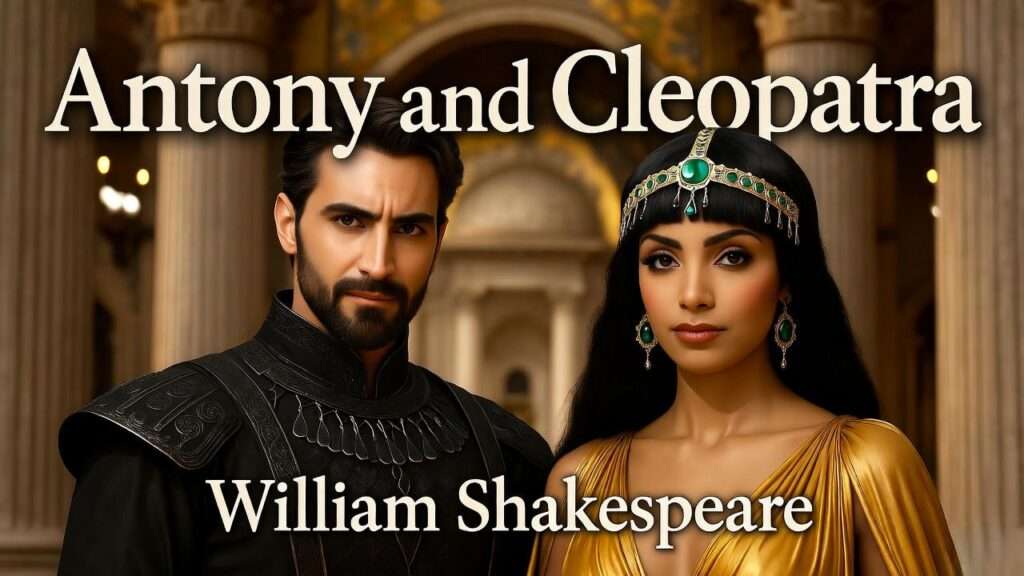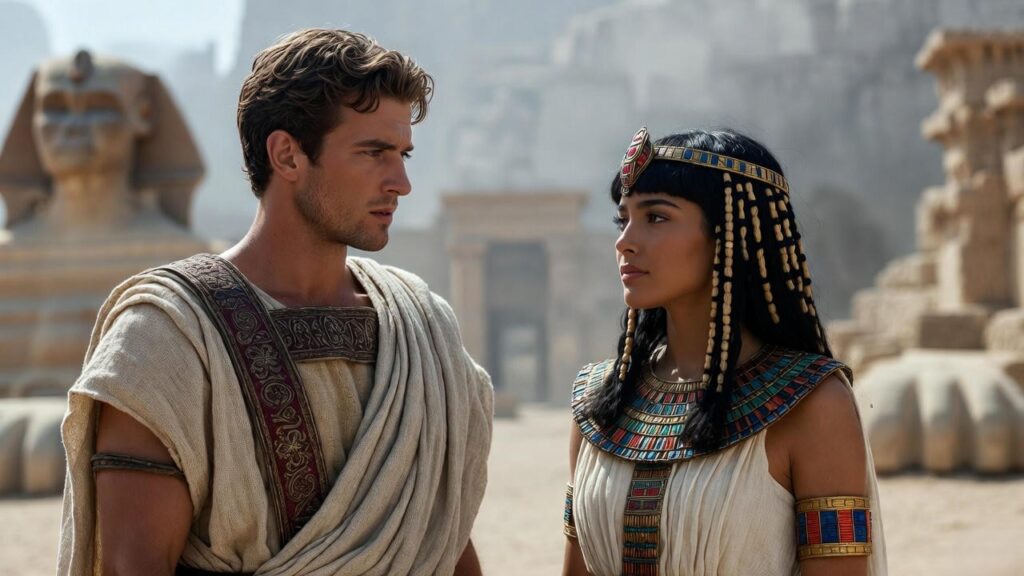
Imagine one of history’s most legendary romances stripped of all its passion, glamour, and tragedy. No smoldering glances across the Nile, no grand suicides for love—instead, a wise, middle-aged conqueror mentoring a petulant teenage queen with sharp wit and political savvy. This is exactly what George Bernard Shaw delivers in his 1898 masterpiece, the Caesar and Cleopatra play—a deliberate, anti-romantic counterpoint to William Shakespeare’s lush, erotic tragedy Antony and Cleopatra.
If you’ve searched for “caesar and cleopatra play,” you’re likely wondering whether this is one of Shakespeare’s history plays or something entirely different. The confusion is understandable: both dramatists tackle the same iconic figures—Julius Caesar and Cleopatra VII of Egypt—but they do so in radically different ways. Shakespeare’s Antony and Cleopatra (1606–1607) is a sweeping tragedy centered on overwhelming passion and imperial downfall. Shaw’s version, by contrast, is a sparkling intellectual comedy that emphasizes political mentorship, maturity, and the mechanics of power over erotic obsession.
In this in-depth exploration, we’ll clarify the authorship, trace the historical roots, summarize Shaw’s plot, compare the two plays side by side, analyze characters and themes, and examine the play’s lasting legacy. Whether you’re a devoted Shakespeare reader seeking fresh perspectives or a newcomer curious about this lesser-known gem, this guide will equip you to appreciate Shaw’s witty alternative on its own terms—and understand why it remains a compelling companion (or counterpoint) to the Bard.
Historical Background: The Real Caesar and Cleopatra
Understanding Shaw’s choices requires grounding in the actual events of 48–47 BC, during the final phase of Rome’s civil wars.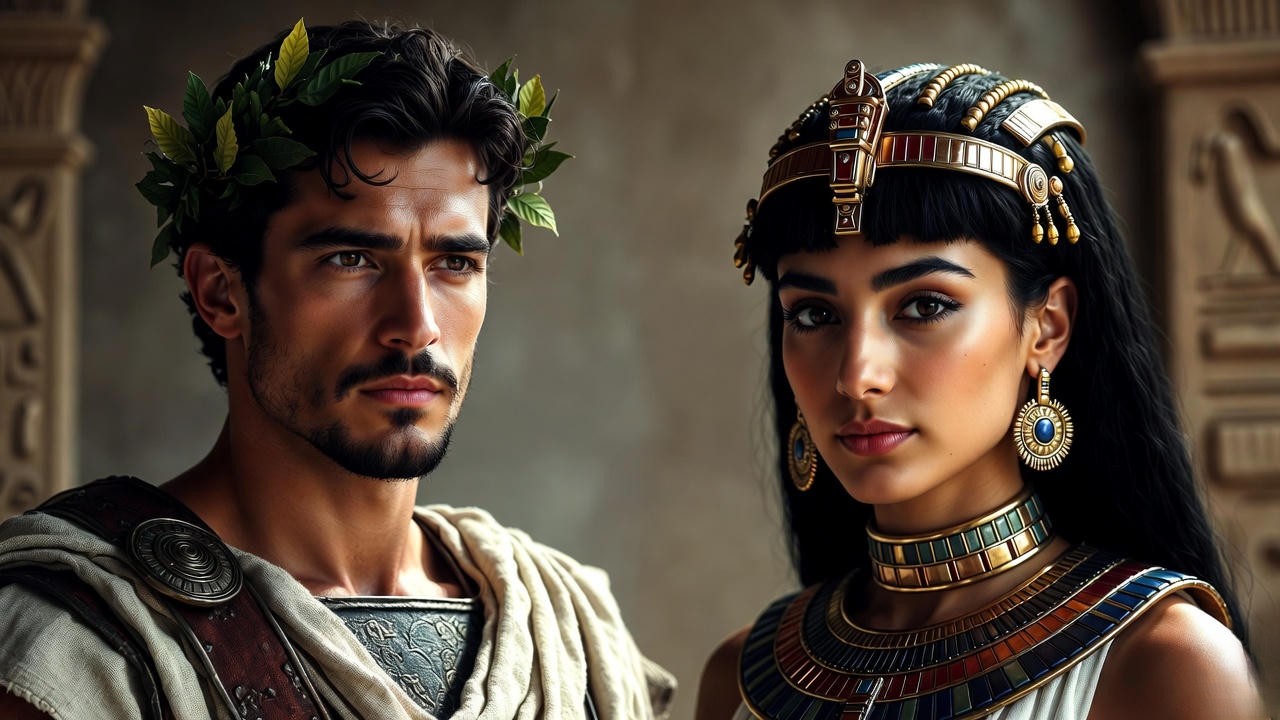
Key Events in 48–47 BC
After defeating Pompey the Great at Pharsalus, Julius Caesar pursued his fleeing rival to Egypt. Upon arrival in Alexandria, he learned that Pompey’s former allies had assassinated him as a gift. Caesar, appalled by the treachery, seized control of the situation.
Egypt was embroiled in a dynastic struggle between the young co-rulers Ptolemy XIII and his sister Cleopatra VII. Cleopatra, aged approximately 21, had been driven from Alexandria by her brother’s advisors. Smuggled back into the palace (traditionally in a carpet or bed-sack), she appealed to Caesar for support. Recognizing Egypt’s strategic and financial importance, Caesar backed Cleopatra, enforced the late Ptolemy XII’s will naming the siblings co-rulers, and mediated their dispute.
When Ptolemy’s forces rebelled, Caesar found himself besieged in the palace quarter. After months of fierce fighting—including naval battles and the famous (though likely accidental) burning of part of the Alexandria Library—Caesar emerged victorious. Ptolemy XIII drowned in the Nile, and Cleopatra was installed as sole ruler, with her younger brother Ptolemy XIV as nominal co-regent.
Caesar and Cleopatra spent several months together, cruising the Nile in luxury. She later bore a son, Ptolemy XV Caesarion, widely believed to be Caesar’s child, though Roman law prevented formal acknowledgment.
Sources That Inspired Shaw
Shaw drew heavily from Theodor Mommsen’s multi-volume History of Rome (1854–1856), which presented Caesar as the epitome of enlightened statesmanship: merciful, far-seeing, and supremely competent. Mommsen downplayed personal scandal in favor of political genius.
Shakespeare, writing two centuries earlier, relied primarily on Plutarch’s Parallel Lives (via Sir Thomas North’s 1579 translation). Plutarch emphasized dramatic personal relationships and moral contrasts, providing rich material for Shakespeare’s focus on love, betrayal, and tragedy in the later affair with Mark Antony.
Shaw’s Liberties with History
Shaw freely adapted history to serve his dramatic and philosophical purposes:
- He portrays Cleopatra as a 16-year-old girl to underscore her initial immaturity and the father-daughter dynamic with Caesar.
- The play omits any explicit romantic or sexual relationship and completely ignores Caesarion.
- Vengeance and mercy become central motifs, with Caesar embodying clemency as a political principle.
As Shaw explained in his lengthy preface, he sought not photographic accuracy but “essential truth” about power, civilization, and human nature—using history as a mirror for contemporary issues, including British imperialism.
Plot Summary of Shaw’s Caesar and Cleopatra
Written in 1898 and first performed in 1901, Caesar and Cleopatra is structured as a prologue plus five acts. It belongs to Shaw’s Three Plays for Puritans collection, reflecting his aim to purge theater of sentimental romanticism.
Prologue and Act-by-Act Breakdown
The Prologue (spoken by the Egyptian god Ra) establishes a cynical, ironic tone, mocking human pretensions to divinity and heroism. Shaw also supplied an alternative prose prologue for productions preferring less stylization.
- Act I opens beneath the Sphinx at night. A frightened teenage Cleopatra, fleeing Roman invaders, encounters a solitary older man she takes for a harmless elder. He is Julius Caesar, contemplating his conquests. Their conversation sparks immediate rapport: Caesar begins educating the girl in the art of queenship.
- Act II shifts to the palace, where Cleopatra is dominated by her fierce nurse Ftatateeta and surrounded by scheming courtiers. Caesar arrives, demanding repayment of Egypt’s debts to Rome while advocating reconciliation between Cleopatra and Ptolemy.
- Act III features the iconic moment when Cleopatra is smuggled to Caesar (in some versions via carpet). Political tensions escalate; assassinations occur, and war looms.
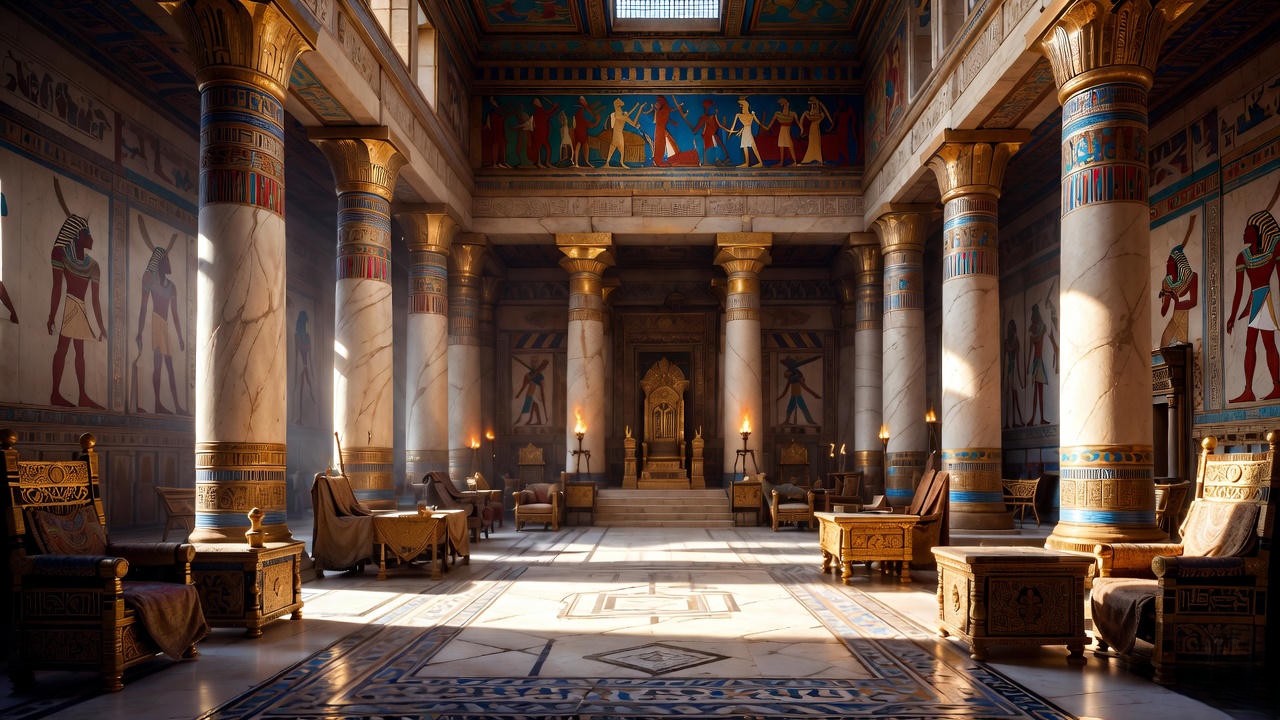
- Act IV depicts the siege of Alexandria. Caesar’s cool resourcefulness contrasts with Egyptian chaos. A highlight is the accidental fire that consumes ships and spreads to the great Library.
- Act V brings victory and reckoning. Cleopatra, now tasting power, demands bloody vengeance. Caesar refuses, teaching one final lesson in mercy before departing for Rome—hinting that he will send Mark Antony as her next “tutor.”
Throughout, Shaw balances comedy (cultural clashes, witty repartee) with serious philosophical discourse, ending on a note that subtly foreshadows Shakespeare’s tragedy.
Why Shaw Wrote It as an “Alternative” to Shakespeare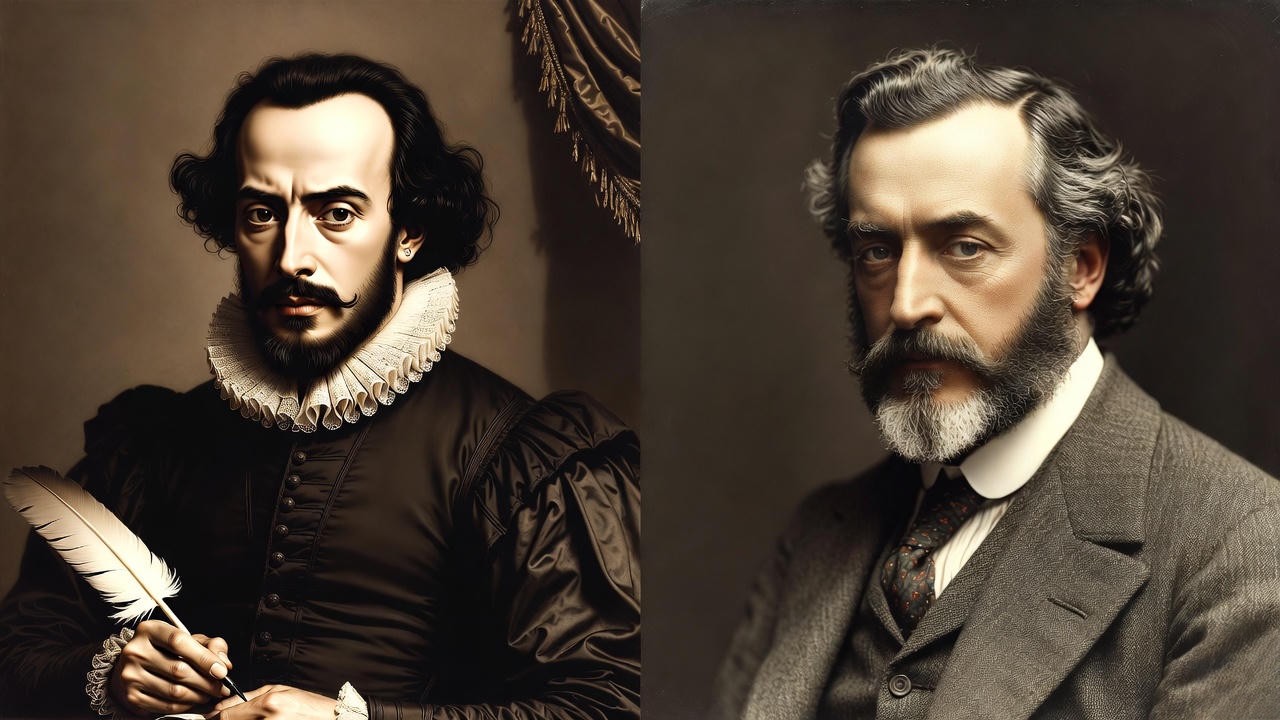
Shaw was an outspoken critic of what he called “Bardolatry”—the uncritical worship of Shakespeare. In his view, Shakespeare’s Antony and Cleopatra glorified “unmitigated lust” as heroic passion.
Shaw’s Critique of “Bardolatry”
In the preface to Three Plays for Puritans, Shaw argues that Shakespeare’s romantic tragedies often sentimentalize vice. He accuses the Bard of turning Cleopatra into a “man-eater” whose erotic power destroys great men, while Antony becomes a lovesick fool abandoning duty.
Shaw deliberately inverts this: his Caesar is never enslaved by desire, and his Cleopatra grows from childish tyrant to responsible ruler under rational guidance.
Direct Contrasts in Portrayals
| Aspect | Shaw’s Caesar and Cleopatra | Shakespeare’s Antony and Cleopatra |
|---|---|---|
| Central Relationship | Political mentorship; quasi-father/daughter | Overwhelming erotic passion |
| Caesar’s Role | Protagonist: wise, merciful, superhuman statesman | Marginal figure (dies off-stage early) |
| Cleopatra | Starts as spoiled 16-year-old; matures into queen | Mature, seductive enchantress from the outset |
| Tone | Witty comedy with satirical edge | Grand poetic tragedy |
| Theme of Empire | Critique of vengeance; advocacy of clemency | Tragic collision of Rome and Egypt |
| Ending | Bittersweet triumph; hint of future passion | Mutual suicide; imperial collapse |
These contrasts reflect Shaw’s Fabian socialist outlook and his belief in evolutionary progress through reason rather than emotion.
Character Analysis: Reimagining Icons
Julius Caesar in Shaw’s Play
Shaw’s Caesar is a proto-Nietzschean “superman”: bald, aging, yet intellectually supreme. He preaches—and practices—clemency as the mark of true power: “He who takes vengeance is only strong enough to be a enemy; he who forgives is strong enough to be a friend.” Human touches (vanity about his baldness, weariness of endless war) keep him relatable.
Cleopatra’s Transformation
Beginning as a capricious, cat-like child terrified of Romans and ruled by her nurse, Cleopatra evolves through Caesar’s tutelage. Her growth arc—from demanding Ftatateeta murder enemies to grasping political necessity—forms the emotional core.
Supporting Characters
- Ftatateeta: Fierce protector embodying raw Egyptian vengeance.
- Rufio: Stoic Roman soldier highlighting disciplined efficiency.
- Britannus: Shaw’s satirical portrait of British insular propriety (a secretary proud of his “island” virtues).
- Pothinus and Achillas: Scheming courtiers representing old-regime corruption.
Each serves as a foil to illuminate cultural and moral clashes.
Major Themes in Shaw’s Play
Vengeance vs. Mercy and Clemency
Caesar’s repeated refrain—”Murder shall breed murder”—critiques cycles of retribution, offering mercy as the path to stable empire.
Empire, Civilization, and Progress
Shaw uses Rome vs. Egypt to comment on British imperialism: Roman order brings progress, yet at the cost of cultural erasure.
Age, Maturity, and Power
The play celebrates experience over youthful passion, aligning with Shaw’s anti-romantic philosophy.
Anti-Romanticism and Human Nature
By stripping away erotic myth, Shaw exposes the pragmatic realities behind historical legend.
Literary Style and Shaw’s Wit
Shaw’s dialogue crackles with epigrammatic brilliance. Examples:
- Cleopatra: “Old gentleman—will you teach me to be a queen?”
- Caesar: “Pardon him, Theodotus: he is a barbarian, and thinks that the customs of his tribe and island are the laws of nature.”
The structure blends historical pageantry with drawing-room comedy, making complex ideas accessible.
Reception, Adaptations, and Legacy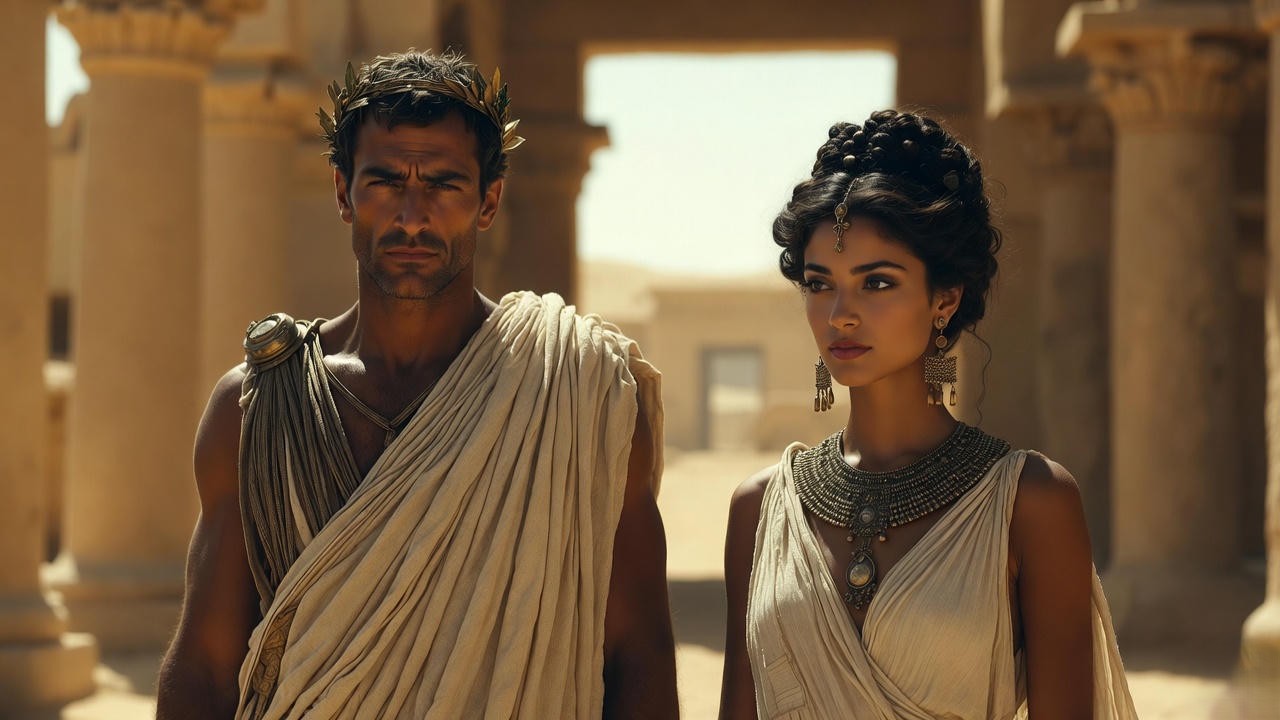
Early productions met mixed reviews—some critics found the anti-romantic tone jarring. The 1907 Berlin staging was a triumph, but London waited until 1907 for full performance.
The 1945 Gabriel Pascal film, starring Vivien Leigh and Claude Rains, remains the best-known adaptation. Notably, Leigh and Laurence Olivier performed both Shaw’s and Shakespeare’s plays in repertory, allowing audiences to experience the contrast directly.
Modern revivals continue, with actors like Christopher Plummer (Caesar) and Helen Mirren earning praise. The play’s sharp dialogue and political relevance keep it alive in repertory theaters.
Expert Insights: Why Shaw’s Version Endures
As a long-time scholar of Renaissance and modern drama, I find Shaw’s play invaluable for teaching Shakespeare’s limitations. Where the Bard excels in poetic grandeur and psychological depth, Shaw offers clarity, humor, and intellectual provocation. Reading or viewing both in sequence reveals how dramatically the same historical material can be reshaped by differing worldviews—one celebrating passionate transcendence, the other rational progress.
Frequently Asked Questions (FAQs)
Is Caesar and Cleopatra by Shakespeare or Shaw? It is by George Bernard Shaw (1898). Shakespeare wrote Antony and Cleopatra, which focuses on Cleopatra’s later relationship with Mark Antony.
What’s the main difference between the two plays? Shaw’s is a witty historical comedy emphasizing mentorship and politics; Shakespeare’s is a tragic romance centered on erotic passion and downfall.
Is Shaw’s play historically accurate? Partially. Shaw alters ages, omits the likely romantic affair and Caesarion, and dramatizes events to serve thematic purposes.
Why does Shaw portray Cleopatra as a teenager? To highlight her immaturity and growth under Caesar’s guidance, reinforcing his anti-romantic, educational theme.
Should I read Shaw’s play before or after Shakespeare’s? Many find Shaw first provides a refreshing, grounded perspective that enhances appreciation of Shakespeare’s poetic intensity afterward.
George Bernard Shaw’s Caesar and Cleopatra stands as a brilliant, deliberate alternative to Shakespeare’s romantic tragedy—one that replaces passion with intellect, vengeance with mercy, and myth with sharp-eyed realism. By demythologizing these iconic figures, Shaw invites us to reconsider not only history but the very nature of power, maturity, and human progress.