With these breathtaking words, Mark Antony—once Rome’s most celebrated general—declares his willingness to let the entire Roman Empire dissolve if it means staying in Cleopatra’s arms. Few lines in Shakespeare so perfectly capture the paradox at the heart of Antony’s character in Antony and Cleopatra: a man whose greatness and ruin are inseparable, a hero whose virtues are also his fatal flaws.
In Shakespeare’s final Roman tragedy, Antony stands as one of the most complex tragic figures in the entire canon. He is neither the straightforward villain of a Richard III nor the purely noble victim of a King Lear. Instead, he is a man torn between two worlds—the disciplined, masculine, imperial world of Rome and the sensual, fluid, intoxicating world of Egypt. This article offers a comprehensive character analysis of Antony, exploring his strengths, contradictions, tragic flaws, and ultimate transcendence. Whether you’re a student preparing for exams, a teacher seeking fresh insights, an actor studying the role, or simply a lover of Shakespeare, this deep dive will illuminate why Antony remains one of the most compelling and human characters in all of literature.
1. Antony’s Historical Context and Shakespeare’s Sources
The Real Mark Antony vs. Shakespeare’s Version
Shakespeare’s Antony is not a direct portrait of the historical Marcus Antonius (83–30 BCE), but a carefully shaped literary creation. The principal source for the play is Plutarch’s Life of Antony (translated into English by Sir Thomas North in 1579). Plutarch presents Antony as a man of extraordinary military talent, immense generosity, and notorious self-indulgence—a portrait Shakespeare both adopts and transforms.
Historically, Antony was a brilliant cavalry commander under Julius Caesar, a key player in the Second Triumvirate, and a shrewd (if ruthless) politician. Shakespeare, however, deliberately amplifies Antony’s contradictions to make him a more tragic figure. Where Plutarch emphasizes Antony’s political ambition and occasional cruelty, Shakespeare foregrounds the tension between Roman duty and personal passion.
Why Shakespeare Heightens Antony’s Contradictions
Shakespeare’s Antony is larger than life in every sense. His language soars to cosmic proportions, his passions burn with apocalyptic intensity, and his fall is correspondingly catastrophic. By magnifying Antony’s grandeur and his flaws, Shakespeare creates a character who embodies the Renaissance fascination with the conflict between public responsibility and private desire—a theme that resonates deeply in the Elizabethan era, when England was itself negotiating its emerging imperial identity.
2. Antony as Roman Hero: The Public Face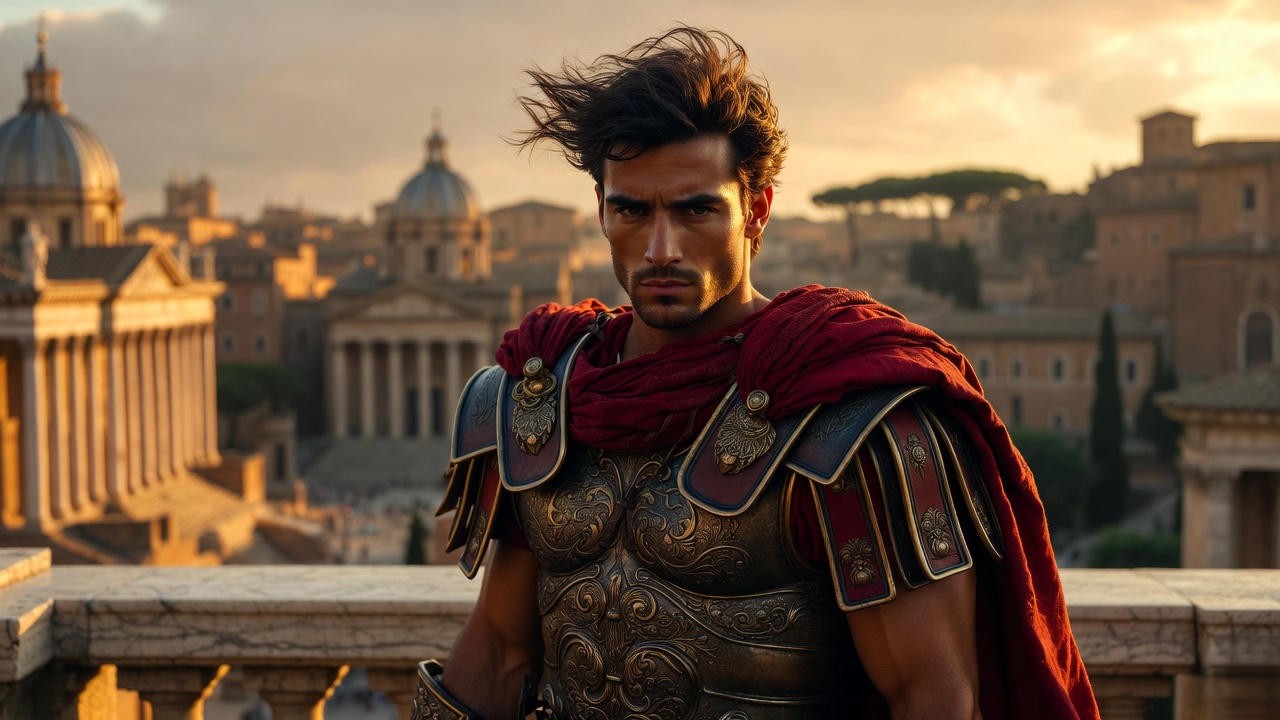
Antony the Triumvir and Soldier
From the opening scene, Antony is presented as a figure of almost mythic Roman stature. Even his critics cannot deny his past achievements. Octavius Caesar grudgingly admits:
“He alone dealt out the spoils of war, / And gave the soldiers what they ask’d for” (3.5.5–6).
Antony’s military reputation is legendary. He is the man who fought at Philippi, who crossed the Alps in winter, who once drank from a helmet while his soldiers cheered. His very name carries the weight of Roman virtus—courage, manliness, and martial excellence.
Octavius Caesar as Foil
Octavius (the future Augustus) serves as the perfect foil to Antony. Where Antony is charismatic, impulsive, and generous, Octavius is disciplined, calculating, and cold. Octavius represents the new Rome—efficient, bureaucratic, and future-oriented—while Antony embodies the old Rome of heroic individualism and martial glory.
This contrast is most evident in Act 3, Scene 11, when Antony, after his humiliating flight from Actium, tries to rally his remaining troops. His speech is still powerful, but the contrast with Octavius’s unshakeable control underscores Antony’s tragic vulnerability.
Key Scenes Showcasing Antony’s Roman Greatness
- The reconciliation with Octavius in Act 2, Scene 2, where Antony’s magnanimity shines.
- The farewell to his servants before Actium (4.2), where his emotional generosity moves even his attendants to tears.
These moments remind us that Antony is not simply a fallen hero; he is a hero who falls because of the very qualities that made him great.
3. Antony as Lover: The Private Self and Its Costs
Antony in Love — Passion, Devotion, and Obsession
Cleopatra is the catalyst that awakens and ultimately destroys Antony. Their relationship is not merely romantic; it is mythic, almost cosmic in scale. Antony describes Cleopatra as “a woman that cannot be matched” (2.2.239), and their love language is one of excess and hyperbole. He famously declares:
“Let Rome in Tiber melt, and the wide arch Of the rang’d empire fall! Here is my space.” (1.1.33–35)
This is not mere flirtation—it is a deliberate rejection of Roman duty in favor of a private, almost anarchic world of pleasure and emotion.
Moments of Genuine Tenderness
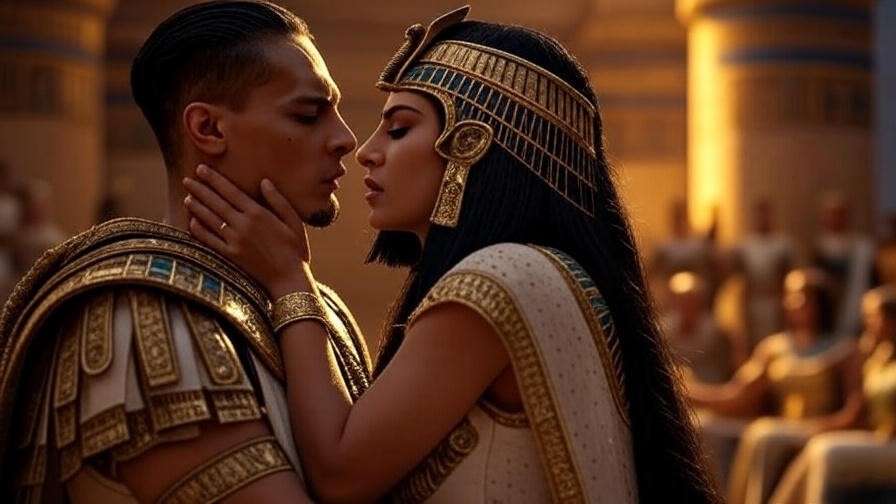
Yet their love is not only destructive. Shakespeare gives us exquisite moments of intimacy and vulnerability. In Act 4, Scene 15, as Antony lies dying, Cleopatra cradles him, and he responds:
“I am dying, Egypt, dying; only I here importune death awhile, until Of many thousand kisses the poor last I lay upon thy lips.” (4.15.18–21)
These lines reveal a man capable of profound tenderness, a depth of feeling that elevates him beyond mere indulgence.
The Destructive Side
The cost of this passion is catastrophic. Antony neglects his Roman responsibilities, betrays his allies, and loses the empire. His love for Cleopatra becomes a form of self-deception—he convinces himself that his private world can coexist with his public duty, only to discover that the two are irreconcilable.
Antony’s tragedy lies in his refusal to choose until it is too late. He is not simply a victim of Cleopatra’s allure; he is complicit in his own downfall.
4. Antony’s Fatal Flaws: Hubris, Impulsiveness, and Self-Division
The Tragic Flaw(s) of Antony
Shakespeare’s tragic heroes are defined by hamartia—a fatal flaw or error in judgment. For Antony, the flaw is twofold and inseparable:
- Excessive passion — an inability to moderate desire.
- Self-division — the failure to reconcile his Roman identity with his Egyptian one.
Impulsiveness and Emotional Volatility
Antony’s impulsiveness is most dramatically revealed in the Battle of Actium (3.10). When Cleopatra’s ships flee, Antony follows her, abandoning his fleet and his honor. Even his own soldiers are stunned:
“All is lost! This foul Egyptian hath bewitched him.” (3.10.1–2)
This single act crystallizes Antony’s tragic nature: his heart overrules his head, and his loyalty to Cleopatra overrides his loyalty to Rome.
Comparison to Other Shakespearean Tragic Heroes
Unlike Macbeth, whose ambition is cold and calculated, or Othello, whose jealousy is manipulated by Iago, Antony’s downfall is self-inflicted and rooted in love rather than hate. Like King Lear, he is a man of immense stature who falls because of his inability to balance passion with reason. Yet Antony’s tragedy feels uniquely modern: he is torn between two incompatible ways of life, a conflict many readers recognize in their own divided selves.
Expert Insight As the eminent Shakespearean scholar Janet Adelman observes in The Common Liar (1973): “Antony’s tragedy is that he can imagine no middle ground between the total surrender to passion and the total surrender to duty. He is a man who lives at the extremes.”
5. Antony’s Downfall: From Hero to Disgrace to Redemption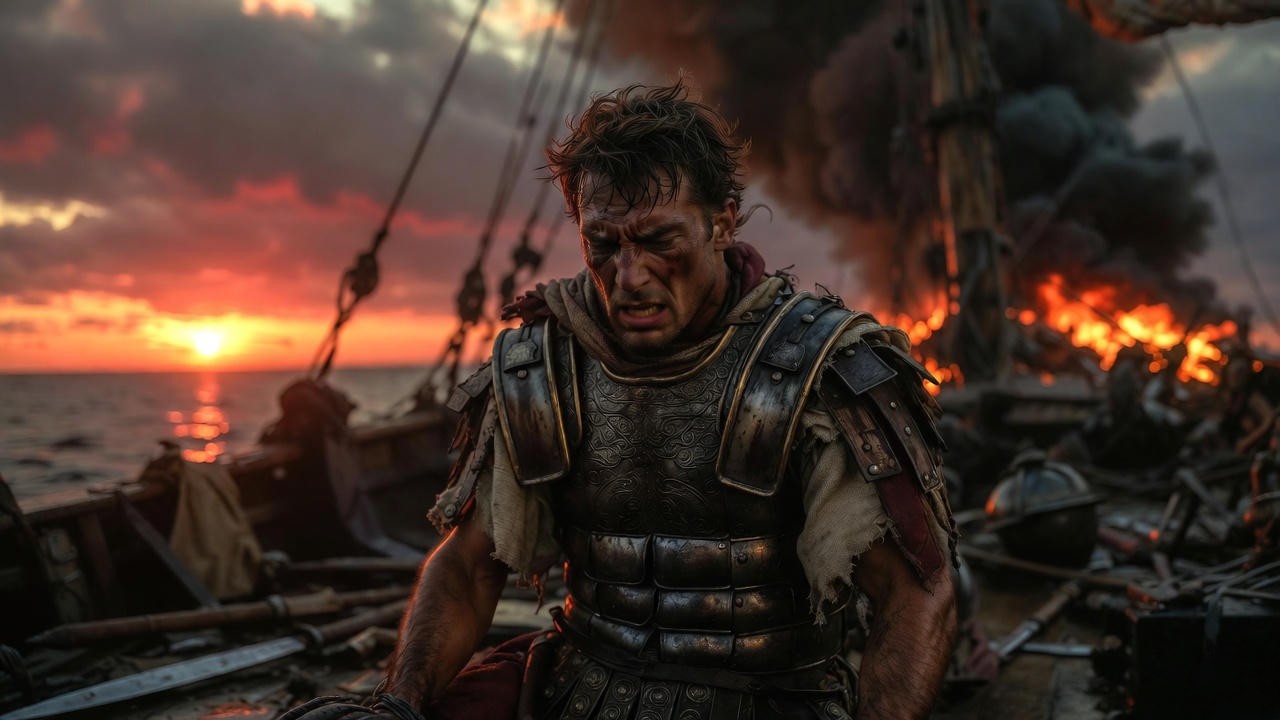
Actium and the Loss of Empire
The Battle of Actium (31 BCE) is the turning point. Antony’s flight after Cleopatra’s ships marks the moment when he loses not only his military power but also his Roman identity. The messenger’s report is devastating:
“He has given his empire to a woman.” (3.6.68–69, paraphrased)
From this point forward, Antony is a man in disgrace, a “stricken deer” (3.13.111) who can no longer command respect.
Suicide Attempt and Final Reconciliation
In Act 4, Scene 15, believing Cleopatra dead, Antony attempts suicide but fails. The scene is both pitiful and heroic. He is carried to Cleopatra’s monument, where they share a final, tender exchange. His death is not glorious, but it is human—messy, painful, and deeply moving.
The “Noble Ruin”
Antony dies calling himself “a Roman by a Roman valiantly vanquished” (4.15.58). The phrase captures the paradox: his suicide is both an act of Roman honor and a recognition of his own failure. He is a “noble ruin” (5.1.357), a man whose greatness is inseparable from his collapse.
6. Antony’s Language and Stage Presence: How Shakespeare Builds Character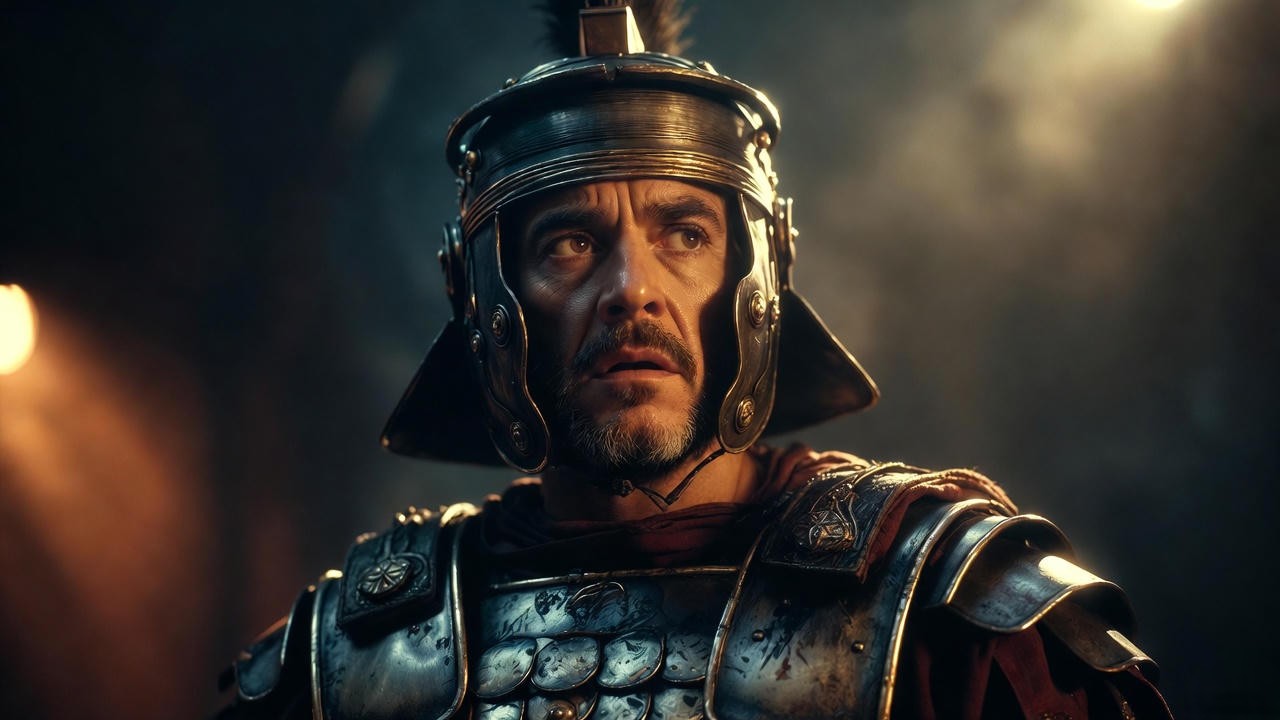
Antony’s Voice — Grandiose, Poetic, and Broken
One of the most striking aspects of Antony’s character is his distinctive voice. Shakespeare gives him some of the richest, most soaring language in the entire play, particularly in his public moments. When he is in command—whether addressing troops or negotiating with Octavius—his rhetoric is grand, almost Herculean:
“I am a man of infinite variety” (2.2.83, spoken by Cleopatra about him, but fittingly descriptive).
Yet as the play progresses, his language fractures. After Actium, his speeches become jagged and self-reproachful. The cosmic imagery of melting empires gives way to images of dissolution and decay:
“Here I am Antony; Yet cannot hold this visible shape, my knave.” (4.14.13–14)
This linguistic shift mirrors his psychological disintegration: the once-unbreakable Roman hero is literally and figuratively falling apart.
Imagery of Dissolution and Cosmic Scale
Antony’s speeches are filled with images of melting, dissolving, and overflowing—water, fire, and sky all collapsing into one another. These metaphors are not mere decoration; they reflect his inability to maintain boundaries between self and other, duty and desire, Rome and Egypt.
Stage Directions and Physicality
Shakespeare provides few explicit stage directions for Antony, yet the text implies a commanding physical presence. His entrances and exits are often dramatic: he storms off in anger, collapses in despair, or is carried dying to Cleopatra’s monument. Actors playing Antony must convey both martial strength and emotional vulnerability—qualities that make the role notoriously challenging and rewarding.
7. Antony Through Cleopatra’s Eyes — A Mirror of His Complexity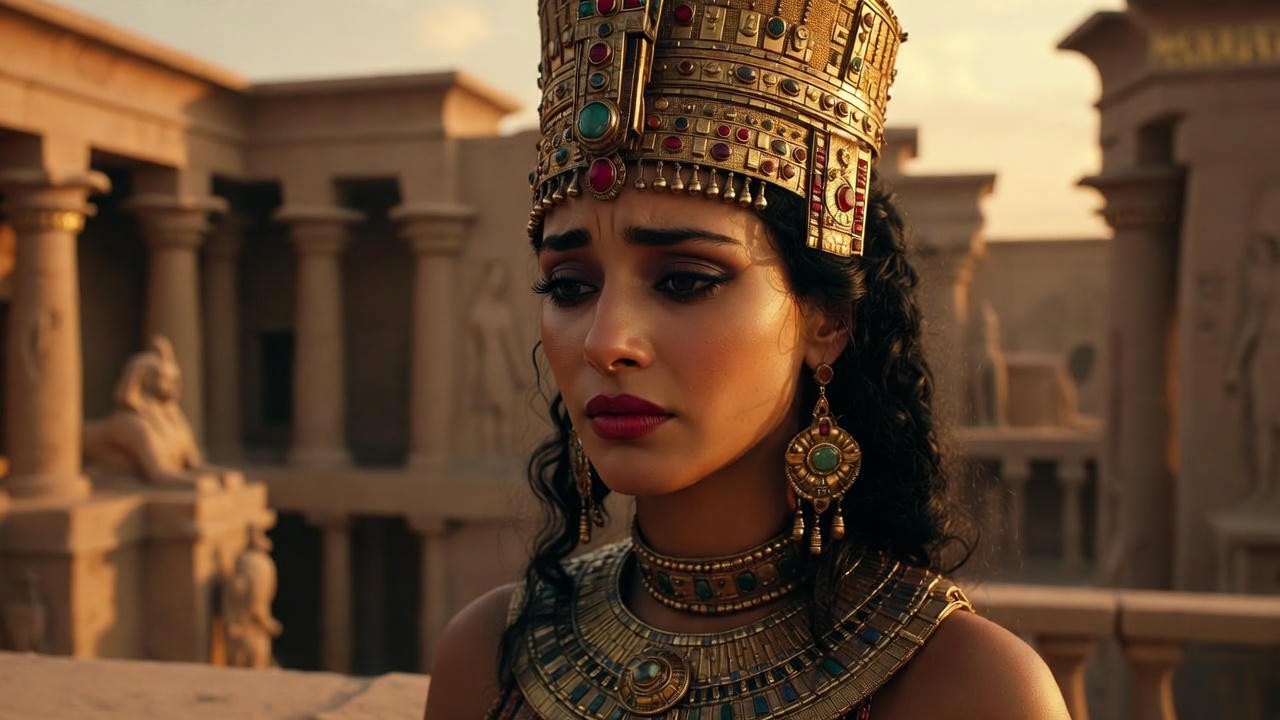
How Cleopatra Defines (and Redeems) Antony
Cleopatra’s final tribute to Antony in Act 5, Scene 2 is perhaps the most powerful summation of his character:
“His face was as the heavens, and therein stuck A sun and moon, which kept their course and lighted The little O, the earth.” (5.2.79–81)
In her vision, Antony is cosmic, radiant, and larger than life—even in death. She transforms his failures into something heroic, refusing to let history remember him only as the man who lost an empire for love.
Cleopatra’s Role in Shaping His Tragic Identity
Cleopatra does not simply seduce Antony; she co-creates his tragedy. By demanding absolute devotion, she forces him to choose between two identities. Yet she also offers him the possibility of transcendence: in her monument, dying in her arms, Antony achieves a kind of unity that was impossible while he lived.
8. Modern Interpretations and Stage Legacy
Antony on Stage and Screen: Enduring Interpretations
The role of Antony has attracted some of the greatest actors of the 20th and 21st centuries:
- Richard Burton (1963 film opposite Elizabeth Taylor): emphasized Antony’s charisma and self-destructive passion.
- Alan Howard (Royal Shakespeare Company, 1982): portrayed a more introspective, psychologically complex Antony.
- Ralph Fiennes (National Theatre, 2018): highlighted Antony’s middle-aged weariness and desperation.
Each interpretation reveals a different facet of the character—soldier, lover, politician, or broken man.
Contemporary Readings
Modern scholars and directors have approached Antony through various lenses:
- Postcolonial: Antony as a Roman imperialist seduced and undone by the “exotic” East.
- Gender studies: Antony’s struggle with masculinity in a world that equates Roman virtue with emotional restraint.
- Political: Antony as a populist leader undone by authoritarian successor (Octavius).
Mark Antony in Antony and Cleopatra is Shakespeare’s ultimate tragic hero of divided loyalties. He is a man who possesses every quality of greatness—courage, generosity, eloquence, passion—yet whose inability to reconcile these qualities with the demands of empire leads to his destruction. Unlike many tragic figures who fall because of vice, Antony falls because of excess of virtue: too much heart, too much love, too much humanity.
In choosing Cleopatra over Rome, he chooses the personal over the political, the immediate over the eternal, the human over the imperial. His story remains profoundly moving because it asks a question many of us face in our own lives: Can we ever truly reconcile the demands of duty with the desires of the heart?
Antony’s final words—“I am dying, Egypt, dying”—are not merely a lament; they are an acknowledgment of a life lived at full intensity, even if that intensity led to ruin. In his noble ruin, he achieves a kind of immortality that cold, calculating Octavius can never attain.
Key Quotes from Antony — With Analysis
| Act & Scene | Quote | Brief Analysis |
|---|---|---|
| 1.1.33–34 | “Let Rome in Tiber melt…” | Iconic rejection of Roman duty for love |
| 4.14.13–14 | “Here I am Antony; / Yet cannot hold this visible shape…” | Self-dissolution after Actium |
| 4.15.18–21 | “I am dying, Egypt, dying…” | Final tender address to Cleopatra |
| 5.2.313 | “A Roman by a Roman / Valiantly vanquished” | Claiming Roman honour in suicide |
Is Antony a tragic hero in the classical sense? Yes, but with a twist. He possesses hamartia (fatal flaw), falls from greatness, and evokes pity and fear—yet his downfall is self-inflicted through love rather than hubris or ambition alone.
How does Antony compare to other Shakespearean tragic heroes? Unlike Macbeth (ambition) or Othello (jealousy), Antony’s tragedy stems from an excess of passion and an inability to reconcile two worlds. He shares Lear’s emotional generosity and Coriolanus’s martial pride.
Why does Antony abandon the battle at Actium? Out of overwhelming loyalty to Cleopatra. When her ships flee, he follows—prioritizing personal attachment over military strategy.
Is Antony more in love with Cleopatra or with himself? Both. His love for Cleopatra is genuine, but it is also a vehicle for self-expression. He needs her to feel larger than life, making their relationship both transcendent and dangerously self-absorbed.