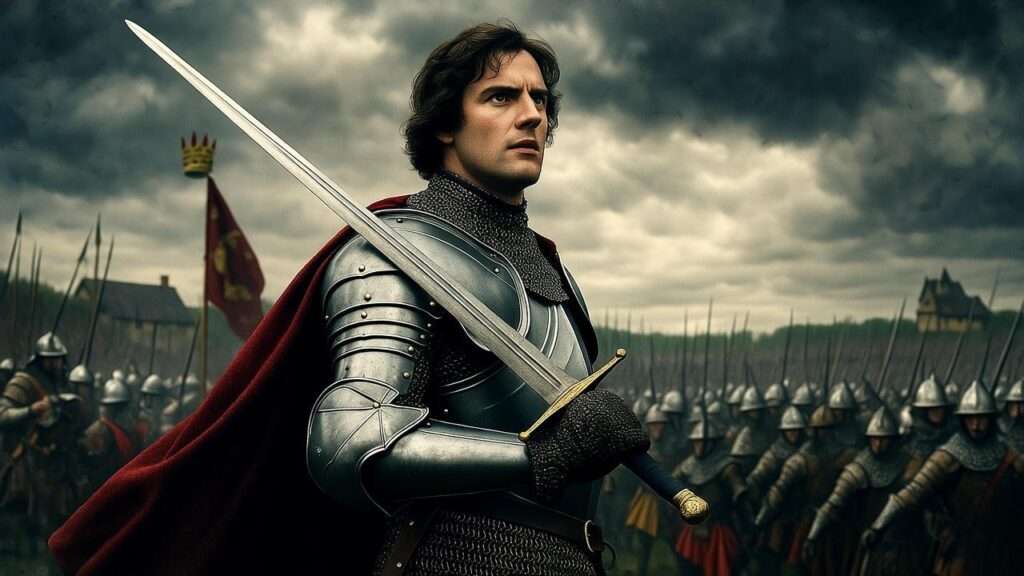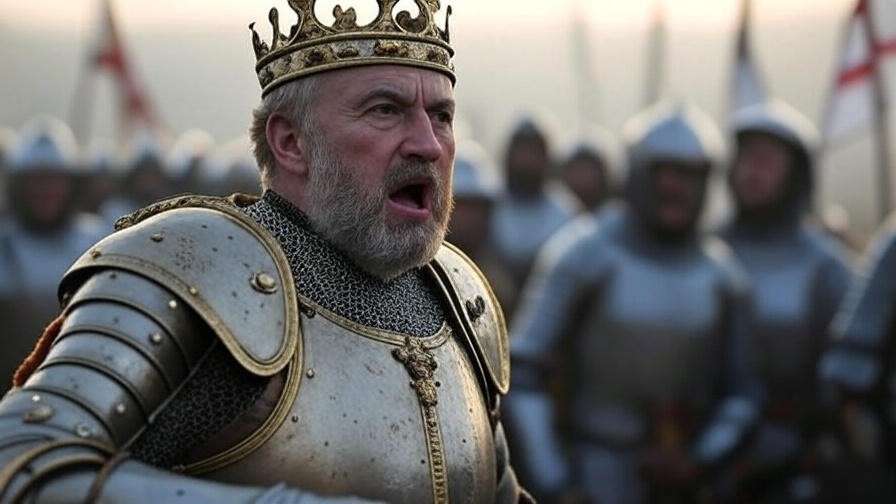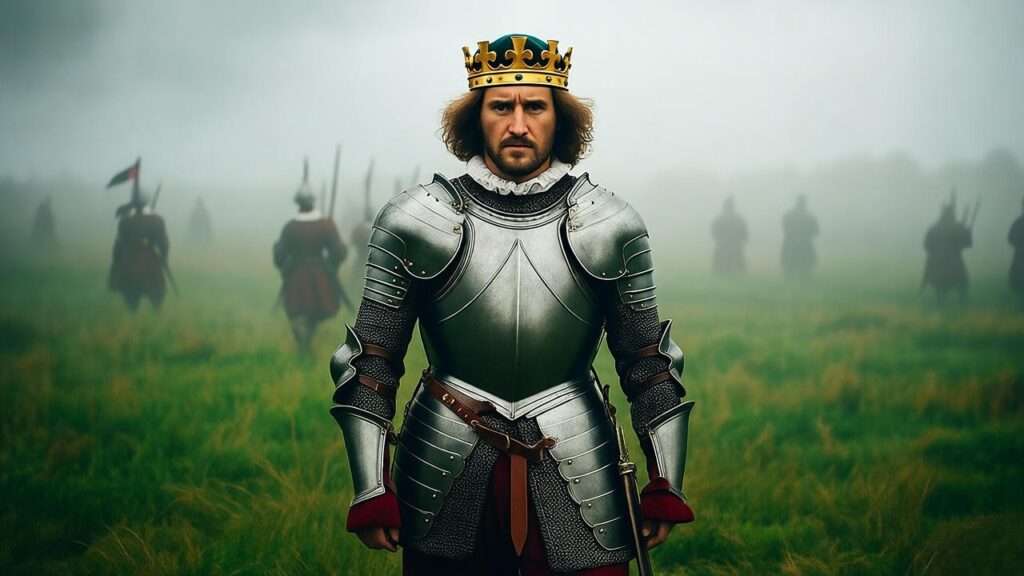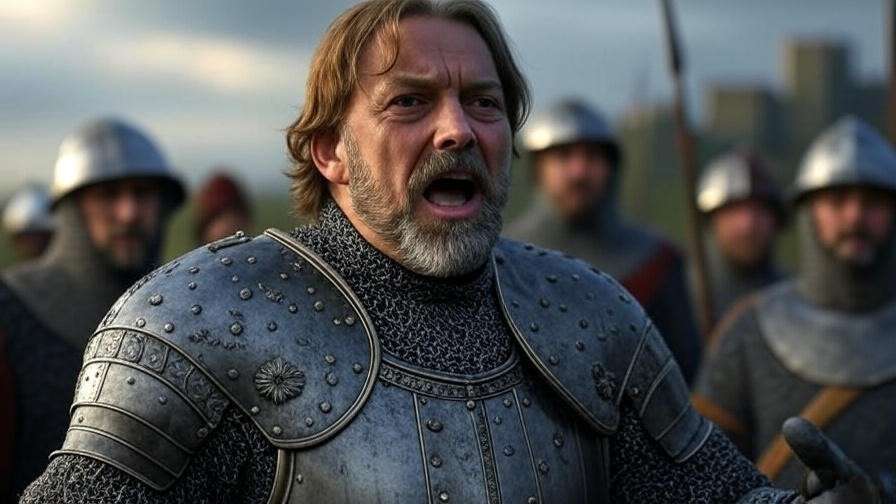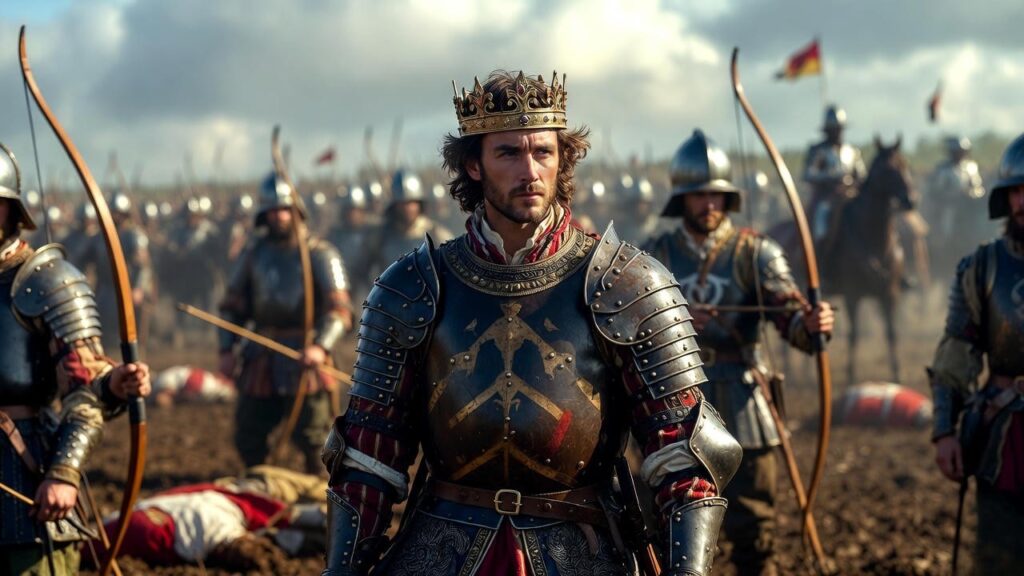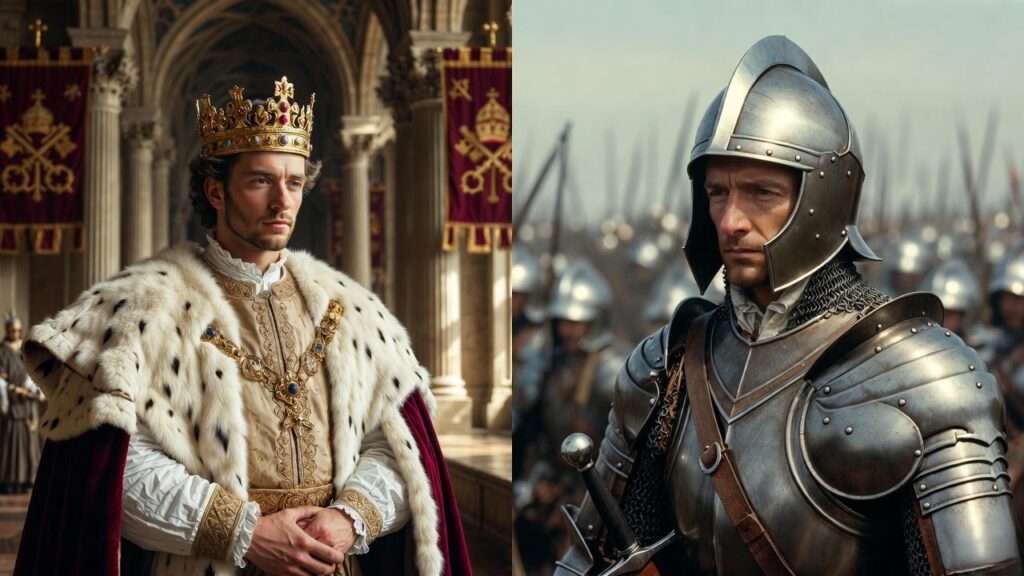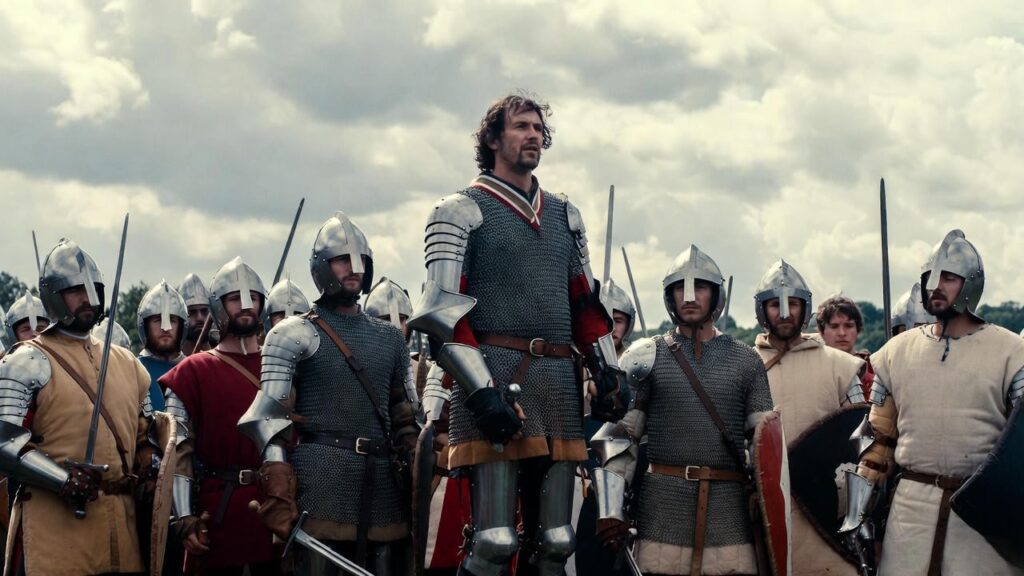
“We few, we happy few, we band of brothers…” These immortal words, delivered on the eve of the Battle of Agincourt, have inspired generations and cemented Henry V as one of William Shakespeare’s most celebrated works. But what exactly is the Henry V storyline that transforms a once-wayward prince into England’s heroic king? Whether you’re a student grappling with the play for the first time, a theater lover preparing for a production, or a lifelong Shakespeare enthusiast seeking deeper insight, this detailed guide offers everything you need: a clear plot summary, act-by-act breakdown, historical context, thematic exploration, character analysis, and expert interpretations—all designed to illuminate the enduring power of this epic history play.
Written around 1599, Henry V concludes Shakespeare’s monumental second tetralogy (often called the Henriad) and presents a complex portrait of leadership, war, and national identity. Far from simple propaganda, the play probes the moral costs of conquest while delivering some of the most stirring rhetoric in the English language. Let’s dive into the full Henry V storyline and uncover why it continues to captivate audiences more than four centuries later.
Historical Context and Background
Shakespeare’s Henriad Tetralogy
Henry V is the triumphant finale of Shakespeare’s four-play cycle tracing the rise and fall of the House of Lancaster. The journey begins with the deposition of Richard II, continues through the rebellious reign of Henry IV (Parts 1 and 2), and culminates in the glorious yet questioning reign of his son, Henry V.
Audiences who had watched the young Prince Hal carouse with Falstaff and his tavern companions in Henry IV now witness his dramatic transformation. The wild prince rejects his former life upon ascending the throne, declaring, “I have turned away my former self.” Shakespeare uses this arc to explore themes of maturation, responsibility, and the burdens of power—ideas that resonate far beyond the 15th century.
Real-Life Henry V and the Hundred Years’ War
The historical Henry V (1386–1422) reigned from 1413 to 1422 and is best remembered for reopening the Hundred Years’ War with France. Encouraged by ambitious clergy seeking to avoid taxation, he pressed an ancestral claim to the French crown. His stunning victory at Agincourt in 1415—where a small, exhausted English army defeated a vastly larger French force—became legendary.
Shakespeare drew primarily from Raphael Holinshed’s Chronicles (1577) and Edward Hall’s The Union of the Two Noble and Illustre Families of Lancaster and York (1548). He took significant dramatic liberties: compressing timelines, inventing characters, and amplifying Henry’s heroism while subtly questioning the justice of the war. The result is a play that balances patriotic fervor with moral ambiguity.
The Role of the Chorus
One of Henry V’s most distinctive features is the Chorus—a single speaker who appears before each act. The Chorus serves multiple functions: apologizing for the limitations of the stage (“Can this cockpit hold / The vasty fields of France?”), bridging gaps in time and place, and urging the audience to use their imagination (“piece out our imperfections with your thoughts”).
Critics often interpret the Chorus as Shakespeare’s meta-theatrical commentary on the challenges of staging epic history. Its effusive praise of Henry also raises questions: Is the Chorus a reliable narrator, or does its idealism contrast with the play’s grittier realities?
Detailed Henry V Storyline: Act-by-Act Summary
Prologue and Act 1: The Making of a King
The Chorus opens with a soaring invocation: “O for a Muse of fire…” The stage, it admits, is inadequate for the story about to unfold.
In Act 1, we meet the newly crowned King Henry V. The Archbishop of Canterbury and Bishop of Ely, fearing a bill that would seize church lands, encourage Henry to pursue his claim to France. Canterbury delivers a lengthy, convoluted justification based on Salic law, concluding that Henry has a legitimate right to the French throne.
French ambassadors arrive bearing a mocking gift from the Dauphin: a chest of tennis balls, mocking Henry’s youthful frivolity. Outraged but controlled, Henry declares war: “We are glad the Dauphin is so pleasant with us… When we have matched our rackets to these balls, / We will in France, by God’s grace, play a set / Shall strike his father’s crown into the hazard.”
Act 2: Preparations and Betrayal
The Chorus describes England’s preparations and the departure of the fleet.
In England, three traitors—Scroop, Cambridge, and Grey—are uncovered plotting Henry’s assassination for French gold. Henry’s handling of the betrayal is masterful: he feigns mercy before revealing he knows their guilt, then orders their execution. This scene showcases his newfound maturity and resolve.
Meanwhile, in the comic subplot, we revisit old friends from Henry IV: Pistol, Nym, Bardolph, and the Boy, now enlisted. Their bickering provides comic relief while foreshadowing the harsh realities of war. Falstaff, gravely ill after Henry’s rejection, dies offstage—reported by Mistress Quickly in a poignant, rambling eulogy.
Act 3: The Siege of Harfleur and the Famous Speeches
The Chorus evokes the English army’s arrival in France.
The siege of Harfleur is grueling. Henry rallies his troops with the iconic cry: “Once more unto the breach, dear friends, once more; / Or close the wall up with our English dead!” The town eventually surrenders, but the English army is depleted by disease.
Henry sends a challenge to the Dauphin, then learns the French are pursuing. Exhausted and outnumbered, the English march toward Calais. In a lighter interlude, we see soldiers from England, Ireland, Scotland, and Wales struggling to communicate—highlighting the play’s interest in national unity.
Act 4: The Night Before Agincourt and the Battle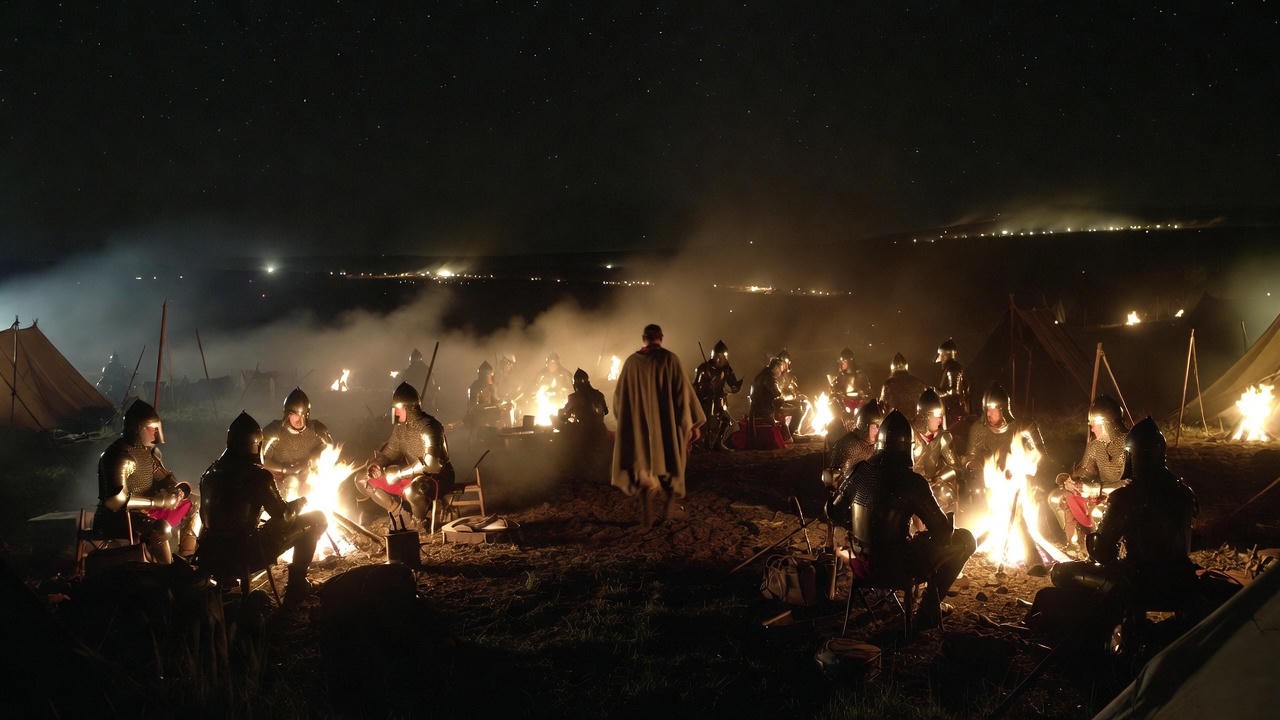
This act contains the emotional and dramatic heart of the play.
The Chorus describes the contrasting camps: confident French nobles playing dice, anxious English soldiers around campfires.
Disguised as a common soldier, Henry walks among his men. He debates with soldiers Williams and Bates about the king’s responsibility for the souls of those who die. Williams challenges the notion that a just cause absolves a king of guilt—a moment that reveals Henry’s private doubts: “Every subject’s duty is the king’s, but every subject’s soul is his own.”
Alone, Henry delivers the introspective soliloquy on ceremony: “What have kings that privates have not too, / Save ceremony…?” He wrestles with the isolation of power.
On St. Crispin’s Day, Henry delivers the rousing speech that defines the play: “We few, we happy few, we band of brothers…” Inspired, the English charge.
Against all odds, they win a decisive victory at Agincourt. The French losses are catastrophic; the English suffer minimal casualties. Henry attributes the triumph to God.
Act 5: Peace and Wooing
The Chorus summarizes the triumphant return to England and subsequent return to France.
Negotiations lead to the Treaty of Troyes: Henry will marry Princess Katherine of France and become heir to the French throne. In the famous wooing scene, Henry—awkward yet sincere—courts Katherine in broken French and English. Their language barrier underscores both comedy and the play’s theme of uneasy union between nations.
Major Themes in Henry V
Shakespeare’s Henry V is far more than a tale of battlefield glory. Beneath the patriotic surface lies a rich exploration of complex themes that continue to provoke debate among scholars, directors, and audiences.
Leadership and the Ideal King
At its core, the play examines what makes a great ruler. Henry V is presented as the ideal Renaissance prince: pious, just, courageous, and merciful. Yet Shakespeare subtly undermines this ideal. Henry’s decision to invade France rests on the self-serving advice of church leaders eager to protect their wealth. His execution of the traitors and former friend Bardolph demonstrates ruthless pragmatism. The disguised king scene reveals his awareness of the moral burden he carries. As critic Norman Rabkin famously argued, Henry is both “the mirror of all Christian kings” (as the Chorus proclaims) and a Machiavellian figure willing to manipulate religion and law for political ends.
The Nature and Cost of War
While the play celebrates English valor, it never shies away from war’s brutality. Soldiers suffer from disease, exhaustion, and fear. The Boy’s disillusioned commentary on Pistol and company—“they will steal anything and call it purchase”—exposes the criminal underside of military life. The killing of the French prisoners (historically ordered for strategic reasons) is glossed over in the play but remains a dark moment. Henry’s threat to Harfleur—warning of rape, murder, and infanticide if the town resists—reveals the terror tactics of medieval siege warfare.
National Identity and Unity
Written shortly after the defeat of the Spanish Armada, Henry V taps into Elizabethan patriotism. The play unites the “four nations” of Britain: English Captain Gower, Welsh Fluellen, Irish Macmorris, and Scottish Jamy serve together under Henry’s banner. Fluellen’s proud comparisons of Henry to Alexander the Great reinforce a sense of shared British destiny. Yet the comic misunderstandings among these captains also hint at underlying tensions—tensions that would erupt in later centuries.
Rhetoric, Language, and Power
Few plays showcase the power of language as vividly. Henry’s speeches—Harfleur, St. Crispin’s Day, the wooing of Katherine—are masterclasses in persuasion. Shakespeare contrasts Henry’s plain, direct English with the French nobility’s ornate arrogance. The language lesson between Katherine and Alice humorously highlights cultural differences while foreshadowing the uneasy Anglo-French union.
Character Analysis
King Henry V (formerly Prince Hal)
Henry’s transformation from the reckless youth of Henry IV to a disciplined monarch is one of Shakespeare’s greatest character arcs. He is charismatic, intelligent, and deeply self-aware. Yet his piety can feel performative (thanking God for Agincourt while ordering prisoners killed), and his rejection of Falstaff remains a point of contention among critics. Laurence Olivier’s 1944 film portrayed him as an unambiguous hero; Kenneth Branagh’s 1989 version emphasized his inner turmoil and moral ambiguity.
The Chorus
More than a narrator, the Chorus shapes audience perception. Its hyperbolic praise (“a little touch of Harry in the night”) creates an idealized image that the play itself intermittently questions. Some scholars see the Chorus as a stand-in for Elizabethan propaganda; others view it as Shakespeare acknowledging the gap between historical myth and complex reality.
Supporting Characters: The Common Soldiers
Williams, Bates, and the Boy provide a ground-level perspective absent from many history plays. Their debates with Henry democratize the drama, forcing the king—and the audience—to confront uncomfortable truths about war and responsibility.
The Comic Subplot: Pistol, Bardolph, Nym, and Fluellen
The Eastcheap crew serves as a dark comic counterpoint to the high politics. Bardolph’s execution for looting a church parallels Henry’s own moral compromises. Pistol’s bombast and cowardice satirize false heroism. Fluellen, the pedantic Welsh captain, offers genuine honor and loyalty, earning Henry’s respect.
Famous Quotes Explained
- “Once more unto the breach, dear friends, once more…” (Act 3, Scene 1) Delivered during the siege of Harfleur, this speech rallies exhausted troops by appealing to shared ancestry, honor, and masculine aggression. Its rhythmic repetition and vivid imagery make it one of Shakespeare’s most quotable calls to action.
- “We few, we happy few, we band of brothers…” (Act 4, Scene 3) The St. Crispin’s Day speech redefines honor: victory will belong not to the many, but to a small, elite “band of brothers.” Henry democratizes glory—every soldier will be his brother—while subtly motivating them through envy of those who stayed home.
- “What have kings that privates have not too, / Save ceremony…?” (Act 4, Scene 1) In his soliloquy on ceremony, Henry envies the sleep of common men while acknowledging the isolating weight of kingship. It’s a rare moment of vulnerability that humanizes him.
- Henry’s Wooing of Katherine (Act 5, Scene 2) Lines like “I love thee… if thou canst love me” blend sincerity with awkwardness, showing Henry as an ordinary man in love despite his royal status.
Historical Accuracy vs. Dramatic License
Shakespeare compresses years into months and invents incidents for dramatic effect. The real Agincourt saw heavy rain and mud favoring English longbowmen; Shakespeare attributes victory primarily to divine favor. The tennis balls insult is likely apocryphal but perfectly dramatizes Henry’s maturation. The play omits Henry’s later marriage troubles and early death at age 35, focusing instead on mythic triumph. The epilogue’s reminder of Henry VI’s failures provides sobering historical context.
Modern Interpretations and Adaptations
Henry V has been interpreted through vastly different lenses:
- Laurence Olivier (1944 film): Made during World War II, this version is unabashedly patriotic, dedicating the victory to British troops.
- Kenneth Branagh (1989 film): Gritty and anti-romantic, emphasizing mud, blood, and moral ambiguity. Branagh’s raw delivery of the St. Crispin’s Day speech became iconic.
- The Hollow Crown (2012 BBC series): Tom Hiddleston’s Henry is charismatic yet haunted, balancing heroism with introspection.
- Recent Stage Productions: Many modern directors highlight the play’s anti-war elements, sometimes cutting the Chorus or presenting Henry as a war criminal.
The Henry V storyline is far more than a simple tale of English triumph. Shakespeare crafts a multifaceted portrait of a king who inspires devotion while provoking questions about power, morality, and the human cost of glory. Whether read as patriotic epic or subtle critique, it endures because it refuses easy answers. Henry V remains “the star of England”—flawed, compelling, and eternally debated.
For students, actors, or casual readers, understanding both the rousing surface and the deeper ambiguities enriches every encounter with this masterpiece.
Frequently Asked Questions (FAQs)
Q: Is Henry V a hero or a villain in Shakespeare’s play? A: Neither extreme captures the full picture. Shakespeare presents Henry as admirable in courage and leadership while subtly questioning the justice of his war and the ruthlessness required to win it.
Q: Why does Falstaff die offstage? A: His death underscores the cost of Henry’s transformation. Rejecting Falstaff was necessary for Henry to become king, but it comes at profound emotional cost.
Q: What is the significance of the St. Crispin’s Day speech? A: It transforms potential defeat into mythic brotherhood, motivating troops by promising eternal fame—while revealing Henry’s mastery of rhetoric.
Q: How accurate is the Battle of Agincourt in the play? A: Dramatically heightened. The real battle depended heavily on terrain and longbow tactics; Shakespeare emphasizes divine intervention and Henry’s personal inspiration.
Q: Where can I read or watch Henry V? A: The play is widely available in Folger, Arden, or Oxford editions. Recommended film versions include Olivier (1944), Branagh (1989), and Hiddleston in The Hollow Crown (2012).