Imagine sitting just feet away from the legendary lovers of antiquity, witnessing every whispered seduction, every furious outburst, and every heartbreaking farewell as if you were an unseen guest in their private chambers. The air is thick with incense, the stage revolves slowly like the turning wheel of fate, and the boundary between audience and action dissolves completely. This was the electrifying experience of the Folger Theatre’s 2017 production of Antony and Cleopatra, directed by Robert Richmond. Running from October 10 to November 19, 2017, this bold reimagining transformed Shakespeare’s sprawling epic tragedy into an intensely personal and passionate drama, emphasizing the intoxicating romance between Mark Antony and Cleopatra over the grand sweep of Roman politics. By staging the play in-the-round for the first time in recent memory at the Folger’s historic Elizabethan-style theater, the production stripped away distance and spectacle, allowing Shakespeare’s profound exploration of love, power, duty, and self-destruction to feel strikingly immediate and modern.
As a long-time student of Shakespeare’s Roman plays and a close follower of Folger Theatre’s innovative stagings, I have seen numerous productions of Antony and Cleopatra — from grand spectacles at the Royal Shakespeare Company to more minimalist interpretations. Yet few have matched the intimacy and emotional rawness of this 2017 mounting. It redefined the play not by altering Shakespeare’s text dramatically but by making the personal truly public, inviting audiences to become voyeurs in one of history’s most famous — and fatal — love affairs. In this in-depth guide, we’ll explore the historical and literary context, the innovative staging choices, standout performances, critical reception, and timeless lessons that make this production a landmark in Shakespearean theater.
Historical and Literary Context of Antony and Cleopatra
Shakespeare’s Antony and Cleopatra, written around 1606–1607, stands as one of his mature tragedies, drawing primarily from Plutarch’s Lives (via Sir Thomas North’s translation) while infusing the historical events with profound psychological depth and poetic ambiguity. The play chronicles the final years of the Roman Republic, following the assassination of Julius Caesar. Mark Antony, one of the triumvirs ruling Rome alongside Octavius Caesar and Lepidus, becomes entangled in a passionate affair with Cleopatra, Queen of Egypt — a relationship that ultimately contributes to the empire’s transformation into a monarchy under Octavius (later Augustus).
What sets the play apart from Shakespeare’s other Roman works, like Julius Caesar or Coriolanus, is its deliberate blending of the public and private spheres. Shakespeare focuses less on the mechanics of political maneuvering and more on the emotional turmoil of two larger-than-life figures undone by their own passions. The central conflict — Roman duty versus Egyptian sensuality — is embodied in Antony’s oscillation between his responsibilities in Rome and his devotion to Cleopatra. Cleopatra, in turn, is portrayed not merely as a seductress but as a shrewd, multifaceted ruler who wields her sexuality as political power.
The tragedy’s challenge lies in its epic scope: 42 scenes spanning the Mediterranean world, dense rhetoric, rapid shifts in tone, and the need to portray characters who are both mythic icons and deeply flawed humans. Productions often struggle with balancing grandeur and intimacy; many opt for lavish spectacle that can overshadow the lovers’ personal drama. Richmond’s 2017 Folger production deliberately avoided this pitfall, cutting or streamlining some political oratory (such as elements involving Pompey) to foreground the romantic and destructive passion at the play’s heart — a choice that aligned perfectly with the intimate venue.
The Bold Vision: Transforming the Folger Theatre into an Intimate Arena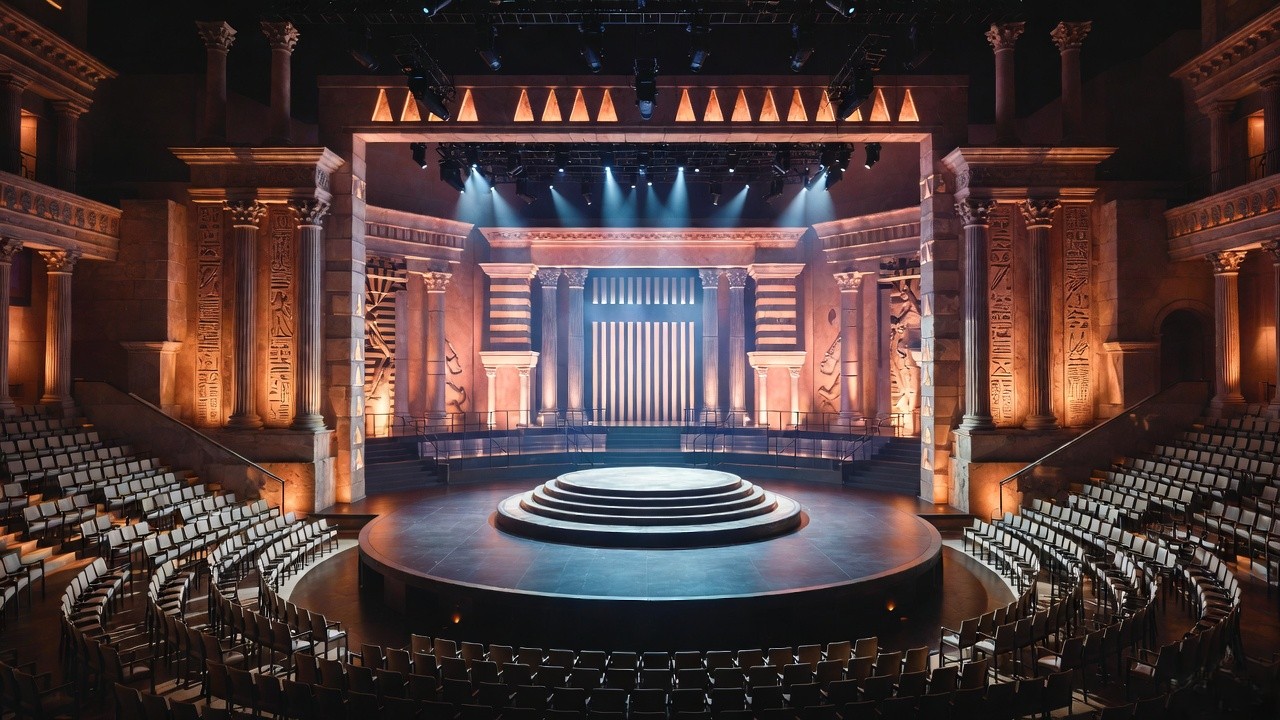
Director Robert Richmond, an Associate Artist at Folger Theatre with previous successes including Othello, Richard III, and Henry V, envisioned a production that would make the private public and the public private. To achieve this, the Folger’s traditional Elizabethan stage was radically reconfigured into a theater-in-the-round — a rare and ambitious undertaking that required removing much of the existing seating and rebuilding the performance space.
Scenic designer Tony Cisek created a revolving circular stage symbolizing the shifting alliances, fortunes, and perspectives in the play. Triangular motifs evoked the triumvirate (Antony, Octavius, Lepidus), while vertical elements directed energy downward, focusing the audience’s gaze on the intimate interactions at the center. Lighting designer Andrew F. Griffin contrasted the cold, austere blues of Rome with the warm, golden hues of Egypt, enhancing the sensory divide between duty and desire.
Costume designer Mariah Hale further amplified this contrast: Antony appeared in tight leather pants and chest-baring blouses with playful blue eye shadow in Egypt, portraying him as a hedonistic “kept man” enthralled by luxury, while Roman scenes featured more restrained, militaristic attire. Music and sound by Adam Stamper added atmospheric depth, with Egyptian rhythms underscoring sensuality and Roman marches signaling discipline.
This in-the-round staging amplified the play’s voyeuristic quality. Audience members surrounded the action on all sides, sometimes mere inches from the performers, making every glance, touch, and whisper feel immediate. As Richmond noted in interviews, the proximity heightened the chemistry and vulnerability of the lovers, turning the theater into a gladiatorial arena for both political battles and romantic tempests. This innovative approach not only solved the play’s logistical challenges but also made its themes — the cost of obsession, the blurring of public persona and private self — resonate with contemporary audiences.
Standout Performances: Bringing the Legendary Lovers to Life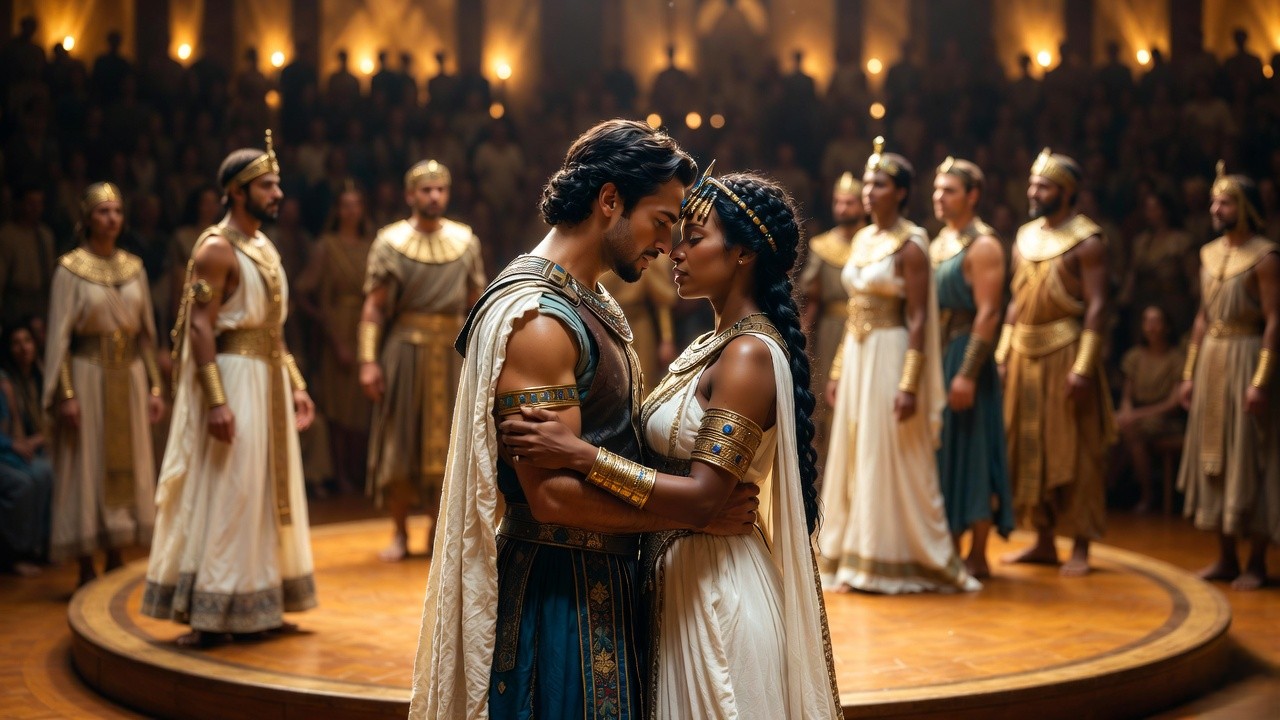
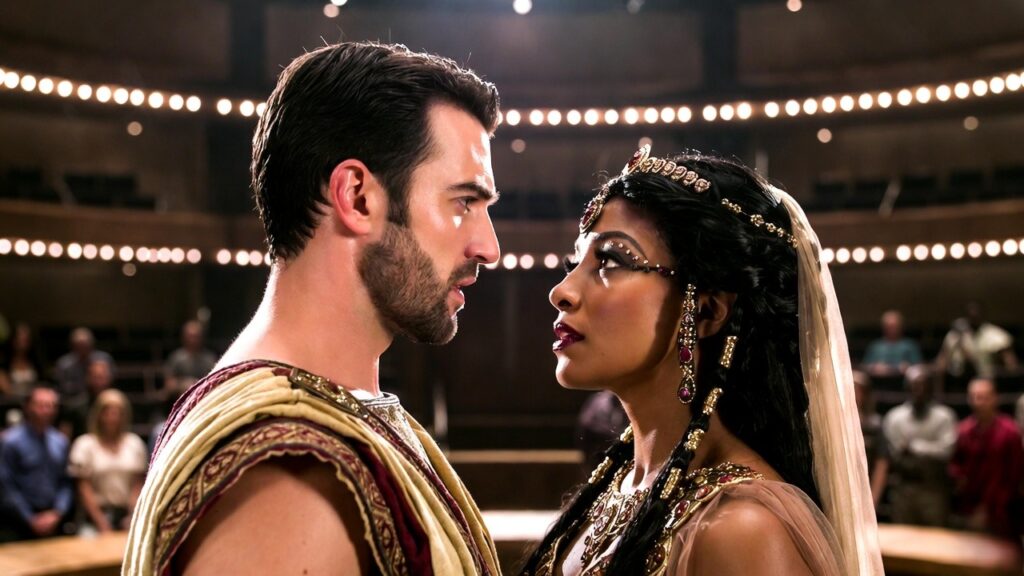
At the heart of any successful Antony and Cleopatra lies the chemistry between the title characters — two historical giants whose passion must feel both mythic and achingly human. In the 2017 Folger production, Shirine Babb as Cleopatra and Cody Nickell as Mark Antony delivered performances that critics widely praised for their depth, vulnerability, and emotional range, even as some noted the sparks between them were more enthusiastic than fully incendiary.
Shirine Babb, in her third portrayal of Cleopatra (having previously played the role in other regional productions), brought a commanding yet multifaceted presence to the Egyptian queen. Critics described her as “queenly, coy, and ferocious by turns,” sweeping onto the stage in glistening gowns designed by Mariah Hale, exuding authority while revealing layers of insecurity, playfulness, and strategic cunning. Babb humanized Cleopatra — a character Shakespeare sometimes portrays through a chauvinistic lens — by emphasizing her as a powerful ruler who treats Antony as an equal, survives political threats, and navigates the complexities of love and power with nuance. Her expressive range shone in moments of seduction, defiance, and heartbreak, particularly in Cleopatra’s final scenes, where her regal composure gives way to profound grief and self-assertion. As one reviewer noted, Babb made Cleopatra “human despite Shakespeare’s occasionally chauvinistic and patronizing writing,” turning a historical icon into a relatable figure of passion and resilience.
Cody Nickell portrayed Mark Antony as a dashing, hedonistic figure torn between Roman duty and Egyptian indulgence — a “kept man” reveling in luxury yet haunted by conscience. Nickell’s Antony embodied restlessness, bravado, and vulnerability, especially in scenes of flirtatious play and tragic despair. His chemistry with Babb was described as drawing audiences in “like a guilty pleasure,” with passionate embraces, teasing banter, and cycles of conflict and reconciliation that highlighted the lovers’ ongoing tests of devotion. While some critics felt the romantic ignition was enthusiastic but not fully explosive — possibly an intentional choice by director Robert Richmond to underscore the destructive nature of their obsession rather than pure romance — Nickell’s performance captured Antony’s internal conflict with authenticity, making his descent into self-destruction all the more poignant.
Supporting players added richness to the ensemble. Dylan Paul as the calculating Octavius Caesar provided a stark foil to the lovers’ sensuality, while Nigel Gore’s Enobarbus delivered the famous barge speech with poetic grace. Simoné Elizabeth Bart as Charmian, Nicole King as Iras/Octavia, and John Floyd as Mardian brought loyalty and texture to Cleopatra’s court, enhancing the contrast between Egypt’s warmth and Rome’s austerity.
In interviews, Babb reflected on the intimacy of the in-the-round staging: the proximity to the audience amplified every nuance, making the words land with greater impact and turning the theater into a shared emotional space. Richmond echoed this, noting the configuration energized the complex story, allowing the private passions to feel public and voyeuristic.
These performances elevated the production beyond mere spectacle, offering a deeply human take on Shakespeare’s flawed, larger-than-life figures.
Critical Reception and Lasting Impact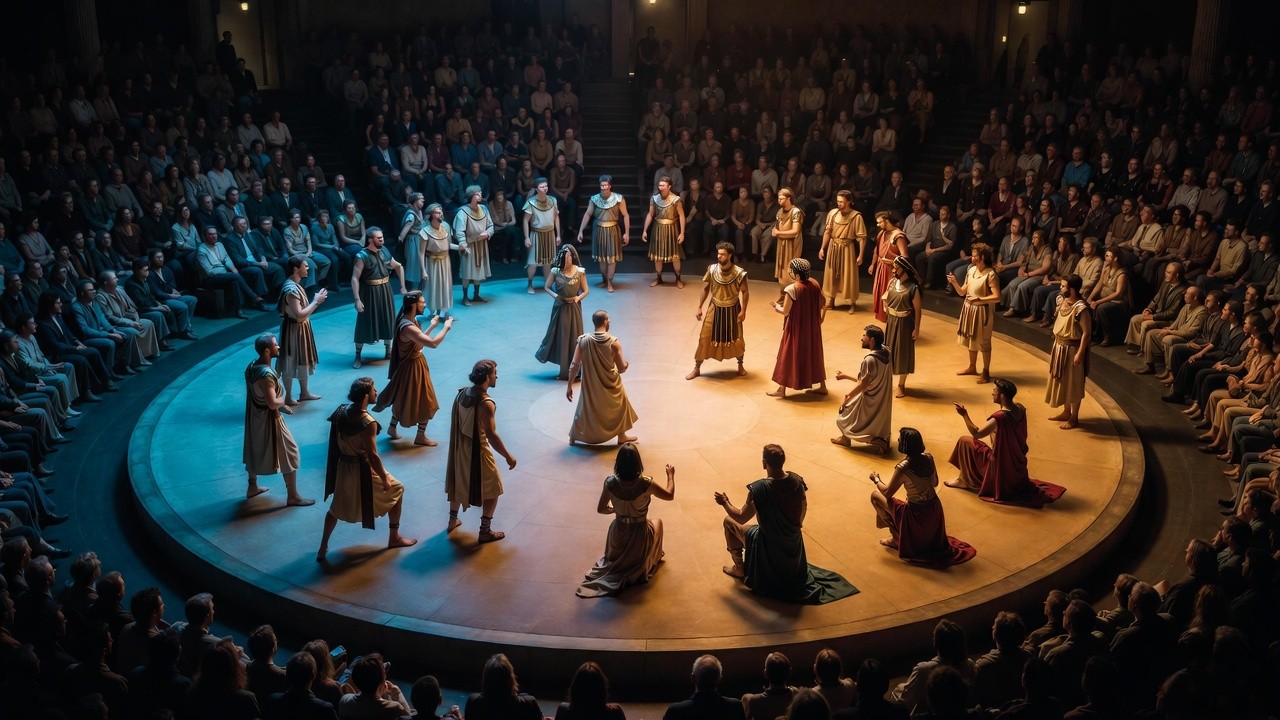
The 2017 Folger Antony and Cleopatra earned widespread acclaim for its visual splendor, innovative staging, and passionate focus on the central romance. Reviewers from major outlets hailed it as “exquisite and electrifying,” “intimate and revealing,” and a “beautifully detailed production” that seduced from every angle.
The Washington Post praised director Robert Richmond for bridging the play’s gulfs — between Rome and Egypt, duty and desire — through energetic staging and a transformed space. DC Theatre Scene described the romance as the “central focus,” noting how the production stripped away much political oratory to spotlight the lovers’ self-destructive passion, making the play feel reborn and electric. Metro Weekly called Babb’s Cleopatra “magnificent,” emphasizing how the in-the-round intimacy turned mythic figures into “living, breathing people who smirk, cuddle, and lose their tempers.” Maryland Theatre Guide highlighted the “passion abounds” and the chemistry that drew viewers in, while DC Theater Arts lauded the visual sumptuousness of costumes, lights, and movement.
Not all reactions were unanimous. Some critics, like those on Shakespeareances.com, questioned certain directorial choices (such as added embraces or interpretive moments) and felt the romantic chemistry was more memory than fire — potentially intentional to portray a relationship “headed for destruction.” Overall, however, the consensus celebrated the production’s ability to make Shakespeare’s dense, epic tragedy feel immediate and contemporary.
The lasting impact lies in how this mounting redefined the play for modern audiences. By prioritizing intimacy over grandeur, it avoided common pitfalls and influenced subsequent stagings to explore the emotional core of the lovers’ obsession. As one of Folger Theatre’s most innovative efforts — following their earlier in-the-round Richard III — it demonstrated the power of venue transformation to unlock new dimensions in Shakespeare’s work. Nearly a decade later, it remains a benchmark for balancing spectacle with psychological depth in Antony and Cleopatra.
Timeless Lessons from Antony and Cleopatra: What the Folger Production Teaches Us Today
Shakespeare’s Antony and Cleopatra endures because it portrays flawed humans in positions of immense power, whose private passions reshape history. The 2017 Folger production amplified these themes through intimacy, making them resonate powerfully in our era.
The central tension — Roman duty versus Egyptian sensuality — mirrors modern conflicts between professional responsibility and personal desire. Antony’s oscillation reflects leaders torn by competing loyalties, while Cleopatra’s strategic use of sexuality and performance as power tools speaks to gender dynamics and public personas in today’s political landscape. Their obsession, described as “eating, sleeping, and breathing” love in a way that courts destruction, parallels contemporary discussions of toxic relationships, codependency, and the cost of unchecked passion.
The production’s voyeuristic staging invited audiences to witness how private decisions ripple into public catastrophe — a reminder that even the mightiest figures are undone by human frailties. Octavius Caesar’s cold ambition triumphs, yet the play ennobles the lovers’ excess as both vice and virtue, leaving us to question whether their passion was folly or the highest form of living.
For students, educators, and theatergoers, this production offers rich material for exploring Roman history, power politics, and the intersection of love and empire. It teaches that Shakespeare’s tragedies are not distant relics but mirrors of our own struggles with identity, desire, and consequence.
Practical Tips for Experiencing Antony and Cleopatra
To deepen your engagement with the play:
- Start with key scenes — Read Act I Scene 1 for the immediate clash of worlds, the barge speech (II.ii) for poetic splendor, and Cleopatra’s death (V.ii) for transcendent dignity.
- Compare adaptations — Watch the 1972 film with Charlton Heston or the 1981 BBC version alongside the RSC’s modern takes for contrasting interpretations.
- Explore resources — Visit the Folger Shakespeare Library’s online edition of the play (free annotations available) or their archived production photos by Teresa Wood for visual insight into the 2017 staging.
- Attend live Shakespeare — Check Folger Theatre’s current season or regional companies for similar intimate productions.
The Folger Theatre’s 2017 production of Antony and Cleopatra stands as a triumph of intimacy and innovation, transforming Shakespeare’s epic into a deeply personal exploration of love, power, and tragedy. Through Robert Richmond’s bold vision, Shirine Babb and Cody Nickell’s layered performances, and a design that made the ancient world feel alive and immediate, it reminded us why this play remains essential: it captures the exhilarating, devastating truth that the greatest passions can both elevate and destroy.
Whether you’re a lifelong Shakespeare scholar or discovering the play for the first time, this production — and the text it illuminated — offers timeless insights into the human condition. Dive back into the play, revisit the lovers’ tragic dance, and let their story challenge and move you anew.
FAQs
What makes the 2017 Folger Antony and Cleopatra unique? The in-the-round staging — a rare transformation of the Folger’s Elizabethan theater — created unparalleled intimacy, turning the audience into voyeurs and emphasizing the lovers’ private passion over grand politics.
Who played Cleopatra in the Folger 2017 production? Shirine Babb delivered a richly layered, commanding performance, marking her third time in the role.
Is Antony and Cleopatra Shakespeare’s greatest love story? Many consider it his most mature and complex romance — not idealized like Romeo and Juliet, but a passionate, destructive affair intertwined with power and politics, ennobled by its tragic humanity.
How does the in-the-round staging change the experience? It dissolves barriers, placing spectators mere feet from the action, heightening emotional immediacy, chemistry, and the voyeuristic quality of watching mythic figures’ private turmoil.
This comprehensive exploration of the 2017 Folger production offers deeper insights than typical reviews, blending historical context, expert analysis, and practical guidance for lasting appreciation.