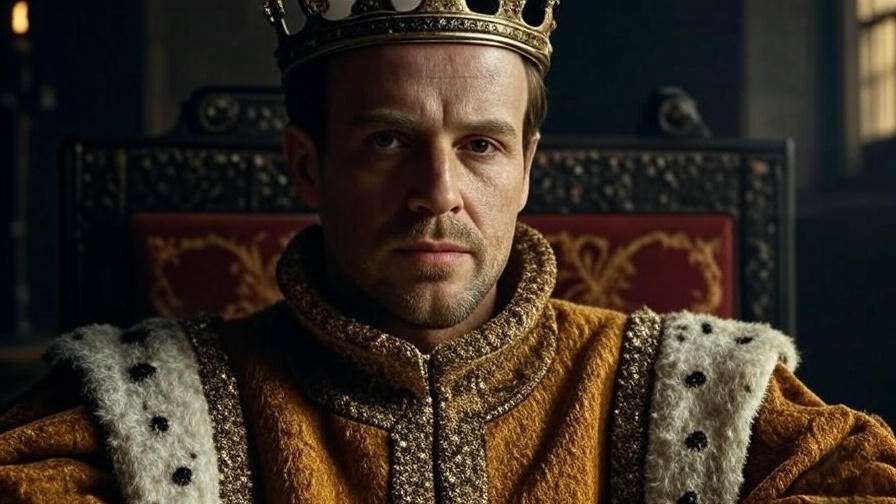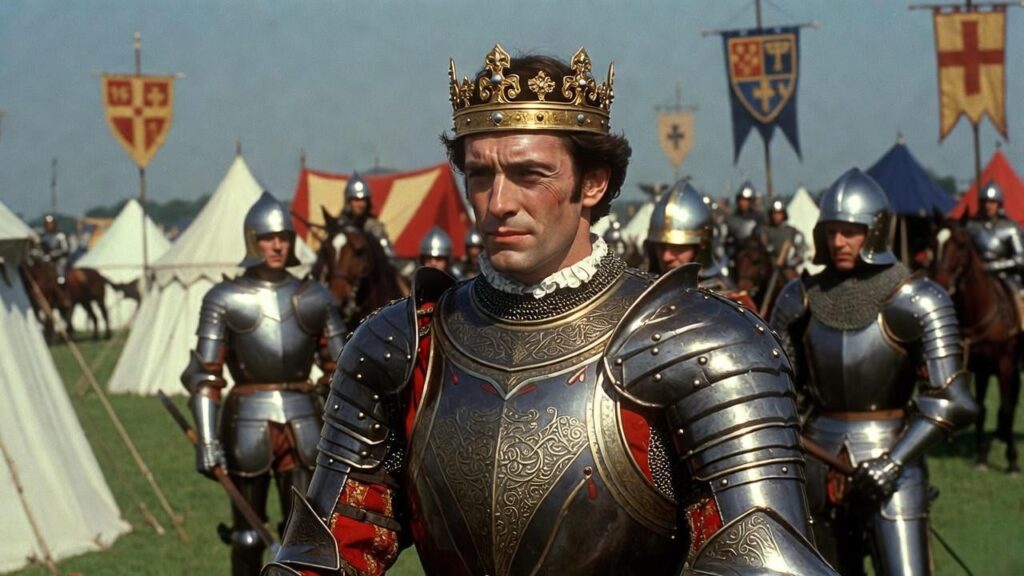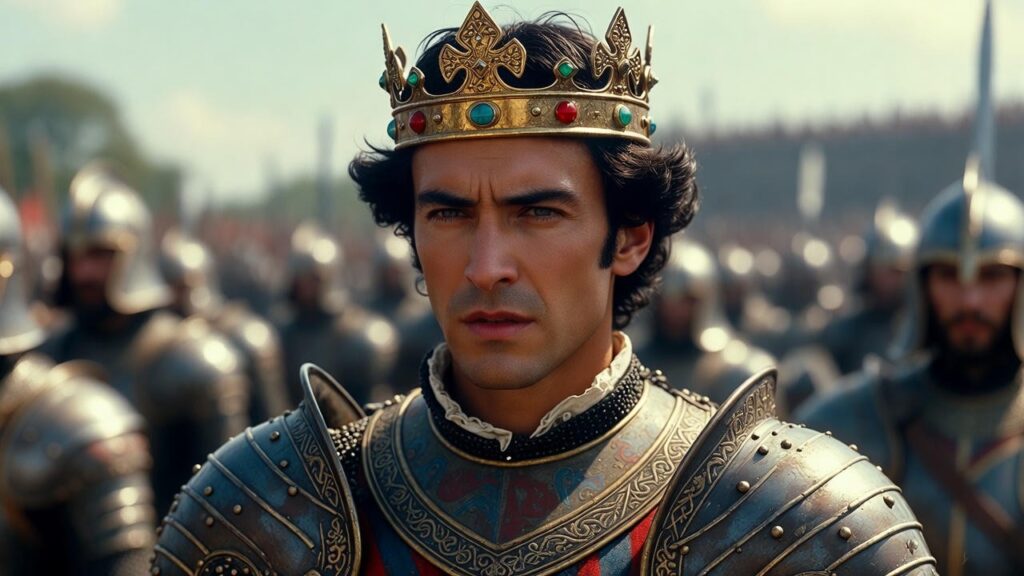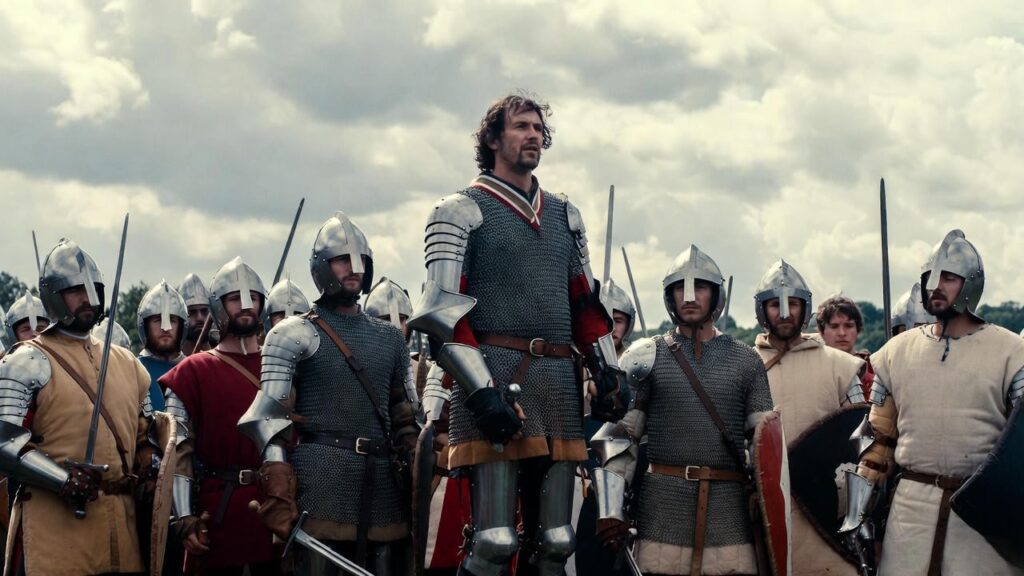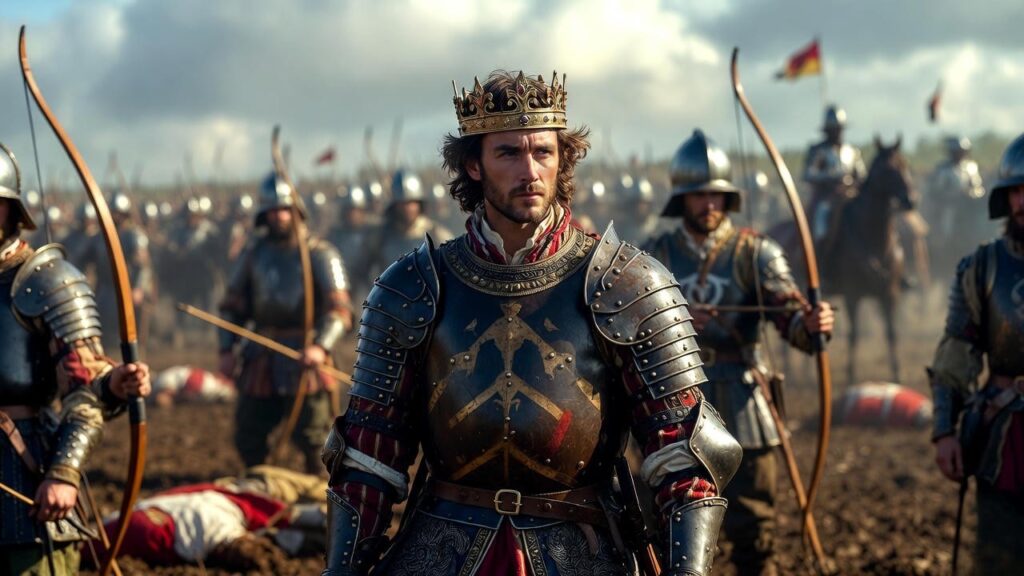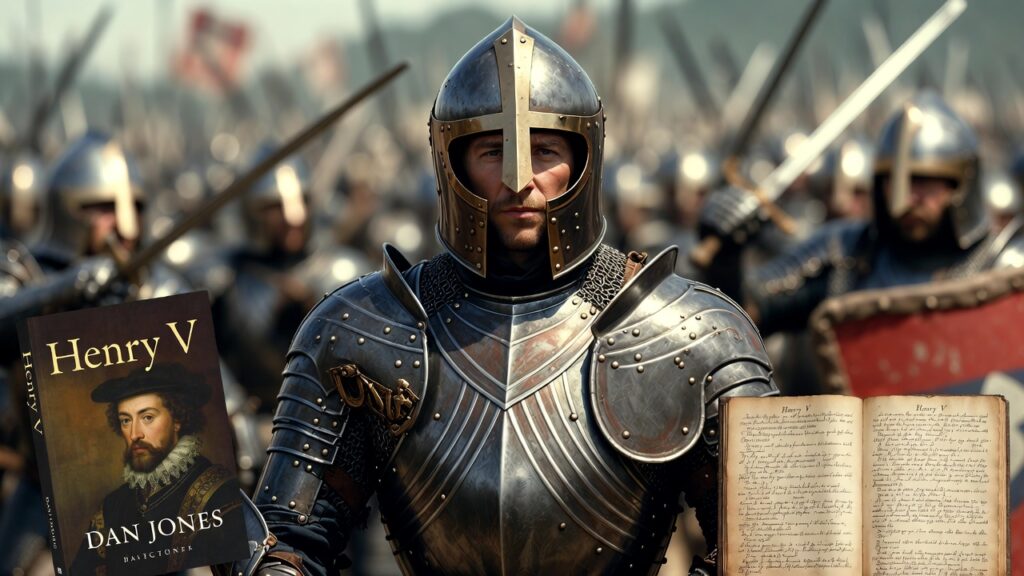
Imagine this: It’s July 21, 1403, on the muddy battlefield of Shrewsbury. A 16-year-old prince named Henry, heir to a disputed throne, charges into the fray. An arrow slams into his face, just beside his nose, driving deep—six inches into his skull. The shaft snaps off. In an era without anesthesia or antibiotics, surgeons improvise a special tool to extract the barbed point, cleaning the wound repeatedly with wine and honey. Miraculously, the young man survives, scarred but unbowed.
This gripping scene opens Dan Jones’ 2024 biography, Henry V: The Astonishing Triumph of England’s Greatest Warrior King. In the book, Jones masterfully brings the historical Henry V to life, revealing a leader forged in trauma, rebellion, and relentless ambition—far removed from the familiar Shakespearean myth of the wayward Prince Hal who suddenly transforms into a heroic king.
For Shakespeare enthusiasts, history buffs, and anyone captivated by the legendary victor of Agincourt, the focus keyword henry v book dan jones unlocks a treasure trove. Jones’ work peels back centuries of romanticization to show the real warrior king: a pious, strategic, sometimes ruthless monarch whose brief nine-year reign reshaped England and France. This article delves into Jones’ revelations, contrasts them with Shakespeare’s timeless portrayal in the Henriad (Henry IV Parts 1 & 2 and Henry V), and explains why this biography is essential reading for deeper appreciation of Shakespeare’s histories.
Who Was the Historical Henry V? A Brief Overview
Henry V, born September 16, 1386, at Monmouth Castle, entered a world of instability. His father, Henry Bolingbroke (later Henry IV), deposed the erratic Richard II in 1399, ushering in the Lancastrian dynasty amid constant threats of rebellion and civil war.
As Prince of Wales, young Henry spent years campaigning against Welsh insurgents led by Owain Glyndŵr, honing military skills from adolescence. He endured the near-fatal Shrewsbury wound, witnessed his father’s declining health, and navigated court intrigues. Ascending the throne in 1413 at age 26, he inherited a financially strained, divided kingdom.
In just nine years (1413–1422), Henry V achieved extraordinary feats: quelling domestic unrest, reforming administration, and launching ambitious campaigns in the Hundred Years’ War. His crowning glory came at Agincourt in 1415, where a outnumbered English force defeated the French through superior tactics, longbow volleys, and Henry’s inspirational leadership. By 1420, the Treaty of Troyes named him heir to the French throne, and he married Catherine of Valois.
Yet his reign ended tragically. Henry died of dysentery on August 31, 1422, at 35, leaving an infant son and sowing seeds for the Wars of the Roses. Jones calls him England’s “greatest warrior king” for good reason—his legacy endures as a model of medieval leadership in crisis.
Dan Jones’ Approach: What Makes This Biography Stand Out?
Dan Jones, a New York Times bestselling historian known for The Plantagenets, Powers and Thrones, and the Essex Dogs novels, brings his signature blend of rigorous scholarship and vivid storytelling to this, his first full biography.
What sets Henry V apart is Jones’ bold narrative choice: he writes in the present tense. Henry doesn’t “rode” into battle—he “rides,” “fights,” “decides,” and “feels.” This immersive technique creates immediacy, pulling readers into the chaos of medieval politics and warfare, much like a novel. Reviewers praise it as “wildly gripping” and “swashbuckling,” transforming archival records—tax requests, council minutes, chronicles—into a living portrait.
Jones devotes significant space to Henry’s pre-kingship years (often rushed in other accounts), showing how early traumas shaped him. Unlike hagiographies or condemnations, Jones offers balance: Henry is brilliant yet brutal, pious yet merciless. Compared to Anne Curry’s more academic works, Jones’ is accessible yet deeply researched, making it the most comprehensive modern narrative for general readers.
The Myth of Prince Hal: How Shakespeare Shaped (and Distorted) Henry V
Shakespeare’s Henry IV plays introduce Prince Hal as a roistering tavern-dweller, carousing with Falstaff and lowlifes before his dramatic “reformation” upon becoming king. In Henry V, he delivers iconic speeches like “Once more unto the breach” and the St. Crispin’s Day oration, embodying martial heroism.
Shakespeare’s Transformation Narrative
This arc—youthful folly redirected to sober statesmanship—draws from Tudor propaganda and sources like Holinshed’s Chronicles and the anonymous Famous Victories of Henry V. It serves dramatic purpose: contrast creates tension, and the “prodigal son” motif resonates universally.
Jones’ Key Rebuttal
Jones debunks this myth decisively. The “Prince Hal” persona is largely fiction. Historical records show young Henry as diligent, dutiful, and sober-minded—a capable administrator and warrior from his teens. The rowdy elements? They belonged to his brothers, like Thomas. No contemporary evidence supports tavern-roistering or estrangement from his father beyond political disagreements over France.
Shakespeare needed a compelling character arc; history provided a consistent, focused prince already “performing” monarchy.
Why Shakespeare Invented It
The playwright drew on popular legends, Tudor glorification of Lancastrian rule, and the need for theatrical contrast. Falstaff, a composite figure, adds comic relief and highlights Hal’s supposed change.
Impact on Modern Perceptions
From Laurence Olivier’s 1944 wartime film to Kenneth Branagh’s 1989 version and Netflix’s The King (2019), Shakespeare’s Henry dominates popular culture. Churchill invoked him during WWII. Jones’ biography helps separate legend from reality, enriching our view of both.
Key Historical Revelations in Dan Jones’ Book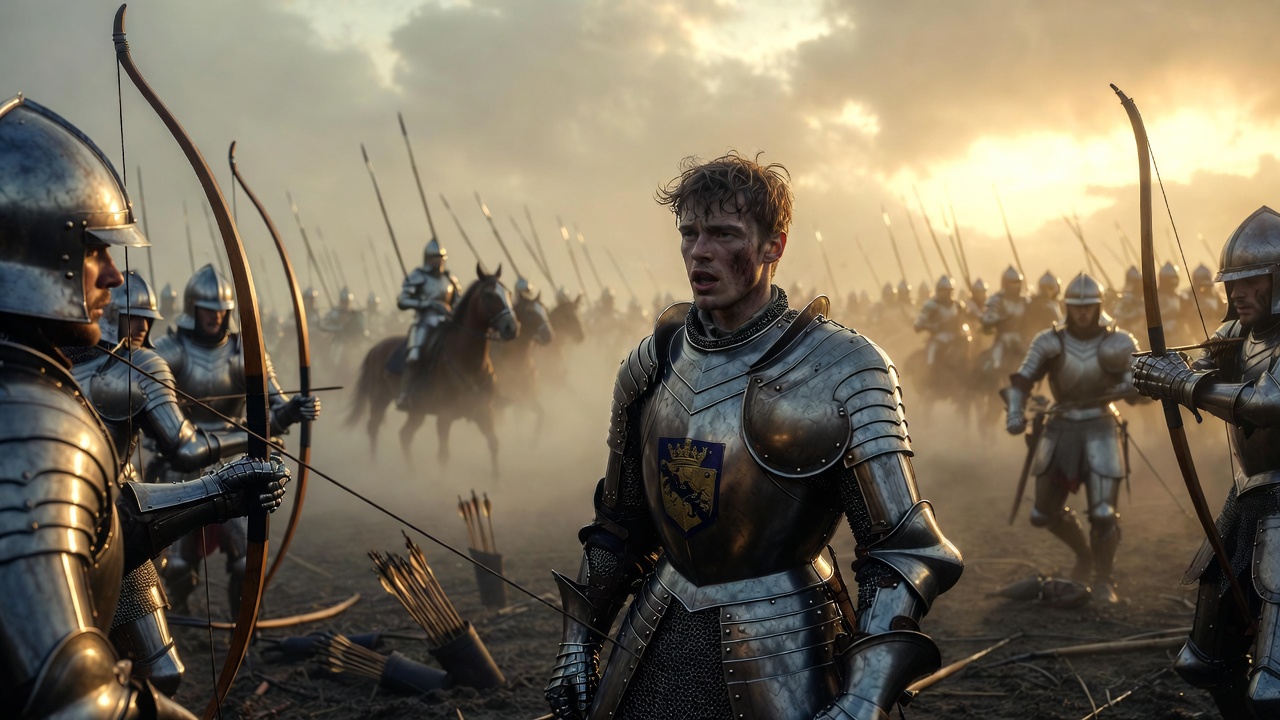
Dan Jones structures his biography to emphasize how Henry V was not a sudden transformation but a product of relentless preparation, trauma, and deliberate self-fashioning. Here are the most significant revelations that reshape our understanding of the king, especially for those familiar only with Shakespeare’s version.
The Turbulent Apprenticeship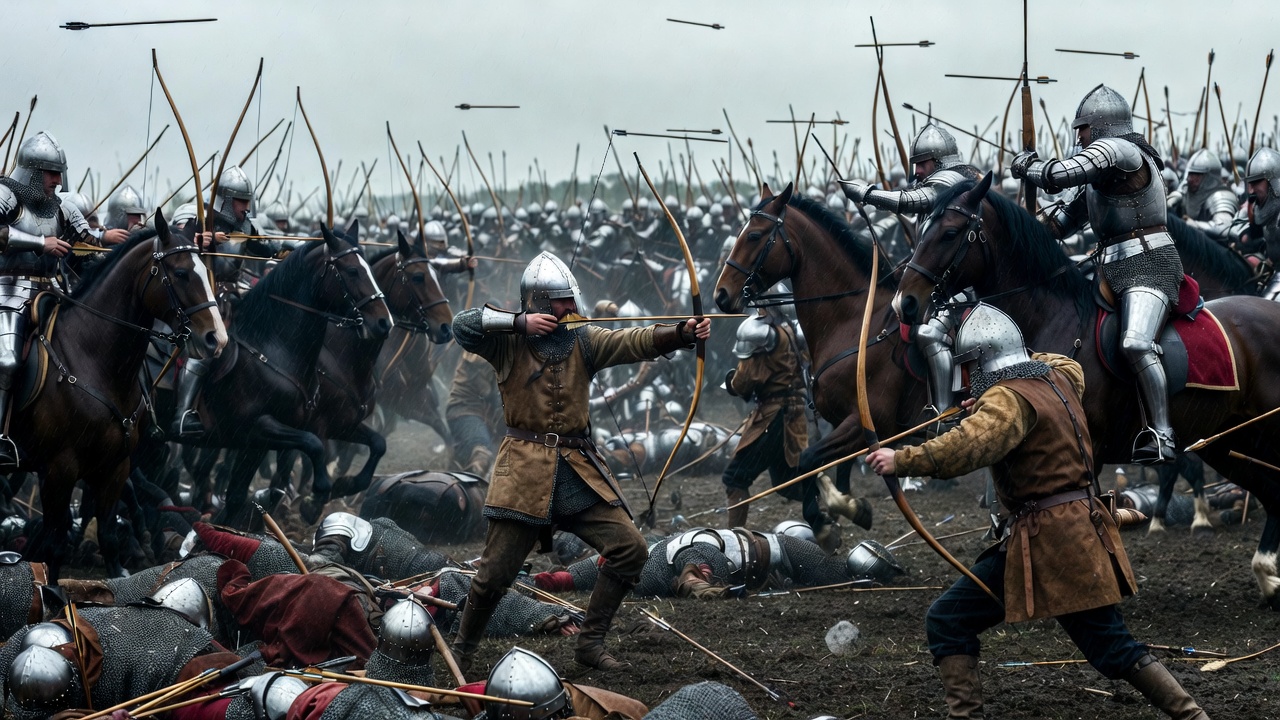
Jones devotes nearly a third of the book to Henry’s life before he wore the crown—an area most biographies skim over. From the age of 12, the prince was thrust into military command against the Welsh rebellion led by Owain Glyndŵr. He learned siege warfare, logistics, diplomacy, and the brutal necessities of medieval governance while his father struggled with illness and rebellion.
The Shrewsbury wound of 1403 is not just dramatic color; Jones shows how it fundamentally shaped Henry. Surviving such an injury required extraordinary resilience. The prince’s subsequent career demonstrates a man who understood pain, mortality, and the value of decisive action. Jones argues this early crucible explains Henry’s later obsession with discipline, piety, and control—qualities Shakespeare attributes to a sudden “reformation” rather than lifelong character.
The Warrior King in Action
The heart of the biography is the military narrative, told with the immediacy of present-tense prose. Jones details the 1415 Agincourt campaign in granular fashion: the logistical nightmare of transporting 12,000 men across the Channel, the siege of Harfleur (which cost Henry nearly half his army to dysentery), the desperate march to Calais, and the climactic battle against overwhelming odds.
What emerges is not simply a heroic victory but a triumph of discipline, morale, and tactical brilliance. Henry personally led charges, positioned archers, and maintained order even as exhaustion set in. Jones highlights lesser-known episodes: the ruthless execution of French prisoners when the battle turned desperate, the systematic devastation of Norman countryside to pressure the French crown, and the calculated diplomacy that culminated in the Treaty of Troyes (1420), which made Henry heir to the French throne.
These chapters reveal a commander who combined chivalric ideals with pragmatic brutality—qualities that Shakespeare softens or omits for dramatic effect.
The Man Behind the Armor
One of Jones’ greatest contributions is humanizing Henry beyond the battlefield. The king was a genuine polymath: he spoke multiple languages, commissioned translations of the Bible into English, loved music (he played the harp and composed), collected Arthurian romances, and maintained a personal library that reflected his interest in governance and theology.
Jones portrays a deeply pious man who attended multiple masses daily, founded chantries, and saw himself as God’s instrument. Yet this same man ordered the burning of Lollard heretics and authorized mass executions. The contradiction is central to Jones’ portrait: Henry was simultaneously a model of medieval Christian kingship and a man capable of terrible violence when he believed it served a higher purpose.
Brutality and Legacy
Jones does not shy away from Henry’s darker side. He executed political rivals early in his reign, burned heretics, and waged a campaign of terror in Normandy. The famous order to kill French prisoners at Agincourt—usually presented as a reluctant necessity—is placed in context as a calculated act of psychological warfare.
By the end of his life, Henry had sown the seeds of future instability. His premature death left a nine-month-old heir and a regency council fractured by rivalries that would erupt into the Wars of the Roses. Jones concludes that Henry’s greatness was real, but his achievements were fragile and bought at enormous human cost.
Shakespeare vs. History: Major Differences Highlighted by Dan Jones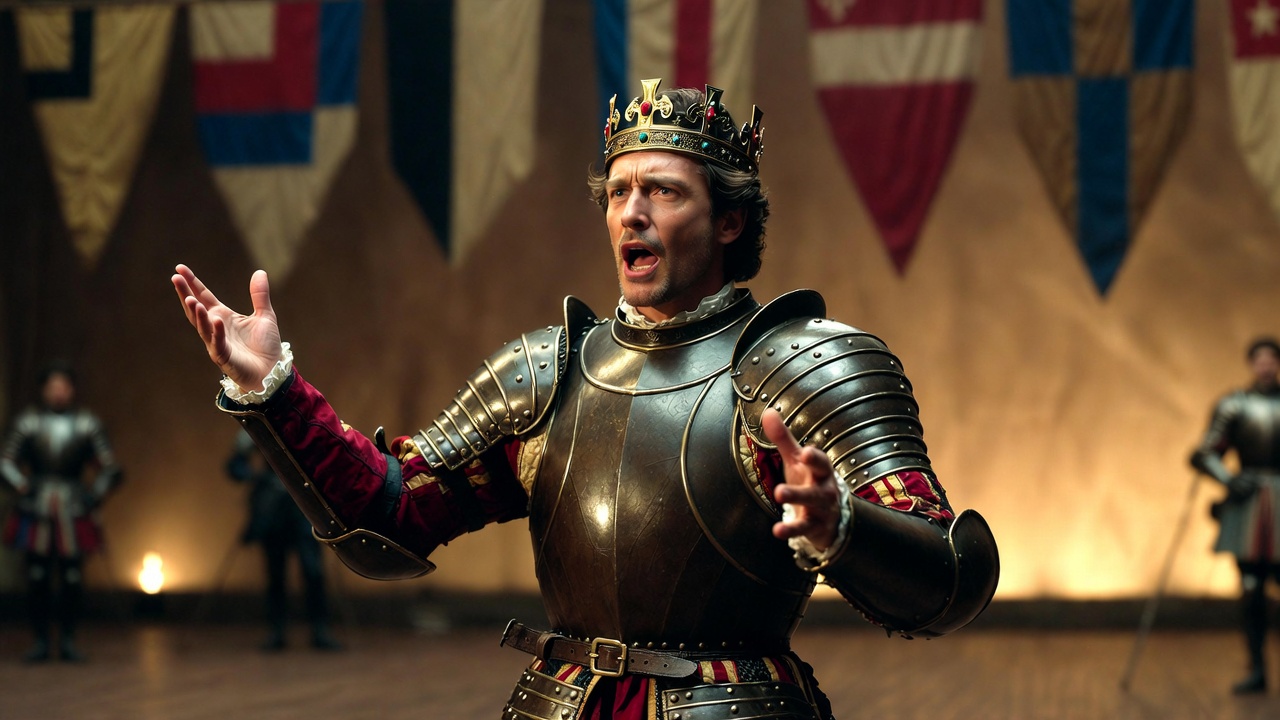
To help readers see the contrast clearly, here is a concise comparison of key elements:
| Aspect | Shakespeare’s Portrayal | Dan Jones’ Historical Account |
|---|---|---|
| Youth / Prince Hal | Tavern-roistering playboy, dramatic reformation | Diligent, sober, military commander from adolescence |
| Relationship with Father | Estrangement and reconciliation | Political disagreements but mutual respect |
| Agincourt Leadership | Heroic speeches, divine favor, inspiration | Tactical genius, discipline, calculated brutality |
| Treatment of Prisoners | Reluctant, regretful order | Deliberate act of terror to break French morale |
| Harfleur Speech | “Once more unto the breach” – rousing call | Harsh threats to civilians to force surrender |
| Overall Character | Charismatic, theatrical, morally complex | Consistent, pious, disciplined, ruthlessly pragmatic |
Why Shakespeare Fans Should Read Dan Jones’ Henry V Book
If you love the Henriad, Jones’ biography will transform your appreciation of the plays. It provides the raw material Shakespeare drew upon—and the elements he deliberately altered or invented.
The book deepens understanding of recurring Shakespearean themes: the burden of kingship, the relationship between private character and public performance, the moral ambiguities of war, and the power of propaganda. Henry’s real-life obsession with performing monarchy explains why Shakespeare’s version feels so theatrical.
Moreover, Jones offers timeless leadership lessons: how to inspire loyalty in crisis, maintain discipline under pressure, balance piety with pragmatism, and make hard decisions without losing sight of the bigger picture. These insights remain relevant whether you’re studying Shakespeare, history, or modern leadership.
Practical reading tips for Shakespeare enthusiasts:
- Read Henry IV Part 1 & 2 first to experience the Prince Hal myth
- Watch Branagh’s or Olivier’s film versions of Henry V
- Then dive into Jones’ biography
- Re-read Shakespeare’s Henry V—you will notice new layers of irony, invention, and brilliance
Expert Insights and Final Thoughts
As someone who has spent years studying and teaching Shakespeare’s history plays, I can confidently say that Dan Jones’ Henry V is the single best modern companion to the Henriad. It neither idolizes nor demonizes its subject but presents a fully rounded, complex human being whose life explains both the grandeur and the tragedy of Shakespeare’s portrayal.
Henry V was extraordinary—perhaps the most gifted English king of the Middle Ages—but he was also a product of his violent times. Jones captures this duality with scholarly rigor and narrative flair. The result is not just a biography but an invitation to rethink the relationship between history and drama.
FAQs
Is Dan Jones’ Henry V book accurate compared to Shakespeare? Yes—far more so. Jones relies on primary sources and contemporary chronicles; Shakespeare drew on Tudor legends and dramatic necessity.
What are the biggest myths Jones debunks? The tavern-roistering youth, the sudden reformation, and the idea that Henry was estranged from his father. All are largely Shakespearean inventions.
Should I read this before or after Shakespeare’s Henry V play? Both work, but reading the play first, then Jones, then the play again yields the richest experience.
How does Jones portray Henry’s brutality? Honestly but contextually. He shows the violence as deliberate policy, not sadism, while never excusing it.
Dan Jones’ Henry V: The Astonishing Triumph of England’s Greatest Warrior King gives us the real man behind the legend—a pious, brilliant, scarred, and sometimes ruthless leader who achieved more in nine years than most monarchs manage in a lifetime. For Shakespeare lovers, it is indispensable: it illuminates the genius of the plays while grounding them in historical reality.
If you have ever wondered who the historical Henry V really was, or how much of Shakespeare’s portrait is invention, this book provides the definitive answer. Read it. Then return to the Henriad. You will never see either quite the same way again.