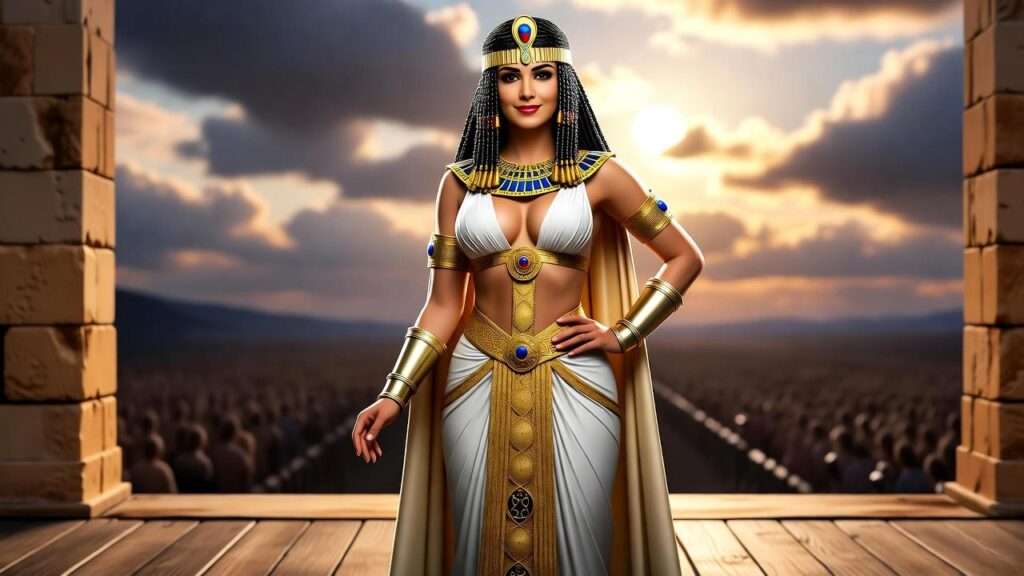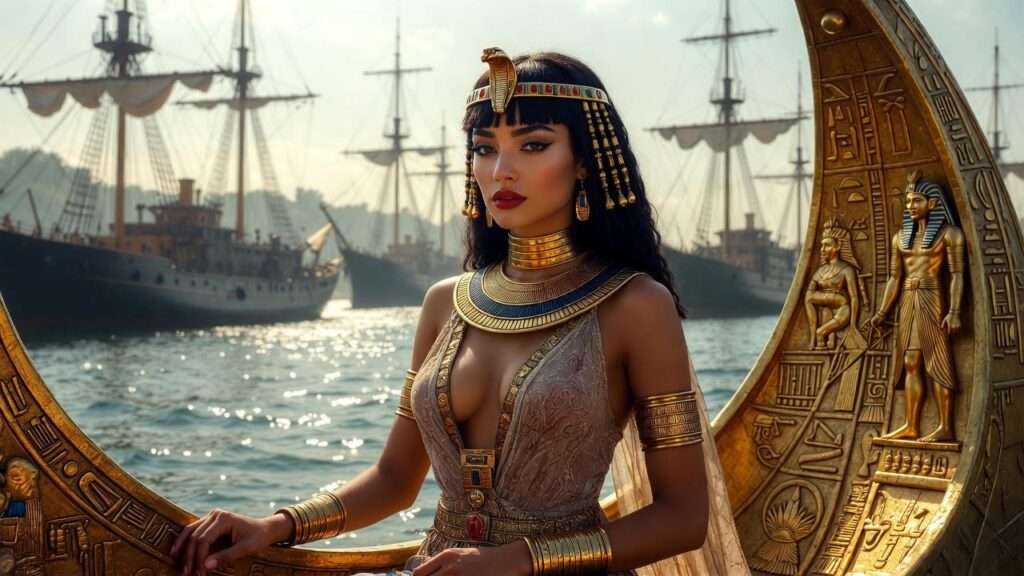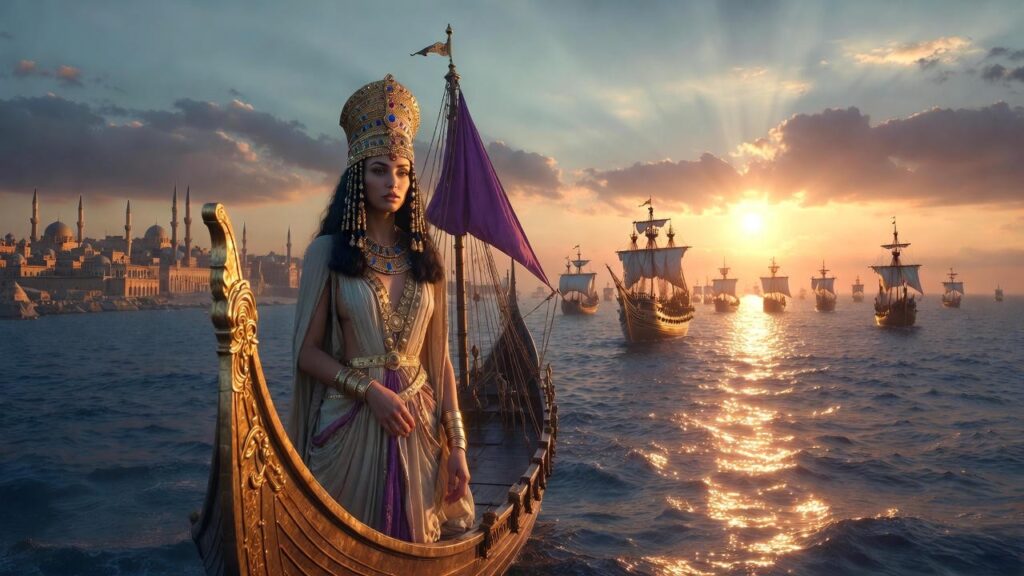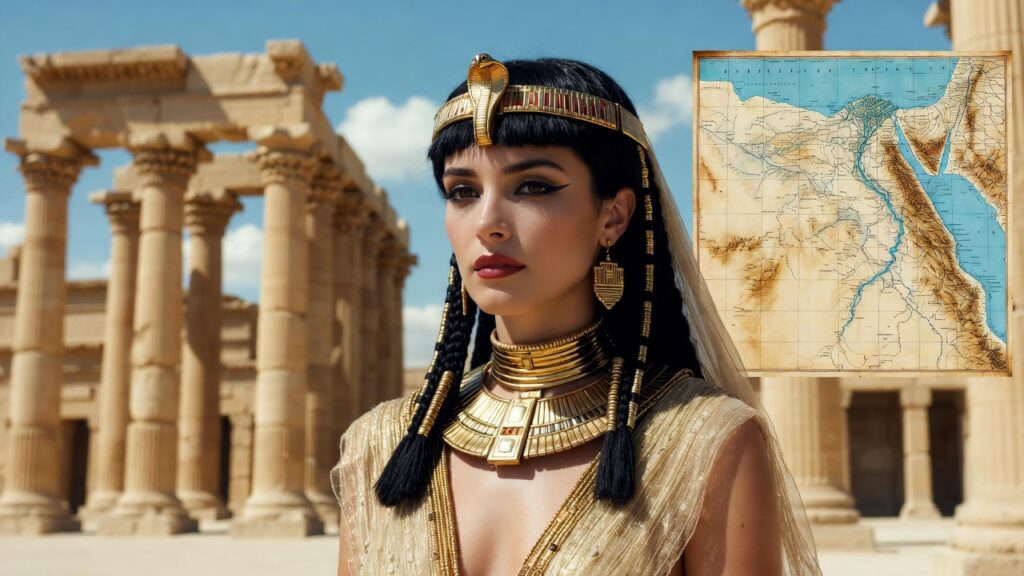
Imagine a young woman of just 18 ascending to the throne of one of the ancient world’s wealthiest kingdoms, surrounded by scheming siblings, a powerful Roman Republic encroaching on every border, and a native population long resentful of its Greek-speaking rulers. Yet, over the next two decades, she not only survived but thrived—forging alliances with Rome’s most formidable generals, stabilizing a famine-threatened economy, patronizing scholarship in the legendary Library of Alexandria, and presenting herself as the living embodiment of the goddess Isis to unite her people. This was Cleopatra VII Philopator, Egypt’s last independent pharaoh (r. 51–30 BCE). What are some of Cleopatra’s accomplishments? Far beyond the myths of seduction and tragedy popularized in literature and film—including Shakespeare’s Antony and Cleopatra—she was a master strategist, economist, diplomat, and intellectual whose leadership preserved Egypt’s sovereignty longer than seemed possible amid Rome’s relentless rise.
Popular culture often reduces Cleopatra to her relationships with Julius Caesar and Mark Antony, emphasizing romance over realpolitik. In reality, her greatest accomplishments lay in political survival, economic stewardship, diplomatic maneuvering, intellectual patronage, and cultural revival. Drawing from ancient sources like Plutarch’s Life of Antony, Cassius Dio’s Roman History, Strabo’s Geography, and modern scholarship (including Stacy Schiff’s Pulitzer Prize-winning Cleopatra: A Life and Duane W. Roller’s Cleopatra: A Biography), this article uncovers her substantive legacy. By examining these achievements with historical context and balanced analysis, we move past Roman propaganda to appreciate why Cleopatra remains one of antiquity’s most capable rulers—a woman who ruled alone in a male-dominated world and sustained a vast, prosperous empire through intellect and resolve.
Cleopatra’s Rise to Power: From Co-Ruler to Sole Sovereign
Cleopatra VII was born in 69 BCE into the Ptolemaic dynasty, a line of Greek rulers descended from Ptolemy I, one of Alexander the Great’s generals. The Ptolemies governed Egypt as a Hellenistic monarchy, blending Greek administration with Egyptian traditions, but by Cleopatra’s time, the kingdom faced chronic instability: sibling rivalries, financial strain from Roman tribute demands, and native unrest.
Educated in the finest Alexandrian tradition, Cleopatra mastered philosophy, mathematics, astronomy, rhetoric, and—uniquely among her dynasty—the Egyptian language (likely Demotic, the everyday script and tongue of the native population). Ancient historian Plutarch notes her exceptional linguistic abilities, claiming she conversed directly with Ethiopians, Troglodytes, Hebrews, Arabians, Syrians, Medes, Parthians, and others without interpreters, and was the first Ptolemy to learn Egyptian fluently. While the exact number of languages (often cited as nine or more) may be exaggerated for rhetorical effect, her multilingualism and command of Egyptian allowed her to address subjects directly, building legitimacy no prior ruler had achieved.
She ascended jointly with her younger brother Ptolemy XIII in 51 BCE, but tensions erupted into civil war. Exiled in 48 BCE, Cleopatra returned dramatically—legend says smuggled into Alexandria rolled in bedding—to meet Julius Caesar. With his military support, she defeated Ptolemy XIII (who drowned in the Nile) and later eliminated her sister Arsinoe IV. By 47 BCE, she ruled alone (with nominal co-regency for her son Caesarion), establishing herself as the dominant sovereign. This rise showcased her political ruthlessness and strategic brilliance: she eliminated threats efficiently while projecting divine kingship, appearing as Isis to win Egyptian loyalty.
Political and Diplomatic Mastery — Navigating Rome’s Shadow
Cleopatra’s most remarkable political accomplishment was preserving Egyptian independence for over two decades amid Rome’s civil wars and expansionist ambitions. The late Roman Republic viewed Egypt as a prize—rich in grain, wealth, and strategic ports—but Cleopatra delayed full annexation until after her death.
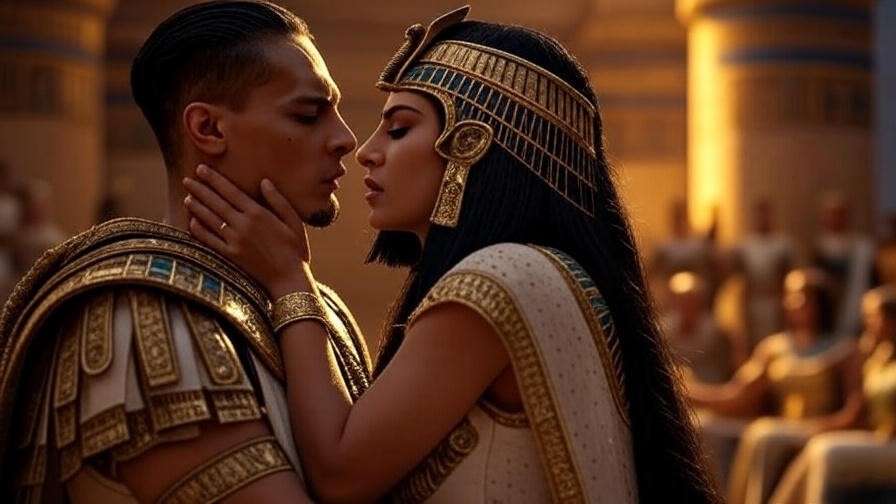
Strategic Alliances with Rome’s Power Players Her partnership with Julius Caesar (48–44 BCE) was no mere romance; it was a calculated alliance. Caesar helped restore her throne and granted Egypt territorial recoveries (including Cyprus). In return, Egypt provided crucial grain shipments and financial support during Rome’s civil strife. Cleopatra bore Caesar a son, Ptolemy XV Caesar (“Caesarion”), whom she presented as legitimate heir, bolstering her dynasty’s continuity.
After Caesar’s assassination, she aligned with Mark Antony (from 41 BCE). Their relationship yielded the “Donations of Alexandria” (34 BCE), where Antony granted Cleopatra control over former Ptolemaic territories in the Levant and Cyprus, expanding Egypt’s influence across the eastern Mediterranean. These moves strengthened Egypt economically and strategically, positioning Cleopatra as a key player in Roman politics.
Preserving Egyptian Independence Amid Roman Expansion Through masterful diplomacy, Cleopatra maintained nominal sovereignty longer than any late Ptolemy. She used propaganda effectively—coins depicted her as a traditional pharaoh, while in Rome she projected Hellenistic sophistication. Her public diplomacy blended charm, intelligence, and resources to influence outcomes without outright conquest. As scholar Stacy Schiff notes, Cleopatra sustained “a vast, rich, densely populated empire in its troubled twilight” through negotiation rather than force.
Economic Reforms and Prosperity — Stabilizing a Wealthy but Troubled Kingdom
Egypt under Cleopatra remained the Mediterranean’s richest nation, thanks to Nile fertility, trade routes, and her astute management. She inherited economic challenges—debt, famine risks, and Roman tribute—but implemented reforms that fostered stability and growth.
Cleopatra focused on agriculture, the economy’s backbone. She invested in irrigation, land distribution reforms to prevent monopolies, and sustainable practices, ensuring surplus grain even during droughts. This supported domestic food security and lucrative exports to Rome.
Trade flourished under her rule. She expanded Red Sea routes to Arabia and India for spices, incense, and luxury goods, while maintaining Nile maritime commerce. Currency regulation stabilized finances, and tax policies balanced revenue needs with economic encouragement.
Public works bolstered prosperity and legitimacy: she sponsored temple expansions (notably at Dendera and Edfu) and infrastructure projects. Egypt’s wealth funded Roman alliances while enriching the kingdom—Cleopatra’s administration navigated plague, famine, and war without collapse.
Her economic acumen is evident in her ability to supply grain to Rome during shortages, leveraging Egypt’s position as the empire’s breadbasket. Modern analyses credit her with revitalizing agriculture and trade, creating relative security and prosperity.
Intellectual and Scientific Contributions — A Scholar-Queen
Cleopatra’s intellectual accomplishments are among the least appreciated yet most impressive aspects of her reign. Far from being merely a political figurehead, she was an active participant in the vibrant intellectual life of Alexandria, the greatest center of learning in the ancient world.
The Library of Alexandria and its associated Mouseion (a research institute) remained functional during her rule, despite earlier damage and political turmoil. Cleopatra actively supported scholarship there, providing patronage to philosophers, mathematicians, physicians, and astronomers. While direct evidence of specific projects she funded is sparse (ancient records are incomplete), her personal engagement with learning is well documented.
Plutarch reports that Cleopatra was deeply interested in philosophy and the sciences. More concretely, later medical writers such as Galen (2nd century CE) and Pliny the Elder reference treatises and cosmetic/pharmacological works attributed to her. These included a collection of recipes and observations on gynecology, dermatology, hair care, weight loss, and toxicology—practical knowledge she reportedly tested herself. Although the original texts have not survived, their citation by authoritative Roman-era physicians indicates Cleopatra was recognized as a contributor to Hellenistic medical and cosmetic science.
Her multilingualism served her scholarship as much as her diplomacy. By learning Egyptian, she could access native priestly knowledge, including medical papyri and religious-medical traditions that had developed over millennia. This cross-cultural fluency allowed her to bridge Greek rationalism with Egyptian empirical practices, enriching Alexandrian intellectual life.
In an era when women were rarely credited with scholarly work, Cleopatra stands out as a rare female intellectual patron and practitioner—demonstrating that her accomplishments extended far beyond the throne room into the realm of knowledge production and preservation.
Cultural and Religious Legacy — Reinforcing Egyptian Identity
Cleopatra understood that legitimacy in Egypt required more than Greek administrative efficiency; it demanded alignment with ancient Egyptian religious and cultural traditions. Unlike most of her Ptolemaic predecessors, who remained aloof from native practices, she embraced them enthusiastically.
She presented herself publicly as the living incarnation of Isis, the goddess of magic, motherhood, and kingship. This identification was not mere propaganda—it was reinforced through monumental building projects. Cleopatra funded major expansions and restorations of temples at Dendera (dedicated to Hathor, with whom Isis was often syncretized) and Edfu (dedicated to Horus). The famous Dendera reliefs depict her and Caesarion making offerings to the gods, portraying them in traditional pharaonic style—a powerful visual statement of continuity with Egypt’s past.
These acts served dual purposes: they won the loyalty of the powerful Egyptian priesthood (who controlled vast temple estates) and reassured the native population that the Ptolemaic dynasty respected their heritage. By participating in festivals, processions, and rituals, Cleopatra reinforced the divine kingship ideology central to Egyptian political culture.
Her cultural patronage extended to Alexandria’s cosmopolitan arts scene. She maintained the city’s reputation as a hub of theater, poetry, and learning, even as political pressures mounted. In doing so, she preserved Hellenistic cultural achievements while simultaneously revitalizing Egyptian identity—a delicate balancing act few rulers could have sustained.
Military and Administrative Achievements
Though Cleopatra is rarely thought of as a military leader, she commanded significant forces and played an active role in military strategy. She personally led a fleet during the final phase of the civil war against Octavian, and her navy formed a crucial component of the combined Antony-Cleopatra forces at the Battle of Actium (31 BCE).
Administratively, she proved highly capable. She managed a complex bureaucracy inherited from the Ptolemies—overseeing tax collection, justice, grain distribution, and provincial governance across a kingdom stretching from Cyrene to Syria (at its height under the Donations of Alexandria). Her court dispensed justice, resolved disputes, and quelled periodic unrest with efficiency.
Compared to the late Ptolemies—who were often puppets of Rome or embroiled in fratricidal strife—Cleopatra maintained relative internal stability for two decades. Her administrative competence ensured that Egypt remained functional and prosperous even under the strain of supporting Antony’s campaigns and preparing for potential Roman invasion.
Challenges and Controversies — A Balanced View
No discussion of Cleopatra’s accomplishments would be complete without acknowledging the immense challenges she faced and the controversies that surrounded her.
Octavian’s propaganda campaign after Actium painted her as a foreign seductress who corrupted Antony and threatened Roman values. This narrative—amplified by poets like Virgil and Propertius—shaped Western perceptions for centuries, overshadowing her political and intellectual achievements.
Her alliance with Antony ultimately failed: the defeat at Actium led to the loss of her fleet, the defection of allies, and her suicide in 30 BCE (most likely by poison, though the asp story remains culturally iconic). Egypt was annexed as a Roman province shortly thereafter.
Yet these “failures” must be contextualized. Cleopatra operated in an impossible strategic position—Rome’s military power was overwhelming by the 30s BCE. That she delayed annexation for 21 years, maintained prosperity, and forced Rome to negotiate rather than simply conquer speaks to her extraordinary skill. Many of her predecessors had already lost significant autonomy; she preserved more of it longer than seemed feasible.
Cleopatra’s Enduring Legacy and Why Her Accomplishments Matter Today
Cleopatra VII was the last Hellenistic monarch and the final pharaoh of an independent Egypt. Her reign marked the end of one era and the beginning of another—Egypt’s incorporation into the Roman Empire.
Modern scholarship has steadily rehabilitated her image. Historians such as Duane Roller, Joyce Tyldesley, and Stacy Schiff emphasize her political intelligence, administrative ability, and cultural sensitivity over the romantic stereotypes. She is increasingly recognized as one of antiquity’s most effective female leaders—someone who ruled alone, navigated superpower politics, sustained economic prosperity, and patronized learning in a time of crisis.
Her accomplishments offer timeless lessons: the power of strategic alliances, the importance of cultural legitimacy, the value of intellectual curiosity, and the resilience required to lead under existential threat. For readers interested in Shakespeare’s Antony and Cleopatra, understanding the historical Cleopatra deepens appreciation of the play’s portrayal of a queen who is both politically astute and tragically human.
In an age still grappling with gender, power, and leadership, Cleopatra’s story remains profoundly relevant—a reminder that intelligence, adaptability, and vision can allow even the most vulnerable rulers to leave an indelible mark on history.
FAQs About Cleopatra’s Accomplishments
Was Cleopatra really beautiful, or was it her intelligence? Ancient sources (especially Plutarch) stress that her charm came from her conversation, wit, and presence rather than conventional beauty. Her intelligence and charisma were her true assets.
How many languages did Cleopatra speak? Plutarch claims at least nine, including Egyptian—the first Ptolemy to do so. While the precise number may be rhetorical, her fluency in Egyptian is widely accepted by historians.
Did Cleopatra contribute to science? Yes—medical and cosmetic treatises attributed to her were referenced centuries later by Galen and others, indicating genuine scholarly contributions.
Why is Cleopatra called Egypt’s last pharaoh? She was the final ruler of the Ptolemaic dynasty and the last person to hold the title of pharaoh before Egypt became a Roman province in 30 BCE.
How did Cleopatra’s alliances benefit Egypt? They restored territories, secured grain markets, expanded trade influence, and delayed Roman annexation—preserving independence and prosperity longer than otherwise possible.
Cleopatra VII Philopator was far more than the tragic lover of legend. Her greatest accomplishments—as Egypt’s last pharaoh—include masterful political survival, diplomatic brilliance, economic stewardship, intellectual patronage, cultural revival, and administrative competence. In an era of overwhelming Roman power, she preserved her kingdom’s independence, wealth, and cultural identity for over two decades through sheer intellect and strategic vision.
Rather than a femme fatale, history reveals a capable, multilingual, scholarly queen who navigated impossible odds with skill and determination. By looking beyond Roman propaganda and Hollywood dramatizations—including Shakespeare’s complex portrayal—we discover one of antiquity’s most remarkable leaders.
For those exploring Shakespeare’s Antony and Cleopatra or simply seeking to understand powerful women in history, Cleopatra’s real legacy offers inspiration: true influence often stems not from beauty or tragedy, but from brains, resilience, and the courage to rule on one’s own terms.