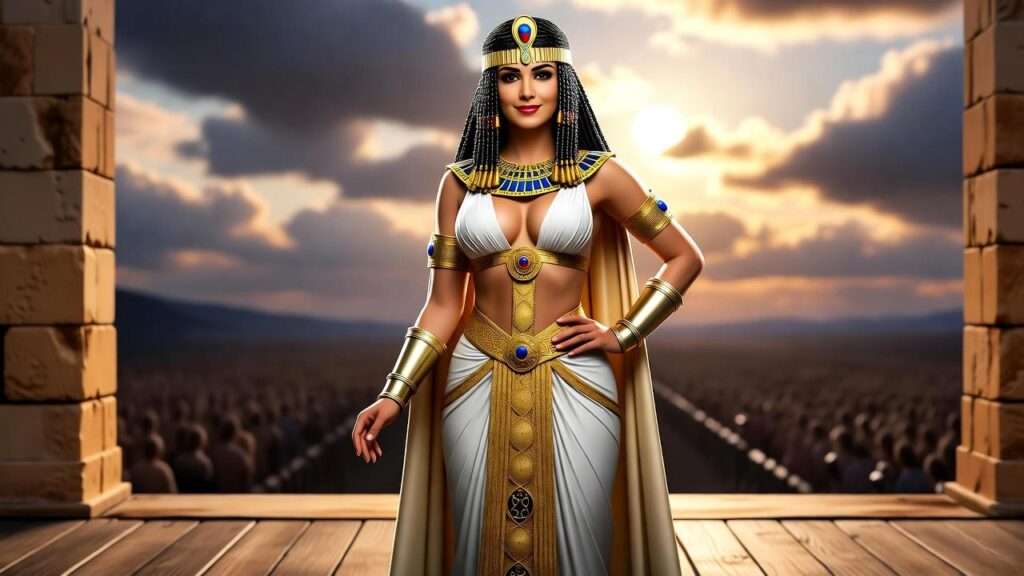
Imagine a woman who declares, in the face of utter defeat and impending death, “I am fire and air; my other elements / I give to baser life.” With these words, Cleopatra does not merely accept her fate—she redefines it, transcending the mortal coil and claiming an eternal, elemental identity. This is no passive surrender; it is the ultimate act of self-assertion. When a character proclaims “I am Cleopatra,” she is not stating a simple fact of name or title. She is asserting a boundless, ever-shifting essence that defies Roman conquest, historical judgment, and even the boundaries of tragedy itself.
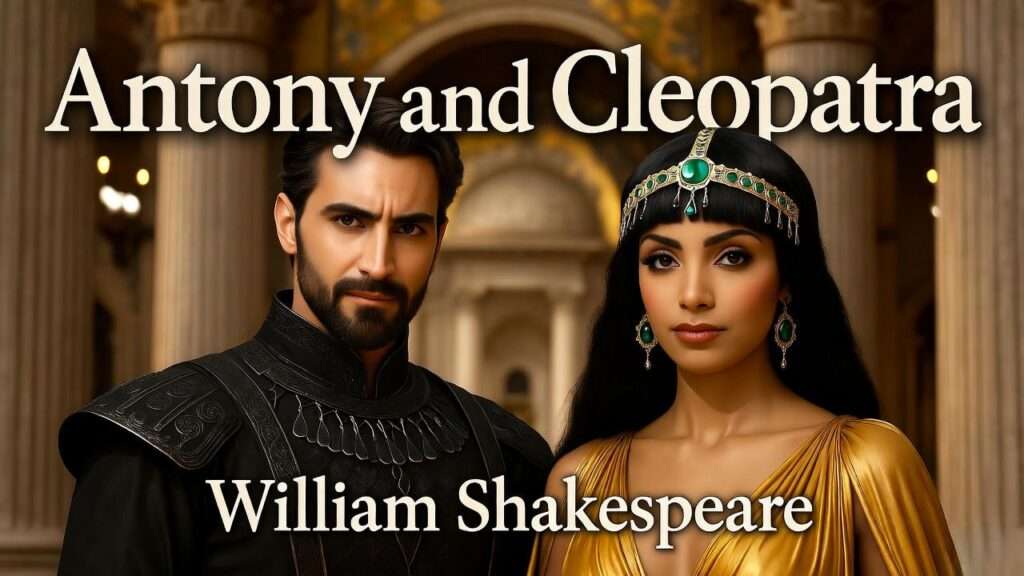
In William Shakespeare’s Antony and Cleopatra (c. 1606–1607), Cleopatra stands as one of the Bard’s most complex and compelling female characters. Far from the one-dimensional seductress of Roman propaganda or Hollywood myth, Shakespeare’s queen embodies infinite variety—a phrase that has become synonymous with her. She is lover, strategist, performer, ruler, and rebel all at once. Her declaration of identity, woven through regal commands, passionate outbursts, and transcendent final moments, invites readers and audiences to explore what it truly means to claim unapologetic selfhood in a world that seeks to contain and diminish women of power.
This article delves deeply into Shakespeare’s portrayal of Cleopatra, drawing on close textual analysis, historical context from Plutarch’s Lives, critical perspectives (including feminist and postcolonial readings), and performance history. Whether you’re a student preparing for exams, a theater enthusiast, or simply someone captivated by Shakespeare’s timeless exploration of power, love, and identity, this comprehensive guide reveals why Cleopatra remains one of literature’s most enduring icons—and why modern readers still find themselves saying, in moments of defiance or self-discovery, “I am Cleopatra.”
Historical Cleopatra vs. Shakespeare’s Reinvention
To appreciate Shakespeare’s genius, we must first distinguish between the historical figure and the dramatic creation.
The Real Cleopatra VII – Beyond the Myths Cleopatra VII Philopator (69–30 BCE) was the last active ruler of the Ptolemaic Kingdom of Egypt. A descendant of Greek Macedonians, she was highly educated, fluent in multiple languages (including Egyptian, a rarity for her dynasty), and a shrewd politician. Her alliances with Julius Caesar and Mark Antony were strategic moves to preserve Egyptian independence amid Rome’s expanding empire. Ancient sources, particularly Plutarch’s Life of Marcus Antonius (translated into English by Sir Thomas North in 1579), often reflect Roman biases: Cleopatra appears as an exotic temptress whose sensuality ensnared great men and led to their downfall. Yet even Plutarch notes her intelligence, charisma, and multilingual charm.
Shakespeare’s Sources and Transformations Shakespeare drew heavily from North’s Plutarch but transformed the narrative. Where Roman accounts emphasize Cleopatra’s manipulative sexuality as a threat to masculine order, Shakespeare amplifies her agency, wit, and emotional depth. He retains the barge scene’s opulent spectacle but frames it through Enobarbus’s admiring description, turning propaganda into poetry. Crucially, Shakespeare elevates Cleopatra’s suicide: no longer a desperate escape from humiliation, it becomes a triumphant assertion of autonomy. By centering her perspective in the final act, Shakespeare shifts the tragedy from Antony’s fall to Cleopatra’s ascension—making her the play’s emotional and thematic heart.
This reinvention challenges stereotypes. Shakespeare does not sanitize Cleopatra; he complicates her, presenting a woman whose contradictions—passion and calculation, vulnerability and strength—are sources of power rather than weakness.
Cleopatra’s “Infinite Variety” – Core Character Traits
Enobarbus’s famous speech in Act 2, Scene 2 captures Cleopatra’s essence:
“Age cannot wither her, nor custom stale Her infinite variety. Other women cloy The appetites they feed, but she makes hungry Where most she satisfies.”
This is not mere flattery; it is the key to understanding her.
The Queen of Contradictions – Mercurial, Theatrical, and Powerful
Cleopatra’s moods shift rapidly: she teases Antony, rages at messengers, feigns death to test his love, and mourns extravagantly. Critics sometimes label this volatility as fickle or manipulative, but Shakespeare presents it as vitality. Her theatricality—staging entrances, manipulating emotions, performing royalty—is not deceit but survival in a patriarchal, imperial world. She knows power requires performance, and she masters it.
Sensuality and Seduction as Political Tools
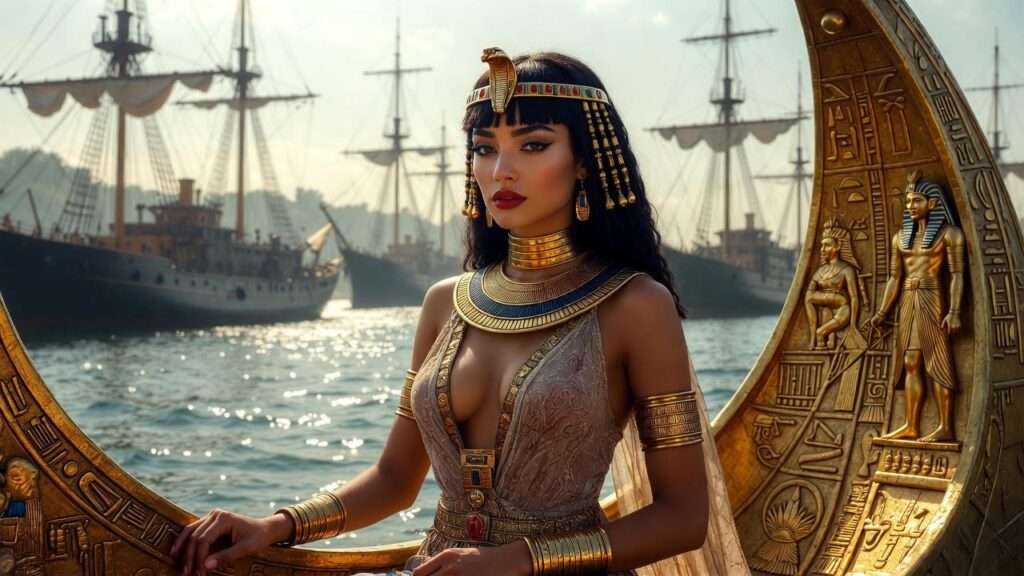
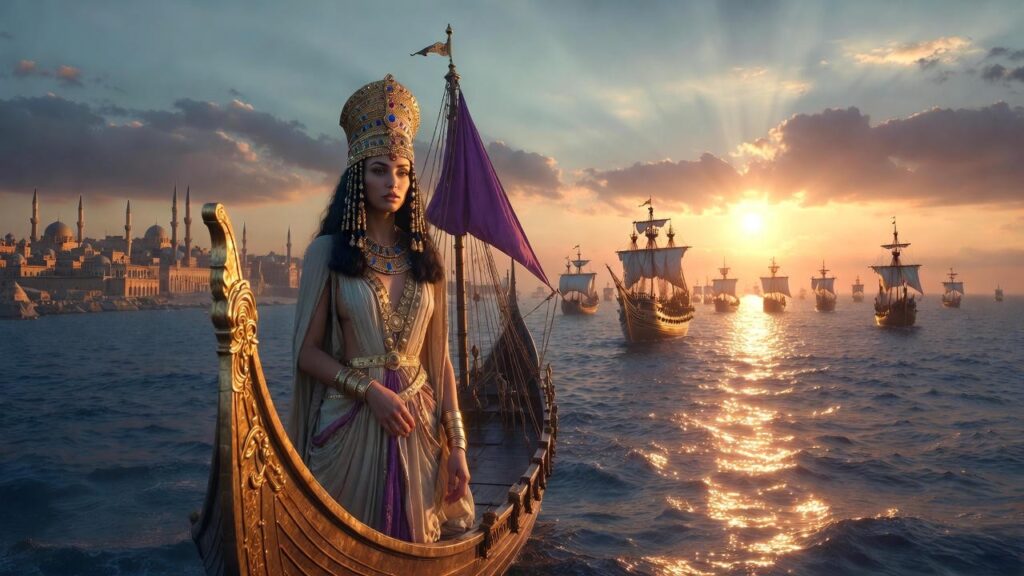
Cleopatra wields sensuality strategically. The legendary barge scene paints her as Venus incarnate:
“The barge she sat in, like a burnish’d throne, Burn’d on the water…”
Yet this spectacle serves diplomacy. Her sensuality is not mere indulgence; it is a counter to Roman stoicism, asserting Egyptian abundance and vitality against Octavius’s cold calculation.
Political Acumen and Regal Authority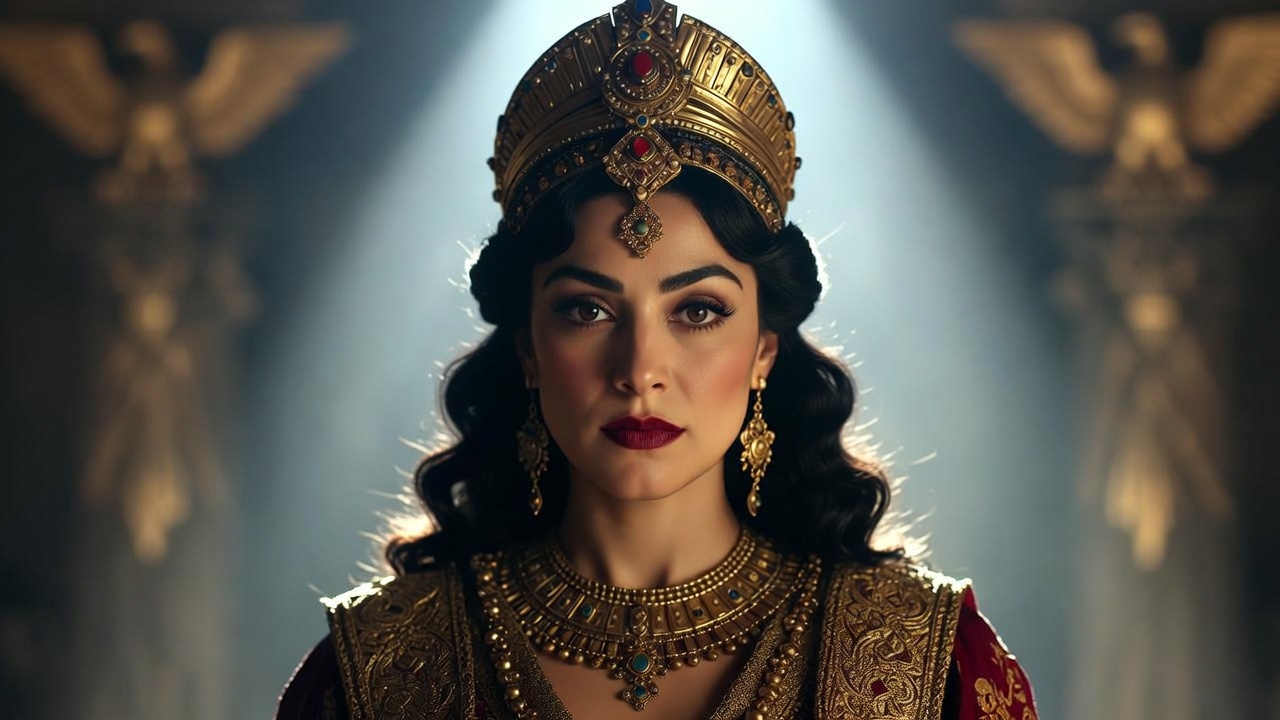
Often overshadowed by her romance, Cleopatra’s political mind shines. She negotiates alliances, resists Roman domination, and even contemplates leading troops (“as the president of my kingdom will / Appear there for a man,” Act 3, Scene 7). Her defiance of Octavius—refusing to be paraded in triumph—underscores her commitment to sovereignty.
Key Scenes and Quotes Where Cleopatra Declares “I Am”
Cleopatra’s self-assertion peaks in moments of identity declaration.
The Iconic “Infinite Variety” Speech (Act 2, Scene 2)
Enobarbus’s praise immortalizes her. The phrase “infinite variety” suggests she cannot be reduced or exhausted—always surprising, always desired. It counters Roman attempts to stereotype her as a mere “strumpet.”
Moments of Self-Assertion and Identity
Cleopatra frequently invokes her queenship: “As I am Egypt’s queen…” (Act 1, Scene 3). Her most profound claim comes in Act 5, Scene 2:
“Now to that name my courage prove my title! I am fire and air; my other elements I give to baser life.”
Here, she rejects earthly limitations (earth and water, the “baser” elements) and claims the noble, ascending ones—fire (passion, transformation) and air (spirit, freedom). This is apotheosis: Cleopatra becomes elemental, immortal through art and will.
Her Suicide – From Defeat to Immortal Triumph
Cleopatra’s death by asp is meticulously staged. She dresses in royal robes, crowns herself, and calls the asp her “baby” and “husband.” Rejecting Caesar’s triumph, she ensures her legacy: “I shall see some squeaking Cleopatra boy my greatness / I’ th’ posture of a whore” is averted. Her final act is victory—self-determined, regal, transcendent.
Cleopatra and Antony – Love, Power, and Mutual Transformation
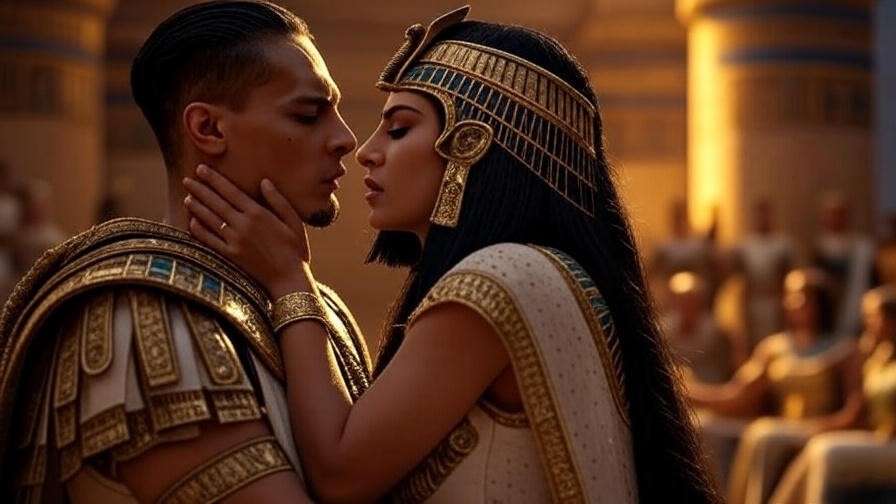
Their relationship is mutual elevation. Antony calls their union a “heavenly mingle”; Cleopatra adores his heroic past while challenging his present.
The Dynamic of Their Relationship Passion fuels both love and conflict. Cleopatra’s tests (e.g., feigning death) stem from fear of abandonment, yet they deepen intimacy.
Gender and Power Dynamics Cleopatra often dominates: Antony follows her to Egypt, fights on her terms. His “emascululation” fears reflect Roman anxiety, but Shakespeare presents it as liberation—Antony finds fuller humanity through her.
Tragic Interplay – How Her “Variety” Both Saves and Dooms Them Her unpredictability inspires Antony’s passion but contributes to strategic missteps (e.g., fleeing battle). Yet their love transcends politics; in death, they achieve unity.
Critical Perspectives on Shakespeare’s Cleopatra
Traditional Views – Seductress or Femme Fatale? Early critics (e.g., Samuel Johnson) saw her as dangerously alluring. T.S. Eliot called the play “aesthetically satisfying” but morally ambiguous.
Feminist and Postcolonial Readings Modern scholars celebrate her agency. Feminist critics view her as subverting patriarchy—using sensuality and wit to resist Roman control. Postcolonial lenses critique Orientalism (Egypt as exotic “other”) but praise her defiance of imperial domination. Scholars like Hélène Cixous highlight her “incomprehensibility” as strength.
Performance History – Why She’s One of Shakespeare’s Hardest Roles Cleopatra demands versatility: sensuality, intellect, tragedy. Notable portrayals include Peggy Ashcroft (1953), Glenda Jackson (1978), Helen Mirren (1982), and Harriet Walter (2006) at the RSC. Cross-gender casting (e.g., Mark Rylance at the Globe) reveals the role’s fluidity.
Why “I Am Cleopatra” Resonates Today
Cleopatra’s declaration speaks to contemporary issues: reclaiming narrative, embracing complexity, defying stereotypes. In an era of powerful women facing scrutiny, her unapologetic selfhood inspires. Lessons include balancing passion with strategy, owning contradictions, and crafting legacy on one’s terms.
Shakespeare’s Cleopatra is no historical footnote or tragic victim. Through “infinite variety” and final transcendence—“I am fire and air”—she asserts eternal identity. In declaring “I am Cleopatra,” she ensures immortality—not through conquest, but through art’s power to capture the human spirit’s boundless complexity.
Reread the play, watch adaptations, or reflect: When have you claimed your own “infinite variety”? Cleopatra’s voice endures because she speaks to the part of us that refuses reduction.