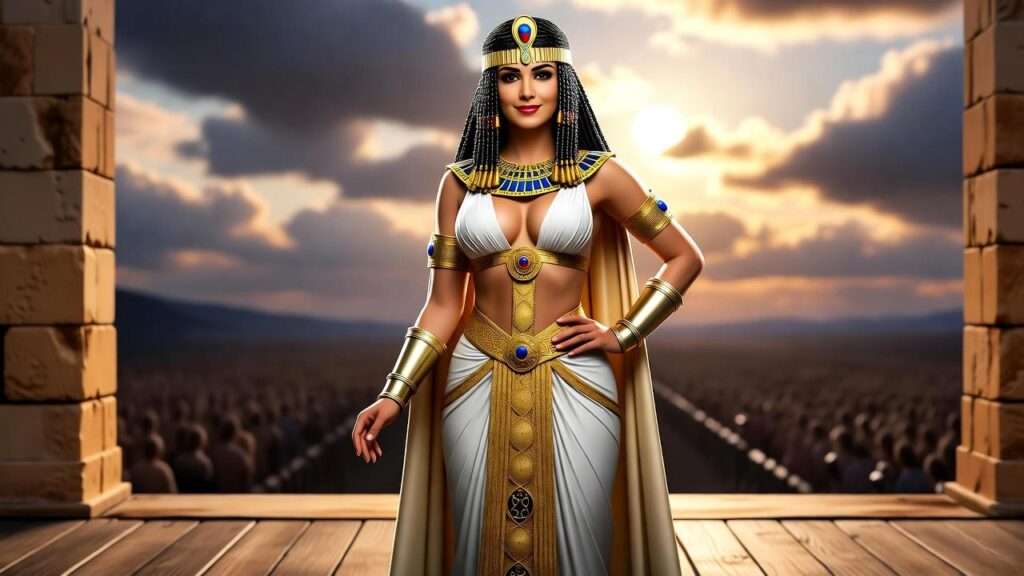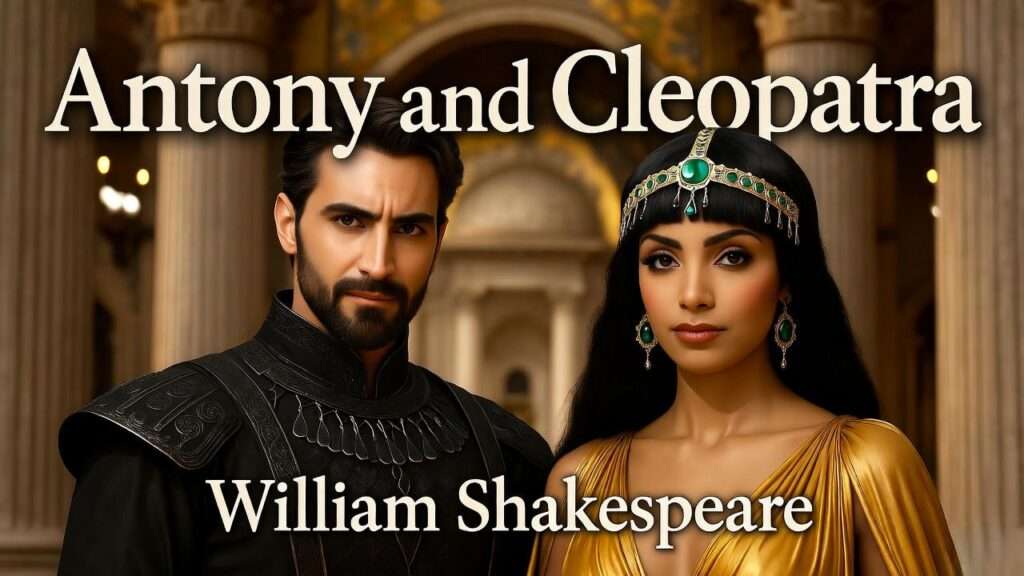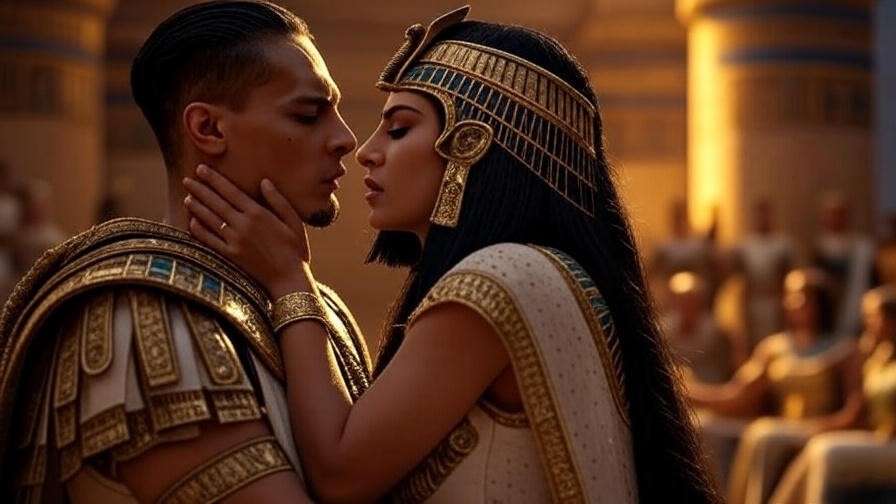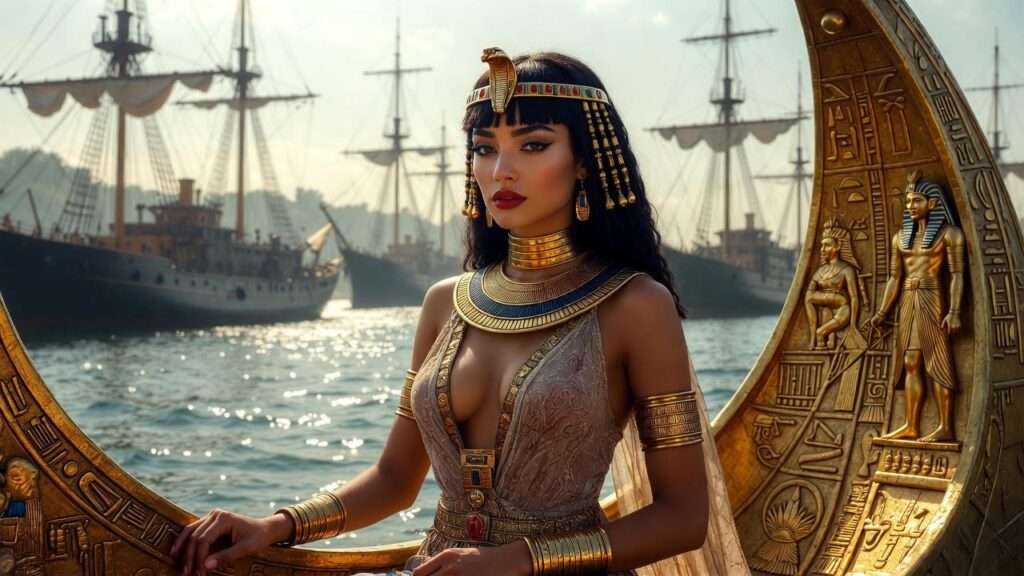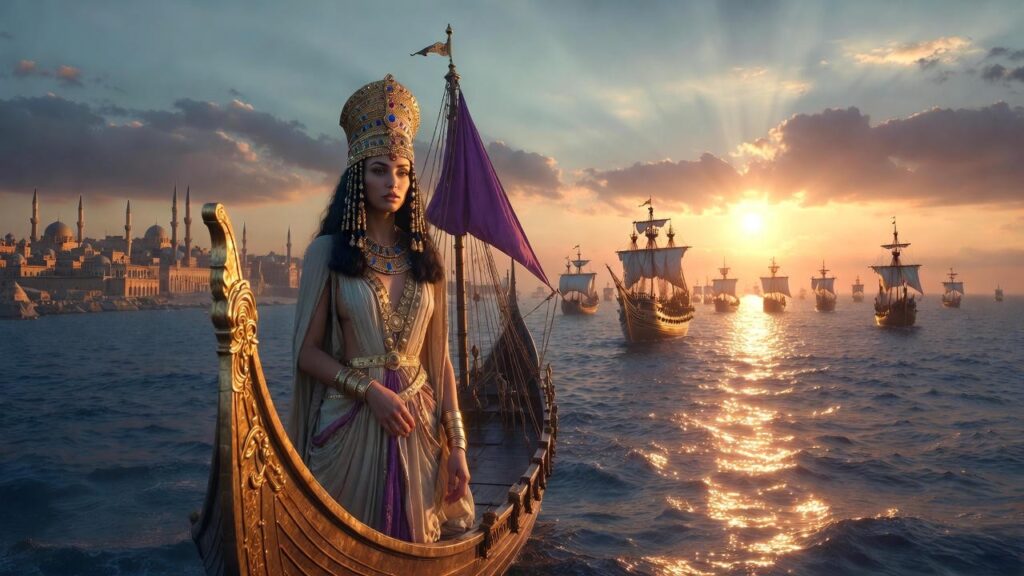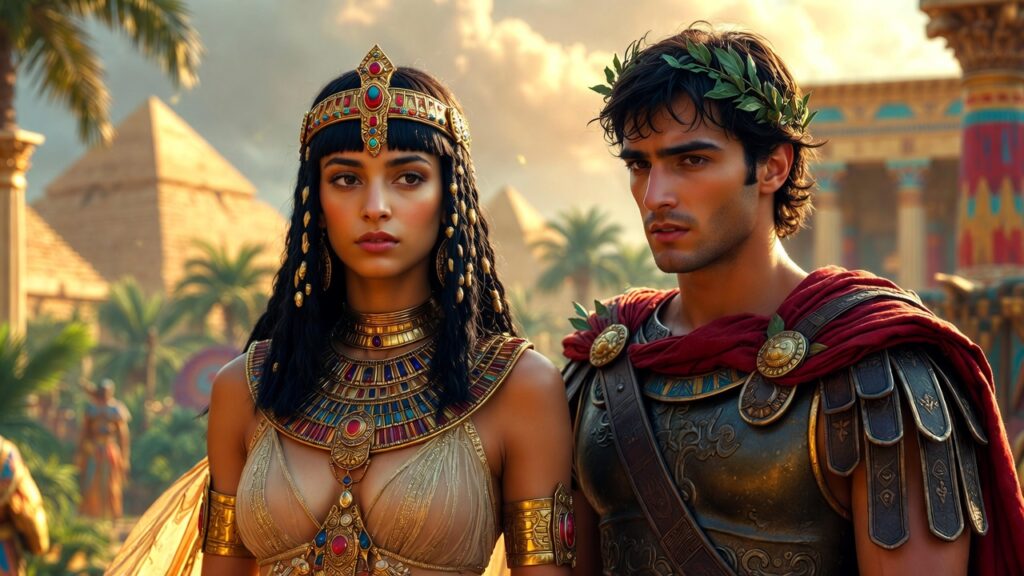
“Age cannot wither her, nor custom stale / Her infinite variety…”
These are probably the most famous words ever written about Cleopatra — and they still take the breath away after more than four hundred years.
Very few characters in world literature manage to feel so alive, so dangerously attractive, so contradictory, and at the same time so heartbreakingly human as Shakespeare’s Cleopatra.
Folger Antony and Cleopatra is, for very good reasons, one of the most widely used and most trusted editions when people — especially students, teachers, theatre lovers and serious readers — want to really understand this gigantic, fascinating, and structurally very unusual tragedy.
The Folger Shakespeare Library edition gives you:
- reliable, freshly edited text based on the First Folio
- extremely helpful facing-page explanations of difficult words and expressions
- clear scene-by-scene summaries
- excellent short introductory essays
- very good selection of modern perspectives and further reading suggestions
In this long, in-depth guide we want to help you get the maximum out of your reading of Folger Antony and Cleopatra.
Whether you • are reading the play for the first time • are preparing for an exam or essay • are going to see a production • or simply love Shakespeare and want to understand this great work much more deeply
…this article will give you the clearest, most complete and most practically useful companion material currently available on the internet.
We will move through:
→ historical & literary background → detailed structure & plot movement → the great central themes → very close character analysis → the most important passages & their real meaning → special language features → modern interpretations → and very practical study & theatre advice
Why Choose the Folger Edition for Antony and Cleopatra?
When serious readers and most literature teachers have to choose one edition of Antony and Cleopatra, the Folger Shakespeare Library paperback is very frequently their first (and often their only) choice.
Main reasons include:
Extremely reader-friendly design Every right-hand page shows the original Shakespeare text → on the left-hand page you find immediate, clear explanations of every difficult word, unusual grammar, mythological reference, sexual innuendo, double meaning…
You very rarely have to flip to the back of the book.
Outstanding editorial work Barbara A. Mowat and Paul Werstine (general editors of the whole Folger series) are among the most respected names in modern Shakespeare editing. Their text is conservative enough to be trusted by scholars and clear enough to be used by high-school students.
Very good teaching & learning apparatus
- Before each scene: short, extremely clear summary
- “Key Facts” box at the beginning
- Short, high-quality introduction essay
- Longer essay “Further Reading” with the most important criticism
- Beautiful images from the Folger collection
Very reasonable price + digital availability The Folger digital library also gives free access to the text → many universities link directly to Folger versions.
In short: If you want to really read and understand Antony and Cleopatra — and not only read around it — the Folger edition is still probably the best single-volume choice in the English-speaking world in 2025–2026.
Plot Summary and Structure
(Detailed Act-by-Act Breakdown)
Antony and Cleopatra has a very special dramatic architecture:
- 42 scenes (extremely high number)
- Very quick cutting between Egypt and Rome
- Almost no big battle scenes are shown on stage
- Enormous time-span and geographical space
- Very strong emphasis on language, report, rumour and imagination instead of physical action
Many people call the structure cinematic — long before cinema existed.
Very short overall plot skeleton
After the death of Julius Caesar, the Roman world is ruled by the Second Triumvirate: Mark Antony – Octavius Caesar – Lepidus
Antony is passionately involved with Cleopatra, Queen of Egypt. Rome tries to pull him back — again and again.
The central dramatic question becomes very cruel and simple: Can Antony live in both worlds — or must he eventually choose one and lose the other?
Act I — the two worlds collide (very strong, very fast exposition)
Rome demands Antony return → Cleopatra and her court try to keep him in the sensual, pleasure-loving Egyptian world Very famous first scene already shows the whole conflict: “Nay, but this dotage of our general’s / O’erflows the measure…”
Act II — political marriage + the barge scene Antony is forced to marry Octavia (Caesar’s sister) → Cleopatra’s explosion of jealousy → the world-famous Enobarbus description of Cleopatra’s barge → one of the greatest pieces of erotic and poetic language in the whole of Shakespeare
Act III — everything falls apart The war begins. Battle of Actium (31 BC) — the turning point of the whole play Cleopatra’s ships flee → Antony follows her → catastrophic defeat
Act IV — despair, false death, reunion, real death Very rapid emotional reversals Antony thinks Cleopatra is dead → attempts suicide → is brought to her monument → they have one last incredibly intense love-scene → Antony dies
Act V — Cleopatra’s monumental ending Cleopatra decides she will not be led in triumph in Rome Her death becomes a carefully staged, almost theatrical apotheosis “Give me my robe. Put on my crown. I have / Immortal longings in me…”
One of the most famous and most powerful finales in Shakespeare.
Major Themes in Antony and Cleopatra
Shakespeare’s Antony and Cleopatra is often described as a tragedy of opposites — and the play relentlessly explores how these opposites both define and destroy its central figures. The Folger edition helps illuminate these tensions through its clear notes on language shifts, cultural allusions, and the editors’ emphasis on performance over strict history.
Here are the play’s major themes, drawn directly from the text and supported by the Folger’s explanatory apparatus:
Love, Passion, and Pleasure vs. Reason and Duty The central binary of the play is Egypt (sensual, emotional, chaotic, feminine) versus Rome (rational, disciplined, political, masculine). Antony embodies this conflict: he is Rome’s greatest warrior, yet he declares early on, “Let Rome in Tiber melt, and the wide arch / Of the ranged empire fall! Here is my space” (1.1.38–40, Folger text). Cleopatra represents infinite sensuality — “Age cannot wither her, nor custom stale / Her infinite variety” (2.2.276–277). Their love is intoxicating but destructive; it pulls Antony from Roman duty toward Egyptian excess. The Folger notes highlight how Shakespeare uses language to reinforce this: Egypt’s speeches are lush, metaphorical, and erotic, while Rome’s are clipped, imperative, and strategic. Readers often struggle with this opposition — is passion liberating or fatal? The play refuses easy answers, showing both as essential yet incompatible.
Honor, Reputation, and Identity Roman honor (virtus) demands self-control and public glory. Antony’s “dotage” (1.1.1) — his obsession with Cleopatra — erodes his reputation among Romans like Philo and Caesar. Enobarbus’s betrayal stems from this: he sees Antony as “the villain of the earth” (4.6.30) yet dies of guilt over abandoning him. Cleopatra subverts Roman notions of honor; her “infinite variety” makes her impossible to pin down, challenging fixed identity. In her final act, she reclaims agency: “My resolution and my hands I’ll trust” (5.2.51), turning suicide into a performance of regal honor. Modern Folger perspectives (in the edition’s essay) note how postcolonial and feminist readings question Roman “honor” as imperial propaganda.
Power, Politics, and Empire The play dramatizes the historical shift from Republic to Empire. Octavius Caesar represents cold, calculating power — he outmaneuvers everyone. The Battle of Actium (offstage) symbolizes the triumph of Roman order over Eastern “decadence.” Shakespeare, following Plutarch, shows power as fluid: alliances shift, rumors spread, and personal passions influence geopolitics. Pompey’s brief rise and fall, Lepidus’s humiliation — all underscore how fragile empire is when desire interferes.
Gender Roles and Subversion Cleopatra defies Roman patriarchy. She is queen, seductress, performer, mother, strategist. Her agency terrifies Romans (Philo calls her “tawny front” and Antony her “fool”). Yet she uses stereotypes (playing the “strumpet”) to her advantage. Antony’s masculinity is questioned — he “effeminately” follows Cleopatra at Actium. The play blurs gender lines: Cleopatra dreams of Antony as “my man of men” (5.2.99), yet dies asserting her royal identity. Folger notes on wordplay (e.g., sexual puns) reveal how Cleopatra’s language empowers her.
Mortality, Legacy, and Myth-Making The lovers construct their own myths. Antony laments losing “the nobleness of life” (1.1.39); Cleopatra stages her death as apotheosis: “Give me my robe. Put on my crown. I have / Immortal longings in me” (5.2.282–283). Their suicides transcend defeat — they achieve eternal fame through artful self-fashioning. Shakespeare shows history as partly invented: Caesar will write the official story, but the play immortalizes the lovers differently.
These themes interweave; no single one dominates. The Folger edition’s modern perspective essay emphasizes how the play deconstructs binaries — Rome needs Egypt’s vitality, just as passion needs reason’s structure.
Key Characters – In-Depth Analysis
Mark Antony Tragic hero caught between worlds. Early: “the triple pillar of the world transformed / Into a strumpet’s fool” (1.1.12–13). He oscillates — heroic in battle, indulgent in love. His suicide stems from lost honor, yet he dies in Cleopatra’s arms, reconciling opposites. Folger notes trace his verse: grand in Rome, lyrical in Egypt.
Cleopatra The play’s most complex figure. Not just seductress — she is politically astute, multilingual (per Plutarch), performative. Her “infinite variety” frustrates and fascinates. She manipulates (jealous rages, false death report) yet shows genuine love. Her death elevates her to mythic status: “I am fire and air; my other elements / I give to baser life” (5.2.289–290). Folger’s facing-page notes decode her puns and shifts, showing intelligence behind caprice.
Octavius Caesar Cold ambition personified. He values order, empire, legacy. “The time of universal peace is near” (4.6.4–5) — his victory. Yet he admires Antony’s past greatness. Represents Rome’s triumph but lacks passion.
Enobarbus Loyal soldier turned betrayer. His barge speech (2.2) is Shakespeare’s poetic high point. Guilt kills him: “I am alone the villain of the Earth” (4.6.30). Shows how personal loyalty clashes with political reality.
Supporting: Octavia (duty incarnate), Charmian/Iras (devoted to Cleopatra’s end).
Memorable Quotes and Close Readings
The Folger text’s line numbers make these easy to locate.
- “Let Rome in Tiber melt…” (Antony, 1.1.38–40) Context: Defying Roman summons. Analysis: Hyperbolic rejection of empire for love. Shows passion overriding duty.
- Enobarbus on Cleopatra’s barge (2.2.201–227) “Age cannot wither her…” Iconic erotic description. Folger notes explain sensory language (perfumes, music) — turns report into poetry.
- “My salad days…” (Cleopatra, 1.5.73–75) Self-aware nostalgia. Reveals vulnerability beneath queenly facade.
- “Give me my robe…” (Cleopatra, 5.2.282–290) Final apotheosis. Asps as “lover’s pinch.” Death as performance — regal, erotic, transcendent.
- “I am dying, Egypt, dying” (Antony, 4.15.18) Repeated — emphasizes mortality. Folger highlights repetition for pathos.
Historical Context and Sources
Shakespeare’s Antony and Cleopatra is one of his most historically grounded plays, yet it is far from a documentary. The playwright drew primarily from one major source: Plutarch’s Parallel Lives, specifically the biographies of Mark Antony and (to a lesser extent) Julius Caesar, as translated into English by Sir Thomas North in 1579.
Key historical facts Shakespeare keeps:
- The Second Triumvirate (Antony, Octavius, Lepidus) formed in 43 BCE to avenge Caesar’s assassination.
- Antony’s long alliance and love affair with Cleopatra VII of Egypt (51–30 BCE).
- The decisive naval Battle of Actium in 31 BCE, where Cleopatra’s fleet fled and Antony followed.
- Antony’s suicide after believing Cleopatra dead, followed by Cleopatra’s suicide by asp bite in 30 BCE.
- Octavius’s victory, leading to his title Augustus and the beginning of the Roman Empire.
What Shakespeare changes or emphasizes:
- He compresses time dramatically (real events span over a decade; the play feels like months).
- Battles are almost entirely offstage — Shakespeare focuses on private emotion, rumor, and report rather than spectacle.
- Cleopatra’s death is elevated into a grand, theatrical apotheosis rather than a desperate act.
- Minor figures like Enobarbus are expanded into major emotional voices (Enobarbus has no equivalent in Plutarch with such depth).
The Folger edition’s introduction and “Further Reading” section point readers toward North’s Plutarch and modern historical works (e.g., Adrian Goldsworthy’s Antony and Cleopatra or Mary Beard’s essays on Cleopatra). This helps students distinguish Shakespeare’s artistic choices from strict history — a common exam topic.
Language and Style: Reading Shakespeare’s Antony and Cleopatra
One of the biggest barriers for modern readers is the play’s dense, shifting language. The Folger edition excels here because its facing-page notes decode almost every difficulty in real time.
Key linguistic features:
- Verse vs. Prose
- High-status characters (Antony, Cleopatra, Caesar) speak mostly blank verse (unrhymed iambic pentameter).
- Lower characters or comic/relaxed moments shift to prose (Enobarbus’s banter with soldiers, Cleopatra’s early teasing).
- Antony’s language deteriorates as he loses control — from grand declarations to fragmented outbursts.
- Egypt vs. Rome speech patterns
- Egypt: flowing, sensual, image-rich, full of hyperbole and sensuous detail (“The barge she sat in, like a burnished throne…”).
- Rome: clipped, imperative, legalistic (“Read the dispatch”; “Do this, or this”). Folger notes frequently point out these contrasts, helping readers feel the cultural opposition aurally.
- Wordplay and sexual innuendo Shakespeare packs the play with double entendres — especially in Cleopatra’s mouth. Examples:
- “My salad days” (1.5) — innocence, but also sexual ripeness.
- “He will to his Egyptian dish again” (2.6.123) — crude food/sex metaphor for Cleopatra. The Folger notes are unusually frank about these, which is invaluable for students encountering them for the first time.
- Report and ekphrasis Much of the play’s most famous imagery is described rather than shown (Cleopatra’s barge, Actium, Cleopatra’s dream of Antony as colossal). This technique makes language itself a kind of stage.
Practical reading tips using the Folger edition:
- Read the left-page note before puzzling over the right-page line — it saves time.
- Pay attention to stage directions and implied actions (e.g., Cleopatra’s “dies” in Act 4 is fake; the text hints at performance).
- Read Enobarbus’s speeches aloud — they contain some of Shakespeare’s most gorgeous prose-poetry.
Modern Relevance and Interpretations
Despite being set in the ancient world, Antony and Cleopatra speaks powerfully to 21st-century concerns.
- Love vs. career / public duty — Antony’s dilemma mirrors modern struggles between personal fulfillment and professional/political obligation.
- Toxic passion and codependency — The lovers’ volatility, jealousy, manipulation, and ultimate devotion feel painfully recognizable.
- Cultural clash and Orientalism — Rome views Egypt as decadent and effeminate; postcolonial critics (noted in Folger’s modern perspectives) read this as early imperial stereotyping of the East.
- Female power and performance — Cleopatra’s ability to stage her own image (costumes, theatrics, death) resonates with discussions of women in power, media image, and agency.
- Polarization and propaganda — Caesar’s cold control of narrative foreshadows modern political spin.
Notable recent interpretations:
- Feminist readings celebrate Cleopatra’s resistance to Roman patriarchy.
- Queer theory explores the fluidity of gender and desire in both lovers.
- Productions often cast non-white actors as Cleopatra to challenge the play’s own racial language (“tawny,” “gipsy”).
The play’s refusal to moralize — it neither condemns nor fully glorifies the lovers — keeps it fresh for every generation.
Study Tips and Resources for Students and Teachers
- Maximize the Folger edition
- Use scene summaries before reading to orient yourself.
- Cross-reference notes when stuck on a line.
- Read the “Further Reading” essay at the end — it curates the best criticism.
- Essay & exam prompts
- How does Shakespeare use language to contrast Rome and Egypt?
- Is Cleopatra a tragic heroine or a manipulative figure?
- Discuss the role of rumor and report in the play’s structure.
- Analyze Antony’s tragic flaw.
- Free Folger resources (2026)
- Folger Digital Texts (free online)
- Folger Shakespeare Library podcasts and videos
- Scene-by-scene video introductions (YouTube)
- Performance viewing
- 1972 film (Charlton Heston & Hildegard Neil) — traditional.
- 1981 BBC version (Jane Lapotaire’s intense Cleopatra).
- Recent RSC or National Theatre productions (often available online).
Frequently Asked Questions (FAQs)
Is Antony and Cleopatra a tragedy, history, or problem play? Officially a tragedy, but it blends elements of history and romance. No clear villain; the tragedy is mutual destruction.
Why does Cleopatra flee at Actium? Shakespeare leaves it ambiguous — fear, strategy, or betrayal? It devastates Antony either way.
Is the Folger edition suitable for beginners? Yes — more accessible than Arden or Oxford for first-time readers due to facing-page notes.
What is the significance of the asp? Symbolic lover’s embrace; Cleopatra turns poison into ecstasy (“a lover’s pinch”).
Does the play glorify or criticize the lovers? Both. Their grandeur is real, but so is their recklessness.
Antony and Cleopatra is Shakespeare at his most expansive and most intimate — a tragedy of empire, passion, identity, and the stories we tell about ourselves in the face of defeat.
The Folger Antony and Cleopatra edition remains the ideal companion because it never gets between you and the play: it clarifies without simplifying, explains without preaching.
Whether you are studying for an exam, directing a scene, teaching a class, or simply wanting to feel the full force of Cleopatra’s “immortal longings,” this guide — and the Folger text itself — will help you meet the play on its own magnificent, contradictory terms.
Now go open your copy. Let Cleopatra’s barge sail again. Let Antony declare his kingdom for a kiss. The play is waiting — infinite in its variety, and still astonishing after four centuries.