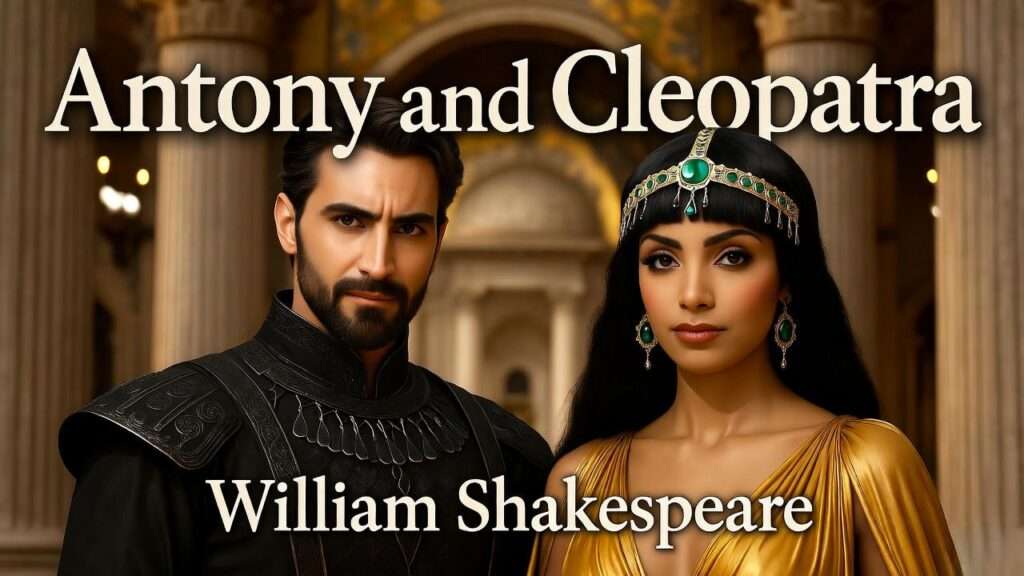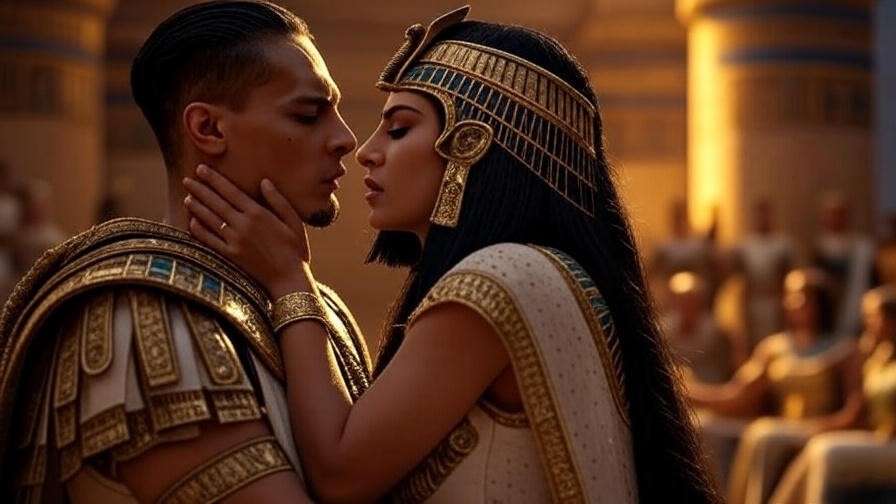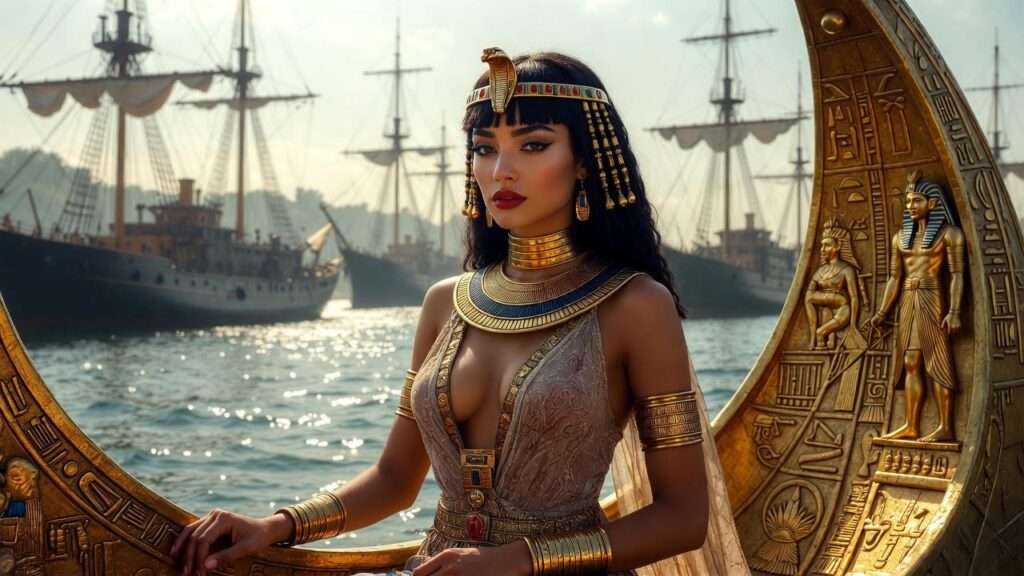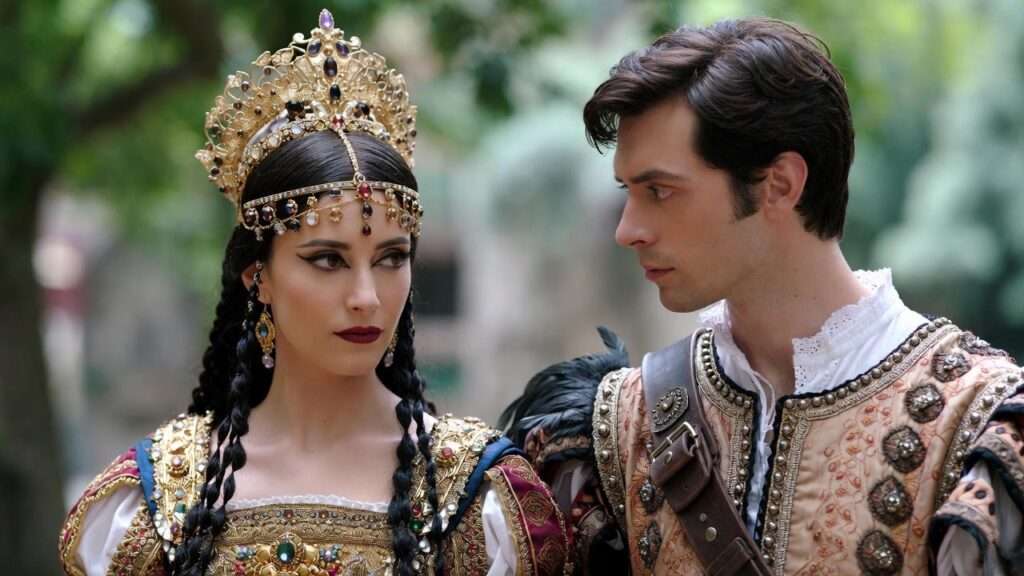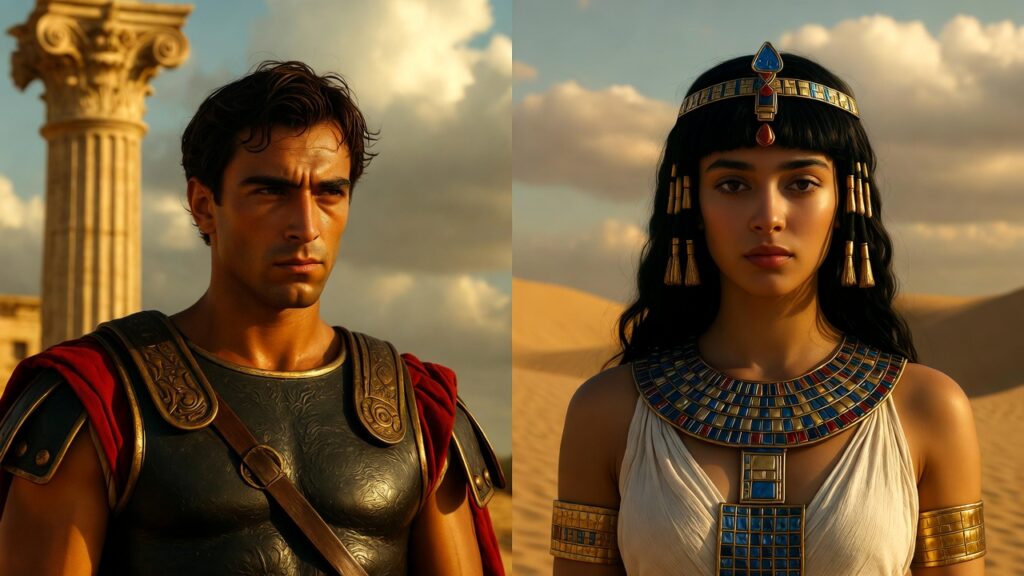
In the sun-drenched splendor of Alexandria, where the Nile meets the sea, Mark Antony stands before Cleopatra and declares with defiant passion: “Let Rome in Tiber melt, and the wide arch / Of the ranged empire fall! Here is my space.” These words, spoken early in William Shakespeare’s Antony and Cleopatra, capture the heart of the play’s central conflict—the explosive “versus” between personal desire and imperial duty. Antony v Cleopatra is not merely a romance; it is Shakespeare’s profound meditation on whether love can defy the demands of empire, loyalty, and reason without catastrophic consequences. As one of the Roman triumvirs alongside Octavius Caesar and Lepidus, Antony’s entanglement with the Egyptian queen threatens the fragile balance of power that once held the Mediterranean world together. The focus keyword “antony v” evokes this dramatic opposition: Antony versus Cleopatra in their volatile relationship, Antony versus Caesar in the struggle for dominance, and ultimately, passion versus politics in a clash that reshapes history.
Shakespeare draws from Plutarch’s Life of Antony, yet transforms dry historical narrative into poetic tragedy. Where Plutarch chronicles events with moral judgment, Shakespeare amplifies emotional depth, linguistic beauty, and ambiguity. The result is a play that defies easy categorization—part history, part tragedy, part romance—offering timeless insights into human nature. For students analyzing Shakespeare’s Roman plays, theater enthusiasts seeking deeper character study, or anyone grappling with the tension between heart and duty, this exploration reveals why Antony and Cleopatra endures as one of the Bard’s most complex masterpieces.
Historical and Dramatic Context – Setting the Stage for Conflict
Shakespeare’s Antony and Cleopatra (written around 1606–1607) dramatizes the final years of the Roman Republic’s collapse into empire (40–30 BCE). Following Julius Caesar’s assassination, the Second Triumvirate—Mark Antony, Octavius Caesar, and Lepidus—divides power. Antony’s alliance with Cleopatra, Queen of Egypt, fuels Roman suspicion and leads to civil war, culminating in the Battle of Actium and the lovers’ suicides.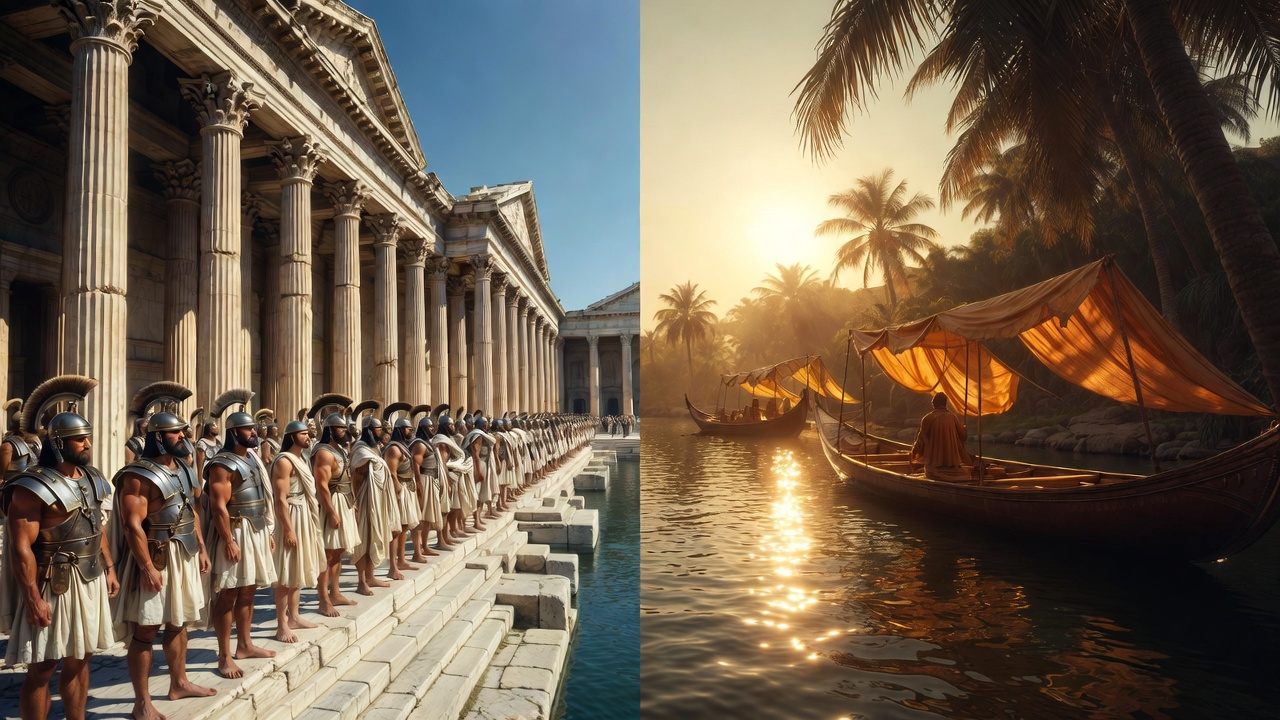
From Plutarch to Shakespeare – What the Bard Changed and Why Shakespeare’s primary source is Thomas North’s 1579 translation of Plutarch’s Parallel Lives. Plutarch portrays Antony as a flawed hero undone by excess and Cleopatra as cunning yet politically astute. Shakespeare condenses timelines, heightens drama, and shifts emphasis: he minimizes Antony’s earlier cruelty (e.g., toward Cicero) and amplifies Cleopatra’s “infinite variety,” making her more enigmatic and powerful. Plutarch notes Cleopatra’s multilingual skills and strategic mind; Shakespeare focuses on her performative sensuality and emotional volatility. These changes serve Shakespeare’s thematic purpose—to explore not just historical facts but the psychological and philosophical costs of choosing passion over empire. By amplifying contrasts, Shakespeare creates a tragedy where personal choices echo cosmic consequences.
Rome vs. Egypt – The Clash of Civilizations The play’s geography symbolizes opposing worldviews. Rome embodies discipline, reason, masculinity, and imperial ambition—values Octavius Caesar personifies through his calculated restraint. Egypt represents sensuality, fluidity, femininity, and pleasure, embodied by Cleopatra’s luxurious court. Shakespeare uses imagery to reinforce this binary: Roman scenes are terse and political, Egyptian ones lush and poetic. This East-West divide anticipates modern postcolonial readings, where Egypt is “othered” as exotic and decadent, yet Cleopatra subverts Roman stereotypes through her agency and intellect. The clash underscores the play’s core question: Can individual passion coexist with imperial order, or must one destroy the other?
Central Characters – Profiles in Power and Passion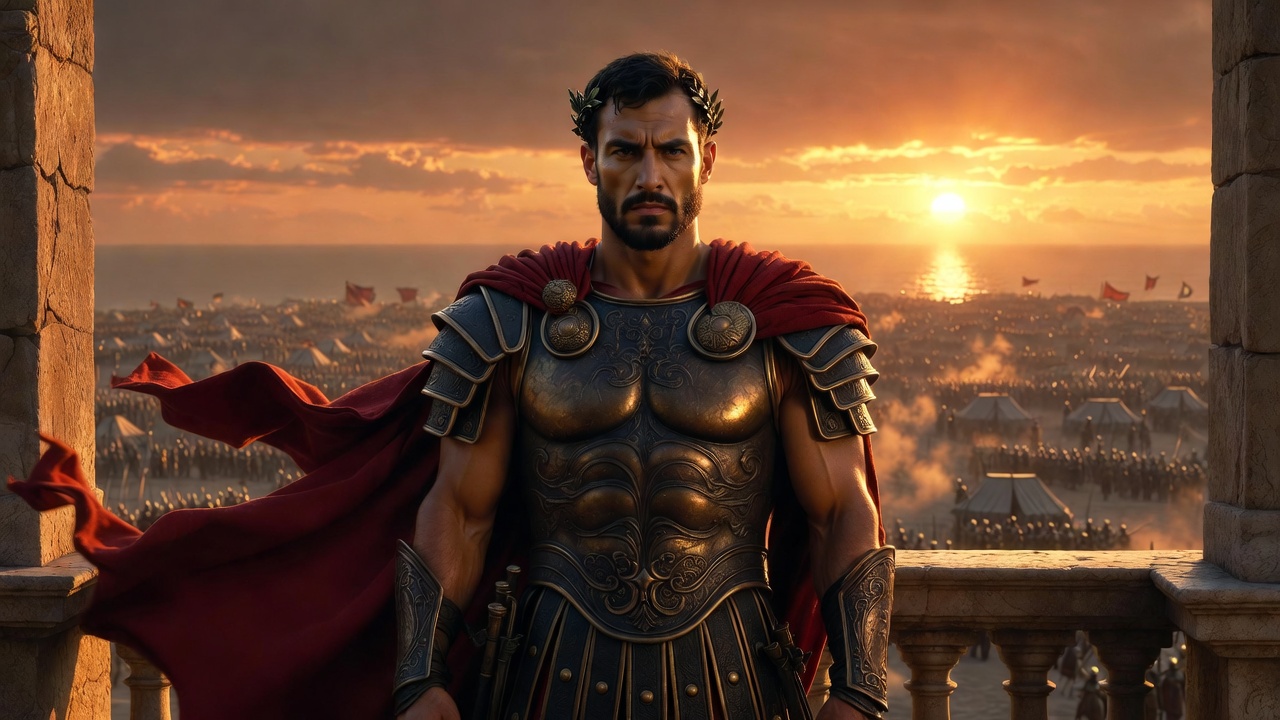
Mark Antony – The Hero Torn Between Worlds Antony begins as the “triple pillar of the world,” a battle-hardened warrior whose valor at Philippi is legendary. Yet his love for Cleopatra erodes this identity. He oscillates between Roman duty (“A Roman thought hath struck him”) and Egyptian indulgence, declaring kingdoms “clay” beside his love. This internal division—reason versus emotion—mirrors the play’s larger conflict. Antony’s tragedy lies in his inability to reconcile these worlds; his suicide stems from perceived loss of honor, yet he dies affirming his passion.
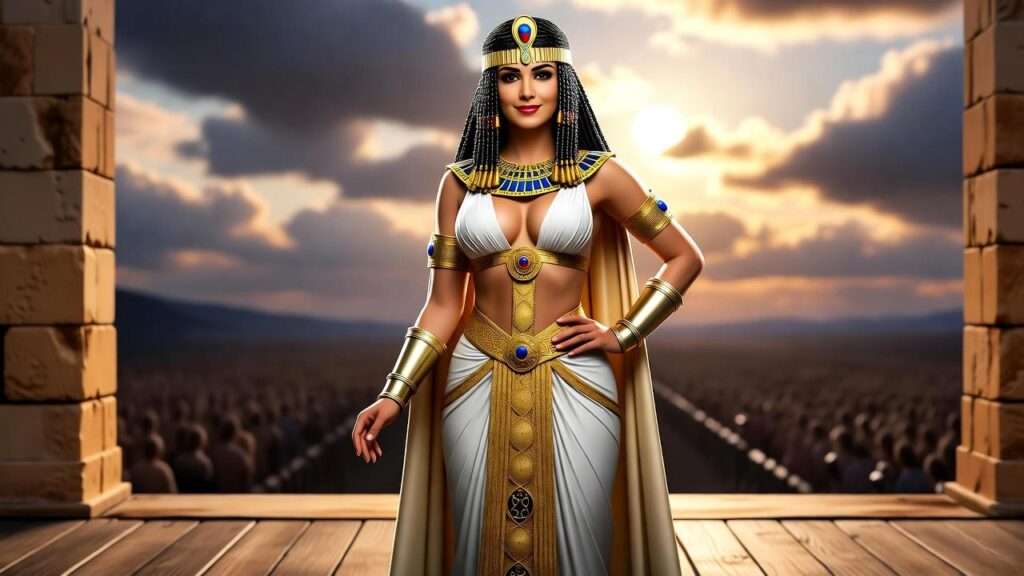
Cleopatra – Queen, Performer, and Immortal Icon Cleopatra is Shakespeare’s most multifaceted female character. Described by Enobarbus as having “infinite variety,” she shifts moods to captivate Antony—playful, jealous, regal, vulnerable. Far from a mere seductress, she wields political power astutely, manipulating messengers and feigning death to test loyalty. Her agency challenges Roman patriarchy; she refuses to be a passive prize in empire’s game. In death, she transforms tragedy into triumph, claiming immortality through love.
Octavius Caesar – The Embodiment of Roman Ascendancy Cold, disciplined, and ambitious, Octavius represents Rome’s future. He condemns Antony’s “dotage” and views personal passion as weakness. His victory at Actium secures the empire, but Shakespeare subtly critiques his sterility—lacking warmth, he wins politically yet loses morally in the play’s poetic vision.
Supporting Figures – Enobarbus, Octavia, and Others Enobarbus, Antony’s loyal lieutenant, provides cynical commentary and the play’s most famous speech. His betrayal and remorse highlight loyalty’s fragility. Octavia, Caesar’s sister, symbolizes failed political marriage—her quiet virtue contrasts Cleopatra’s vibrancy but cannot hold Antony.
The Core Power Struggle – Love vs. Loyalty vs. Empire
Love and Pleasure as Decadence or Transcendence? The lovers’ passion elevates them beyond mortality—Antony calls their space “here”—yet dooms them politically. Shakespeare questions whether love is destructive indulgence or transcendent force. Their revels mock Roman restraint, but their deaths suggest love’s ultimate victory over empire’s transience.
Loyalty and Betrayal – Personal and Political Dimensions Betrayals abound: Antony’s marriage to Octavia, Enobarbus’s defection, Cleopatra’s apparent surrender to Caesar. These acts expose loyalty’s limits when passion intervenes. Enobarbus’s desertion speech (“I am alone the villain”) reveals self-awareness amid betrayal.
Empire and Ambition – The Cost of Imperial Vision Antony’s choices accelerate Rome’s shift to autocracy under Octavius. Personal indulgence costs empire; yet the play implies empire’s cold efficiency lacks the grandeur of flawed humanity.
Key Scenes and Iconic Speeches – Moments That Define the Tragedy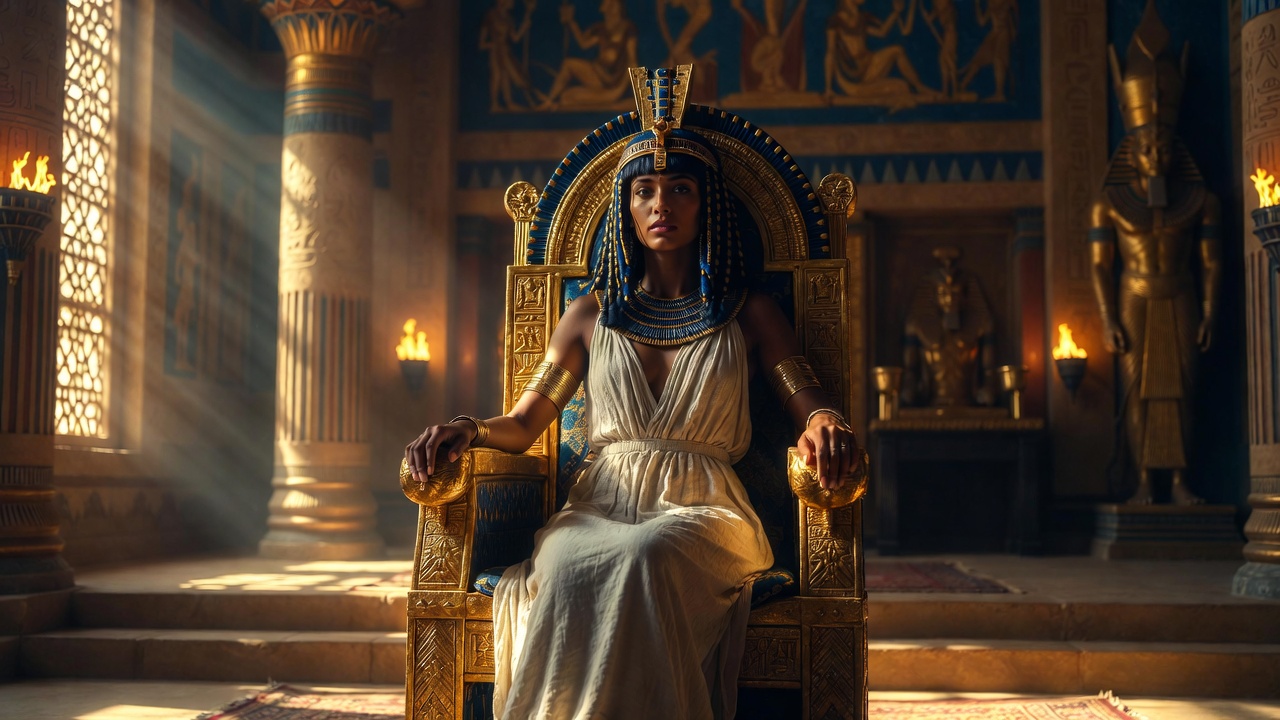
Shakespeare structures Antony and Cleopatra episodically, with rapid scene shifts between Rome, Egypt, and battlefields, mirroring the lovers’ fractured loyalties and the instability of empire. The play contains some of Shakespeare’s most celebrated poetry, where language itself becomes a battleground between Roman restraint and Egyptian excess.
Opening Scene (Act 1, Scene 1) – Establishing the “v” Tension The play opens not with grandeur but with Roman disapproval. Philo and Demetrius watch Antony follow Cleopatra and her train, complaining that “this dotage of our general’s / O’erflows the measure.” Then Antony delivers the famous declaration:
“Let Rome in Tiber melt, and the wide arch Of the ranged empire fall! Here is my space. Kingdoms are clay…”
This moment crystallizes the central opposition: empire versus individual desire. Antony rejects the very foundation of Roman identity—duty to the state—for the private “space” he shares with Cleopatra. The contrast between the soldiers’ scorn and Antony’s exalted language immediately sets up the play’s moral and aesthetic ambiguity.
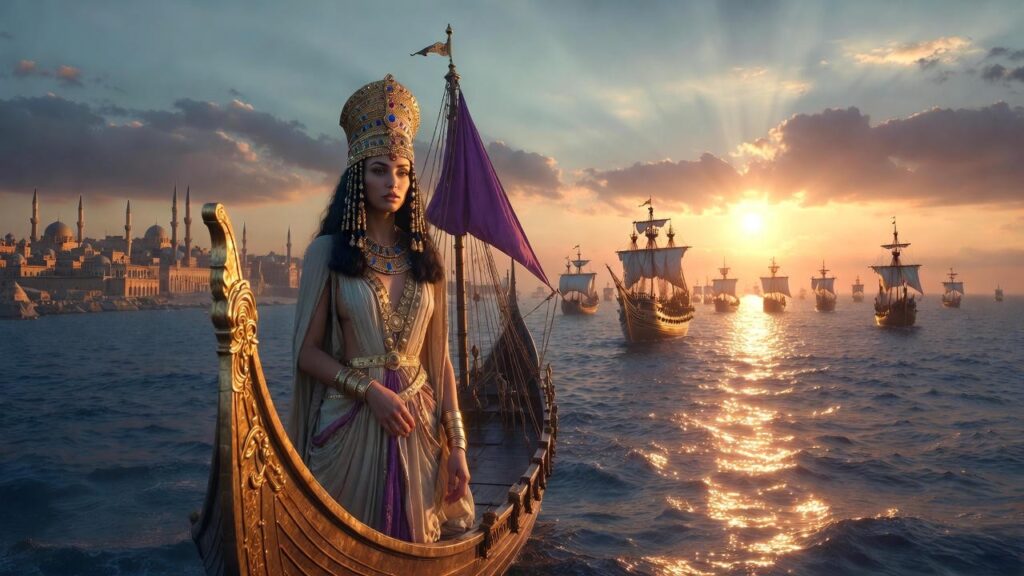
Enobarbus’s Barge Speech (Act 2, Scene 2) – Cleopatra’s Mythic Allure Perhaps the most famous passage in the play, Enobarbus describes Cleopatra’s first meeting with Antony on the Cydnus River: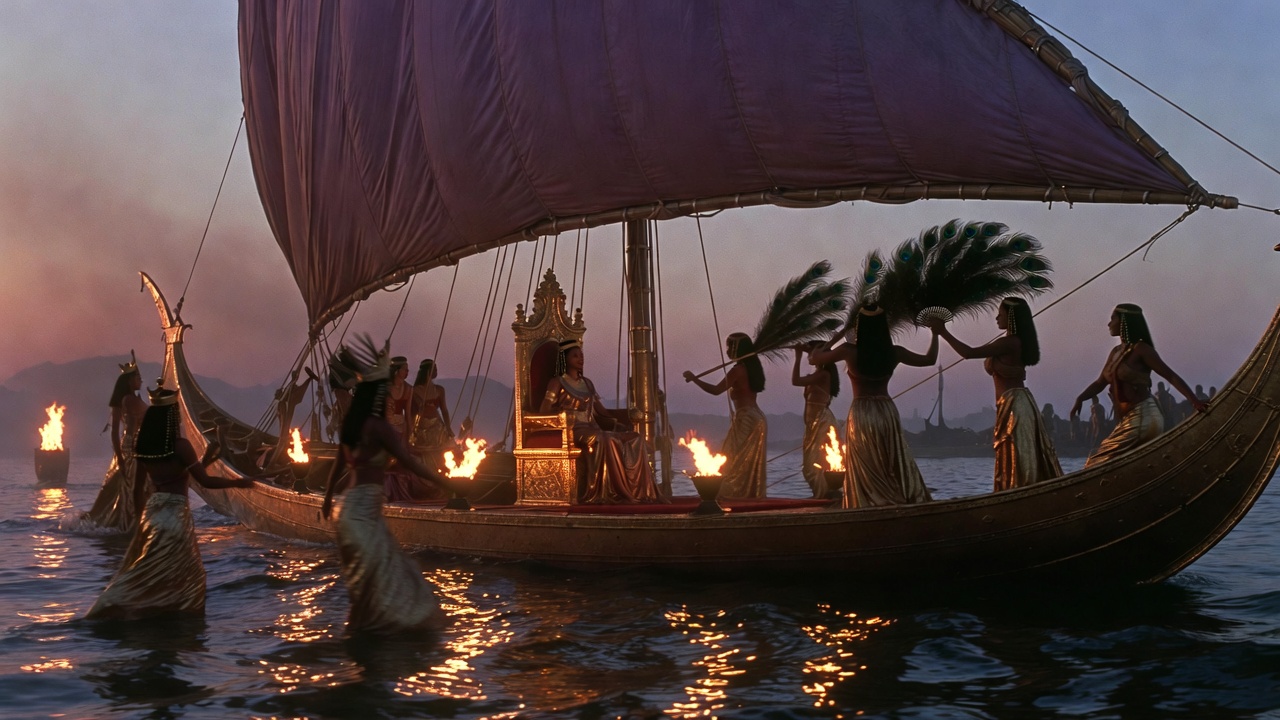
“The barge she sat in, like a burnished throne, Burned on the water… …For her own person, It beggared all description: she did lie In her pavilion—cloth-of-gold of tissue— O’er-picturing that Venus where we see The fancy outwork nature…”
This speech transforms Cleopatra from historical figure into mythic icon. Enobarbus, the play’s most cynical voice, is so moved that he elevates her sensuality to divine art. The imagery—fire on water, gold burning, nature outdone by imagination—embodies Egypt’s power to transcend Roman categories of order and measurement.
Antony’s Farewell and Reconciliation Scenes (Act 1, Scene 3; Act 4) Antony’s volatility is on full display when he must leave Egypt for Rome. In Act 1, Scene 3, Cleopatra alternates between playful jealousy and regal command, while Antony tries to balance duty and affection. Later, after Actium, their reconciliations are passionate yet fragile—each time they reaffirm love, the political cost grows steeper. These scenes reveal love as both sustaining and destructive force.
The Battle of Actium and Its Aftermath – Turning Point of Betrayal The naval battle at Actium (Act 3, Scene 10) marks the irreversible shift. Cleopatra’s ships flee, and Antony follows, abandoning his fleet. Shakespeare condenses the historical disaster into a few breathless scenes, emphasizing personal betrayal over military strategy. Antony’s despair—“All is lost!”—and his accusation that Cleopatra has “sold” him reveal how deeply personal passion has corrupted political loyalty.
Cleopatra’s Final Monologue (Act 5, Scene 2) – “I dreamt there was an Emperor Antony…” After Antony’s suicide, Cleopatra refuses to be paraded in Caesar’s triumph. In her death scene, she reclaims narrative control: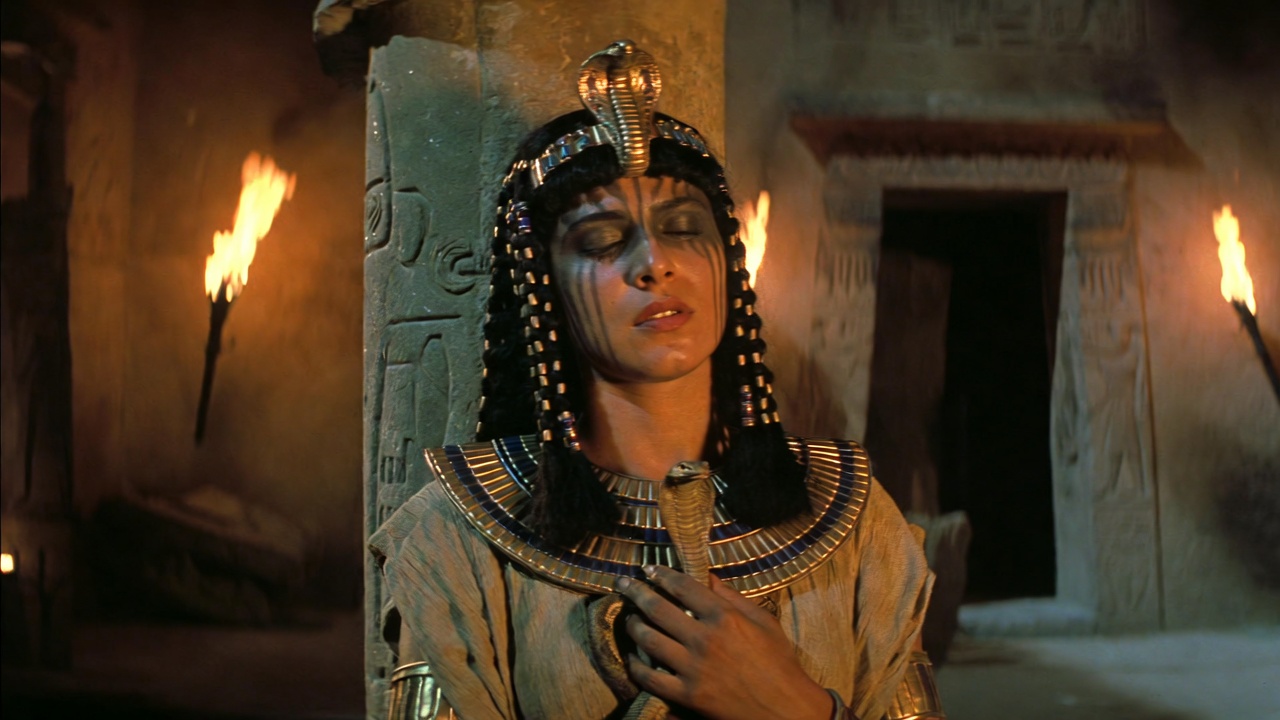
“I dreamt there was an Emperor Antony— O, such another sleep, that I might see But such another man!… His face was as the heavens, and therein stuck A sun and moon…”
This vision reimagines Antony not as defeated general but as cosmic emperor. Cleopatra’s suicide—by asp bite—becomes a theatrical triumph, transforming tragic loss into eternal legend. She dies “in the high Roman fashion,” yet on her own terms, subverting Caesar’s victory.
Major Themes – Timeless Insights from Shakespeare’s Masterpiece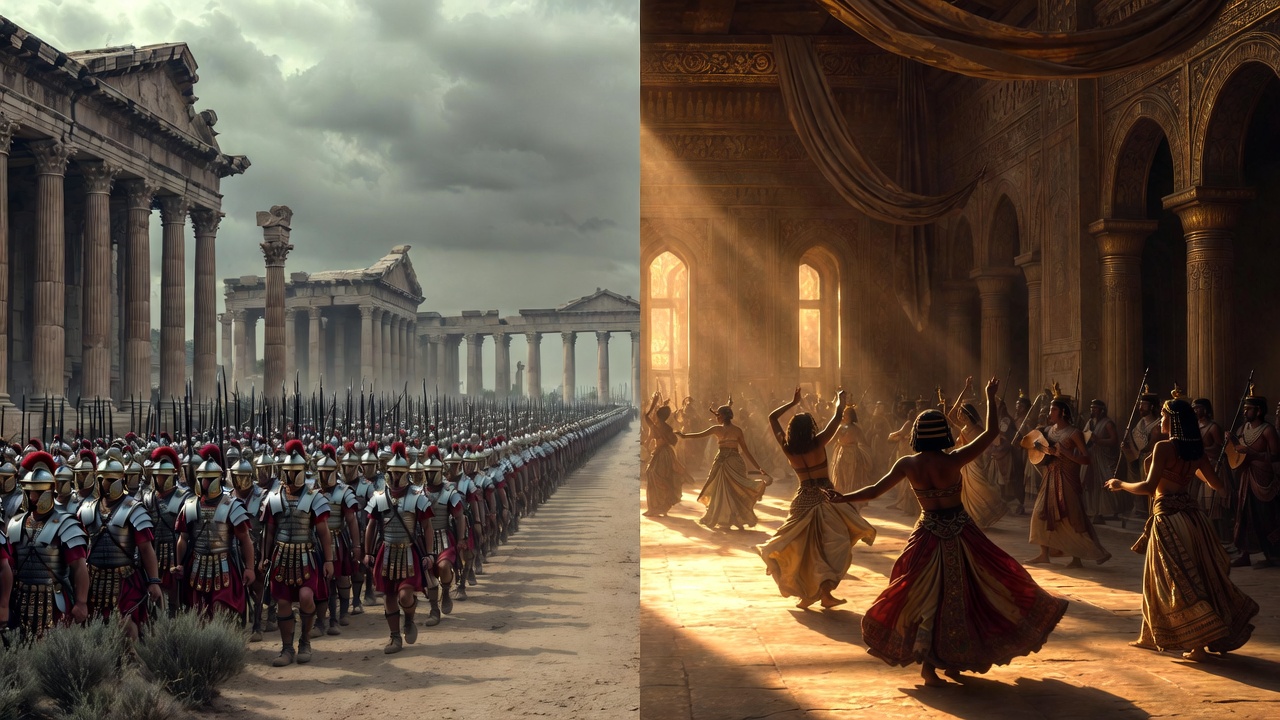
The Conflict Between Reason and Emotion Antony’s tragedy is internal: the Roman part of him demands discipline, while the lover demands surrender. This universal dilemma—head versus heart—resonates across centuries, from Elizabethan audiences to modern readers navigating career versus family, duty versus desire.
Gender, Power, and Performance Cleopatra performs constantly—seductress, queen, grieving lover—using theatricality to maintain power in a male-dominated world. Shakespeare challenges Roman (and Elizabethan) assumptions about female constancy and rationality. Cleopatra’s “infinite variety” is both her strength and her vulnerability.
Transformation and Immortality Through Love Unlike Romeo and Juliet, where love ends in mutual death, Antony and Cleopatra suggests that love can achieve a kind of afterlife. The lovers’ suicides elevate them into legend; their story outlives Caesar’s empire. Shakespeare implies that art and passion can confer a permanence that political power cannot.
Colonialism and Cultural Clash Modern critics read the play through postcolonial lenses: Rome’s conquest of Egypt as Western domination of the East, Cleopatra as exotic “other.” Yet Shakespeare complicates this binary—Cleopatra is politically shrewd, multilingual, and capable of outmaneuvering Roman envoys. The play questions whether cultural superiority is real or merely a justification for conquest.
Expert Insights and Modern Relevance
Antony and Cleopatra stands apart even among Shakespeare’s Roman plays. Unlike the more structurally unified Julius Caesar, it refuses neat tragic closure. The lovers do not die in the fifth act because fate or a single flaw dooms them; they die because they choose each other over empire again and again. This makes the play feel almost anti-tragic in moments—Cleopatra’s final performance turns suicide into apotheosis, and Antony’s last words affirm love rather than repent excess.
Scholars frequently note the play’s sequel-like relationship to Julius Caesar. Antony appears in both, evolving from eloquent funeral orator to self-destructive lover. The contrast is deliberate: the man who once swayed Rome with rhetoric now lets passion sway him to ruin. Echoes of Romeo and Juliet also appear—mutual devotion, rapid mood shifts, death as union—but here the scale is geopolitical, not domestic.
In performance, directors often emphasize the “versus” of the title through stark visual language: cold marble and togas for Roman scenes, warm golds, silks, and flowing water for Egyptian ones. Recent productions (Royal Shakespeare Company, National Theatre, Broadway revivals) have explored gender fluidity, racial dynamics (casting Cleopatra as Black or South Asian to challenge orientalist readings), and the politics of spectacle in an age of media-driven leadership.
Today the play speaks powerfully to contemporary tensions:
- Leaders torn between personal life and public duty (political marriages, scandals, the private costs of power).
- “Power couples” whose relationships become public spectacle.
- Cultural clashes in a globalized world—East vs. West stereotypes, the allure and danger of cross-cultural alliances.
- The seductive danger of charisma over competence (Antony’s magnetism versus Caesar’s efficiency).
In an era when personal branding and performative identity dominate politics and social media, Cleopatra’s constant self-staging feels strikingly modern.
Practical Tips for Readers and Students
Approaching the Play for the First Time
- Read actively with two texts side by side: a modern edition (Arden, Folger, or Norton) with notes, and watch a performance afterward.
- Start with a filmed version—1999 television production with Alan Howard and Frances de la Tour, or the 1972 Charlton Heston–Hildegard Neil film—to grasp the rhythm before tackling the dense poetry alone.
- Focus first on character voice: Antony’s grand declarations, Cleopatra’s quicksilver shifts, Enobarbus’s sardonic commentary, Caesar’s clipped precision.
Key Quotes to Memorize or Use in Essays
- “Let Rome in Tiber melt…” (I.i.33–35) — passion over empire
- “Age cannot wither her, nor custom stale / Her infinite variety” (II.ii.276–277) — Cleopatra’s enduring fascination
- “The barge she sat in…” (II.ii.201 ff.) — Enobarbus’s speech
- “I am fire and air; my other elements / I give to baser life” (V.ii.344–345) — Cleopatra’s final transcendence
- “My desolation does begin to make / A better life” (V.ii.1–2) — Cleopatra’s shift to mythic self-fashioning
Common Analytical Pitfalls to Avoid
- Reducing Cleopatra to a femme fatale or manipulative seductress—Shakespeare gives her genuine political intelligence and emotional depth.
- Treating the play as simple East–West binary—both worlds contain virtues and flaws.
- Ignoring the humor—especially Cleopatra’s bawdy wit and the play’s ironic undercutting of heroic posturing.
FAQs – Answering Common Questions About Antony v Cleopatra
Is the play more tragedy or romance? It is both—and neither fully. The structure and tone contain tragic elements (downfall through passion, suicides), yet the lovers achieve a kind of romantic apotheosis in death. Shakespeare deliberately blurs genre boundaries, making the play feel larger and more ambiguous than conventional tragedy.
Who “wins” — Antony/Cleopatra or Caesar? Politically, Caesar wins: he becomes Augustus, sole ruler of Rome. Poetically and morally, the lovers win: their story endures as legend while Caesar’s empire, though vast, remains prosaic. Shakespeare gives the final word—and the most beautiful poetry—to Cleopatra.
How does Shakespeare portray Cleopatra differently from history? Plutarch presents a shrewd, multilingual queen who used charm strategically. Shakespeare heightens her theatricality, emotional range, and mythic quality, making her less a historical politician and more an embodiment of desire, performance, and defiance.
Why is the play so scene-shifting and episodic? The rapid location changes mirror the instability of empire and the lovers’ divided allegiances. Shakespeare uses geography the way he uses language—to show a world in flux, where no single center (Rome or Alexandria) can hold absolute authority.
In Antony and Cleopatra, Shakespeare stages the ultimate power struggle: not merely Antony versus Cleopatra, nor Antony versus Caesar, but the human heart versus the machinery of empire. The lovers lose the world but claim something rarer—an imaginative and eternal victory. They die affirming that “here is my space,” a private kingdom of passion more real to them than any province Rome could conquer.
This refusal to choose fully between love and duty, between Egypt and Rome, between mortality and myth, is what makes the play inexhaustible. It does not deliver moral certainties or tidy catharsis; instead, it offers a mirror to our own divided natures—how we too are pulled between responsibility and desire, between the measured life and the incandescent one.
Centuries after the historical Antony and Cleopatra vanished from the earth, their story survives because Shakespeare understood something profound: empires rise and fall, but the longing to live fully, even at ultimate cost, is timeless. Revisit the text, watch a performance, or simply reflect on the next time you feel torn between head and heart—you may find Antony and Cleopatra still speaking directly to you.