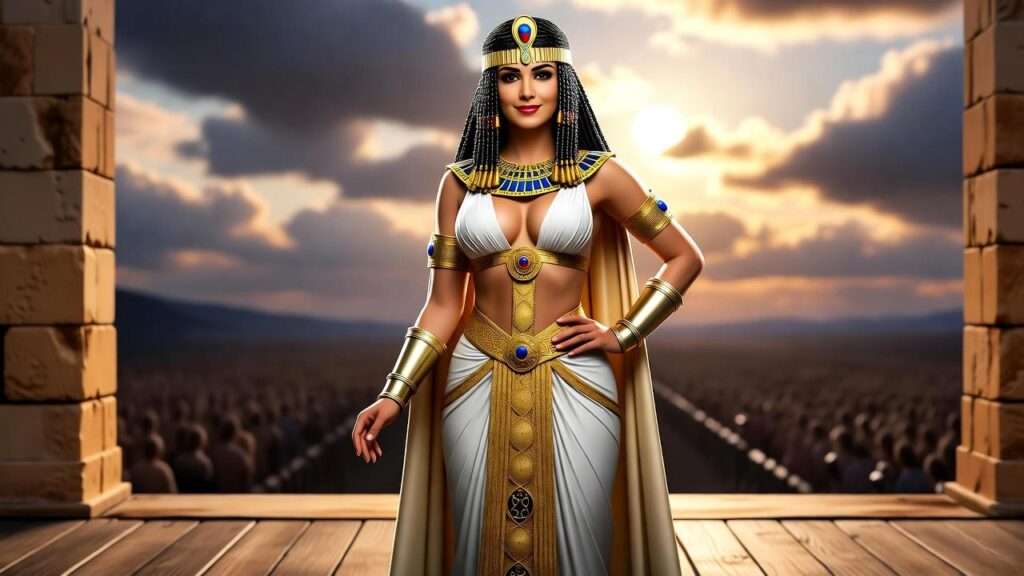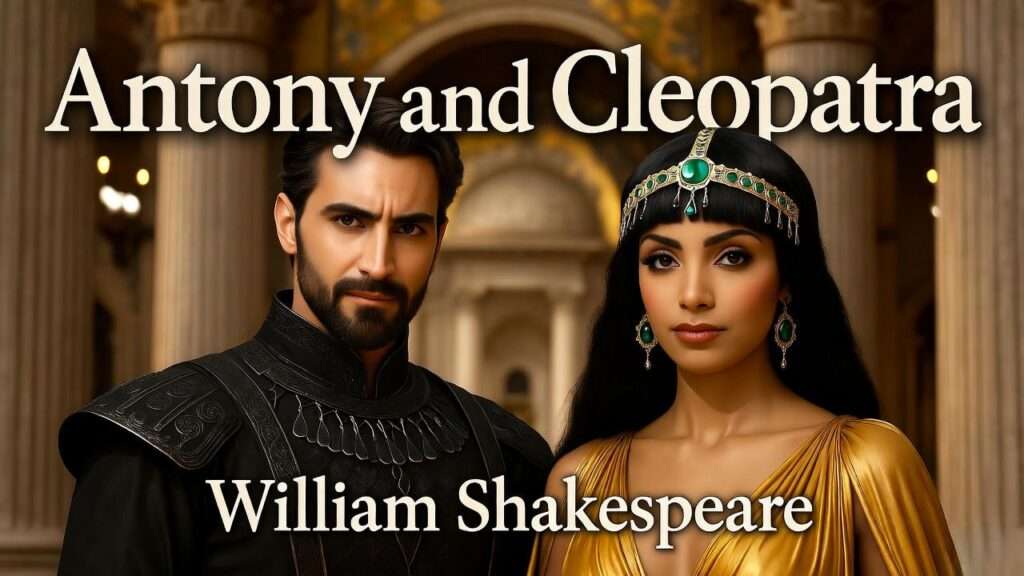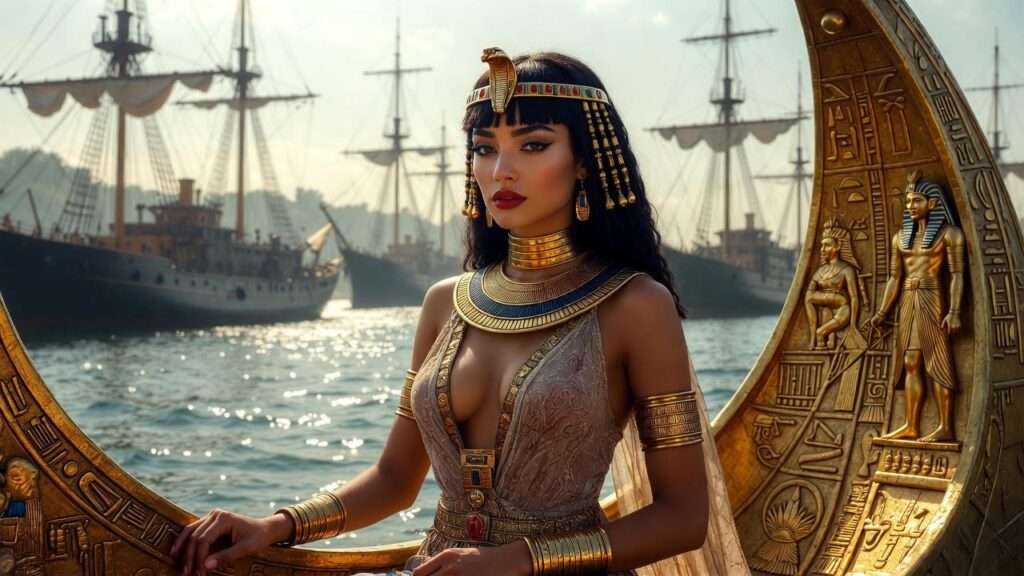
When readers search for “cleopatra full body,” they are looking for far more than a static image or glamorous costume still. They want the complete, breathing, three-dimensional portrait that William Shakespeare created in Antony and Cleopatra—a queen whose physical presence, voice, movement, intellect, and erotic power fill every corner of the stage and page. In an Elizabethan theater that had no lighting rigs, no CGI, and no close-up cameras, Shakespeare used nothing but words to make Cleopatra live and breathe in the minds of his audience. “Age cannot wither her, nor custom stale / Her infinite variety” (2.2.241–242). With that single line, Enobarbus hands us the key to understanding Shakespeare’s most fully realized female character: a woman whose body is not merely beautiful but an instrument of political mastery, emotional depth, and theatrical immortality.
This article is written for the exact audience that lands on this page—students, actors, directors, teachers, and passionate readers of the William Shakespeare Insights blog who need a definitive, text-grounded exploration of Cleopatra’s full-bodied portrayal. Whether you are preparing an essay, rehearsing the role, directing a production, or simply want to see why this 400-year-old queen still feels dangerously alive in 2026, you will leave with a richer, more precise understanding than any summary or film adaptation can provide. We will move step by step from historical fact to Shakespeare’s dramatic choices, from the most famous descriptive speech in the canon to the intimate physical and emotional moments that make Cleopatra leap off the page. Every quotation is cited by act, scene, and line so you can return to the text with confidence. By the end, you will possess the tools to visualize, analyze, and even perform Shakespeare’s Cleopatra with authority.
The Historical Cleopatra: Fact vs. Shakespeare’s Dramatic License
To appreciate the “cleopatra full body” Shakespeare created, we must first understand the real woman he transformed. Cleopatra VII Philopator (69–30 BCE) was the last Ptolemaic ruler of Egypt, a Macedonian-Greek dynasty that had governed Egypt since Alexander the Great’s conquest. Fluent in nine languages, she presented herself to her Egyptian subjects as the living incarnation of Isis, yet she was a shrewd Hellenistic monarch who understood Roman power better than most of her contemporaries. She formed alliances—and children—with Julius Caesar and later Mark Antony, ruled a wealthy kingdom, and ultimately chose suicide by asp bite rather than be paraded in Octavius Caesar’s triumph.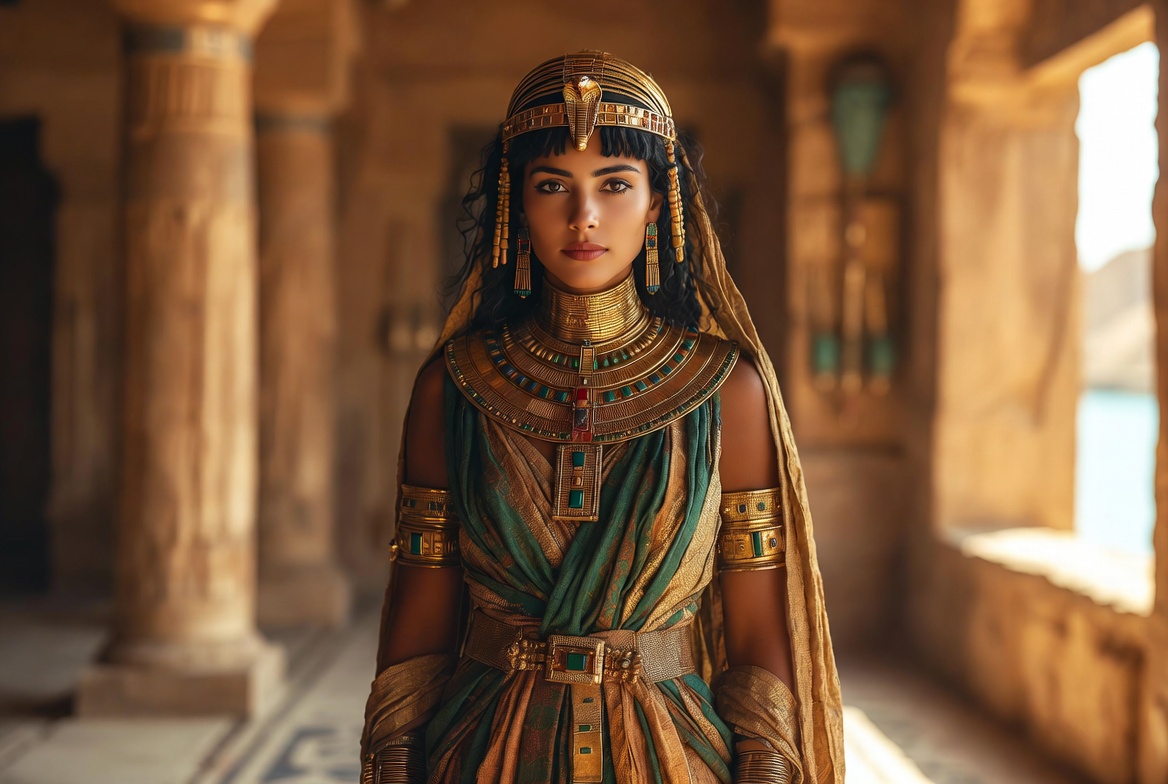
Shakespeare’s primary source was Sir Thomas North’s 1579 English translation of Plutarch’s Parallel Lives (the “Life of Antony”). Plutarch portrays a clever, charming, and politically astute queen, but he also notes her physical beauty without lingering on it in the lush, sensual detail Shakespeare supplies. The playwright deliberately amplified Cleopatra’s sensuality, emotional volatility, and theatrical self-presentation to suit the demands of the English stage and the thematic needs of his tragedy.
Shakespeare’s dramatic license is most visible in three key areas. First, he compresses and heightens the timeline, collapsing years of political maneuvering into a single, intense emotional arc. Second, he gives Cleopatra a vivid physical and vocal presence that Plutarch only hints at—turning her into a creature of “infinite variety” rather than a merely intelligent ruler. Third, he makes her consciously performative: she is always aware of being watched, always staging her own body for maximum effect. This is not historical inaccuracy; it is theatrical necessity. On the bare Globe stage, Cleopatra had to dominate through language and implied physicality alone. Shakespeare therefore wrote her “full body” into the verse itself.
Why “Cleopatra Full Body” Matters in Antony and Cleopatra
On the Elizabethan stage, a “full body” portrayal was the only kind possible. There were no spotlights to isolate a face, no quick costume changes, no cinematic cuts. An actor (a boy playing the queen) had to convey Cleopatra’s royal stature, seductive grace, imperious rage, and suicidal dignity through posture, gesture, voice, and the sheer power of Shakespeare’s poetry. The audience had to see her in their imagination.
Shakespeare defines Cleopatra’s “full body” across four inseparable dimensions:
- Physical — skin, eyes, movement, scent, and the way light plays on her.
- Emotional — the rapid shifts from joy to fury to despair that make her unpredictable.
- Intellectual — her razor-sharp wit and political cunning.
- Political/Sexual — the way she weaponizes her body and desire in the service of empire.
She is Shakespeare’s most complex female character precisely because she refuses to be reduced to any single trait. As she declares in the monument scene, “I am fire and air; my other elements / I give to baser life” (5.2.292–293). That line is not poetic exaggeration; it is the playwright telling us that Cleopatra’s full body transcends the ordinary mortal frame.
Vivid Descriptions of Cleopatra’s Appearance and Presence in the Play
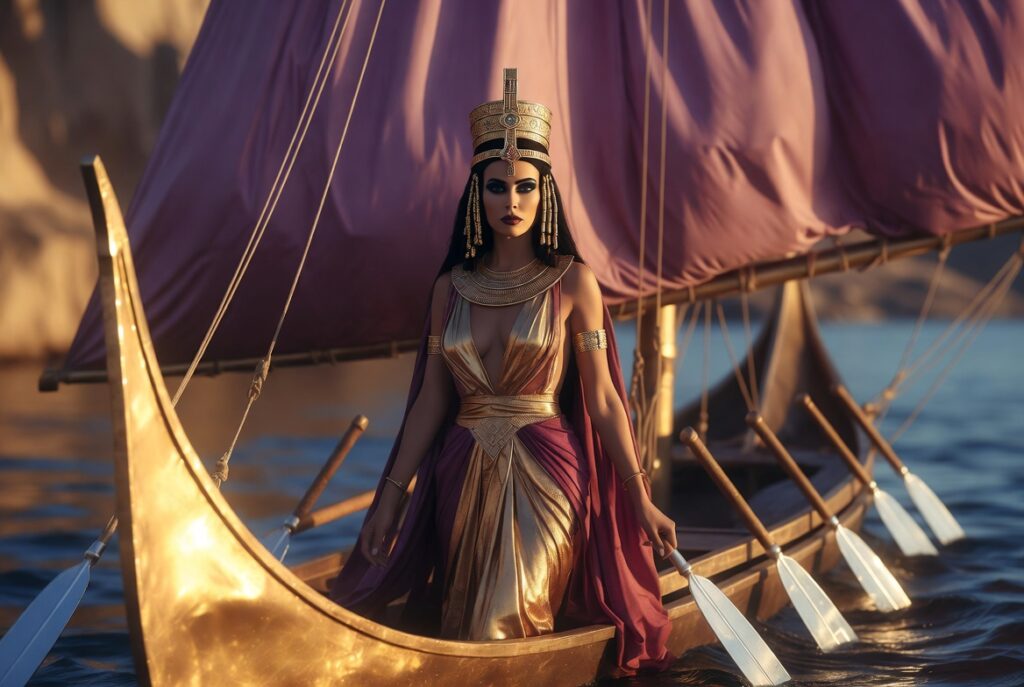
The crown jewel of Shakespeare’s “cleopatra full body” description is Enobarbus’ barge speech (2.2.195–225). This is the passage most readers instinctively recall when they type “cleopatra full body” into a search engine, and for good reason. It is the longest, most luxuriant physical portrait in the entire Shakespeare canon.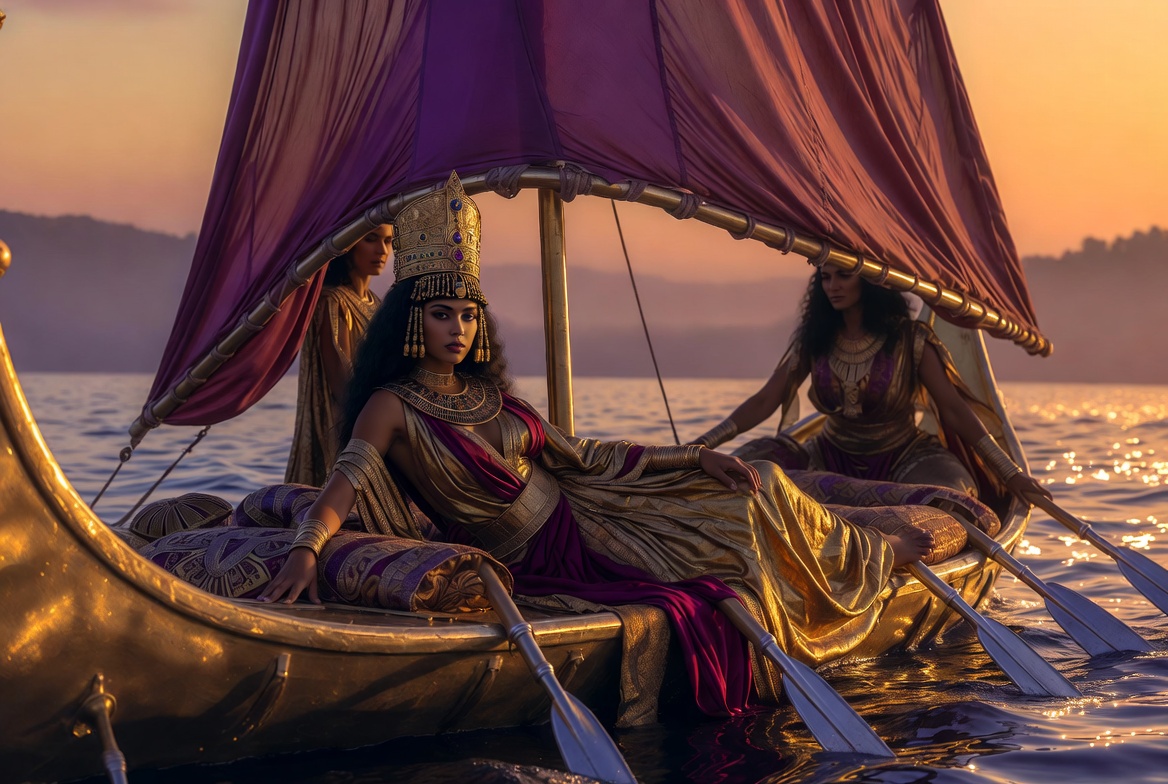
The barge she sat in, like a burnish’d throne, Burn’d on the water: the poop was beaten gold; Purple the sails, and so perfumed that The winds were love-sick with them; the oars were silver, Which to the tune of flutes kept stroke, and made The water which they beat to follow faster, As amorous of their strokes. For her own person, It beggar’d all description: she did lie In her pavilion, cloth-of-gold of tissue, O’er-picturing that Venus where we see The fancy outwork nature…
Enobarbus does not simply say Cleopatra is beautiful. He shows her body as a work of art that surpasses nature itself. The dimpled boys fanning her create a living, breathing erotic tableau. The air itself becomes “love-sick.” Every sensory detail—sight, sound, scent, touch—is mobilized to make the audience feel Cleopatra’s presence even though she is not yet on stage.
Yet Shakespeare scatters dozens of smaller, equally revealing physical references throughout the play. Cleopatra is “a lass unparalleled” (5.2.318), a “royal Egypt” whose posture alone commands respect. Her eyes are “black” and “amorous” (1.5.19; 2.5.12). She moves with the sinuous grace of “the serpent of old Nile” (1.5.25). Her voice can shift from honeyed seduction to thunderous rage within a single line. In Act 3, Scene 3, when she cross-examines the messenger about Octavia’s appearance, her jealous physicality erupts: she demands to know Octavia’s height, voice, and gait, revealing how acutely aware Cleopatra is of her own bodily power.
Most revolutionary is Shakespeare’s treatment of age and beauty. Enobarbus’ line “Age cannot wither her” directly challenges the Renaissance ideal of youthful perfection. Cleopatra is a mature woman—historically 39 when she met Antony, and portrayed as experienced and powerful rather than ingénue-fresh. Her “infinite variety” lies in constant change: one moment languid and seductive, the next imperious and commanding. This fluidity is what keeps her eternally desirable and dramatically compelling.
Cleopatra in Action: Key Scenes That Animate Her Full Body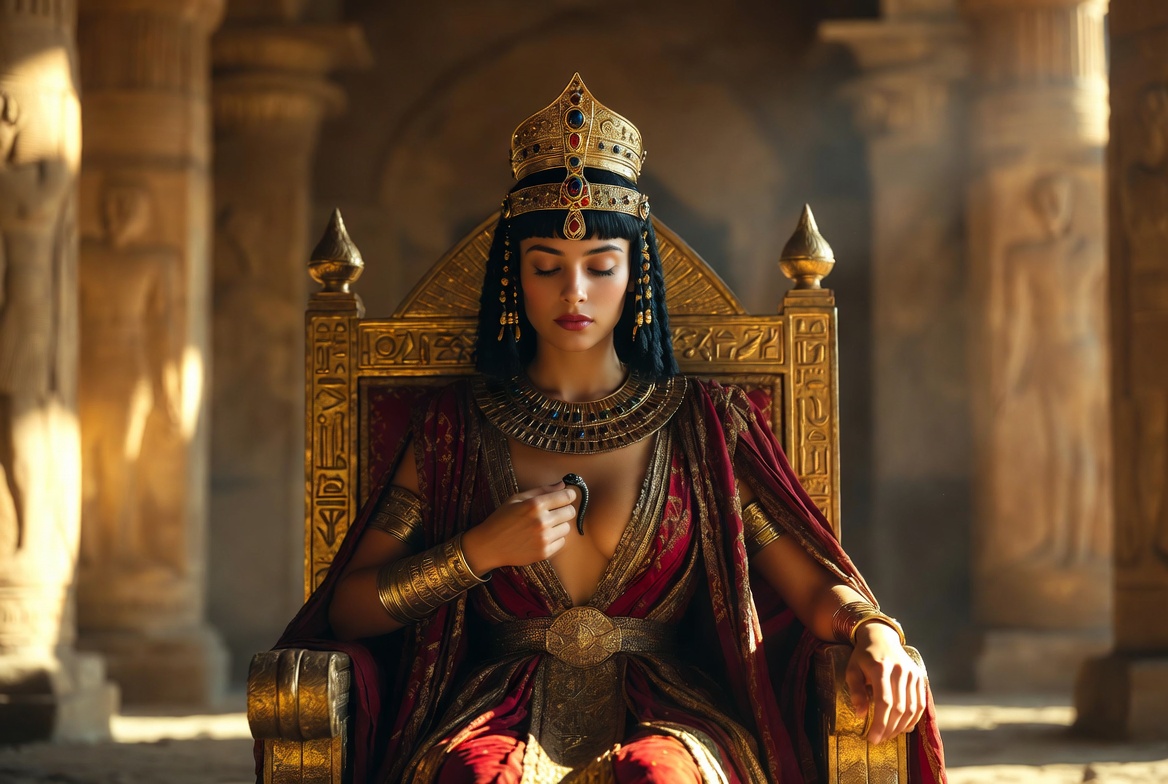
Shakespeare does not stop at description. He stages Cleopatra’s body in motion across five pivotal sequences that together form the complete arc of her physical and emotional life.
The First Meeting with Antony (retold in 2.2 and 1.1) Enobarbus recounts how Cleopatra engineered their first encounter on the Cydnus River. She deliberately made Antony wait while she presented her body as a living goddess. The scene is a masterclass in calculated physical presence: perfume on the sails, music, golden pavilion, and Cleopatra reclining like Venus. Antony is conquered before a word is spoken.
The Flag Scene (3.7) During the Battle of Actium, Cleopatra’s physical presence on the flagship becomes a turning point. When she flees, Antony follows “like a doting mallard” (3.10.20). Shakespeare shows her body as both political weapon and fatal distraction—her very movement alters the course of empires.
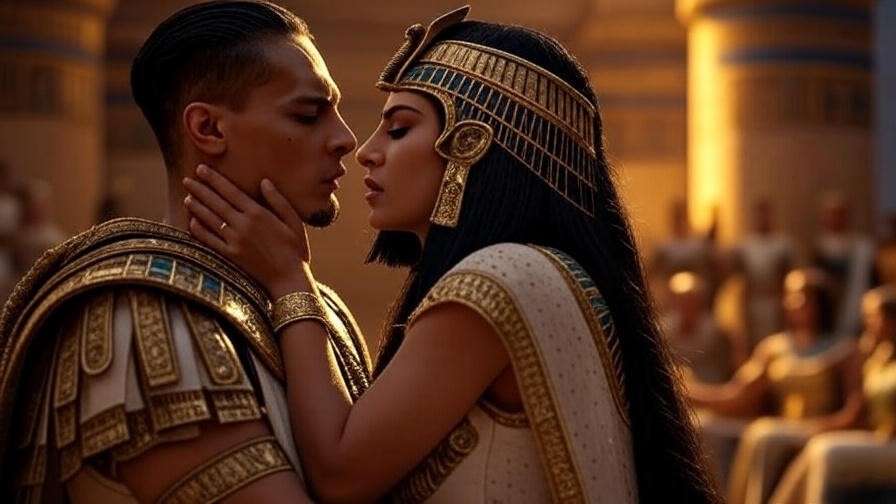
The Monument Scene (4.15) After Antony’s mortal wound, Cleopatra has him hoisted into the monument. The physical effort required of the boy-actor—lifting the dying Antony while maintaining queenly dignity—is immense. The scene forces the audience to confront the weight and vulnerability of Cleopatra’s own body as she cradles her dying lover.
The Death Scene (5.2) In her final moments, Cleopatra stages her own “full body” apotheosis. “Give me my robe, put on my crown. I have / Immortal longings in me” (5.2.280–281). She applies the asp to her breast with calm eroticism, transforming suicide into a sensual, regal performance. Her body becomes both tomb and monument, Egyptian and Roman, mortal and divine.
Each of these scenes gives actors concrete physical actions to play: the languid recline on the barge, the furious pacing while questioning the messenger, the straining lift of Antony’s body, the deliberate application of the asp. Directors and performers who ignore this embodied reality miss the heart of Shakespeare’s writing.
Cleopatra’s Mind, Heart, and Power — The Full Portrait
The physical Cleopatra cannot be separated from her intellect and emotion. Shakespeare makes her linguistic mastery a form of bodily power. Her wit is razor-sharp; her code-switching between Egyptian passion and Roman diplomacy is breathtaking. In Act 1, Scene 1, she teases Antony with lines that blend erotic invitation and political challenge. Her emotional range—jealousy, tenderness, fury, grief—is expressed through physical stage directions embedded in the verse: she “strikes” the messenger, “falls” on the ground, “kisses” Antony’s wounds.
This psychological and sexual agency is what makes her “full body” revolutionary for 1606. While other Shakespearean women are often defined by virtue or victimhood, Cleopatra exercises desire on her own terms. She is neither whore nor saint; she is a queen who uses her body and her mind as equal instruments of rule.
Major Themes Explored Through Shakespeare’s Cleopatra
Her full-bodied presence drives the play’s central oppositions: East versus West, love versus duty, performance versus authenticity. The sensual, fluid, “infinite” East is embodied in Cleopatra’s physicality; the rigid, marble-like Rome is embodied in Octavius. Their collision is not abstract—it is felt in every sway of her hips, every change in her voice, every strategic tear.
Why Shakespeare’s Cleopatra Still Captivates Audiences in 2026
Four hundred years later, productions from the Royal Shakespeare Company to modern film adaptations (and even TikTok performances) keep returning to the same textual clues. The barge speech remains the gold standard for costume and lighting designers. Actors study the role for its unmatched vocal and physical demands. Readers return because Cleopatra refuses to be simplified—she is powerful and vulnerable, calculating and passionate, ancient and startlingly modern.
Practical Tips for Students, Actors, and Readers
- When reading, pause at every physical verb and visualize the gesture.
- Actors: experiment with “infinite variety” by playing one speech in three contrasting physical states (languid, imperious, playful).
- Directors: use lighting and fabric to echo the barge speech’s sensory overload.
- Teachers: have students draw or stage Enobarbus’ description before reading the rest of the play.
FAQs About Shakespeare’s Cleopatra Full Body Portrayal
What does Shakespeare actually say about Cleopatra’s physical appearance? He never gives a head-to-toe catalogue. Instead, he uses sensory, metaphorical language (golden barge, o’er-picturing Venus, infinite variety) that forces the imagination to complete the picture.
How does Shakespeare’s Cleopatra differ from the historical queen? Shakespeare heightens her sensuality and emotional volatility while preserving her political intelligence, making her dramatically irresistible rather than strictly historical.
Why is Enobarbus’ barge speech considered the ultimate “cleopatra full body” description? It is the longest, most vivid, multi-sensory portrait in Shakespeare, combining visual splendor, eroticism, and theatrical wonder in 30 lines.
Is Cleopatra portrayed as beautiful or powerful in the play? Both—and inseparably so. Her power is her beauty, and her beauty is a form of power.
How has the role been performed across centuries? From boy-actors in the Globe to Sarah Bernhardt, Janet Suzman, and modern interpretations that emphasize Cleopatra’s North African heritage, the role continues to evolve while remaining rooted in Shakespeare’s text.
Where can I read the full text of Antony and Cleopatra for free? The Folger Shakespeare Library, MIT’s Shakespeare site, and Project Gutenberg all offer excellent public-domain editions.
Shakespeare did not merely write a queen. He wrote a “cleopatra full body”—a woman whose physical presence, intellectual fire, and emotional depth explode off the page and onto the stage. In an age of fleeting digital images, his portrait remains the most complete and enduring because it lives in language that still makes hearts race and imaginations soar.
Return to Antony and Cleopatra with fresh eyes. Notice how every entrance, every gesture, every shift in tone adds another brushstroke to her full portrait. Then share your favorite Cleopatra moment in the comments below or explore our other in-depth analyses on the William Shakespeare Insights blog.