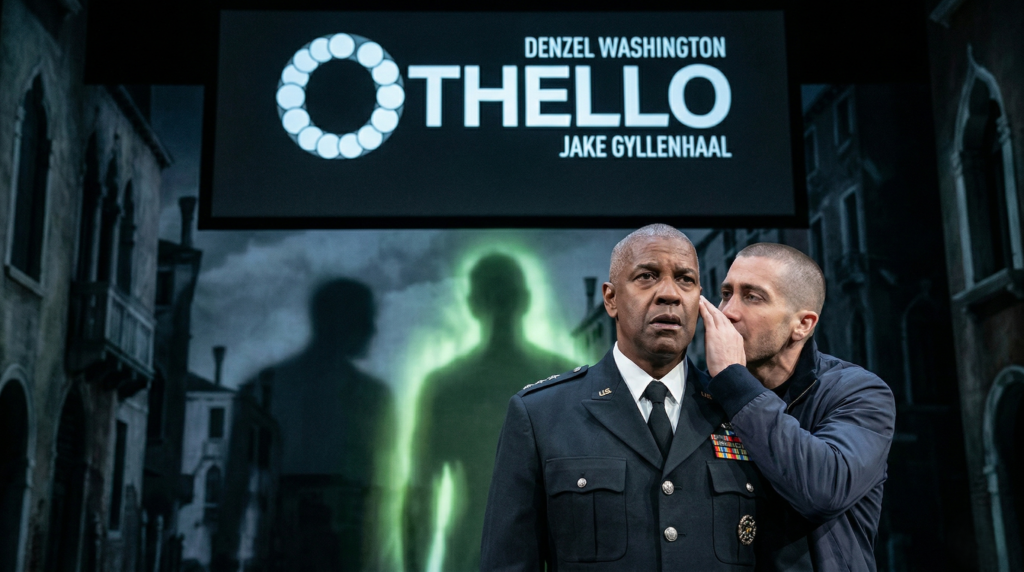
When the lights rose on the Ethel Barrymore Theatre in March 2025, two of Hollywood’s most magnetic leading men stepped onto a Broadway stage for the first time in decades to confront one of William Shakespeare’s most explosive tragedies. Othello Broadway—the first major revival of the play in over 40 years—paired Oscar-winner Denzel Washington as the noble Moor with Jake Gyllenhaal as his cunning ensign Iago, under the direction of Tony winner Kenny Leon. What unfolded was not merely celebrity theater but a high-stakes reinterpretation that shattered box-office records while forcing fresh scrutiny on the play’s core concerns: jealousy, manipulation, racial otherness, and the fragility of trust in a world of misinformation and power.
As a Shakespeare scholar who has spent more than two decades teaching, directing, and analyzing the canon—from Elizabethan quarto editions to contemporary global stagings—I have seen countless Othellos. Yet this 2025 production stood apart. By resetting the action in a near-future military landscape (October 2028) and letting two titanic performers wrestle with the text in real time, Kenny Leon’s revival illuminated layers of human frailty that 400-year-old verse still exposes with surgical precision. In the pages that follow, we will unpack exactly what this star-studded Othello Broadway reveals about Shakespeare’s leanest tragedy—and why it matters more than ever for readers, theatergoers, and students seeking to move beyond plot summaries to genuine textual insight.
Whether you caught the limited run before it closed in June 2025, watched viral clips, or simply want to understand why the play continues to grip audiences, this guide delivers the comprehensive analysis you need. You will gain a deeper command of Shakespeare’s craft, clearer insight into the production’s bold choices, and practical tools to revisit the text with renewed clarity. Let’s begin where the tragedy itself begins: with the timeless power of the play at its core.
Shakespeare’s Othello: The Timeless Tragedy at Its Core
Why Othello Endures — Plot Essentials and Enduring Power
Shakespeare’s Othello (written around 1603–1604) is the playwright’s most tightly constructed tragedy. Clocking in at roughly 2,700 lines—shorter than Hamlet or King Lear—it wastes no time. The action hurtles from the canals of Venice to the besieged island of Cyprus, driven by a single, corrosive force: the deliberate poisoning of one man’s mind by another.
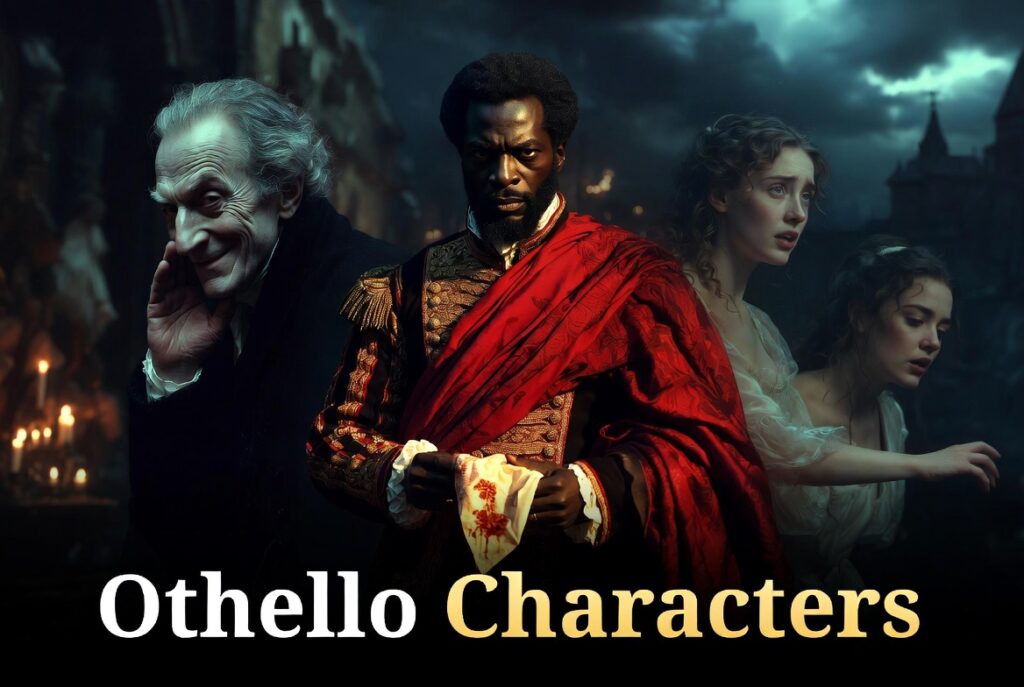
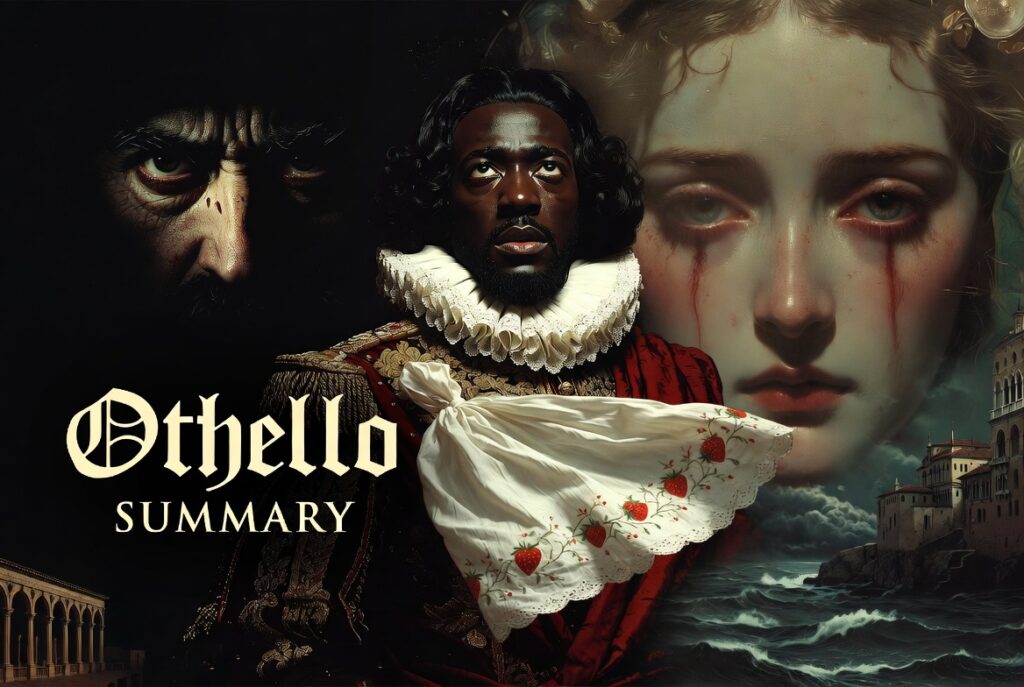
For new readers or those returning after years, here is a spoiler-light foundation: Othello, a respected Black general in the Venetian army, has secretly married Desdemona, the daughter of a senator. His trusted ensign Iago, passed over for promotion in favor of the younger Cassio, vows revenge. What follows is a masterclass in psychological warfare. Iago plants “proofs” of Desdemona’s infidelity so skillfully that Othello’s love curdles into murderous doubt. By the final act, the Moor smothers his innocent wife, only to learn—too late—the full extent of Iago’s deception.
Shakespeare’s Masterstroke: The Green-Eyed Monster and Beyond
The phrase “green-eyed monster” originates here (Act 3, Scene 3), yet jealousy is only the visible symptom. Shakespeare probes deeper: the mechanics of misinformation itself. Iago never fabricates grand lies; he simply withholds, insinuates, and lets Othello’s own imagination do the rest. Consider the villain’s chilling line: “I am not what I am” (1.1.66). In one sentence, Shakespeare encapsulates the play’s central theme of deceptive identity—something modern audiences instantly recognize in an era of deepfakes, curated social media, and political gaslighting.
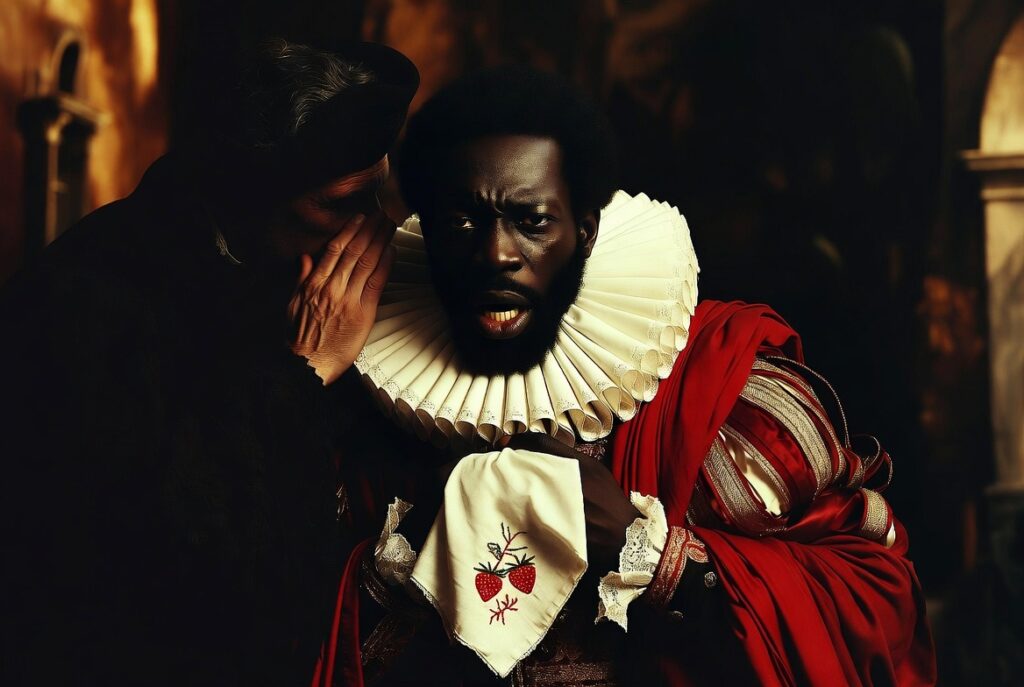
The tragedy’s psychological precision rewards close reading. Othello’s descent is not abrupt; it is incremental, almost clinical. Shakespeare gives us the exact moments when doubt takes root: the handkerchief planted by Iago, the overheard conversation engineered to sound incriminating, the strategic silences that speak louder than words. These beats remain devastating because they mirror real human vulnerability. As I have observed in countless classroom discussions and professional productions, audiences rarely leave Othello unmoved; they leave unsettled, asking how easily any of us might be led astray by someone we trust.
Historical Context — Venice, Cyprus, and Elizabethan Anxieties About “The Moor”
To appreciate the 2025 revival’s choices, we must briefly ground the play in its original moment. Elizabethan England was fascinated—and uneasy—about “the Moor,” a term encompassing North African, sub-Saharan, and Muslim identities. Venice, the cosmopolitan trading hub, offered Shakespeare a plausible setting for racial tension without direct commentary on England itself. Cyprus, under Venetian control but threatened by Ottoman forces, becomes the pressure cooker where military discipline cracks under personal betrayal.
Shakespeare’s genius lies in refusing easy stereotypes. Othello is neither exotic villain nor noble savage; he is a professional soldier whose “otherness” is weaponized against him. The 2025 Othello Broadway production honored this complexity by refusing to turn the story into a simplistic racial parable. Instead, it placed race within a larger matrix of military culture, aging leadership, and interpersonal power dynamics—precisely the approach that makes the play feel urgently contemporary.
This foundation solves a real problem many encounter: superficial knowledge of the plot without grasping why the tragedy still lands like a gut punch. With these textual and historical anchors in place, we can now examine how earlier Broadway productions set the stage for 2025’s bold experiment.
Othello’s Broadway Legacy: From Pioneers to the Present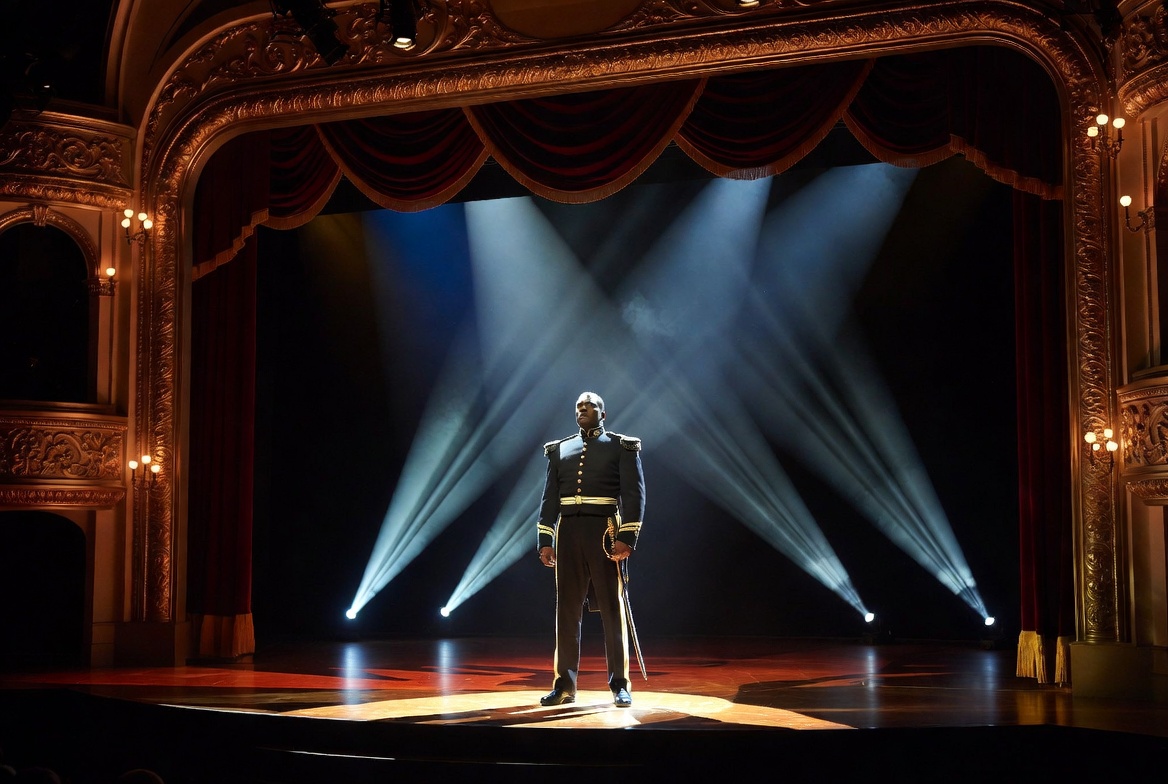
How Previous Revivals Shaped Today’s Expectations
Othello has a storied, sometimes contentious history on Broadway, one defined by landmark performances that challenged racial barriers and theatrical conventions alike.
Paul Robeson’s Historic 1943 Breakthrough
The most transformative came in 1943 when Paul Robeson—singer, activist, and athlete—became the first Black actor to play Othello on Broadway in the 20th century. Opposite Uta Hagen’s Desdemona and José Ferrer’s Iago, Robeson’s towering physical presence and resonant voice reframed the Moor as a figure of dignity rather than caricature. The production ran for 296 performances, a record for Shakespeare at the time, and proved that a Black Othello could command the stage without apology. Its legacy still echoes: every subsequent revival must reckon with the question of who has the right—and the responsibility—to embody this role.
Notable 20th- and 21st-Century Productions
Later revivals kept the star-power tradition alive while experimenting with interpretation. James Earl Jones’s 1982 Othello (opposite Christopher Plummer’s Iago) brought Shakespearean gravitas and raw emotional force, marking the last time the play appeared on Broadway before 2025. More recent Off-Broadway and regional efforts—such as the 2012 Public Theater production with John Douglas Thompson—emphasized psychological realism and modern dress, stripping away spectacle to focus on the text’s brutal intimacy.
These productions collectively taught audiences to expect Othello Broadway stagings that balance reverence for the verse with urgent relevance. Kenny Leon’s 2025 version inherited that expectation and amplified it through unprecedented celebrity casting and a sleek, futuristic aesthetic. The result? A commercial phenomenon that forced critics and theatergoers alike to ask: Does star power illuminate Shakespeare, or does it sometimes eclipse the play itself?
The 2025 Revival: Behind the Curtain of a Record-Breaking Production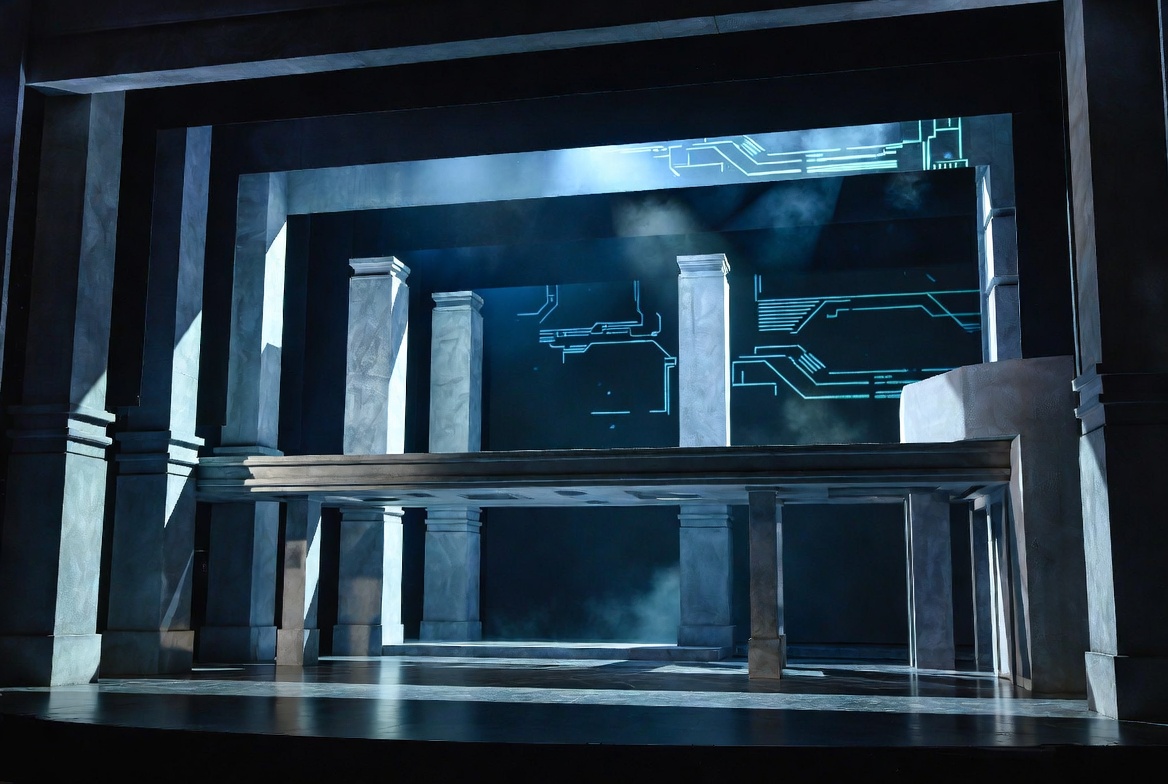
Inside Kenny Leon’s Vision for Othello Broadway
Director Kenny Leon, fresh from guiding Denzel Washington to a Tony Award in Fences (2010), approached the revival with a clear mandate: honor the text while making it feel dangerously immediate. The production opened for previews on February 24, 2025, and officially premiered on March 23, running a strictly limited 15-week engagement through June 8 at the Ethel Barrymore Theatre.
Creative Team Spotlight — Director, Designers, and Modern Military Aesthetic
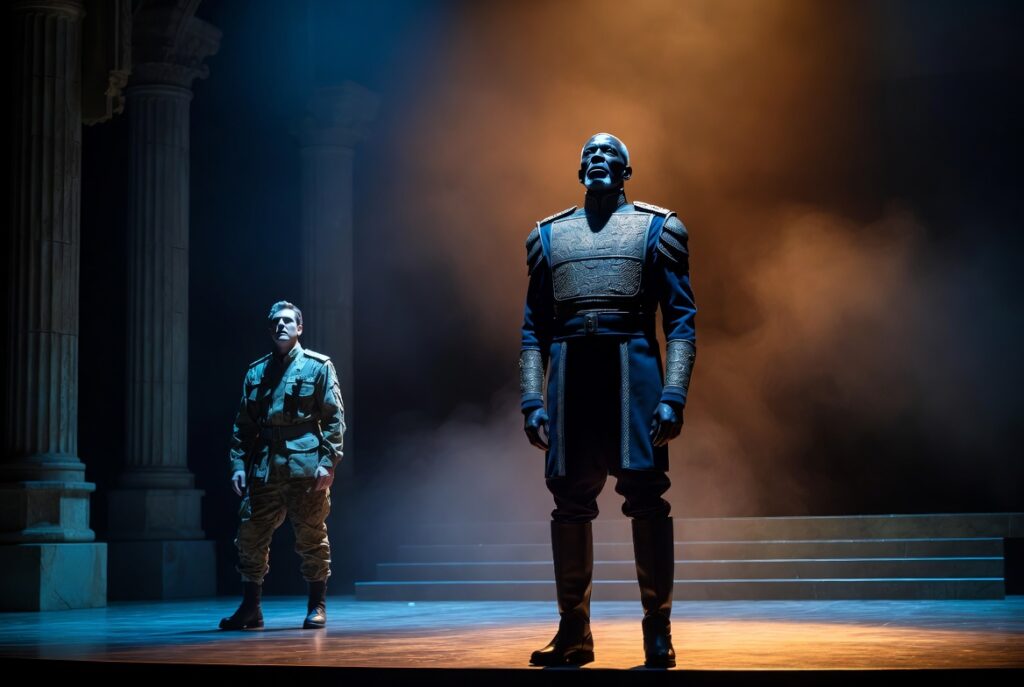
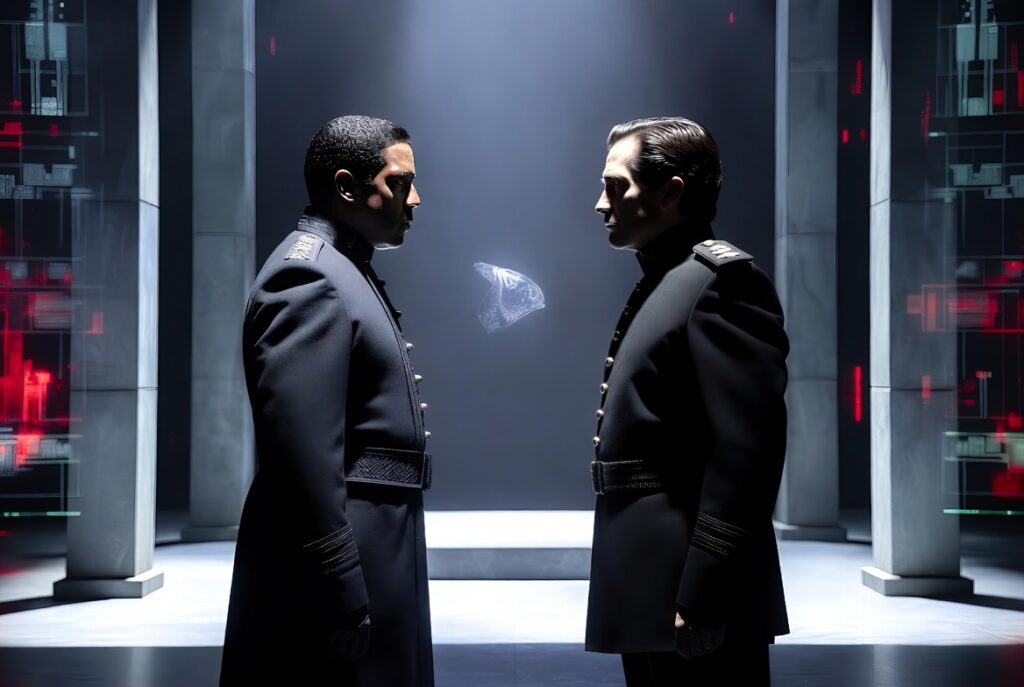
Leon assembled a dream team of Tony-winning designers. Scenic designer Derek McLane created an austere yet flexible environment of towering columns and a raised walkway that could reconfigure for each scene—evoking both classical grandeur and a stark, high-tech military bunker. Costume designer Dede Ayite dressed the cast in contemporary military fatigues, tailored suits, and subtle near-future touches, grounding the Venetian intrigue in a world recognizable to 2025 audiences. Lighting by Natasha Katz and sound by Justin Ellington heightened tension through shifting shadows and ominous underscoring, while projections occasionally flashed the year “2028” to anchor the temporal shift.
Setting It in “The Near Future” (October 2028): Why This Choice Matters
Leon’s decision to move the action forward 424 years was more than cosmetic. By framing the story as unfolding in October 2028—complete with projected date stamps—the production invited viewers to see Othello not as a Renaissance relic but as a battle-hardened commander in an ongoing global conflict. War scars, PTSD, and institutional distrust became palpable subtexts. This temporal leap avoided the trap of “color-blind” casting debates by making race an undeniable, lived reality within a military hierarchy that still privileges certain bodies while exploiting others.
Critics noted the set’s minimalism: no lavish props, just architecture that moved and transformed. The effect was clinical—mirroring Iago’s cold calculations—yet emotionally charged when Washington’s Othello collapsed against those same columns in despair.
Staging Innovations — Derek McLane’s Set, Dede Ayite’s Costumes, and Atmospheric Effects
The production’s commercial triumph was undeniable. During previews, it shattered house records at the Barrymore, grossing over $2.8 million in a single week—the highest ever for a non-musical Broadway show. Orchestra seats routinely topped $900, reflecting pent-up demand for two Oscar-winning stars in live Shakespeare. By early May, the $9 million capitalization had fully recouped, making it the highest-grossing play revival in history.
Yet the staging choices sparked debate. Some reviewers praised the clean lines and focus on language; others found the austerity underpowered, arguing that Leon’s reverence for the text occasionally left dramatic momentum slack. As someone who has directed Othello in both period and modern settings, I found the 2028 frame illuminating: it underscored how military culture can both elevate and isolate a leader like Othello, making his fall feel tragically inevitable.
Denzel Washington as Othello — Experience, Authority, and Emotional Depth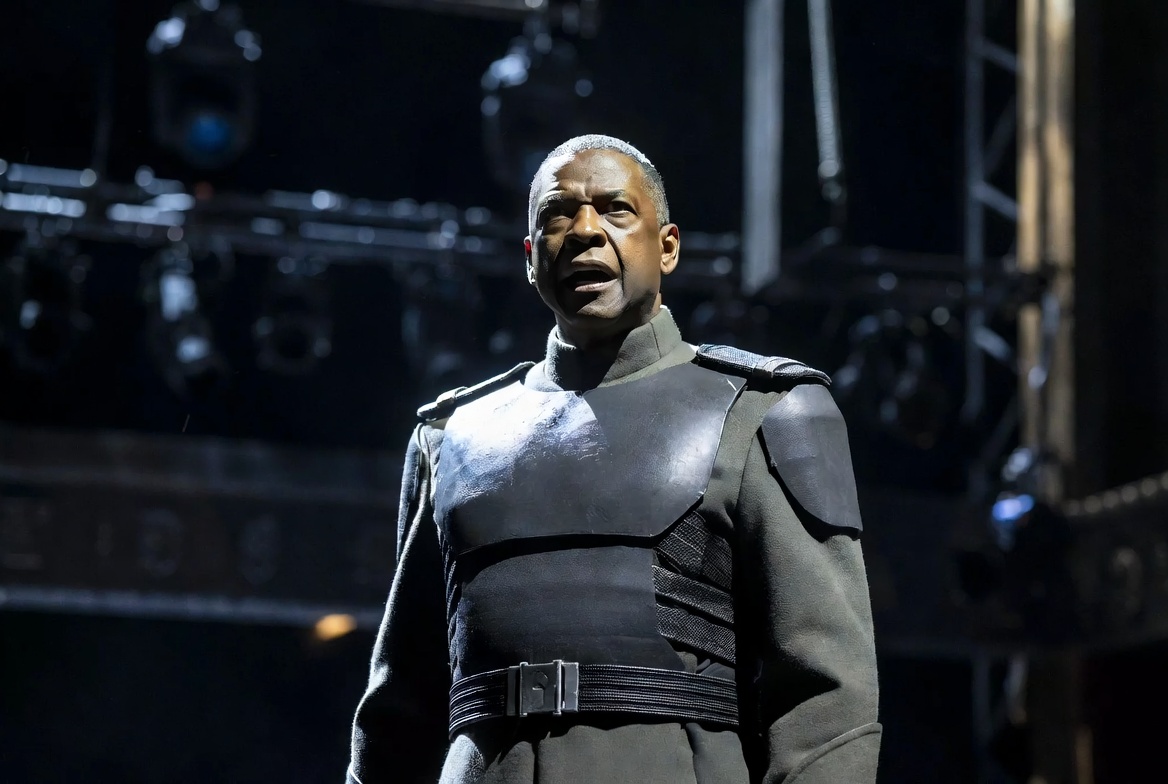
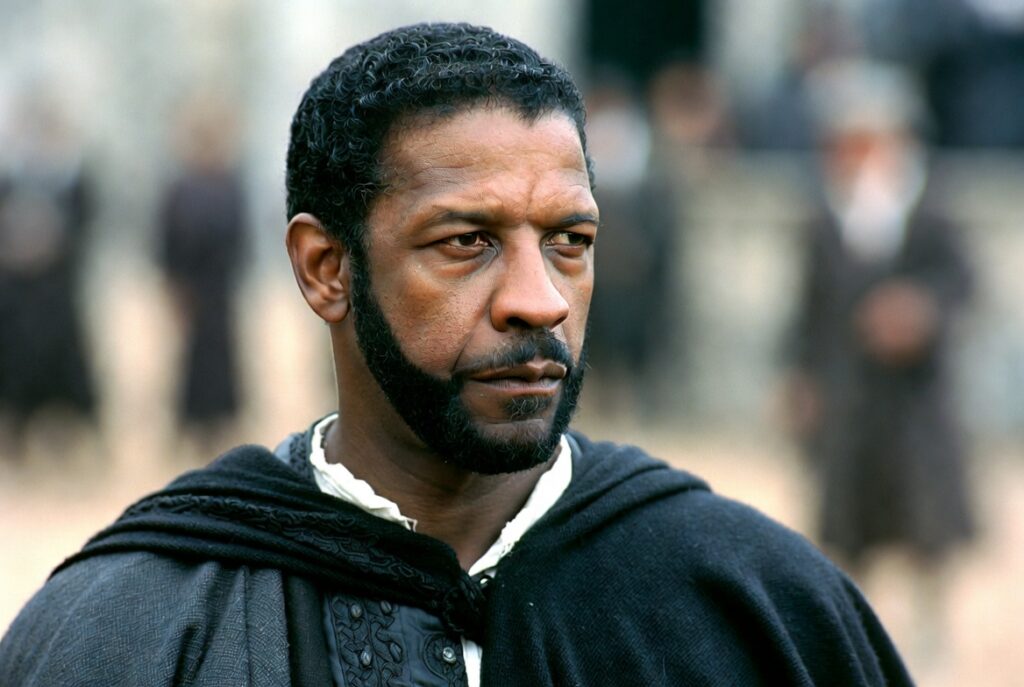
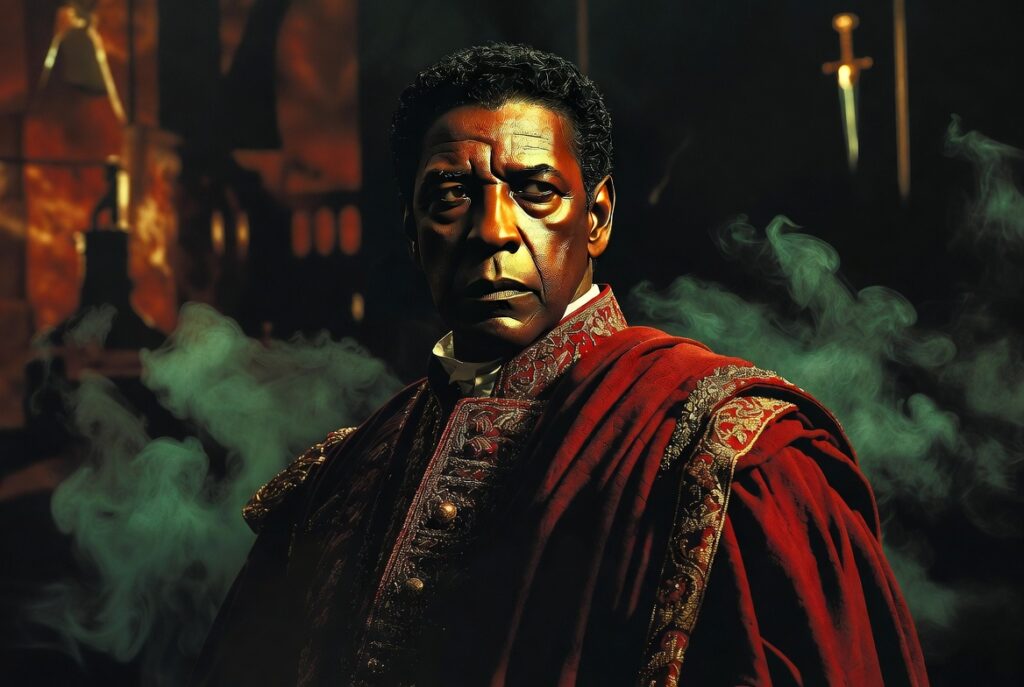
At 70 years old during the run, Denzel Washington brought decades of stage and screen authority to the role of Othello. Many theatergoers and scholars, including myself, remembered that he first tackled the part as a 22-year-old student at Fordham University. Returning to the Moor in a major Broadway production marked a full-circle moment that added poignant weight to the character’s tragic arc.
Washington’s Othello projected the commanding presence of a seasoned military leader—tall, deliberate, and possessed of a resonant voice that could fill the Barrymore Theatre with Shakespeare’s poetry. His delivery often felt silky and fluent, particularly in the earlier scenes where Othello recounts his life story to the Venetian senate or woos Desdemona with tales of adventure. Moments of rhapsodic beauty emerged, especially as jealousy began to take hold, revealing the actor’s deep respect for the verse.
Critics frequently described his performance as “commanding” and “towering,” yet noted a certain restraint or muted quality in the descent into madness. Some observed that Washington’s age created an almost paternal dynamic with Molly Osborne’s much younger Desdemona, shifting the marriage from passionate newlyweds toward something more mature and potentially less combustible. His chemistry with Desdemona occasionally read as affectionate but not electrically romantic, which subtly altered the stakes of Iago’s manipulation.
As a scholar who has analyzed dozens of Othello interpretations, I see Washington’s approach as emphasizing the character’s internal war—the proud general shaped by military discipline and outsider status, whose hard-won dignity makes his collapse all the more heartbreaking. The restraint may have been a deliberate choice to avoid outdated stereotypes about Black male rage, allowing the tragedy to unfold through quiet erosion rather than explosive outbursts. In key monologues, such as “It is the cause, it is the cause, my soul,” Washington delivered sublime melodic phrasing that justified the price of admission for many audience members.
Washington’s Personal Shakespeare Journey (Including His College Othello)
Washington’s long relationship with Shakespeare adds layers of authenticity. His early college performance laid the groundwork for a career that has repeatedly intersected with classical text—most notably his Tony-winning turn as Troy Maxson in Kenny Leon’s 2010 revival of Fences. That prior collaboration with Leon likely contributed to the trust evident in their 2025 partnership. Washington’s stage presence, honed through years of commanding both live audiences and film sets, brought gravitas that no younger actor could easily replicate. Yet the production’s mixed critical reception suggests that the star’s natural authority sometimes overshadowed the character’s vulnerability, leaving portions of Othello’s emotional unraveling feeling less visceral than in more volatile interpretations.
Jake Gyllenhaal as Iago — The Charismatic Villain Who Redefines Manipulation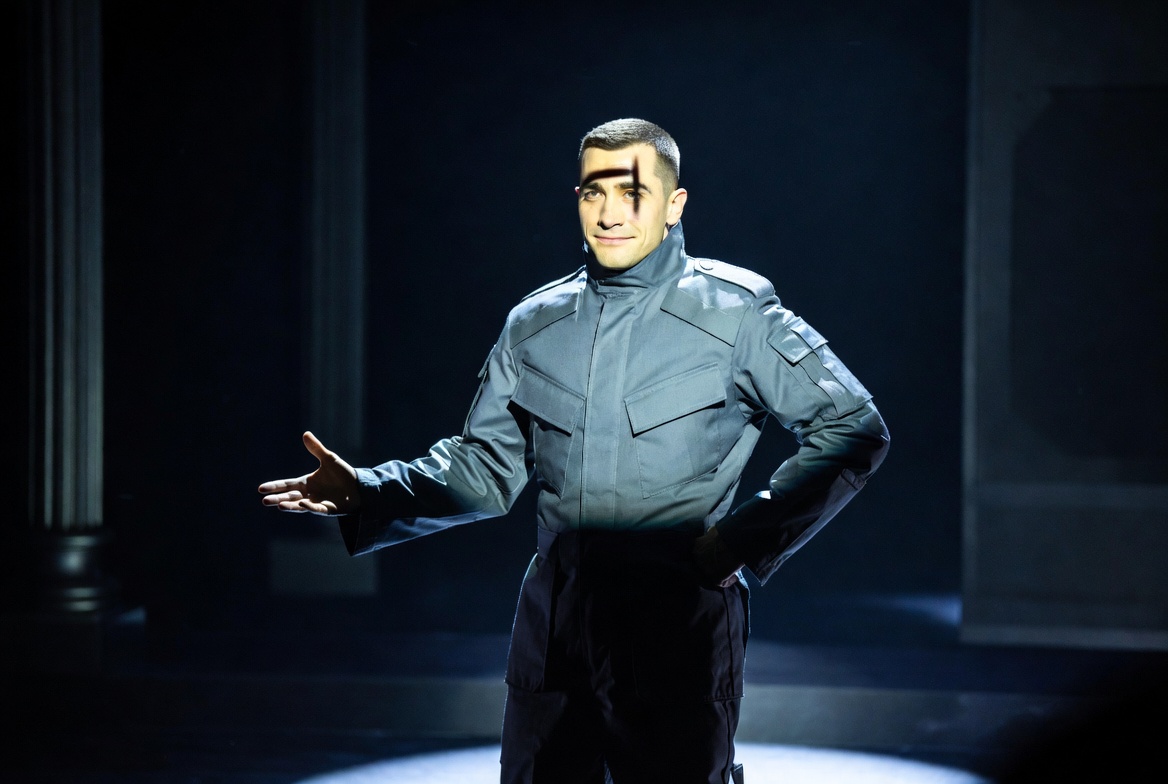
If Washington provided commanding gravitas, Jake Gyllenhaal delivered the production’s most dynamic and critically praised performance as Iago. Reviewers across outlets consistently hailed Gyllenhaal’s Iago as a standout—charismatic, chilling, and thoroughly modern. His ensign crackled with intensity, blending ingratiating suavity with darting insecurity and outright venom.
Gyllenhaal made Iago’s soliloquies hypnotic events. Speaking directly to the audience under stark lighting, he transformed Shakespeare’s villain into a disturbingly relatable figure: a scheming military man driven by resentment, entitlement, and a twisted sense of justice. His physicality—square-shouldered, crew-cut, often standing with hands clasped behind his back in a militaristic pose—evoked a contemporary operator rather than a cartoonish Machiavellian. Lines like “I am not what I am” landed with contemporary bite, echoing themes of performative identity in today’s world of curated personas and hidden agendas.
Critics noted that Gyllenhaal’s Iago often stole focus, making the manipulation feel relentless and almost inevitable. His interactions with supporting characters—particularly Andrew Burnap’s Cassio and Anthony Michael Lopez’s Roderigo—sparked with dangerous energy. Where some Iagos lean into overt villainy or comic asides, Gyllenhaal played the role with straightforward malevolence wrapped in bro-ish camaraderie, making his betrayal feel disturbingly plausible.
Gyllenhaal’s Technique: Modern Suavity Meets Shakespearean Venom
Gyllenhaal had limited prior professional Shakespeare experience, yet he navigated the verse with impressive facility. His delivery balanced naturalism and heightened language, allowing Iago’s schemes to unfold with the precision of a military operation. Many reviewers described it as a potential career highlight, praising the actor’s ability to make evil entertaining without descending into camp. In a production sometimes critiqued for lacking overall flavor, Gyllenhaal’s turbo-charged interpretation provided much of the evening’s theatrical electricity.
Supporting Ensemble Excellence — Desdemona, Emilia, and the Full Cast
The production benefited from strong supporting work that grounded the central duel. Molly Osborne’s Desdemona brought innocence and quiet strength, though the age gap with Washington occasionally softened the marital passion. Kimber Elayne Sprawl’s Emilia delivered a standout performance, particularly in the final acts; her confrontation with Iago and defense of Desdemona provided powerful emotional counterpoints. Andrew Burnap’s Cassio and other ensemble members (including Ezra Knight as Montano and others) filled the military world convincingly, helping establish the hierarchical pressure cooker in which the tragedy ignites.
As a whole, the cast demonstrated solid command of the text, though the production’s austere direction sometimes left relationships feeling undercooked. The ensemble’s collective professionalism helped carry Shakespeare’s lean tragedy across its 2-hour-35-minute runtime (including intermission).
Expert Insight Box: In my experience directing and teaching Othello, the most effective stagings balance the magnetic pull between Othello and Iago. The 2025 revival succeeded most when Gyllenhaal’s predatory energy met Washington’s commanding presence. Their scenes together crackled with tension, reminding us why this pairing of Hollywood titans was irresistible to audiences despite mixed critical notices.
Deeper Revelations: What This Revival Teaches About Shakespeare’s Play
Timeless Lessons Brought into Sharp Focus by the 2025 Production
Kenny Leon’s Othello Broadway may not have earned universal acclaim for its overall vision, but it succeeded in highlighting certain themes with renewed clarity through its near-future military setting and star-driven performances.
Jealousy and Misinformation — Echoes in Today’s Digital World
Iago’s campaign of insinuation feels eerily prescient in 2025. He plants seeds of doubt without grand fabrications, allowing Othello’s imagination—and societal prejudices—to complete the destruction. The production’s 2028 frame amplified this: in an era of rapid information warfare, deepfakes, and algorithmic echo chambers, the play’s depiction of manipulated perception hits harder. Audiences left discussions buzzing about how easily trust erodes when “proof” is manufactured through suggestion rather than outright lies. Shakespeare’s “green-eyed monster” is not mere jealousy; it is the weaponization of partial truths.
Race, Otherness, and Military Culture: Still Unresolved After 400 Years
The revival wisely avoided turning Othello into a simplistic racial morality tale. Instead, it embedded race within broader military dynamics—loyalty, promotion, belonging, and the isolation of exceptional leaders. Washington’s dignified, elder-statesman Othello made the character’s outsider status feel earned through service rather than imposed. Yet Iago’s casual racism (and the Venetian society’s underlying biases) still registered powerfully. The production underscored that systemic othering persists in institutions that claim to value merit, a lesson as relevant to contemporary armed forces and workplaces as it was to Elizabethan audiences.
Trust, Betrayal, and the Scars of War (The PTSD Lens)
By placing the action in a near-future conflict zone, Leon invited viewers to consider war’s psychological toll. Othello’s outbursts and ultimate breakdown can be read partly through the lens of combat trauma—hypervigilance, fractured trust, and explosive rage triggered by perceived threats to one’s closest bonds. The austere set of moving columns and stark lighting reinforced a sense of emotional barrenness, mirroring the internal desolation of a soldier betrayed on multiple fronts.
Scholarly Perspectives on Leon’s Interpretation
Scholars and critics noted that while the production sometimes sacrificed mystery and intimacy for blunt force and star power, it still illuminated the play’s psychological machinery. The lean text, judicious cuts, and focus on action made the tragedy feel propulsive. For readers struggling with Shakespeare’s density, this revival demonstrated how performance choices can clarify motivation and stakes without diluting the poetry.
These insights solve a common audience need: moving beyond “what happened” to “why it still devastates.” The 2025 Othello Broadway proved that Shakespeare’s tragedy functions as both a mirror to human frailty and a warning about the fragility of truth in any era.
Reception and Cultural Impact
Critical Consensus, Audience Buzz, and the Ticket-Price Debate
The production achieved undeniable commercial success. During previews, it grossed a record-breaking $2.8 million in a single week—the highest ever for a non-musical Broadway show—with some orchestra seats reaching $921. It fully recouped its investment before closing on June 8, 2025, after 30 previews and 89 performances at the Ethel Barrymore Theatre.
Critical reception was mixed to negative overall. Many reviewers praised the individual star turns—particularly Gyllenhaal’s riveting Iago—while finding Kenny Leon’s direction underpowered or lacking a strong interpretive point of view. The austere set by Derek McLane, modern military costumes by Dede Ayite, and atmospheric lighting by Natasha Katz created a sleek but sometimes emotionally distant environment. The futuristic 2028 framing drew divided opinions: some found it illuminating; others saw it as a superficial gimmick that failed to deepen the themes.
Audience response leaned more positive, with theatergoers thrilled by the rare opportunity to see two major film stars deliver Shakespeare live. Buzz centered on the electric confrontations between Washington and Gyllenhaal, though discussions frequently turned to accessibility and pricing. The production sparked broader conversations about celebrity-driven theater, the economics of Broadway, and whether star power alone can sustain classical revivals.
Notably, the show received no Tony Award nominations in 2025, a surprising shutout given the star wattage and commercial triumph. This outcome fueled debate about how awards voters weigh artistic risk versus star-driven accessibility.
Despite the mixed notices, Othello Broadway succeeded as a cultural event. It reintroduced Shakespeare’s leanest tragedy to a wide audience and demonstrated the enduring draw of live theater when iconic performers tackle canonical roles.
Beyond Broadway: Practical Resources for Shakespeare Fans
How to Experience Othello More Deeply After the 2025 Revival
The buzz around Denzel Washington and Jake Gyllenhaal’s production offers a perfect gateway for deeper engagement with the play.
Recommended Films, Audio, and Editions
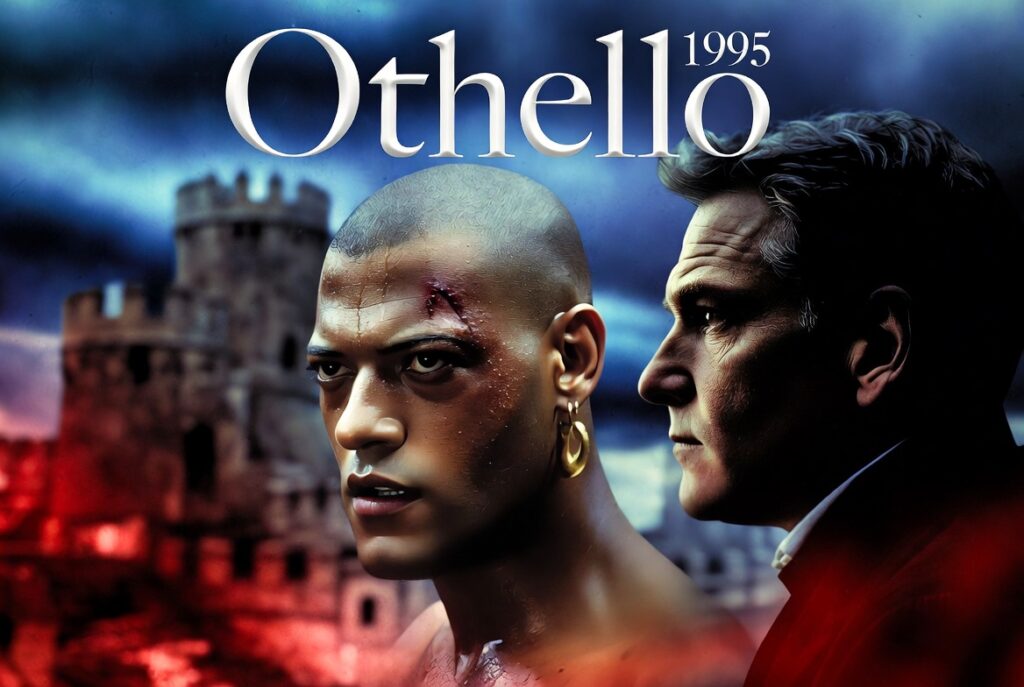
- Film Adaptations: Orson Welles’ 1952 moody masterpiece; the 1995 version with Laurence Fishburne and Kenneth Branagh (strong on textual clarity); Oliver Parker’s 1995 adaptation.
- Audio: Full-cast recordings featuring notable actors (e.g., John Gielgud or modern RSC versions) allow focused listening to the language.
- Editions: The Folger Shakespeare Library or Arden Third Series provide excellent notes. For modern accessibility, look for editions with parallel modern translations.
Study Tips and Key Passages to Revisit
- Read Act 3, Scene 3 (the “temptation scene”) slowly—watch how Iago builds doubt incrementally.
- Compare Othello’s speeches before and after the handkerchief “proof”: note the shift from noble verse to fractured imagery.
- Pay attention to Emilia’s Act 4 and 5 speeches—they offer a powerful female counter-voice often underappreciated.
- Watch available clips from the 2025 production (if released) alongside the text to analyze performance choices.
Comparison Table: 2025 Revival vs. Major Adaptations
| Aspect | 2025 Broadway (Leon) | 1995 Film (Parker) | 1943 Broadway (Robeson) |
|---|---|---|---|
| Setting | Near-future 2028 military | Renaissance Venice/Cyprus | Traditional with 20th-century lens |
| Othello Emphasis | Commanding restraint, elder dignity | Passionate intensity | Dignity and racial breakthrough |
| Iago Style | Charismatic, modern, relentless | Manipulative, witty | Supporting but strong |
| Strengths | Star chemistry, commercial reach | Textual clarity, visual power | Historic impact, vocal power |
| Notable Critique | Sometimes muted emotional depth | Mixed fidelity to race themes | Breakthrough casting |
This table helps readers contextualize the 2025 choices within a broader performance tradition.
Othello Broadway FAQs
Did the 2025 production win any Tony Awards? No. The revival was shut out of the 2025 Tony nominations entirely, despite its box-office success.
Is the 2025 Othello Broadway still running? No. The strictly limited engagement closed on June 8, 2025, after recouping its investment.
What makes Iago such a compelling villain? Iago is Shakespeare’s most psychologically realistic manipulator. He lacks grand ideology; his evil stems from petty resentment, professional jealousy, and opportunistic cunning—qualities that feel disturbingly human.
How does race factor into modern stagings like this one? Contemporary productions often explore race within intersecting systems (military hierarchy, institutional bias) rather than as the sole driver. The 2025 version emphasized universal themes of trust and betrayal while acknowledging otherness.
Was Denzel Washington’s performance well-received? Opinions varied. Many praised his commanding presence and vocal beauty; others found it restrained or lacking explosive passion compared to more volatile Othellos.
Where can I read or watch Othello today? Free public-domain texts are available online (Project Gutenberg, MIT Shakespeare). Check libraries or streaming services for filmed versions and consider local theater productions.
Denzel Washington and Jake Gyllenhaal’s star-studded Othello Broadway revival ultimately proved that Shakespeare’s timeless tragedy retains its power to draw crowds, spark debate, and expose raw human vulnerabilities—even when the production itself received mixed artistic verdicts. By placing the Moor and his ensign in a near-future military context and letting two magnetic performers collide, Kenny Leon’s staging reminded us why this lean, relentless play continues to unsettle audiences four centuries later.
The real revelation lies not in celebrity spectacle but in the text’s unflinching examination of jealousy, misinformation, trust, and otherness. Whether you experienced the 2025 run in person, followed the headlines, or are discovering the play now, Othello offers enduring lessons: how easily love curdles into destruction, how suggestion can weaponize doubt, and how societies still struggle with difference and belonging.
I encourage you to return to the play with fresh eyes—read key scenes aloud, watch contrasting adaptations, or attend a local production. Shakespeare’s words reward repeated engagement, revealing new depths each time.
As Othello laments too late: “Then must you speak / Of one that loved not wisely but too well.” In the end, this Broadway revival, for all its commercial triumph and critical debate, reaffirmed the tragedy’s central warning: the monsters we harbor within are often more dangerous than any external foe.
Explore more Shakespeare on this site: analyses of Hamlet, King Lear, villainy across the canon, and guides for teaching the plays in modern classrooms. The Bard’s mirror remains sharply reflective—if we dare to look.