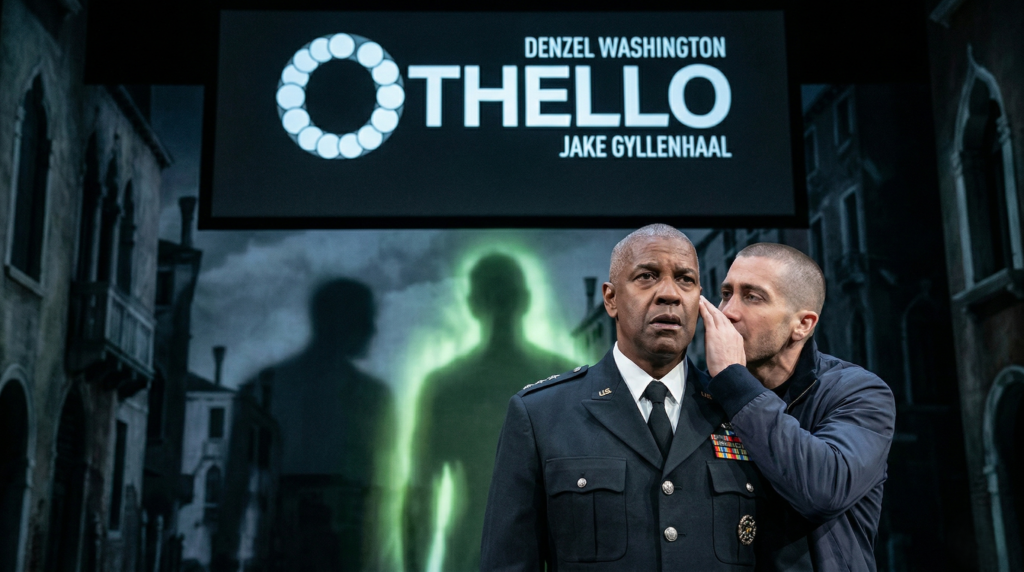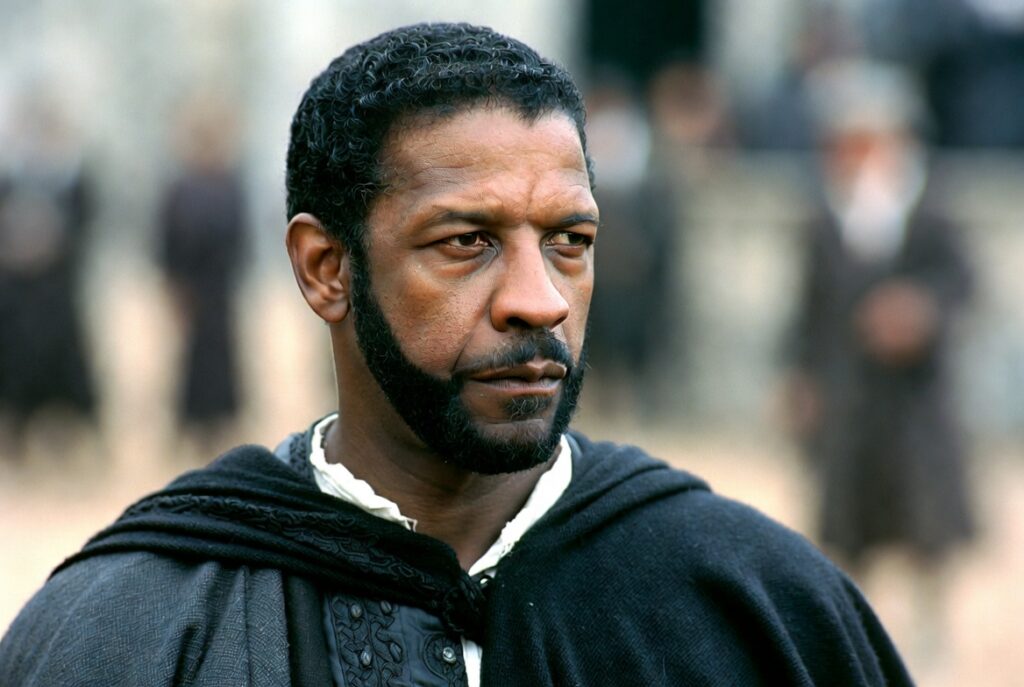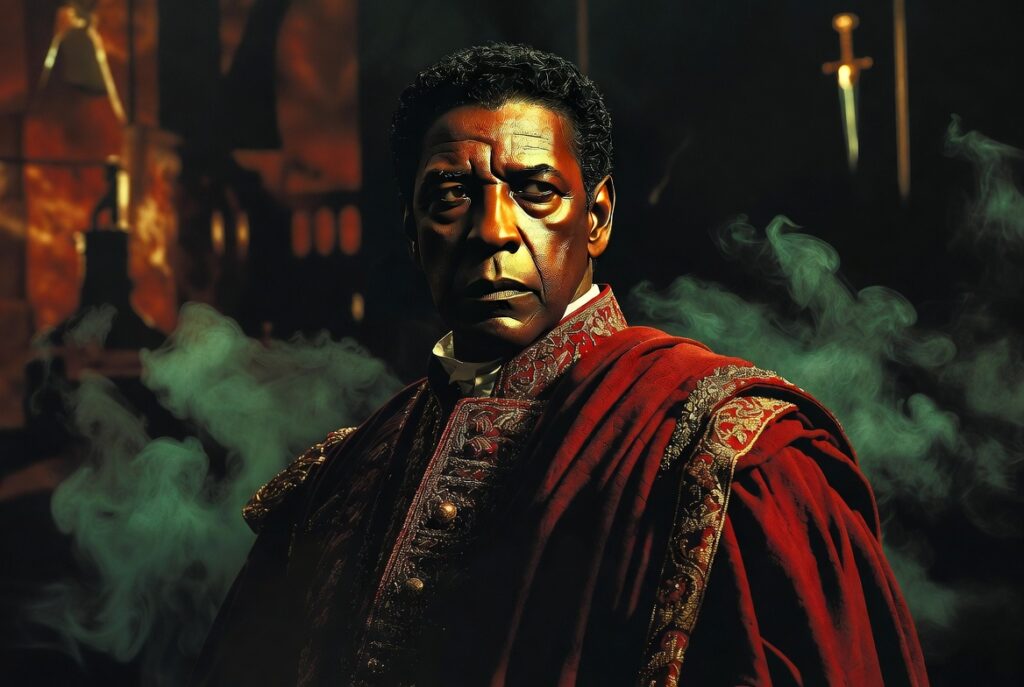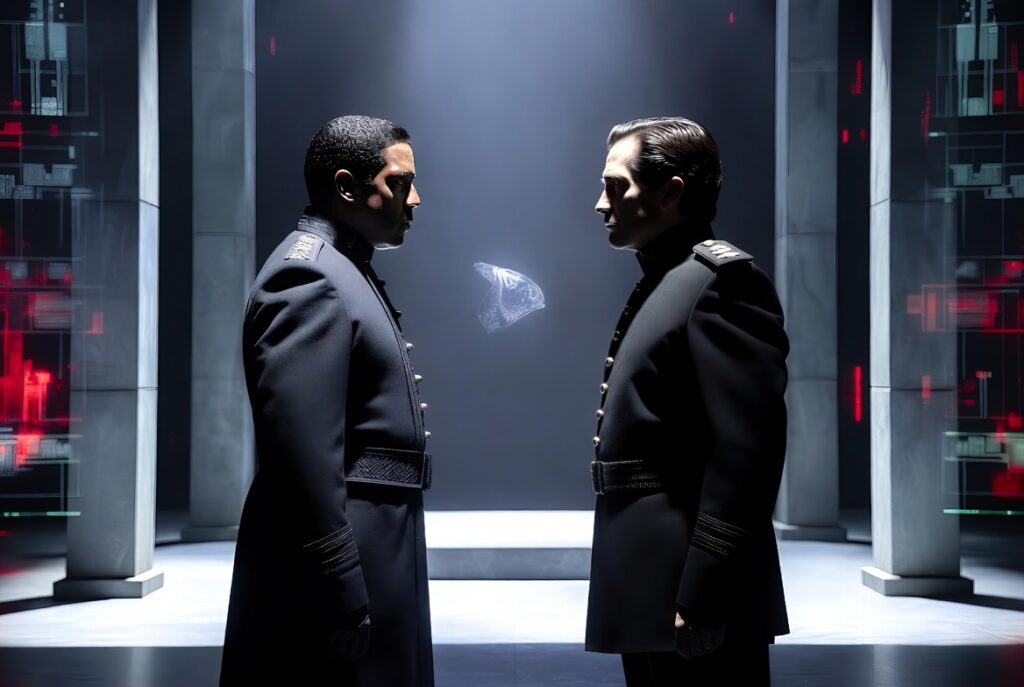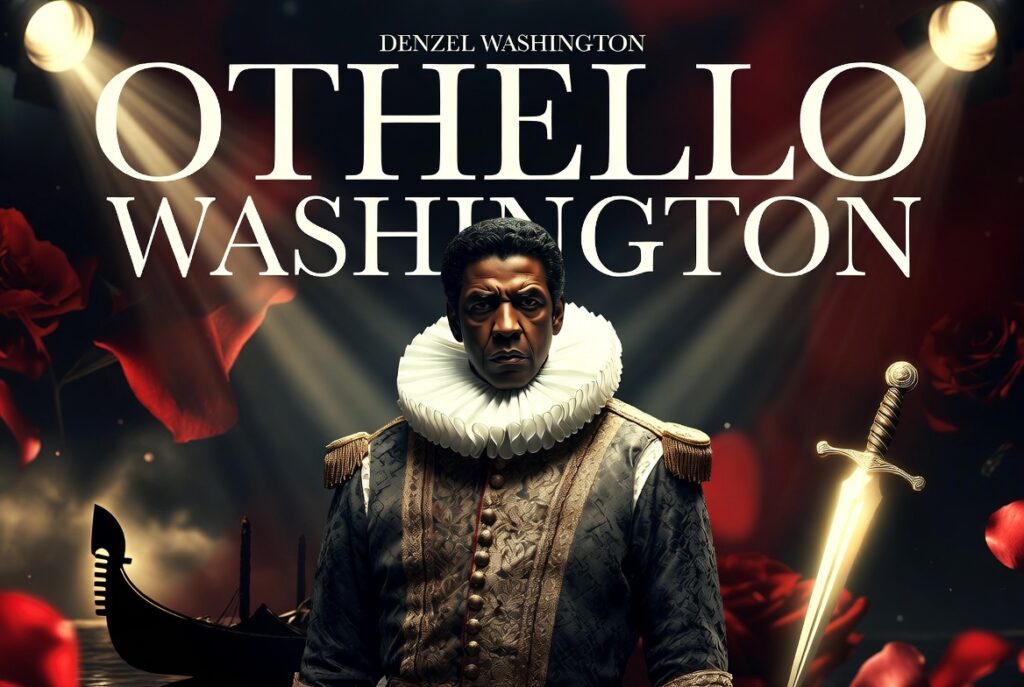
The lights dim at Broadway’s Ethel Barrymore Theatre. A projection flickers: “The Near Future—2028.” Two titans of stage and screen step into the stark military world of Shakespeare’s Othello—Denzel Washington as the noble Moorish general, commanding yet vulnerable, and Jake Gyllenhaal as his scheming ensign Iago, all charm and venom. In that electric opening moment of the 2025 revival, audiences felt the full weight of one of literature’s most explosive tragedies unfold live. This was Othello Washington—the star-powered Broadway event that shattered box-office records and reignited conversations about jealousy, race, manipulation, and human frailty in Shakespeare’s most intimate tragedy.
Whether you’re a longtime Shakespeare devotee searching for fresh insight or a theater lover drawn by the celebrity buzz around “Denzel Washington Othello,” this production delivered something rare: a modern lens on a 400-year-old masterpiece that still feels urgently relevant. As a Shakespeare scholar who has taught, directed, and analyzed the Bard’s canon for over two decades, I’ve seen dozens of Othello stagings—from traditional period pieces to experimental adaptations. None matched the cultural phenomenon of this Kenny Leon–directed revival. In the pages that follow, we’ll explore why Othello Washington mattered, how Denzel Washington’s performance built on a lifetime of Shakespearean work, the production’s bold creative choices, critical reception, and the deeper lessons it offers today. By the end, you’ll have not only a complete understanding of this landmark revival but also practical ways to carry Shakespeare’s timeless tragedy into your own reading, viewing, and reflection.
Shakespeare’s Othello: The Timeless Tragedy That Still Speaks to Us Today
At its core, Othello (written around 1603–1604 during the reign of King James I) is Shakespeare’s leanest and most psychologically piercing tragedy. The plot follows Othello, a respected Venetian general and Moor, who marries the noble Desdemona against her father’s wishes. Promoted to Cyprus to defend against Turkish invasion, Othello’s happiness unravels when his trusted ensign Iago—passed over for promotion—engineers a campaign of lies, planting seeds of doubt about Desdemona’s fidelity. What begins as professional resentment spirals into a cascade of jealousy, murder, and suicide.
The play’s dramatic structure is ruthlessly efficient: five acts, a tight ensemble, and no subplots to dilute the central poison of manipulation. Yet its power lies in the themes that feel ripped from today’s headlines. Jealousy is personified as the “green-eyed monster which doth mock the meat it feeds on” (Act 3, Scene 3)—a line that still chills because it captures how suspicion self-destructs. Racial othering is explicit: Othello is repeatedly reduced to “the Moor,” “thick-lips,” or “black ram,” exposing Venetian society’s casual prejudice even as it relies on his military genius. Manipulation and gaslighting dominate—Iago’s soliloquies reveal a villain who delights in chaos without a grand ideological motive, making him terrifyingly relatable in our era of social-media-fueled disinformation and “wars now” (as the production updated the military context). Honor, reputation, and the fragility of love across boundaries round out the tragedy’s emotional core.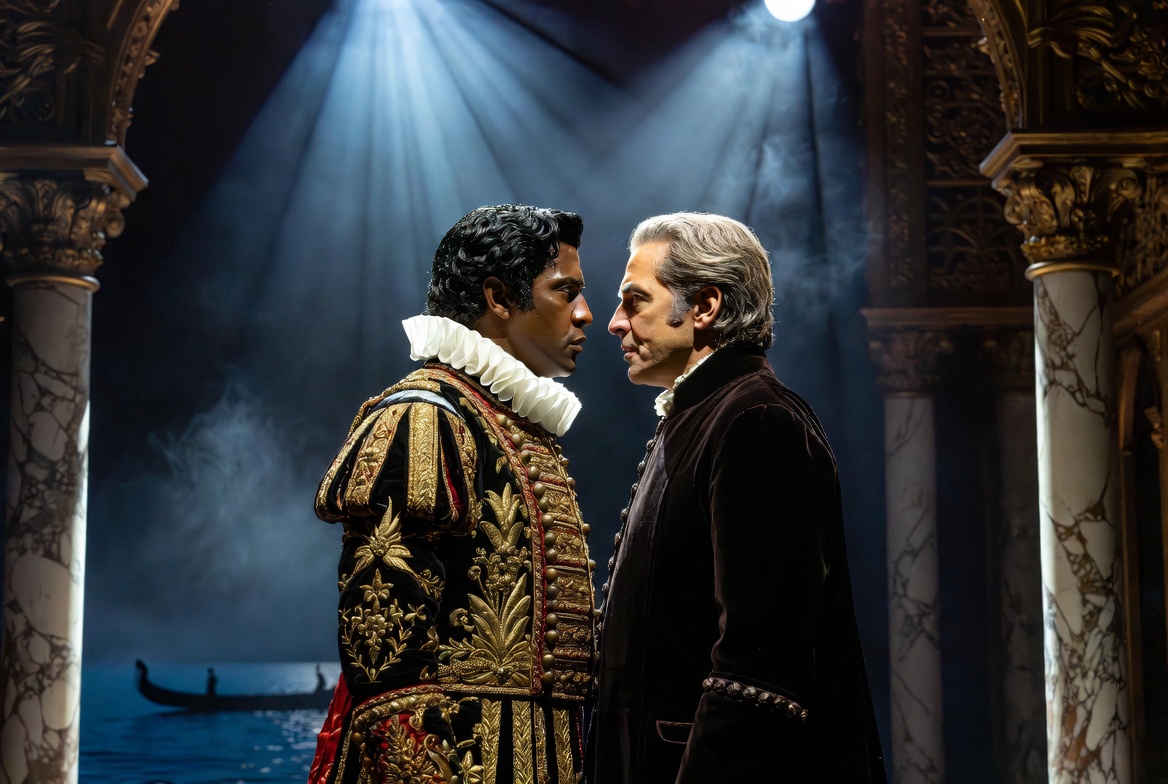
Historically, Othello emerged in a time when England was grappling with its expanding global empire and encounters with “other” cultures. Early modern audiences saw Moors through a lens of exoticism and suspicion, yet Shakespeare humanizes Othello with profound dignity while never shying from the racism that dooms him. As I’ve lectured in university courses on Renaissance drama, this duality is why the play endures: it refuses easy answers. It asks us to confront how prejudice, unchecked emotion, and eloquent deception can destroy even the strongest bonds.
Key textual moments underscore this relevance. Iago’s chilling declaration, “I am not what I am” (Act 1, Scene 1), prefigures modern identity performance and performative sincerity. Othello’s handkerchief— a simple token turned damning “proof”—mirrors how today’s digital evidence (texts, posts, rumors) can be weaponized. And Emilia’s final stand in Act 5, exposing her husband’s villainy, resonates powerfully in #MeToo conversations about women’s voices finally breaking through patriarchal silence.
For newcomers, Othello is remarkably accessible once the Elizabethan language clicks. Its poetry is less ornate than Hamlet’s, its action more propulsive. Yet its emotional depth rewards multiple readings or viewings—precisely what made the 2025 Broadway revival such a perfect entry point for new generations.
Denzel Washington’s Lifelong Connection to Othello
Denzel Washington’s portrayal of Othello in 2025 was no spur-of-the-moment star vehicle; it was the culmination of a career steeped in Shakespeare. The two-time Oscar winner first tackled the role as a 23-year-old Fordham University student in 1977, an experience he has described in interviews as transformative. That early encounter planted seeds that blossomed across decades: his film Much Ado About Nothing (1993), Broadway turns in Julius Caesar (2005) and Richard III (1990s regional), and the 2021 Apple TV+ adaptation of Macbeth opposite Frances McDormand.
What makes Othello a natural fit for Washington is the role’s demand for unassailable dignity under pressure—qualities that have defined his public persona and screen work. Othello is a man of command who has risen through merit in a world quick to judge his skin. Washington, who has spoken openly about navigating Hollywood’s racial dynamics while maintaining grace and excellence, brought lived experience to the part. At age 70 during the run, his Othello carried the gravitas of maturity: a seasoned warrior who has earned respect the hard way, only to watch it erode through planted doubt.
Critics and audiences noted how Washington’s silky, resonant delivery made Shakespeare’s verse feel conversational yet monumental. His physical presence—tall, composed, exuding quiet authority—anchored the production. In the temptation scene (Act 3, Scene 3), where Iago drips poison into Othello’s ear, Washington’s gradual shift from serene confidence to simmering rage showcased a lifetime of craft. As he has reflected in CBS Sunday Morning interviews tied to the production, this role represented “working our whole careers for this moment”—a full-circle return enriched by age, wisdom, and the perspective only seven decades can provide.
The 2025 Broadway Othello Production: Key Facts and Creative Team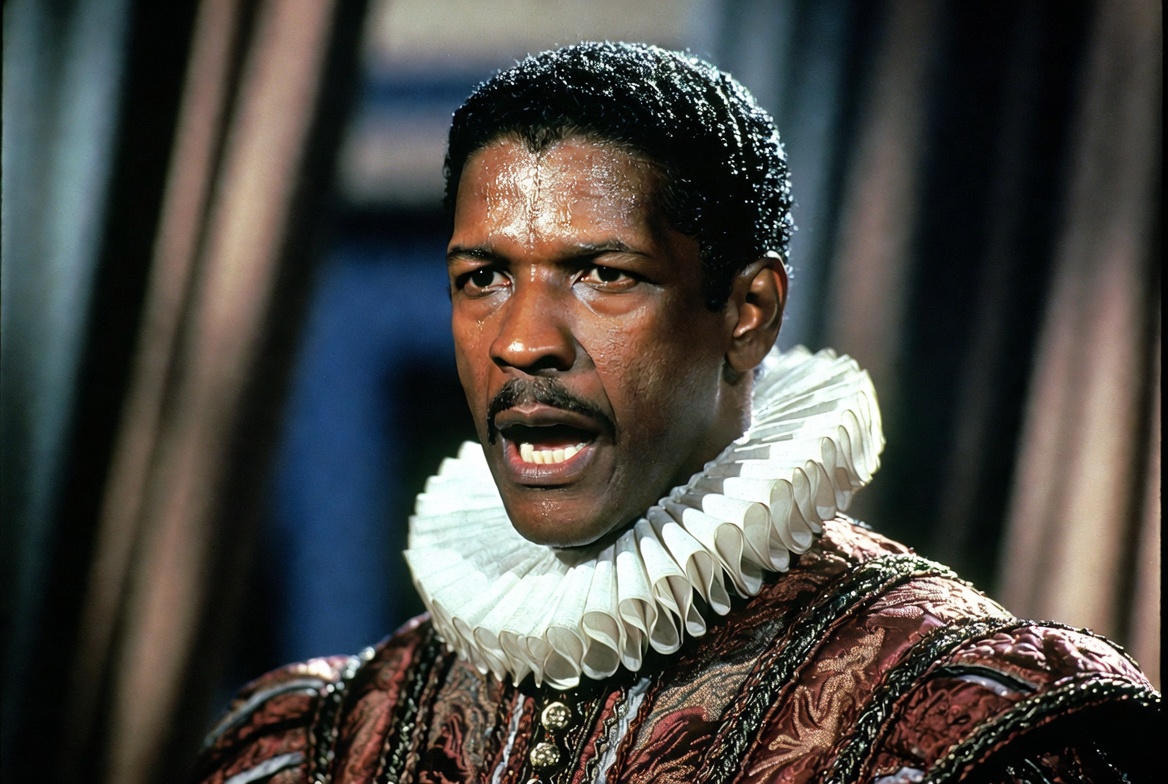
Directed by Tony Award winner Kenny Leon (who previously guided Washington to a Tony in Fences), this revival marked the first Othello on Broadway in more than 40 years. Previews began February 24, 2025, with opening night on March 23 at the Ethel Barrymore Theatre. The strictly limited 15-week engagement closed on June 8, 2025, after playing to sold-out houses and setting records as the highest-grossing play in Broadway history at the time.
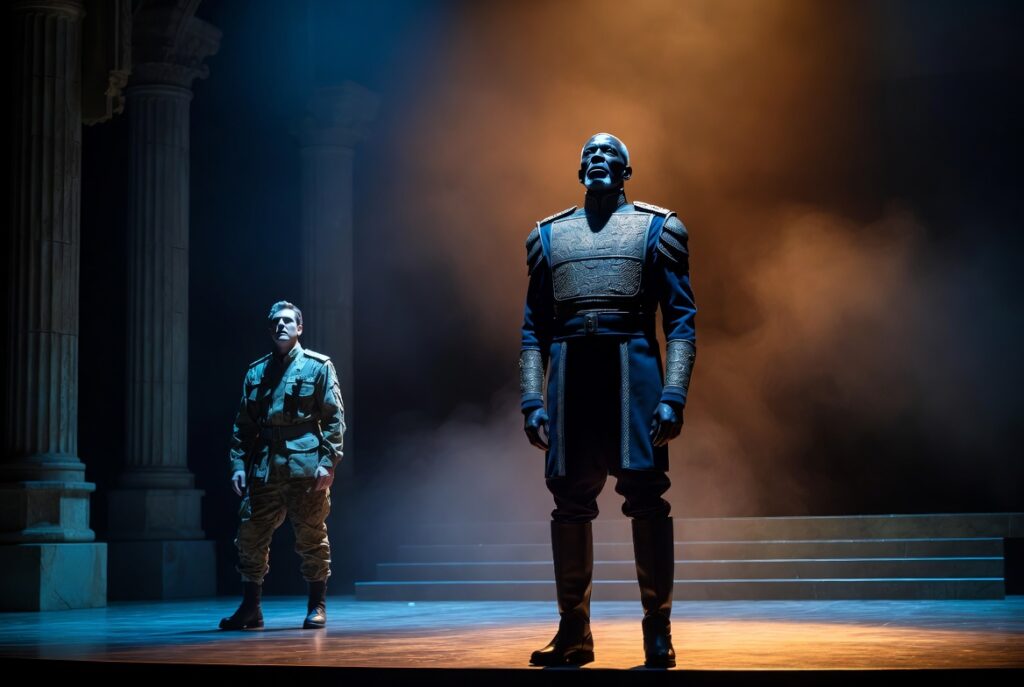
Leon’s bold vision relocated the action to “the near future”—October 2028—within an American military context. Othello and his company become U.S. Marines stationed in a Cyprus-like outpost, complete with modern fatigues, tactical gear, and subtle projections evoking contemporary geopolitics. The goal, Leon explained, was not heavy-handed allegory but a focus on “humanity”: love, jealousy, and the cost of unchecked suspicion in a world still wrestling with division. Designer Derek McLane’s set was austere yet effective—tall gray columns that shifted to redefine space, a raised walkway for surveillance-like tension, and minimalist lighting by Natasha Katz that kept focus laser-sharp on the actors. Costumes by Dede Ayite blended military practicality with elegant civilian touches for Desdemona’s scenes.
The principal cast was a masterclass in star power and stage prowess:
- Denzel Washington as Othello
- Jake Gyllenhaal as Iago
- Molly Osborne (Broadway debut) as Desdemona
- Andrew Burnap (Tony winner for The Inheritance) as Cassio
- Kimber Elayne Sprawl as Emilia
- Supporting roles filled by Anthony Michael Lopez (Roderigo), Daniel Pearce (Brabantio), and others.
This ensemble chemistry, amplified by Leon’s direction, turned a classic into a must-see event. Ticket demand was unprecedented, with orchestra seats reportedly topping $900—yet the production consistently hit 100% capacity, proving celebrity Shakespeare still draws crowds in an era of streaming distractions.
Star Power on Stage — Denzel Washington’s Othello and Jake Gyllenhaal’s Iago
The heart of Othello Washington beat in the electrifying duel between its leads. Washington’s Othello was a study in controlled power: early scenes radiated the easy command of a man secure in his accomplishments and new marriage. His voice—rich, measured, laced with that signature gravitas—made the poetry land with contemporary clarity. Reviewers from Variety praised his “silky, fluent delivery,” while The New York Times highlighted the “commanding” presence that made Othello’s fall feel tragically human.
Yet the arc into jealousy revealed both strengths and the production’s noted limitations. Washington conveyed the internal fracture with nuance—subtle shifts in posture, a tightening jaw, quiet fury rather than explosive ranting. Some critics felt the later acts lacked the volcanic rage traditional stagings deliver, describing the descent as “subdued” or “kooky” rather than monstrous (Hollywood Reporter, New Yorker). In my expert view, this choice emphasized Othello’s dignity even in collapse: a man fighting to retain composure as his world implodes. It mirrored real-life erosion of trust more than theatrical fireworks, making the tragedy feel intimate and modern.
Opposite him, Jake Gyllenhaal delivered what many called a career-best Iago—scene-stealing, chillingly relatable, and often the production’s standout. Gyllenhaal infused the villain with ingratiating charm and petulant resentment, making “Honest Iago” believable. His physicality—restless energy, conspiratorial asides directly to the audience—amplified the manipulation. USA Today and multiple outlets hailed it as “tremendous,” noting how Gyllenhaal’s conversational menace felt ripped from today’s toxic online discourse. The off-stage friendship between Washington and Gyllenhaal only heightened the onstage betrayal, creating palpable tension in key exchanges like the handkerchief scene and the temptation sequence.
Their chemistry crackled: Washington’s stoic general versus Gyllenhaal’s shape-shifting predator. Together, they proved why star pairings can elevate Shakespeare without overshadowing the text.
Supporting Performances That Elevated the Tragedy
While the spotlight naturally fell on Denzel Washington and Jake Gyllenhaal, the supporting cast provided crucial grounding and emotional texture that helped sustain the production’s two-hour-and-thirty-five-minute runtime. Molly Osborne, making her Broadway debut as Desdemona, brought a refreshing sense of agency and warmth to a role that can sometimes feel passive. Her Desdemona was no fragile flower but a woman of conviction—deeply in love, intellectually engaged, and increasingly bewildered by the unraveling of her marriage. Critics noted her strong chemistry with Washington, particularly in the tender Cyprus scenes, where their portrayal of marital intimacy made the later betrayal all the more heartbreaking. Osborne’s clear diction and emotional transparency helped modern audiences connect with Shakespeare’s verse without feeling lectured.
Andrew Burnap, a Tony winner for The Inheritance, delivered a solid Cassio—charismatic, ambitious, and believably flawed. His fall from grace after the drunken brawl felt earned rather than contrived, and his scenes with Iago highlighted Gyllenhaal’s manipulative prowess. Kimber Elayne Sprawl as Emilia offered one of the production’s most powerful moments in the final act. Her delivery of the speech defending women’s honor and exposing Iago’s villainy carried real fire, reminding audiences that Shakespeare embedded strong female voices even within patriarchal structures. The ensemble, including Anthony Michael Lopez as the gullible Roderigo and Daniel Pearce as Brabantio, handled the military-infused staging with discipline, marching through aisles at times to emphasize the hierarchical world.
Collectively, these performances prevented the star vehicle from feeling hollow. They reminded us that Othello is an ensemble tragedy: no single character operates in isolation, and the web of relationships amplifies the central poison of jealousy.
Critical Reception and Box-Office Phenomenon
Othello Washington, as the production quickly became known in searches and headlines, achieved something extraordinary at the box office while receiving decidedly mixed critical notices. During its first week of previews, it grossed a record-breaking $2.8 million over eight performances—the highest weekly gross ever recorded for a Broadway play at the time, surpassing even Harry Potter and the Cursed Child’s holiday peak. Average ticket prices soared, with some center orchestra seats reaching $921, yet demand remained insatiable. The strictly limited 15-week run (previews from February 24, official opening March 23, closing June 8, 2025, at the Ethel Barrymore Theatre) fully recouped its roughly $9 million capitalization and became the highest-grossing play revival in Broadway history.
Critical response told a more nuanced story. Many reviewers praised the star wattage but found Kenny Leon’s direction underpowered or muddled. The Hollywood Reporter described it as a “frustratingly underpowered revival” short on electricity, noting Washington’s natural gravitas but little driving force behind the performance overall. The New Yorker called it an “overpriced ‘Othello’ [that] goes splat,” criticizing the bland gray-columned set by Derek McLane (likened by some to a parking garage) and Washington’s occasionally light, singsong delivery that veered into vagueness.
Conversely, outlets like New York Stage Review celebrated Gyllenhaal’s Iago as scene-stealing and “tremendous,” arguing the production succeeded despite minimal textual updates beyond a handful of modernizing substitutions. Audience scores on platforms like Show-Score leaned more positive than critics (around 61% critic vs. higher reader approval), with many theatergoers citing the sheer thrill of seeing two screen legends command a Broadway stage.
The production notably received no Tony Award nominations in 2025, a snub widely discussed given its commercial dominance. This disconnect between box-office success and critical acclaim sparked broader conversations: Does celebrity casting guarantee artistic depth? Can star power alone revitalize Shakespeare for contemporary audiences? In my analysis as a scholar, the answer lies somewhere in between. The revival excelled as an event—introducing or reintroducing thousands to Othello—but fell short of redefining the play’s interpretive possibilities the way some landmark productions have.
Modern Relevance — How This Othello Washington Reflects 21st-Century Issues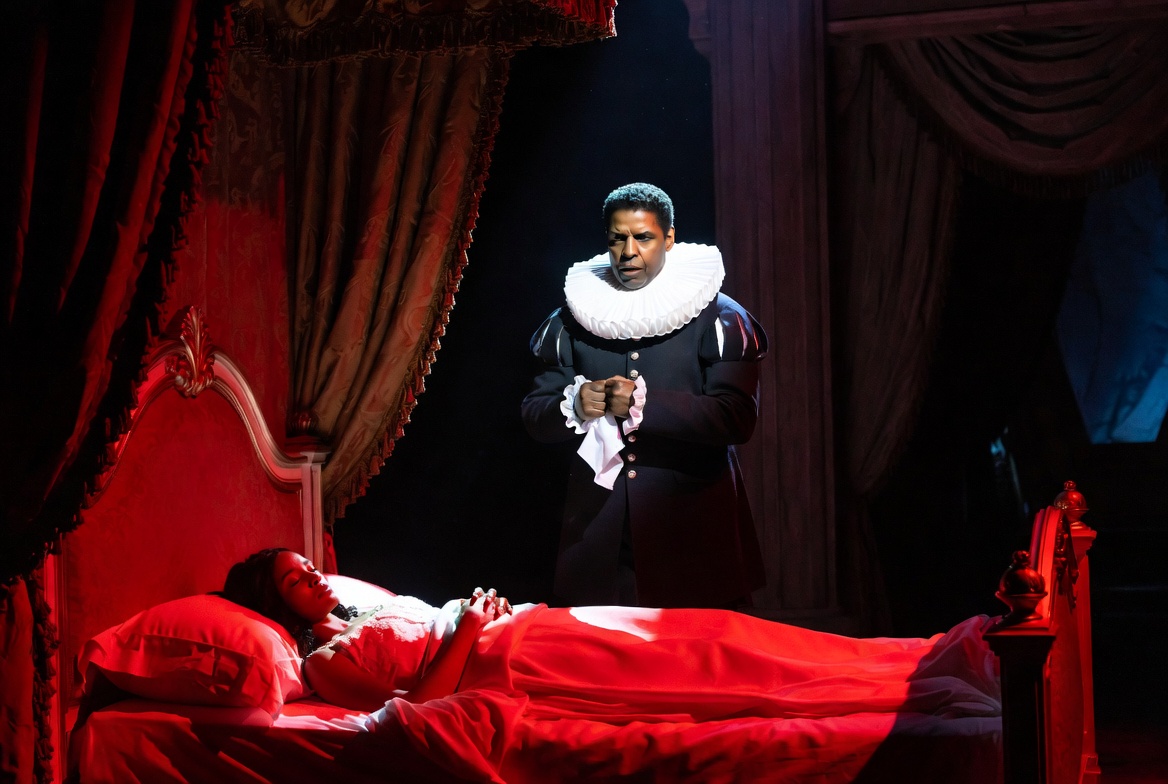
Kenny Leon’s decision to set the action in “the near future”—specifically October 2028, within an American military context—aimed to make Shakespeare’s themes feel immediate rather than distant. Characters wore tactical gear and moved with military precision; the Cyprus posting evoked contemporary overseas deployments rather than Renaissance Venice. Leon emphasized humanity over heavy allegory, telling interviewers the choice allowed audiences to see themselves in the story without tying it to any specific current political moment.
This framing illuminated several pressing 21st-century issues. Race and othering remain central: Washington’s mature, commanding Othello highlighted how prejudice persists even against proven leaders, while also layering in questions of age. As Leon noted, for Washington the role became as much about age as race—an older man whose hard-earned status and late-life love face erosion.
Jealousy in the age of misinformation gained fresh urgency. Iago’s campaign of whispered lies and planted “evidence” (the handkerchief) parallels today’s digital gaslighting, deepfakes, and social media rumors that destroy reputations overnight. The military setting amplified themes of loyalty, trauma, and “wars now”—both literal and psychological—echoing how unchecked suspicion can fracture units and families alike.
Gender dynamics received thoughtful attention through Desdemona’s agency and Emilia’s climactic stand. In a post-#MeToo world, Emilia’s line “Let heaven and men and devils… cry shame against me” lands with renewed force, underscoring women’s silenced truths and the courage required to speak them.
Overall, the production succeeded in proving Othello’s portability across time. While some critics found the modern touches superficial, they undeniably helped younger and broader audiences see the tragedy not as dusty literature but as a mirror to ongoing struggles with trust, prejudice, manipulation, and the human cost of emotional warfare.
Comparing Othello Washington to Legendary Past Productions
Denzel Washington’s Othello joins a distinguished lineage of great interpreters. James Earl Jones brought towering physicality and vocal power in the 1980s. Laurence Olivier’s 1964 National Theatre performance (later filmed) remains controversial for its blackface but showcased unmatched psychological depth. Chiwetel Ejiofor’s 2007 Donmar Warehouse turn emphasized vulnerability and intellect. Washington’s version, informed by age and lived experience, offered a more restrained, dignified descent—prioritizing gravitas over explosive rage.
On the Iago front, Gyllenhaal’s conversational, almost buddy-like villain stood out for accessibility. Compare this to Kenneth Branagh’s coldly intellectual Iago in the 1995 film or Simon Russell Beale’s chillingly ordinary one. Gyllenhaal made evil feel like the guy next to you in the barracks—charming, resentful, and dangerously relatable.
What made the 2025 revival unique was the star pairing and the deliberate avoidance of gimmickry beyond the near-future frame. Unlike some experimental stagings that overhaul the text or setting dramatically, Leon kept Shakespeare’s language largely intact, letting celebrity draw audiences to the words themselves. In doing so, it prioritized accessibility over radical reinterpretation—a trade-off that fueled both its commercial triumph and critical debate.
Behind-the-Scenes Insights and Cast Reflections
Washington and Gyllenhaal, longtime friends, spoke warmly about the collaborative process. Washington described the project as a dream culmination, while both actors highlighted the theme of trust—how easily it breaks and how vital it is in high-stakes environments like the military or theater itself. Leon emphasized rehearsal focus on humanity: love, jealousy, and the choices that lead to tragedy. Challenges included balancing star egos with ensemble needs and making Elizabethan verse land naturally in a modern military aesthetic. Triumphs came in nightly standing ovations and the visible impact on first-time Shakespeare attendees.
Why This Production Matters for Shakespeare Lovers Today
Othello Washington demonstrated that celebrity can serve as a powerful gateway to the Bard. High ticket prices aside, the production exposed thousands—many newcomers—to one of Shakespeare’s most compact and psychologically rich tragedies. It sparked renewed interest in live theater post-pandemic and proved that classical works can still dominate cultural conversations when presented with star power and thoughtful (if not revolutionary) direction.
For dedicated Shakespeare enthusiasts, it offered a chance to re-examine familiar themes through fresh eyes. Its legacy may lie less in awards or unanimous acclaim and more in broadening the audience for serious drama and reminding us that the “green-eyed monster” still stalks our relationships, workplaces, and digital lives.
Practical Tips for Experiencing Othello After the Curtain Call
If this production ignited (or reignited) your interest, start with a reliable modern edition such as the Folger Shakespeare Library or Arden Third Series for clear notes. Listen to audio versions (Arkangel or Naxos) while following the text to master the language.
Film adaptations provide excellent entry points: the 1995 Kenneth Branagh–Laurence Fishburne version for accessibility, or Orson Welles’ 1952 artistic masterpiece. Search for past stage recordings or the 2021 Washington Macbeth to see his Shakespearean range.
Local theaters or university productions often stage Othello affordably—check Drama League or regional company calendars. Online resources like MIT’s Shakespeare portal or Folger Digital Texts offer free full texts with annotations.
For beginners: Focus first on plot and character motivations rather than every archaic word. Read key scenes aloud. Discuss with others—the play’s ambiguities reward conversation.
FAQs
What is “Othello Washington”? It is the informal nickname for the 2025 Broadway revival of Shakespeare’s Othello starring Denzel Washington in the title role.
Did Denzel Washington play Othello before? Yes—first as a college student at Fordham University in 1977. The 2025 production marked his professional return to the role at age 70.
How does the 2025 production differ from traditional stagings? It is set in a near-future (2028) American military context with modern tactical costumes and minimalist design, though the text remains largely unchanged.
Was Jake Gyllenhaal’s Iago better than Denzel’s Othello? Many critics thought Gyllenhaal’s performance was the standout—more dynamic and scene-stealing—while Washington’s was commanding but sometimes restrained.
Is the play suitable for first-time Shakespeare viewers? Yes. Its tight plotting, strong emotions, and relatively straightforward language make it more accessible than denser works like Hamlet. The star power helps draw viewers in.
Where can I see or read more about this production? Official clips and interviews appeared on Playbill, Broadway.com, and cast social media. The full text is widely available online and in print.
What are the main themes of Othello? Jealousy, racial prejudice, manipulation and deception, honor and reputation, love and betrayal.
Did the production win any awards? It received no Tony nominations despite commercial success, highlighting the gap between popularity and critical consensus.
Denzel Washington’s Othello Washington was never going to be a quiet scholarly revival. It was an event—star-driven, record-shattering, conversation-starting—that brought Shakespeare’s most intimate tragedy back to Broadway’s center stage after more than four decades. While critics debated its directorial vision and performative fireworks, audiences flocked to witness two screen legends grapple with jealousy, trust, and human frailty in real time.
Ultimately, the production reaffirmed why Othello endures: its monsters are internal, its warnings timeless. In an era of rapid misinformation, polarized identities, and fragile relationships, the play still asks the hardest questions—about the stories we believe, the doubts we entertain, and the trust we risk losing. Whether you caught the 2025 run or are discovering it through this deep dive, I encourage you to pick up the text, attend a local staging, or simply reflect on how its truths echo in your own world.
Shakespeare wrote for the stage, but his words travel far beyond any single production. Othello Washington proved that with the right stars and vision, even a 400-year-old tragedy can still pack houses, break records, and leave us pondering the green-eyed monster long after the lights come up.