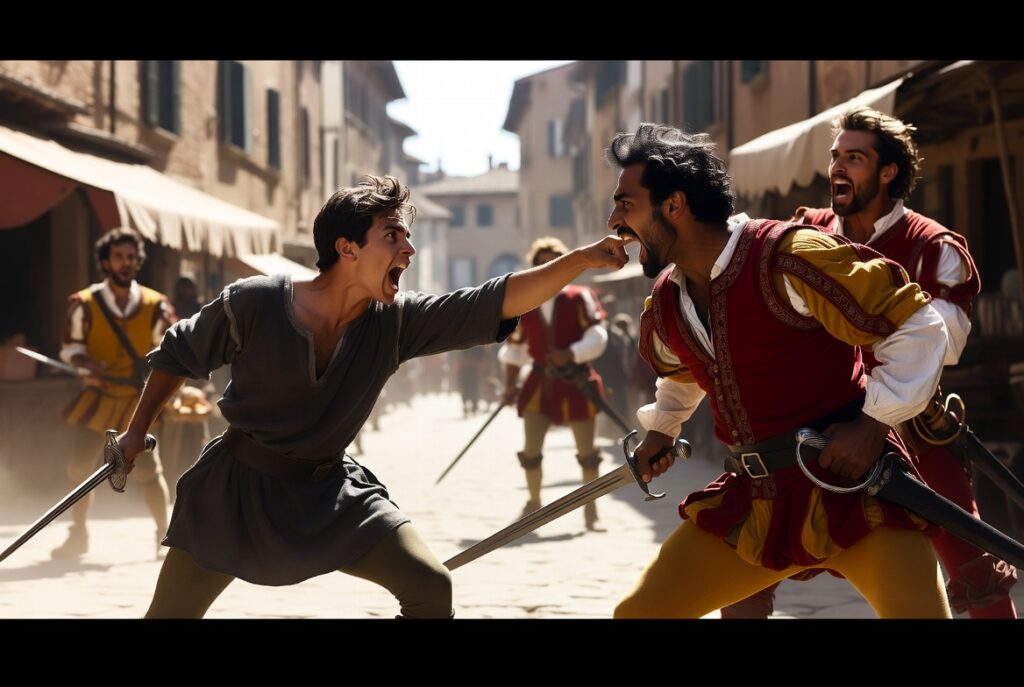
In the blistering opening seconds of Romeo and Juliet, the streets of Verona explode into a brawl that will claim six lives and doom two young lovers. Yet amid the clashing swords and hurled insults, one name is rarely remembered by first-time readers or even many students: Abraham. If you’ve typed “abraham romeo and juliet” into a search bar after encountering his single, brief appearance in Act 1, Scene 1, you already sense there’s more to this Montague servant than the textbooks admit. This comprehensive guide reveals exactly who Abraham is, why Shakespeare placed him at the very ignition point of the tragedy, and how his few lines quietly power the entire five-act machine of fate, class tension, and cyclical violence. Whether you’re a student writing an essay, a teacher preparing a lesson, an actor preparing an audition, or a lifelong Shakespeare lover seeking deeper insight, you’ll leave with a richer understanding of the play than any standard plot summary can provide.
Who Is Abraham in Romeo and Juliet? A Character Profile
Abraham is listed in the dramatis personae of most modern editions simply as “Abraham, a Montague servant” or “a servingman.” In the 1597 First Quarto and the authoritative 1599 Second Quarto (the basis for the First Folio), he appears without a proper name in the speech prefixes, identified only as “1. Ser.” or “Abr.” in some early printings. His total spoken lines number fewer than twenty, and he exits the stage by line 70, never to return. Yet Shakespeare’s economy is legendary: every character, no matter how minor, serves the larger dramatic architecture.
Abraham’s Identity and Social Status Abraham belongs to the lowest rung of the Montague household — a retainer or servingman, not a personal page like Balthasar (who later carries Romeo’s letters and appears in later acts). In Elizabethan England, such servants were often young men from modest families, bound by loyalty and wages to their noble masters. His presence immediately signals the class dynamics that Shakespeare explores throughout the play: the nobility’s ancient grudge is fought, quite literally, by their underlings.
Abraham vs. Other Servants To appreciate Abraham’s function, contrast him with the Capulet servants Sampson and Gregory, who open the scene with crude jokes about “thrusting maids to the wall” and “maidenheads.” They are boastful instigators. Abraham and the unnamed second Montague servant enter as responders. This pairing creates dramatic symmetry: two servants from each house mirror the two households, showing how the feud permeates every social level. Balthasar, by contrast, is more intimate with Romeo; Abraham is anonymous muscle, interchangeable yet essential.
Textual Evidence The critical moment arrives when Sampson bites his thumb at the approaching Montagues. Abraham’s first line is direct and legalistic: “Do you bite your thumb at us, sir?” (1.1.45). The second Montague servant echoes him. Shakespeare’s precise wording — repeated questions and escalating challenges — turns a deniable gesture into an unavoidable public confrontation. These lines are preserved identically across the First Folio and modern scholarly editions such as the Arden Shakespeare and Folger Library texts.
The Opening Scene Breakdown – How Abraham Ignites the Feud
Act 1, Scene 1 in Context Shakespeare could have begun with the lovers’ first meeting or even the Prince’s later decree. Instead, he opens with a public riot. The choice is deliberate: the audience must feel the “ancient grudge” as an immediate, visceral reality before any romantic plot begins. The scene runs approximately 100 lines and sets the political, social, and emotional stakes for the entire tragedy.
The Thumb-Biting Incident – Line-by-Line Analysis The exchange is a masterclass in dramatic escalation: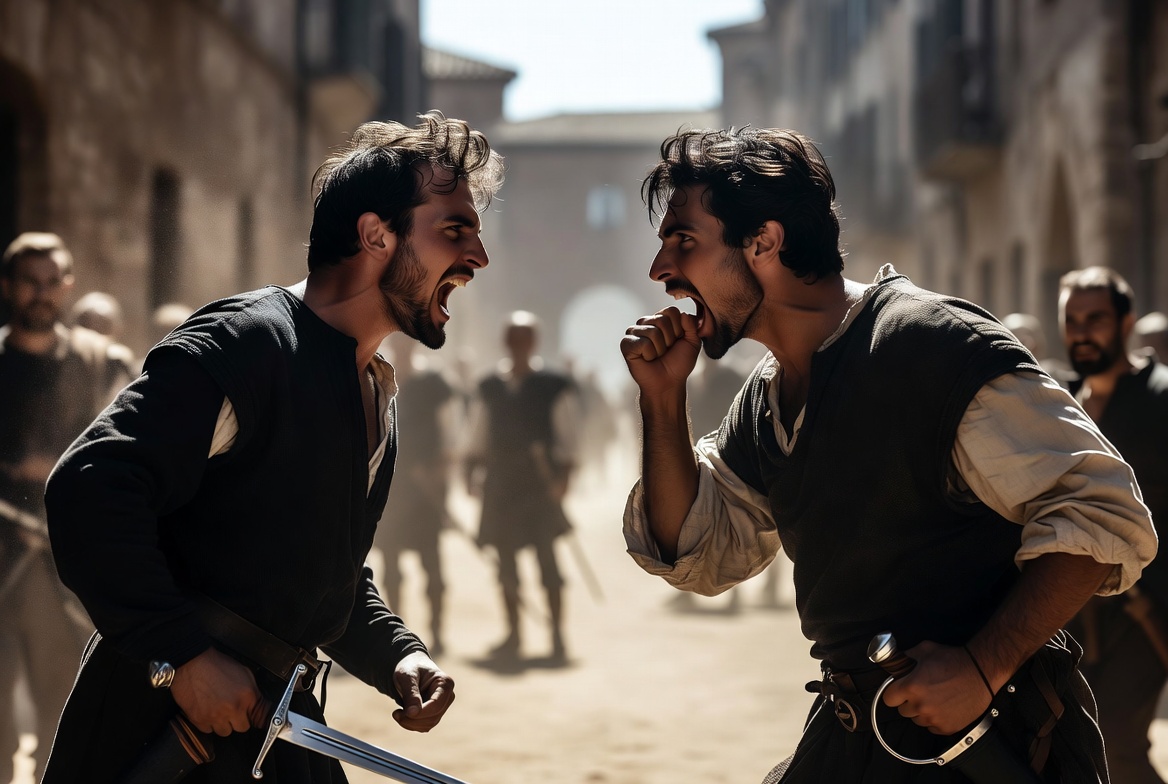
- Sampson: “I will bite my thumb at them, which is disgrace to them if they bear it.”
- Abraham: “Do you bite your thumb at us, sir?”
- Sampson: “I do bite my thumb, sir.”
- Abraham: “Do you bite your thumb at us, sir?”
The repetition forces Sampson into a corner. Because thumb-biting was a calculated insult that could be denied (“I bite my thumb, sir” is technically true, but the direction “at us” makes it personal), Abraham’s insistence drags the insult into open legal and social territory. Within moments, swords are drawn, citizens join the fray, and the Prince arrives to deliver his ultimatum. Abraham’s questions are the dramatic spark.
Historical and Cultural Significance of “Biting the Thumb” In late-16th-century England and Italy, biting the thumb was the equivalent of the modern middle finger — an actionable insult that could provoke a duel or legal complaint. Contemporary accounts, such as those in George Whetstone’s Promos and Cassandra (1578) and records of Elizabethan street brawls, confirm its use as a “disgrace” that demanded response. Shakespeare drew on real social practice to make the feud feel authentic to his groundling audience, many of whom would have witnessed similar tavern or market scuffles.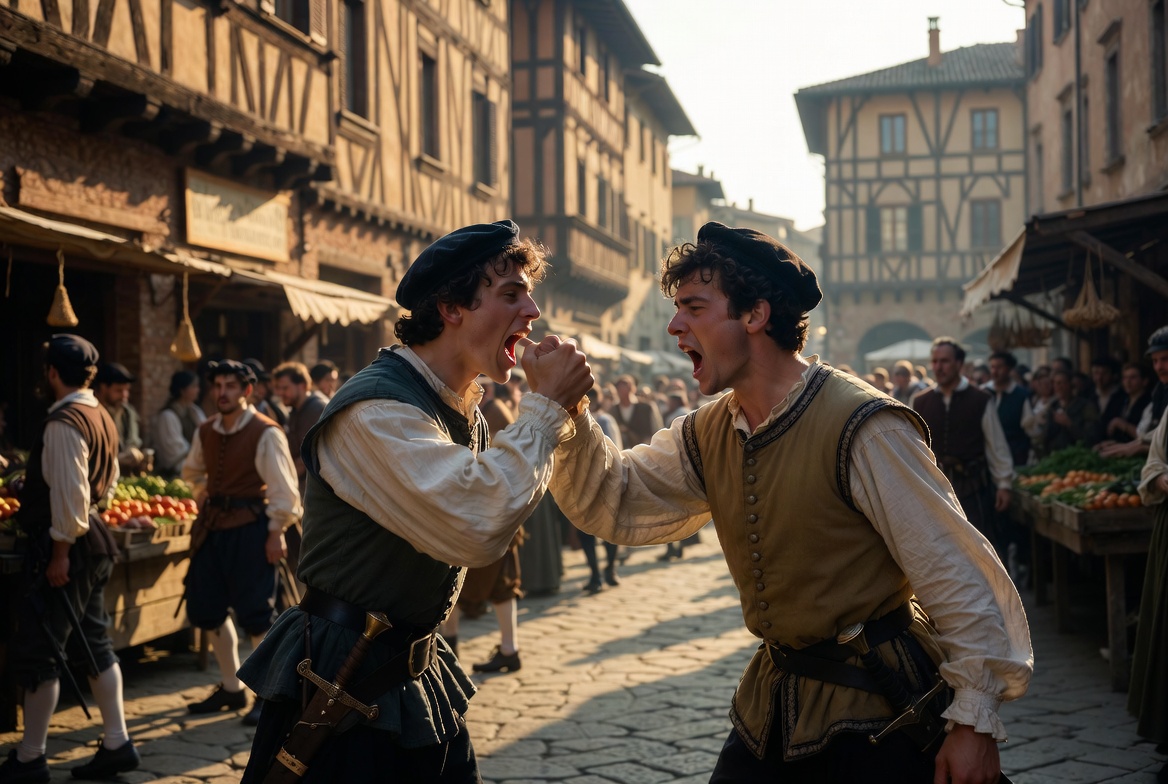
Abraham’s Response and Its Dramatic Purpose By demanding clarification (“at us, sir?”), Abraham refuses to let the insult slide into ambiguity. He embodies the rigid code of honor that binds even the lowest servant to his master’s name. His lines shift the scene from comic posturing to genuine peril, proving that the feud is not abstract — it is lived by ordinary people every day.
Why Shakespeare Chose a Minor Servant to Launch the Tragedy
Thematic Foreshadowing Abraham’s moment foreshadows every major theme: impulsive violence, the futility of the “ancient grudge,” and the way fate operates through seemingly insignificant choices. Before Romeo or Juliet utters a word, the audience has already seen how a single gesture can spiral into city-wide chaos — a microcosm of the lovers’ doom.
Class and Social Hierarchy in Verona Shakespeare repeatedly uses servants to comment on their masters. The Nurse, Peter, and the musicians later serve the same function. Abraham and his counterpart illustrate that the nobility’s hatred trickles downward; the servants do not merely reflect the feud — they actively perpetuate it. This mirrors Elizabethan anxieties about social order and the risk of mob violence, topics Shakespeare explored again in Coriolanus and Julius Caesar.
Dramatic Economy and Audience Engagement Elizabethan playhouses mixed comedy and tragedy in the same scene to keep diverse audiences engaged. The servants’ bawdy humor and quick fight provide immediate entertainment for the groundlings while the nobility in the galleries recognize the deeper political warning. By using Abraham, Shakespeare achieves exposition, comic relief, and thematic depth in under two minutes of stage time — a model of efficiency that modern screenwriters still study.
Literary and Dramatic Significance of Abraham’s Role
Abraham may speak few lines, but his dramatic weight is immense. In Shakespearean tragedy, minor characters often function as catalysts or symbolic mirrors, and Abraham is a textbook example of both.
Catalyst for the Entire Plot The causal chain is crystal clear. Abraham’s confrontation with Sampson leads directly to the brawl. The Prince intervenes and issues his stern decree: “If ever you disturb our streets again, / Your lives shall pay the forfeit of the peace” (1.1.103–104). This edict hangs over every subsequent event. When Romeo later kills Tybalt, the Prince’s earlier warning makes exile inevitable. Without the opening riot sparked in part by Abraham, there is no public decree, no pressure on the families, and the secret marriage might have had a chance of success. In this sense, Abraham is the first domino in the tragedy’s fatal sequence.
Symbolism and Motifs Abraham embodies the “ancient grudge” in its purest, most anonymous form. He is not a named noble driven by personal vendetta; he is an everyman servant defending his master’s honor. His willingness to fight over a thumb-biting gesture illustrates how deeply the feud has poisoned Verona’s social fabric. The motif of meaningless violence recurs throughout the play — in the deaths of Mercutio and Tybalt, in Paris’s challenge at the tomb, and finally in the lovers’ suicides. Abraham’s scene quietly introduces this motif before the audience even meets the protagonists.
Comparisons with Other Shakespearean Minor Characters Shakespeare frequently elevates servants and clowns to illuminate major themes. The Porter in Macbeth provides comic relief while commenting on damnation and equivocation. The Gravedigger in Hamlet forces the prince to confront mortality with earthy wit. Similarly, Abraham’s brief appearance uses low-status characters to expose the absurdity and danger of aristocratic feuds. These “minor” roles demonstrate Shakespeare’s democratic theatrical vision: the actions of servants can determine the fate of kings and lovers alike.
Abraham in Performance and Adaptations
The role of Abraham offers directors and actors a surprising amount of interpretive freedom despite its brevity.
Staging Choices Across Centuries In early modern productions at the Globe, the servants’ fight was likely played for broad physical comedy to engage the pit audience. Restoration and 18th-century adaptations often cut or minimized the opening brawl to focus on the star-crossed lovers. By the 19th and 20th centuries, directors began restoring the full scene to emphasize social realism. Modern productions frequently amplify the violence, turning Abraham and the other servants into believable street toughs rather than caricatures.
Notable Actors and Interpretations In Franco Zeffirelli’s influential 1968 film, the servants are portrayed with youthful energy and genuine menace, making the opening fight feel like a real gang confrontation. Baz Luhrmann’s 1996 Verona Beach version reimagines the characters as members of rival Latino and Anglo gangs, with Abraham (played by a young actor in the Montague crew) delivering his lines with contemporary swagger and threat. In recent RSC and Globe productions, actors have explored Abraham as either a reluctant participant or an eager enforcer, adding layers of class resentment or blind loyalty.
Abraham in Film, Ballet, and Pop Culture While Abraham rarely receives expanded dialogue, his presence is visually retained in nearly every major screen adaptation because the opening brawl is too iconic to omit. In Sergei Prokofiev’s ballet Romeo and Juliet, the servants’ fight is choreographed as energetic, almost slapstick combat that contrasts with the lyrical pas de deux of the lovers. Elements of the thumb-biting insult have even influenced modern retellings such as West Side Story (both the original and Steven Spielberg’s 2021 version), where rival gang posturing echoes the same ritualized aggression. In popular culture, Abraham is occasionally referenced in memes or TikTok explanations when students jokingly ask “Who even is Abraham in Romeo and Juliet?”
Expert Insights and Scholarly Perspectives
Serious Shakespeare scholarship has long recognized the importance of seemingly marginal figures like Abraham.
Leading scholars such as Stephen Greenblatt, in Will in the World, highlight how Shakespeare used minor characters drawn from everyday Elizabethan life to ground his grand tragedies in social reality. Marjorie Garber, in Shakespeare After All, notes that the opening scene’s servants establish the “grammar of violence” that governs the rest of the play. Jonathan Bate, in his biographies and critical works, emphasizes Shakespeare’s background as an actor who understood the practical value of giving even apprentice players meaningful moments on stage.
From a performance studies perspective, scholars argue that Abraham’s role reveals the collaborative nature of early modern theater companies, where boy actors and hired men played servant roles that could make or break a scene’s energy. Marxist and new historicist readings view Abraham as evidence of Shakespeare’s subtle critique of hierarchical society: the nobility may claim the spotlight, but the laboring classes fuel the conflict.
These perspectives reinforce that understanding Abraham is not pedantic detail — it is essential to grasping Shakespeare’s sophisticated dramatic technique and social commentary.
Why Understanding Abraham Matters for Readers and Students Today
Grasping Abraham’s role delivers immediate practical benefits and deeper modern relevance.
For Students and Essay Writers Including detailed analysis of Abraham’s scene demonstrates close reading skills and elevates any essay or exam answer above surface-level plot summary. Teachers frequently reward answers that show how minor characters drive major themes. Sample essay prompt: “Discuss the significance of minor characters in establishing the central conflict of Romeo and Juliet.” Abraham provides rich, specific evidence.
For Teachers and Classroom Use Classroom activities can include staging the opening 70 lines with students rotating through the servant roles, followed by discussion: How does the fight change when Abraham delivers his lines aggressively versus hesitantly? Modern parallels — such as social media feuds where anonymous users escalate conflicts — make the scene strikingly relevant.
Modern Relevance In an age of polarized politics, online echo chambers, and gang violence, Abraham’s scene reminds us how ordinary people become caught in larger conflicts not of their own making. The thumb-biting incident parallels today’s ritualized provocations on social media that can spiral into real-world harm. Shakespeare shows that peace requires intervention at every level of society, not just among leaders.
Practical Tips
- When quoting the scene, always compare at least two editions (Arden, Folger, or Oxford) to note subtle textual variants.
- For actors: Experiment with different deliveries of “Do you bite your thumb at us, sir?” — questioning, challenging, or fearful — to discover new nuances.
- For directors: Consider costuming Abraham and the servants to reflect contemporary street culture while keeping Elizabethan language for contrast.
Conclusion
Abraham may appear for less than two minutes and speak fewer than twenty lines, yet he stands at the dramatic and thematic heart of Romeo and Juliet. His simple question transforms a gesture into a public crisis, launches the Prince’s decree, and sets the machinery of tragedy in motion. Shakespeare’s genius lies precisely in this economy: even the most minor Montague servant carries the weight of the “ancient grudge” and helps illuminate the play’s timeless warnings about honor, violence, and the cost of unchecked hatred.
By paying attention to Abraham, we move beyond romantic clichés and discover a richer, more socially grounded Romeo and Juliet — one where every citizen of Verona, high or low, participates in the tragedy. The next time you watch or read the play, listen carefully for that quiet but insistent voice in the opening brawl. It is Abraham reminding us that great dramas are built not only on star-crossed lovers, but on the everyday choices of ordinary people.
Further Reading on This Site
- The Nurse in Romeo and Juliet: More Than Comic Relief
- Fate vs. Free Will in Shakespeare’s Romeo and Juliet
- The Language of Violence in Shakespeare’s Tragedies
FAQ
Who is Abraham in Romeo and Juliet? Abraham is a servant in the Montague household who appears only in Act 1, Scene 1. He confronts the Capulet servants after one of them bites his thumb as an insult.
Why does Abraham ask about biting the thumb? His repeated question “Do you bite your thumb at us, sir?” forces the Capulet servant to admit the insult publicly, escalating the confrontation into a full street brawl.
Is Abraham a main character? No. He is a minor character with very few lines, but his role is dramatically crucial as the spark that ignites the opening conflict.
What does biting the thumb mean in Shakespeare? It was a common Elizabethan gesture of contempt, similar to a rude hand signal today. It was deliberately provocative yet could be partially denied, making it a perfect trigger for a fight.
How does Abraham’s scene connect to the ending of Romeo and Juliet? The brawl leads to the Prince’s decree against further violence. This decree later influences the punishment of Romeo after he kills Tybalt, tightening the tragic circumstances that lead to the lovers’ deaths.
Does Abraham appear in film adaptations? Yes, he is present (though sometimes unnamed or blended with other servants) in major films by Zeffirelli, Luhrmann, and others, usually as part of the Montague group in the opening fight.
What is the historical context of the Montague-Capulet feud? Shakespeare based the families on real feuding Italian houses but used the conflict to explore universal themes of inherited hatred and its destructive consequences.