Before we dive into the list, it’s worth spending a moment on what actually separates epic fantasy from the broader genre — because not all fantasy is created equal, and knowing the difference will help you shop smarter.
At its core, epic fantasy is defined by scale and consequence. We’re talking about worlds with their own histories, geographies, cultures, and cosmologies — places that feel like they existed long before the first page and will continue long after the last. The stakes are civilizational: empires rise and fall, ancient evils stir, the fate of entire peoples hangs on the choices of a handful of characters. That’s the “epic” part.
Beyond scale, there are a few key ingredients most great epic fantasy novels share. A well-developed magic system — whether it’s a hard, rules-based system like Brandon Sanderson’s Allomancy or a soft, mysterious force like Tolkien’s — gives the world internal logic that makes it feel real. A large, memorable cast of characters across multiple storylines keeps the scope feeling lived-in rather than hollow. And a sense of mythology — the feeling that the world has ancient legends and deep spiritual stakes — elevates the story above a simple adventure.
For this guide, we’ve ranked each book on four criteria: Amazon ratings volume and score, Goodreads community ratings, critical and editorial recognition, and — most importantly — what verified readers actually report about their experience finishing the book. We’ve also considered accessibility for newcomers, re-readability for veterans, and value for money across formats (paperback, Kindle, and audiobook).
One more distinction worth knowing: epic fantasy and high fantasy overlap significantly but aren’t identical. High fantasy simply means a secondary world (not set on Earth). Epic fantasy is high fantasy with massive scope and stakes. Dark fantasy leans into horror and moral ambiguity. Romantasy blends romance with fantasy tropes. This list focuses purely on traditional epic fantasy — world-defining, saga-scale storytelling.
Quick Comparison Table
Here’s your at-a-glance guide to all 10 books before we go deep. Three columns, clean and simple:
You can tap the filter buttons above to sort by category — Series, Standalone, Great for beginners, or Best on audio — to quickly find the right match for you. Now let’s go deep on every single book.
In-Depth Reviews
#1 — The Way of Kings by Brandon Sanderson
Best Overall Epic Fantasy Novel
Amazon Rating: 4.8/5 stars · 78,000+ reviews Goodreads Rating: 4.66/5 · 650,000+ ratings
Approximate Price:
(Kindle/Paperback) | $35 Audiobook Format: Series — Book 1 of 5 in The Stormlight Archive Pages: 1,007
Description
If you ask a thousand devoted epic fantasy readers to name the single best the genre has produced in the last two decades, a staggering number of them will say the same two words: The Way of Kings. This is Brandon Sanderson’s magnum opus — the first volume of The Stormlight Archive, a planned five-book series set on the alien, storm-ravaged world of Roshar, where planet-wide hurricanes called highstorms shape every aspect of civilization, ecology, religion, and war.
The novel follows three principal characters whose lives begin in completely separate corners of the world and converge with breathtaking payoff. Kaladin is a young soldier of extraordinary skill who has been betrayed, stripped of his rank, and sold into slavery as a bridgeman — one of the wretches forced to carry wooden bridges across chasms during military assaults, used as human shields so that real soldiers don’t die. His storyline is a survival narrative about maintaining hope and identity in a system designed to crush both. Shallan Davar is a young noblewoman who travels to study under one of the world’s most controversial scholars, carrying a secret that could destroy her family. And Dalinar Kholin is a legendary warlord who has begun to experience haunting visions during the highstorms — visions he believes may be messages from a long-dead god about an ancient, returning evil.
What makes The Way of Kings extraordinary — and genuinely unlike anything else in the genre — is the density and coherence of the world. Roshar is not merely a backdrop. It is an ecosystem. Plants retract into stone when touched because they evolved to survive the storms. Creatures have shells instead of skin. The magic system — Stormlight, drawn from gemstones charged by highstorms, fueling superhuman powers called Surgebinding — operates on rigorous, internally consistent rules. The religion, the politics, the military strategy, the archaeology of a civilization that has endured twenty-four apocalyptic events called Desolations: all of it interlocks.
This is not a book that flatters you with easy thrills. The first 200 pages are an act of deliberate world-building patience. But readers who stay are rewarded with one of the most satisfying payoffs in the entire genre. The Bridge Four arc alone — Kaladin’s journey from broken slave to something much greater — has moved readers to tears in five-star reviews across every platform.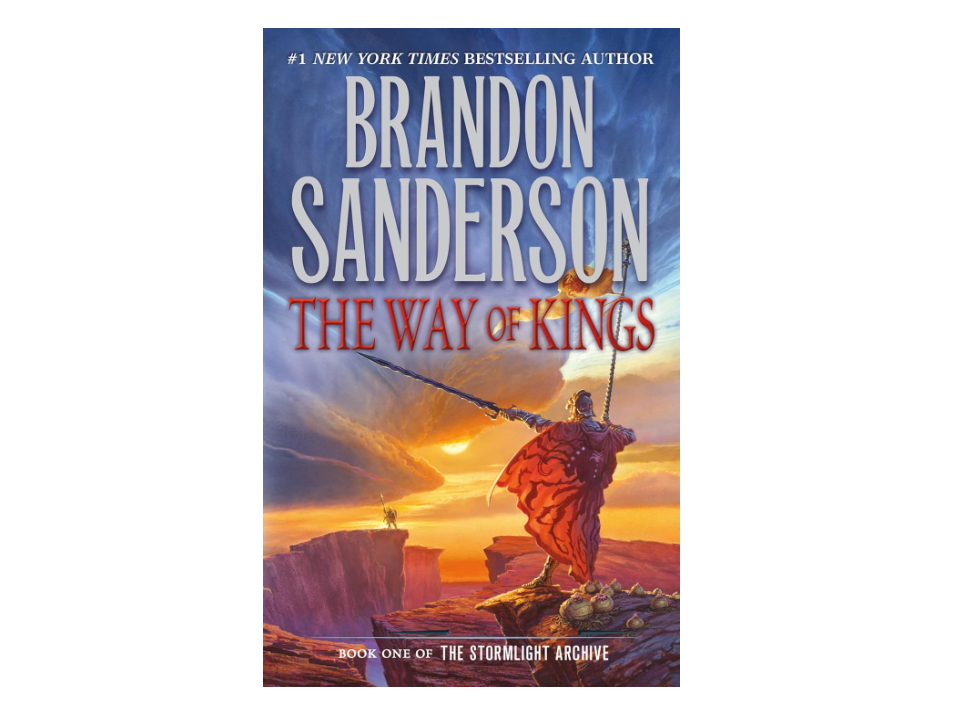
Key Features and Benefits
The Stormlight Archive is built around Brandon Sanderson’s “Cosmere” — a shared universe spanning multiple series. The Way of Kings serves as a gateway into a creative project of genuinely unprecedented ambition: 10 planned books in this series alone, all set in a universe where every magic, every world, and every mythology is connected. Readers who invest in this book aren’t just buying a novel — they’re buying a passport.
The magic system is one of the most praised in the history of the genre. Unlike vague, mysterious forces that operate by authorial convenience, Stormlight Surgebinding has hard rules, hard costs, and hard limits — which means battles and problem-solving feel earned rather than arbitrary. The novel also features illustrated chapter interludes, beautiful maps, and in-world historical texts that deepen the experience without cluttering the narrative.
Pros
The world-building is the finest in modern epic fantasy — full stop. The character arcs, especially Kaladin’s, are emotionally devastating and deeply human. The payoff for the patience required in the early chapters is enormous. The community around this series (including active forums, wikis, and annual re-reads) makes it a genuinely social reading experience. The book is also available in an exceptional audiobook format narrated by Michael Kramer and Kate Reading, widely considered among the best fantasy audiobook productions ever made.
Cons
The book demands patience. The first 200 pages are dense with world-building and deliberately slow. At over 1,000 pages, it is not a casual commitment — it’s a lifestyle decision. The series is also unfinished, with Book 5 (Wind and Truth) releasing in late 2024. Readers who struggle with waiting between installments may want to confirm the series timeline before investing emotionally.
Amazon Customer Ratings and Reviews
The Way of Kings holds a 4.8 out of 5 stars with over 78,000 Audible reviews Amazon, making it one of the highest-rated epic fantasy audiobooks on the platform. On Goodreads, it carries an average rating of 4.66 across over 650,000 ratings, making it the most-shelved epic fantasy title in the platform’s history Goodreads. Readers consistently praise the world-building, the character depth, and the emotional payoff of the Bridge Four arc. The most common complaint in negative reviews is the slow opening — a criticism that virtually disappears in reviews from readers who finished the book.
Why It’s a Great Choice
The Way of Kings opens with inviting clarity and then widens into consequence, rewarding patient readers with cumulative awe — its plot balances momentum with reflection, letting quiet choices echo across cultures, courts, and wild frontiers MAXMAG. Few books in any genre can claim the level of sustained community devotion this one has generated. It won the David Gemmell Legend Award for Best Novel in 2011 and has never left the recommendation lists of serious fantasy readers since.
Ideal Reader
This book is perfect for readers who want to commit to a universe, not just a book — people who loved the world-building of Game of Thrones but want a more heroic, optimistic undertone. It’s ideal for readers who enjoy complex magic systems, military strategy, and character-driven emotional arcs that pay off across multiple volumes. If you are patient, curious, and ready to be obsessed, this is your book.
#2 — Mistborn: The Final Empire by Brandon Sanderson
Best Epic Fantasy for New Readers
Amazon Rating: 4.7/5 stars · 48,000+ reviews Goodreads Rating: 4.49/5 · 939,000+ ratings
Approximate Price: $28.13
Format: Series — Book 1 of 3 in the Original Mistborn Trilogy Pages: 541
Description
If The Way of Kings is Brandon Sanderson at his most ambitious, Mistborn: The Final Empire is Sanderson at his most accessible — and that is not a slight. It is a deliberate, masterfully crafted entry point into Sanderson’s Cosmere universe, and it may be the single most recommended first epic fantasy novel in the genre today.
The premise is a classic fantasy setup flipped brilliantly on its head: the Dark Lord won. A thousand years ago, a prophesied hero rose to defeat an ancient evil — and failed. Now the immortal Lord Ruler reigns over a blighted empire where ash falls from the sky, the sun is a dull red, and the enslaved underclass called skaa exist in permanent, generational misery. Into this hopeless world comes Kelsier, a legendary thief and the only known skaa survivor of the Lord Ruler’s death camps, with a plan so audacious it borders on suicidal: recruit a crew of magical thieves, infiltrate the noble elite, and topple an immortal god-emperor.
The second protagonist is Vin, a young skaa street thief with abilities she barely understands, recruited by Kelsier’s crew and forced to discover both her power and her identity. Her arc — from a terrified, trust-starved teenager to one of the most capable and layered characters in fantasy fiction — is one of the most satisfying character journeys in the genre.
The magic system, Allomancy, is the engine that makes everything tick. Mistborn characters gain abilities by swallowing and “burning” metals: iron allows you to pull metal objects toward you, steel pushes them away, tin enhances the senses, pewter enhances the body, and so on. Each of the sixteen metals does something specific, internally consistent, and exhilarating to read in action. Combat scenes involving Allomancy — characters essentially flying through the air by pushing off coins and pulling on metal fixtures — are some of the most kinetic and original action sequences in all of fantasy.
At 541 pages, the book is half the length of The Way of Kings, moves at a heist thriller’s pace, and ends with one of the most shocking and satisfying conclusions in the genre. The trilogy is also fully complete, so there are no wait times between books — a rare luxury in epic fantasy.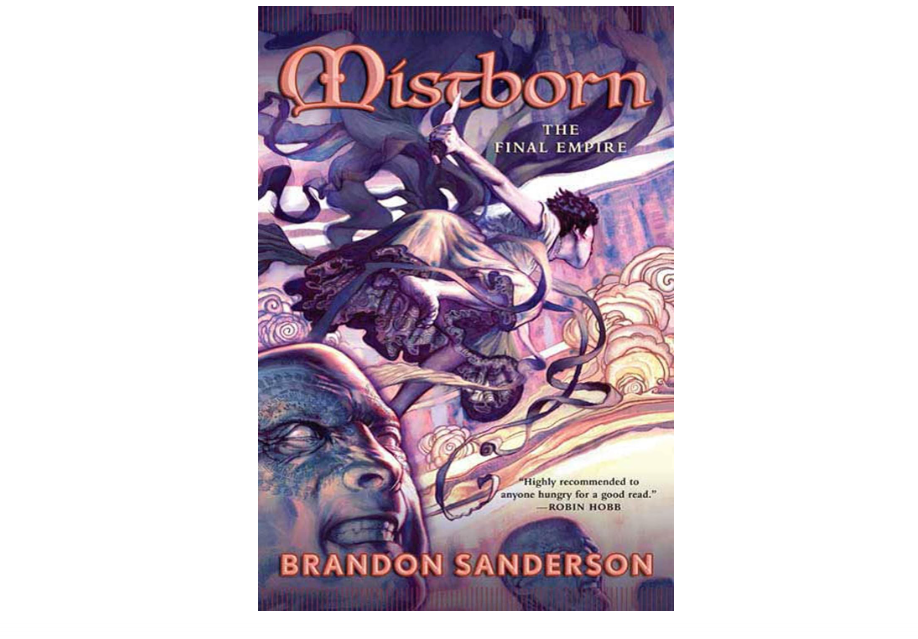
Key Features and Benefits
The self-contained nature of the original trilogy is a major selling point. While The Way of Kings asks you to trust that a 10-book series will pay off, Mistborn delivers a complete, emotionally satisfying story arc across three books — with a beginning, middle, and end that genuinely lands. Each book is also shorter and faster-paced than most epic fantasy, which makes the series highly readable for people who worry about commitment.
The book also serves as a perfect introduction to the broader Cosmere universe. After Mistborn, readers are well-equipped to tackle The Way of Kings or explore other Sanderson series like Elantris or Warbreaker — each of which exists in the same shared universe and rewards readers who have already spent time in Sanderson’s world.
Pros
Unmatched accessibility for new fantasy readers. The fastest pacing of any book on this list. The Allomancy magic system is one of the most praised and original in genre history. The heist structure makes it feel fresh and propulsive. Vin is an exceptional protagonist. The trilogy is complete — no waiting. Strong emotional resonance in the finale.
Cons
The world of Scadrial is slightly less visually spectacular than Roshar or Middle-earth — the deliberately blighted aesthetic (ash, red sun, oppressive darkness) is thematically perfect but can feel drab visually. The supporting cast, while charming, is less deeply developed than in Sanderson’s later works. Some readers who came expecting the depth of The Way of Kings found Mistborn slightly lighter in emotional complexity.
Amazon Customer Ratings and Reviews
Mistborn: The Final Empire holds 4.7 out of 5 stars with over 48,000 Audible reviews. Amazon It is widely considered among the best fantasy series ever written and is the most-recommended starting point for readers new to the genre. Books of Brilliance Reviewers consistently highlight the magic system, the heist plot, and Vin’s character arc. The most common positive theme across thousands of reviews is the word “unputdownable.”
Why It’s a Great Choice
Sanderson is known for his incredible magic systems, and Mistborn might be his best — the concept of gaining powers through metals is both unique and well thought out, with a fast-paced plot and great characters making it a must-read series. Books of Brilliance For anyone nervous about committing to a multi-book fantasy saga, this is the safest, most rewarding first investment in the genre.
Ideal Reader
New-to-fantasy readers who want a fast, exciting, emotionally satisfying entry point. Fans of heist stories, ensemble casts, and strong female leads. Anyone who wants to read a complete trilogy without waiting years for sequels. Readers who struggled to get through The Lord of the Rings or The Way of Kings and want something more immediately propulsive.
#3 — A Game of Thrones by George R.R. Martin
Best Epic Fantasy for Political Intrigue and Moral Complexity
Amazon Rating: 4.7/5 stars · 200,000+ reviews Goodreads Rating: 4.44/5 · 2.4 million+ ratings
Approximate Price: $10.90
Format: Series — Book 1 of 5 (planned 7) in A Song of Ice and Fire Pages: 694
Description
There are books that define a genre, and then there are books that redefine it. A Game of Thrones — published in 1996 and adapted into the global phenomenon HBO series decades later — did something that felt almost impossible when it first arrived: it made epic fantasy serious. Politically serious. Morally serious. Dangerously, thrillingly serious.
The story is set in the fictional continent of Westeros, a medieval world of warring noble houses, ancient dynasties, and a political landscape so treacherous that every alliance is temporary and every crown is a death sentence waiting to be served. The central conflict begins simply enough: Lord Eddard “Ned” Stark, the honorable Warden of the North, is summoned to the capital to serve as the King’s Hand — essentially the realm’s chief administrator. He uncovers a secret that threatens to unravel the entire kingdom. What follows is a cascade of betrayal, warfare, and consequence that spans continents and generations.
What made A Game of Thrones revolutionary — and what still makes it essential reading — is Martin’s unflinching commitment to consequence. In the fantasy that came before, heroes were largely safe. Readers understood the grammar: the protagonist might suffer, but they wouldn’t die, not until the last page. Martin broke that grammar completely and permanently. Characters you invest in, characters who seem structurally necessary to the plot, are removed without warning or narrative mercy. Every scene carries genuine tension because the author has proven he will follow the story wherever it leads, regardless of reader comfort.
The novel is told through rotating chapters, each from the perspective of a different member of the Stark family or their allies and enemies. This structure allows Martin to render the same events from multiple viewpoints, revealing how differently each character — each with their own code, their own fears, their own loyalties — interprets the same reality. It’s a technique that feels almost novelistic in the literary fiction sense, applied to the vast canvas of epic fantasy.
The world itself is rendered with extraordinary texture. Westeros has 8,000 years of history, dozens of distinct regions with their own cultures and climates, a church that worships the Seven, an ancient wall of ice at the edge of the world guarding against something older and colder than politics — and beyond the Narrow Sea, a second continent, Essos, where the exiled heirs to the throne plot their return. There are no elves, no dwarves, no traditional fantasy races — just humans, doing what humans have always done to each other.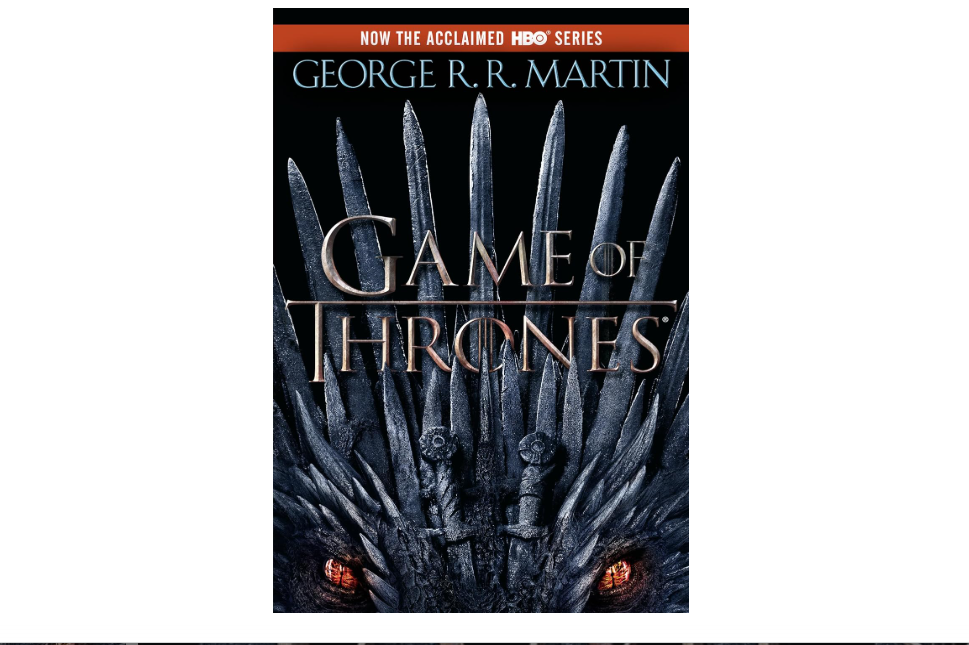
Key Features and Benefits
The novel is anchored by one of the largest and most memorable casts in genre history. The Stark children alone — Robb, Sansa, Arya, Bran, Jon Snow — each represent a distinct worldview and set of questions about honor, power, identity, and survival. Tyrion Lannister, arguably the most beloved character in modern fantasy, makes his first appearance here. The political intrigue — the scheming of Cersei, the calculating pragmatism of Littlefinger, the cold ruthlessness of Tywin Lannister — gives the novel the texture of a Renaissance-era court drama set in a fantasy world.
The book is also the gateway into one of the most discussed and analyzed fictional universes in modern popular culture. The fandom is enormous, the lore is deep, and the community engagement — through wikis, podcasts, YouTube essays, and the Fire and Blood companion books — provides near-infinite supplementary material for invested readers.
Pros
Unmatched political complexity and moral realism. Genuinely unpredictable plotting that creates authentic tension. One of the most memorable and diverse casts in the genre. Rich, deeply researched world-building grounded in real medieval history. The first four books (through A Feast for Crows) are widely considered masterpieces. The prose, while accessible, has genuine literary quality — Martin is a trained writer who brings craft as well as imagination to the page.
Cons
The elephant in the room is unavoidable: the series is unfinished. The last book, A Dance with Dragons, was published in 2011. The remaining two planned volumes have not yet appeared, and there is no confirmed publication date for The Winds of Winter. For readers who hate open endings, this is a genuine and significant risk. Later books in the series (particularly A Feast for Crows) are widely considered slower and less satisfying than the first three. The content is extremely dark — sexual violence, graphic torture, and the deaths of beloved characters are recurring features. This is emphatically adult fiction.
Amazon Customer Ratings and Reviews
The book holds 4.7 out of 5 stars across over 200,000 Amazon reviews — one of the largest review pools of any fantasy novel on the platform. The HBO adaptation massively expanded the readership, bringing in millions of new readers who came for the show and stayed for the deeper, richer source material. Martin brought a level of realism and unpredictability to fantasy that the genre hadn’t really seen before — characters you grow attached to can be gone in an instant, and every decision carries weight, with political intrigue, shifting alliances, and morally gray characters making it impossible to put down. Books of Brilliance
Why It’s a Great Choice
If you’ve ever wanted a fantasy novel that treats you like an adult — one that doesn’t protect its characters, sanitize its politics, or resolve its tensions cheaply — this is that book. It is the single most effective gateway into the idea that fantasy can be literary, complex, and emotionally devastating without sacrificing the pleasure of a vast, immersive world.
Ideal Reader
Fans of prestige TV drama, political thrillers, and historical fiction who have always been skeptical of fantasy. Readers who want moral ambiguity, unpredictable plotting, and a world that feels genuinely dangerous. Adults comfortable with dark content. Anyone who watched the HBO series and wants to experience the story as Martin originally envisioned it — richer, deeper, and far more nuanced than any screen adaptation could capture.
#4 — The Name of the Wind by Patrick Rothfuss
Best-Written Epic Fantasy Novel
Amazon Rating: 4.7/5 stars · 60,000+ reviews Goodreads Rating: 4.52/5 · 1,068,000+ ratings
Approximate Price: $7.00
Format: Series — Book 1 of 3 in The Kingkiller Chronicle Pages: 662
Description
Most epic fantasy novels want to take you somewhere. The Name of the Wind wants to make you feel something — and it succeeds with a completeness that has made it one of the most beloved and fiercely defended novels in the genre.
The setup is deceptively simple. A traveling scribe called Chronicler arrives at a backwater inn and discovers that the innkeeper, a quiet red-haired man named Kote, is actually Kvothe — the most legendary figure of the age. A king-killer. A wizard who called down lightning. A man who supposedly studied at the most prestigious university in the world, survived the murderous Chandrian, and learned the name of the wind itself. Kvothe, now in hiding for reasons the first book only hints at, agrees to tell Chronicler his true life story. Three days. Three books.
What follows is the first day’s account: Kvothe’s childhood as part of a traveling performance troupe, the catastrophic event that orphaned him, his years of desperate survival on the streets of a major city, his improbable admission to the University, and his first years studying the Ars Arcana — the formal magic system called Sympathy, which operates on the principle that a skilled practitioner can create a mental link between two objects and transfer energy, force, or heat between them. It is a magic system rooted in thermodynamics and willpower rather than mystical hand-waving, and Rothfuss deploys it with elegant precision.
But what truly sets this novel apart — what has made it one of the most quoted and re-read books in modern fantasy — is the prose. Rothfuss writes like a literary novelist who happened to choose a fantasy setting. His sentences have weight and rhythm. His metaphors are earned. His dialogue crackles with subtext. The scene in which Kvothe first hears a piece of music that will define the rest of his life is written with a lyricism that rivals anything in mainstream literary fiction. Few books capture the magic of storytelling itself quite like The Name of the Wind Books of Brilliance — it is a novel about the gap between legend and reality, between who we tell the world we are and who we secretly know ourselves to be.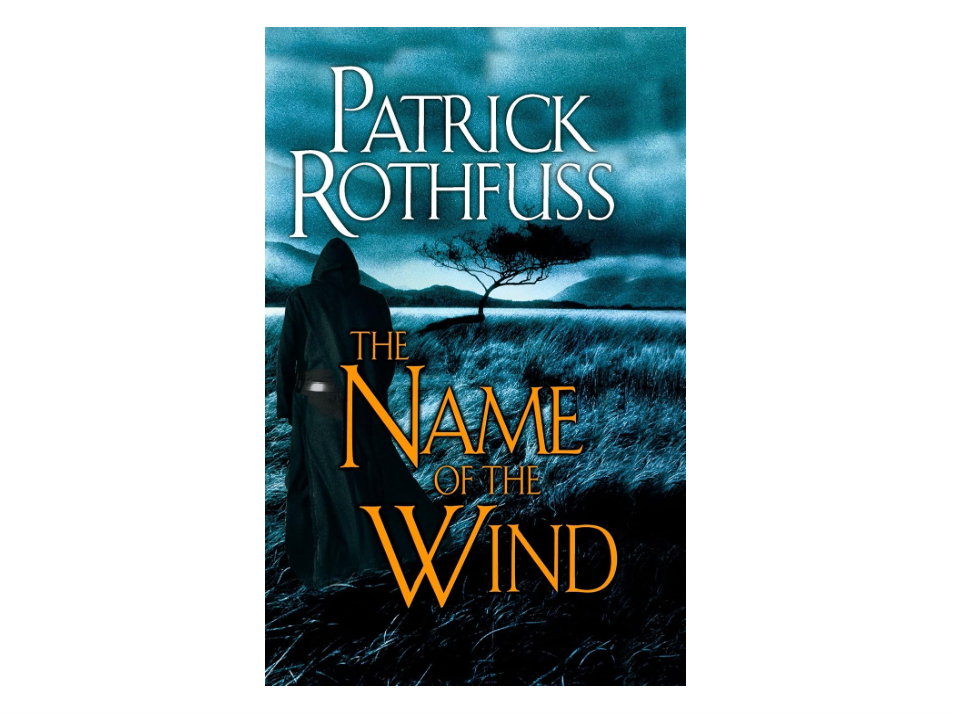
Key Features and Benefits
The frame narrative structure — Kvothe telling his own story to a scribe — is one of the most sophisticated narrative devices in contemporary fantasy. It allows Rothfuss to layer multiple tones simultaneously: the legendary Kvothe of the stories, the broken man telling them, and the young, brilliant, reckless student who actually lived them. The dramatic irony is built in from page one: we know the story ends badly. We just don’t know how.
The University sections of the book function almost like an academic fantasy — a subgenre that has exploded in popularity since this novel helped define it. Kvothe navigating classes, rivalries, romantic failures, and financial desperation at a place called the University gives the novel an intimacy and specificity that most epic fantasy, with its armies and prophecies, lacks. It is, among other things, a deeply felt portrait of what it’s like to be exceptionally talented and completely broke.
Pros
The finest prose in epic fantasy, full stop. An unforgettable, deeply complex protagonist whose voice is compelling on every page. A magic system grounded in real-world logic. An emotionally resonant coming-of-age story embedded in a larger epic structure. Extremely high re-readability — readers routinely report finding new layers on second and third reads. The audiobook, narrated by Nick Podehl, is widely considered one of the best fantasy audio productions ever recorded.
Cons
The series is famously unfinished — Book 2, The Wise Man’s Fear, was published in 2011, and the third and final volume, The Doors of Stone, has no confirmed publication date as of 2026. This is the most significant caveat in this entire guide. The plot moves slowly by conventional epic fantasy standards — readers looking for battles, armies, and world-ending stakes will find the first book’s scope somewhat intimate. Kvothe is a deeply unreliable narrator and can read as arrogant to some readers, which is intentional but occasionally alienating.
Amazon Customer Ratings and Reviews
The book holds 4.7 out of 5 stars across 60,000+ Amazon reviews and an extraordinary 4.52 across over one million Goodreads ratings. With over 1,068,000 Goodreads ratings, it is one of the most-rated fantasy novels on the platform Goodreads, a testament to the size and devotion of its readership. Reviewers routinely describe it as “the best fantasy novel I’ve ever read” alongside warnings about the unfinished series — a combination that tells you everything you need to know about its power and its complication.
Why It’s a Great Choice
Both epic and intimate, The Name of the Wind might not please all fantasy fans, but as a deep character study, this novel wins Books Like This One — it is the rare fantasy novel that crossover literary fiction readers embrace without reservation, and that hardcore fantasy readers list as one of their all-time favorites. If you care about sentences, character, and the emotional texture of storytelling itself, this belongs in your hands.
Ideal Reader
Literary fiction readers crossing into fantasy for the first time. Character-first readers who prioritize voice and prose over plot velocity. Fans of coming-of-age stories with moral complexity. Anyone who has ever been drawn to the tension between myth and reality, between the person the world believes you are and the person you know yourself to be. Readers who are willing to accept — and sit with — an unfinished series for the quality of what already exists.
#5 — The Lord of the Rings by J.R.R. Tolkien
The Foundational Classic — Best for Understanding the Entire Genre
Amazon Rating: 4.8/5 stars · 50,000+ reviews
Approximate Price:
Format: Trilogy (The Fellowship of the Ring / The Two Towers / The Return of the King) Pages: ~1,200 across three volumes
Description
Every other book on this list exists in some relationship to The Lord of the Rings. Some are direct descendants of its traditions. Others are deliberate reactions against them. But none of them exist outside its influence — because Tolkien didn’t just write an epic fantasy novel. He invented the architecture of the form, and every author who has worked in the genre since has been building with or against his blueprints.
The story needs little introduction: Frodo Baggins, a hobbit of the Shire, inherits a ring of immense and terrifying power from his uncle Bilbo. The ring, it turns out, is the One Ring — the instrument through which the Dark Lord Sauron poured his will and his power, and which he now seeks to reclaim in order to cover the world in darkness and dominate all living things. Frodo must carry the Ring to the fires of Mount Doom in the heart of Sauron’s territory and destroy it, accompanied by a Fellowship of nine: men, a wizard, a dwarf, an elf, and three fellow hobbits.
What Tolkien created was not merely a quest narrative but an entire mythology. Middle-earth has thousands of years of history predating the events of the novel — rendered in The Silmarillion and other works — multiple languages he invented from phonological scratch, detailed calendars and astronomical systems, a theology of creation, and a geography mapped with surveyor’s precision. The novel is the surface expression of a world that extends almost infinitely in every direction. Reading it for the first time is less like reading a novel and more like being handed a key to a country that already exists.
The prose is archaic by contemporary standards — deliberately so. Tolkien was a medieval scholar, and the cadences of his writing echo Old English epic poetry. Some modern readers find this beautiful. Others find it slow. Both reactions are valid, but it’s worth knowing before you begin that this is not a novel optimized for pace. It is optimized for depth.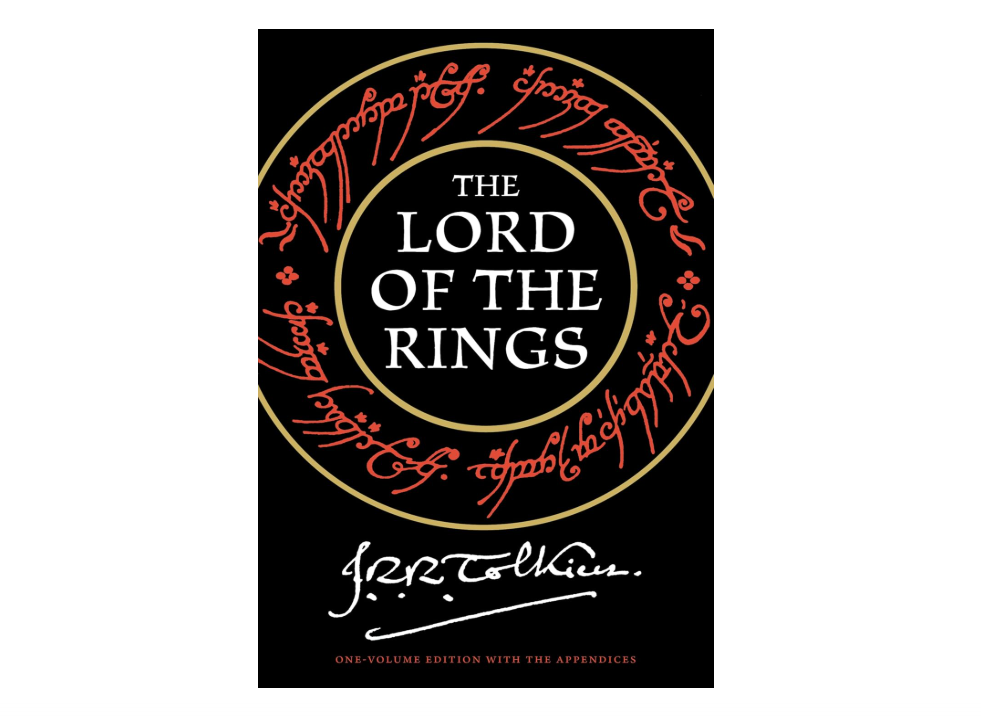
Key Features and Benefits
The boxed set is the best value format, bringing all three volumes together at a price point that makes each individual book cheaper than a cup of coffee per hour of reading. Several illustrated editions — including the Alan Lee illustrated hardcovers — are among the most beautiful physical books in print and make extraordinary gifts.
The novel gave the genre its foundational vocabulary: the quest structure, the Fellowship archetype, the Dark Lord, the ancient evil, the ordinary hero thrust into extraordinary events. Understanding Tolkien means understanding the grammar every other epic fantasy is written in — which makes re-reading the genre infinitely richer.
Pros
Unmatched world-building depth and mythological richness. The most influential work of fiction in the fantasy genre and one of the most influential works of the 20th century. Genuinely moving in its portrait of friendship, sacrifice, and the weight of heroism on ordinary people. Beautifully written at the level of the sentence for readers attuned to its register. Multiple gorgeous physical editions available. It still sets the standard for epic fantasy — reading it is not just reading a story, but living in a world that feels immeasurably real, and even decades later it remains the benchmark. Books of Brilliance
Cons
The pacing is slower than anything else on this list — there are entire chapters dedicated to songs, walking, and geography that modern readers may find testing. Female characters are largely peripheral, a product of the era and Tolkien’s sources. The prose register requires some adjustment for readers accustomed to contemporary genre writing. The story can feel archetypal to the point of simplicity compared to the moral complexity of Game of Thrones or the character depth of The Name of the Wind — though this, too, is intentional.
Amazon Customer Ratings and Reviews
The Lord of the Rings holds 4.8 out of 5 stars across 50,000+ Amazon reviews — a remarkable score for a novel first published in 1954. The reviews span decades and generations, with readers ranging from children reading their first fantasy to elderly readers returning for their tenth read. The series is immersive in a way that you are not just reading a story, you are living in it — and even decades later, it still sets the standard for epic fantasy. Books of Brilliance
Why It’s a Great Choice
This is the book you read to understand where all other epic fantasy came from. It is the original and still, in many ways, the greatest — not because it is the most exciting or the most modern, but because no other work in the genre has the same mythological density, the same sense of a world existing completely beyond the edges of the page, or the same emotional core of small, humble people carrying unbearable weight with grace.
Ideal Reader
Classic literature lovers who want to approach fantasy seriously. Readers who want to understand the foundational text of the genre before exploring its descendants. Anyone for whom the question “where did all this come from?” matters as much as the story itself. Readers who value beauty, mythology, and depth over pace and plot velocity.
#6 — The Eye of the World by Robert Jordan
Best Epic Fantasy for Readers Who Want Maximum Scope
Amazon Rating: 4.7/5 stars · 40,000+ reviews Goodreads Rating: 4.19/5 · 630,000+ ratings
Approximate Price:
Format: Series — Book 1 of 14 in The Wheel of Time Pages: 782
Description
If you’ve ever finished a fantasy series and felt a hollow grief that it was over — if you’ve ever wished a fictional world could simply go on forever — then Robert Jordan’s The Wheel of Time was built specifically for you. At 14 volumes, spanning over four million words, it is one of the longest and most elaborately constructed fantasy series ever written. And The Eye of the World is where it all begins.
The world of the Wheel of Time operates on a cosmological premise as elegant as it is vast: time is not linear but cyclical, turning like a wheel through Ages, with the same souls reborn again and again to play out variations of the same heroic and villainous roles. The Dark One — a malevolent force of chaos and oblivion — exists outside the wheel, perpetually attempting to break free from the prison in which the Creator sealed him at the moment of creation. And in every Age, a figure called the Dragon is reborn to face him.
The story opens in the village of Emond’s Field, a quiet farming community so remote that its inhabitants barely believe the wider world exists. Three young men — Rand al’Thor, Matrim Cauthon, and Perrin Aybara — are going about their ordinary lives when a mysterious woman called Moiraine arrives. She is an Aes Sedai — a wielder of the One Power, the world’s magic — and she has come because she believes one of the three boys may be the Dragon Reborn. Before the night is over, the village is attacked by creatures of the Dark One called Trollocs, and the three boys must flee into a world they barely know exists, accompanied by Moiraine, her Warder Lan, and their childhood friend Egwene.
What follows is a journey of enormous scope — across cities, across continents, through history and prophecy and politics and war. Jordan’s world is staggeringly detailed. He has designed full cosmologies, detailed magic systems (the One Power is divided into five elements — Earth, Air, Fire, Water, and Spirit — and split between male and female halves with different properties and consequences), hundreds of distinct cultures each with their own customs and costumes and belief systems, and a history so deep that the events of the novel are merely the latest chapter in an endlessly turning saga.
The first book draws consciously from Tolkien’s structural grammar — a small fellowship fleeing a great evil from a quiet, pastoral home — but Jordan rapidly diverges into his own territory. By the middle books, the scale has expanded so far beyond anything Tolkien attempted that the two series are barely comparable. The Wheel of Time is its own thing: massive, intricate, occasionally flawed, and utterly consuming.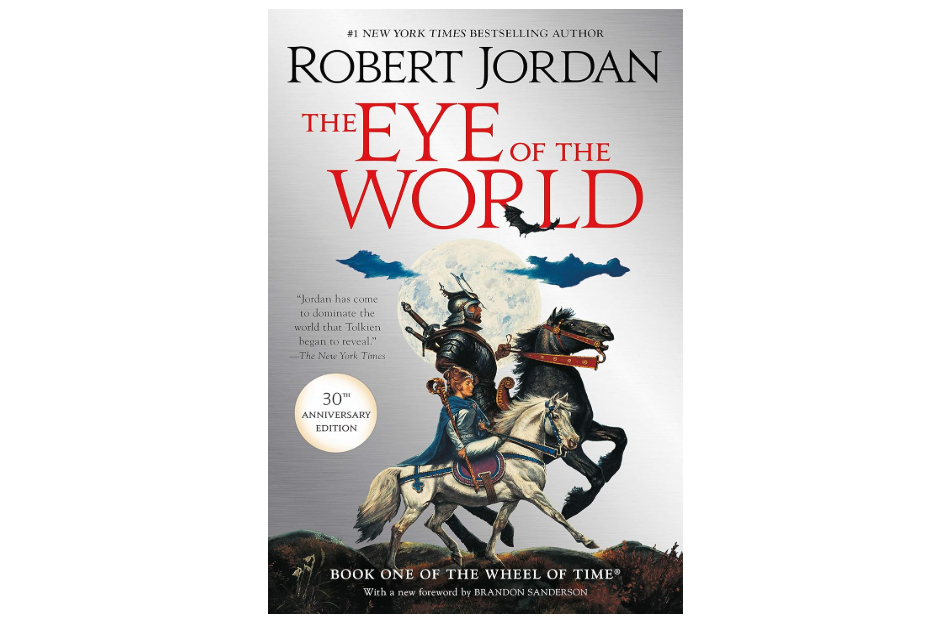
Key Features and Benefits
For readers who want sheer volume, this series is unmatched. Fourteen books means thousands of hours of reading — a universe you can truly live in for years. The world-building is among the most detailed in the genre, with particular strengths in cultural diversity and the magic system. Jordan’s female characters are notably strong and numerous — women hold significant institutional power in the world through the Aes Sedai organization, and several of the series’ most compelling characters and storylines follow women.
The series is also complete. Robert Jordan passed away in 2007 before finishing the final three volumes, but Brandon Sanderson — who appears three times on this list — was chosen to complete the series using Jordan’s notes. The final three books were published between 2009 and 2013, giving readers the extremely rare gift of a 14-book series with a proper ending.
An acclaimed Amazon Prime Video adaptation premiered in 2021, bringing new readers to the series in enormous numbers and reinvigorating the community around it. The show is a useful companion to the books, though the source material is vastly richer.
Pros
Unparalleled scope — 14 complete books in a fully realized world. Strong, numerous, and complex female characters. One of the most detailed and praised magic systems in the genre. The series is complete — no waiting. Multiple storylines with enormous variety of tone and setting. The audiobook production, narrated by Kate Reading and Michael Kramer, is among the finest long-form audio experiences in publishing. The Wheel of Time is widely considered among the best fantasy series ever written. Books of Brilliance
Cons
The most common and significant criticism of the series is its pacing across the middle volumes — books 7 through 10 in particular are widely considered to drag, with enormous casts and limited narrative momentum. The first book’s opening is deliberately slow, evoking Tolkien’s pastoral Shire chapters. Some readers find Jordan’s prose style repetitive, with certain character mannerisms and descriptive habits appearing so frequently they become involuntary running jokes in the fandom. The sheer size of the commitment — 14 books before the story resolves — is a genuine barrier.
Amazon Customer Ratings and Reviews
The Eye of the World holds 4.7 out of 5 stars across 40,000+ Amazon reviews. The series as a whole has generated millions of ratings across platforms, with a particularly devoted long-term readership. The Amazon Prime adaptation significantly expanded its audience, and reviews from new readers since 2021 are largely enthusiastic. The most consistent praise focuses on the world-building, the magic system, and the variety and depth of the female characters. The most consistent criticism focuses on the middle-book pacing — a complaint so universal it has become part of the series’ cultural identity, typically accompanied by the assurance that it’s worth pushing through.
Why It’s a Great Choice
There is no fantasy reading experience quite like committing to The Wheel of Time and seeing it through to its end. The series rewards long-term investment with a density of world, character, and plot that simply cannot be achieved in fewer books. Readers who complete it describe the final volumes as among the most emotionally satisfying conclusions in genre history. Books like The Way of Kings and Mistborn definitely deserve a spot on every fantasy reader’s list — but The Wheel of Time surpasses that mark by a few thousand miles for readers who want stories that take place in minutely crafted fantasy worlds that can literally take your breath away. Blogging with Dragons
Ideal Reader
Readers who want a universe, not just a story — people who want to spend years, not weeks, in a fictional world. Fans of intricate political systems, detailed magic, and cultural variety. Readers who loved Game of Thrones but wanted more optimism and heroism. Anyone who has always wanted to attempt an epic series but has been waiting for one that is actually finished before committing.
#7 — The Fifth Season by N.K. Jemisin
Best Award-Winning and Most Innovative Epic Fantasy
Amazon Rating: 4.4/5 stars · 70,000+ reviews Goodreads Rating: 4.28/5 · 300,000+ ratings
Approximate Price: $22.31
Format: Series — Book 1 of 3 in The Broken Earth Pages: 468
Description
Every decade or so, a book arrives in a genre and doesn’t just add to it but breaks it open — demonstrating that the form is capable of more than its practitioners had imagined. The Fifth Season by N.K. Jemisin is that book for epic fantasy in the 2010s. It won the Hugo Award for Best Novel in 2016. Then the sequel, The Obelisk Gate, won the Hugo Award for Best Novel in 2017. Then the conclusion, The Stone Sky, won the Hugo Award for Best Novel in 2018. Jemisin became the first author in the award’s 60-year history to win three consecutive times, and she did it with a single trilogy. That achievement alone tells you something extraordinary is happening in these pages.
The world is the Stillness — a continent that calls itself that with bitter irony, because it is anything but. The Stillness sits atop a geologically hyperactive planet that periodically suffers catastrophic events called Fifth Seasons: eruptions, earthquakes, and atmospheric disasters so severe that civilization collapses and humanity must start over. This has happened dozens of times. Civilizations have risen and been erased so many times that the current culture has formalized survival protocols — survival manuals called stonelore — as the most sacred civic institution.
Into this world are born orogenes: people with the power to sense and control geological forces — to stop earthquakes, to redirect tectonic pressure, to freeze entire armies. They are also the most feared and oppressed people in the world, enslaved by a governmental body called the Fulcrum, tattooed, controlled, and killed if they step out of line. The novel follows three women — Essun, a middle-aged orogene hiding her identity in a small town whose son has just been murdered by her husband; Damaya, a child orogene taken from her family to be trained at the Fulcrum; and Syenite, a young Fulcrum orogene sent on a mission with a legendary and deeply difficult mentor. Their stories interweave across time and narrative perspective in a structure that reveals itself to be far more complex — and devastating — than it initially appears.
The most immediately striking formal choice is the second-person narration: you do this. You feel this. It is an almost unprecedented choice for a novel of this scale, and Jemisin wields it not as a gimmick but as a weapon — the “you” creates a closeness and a complicity that makes the novel’s themes of oppression, survival, and motherhood hit with physical force.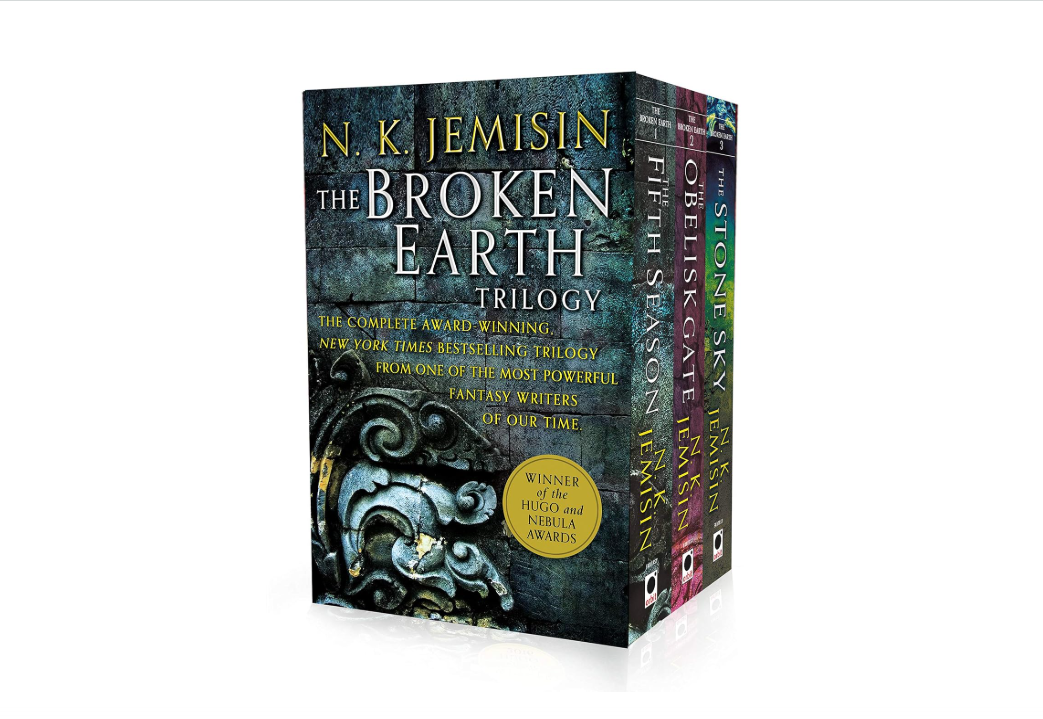
Key Features and Benefits
The Fifth Season is the most formally ambitious novel on this list — and the most thematically urgent. Its exploration of systematic oppression, generational trauma, and the relationship between power and fear is rendered through metaphor with a precision that makes it simultaneously a gripping fantasy narrative and a work of genuine social and political weight. It is the fantasy novel most commonly recommended by readers of literary fiction, and the one most likely to change how you think about what the genre can do.
The novel is also comparatively short by epic fantasy standards at 468 pages — making it an accessible entry point for readers nervous about the multi-thousand-page commitments required by other titles on this list. The complete trilogy runs to approximately 1,400 pages total, with each book shorter than the average single volume by Sanderson or Jordan.
Pros
Hugo Award winner — three consecutive years, never done before. Genuinely groundbreaking narrative structure and prose approach. Thematically rich in a way most fantasy is not. Shorter and more accessible than most epic fantasy. A complete trilogy with a satisfying and emotionally devastating conclusion. Exceptional representation of diverse characters and experiences. The Fifth Season takes risks with its structure, perspective, and storytelling — Jemisin’s world-building is both unique and deeply thought out, challenging expectations and proving that fantasy can still evolve in exciting ways. Books of Brilliance
Cons
The second-person narration is polarizing — a significant minority of readers find it distancing rather than immersive, and some cannot adapt to it despite the novel’s other qualities. The book is very dark, dealing explicitly with child abuse, enslavement, and genocide. The world is deliberately bleak — there is little conventional heroism or optimism in the early pages. Readers who come to epic fantasy specifically for escapism or adventure may find the novel’s thematic density more demanding than entertaining.
Amazon Customer Ratings and Reviews
The Fifth Season holds 4.4 out of 5 stars across 70,000+ Amazon reviews — a score that reflects both the intensity of its admirers and the genuine difficulty some readers have with its formal choices. The reviews split in a distinctive pattern: five-star reviews tend to describe it as life-changing and the best fantasy novel the reviewer has ever read; lower reviews tend to cite the second-person narration or the darkness of the content. This is not a book that leaves readers neutral.
Why It’s a Great Choice
If you are a reader who has ever felt that fantasy is too comfortable — that the genre’s tendency toward heroism and resolution lets it avoid the harder truths that the best literature confronts — The Fifth Season is the direct answer to that feeling. It uses the tools of epic fantasy (invented world, magic system, large historical scope) to examine real human experiences with a clarity and courage that most realistic fiction never achieves.
Ideal Reader
Literary fiction readers who want fantasy that takes ideas seriously. Readers drawn to award-winning, critically recognized work. Anyone interested in fantasy that explores systemic oppression, power, and identity through speculative metaphor. Readers who want a complete, shorter trilogy rather than a decade-long commitment. Those who want to understand why The Fifth Season changed the genre’s conversation about what epic fantasy is capable of.
#8 — The Priory of the Orange Tree by Samantha Shannon
Best Standalone Epic Fantasy — No Series Commitment Required
Amazon Rating: 4.4/5 stars · 30,000+ reviews Goodreads Rating: 4.10/5 · 200,000+ ratings
Approximate Price:
Format: Standalone Pages: 848
Description
The Priory of the Orange Tree solves one of epic fantasy’s most persistent frustrations: the almost universal requirement to commit to a multi-year, multi-book series before you know whether you’ll love the world. At 848 pages, Samantha Shannon’s standalone novel delivers the full experience of a sprawling, world-spanning epic — multiple continents, dozens of characters, a deeply developed history and mythology, a war against a returning ancient evil, political intrigue across competing kingdoms, and a magic system built around dragons — and then ends. Completely. With no sequel required and no cliffhanger left dangling. In a genre where standalone epics are nearly extinct, this is a genuine rarity and a genuine achievement.
The world is split between East and West by both geography and ideology. In the West, the kingdom of Inys has been protected for a thousand years by the Berethnet queens — women whose bloodline is believed to be the only thing keeping the Nameless One, an ancient dragon of apocalyptic power, sealed in his underwater prison. Queen Sabran IX, the current ruler, is under enormous pressure to produce an heir, and her life is under constant threat from assassins. Her protector is Ead Duryan, a lady-in-waiting with a secret: she is not the courtly attendant she appears to be, but an agent of the Priory of the Orange Tree, a clandestine society of female mages who have quietly protected the world from the Nameless One’s servants for centuries using a magic the Western world believes to be witchcraft.
In the East, the scholar Tané has trained her entire life to become a dragonrider — in the Eastern tradition, dragons are benevolent, sacred creatures deeply bonded to human riders. But on the eve of her selection, she makes a decision that threatens everything she has worked for. And across the Abyss, a third storyline follows Niclays, an exiled alchemist, into the Eastern world. The three storylines converge in a final act that brings all of the novel’s thematic and plot threads together with genuine craft.
What distinguishes The Priory of the Orange Tree is its world-building architecture: Shannon has created two completely distinct fantasy cultures — the Western, European-influenced Inys and the Eastern, East Asian-influenced Seiiki — and built a story in which the central conflict is in part about which of these cultures’ competing mythologies about dragons is actually true. The answer, when it comes, is both satisfying and genuinely surprising.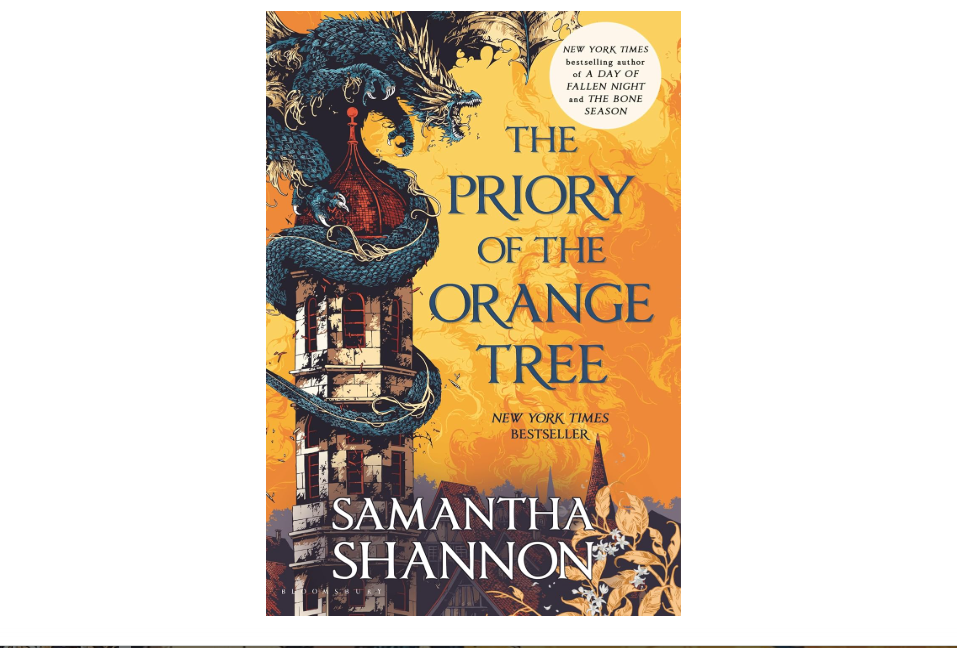
Key Features and Benefits
The most significant benefit is structural: this is a complete story. You are not buying the first chapter of a decade-long commitment. You are buying an 848-page epic with a beginning, a middle, and an ending that resolves its central conflicts. For readers who have been burned by unfinished series — and every reader on this list has at least one on their conscience — that promise is worth its weight in gold.
The novel also features one of the most prominent LGBTQ+ love stories in mainstream epic fantasy, rendered not as a political statement but simply as the central emotional relationship of the book. Ead and Sabran’s relationship is the heart of the novel, and it is handled with the same seriousness and tenderness that traditional fantasy reserves for its great heterosexual romances. Representation in epic fantasy has historically been thin, and Shannon’s novel is a landmark in that regard.
The dragon mythology deserves special mention. Shannon has clearly done enormous research into both Western and Eastern dragon traditions, and the novel’s treatment of dragons as complex, ancient beings with their own cultures and loyalties — rather than as mere weapons or symbols — is one of the most sophisticated in the genre.
Pros
Fully standalone — complete story, no series commitment. Exceptional LGBTQ+ representation at the center of the narrative. Two richly developed fantasy cultures rather than one. One of the most sophisticated dragon mythologies in the genre. Strong, complex female characters throughout. A satisfying ending that honors everything the novel builds. An excellent choice for readers who want the epic fantasy experience in a single volume.
Cons
The large cast of characters in the early chapters requires patience and investment before the storylines begin to connect. The first 150 pages can feel slow as Shannon establishes the world’s competing cultures and politics. Some readers find the Western storyline more compelling than the Eastern and feel the balance between them is uneven. At 848 pages, it is by no means a short novel — the “standalone” label means no sequels, not a small commitment of time.
Amazon Customer Ratings and Reviews
The Priory of the Orange Tree holds 4.4 out of 5 stars across 30,000+ Amazon reviews. The most consistent praise in reviews focuses on the world-building, the dragon mythology, and the central romance. The most common criticism is the slow opening, with reviewers frequently noting that the novel becomes significantly more compelling once all three storylines are established and the connections between them become clear — typically around the 200-page mark. Reviews from LGBTQ+ readers are disproportionately enthusiastic, citing the centrality and quality of the representation.
Why It’s a Great Choice
In a genre dominated by series, this novel’s completeness is itself a form of generosity. Shannon gives you everything — an entire world, a complete mythology, a cast of fully realized characters, a war against ancient evil, and a resolution — without asking you to wait, to buy five more books, or to trust that a conclusion is coming. For any reader who has ever wanted to experience epic fantasy without the open-ended commitment, this is the definitive answer.
Ideal Reader
Readers who have been reluctant to start fantasy series because of the open-ended commitment. Fans of LGBTQ+ romance looking for representation in epic fantasy. Readers drawn to East Asian-inspired fantasy worlds as an alternative to the genre’s default European settings. Anyone who wants the full epic fantasy experience — scale, stakes, magic, war, dragons — contained in a single, satisfying volume.
#9 — A Wizard of Earthsea by Ursula K. Le Guin
Best Classic Compact Epic Fantasy
Amazon Rating: 4.5/5 stars · 30,000+ reviews Goodreads Rating: 4.04/5 · 400,000+ ratings
Approximate Price:
Format: Series — Book 1 of 6 in the Earthsea Cycle Pages: 183
Description
In a genre increasingly defined by length — by thousand-page doorstops and fourteen-volume sagas — A Wizard of Earthsea stands as proof that epic can be small. At 183 pages, it is the shortest book on this list by an enormous margin. And yet it contains more genuine philosophical depth, more original world-building, and more enduring thematic resonance than books ten times its length.
Published in 1968, A Wizard of Earthsea is in many ways the book that should have defined the genre before Tolkien’s structural grammar became dominant — and in the years since, as fantasy has matured and diversified, Le Guin’s influence has grown steadily while her critical reputation has risen to the level of literary canonization.
The story follows Ged, a young boy born on the island of Gont with an extraordinary innate gift for magic. His talent is recognized and cultivated, and he eventually wins a place at the School of Roke — the great academy of wizardry at the center of the Archipelago of Earthsea. Ged is brilliant, proud, and dangerously competitive. In a moment of arrogance, he attempts a spell beyond his knowledge and tears open the boundary between the living world and the land of the dead, releasing a shadow-creature — formless, nameless, hungry — that immediately begins to hunt him. The novel is Ged’s pursuit across the islands of Earthsea and eventually his reversal — his decision to stop running and to hunt the shadow instead.
That reversal, and what it means, is the heart of the novel. A Wizard of Earthsea is a story about the shadow self — about the parts of our nature we refuse to acknowledge, the shame and fear and rage we project outward because we cannot bear to own them. It is a story about what happens when you stop fleeing your own darkness and turn to face it. Rendered as a fantasy adventure, this psychological and philosophical substance is completely accessible to young readers. Understood as literature, it is as sophisticated as anything written in the 20th century.
Le Guin’s world is also a landmark of representation that was decades ahead of its time. Ged is brown-skinned, as are most of the characters in Earthsea — the default human in this world is not white European, a choice Le Guin made consciously and explicitly as a rebuke to the genre’s racial assumptions. The world’s culture is island-based and feels genuinely non-European in its customs, values, and aesthetics. The magic system — based on the True Names of things, the idea that to know the real name of an object or creature is to have power over it — is philosophically original and linguistically grounded in a way that remains distinctive fifty-plus years later.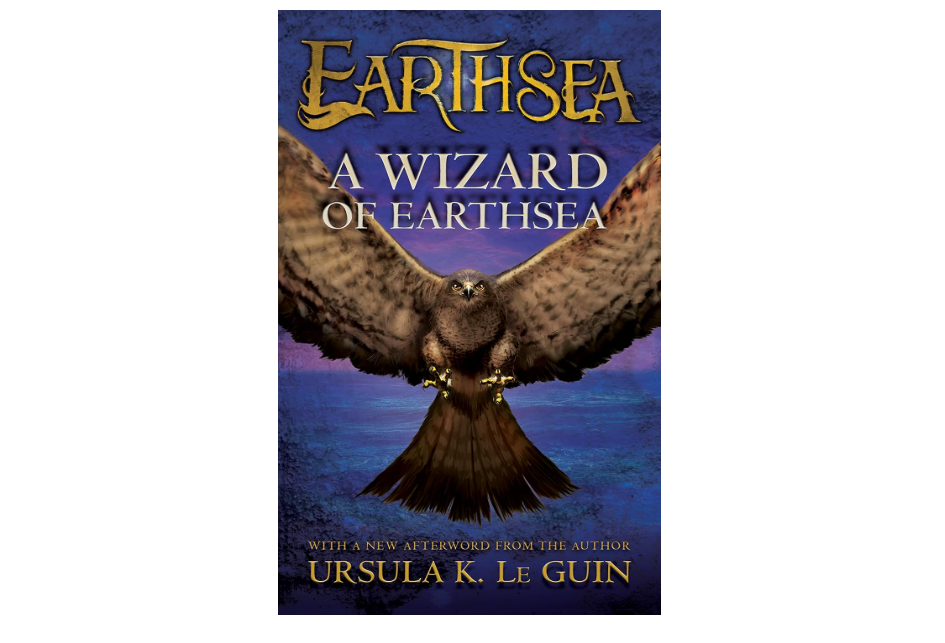
Key Features and Benefits
The novel’s brevity is a genuine asset. It can be read in a single sitting, recommended to almost any reader regardless of their relationship with fantasy, and used as a gateway into both the broader genre and Le Guin’s extraordinary body of work — which includes The Left Hand of Darkness, The Dispossessed, and the rest of the Earthsea Cycle. The series grows significantly in depth and complexity with each volume, culminating in Tehanu (1990), which revisits the world from a radically different perspective and is considered by many critics to be even more powerful than the original.
At $8–$14, it is also the most affordable book on this list — and the most giftable, suitable for readers of almost any age from late childhood onward.
Pros
Le Guin proves that fantasy does not need to be massive in scale to be impactful — A Wizard of Earthsea is a more introspective story that explores identity, power, and balance, simple on the surface but incredibly deep once you dig into it. Books of Brilliance Pioneering racial diversity in 1968 — still ahead of most of the genre today. The most philosophically rich novel on this list. Exceptionally written in a clean, precise prose style that has aged beautifully. Short enough to gift to almost anyone. The True Names magic system remains one of the most original in the genre’s history.
Cons
At 183 pages, readers seeking the immersive, world-spanning scope of Sanderson or Jordan will find this too contained. The pacing is quiet and meditative rather than action-driven. The novel’s emotional register is contemplative rather than thrilling — it rewards reflection more than it rewards momentum. Younger or less patient readers may find it slow.
Amazon Customer Ratings and Reviews
A Wizard of Earthsea holds 4.5 out of 5 stars across 30,000+ Amazon reviews — an extraordinary score for a 1968 novel that has never been part of a major film or television adaptation. Reviews range from childhood re-reads to first-time encounters, and the consistent theme across positive reviews is the novel’s emotional staying power: readers describe finishing it and immediately understanding why it has been in print for over 50 years. The most common note in critical reviews is a wish for more length and more world — a complaint that, in a sense, is a compliment.
Why It’s a Great Choice
A Wizard of Earthsea is the novel you give to someone you love who has never read fantasy and you want to demonstrate, in the fewest possible pages, what the genre is genuinely capable of at its most thoughtful. It is also the novel you return to when the weight of thousand-page commitments feels too heavy and you need to remember why you fell in love with imagined worlds in the first place.
Ideal Reader
Literary fiction readers who want philosophical depth in a compact form. Readers of any age looking for an accessible but meaningful entry into fantasy. Parents and teachers seeking the ideal fantasy novel for a thoughtful young reader. Veterans of the genre looking to fill a foundational gap in their reading history. Anyone who values ideas, prose, and emotional resonance over scale and spectacle.
#10 — Mistborn: The Final Empire (Audiobook Edition)
Best Epic Fantasy Audiobook
Narrator: Michael Kramer Amazon/Audible Rating: 4.7/5 stars · 48,000+ reviews
Approximate Price:
Running Time: ~24 hours Format: Audiobook (Audible / Whispersync compatible)
Description
The tenth spot on this list is reserved not for a different novel but for a different format — because for a significant portion of readers, the question is not just which book to choose but how to experience it. And for audiobook listeners, Mistborn: The Final Empire narrated by Michael Kramer is the definitive recommendation: one of the most acclaimed audiobook productions in the history of the genre, matched to one of the most accessible and rewarding first novels on this list.
Michael Kramer is one of the most prolific and celebrated narrators in fantasy audiobooks. He is the voice of the Cosmere — he has narrated virtually every Brandon Sanderson novel, and his work across The Wheel of Time (shared with Kate Reading) has set the standard for what long-form fantasy audio can be. His voice for Mistborn is perfectly calibrated to the tone: Kelsier’s roguish confidence, Vin’s quiet wariness, the Lord Ruler’s cold menace. He distinguishes an enormous cast of characters with individual voices without tipping into caricature, and he handles Sanderson’s action sequences — which, as discussed above, involve metal-powered flight and combat at high velocity — with a pacing that makes them genuinely cinematic.
At approximately 24 hours, Mistborn: The Final Empire is the ideal length for an audiobook commitment. It is long enough to fully immerse you in the world across weeks of commuting, exercising, or household tasks, but short enough that the story maintains momentum throughout. The Audible Whispersync feature allows you to move seamlessly between the audio and Kindle editions — pausing the audiobook and picking up reading without losing your place — which makes it an exceptional choice for readers who combine both formats.
The audiobook is also an outstanding gateway into the broader Sanderson audio catalog. Michael Kramer’s narration of The Way of Kings and its sequels — running to over 45 hours per volume — uses the same voice and production quality, making the transition from Mistborn to The Stormlight Archive in audio format a seamless and deeply satisfying experience.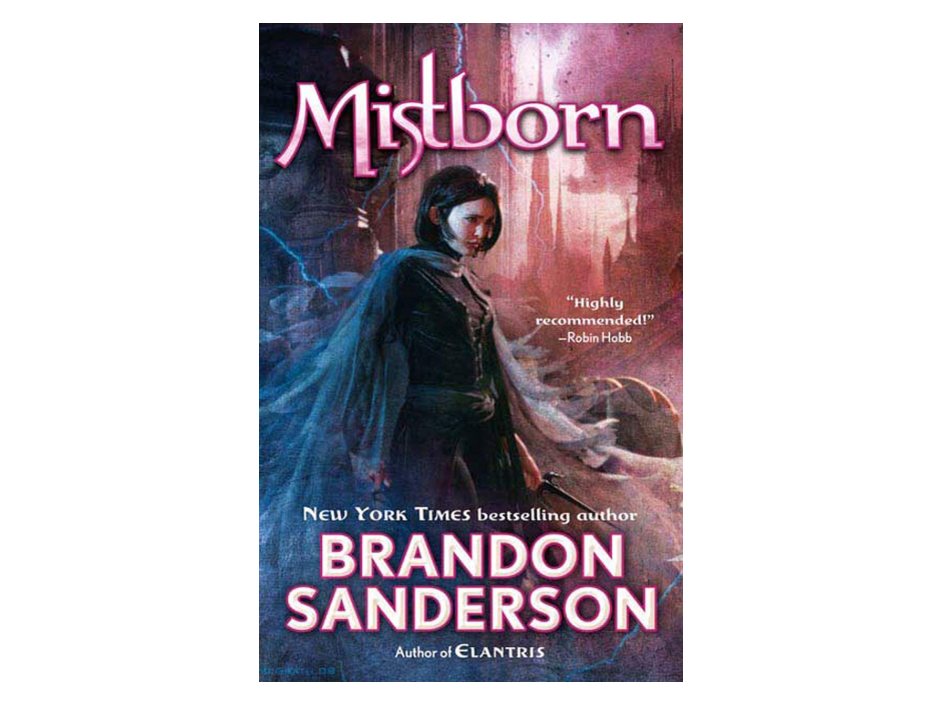
Key Features and Benefits
For readers who “don’t have time to read,” audiobooks are not a compromise — they are a legitimate and often superior format for certain kinds of storytelling. Epic fantasy, with its emphasis on world immersion, character voice, and narrative momentum, translates exceptionally well to audio. The 24-hour running time of this production means that a commuter listening for 45 minutes each way can complete the entire novel in approximately three and a half weeks. A gym-goer doing five sessions a week completes it in six weeks. A walker doing an hour a day finishes it in less than a month.
Audible’s return policy — which allows members to exchange any audiobook they don’t enjoy, no questions asked — makes this an extremely low-risk purchase. The Audible membership model also offers the first audiobook free on a trial, which means many readers can access this production at no cost.
Pros
The audiobook holds 4.7 out of 5 stars with over 48,000 Audible reviews Amazon — one of the highest-rated fantasy audiobooks on the platform. Michael Kramer’s narration is universally praised. The Whispersync compatibility is a genuine practical benefit. The 24-hour length is ideal for sustained commute or exercise listening. A perfect gateway into Sanderson’s broader audio catalog. Available free with Audible trial.
Cons
The price point — $30–$35 without a membership or trial — is higher than any print format of the same novel. Audio is not ideal for readers who want to re-read passages, track magic system rules, or flip back to maps and reference material. Some readers find that complex fantasy world-building is harder to absorb in audio form than in print, particularly in the early chapters where the world is being established.
Amazon Customer Ratings and Reviews
The audiobook consistently ranks among the top-rated fantasy productions on Audible, with reviewers frequently citing Kramer’s narration as the specific reason they fell in love with a novel they might have abandoned in print. The most common pattern in reviews is the “accidental marathon listen” — readers who intended to listen for 30 minutes and found themselves still listening three hours later.
Why It’s a Great Choice
For the millions of people who love stories but struggle to carve out sitting-down reading time, this audiobook is the solution. It delivers the full Mistborn experience — the world, the characters, the magic system, the emotional arc — in a format that fits into the gaps of a busy life without requiring you to sacrifice anything else to experience it.
Ideal Reader
Commuters, gym-goers, dog walkers, and anyone whose lifestyle makes sitting with a book difficult. Readers who have tried epic fantasy in print and found the world-building density hard to absorb — audio’s continuous forward momentum can actually make dense world-building easier to process. Anyone who wants to experience the best of Sanderson’s accessible work in the most frictionless format available.
How to Choose the Right Epic Fantasy Novel for You
You’ve now read detailed breakdowns of all ten books. But the right choice is still personal — so here’s a direct decision guide based on reader type. Find yourself in the list below, and you’ll know exactly where to start.
“I want the absolute best the genre has to offer and I’ll happily commit to a long series” → Start with The Way of Kings. It is the greatest sustained achievement in modern epic fantasy, and the community around it will make the journey richer.
“I’m brand new to fantasy and I want something fast, exciting, and accessible” → Start with Mistborn: The Final Empire. It is the safest, most rewarding first investment in the genre — short enough to not feel overwhelming, good enough to make you want more.
“I want something dark, unpredictable, and morally complex — like prestige TV in book form” → Start with A Game of Thrones. No other book on this list matches its political tension and narrative unpredictability. Go in knowing the series is unfinished.
“I care more about beautiful writing than anything else” → Start with The Name of the Wind. Rothfuss writes at a level most fantasy authors cannot reach, and Kvothe is one of the most compelling narrators in the genre. Accept the unfinished series as the cost of the experience.
“I want to understand where all of modern fantasy came from” → Start with The Lord of the Rings. It is the foundation everything else is built on, and reading it gives you a perspective on the genre that nothing else can.
“I want the most scope possible — I want a universe I can live in for years” → Start with The Eye of the World. Fourteen complete books in a fully realized world — there is nothing larger, and nothing more completely finished.
“I want fantasy that takes ideas seriously and challenges the genre’s conventions” → Start with The Fifth Season. Three Hugo Awards in a row is not an accident. This is the most ambitious and thematically serious novel on the list.
“I want just one book — no series, no waiting, complete story” → Start with The Priory of the Orange Tree. The only standalone epic fantasy on this list, and it delivers everything the genre promises in a single complete volume.
“I want something short, profound, and beautifully written” → Start with A Wizard of Earthsea. Two hours of reading. Fifty years of staying with you.
“I prefer audiobooks and want the best possible audio experience” → Start with Mistborn narrated by Michael Kramer. Twenty-four hours of one of the finest fantasy audio productions ever made.
Frequently Asked Questions
What is the best epic fantasy novel of all time? By the numbers — Goodreads ratings, Amazon reviews, critical consensus, and cultural impact — the answer is either The Lord of the Rings (the most historically significant) or The Way of Kings (the highest-rated by modern readers). For new readers, Mistborn is the most recommended starting point because of its accessibility and pace.
What is the best epic fantasy novel for complete beginners? Mistborn: The Final Empire by Brandon Sanderson is the near-universal recommendation. It is shorter than most, faster-paced than anything else on this list, has a magic system that is immediately understandable and exciting, and delivers a complete and emotionally satisfying story arc within its three-book trilogy.
Is The Way of Kings or Mistborn better for a first-time fantasy reader? Mistborn for almost all new readers. The Way of Kings is the better book by most measures, but it requires patience that first-time readers may not yet have developed for the genre. Mistborn creates that patience by earning it early.
Are there any good epic fantasy standalones — not a series? Yes — The Priory of the Orange Tree by Samantha Shannon is the definitive answer. At 848 pages, it delivers a complete world, complete war, and complete resolution with no sequel required. A Wizard of Earthsea is another option if you want something significantly shorter.
What epic fantasy series are actually finished? Mistborn (original trilogy, 3 books), The Wheel of Time (14 books, completed by Brandon Sanderson), The Broken Earth (The Fifth Season trilogy, 3 books), and The Lord of the Rings are all fully complete. The Stormlight Archive is in progress with 5 of 5 planned books now published as of late 2024. A Song of Ice and Fire and The Kingkiller Chronicle are both unfinished.
Is A Game of Thrones worth reading if the series isn’t finished? Yes — but only if you can make peace with the uncertainty. The first three books are masterpieces and fully worth reading on their own terms. The risk is emotional investment in a resolution that may not arrive. Many readers choose to stop after A Storm of Swords (Book 3), which ends at a natural and devastating climax, and consider the story complete at that point.
What’s the difference between epic fantasy and high fantasy? High fantasy means a fully invented secondary world — not set on Earth. Epic fantasy is high fantasy with civilizational stakes, vast scope, and large-scale conflict. All epic fantasy is high fantasy, but not all high fantasy is epic — a small, quiet story set in an invented world is high fantasy but not epic.
How long does it take to read The Way of Kings? At the average adult reading speed of roughly 250–300 words per minute, The Way of Kings takes approximately 40–50 hours to read. At 30 minutes of reading per day, that is approximately 80–100 days. Most dedicated readers report finishing it in three to six weeks of regular reading.
Final Verdict
There is no single “best” epic fantasy novel for every reader — but there is a best one for you, and this guide has given you everything you need to find it.
If you can only pick one: buy Mistborn: The Final Empire. It is the most universally accessible entry point, the most rewarding for the investment of time, and the most likely to make you a committed epic fantasy reader for life. If you finish it and want the deepest, most ambitious experience the genre currently offers, move directly to The Way of Kings. Between those two books, you have several thousand pages of the finest world-building, character work, and storytelling the genre has ever produced.
Every book on this list will reward you. Pick the one that matches where you are right now — not where you think you should be — and let the world take you.