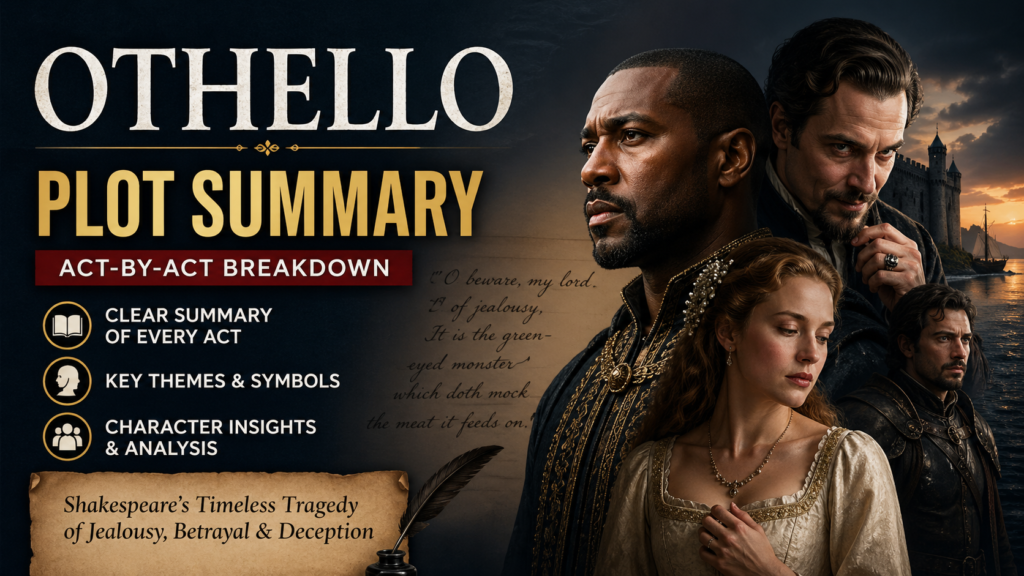
What happens when trust is placed in the wrong hands—and jealousy is allowed to grow unchecked? Few works in literature capture this devastating combination as powerfully as Othello. If you’ve ever struggled to follow the story or fully grasp its emotional depth, this othello plot summary will guide you step by step through one of William Shakespeare’s most gripping tragedies.
Many readers find Othello difficult—not because the story is complex, but because the language and subtle manipulation between characters can be hard to track. This article solves that problem. You’ll get a clear, scene-by-scene breakdown, along with expert insights into themes, symbols, and character motivations—everything you need for exams, essays, or deeper understanding.
By the end, you won’t just know what happens—you’ll understand why it happens.
Quick Overview of Othello
Who Wrote Othello and When?
Othello was written by William Shakespeare around 1603–1604, during the height of his tragic writing period. It stands alongside masterpieces like Hamlet and King Lear, exploring deep psychological and emotional conflicts.
Genre and Structure
- Genre: Tragedy
- Structure: Five acts, following a classical dramatic arc:
- Exposition
- Rising action
- Climax
- Falling action
- Catastrophe (tragic ending)
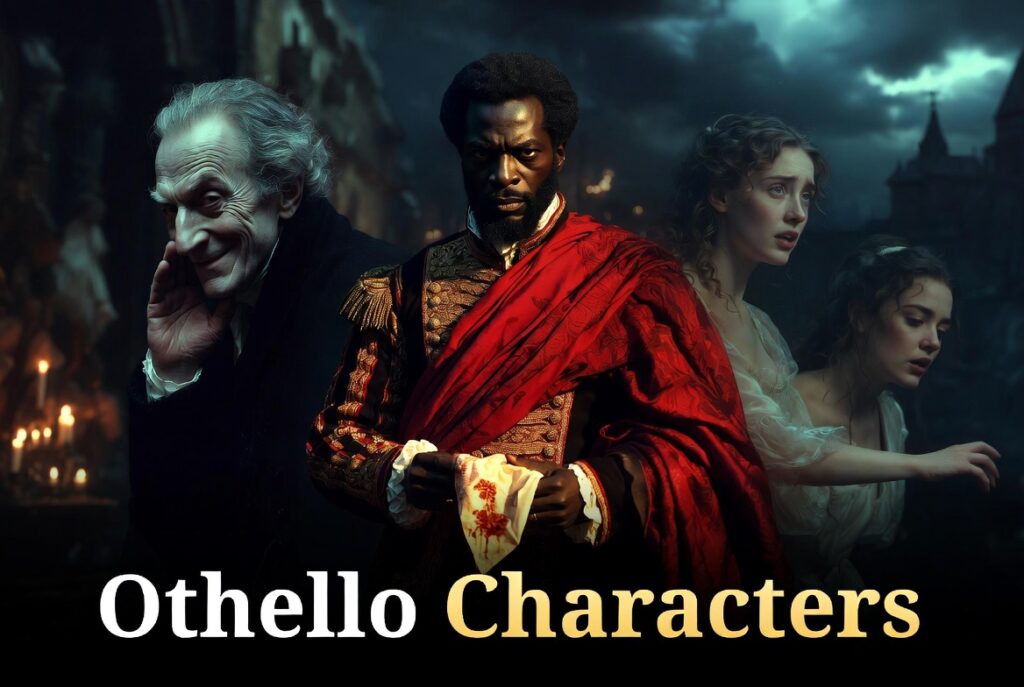
Main Characters at a Glance
- Othello – A respected Moorish general in the Venetian army
- Desdemona – His loyal and loving wife
- Iago – Othello’s ensign and the play’s main antagonist
- Cassio – Othello’s trusted lieutenant
- Emilia – Iago’s wife and Desdemona’s attendant
- Brabantio – Desdemona’s father
- Roderigo – A wealthy man manipulated by Iago
Othello Plot Summary (Act-by-Act Breakdown)
Act 1 Summary – The Seeds of Deception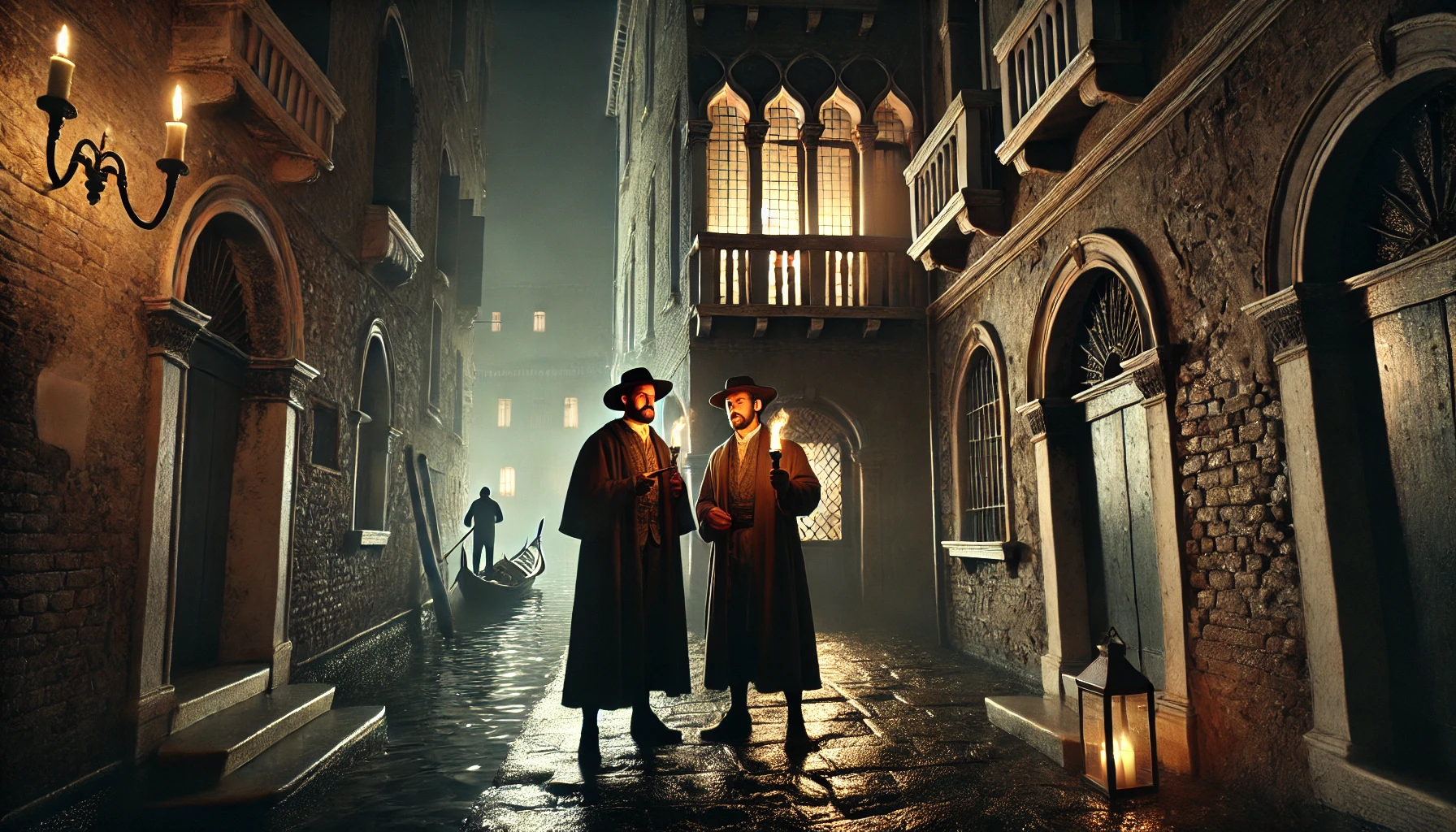
The play opens in Venice with tension already brewing. Iago is furious because Othello has promoted Cassio instead of him. Feeling insulted and overlooked, Iago begins plotting revenge.
He manipulates Roderigo, a man who is in love with Desdemona, convincing him to help sabotage Othello. Together, they inform Brabantio that his daughter has secretly married Othello.
Brabantio is outraged, believing his daughter must have been tricked or enchanted. He confronts Othello before the Duke of Venice. However, Othello calmly explains how Desdemona fell in love with him through his life stories.
Desdemona confirms this, defending her marriage.
Key Turning Point:
Othello is sent to Cyprus to defend it from a Turkish attack, and Desdemona accompanies him. Meanwhile, Iago begins laying the groundwork for his larger scheme.
Act 2 Summary – Celebration and Hidden Schemes
In Cyprus, the Turkish fleet is destroyed by a storm, eliminating the external threat. This shifts the focus entirely to internal conflict.
Iago now sets his plan in motion. He knows Cassio values his reputation, so he manipulates him into drinking excessively. Cassio, who cannot handle alcohol, gets into a fight and loses control.
Othello, disappointed, strips Cassio of his rank.
Iago then pretends to help Cassio, advising him to seek Desdemona’s assistance in regaining Othello’s favor.
Key Turning Point:
Cassio begins spending time with Desdemona, unknowingly playing into Iago’s plan to make their relationship look suspicious.
Act 3 Summary – The Turning Point
This is the most crucial act in the play—the moment everything changes.
Desdemona innocently advocates for Cassio, repeatedly asking Othello to forgive him. Iago subtly plants seeds of doubt, suggesting that Cassio and Desdemona might be too close.
At first, Othello resists. But Iago is patient and strategic. He uses hesitation, vague hints, and emotional manipulation rather than direct accusations.
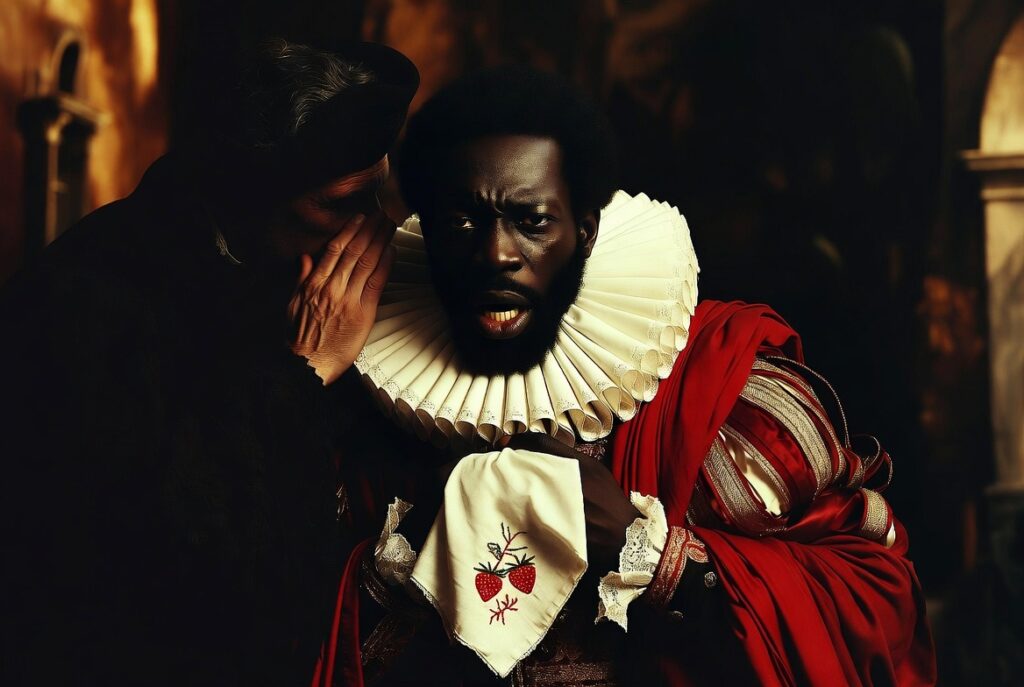
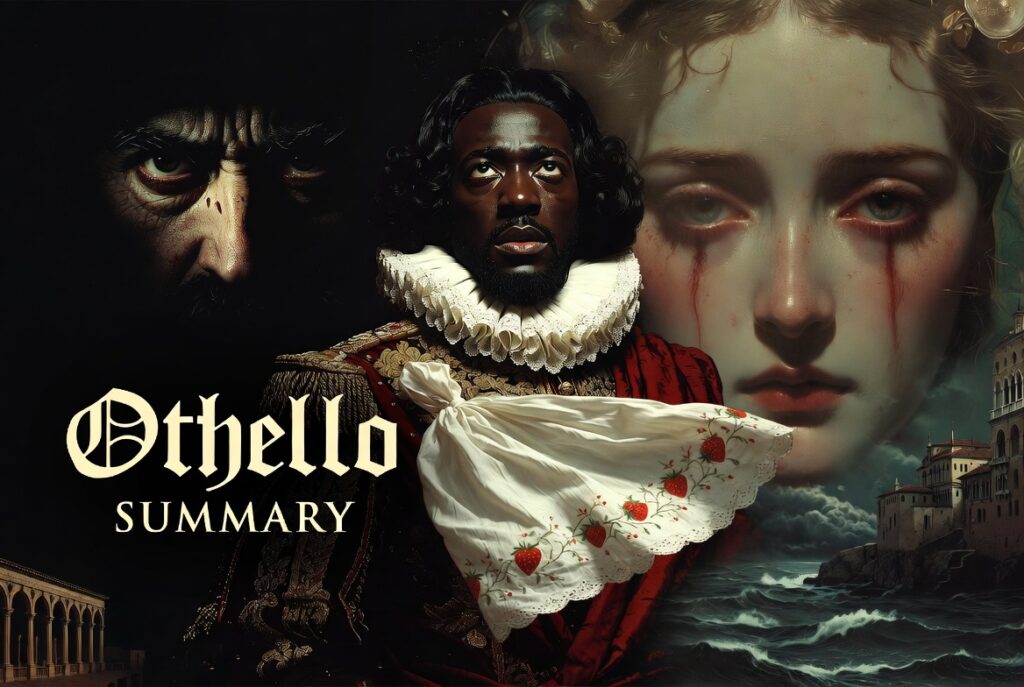
The turning point comes with the handkerchief—a special gift Othello gave Desdemona as a symbol of love. Emilia unknowingly gives it to Iago, who plants it in Cassio’s possession.
When Othello learns that Cassio has the handkerchief, he sees it as undeniable proof of betrayal.
Key Turning Point:
Othello vows revenge and decides that Desdemona must die.
Act 4 Summary – Descent into Jealousy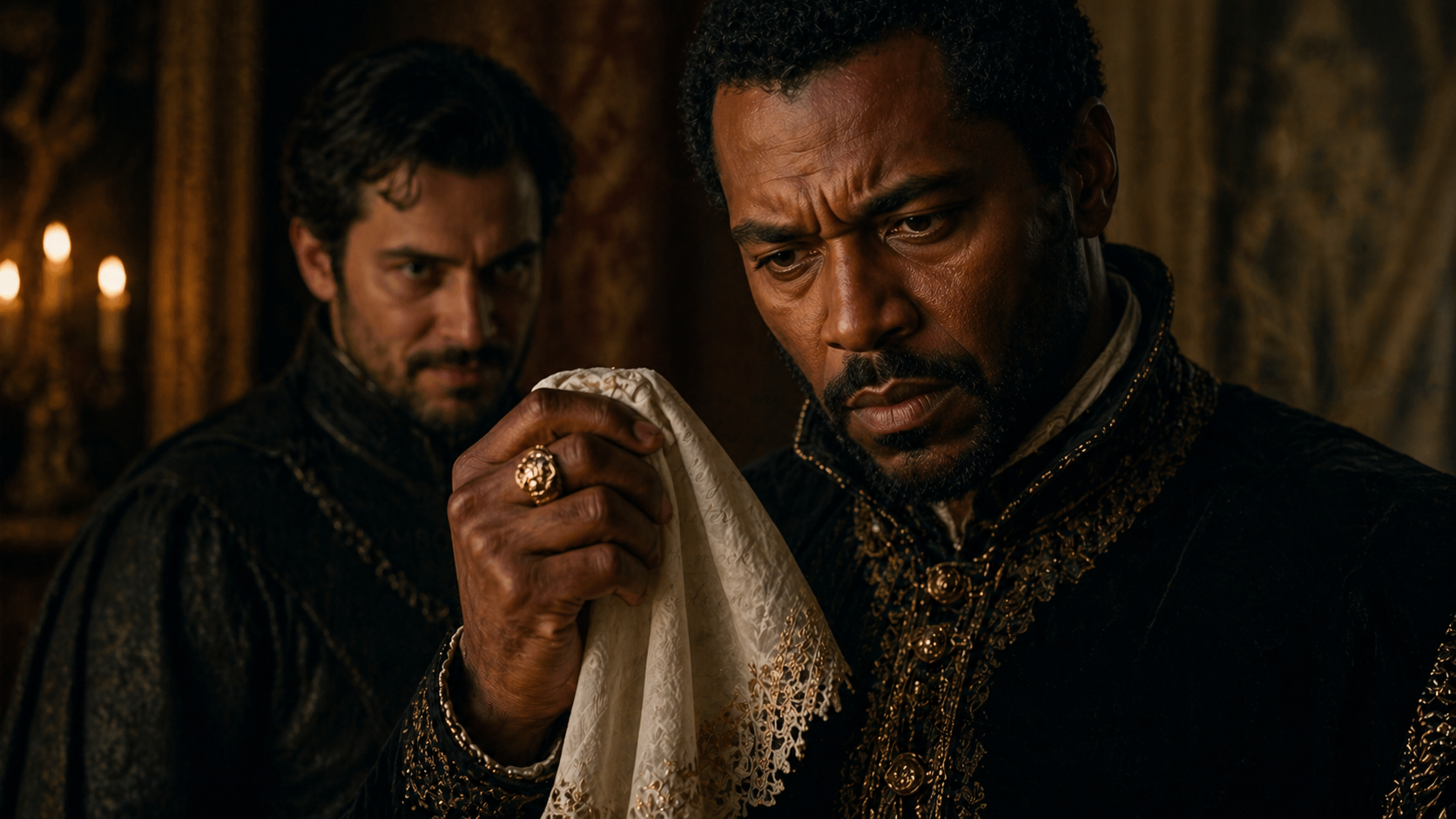
Othello is now completely consumed by jealousy. His rational mind is overtaken by emotion.
He becomes increasingly unstable:
- He falls into a trance
- He publicly humiliates Desdemona
- He interprets innocent actions as guilt
Iago continues to manipulate events, even staging conversations that mislead Othello further.
Despite Desdemona’s unwavering love and innocence, Othello is convinced of her betrayal.
Key Turning Point:
Othello resolves to kill Desdemona, believing it is an act of justice.
Act 5 Summary – The Tragic Conclusion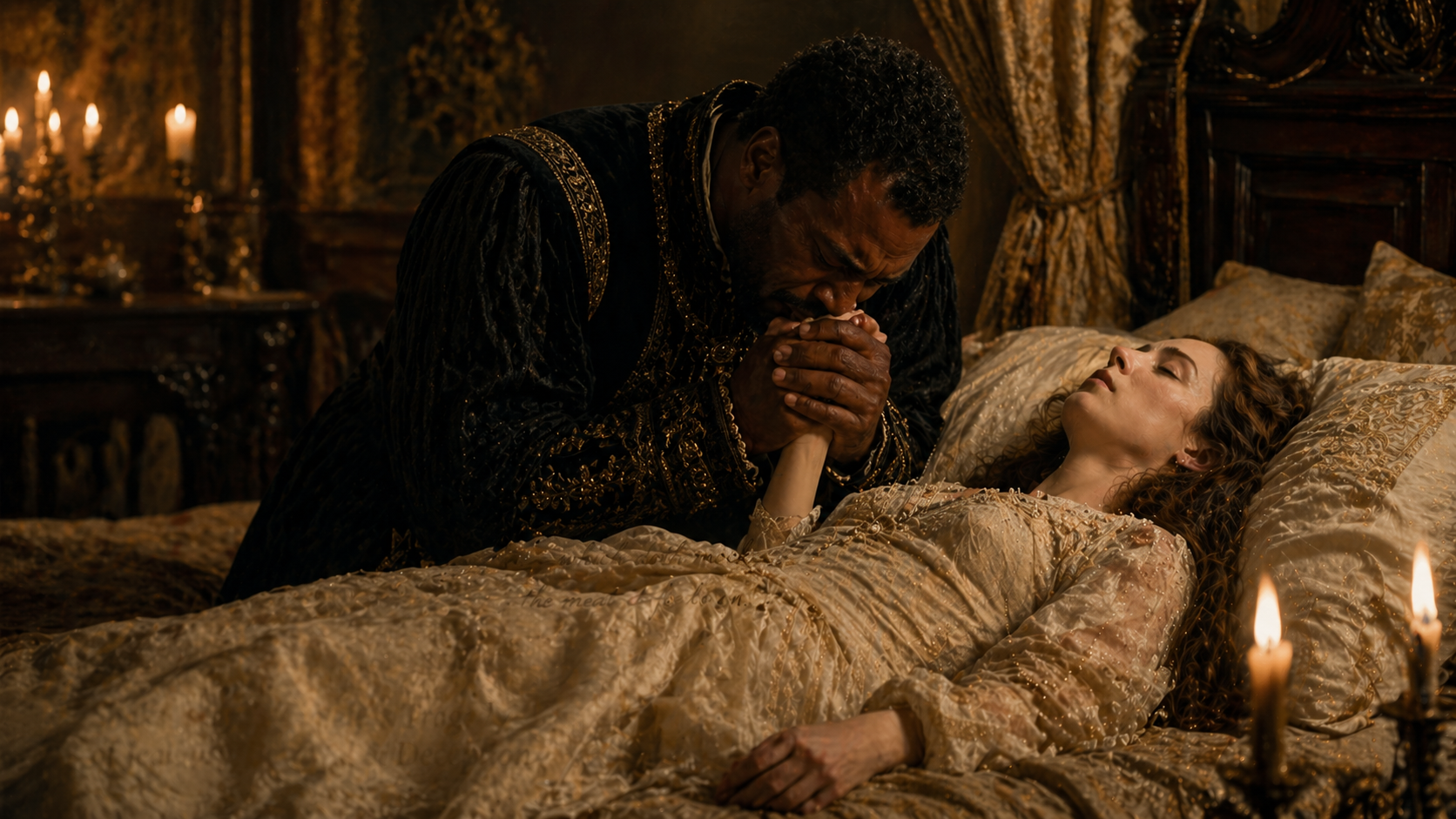
The final act delivers the devastating consequences of deception.
Othello confronts Desdemona in their bedroom and, despite her pleas, kills her.
Emilia soon discovers the truth. She exposes Iago’s manipulation and reveals that the handkerchief was planted.
Othello realizes his tragic mistake—he has killed the woman who truly loved him.
In despair and guilt, he takes his own life.
Iago is arrested but refuses to explain his actions.
Final Resolution:
Truth emerges—but too late to prevent tragedy.
Key Themes in Othello Explained
Jealousy as a Destructive Force
Jealousy is the central theme of Othello. Often referred to as the “green-eyed monster,” it consumes Othello completely.
- It begins as doubt
- Grows into suspicion
- Ends in violence and tragedy
This theme highlights how unchecked emotions can destroy even the strongest individuals.
Appearance vs Reality
Nothing in Othello is as it seems.
- Iago appears honest but is deceitful
- Desdemona appears guilty but is innocent
- Cassio appears suspicious but is loyal
This theme teaches readers to question surface appearances and seek deeper truth.
Trust and Betrayal
Othello’s greatest flaw is misplaced trust.
- He trusts Iago completely
- He doubts Desdemona without proof
The play explores how trust, when given blindly, can lead to devastating consequences.
Race and Otherness
Othello is an outsider in Venetian society.
- His identity as a Moor sets him apart
- He faces subtle prejudice and insecurity
This contributes to his vulnerability, making him more susceptible to Iago’s manipulation.
Love vs Possession
Othello’s love for Desdemona transforms into control and suspicion.
- True love is based on trust
- Possessive love leads to destruction
This contrast is central to the tragedy.
Character Analysis and Motivations
Othello – The Tragic Hero
Othello is noble, brave, and respected—but deeply flawed.
Strengths:
- Leadership
- Honor
- Emotional depth
Flaw (Hamartia):
- Jealousy and insecurity
His transformation from a confident leader to a broken man is the emotional core of the play.
Iago – The Master Manipulator
Iago is one of literature’s most complex villains.
Possible motivations:
- Professional jealousy
- Personal resentment
- Desire for control
What makes him terrifying is his ability to manipulate without being detected.
Desdemona – Innocence and Loyalty
Desdemona represents pure love and faithfulness.
- She remains loyal until the end
- She cannot comprehend Othello’s change
Her innocence makes the tragedy even more painful.
Emilia – The Voice of Truth
Initially passive, Emilia becomes crucial in the final act.
- She exposes Iago
- She stands for truth and justice
Her courage ultimately reveals the truth.
Cassio – Honor and Reputation
Cassio values his reputation above all.
- His downfall is engineered by Iago
- He becomes an unwitting pawn
Important Symbols in Othello
The Handkerchief
The most important symbol in the play.
- Represents love and fidelity
- Becomes “proof” of betrayal
Its misuse drives the entire tragedy.
Light and Darkness
- Light = truth, innocence
- Darkness = deception, evil
These contrasts reinforce the emotional tone of the play.
Animal Imagery
Iago frequently uses crude animal imagery to:
- Dehumanize others
- Manipulate emotions
Key Quotes That Explain the Plot
- “O, beware, my lord, of jealousy…” – Iago
- “I loved not wisely but too well.” – Othello
- “Nobody; I myself.” – Desdemona
Each quote reflects major turning points and emotional shifts.
Othello Plot Summary in Simple Terms (Quick Recap)
- Othello marries Desdemona secretly
- Iago plots revenge against Othello
- Cassio loses his position due to Iago’s trick
- Iago convinces Othello that Desdemona is unfaithful
- The handkerchief is used as false evidence
- Othello kills Desdemona
- Truth is revealed too late
- Othello takes his own life
Common Questions About Othello Plot Summary (FAQs)
What is the main conflict in Othello?
The central conflict is internal—Othello’s struggle between trust and jealousy.
Why does Othello trust Iago?
Iago carefully builds a reputation for honesty, making his lies believable.
What role does the handkerchief play?
It serves as false proof of Desdemona’s betrayal.
Is Othello responsible for his downfall?
Yes—while Iago manipulates him, Othello ultimately chooses to believe without proof.
What is the moral lesson of Othello?
Unchecked jealousy and blind trust can lead to irreversible consequences.
Study Tips: How to Understand and Remember Othello Easily
- Break the play into acts and focus on key events
- Track character motivations closely
- Use summaries and key quotes for revision
- Focus on themes like jealousy and manipulation
Why Othello Still Matters Today
Even today, Othello remains deeply relevant.
- Toxic relationships
- Manipulation and misinformation
- Emotional insecurity
These issues are timeless, making the play powerful even in modern contexts.
Understanding Othello is not just about knowing the plot—it’s about recognizing the emotional and psychological forces that drive human behavior. This othello plot summary has broken down the story into clear, manageable parts while exploring the deeper meanings behind the tragedy.
Whether you’re preparing for exams or simply exploring literature, Othello offers unforgettable lessons about trust, love, and the dangers of unchecked emotion.