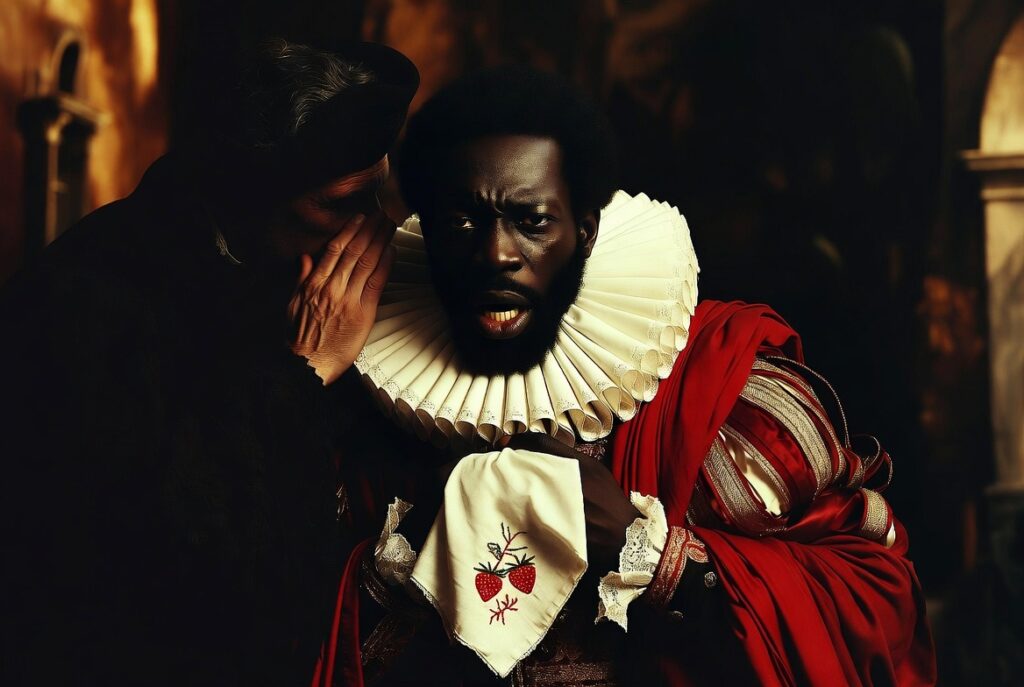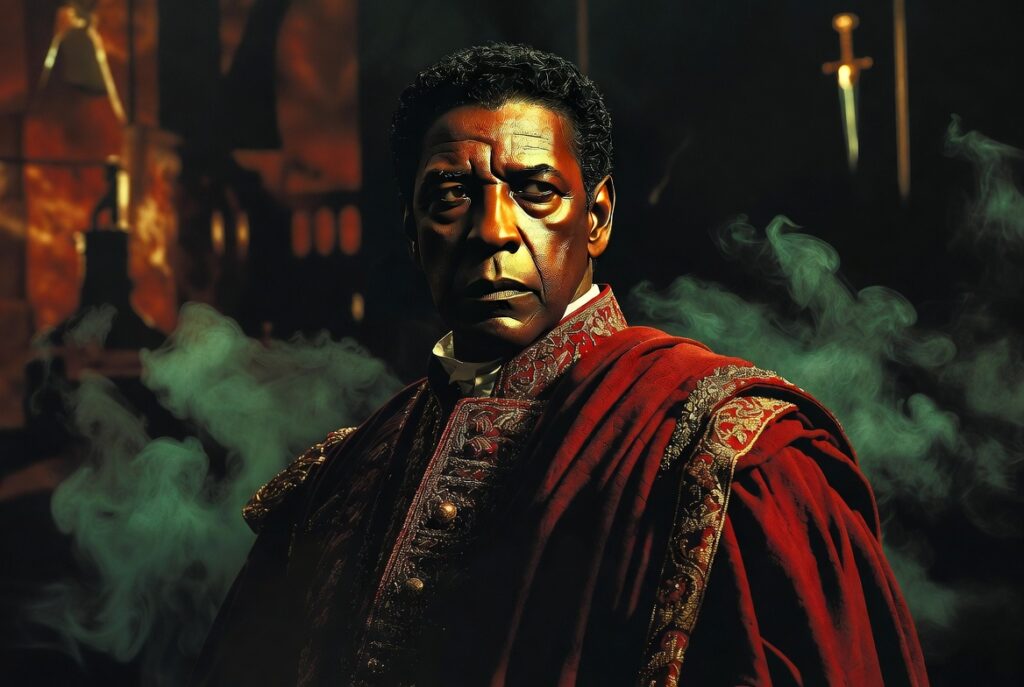
In the treacherous world of William Shakespeare’s Othello, few characters embody the cruel irony of innocence more poignantly than Michael Cassio. A charming, capable Florentine lieutenant whose polished manners and quick promotion spark deadly envy, Cassio becomes both victim and unwitting catalyst in Iago’s masterful web of deception. His fall from grace — triggered by a single night of weakness — sets in motion the tragic unraveling of Othello, Desdemona, and nearly everyone around them.
Cassio Othello is far more than a secondary figure. He is a multifaceted character whose arc illuminates Shakespeare’s profound exploration of reputation, honor, manipulation, and redemption. For students, educators, theater enthusiasts, and Shakespeare lovers seeking a deeper understanding, this comprehensive analysis reveals why Cassio matters: his story warns us how easily perception can destroy reality, and how survival in tragedy often demands painful growth.
Whether you’re preparing for an exam, directing a scene, or simply revisiting the play, this guide offers detailed character insights, key quotes with analysis, thematic connections, and modern relevance that go beyond standard study notes.
Who Is Michael Cassio? Background and First Impressions
Michael Cassio enters Othello as Othello’s newly appointed lieutenant, a position that ignites Iago’s resentment from the very first scene. Unlike Iago, the battle-hardened “ancient” (ensign) who feels passed over, Cassio is portrayed as a cultured outsider from Florence — a city synonymous in Shakespeare’s time with Renaissance learning, strategy, and refinement rather than raw military grit.
Cassio’s Origins and Position in Venetian Society
Cassio represents a new kind of military officer: the “bookish theoric” rather than the seasoned campaigner. Iago mocks him harshly in Act 1, Scene 1:
“One Michael Cassio, a Florentine, A fellow almost damn’d in a fair wife; That never set a squadron in the field, Nor the division of a battle knows More than a spinster.”
This criticism reveals as much about Iago’s bitterness as it does about Cassio. While Cassio may lack extensive battlefield experience, Othello — a master judge of character in military matters — chooses him for his theoretical knowledge, leadership potential, and loyalty. This decision underscores themes of merit versus seniority that still resonate in professional environments today.
Physical Appearance, Personality, and Social Skills
Shakespeare presents Cassio as young, handsome, and exceptionally charming. His courtly manners and gallant demeanor make him a natural favorite with women and a polished representative of Venetian (and Florentine) sophistication. In Act 2, Scene 1, upon arriving in Cyprus, Cassio greets Desdemona with eloquent praise and kisses Emilia, explaining courteously to Iago:
“Let it not gall your patience, good Iago, That I have ta’en away this old man’s daughter… That gives me this bold show of courtesy.”
These social graces are genuine expressions of respect rather than flirtation, yet Iago weaponizes them brilliantly. Cassio’s charm becomes a double-edged sword — an asset that earns him favor but fuels suspicion.
Initial Relationship with Othello and Desdemona
Cassio enjoys a relationship of mutual respect and affection with both Othello and Desdemona. He serves as a loyal subordinate who facilitated aspects of their secret courtship, making him a trusted intermediary. This closeness later provides Iago with the perfect “proof” for his fabricated affair narrative. Cassio’s loyalty is never in doubt — until a single lapse destroys it.
Cassio’s Role in the Plot of Othello
Cassio functions as the essential pivot upon which Iago’s entire scheme turns. Without Cassio’s promotion, demotion, and subsequent attempts to regain favor, the central tragedy would lack its primary engine.
The Promotion That Ignites Jealousy
From the opening lines, Iago’s envy of Cassio drives the action. Iago feels entitled to the lieutenancy due to his proven service, yet Othello selects the younger, less experienced but theoretically adept Cassio. This slight plants the seeds of revenge that will consume the play.
Cassio as an Unwitting Pawn in Iago’s Scheme
Iago identifies Cassio’s key vulnerabilities early: his concern for reputation, moderate drinking tolerance, and courteous behavior toward women. In one of Iago’s chilling soliloquies, he notes:
“He hath a person and a smooth dispose To be suspected, framed to make women false.”
Cassio never suspects the depth of Iago’s malice, repeatedly calling him “honest” — a tragic irony that echoes Othello’s own trust in the villain.
Key Plot Functions – Catalyst for Jealousy and Tool of Manipulation
Cassio’s drunken brawl in Act 2, Scene 3 leads to his demotion, creating the crisis that allows Iago to suggest Desdemona’s intercession. Every polite meeting between Cassio and Desdemona is then twisted into evidence of infidelity. Cassio advances the plot not through ambition or vice, but through innocence and good intentions — making his role particularly heartbreaking.
In-Depth Character Analysis of Cassio
Cassio is neither hero nor villain but a complex supporting character whose strengths and flaws mirror broader human vulnerabilities.
Strengths – Honor, Loyalty, Charm, and Gallantry
Cassio demonstrates unwavering loyalty to Othello even after his demotion. His gallantry toward Desdemona is sincere, rooted in Renaissance ideals of courtly love and respect. He values honor deeply, viewing reputation as integral to his identity.
Flaws – Naivety, Weakness for Drink, Over-Reliance on Reputation
Cassio’s most famous flaw emerges in the drinking scene. He admits:
“I have very poor and unhappy brains for drinking.”
Despite knowing his weakness, he allows Iago to persuade him — a moment of poor judgment with catastrophic results. His subsequent lament is one of the play’s most memorable:
“Reputation, reputation, reputation! O, I have lost my reputation! I have lost the immortal part of myself, and what remains is bestial. My reputation, Iago, my reputation!”
This outburst reveals how intertwined Cassio’s sense of self is with social standing. Shakespeare uses Cassio to critique a society where external perception outweighs internal virtue.
Cassio’s Relationship with Women: Desdemona, Bianca, and Emilia
Cassio idealizes Desdemona as a paragon of virtue while treating his mistress Bianca with casual disdain, calling her a “customer” and showing impatience with her jealousy. This dichotomy highlights Elizabethan attitudes toward women and exposes Cassio’s own inconsistencies. His interactions with Emilia are polite but reveal his class-conscious manners.
Parallel to Desdemona: Innocence and Trust
Both Cassio and Desdemona are trusting, honorable figures destroyed (or nearly destroyed) by Iago’s manipulation of appearances. Their parallel arcs deepen the tragedy’s exploration of innocence in a corrupt world.
Evolution and Growth Throughout the Play
Unlike many characters who remain static, Cassio grows. By the finale, after being wounded and witnessing the horror, he confronts the truth and assumes responsibility as governor of Cyprus. His survival suggests Shakespeare’s belief in the possibility of redemption and wiser leadership forged through suffering.
Key Scenes and Memorable Moments Involving Cassio
The Drinking Scene (Act 2, Scene 3) – Fall from Grace
This scene is masterfully constructed. Iago exploits Cassio’s sense of camaraderie and duty, leading to the brawl that wounds Montano and disrupts the peace. Cassio’s demotion is swift and public, marking the point of no return for multiple characters.
Pleading with Desdemona (Acts 3) – Fueling Othello’s Suspicions
Cassio’s earnest attempts to regain his position through Desdemona’s advocacy provide Iago with visual “evidence.” Shakespeare shows how good intentions, combined with Iago’s poisonous suggestions, create an illusion of guilt.
The Ambush and Injury (Act 5, Scene 1)
Cassio is attacked on Iago’s orders but survives, thanks in part to his own defense and Iago’s double-dealing. This survival sets up the final revelations.
Final Revelation and Redemption (Act 5, Scene 2)
In the chaotic aftermath, Cassio’s testimony helps expose Iago. His line “Dear general, I never gave you cause” to the dying Othello is heartbreaking in its simplicity and truth. Ludovico’s command that Cassio rules in Cyprus represents poetic justice and restoration of order.
Important Quotes by and About Cassio with Analysis
Shakespeare gives Cassio several emotionally charged lines that reveal the depth of his character. Here are the most significant quotes, with close analysis:
-
On Reputation (Act 2, Scene 3)
“Reputation, reputation, reputation! O, I have lost my reputation! I have lost the immortal part of myself, and what remains is bestial. My reputation, Iago, my reputation!”
This is Cassio’s most famous speech. It exposes his central flaw: an almost idolatrous worship of external reputation. Shakespeare brilliantly contrasts this with Iago’s cynical response: “As I am an honest man, I thought you had received some bodily wound; there is more sense in that than in reputation.” The irony is devastating — the “honest” man is the one destroying reputations.
-
Self-Awareness About Drinking
“I have very poor and unhappy brains for drinking. I could well wish courtesy would invent some other custom of entertainment.”
This line humanizes Cassio. He knows his weakness yet succumbs to peer pressure, highlighting themes of flawed judgment under social obligation.
-
To Desdemona (Act 3, Scene 1)
“I humbly thank your ladyship… I never knew / A Florentine more kind and honest.”
Cassio’s genuine gratitude and courtly language toward Desdemona are later weaponized against both.
-
Final Address to Othello
“Dear general, I never gave you cause.”
Delivered to the dying Othello, this simple, truthful statement carries immense emotional weight. It affirms Cassio’s innocence and underscores the tragedy of misplaced trust.
Other notable mentions include Iago’s repeated sarcastic use of “honest Cassio” and Othello’s early praise of his lieutenant as “a man of honesty and trust.”
These quotes collectively paint Cassio as a man defined by honor, social grace, and vulnerability — qualities that make him both admirable and exploitable.
Cassio and Major Themes in Othello
Reputation and Honor Cassio embodies the Renaissance preoccupation with fama (public reputation). His despair over losing his rank mirrors Othello’s own fears about cuckoldry. Shakespeare uses Cassio to show that reputation is both fragile and recoverable — unlike Othello, who cannot regain his.
Jealousy and Manipulation While Othello is consumed by sexual jealousy, Iago’s jealousy toward Cassio is professional and class-based. Cassio’s innocence makes him the perfect tool: his every courteous action can be reframed as evidence of betrayal.
Appearance vs. Reality Cassio looks like a potential rival (young, handsome, close to Desdemona) but is not. This gap between appearance and truth drives the entire tragedy and reflects one of Shakespeare’s favorite motifs.
Masculinity, Class, and Military Virtue The contrast between Cassio (theoretical, courtly masculinity) and Iago/Othello (battle-hardened, “real” soldiers) raises questions about what qualifies a man for leadership. Cassio’s eventual success suggests Shakespeare may favor educated, balanced leadership over raw experience.
Friendship, Loyalty, and Betrayal Cassio remains loyal to Othello despite demotion. His survival allows the restoration of rightful order, offering a glimmer of hope amid the corpses.
Redemption and Survival in Tragedy Most Shakespearean tragedies end in near-total destruction. Cassio’s survival and promotion to governor of Cyprus is significant. It implies that virtue and competence can endure manipulation and emerge stronger.
Cassio’s Fate and Resolution – Survival Amidst Devastation
In the final scene, after Othello’s suicide and the exposure of Iago, Ludovico appoints Cassio as the new authority in Cyprus:
“Cassio rules in Cyprus.”
This resolution is profoundly meaningful. The man who lost everything through no real fault of his own regains and exceeds his former position. Cassio’s survival serves multiple dramatic purposes: it provides poetic justice, restores social order, and allows the audience a measure of catharsis. Unlike Othello and Desdemona, Cassio learns from his mistakes. His wounding in Act 5 also symbolically “purifies” him through suffering.
Shakespeare allows Cassio to live because his story represents the possibility of redemption and wiser future leadership — a subtle counterpoint to the play’s overwhelming sense of waste.
Cassio in Performance History and Modern Adaptations
Notable Actors and Interpretations Across centuries, actors have portrayed Cassio differently: some emphasize his charm and youth (making the fall more poignant), others highlight his military competence to counter Iago’s criticisms. In modern productions, Cassio is often cast as a contrast to Othello — lighter in complexion and more “European” in manner, reinforcing themes of otherness and insider dynamics.
Cassio in Film, Opera, and Contemporary Retellings
- In Orson Welles’ 1952 film, Cassio appears as a dashing, somewhat weak figure.
- Oliver Parker’s 1995 version with Laurence Fishburne emphasizes the homoerotic undertones some scholars see in Iago’s obsession with destroying Cassio.
- In operas (Verdi’s Otello) and modern retellings like O (the 2001 basketball film), Cassio equivalents remain pivotal triggers for jealousy. Contemporary adaptations often explore Cassio through lenses of cancel culture and reputation destruction in the digital age.
Relevance to Today – Lessons on Reputation in the Social Media Age Cassio’s cry about losing his reputation feels eerily prophetic in 2026. One viral post, one manipulated image, or one false accusation can destroy careers overnight. Cassio teaches us the danger of living solely for external validation — and the possibility of rebuilding after cancellation. His story encourages resilience, careful judgment, and skepticism toward those who seem overly eager to “help” during crises.
Literary Comparisons – Cassio and Other Shakespearean Characters
Cassio shares traits with Mercutio (wit and charm), Florizel (courtly manners), and even aspects of Hamlet (introspective concern with honor). However, his survival distinguishes him from most tragic figures. He functions similarly to Edgar in King Lear — a good man tested by betrayal who ultimately helps restore order.
Common Student Questions and Expert Insights
What is Cassio’s tragic flaw? His excessive concern for reputation combined with naivety and poor impulse control when drinking.
Why did Othello promote Cassio over Iago? Othello valued Cassio’s theoretical knowledge, leadership potential, and proven loyalty over Iago’s battlefield experience. This decision reflects merit-based promotion rather than seniority.
Does Cassio have genuine feelings for Desdemona? No romantic interest is indicated. His admiration is respectful and courtly, consistent with his character.
How does Cassio change by the end? He moves from naive courtier to a battle-tested survivor who will likely govern with greater wisdom and caution.
Essay Writing Tips
- Always ground arguments in specific quotes and line references.
- Compare Cassio with Iago and Othello for richer analysis.
- Discuss staging choices and how they affect interpretation of his character.
Cassio’s Enduring Significance in Shakespeare’s Masterpiece
Michael Cassio is one of Shakespeare’s most relatable and instructive characters. Neither the flawed hero like Othello nor the embodiment of evil like Iago, Cassio represents the ordinary good man caught in extraordinary circumstances. His charm, loyalty, naivety, and ultimate survival make him a compelling figure whose story resonates across centuries.
Through Cassio Othello, Shakespeare explores how quickly reputation can be destroyed and how painfully it can be rebuilt. In an age obsessed with image, status, and public perception, Cassio’s journey offers both warning and hope: innocence can be manipulated, but integrity and competence may ultimately prevail.
For actors, directors, students, and lovers of literature, understanding Cassio deeply enriches any reading or performance of Othello. He reminds us that even in the darkest tragedies, some light — and some redemption — can endure.
By studying characters like Cassio, we better understand ourselves and the fragile social worlds we inhabit. Shakespeare’s insight into human nature remains unmatched, and Michael Cassio stands as a nuanced testament to that genius.