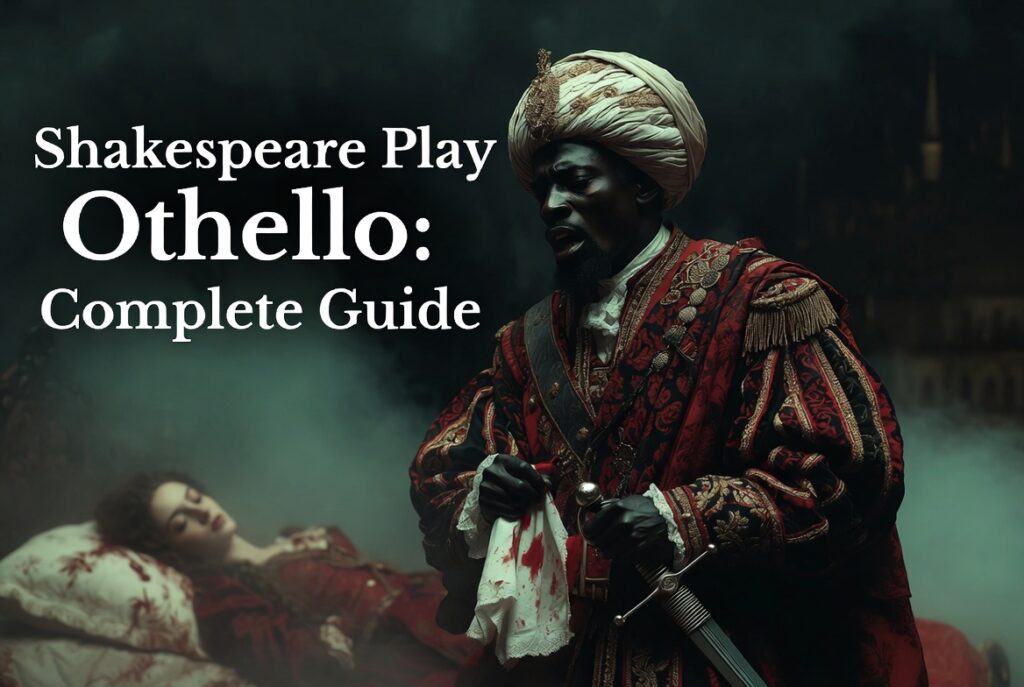
“Iago is the most evil character in all of Shakespeare’s works — and perhaps in all of literature.”
This chilling observation captures why the Shakespeare play Othello continues to haunt audiences more than 400 years after it was written. In this gripping tragedy, Shakespeare explores how a single manipulator can weaponize jealousy to destroy a seemingly invincible hero, his innocent wife, and everyone around them. The play’s raw examination of love, betrayal, race, and deception makes it one of Shakespeare’s most powerful and disturbingly relevant works.
Whether you’re a student preparing for exams, a teacher designing lessons, a theater lover, or simply someone seeking a deeper understanding, this comprehensive guide delivers everything you need. We’ll dive into the full plot summary, detailed character analysis, major themes, literary techniques, historical context, modern relevance, and critical interpretations. By the end, you’ll have a rich, nuanced appreciation of this masterpiece that goes far beyond basic study notes.
Historical and Literary Context of Othello
Understanding the world in which Shakespeare created Othello enriches our interpretation of the text significantly.
When and Why Shakespeare Wrote Othello
Scholars generally date the composition of Othello to 1603–1604, during the early reign of King James I. It was first performed before the king at Whitehall Palace in November 1604. The play was likely written in the period following Hamlet and before King Lear, placing it in the heart of Shakespeare’s great tragic period.
Shakespeare drew his primary source from Giraldi Cinthio’s 1565 Italian collection Hecatommithi, specifically the story “Un Capitano Moro” (“A Moorish Captain”). While Cinthio’s tale is a straightforward narrative of jealousy and murder, Shakespeare transformed it into a profound psychological drama filled with complex characters and poetic brilliance.
Elizabethan/Jacobean England and the Venetian Setting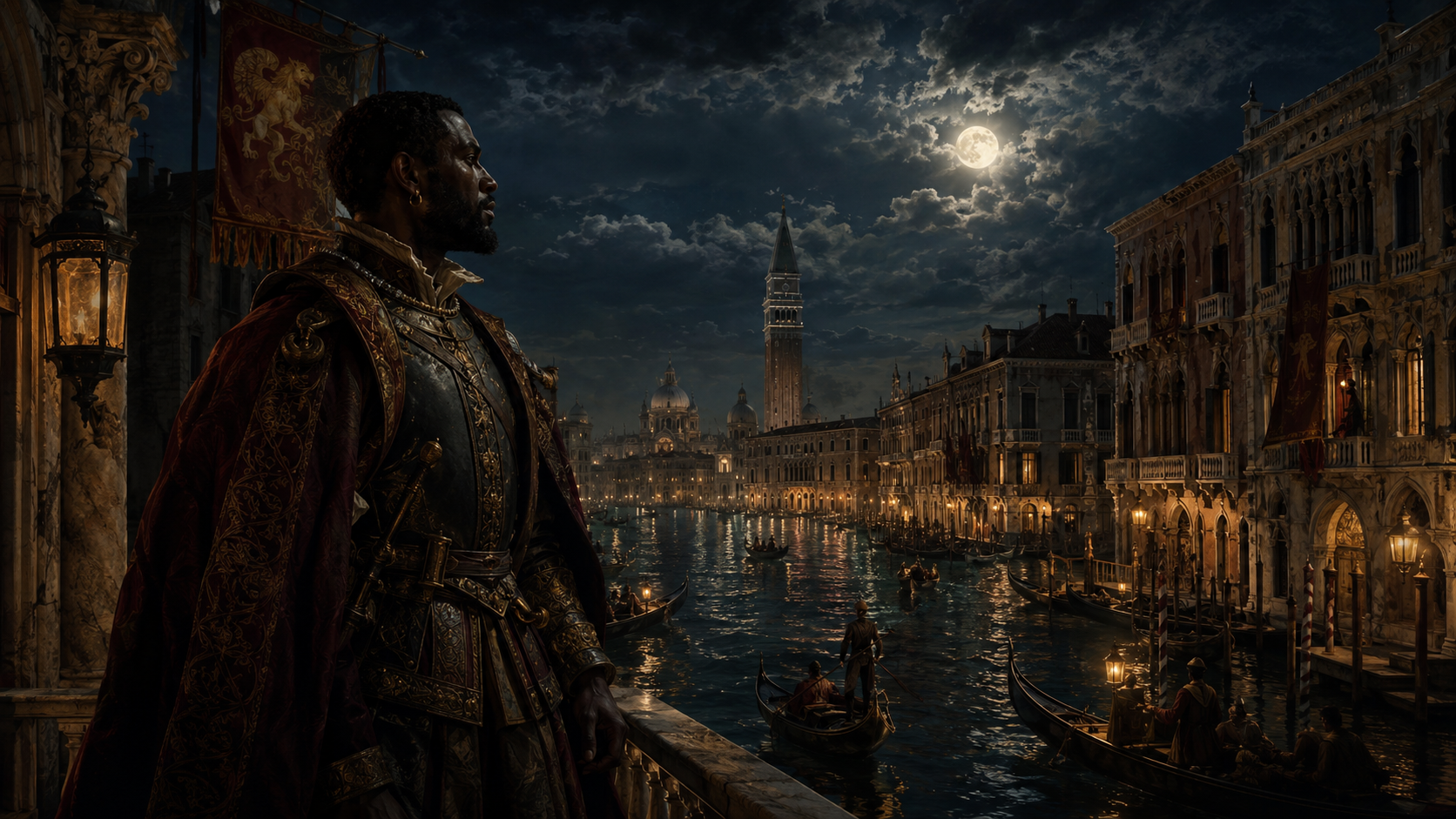
The choice of Venice as the setting was deliberate. In Shakespeare’s time, Venice represented a wealthy, cosmopolitan trading hub — a place of sophistication but also moral ambiguity. For English audiences, it was exotic yet familiar enough to reflect their own society’s concerns.
Race plays a central role in the play. Moors (Muslim North Africans) were both feared and romanticized in Elizabethan England. While some Moors held high positions in European courts, racial prejudice was widespread. Shakespeare uses Othello’s identity as a Black Moor not merely as background but as a driving force in the tragedy.
Genre and Dramatic Structure
Othello is classified as a domestic tragedy. Unlike the grand political scope of Hamlet or King Lear, much of the action centers on personal relationships within a marriage. Shakespeare observes the classical unities (time, place, and action) more closely here than in many of his other plays, creating intense dramatic pressure that builds relentlessly toward the devastating conclusion.
Detailed Plot Summary of Shakespeare Play Othello
Spoiler Warning: This section reveals all major plot points.
Act 1 – The Setup in Venice
The play opens in Venice at night. Iago, a soldier, bitterly complains to his friend Roderigo that Othello — a respected Moorish general — has promoted Michael Cassio to lieutenant instead of him. Iago reveals his deep resentment and begins plotting revenge.
Meanwhile, Brabantio, a Venetian senator, is horrified to learn that his daughter Desdemona has secretly married Othello. He accuses the general of using witchcraft. Othello defends himself eloquently before the Duke, and Desdemona confirms her love and willing marriage. The Duke sends Othello to defend Cyprus from a Turkish invasion, with Desdemona accompanying him.
Act 2 – Arrival in Cyprus and Rising Tension
A storm destroys the Turkish fleet, allowing a peaceful arrival in Cyprus. Iago begins manipulating Roderigo and plants seeds of doubt about Cassio. During a celebration, Iago gets Cassio drunk, leading to a fight that results in Cassio’s demotion. Desdemona promises to help Cassio regain his position — an act of kindness that Iago will later twist against her.
Act 3 – The Turning Point: Iago’s Manipulation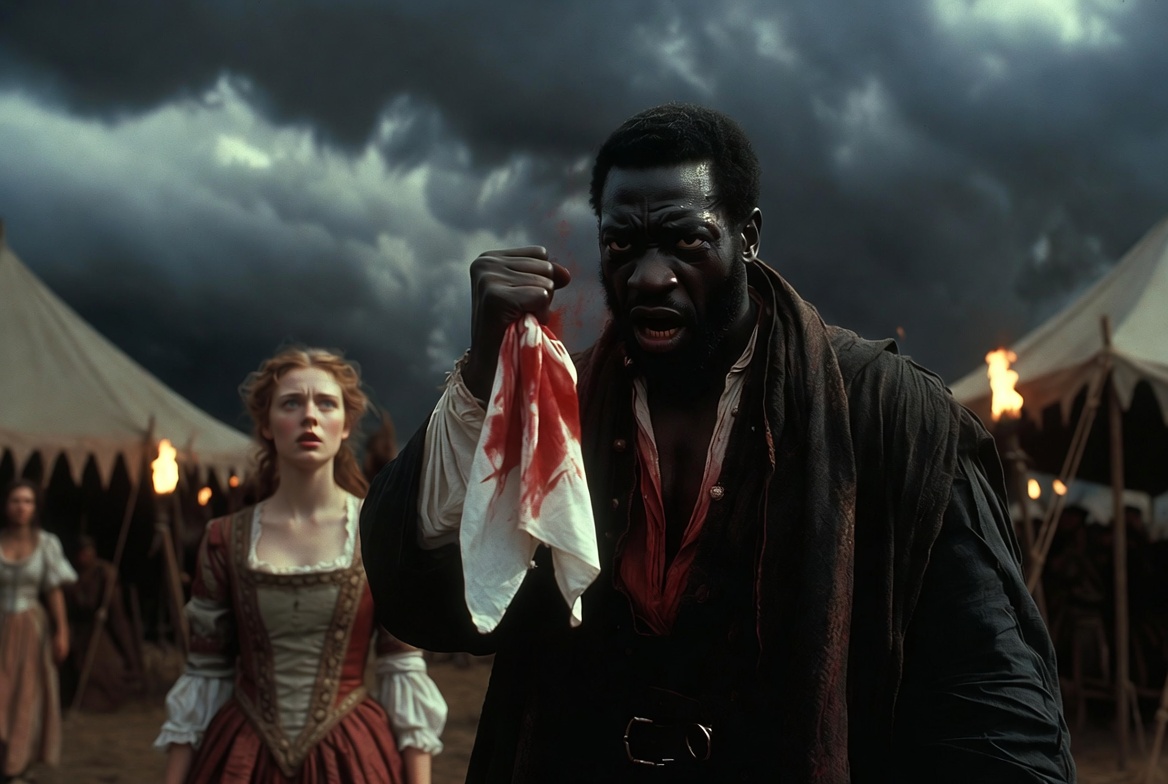
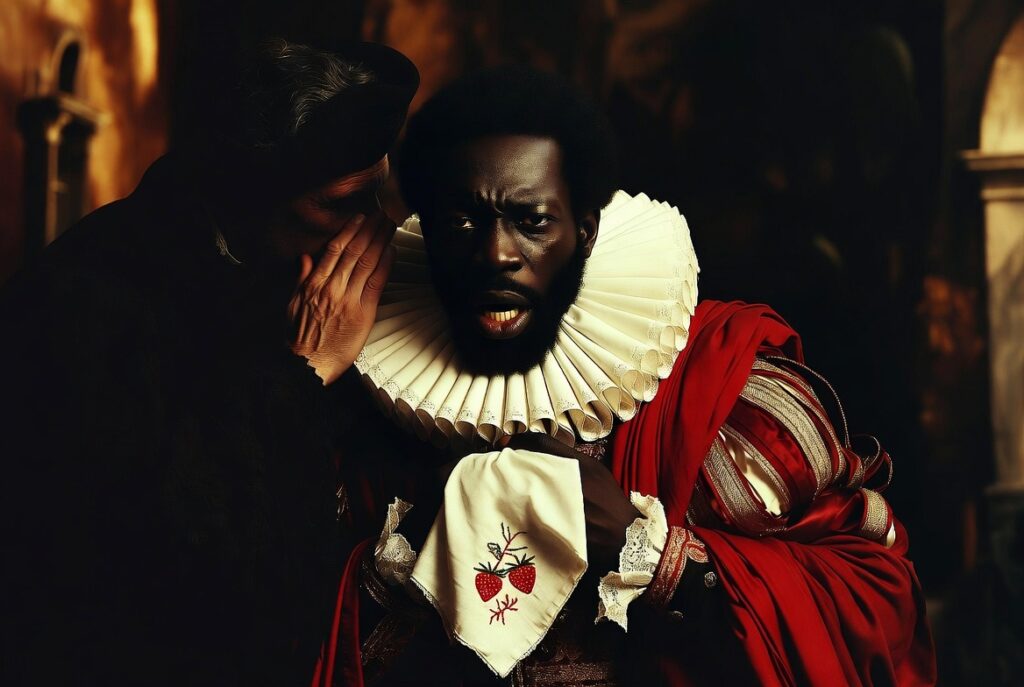
This is the most masterful act in Shakespearean drama. Iago skillfully exploits Othello’s insecurities. He suggests Desdemona is having an affair with Cassio. The famous “handkerchief scene” becomes crucial: Desdemona drops a treasured handkerchief given to her by Othello, which Emilia (Iago’s wife) finds and gives to her husband. Iago plants it in Cassio’s room.
Through masterful psychological manipulation and false honesty (“I am not what I am”), Iago convinces Othello of his wife’s infidelity. By the end of the act, Othello is consumed by jealousy and vows revenge.
Act 4 – Jealousy Consumes Othello
Othello’s mental state deteriorates rapidly. He publicly humiliates Desdemona, calling her a whore. Iago arranges for Othello to overhear a conversation with Cassio that he misinterprets as proof of the affair. In a fit of epilepsy induced by overwhelming emotion, Othello collapses. He resolves to kill Desdemona.
Act 5 – Tragic Climax and Resolution
In the final act, Othello smothers Desdemona in their bed, believing her guilty. Emilia discovers the truth and exposes Iago’s scheme. In a chaotic confrontation, Iago kills Emilia, Roderigo is killed, and Iago is captured. Othello, realizing his terrible mistake, delivers a poignant final speech before stabbing himself. The play ends with the promise that Iago will be tortured but refuses to explain his motives.
The plot’s genius lies in its terrifying plausibility. No supernatural forces are needed — only human weakness, prejudice, and masterful deception.
In-Depth Characters Analysis
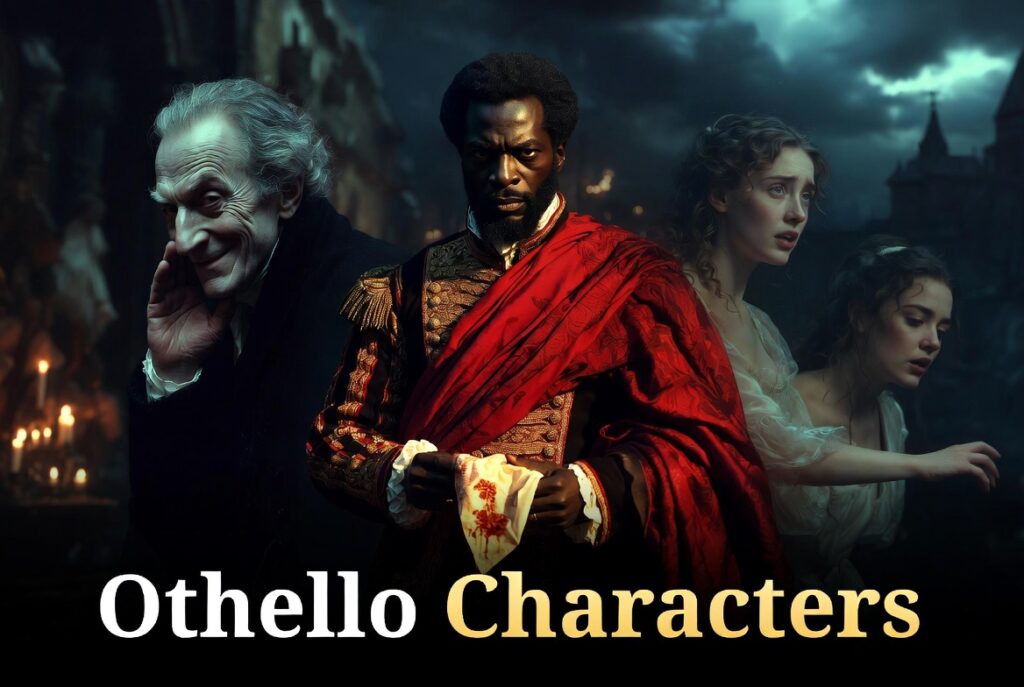
Othello – The Noble Moor and Tragic Hero
Othello is one of Shakespeare’s most complex tragic heroes. A successful military commander, he possesses remarkable eloquence, dignity, and courage. His famous line “I fetch my life and being / From men of royal siege” reflects his noble background.
However, his tragic flaw is his insecurity — particularly regarding his age, race, and outsider status in Venetian society. This makes him vulnerable to Iago’s poison. His love for Desdemona is genuine but possessive. By the end, he becomes a study in how a good man can commit horrific acts when manipulated.
Iago – Shakespeare’s Most Diabolical Villain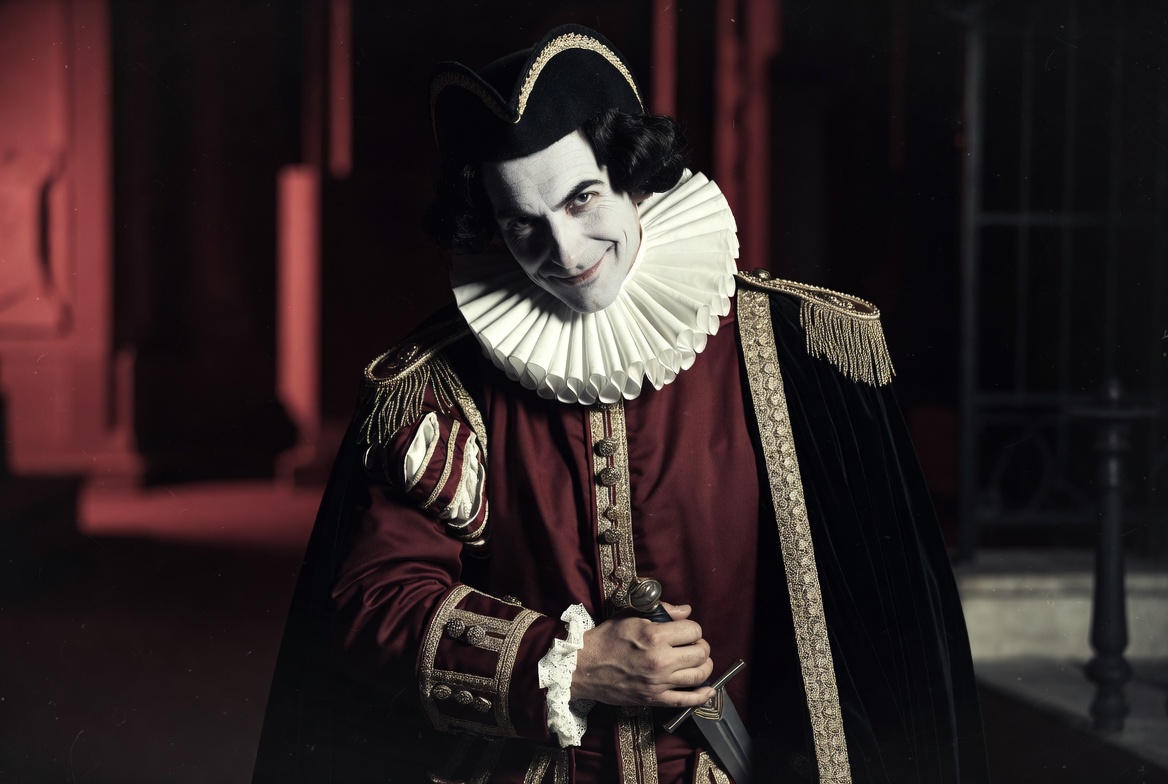
Iago stands as one of literature’s greatest villains. Unlike many antagonists who have clear motives, Iago’s reasons (being passed over for promotion, suspected infidelity of his wife, racial resentment) seem insufficient for the scale of his evil. This ambiguity makes him more terrifying.
His intelligence, acting ability, and psychological insight are extraordinary. He delivers some of the most chilling soliloquies in theater, openly revealing his manipulative plans to the audience while appearing honest to other characters. Coleridge famously described Iago’s motivation as “motiveless malignity.”
Desdemona – Innocence, Strength, and Tragedy
Desdemona is far from the passive victim some readers assume. She defies her father and Venetian society to marry Othello, showing courage and independence. Her loyalty remains unwavering even as Othello abuses her. Her final moments, where she tries to protect Othello’s reputation, highlight her deep love and moral character.
Major Themes in Shakespeare Play Othello
The Shakespeare play Othello derives its enduring power from its profound exploration of universal human experiences. Shakespeare doesn’t simply tell a story — he dissects the darker aspects of the human psyche with remarkable insight.
Jealousy as the Green-Eyed Monster
The central theme is jealousy, famously described by Iago as “the green-eyed monster which doth mock the meat it feeds on.” Shakespeare distinguishes between different forms of jealousy: sexual jealousy, professional envy, and possessive love. Othello’s jealousy is not natural but carefully cultivated by Iago. The play demonstrates how jealousy transforms rational thought into irrational rage, leading even the noblest characters to destruction. This theme resonates powerfully with modern audiences dealing with toxic relationships and social media-fueled insecurities.
Race, Otherness, and Prejudice
Othello’s identity as a Moor is crucial. He is both celebrated as a military hero and reduced to his racial difference (“the thick-lips,” “an old black ram”). Shakespeare presents a nuanced view: Othello internalizes some of the prejudices against him, which Iago exploits. The play raises timeless questions about belonging, identity, and systemic racism. Modern postcolonial readings view Othello as a victim of Venetian society’s underlying xenophobia, making the tragedy even more heartbreaking.
Appearance vs. Reality and Deception
“Nothing is what it seems” could be the play’s subtitle. Iago repeatedly claims to be honest while being the ultimate deceiver. The handkerchief, a simple object, becomes devastating proof through manipulation. Shakespeare masterfully uses dramatic irony — the audience knows the truth while Othello remains blind — heightening the tragedy.
Love, Loyalty, and Betrayal
At its heart, Othello is a love story gone wrong. The pure love between Othello and Desdemona is corrupted by external forces. The play examines different kinds of loyalty: marital, military, and friendship, showing how easily they can be broken. Emilia’s final act of loyalty to truth over her husband provides a redemptive counterpoint.
Gender and Power Dynamics
Shakespeare gives voice to the marginalized through the female characters. Desdemona’s defiance in marrying Othello challenges patriarchal control. Emilia delivers one of Shakespeare’s strongest proto-feminist speeches in Act 4, questioning why women are treated differently from men. The play critiques how women’s reputations are fragile and controlled by male perception.
Evil and Manipulation
Iago embodies motiveless malignity. His evil is chilling because it is purely intellectual and strategic. The play forces us to confront how ordinary human flaws — resentment, ambition, insecurity — can enable profound evil when left unchecked.
Literary Devices, Symbolism, and Language Analysis
Shakespeare’s technical brilliance elevates Othello to masterpiece status.
Imagery and Motifs
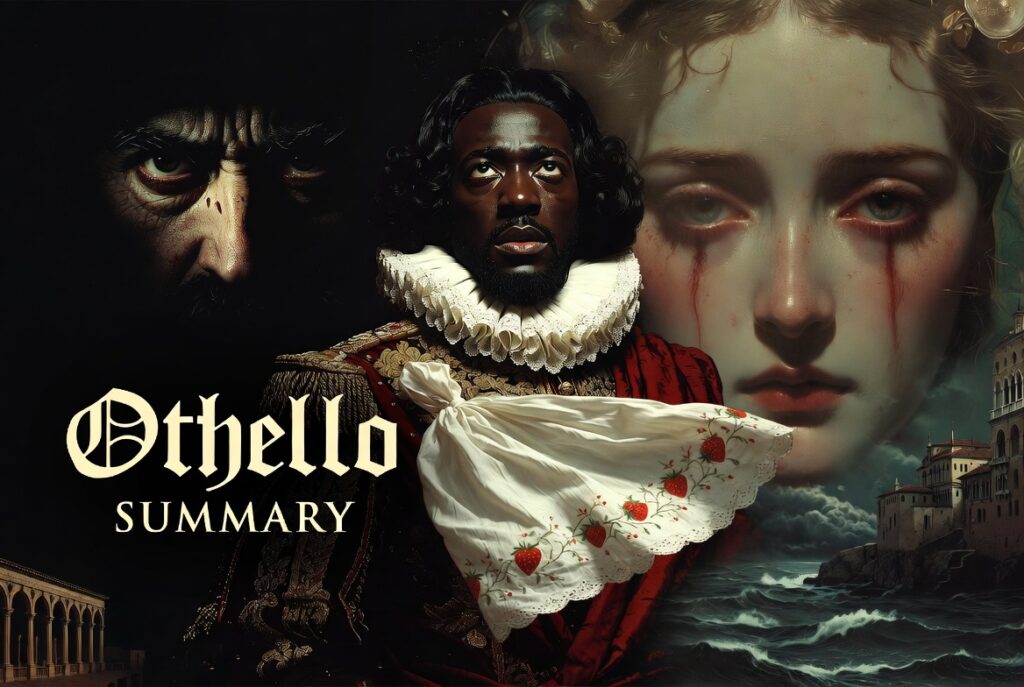
The handkerchief is the most famous symbol — representing Othello’s love, Desdemona’s fidelity, and cultural heritage. Animal imagery abounds (Iago frequently compares people to beasts), showing the dehumanizing effect of jealousy. Light and darkness, poison, and the sea also recur powerfully.
Dramatic Irony and Soliloquies
The audience’s privileged knowledge creates unbearable tension. Iago’s soliloquies are particularly effective, as he confides his villainy directly to the viewers, making them unwilling accomplices.
Othello’s Poetry vs. Iago’s Prose
Othello speaks in elevated, poetic verse reflecting his noble nature. As jealousy overtakes him, his language breaks down into fragmented prose — a brilliant linguistic representation of his psychological collapse. Iago, by contrast, uses blunt, cynical prose that reveals his earthly, manipulative worldview.
Structure and Pacing
The play’s tight structure and rapid descent into tragedy demonstrate Shakespeare’s control. The shift from Venice to Cyprus moves the action from civilization to isolation, mirroring Othello’s emotional journey.
Critical Interpretations and Scholarly Perspectives
Traditional Character Criticism
A.C. Bradley, in his influential Shakespearean Tragedy (1904), viewed Othello as a noble hero brought down by a tragic flaw — misplaced trust. This romantic interpretation emphasizes personal psychology over societal factors.
Modern Approaches
- Feminist Readings: Focus on Desdemona and Emilia’s oppression and quiet resistance. Scholars like Karen Newman highlight how the play both reinforces and challenges patriarchal structures.
- Postcolonial Readings: Edward Said’s Orientalism framework helps explain Othello’s “otherness.” Many contemporary productions cast Othello with Black actors to emphasize racial dynamics.
- Psychoanalytic Views: Explore Iago’s possible repressed homosexuality or Othello’s self-hatred.
- New Historicist: Examines the play in context of emerging English colonialism and attitudes toward Islam.
Key Debates
Is Othello a racist play or an anti-racist critique? Most modern scholars lean toward the latter, arguing Shakespeare exposes prejudice rather than endorses it. Another debate centers on Iago: Can such evil exist without clear motivation?
Modern Relevance and Adaptations of Othello
The Shakespeare play Othello feels eerily contemporary. In an age of deepfakes, cancel culture, and social media manipulation, Iago’s tactics seem familiar. Jealousy destroys relationships daily, while racial tensions and identity politics remain pressing issues.
Notable adaptations include:
- Orson Welles’ 1952 film (visually stunning)
- Oliver Parker’s 1995 version with Laurence Fishburne and Kenneth Branagh
- Recent stage productions with diverse casting, including women of color playing Othello
- Literary retellings like Desdemona by Toni Morrison
These adaptations prove the play’s flexibility while maintaining its emotional core.
Study Tips and Essay Guidance
For students writing about Othello:
- Always support arguments with precise quotes and line references.
- Analyze how language reveals character (e.g., Othello’s shift from verse to prose).
- Compare with other tragedies: How does Othello’s hamartia differ from Hamlet’s indecision or Macbeth’s ambition?
- Consider historical context without excusing modern moral judgments.
Key quotes to memorize:
- “O, beware, my lord, of jealousy…” (Iago)
- “I am not what I am.” (Iago)
- “Put out the light, and then put out the light…” (Othello)
Recommended editions: Arden Shakespeare, Folger Shakespeare Library, or Oxford World’s Classics.
Frequently Asked Questions (FAQs)
What is the main message of Shakespeare’s play Othello? The primary message is the destructive power of unchecked jealousy and deception, and how easily good people can be manipulated into committing evil acts.
Why does Iago hate Othello? Iago gives several reasons (being passed over for promotion, suspected infidelity), but his true motivation remains ambiguous — making him more frightening.
What does the handkerchief symbolize? It represents love, fidelity, and Othello’s cultural heritage. Its loss triggers the tragic chain of events.
Is Othello a racist play? While it contains racist language, most scholars believe Shakespeare critiques racism by showing its tragic consequences.
How does Othello end? Othello kills Desdemona, then kills himself upon learning the truth. Iago is arrested but remains defiantly silent.
Is Desdemona a weak character? No. She shows remarkable courage and loyalty throughout the play.
The Shakespeare play Othello remains a towering achievement in world literature because it speaks so powerfully to fundamental human truths. Shakespeare shows us how fragile reputation, trust, and love can be when exposed to manipulation and prejudice. Yet he also offers glimmers of hope through characters like Emilia who choose truth over loyalty.
More than four centuries later, this tragedy continues to move audiences to tears and provoke deep reflection. Whether you encounter Othello for the first time or return to it as an old friend, its power only grows with deeper understanding.
We hope this comprehensive guide has enriched your appreciation of this masterpiece. Have you seen a memorable production of Othello? Which character do you find most fascinating? Share your thoughts in the comments below. For more insights into Shakespeare’s works, explore our guides to Hamlet, Macbeth, and Romeo and Juliet.