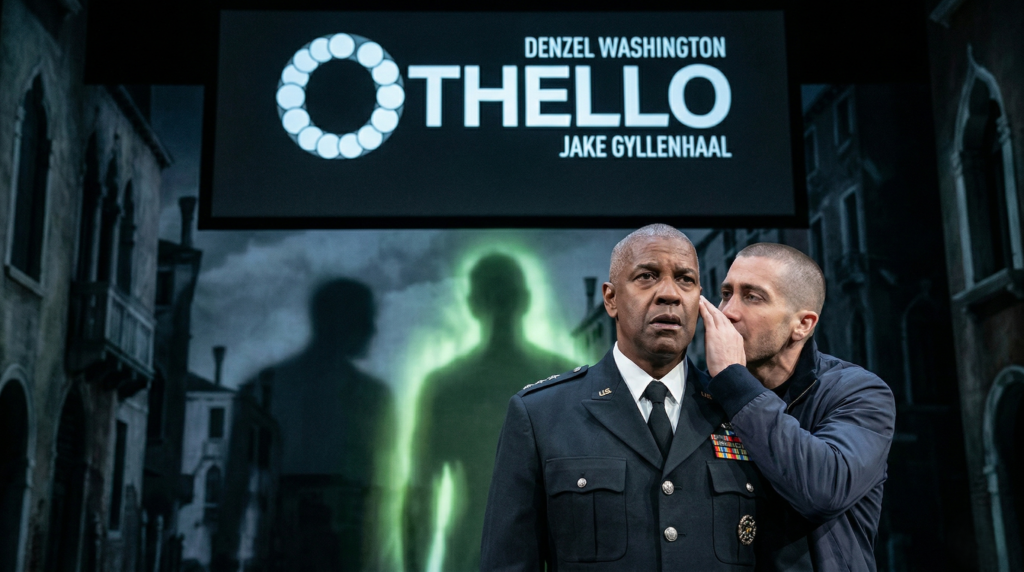
For theatergoers, scholars, and casual fans alike, securing a ticket to the highly anticipated othello new york production of 2025 became the defining cultural conquest of the Broadway spring season. When two Hollywood titans—Denzel Washington and Jake Gyllenhaal—stepped onto the stage of the historic Ethel Barrymore Theatre, it wasn’t just another revival of a Shakespeare tragedy; it was a monumental theatrical event. Running for a strictly limited 15-week engagement under the visionary direction of Tony Award-winner Kenny Leon, this production promised to drag the Moor of Venice into a chilling, near-future setting.
However, the sheer hype surrounding this production has left the actual discourse fragmented. Between polarizing critical reviews, viral debates over staging choices, and astronomical ticket prices, it can be difficult to separate the spectacle from the substance. As an expert in Shakespearean text and stage history, I have created this definitive guide to consolidate the noise.
This skyscraper analysis dives deep into what worked, what fell flat, and how Kenny Leon’s bold directorial choices fundamentally altered the legacy of Othello. Whether you witnessed the standing ovations firsthand or are studying the evolution of modern Shakespearean performance, this is your comprehensive roadmap to understanding the 2025 revival.
II. The Titans of the Stage: Casting the 2025 Revival
The gravitational pull of this revival was undeniably its central casting. The dynamic between Othello and his ancient, Iago, requires a perilous high-wire act of trust, manipulation, and psychological warfare. This production offered a masterclass in contrasting acting methodologies.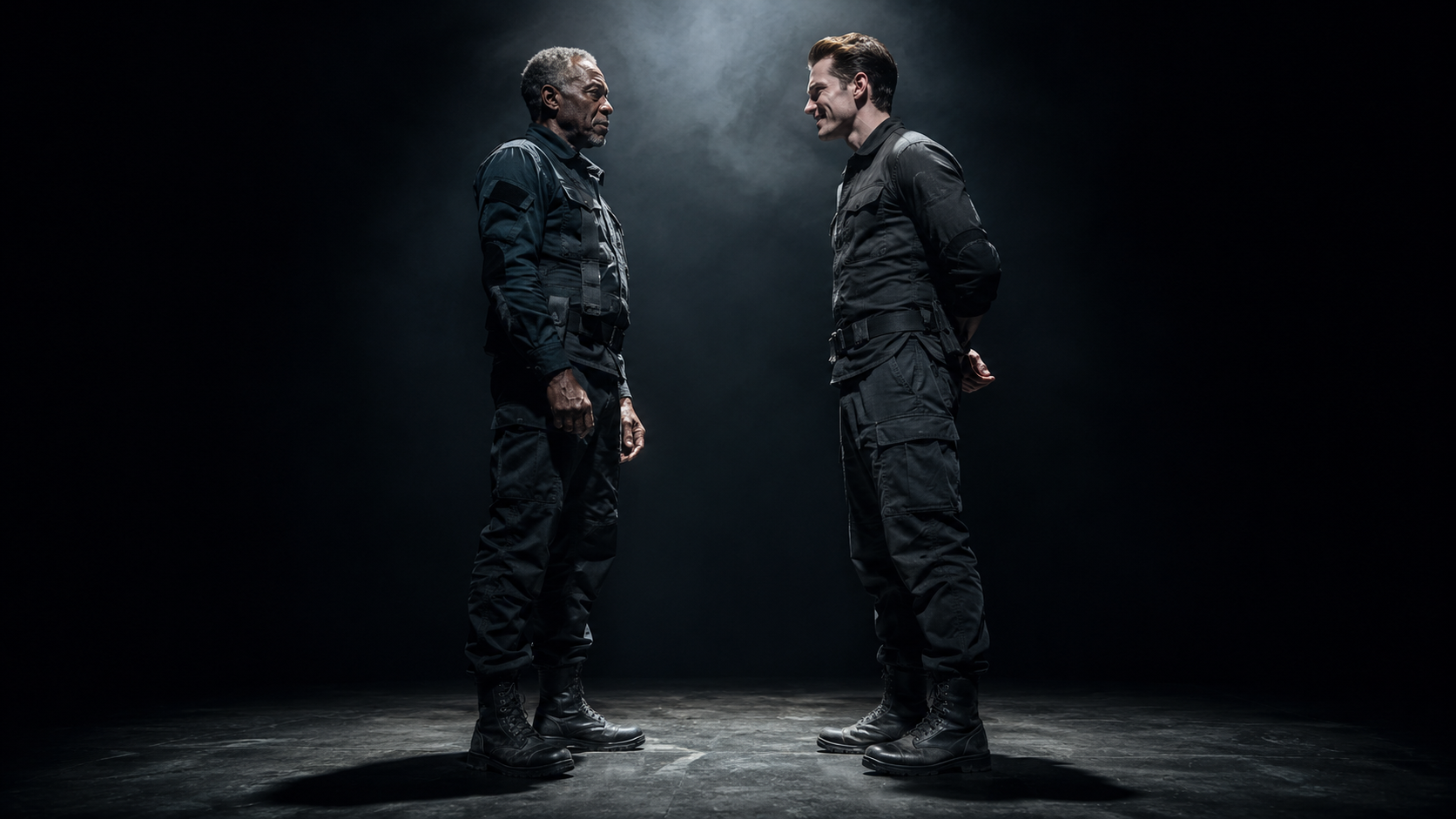
Denzel Washington as Othello: A Lifetime in the Making
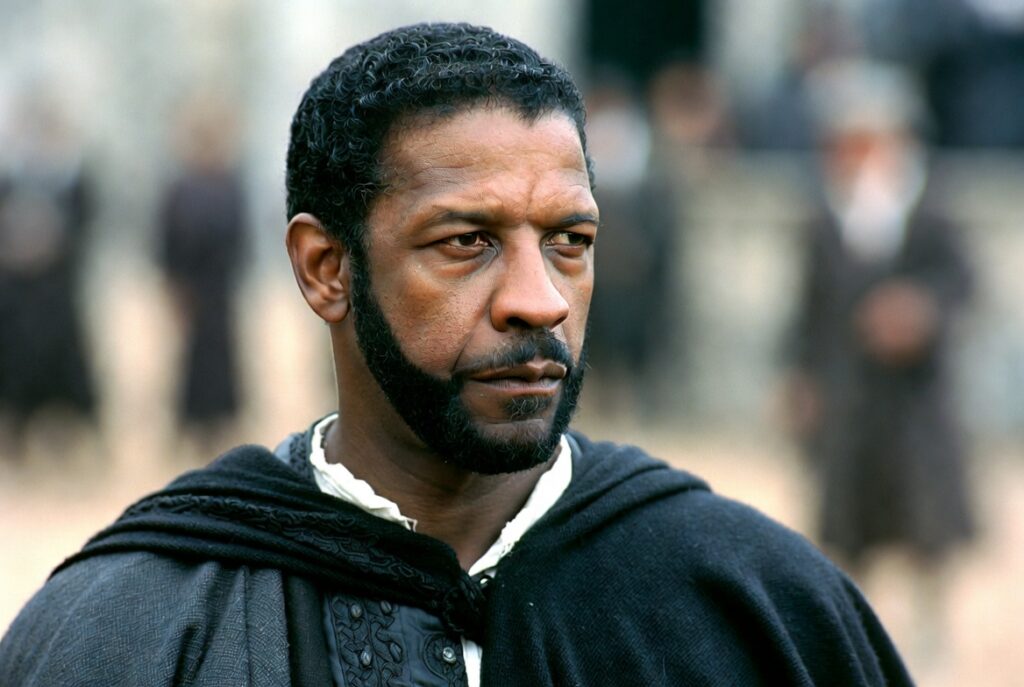
Denzel Washington is no stranger to the Bard. Having tackled Brutus in Julius Caesar on Broadway and earning an Oscar nomination for his titular role in Joel Coen’s film adaptation The Tragedy of Macbeth, Washington brought a veteran’s gravitas to the role of the Moor.
Unlike younger portrayals that lean heavily into raw, explosive physical prowess, Washington’s Othello was steeped in the vulnerability of an older, weary general. His interpretation leaned into a quiet, commanding authority that made his eventual descent into rhapsodic, jealous delusion all the more tragic. When Iago’s poison finally took hold, Washington didn’t just rage; he crumbled from the inside out, delivering a deeply internalized portrait of a man whose entire foundation of reality had been dismantled.
Jake Gyllenhaal’s Iago: The Charismatic Predator
If Washington provided the production’s gravitational center, Jake Gyllenhaal was its chaotic, kinetic energy. Gyllenhaal’s Iago was universally praised as a scene-stealing triumph. Stripping away the sneering, mustache-twirling tropes of classic villains, Gyllenhaal presented Iago as a terrifyingly casual, modern predator.
-
The “Bushwick Hustler” Aesthetic: Gyllenhaal delivered his lines with a fast-talking, colloquial ease, bridging the gap between classical text and modern sociopathy.
-
The Charisma Trap: His Iago was highly likable to the other characters on stage—the kind of guy you’d grab a beer with after a long shift. This made his direct addresses to the audience profoundly unsettling, as we alone were privy to his nihilistic machinations.
The Supporting Players: Desdemona, Cassio, and Emilia
While the marquee belonged to the leading men, the supporting cast carried the emotional weight of the tragedy.
-
Molly Osborne (Desdemona): Osborne brought a youthful, tragic grace to the role. Rather than playing Desdemona as a naive victim, she imbued her with an earnest, fierce loyalty that made her final, suffocating moments deeply harrowing.
-
Andrew Burnap (Cassio): Burnap portrayed the newly promoted lieutenant with a guileless charm, making him the perfect, unwitting pawn in Iago’s game.
-
Kimber Elayne Sprawl (Emilia): Sprawl was the production’s sleeper standout. Her delivery of the famous “Let husbands know their wives have sense like them” speech was a searing indictment of the play’s underlying misogyny, earning spontaneous mid-scene applause during several performances.
III. Kenny Leon’s Vision: A Minimalist, Modern-Day Cyprus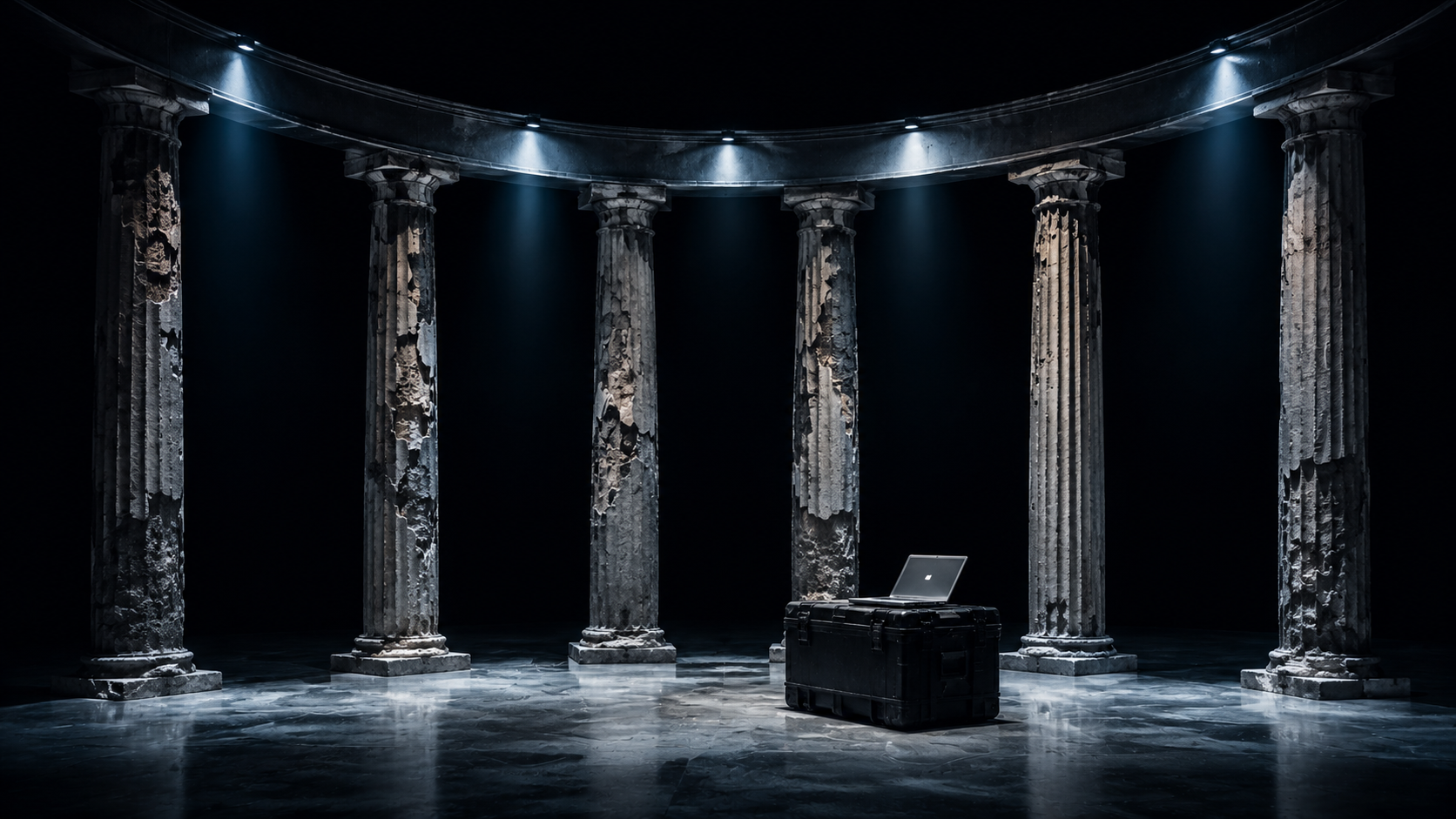
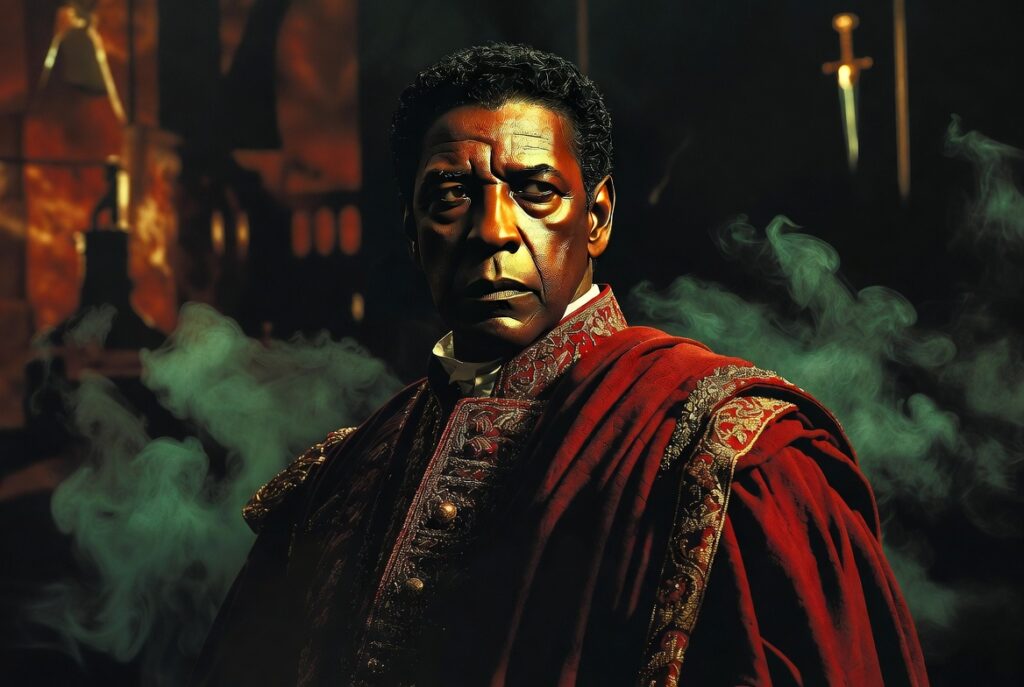
Director Kenny Leon made a deliberate choice to strip away the ornate velvet cloaks and clashing swords of traditional Elizabethan stagings. By placing the narrative in the “near future,” he forced the audience to confront the timelessness of misinformation, jealousy, and systemic prejudice.
Setting the Scene in “The Near Future”
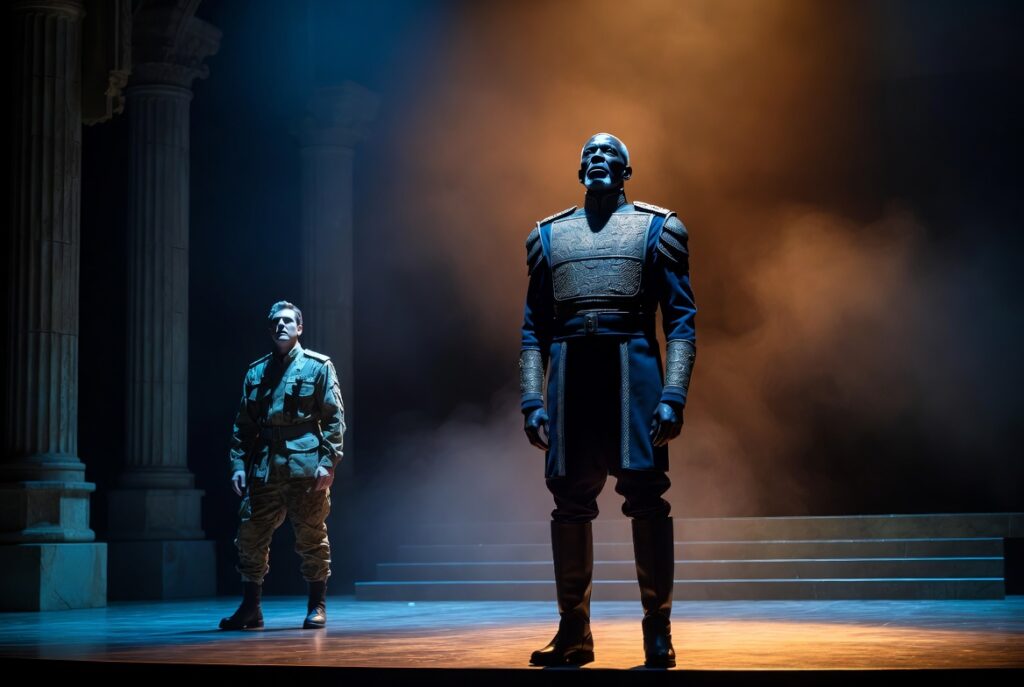
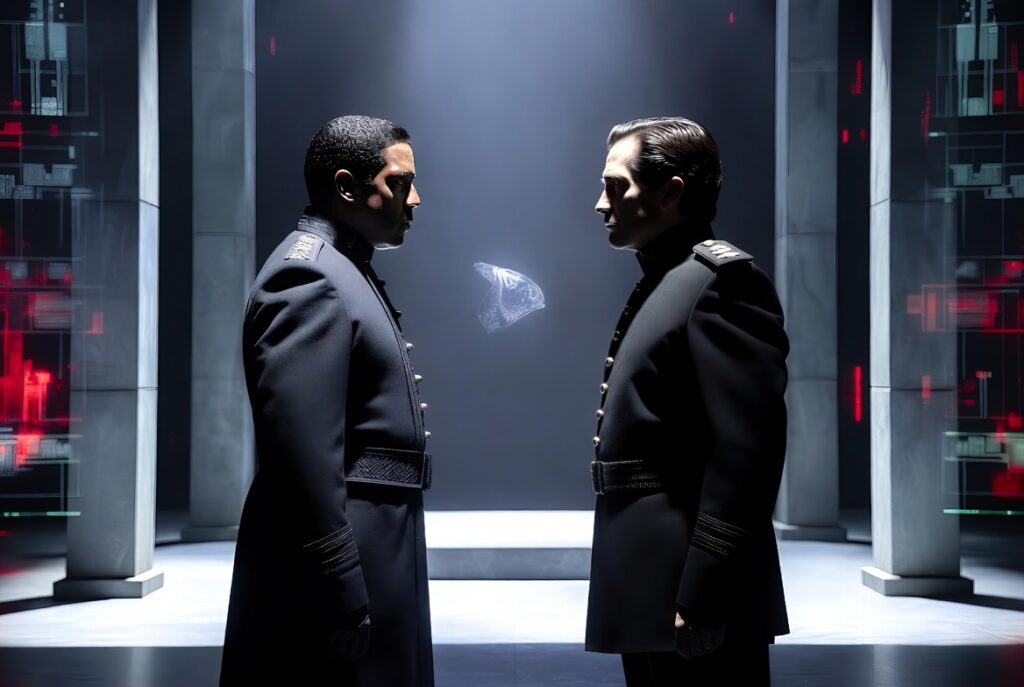
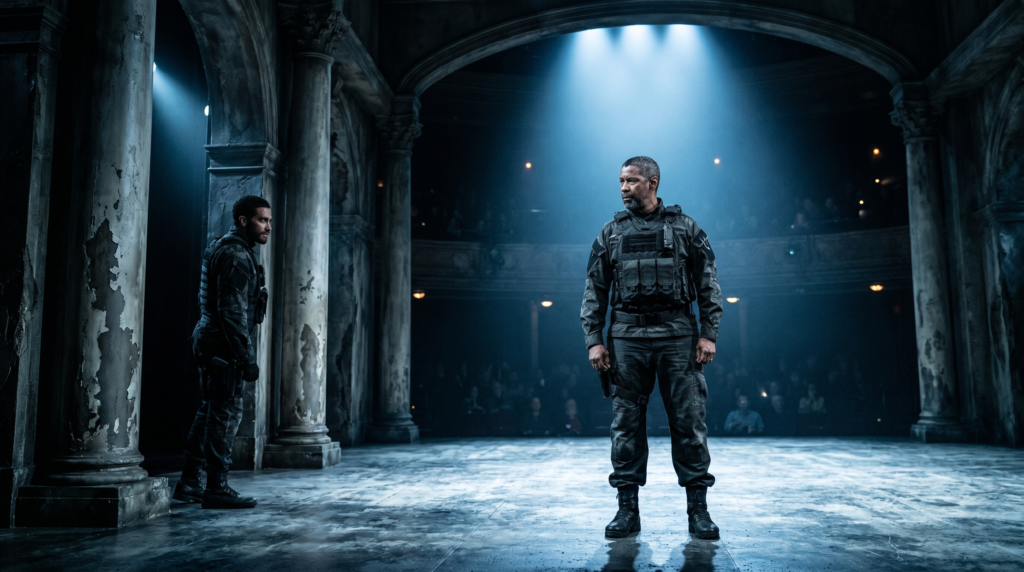
The visual language of this Othello was distinctly contemporary. Soldiers wore modern military fatigues, battle plans were reviewed on Apple laptops, and the transition from the sophisticated senate of Venice to the isolated, war-torn outpost of Cyprus felt uncomfortably relevant to modern global conflicts.
The Bare Stage: Stripping Back the Spectacle
To match the modern aesthetic, the stagecraft relied on stark minimalism:
-
Scenic Design: Derek McLane designed a set that was almost aggressively bare, utilizing peeling columns and vast, empty spaces to emphasize the isolation of the characters.
-
Lighting Design: Natasha Katz utilized harsh, blue-white, colosseum-style lighting. There were no soft, romantic shadows here; every betrayal was illuminated under the unforgiving glare of a literal and metaphorical interrogation lamp.
Expert Insight: Why do modern directors choose minimalist staging for Shakespeare? By removing lavish sets and historical costuming, directors eliminate visual distractions. The minimalist staging forces the audience to focus entirely on the text, the actors’ psychological arcs, and the raw emotional violence of the tragedy.
The Yondr Pouch Experience
In a highly publicized move, this production required all audience members to lock their phones in Yondr pouches for the duration of the performance. While initially frustrating to some, this forced digital disconnection proved vital. In a play entirely about the weaponization of whispers and the destructive power of unchecked rumors, forcing a modern audience to sit in the dark, entirely present and unable to distract themselves, heightened the suffocating tension of the final act.
IV. The Text: How This Production Handled Shakespeare’s Words
Directing Shakespeare is as much an act of editing as it is staging. The text of Othello is notoriously dense, but Leon’s production approached the dialogue with an aggressive, modern sensibility.
Trimming the Fat: Judicious Cuts for a Modern Audience
Clocking in at a lean two hours and thirty-five minutes (with one intermission), the 2025 revival trimmed much of the play’s excess fat. Minor subplots and extraneous characters—most notably the Clown, whose comedic relief often disrupts the pacing of modern stagings—were entirely excised. The result was a streamlined, bullet-train narrative that hurtled toward its bloody conclusion without giving the audience a moment to catch their breath.
Mastering the Iambic Pentameter
One of the most fiercely debated aspects of this production was the vocal delivery. Traditional classical actors often lean into the lyrical, musical cadence of iambic pentameter. In contrast, the cast of this revival—led heavily by Gyllenhaal’s interpretation—delivered the verse at breakneck speed.
-
The Pros: This rapid-fire delivery made the text sound conversational, urgent, and accessible to viewers who might otherwise be intimidated by Early Modern English.
-
The Cons: Some purists argued that the sheer speed occasionally muddied the poetic brilliance of Shakespeare’s monologues, prioritizing modern realism over classical resonance.
V. Critical Reception vs. Audience Reaction: A Divided Theater
Whenever a production of this magnitude hits the stage, the discourse is bound to be fractured. The 2025 Broadway revival of Othello proved to be a fascinating case study in the divide between academic theater criticism and the visceral reactions of paying audiences.
What the Critics Said
The critical consensus from major publications like The New York Times, The Guardian, and The Hollywood Reporter was largely unified: the performances were a triumph, but the overarching directorial vision left some scratching their heads.
Critics lauded Gyllenhaal’s electric, unpredictable take on Iago and praised Washington’s deeply internal, stoic descent into madness. However, the modern, “near future” military setting drew mixed reviews. Some theatrical purists felt that Kenny Leon’s minimalist staging and aggressive use of modern technology (like laptops and fluorescent tactical lighting) stripped the play of its historical and poetic romance. A recurring critique was that while the actors delivered a psychological masterclass, the barren aesthetic sometimes felt more like a sterile clinical trial than a grand Shakespeare tragedy.
The Word on the Street: Fan Perspectives
If you walked out of the Ethel Barrymore Theatre and listened to the chatter on the street—or logged into passionate theater forums on Reddit—the narrative was starkly different. Audiences were enraptured.
-
The Spectacle of Star Power: General audiences consistently delivered deafening standing ovations. For many, seeing two cinematic titans commanding a Broadway stage in real-time transcended any quibbles about set design.
-
The “Fake Blood” Debate: Interestingly, a highly debated topic among fans was the lack of grand, theatrical violence. In the climactic murder scene, the production eschewed the traditional reliance on stage blood and melodramatic thrashing. Instead, the violence was stark, intimate, and disturbingly quiet. While some fans felt shortchanged by the lack of visceral gore, others argued it made the domestic tragedy feel far more grounded and terrifying.
The “Luxury Broadway” Debate
You cannot discuss this specific revival without addressing the economic elephant in the room: Broadway ticket prices. Driven by the astronomical demand to see Washington and Gyllenhaal, premium tickets on the secondary market—and even dynamic pricing at the box office—skyrocketed, frequently ranging from $300 to well over $1,000 for orchestra seating.
This sparked an industry-wide debate about the accessibility of live theater. Does a production of a 400-year-old public domain play justify such exorbitant costs simply because of its Hollywood casting? While the producers did offer limited rush tickets and lottery options, the 2025 Othello undeniably became a symbol of “luxury Broadway”—an exclusionary status symbol that favored the wealthy over the dedicated theater student.
VI. Legacy: How the 2025 Othello Stacks Up Against Past Revivals
To truly understand the weight of this production, an expert must contextualize it within the broader history of the Moor of Venice on the New York stage. How will the Washington/Gyllenhaal dynamic be remembered?
-
The 1982 Broadway Production (James Earl Jones and Christopher Plummer): For decades, this staging was considered the gold standard of American Othello revivals. Jones brought a booming, statuesque majesty to the Moor, while Plummer delivered an Iago steeped in cold, calculated, classical villainy. In contrast, the 2025 production swapped the operatic scale of 1982 for modern, gritty psychological realism. Washington’s Othello was far quieter than Jones’s, and Gyllenhaal’s Iago was far more manic than Plummer’s.
-
The 2016 Off-Broadway Staging (David Oyelowo and Daniel Craig): Sam Gold’s 2016 production at the New York Theatre Workshop is the closest modern cousin to Kenny Leon’s vision. Craig’s Iago was a bitter, passed-over military man in a modern barrack, and Oyelowo played a remarkably composed Othello. While the 2016 version was praised for its intimate, claustrophobic dread, the 2025 revival amplified that same modern military anxiety to an arena-sized scale, relying on the sheer wattage of its leads to fill the Barrymore.
Ultimately, the 2025 revival’s legacy will likely be cemented not by its set design or its textual edits, but as a definitive acting benchmark. It will be remembered as the moment Denzel Washington completed his lifelong mastery of Shakespearean titans, and the moment Jake Gyllenhaal redefined one of literature’s greatest villains for the 21st century.
VII. Frequently Asked Questions (FAQs)
When and where did the 2025 Othello play? The production ran for a strictly limited 15-week engagement from February 24 to June 8, 2025. It was housed at the historic Ethel Barrymore Theatre in New York City.
How long was the runtime of the Othello revival? Kenny Leon’s streamlined production had a runtime of exactly 2 hours and 35 minutes, which included one 15-minute intermission.
Will the Denzel Washington Othello be filmed or streamed? As of now, there are no official plans for a pro-shot or a National Theatre Live-style cinematic release. Because of the strict union rules surrounding Broadway recordings and the A-list status of the cast, acquiring streaming rights is incredibly complex. For now, it remains a “you had to be there” theatrical event.
Who directed the 2025 Broadway production of Othello? The revival was directed by Kenny Leon, a Tony Award-winning director known for his masterful revivals of A Raisin in the Sun and Fences.
The 2025 othello new york revival was a seismic event that shook the foundations of contemporary Shakespearean performance. By placing the narrative in a sterile, near-future military environment and stripping away the crutches of Elizabethan pageantry, director Kenny Leon forced us to look at the ugly, unadorned mechanics of jealousy, racism, and manipulation.
While the minimalist staging and breakneck iambic pentameter left some critics longing for traditionalism, there is no denying the masterclass unfolding center stage. Denzel Washington’s heartbreaking vulnerability and Jake Gyllenhaal’s charismatic sociopathy created a symbiotic, destructive dance that will be studied by acting students for decades. It was a production that proved Shakespeare’s darkest tragedy doesn’t need velvet cloaks to be terrifying—it only needs the weaponized whispers of a trusted friend.