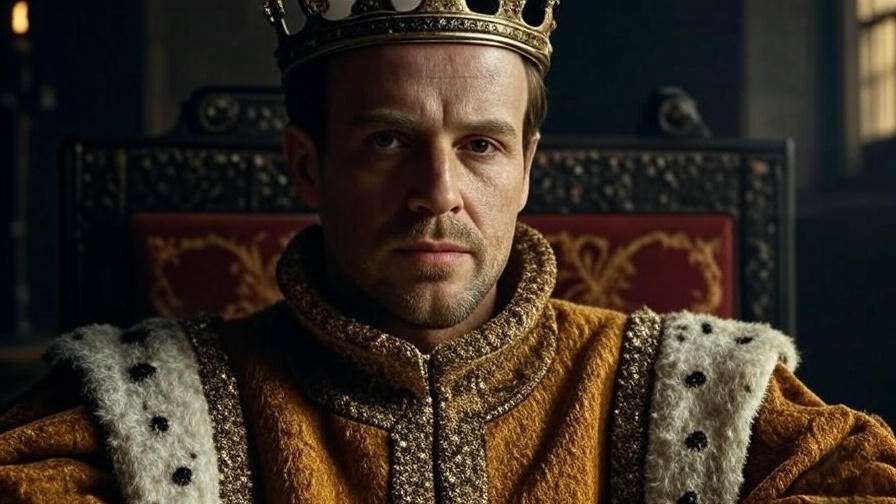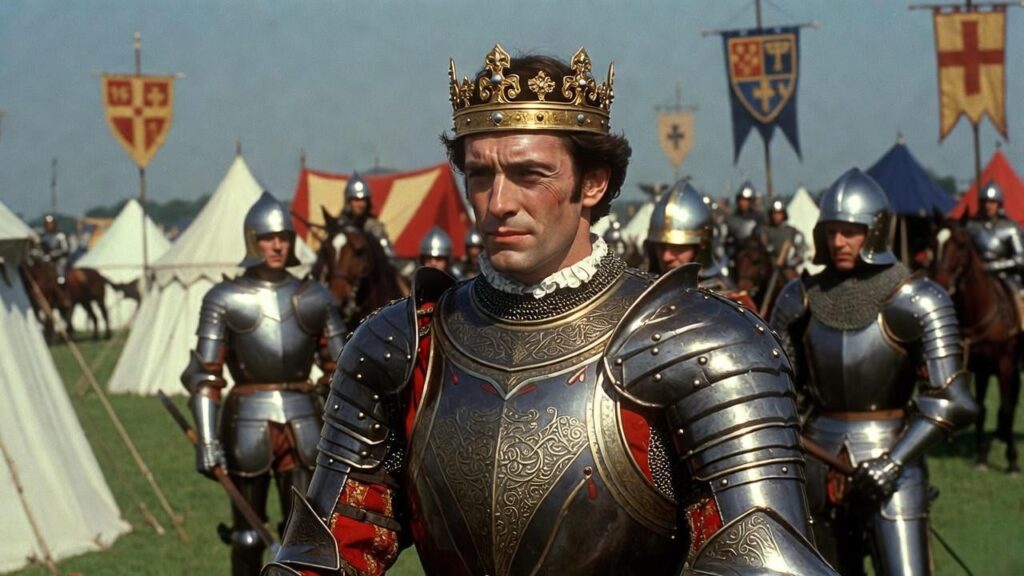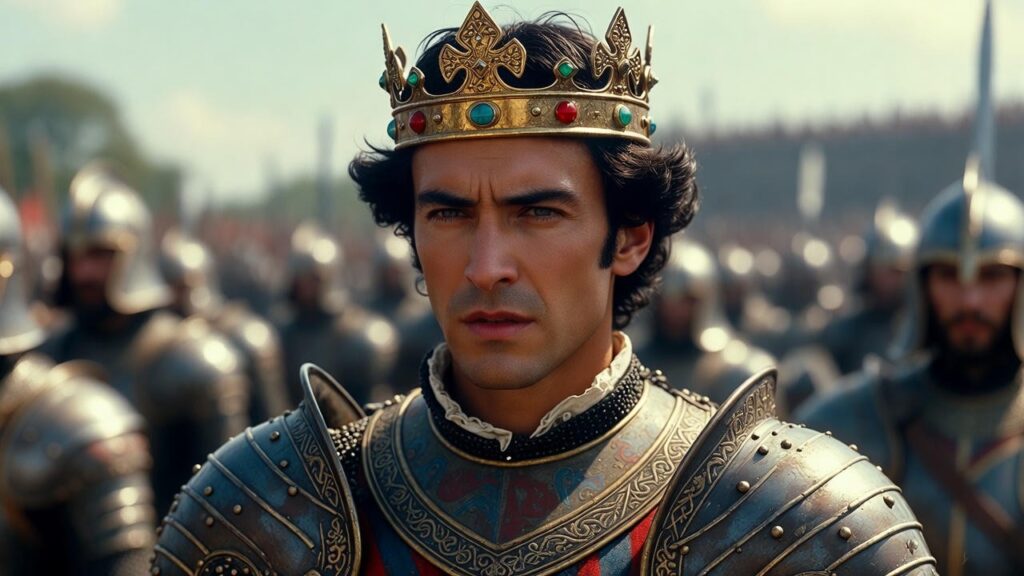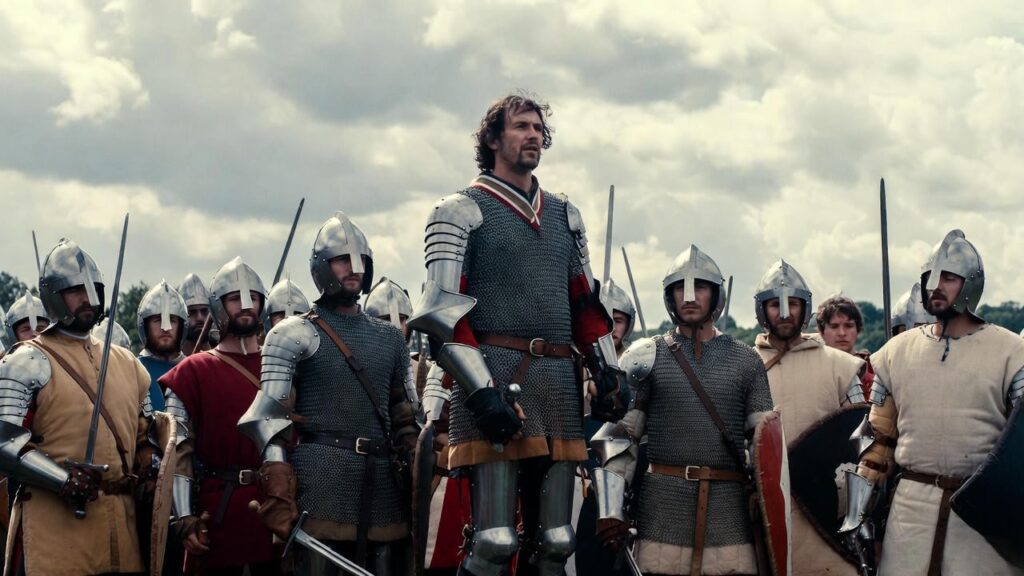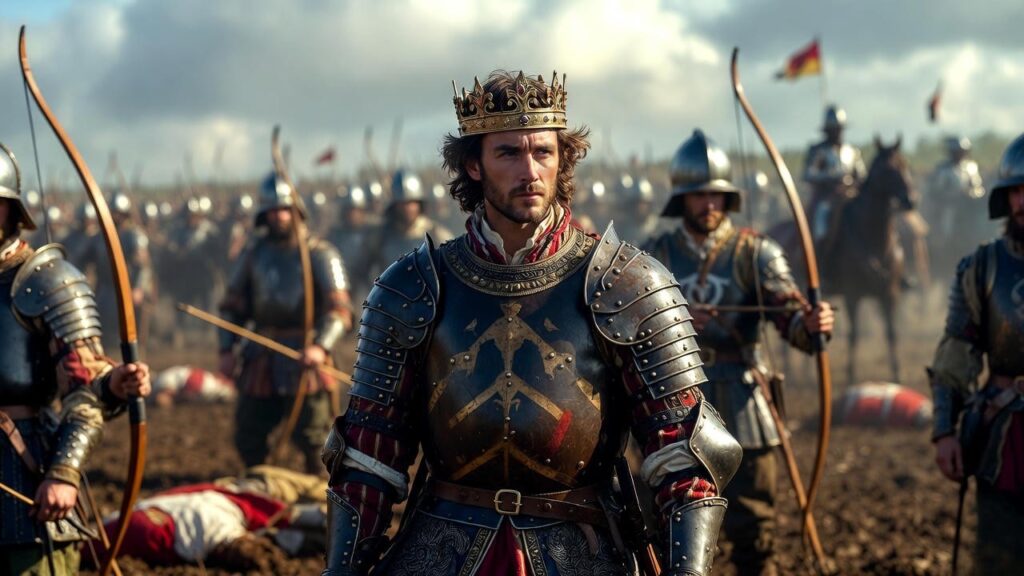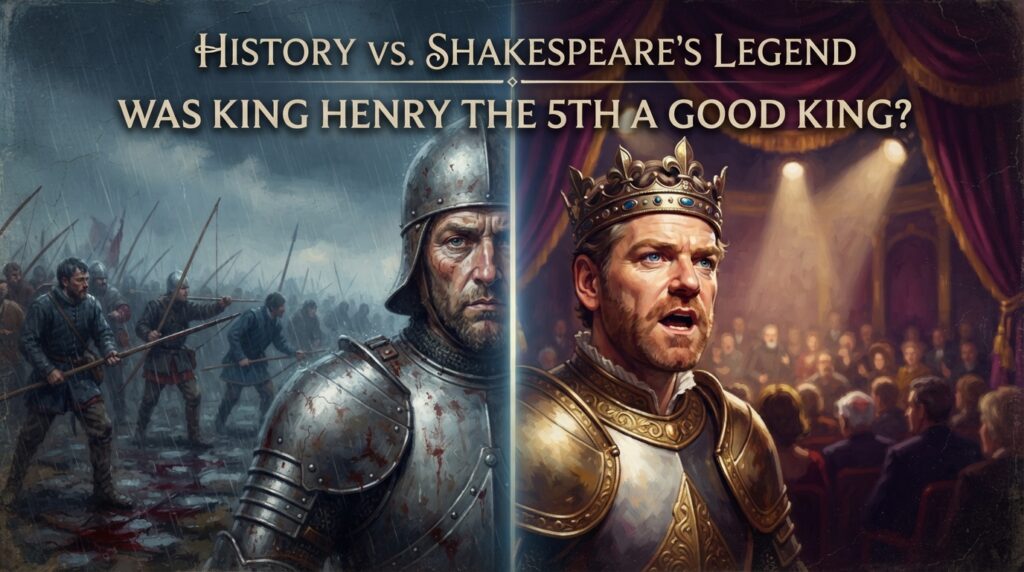
To millions of theatergoers and literature enthusiasts, the central question of whether King Henry the 5th was a good king feels almost rhetorical. William Shakespeare immortalized him as the charismatic, golden-tongued national hero who rallied his “band of brothers” against staggering odds on the muddy fields of Agincourt. Yet, when we strip away the soaring iambic pentameter and Tudor political propaganda, the historical ledger of England’s most celebrated warrior-monarch reveals a far more complex picture. Was he a master statesman of unrivaled tactical genius, or a ruthless imperialist whose short-sighted ambitions drained the English treasury and sowed the seeds for national catastrophe? To find out, we must look past the theatrical spectacle and examine the cold, documented realities of fifteenth-century Plantagenet rule.
The Prince Hal Problem: From Tavern Rake to Crowned Zealot
The Madcap Youth Myth
Popular imagination—heavily fueled by Shakespeare’s Henry IV, Parts 1 and 2—pictures young Prince Hal spending his formative years drinking in Eastcheap taverns with Falstaff, engaging in petty highway robbery, and humiliating the Lord Chief Justice. The historical reality is starkly different. From his early teens, Henry of Monmouth was a hardened, frontline military commander. By the age of sixteen, he was fighting for his father’s usurped crown, taking a near-fatal arrow to the face at the Battle of Shrewsbury (1403). His grueling years suppressing the Welsh rebellions led by Owain Glyndŵr forged him into an exceptionally competent, if utterly humorless, military administrator long before he ever inherited the throne in 1413.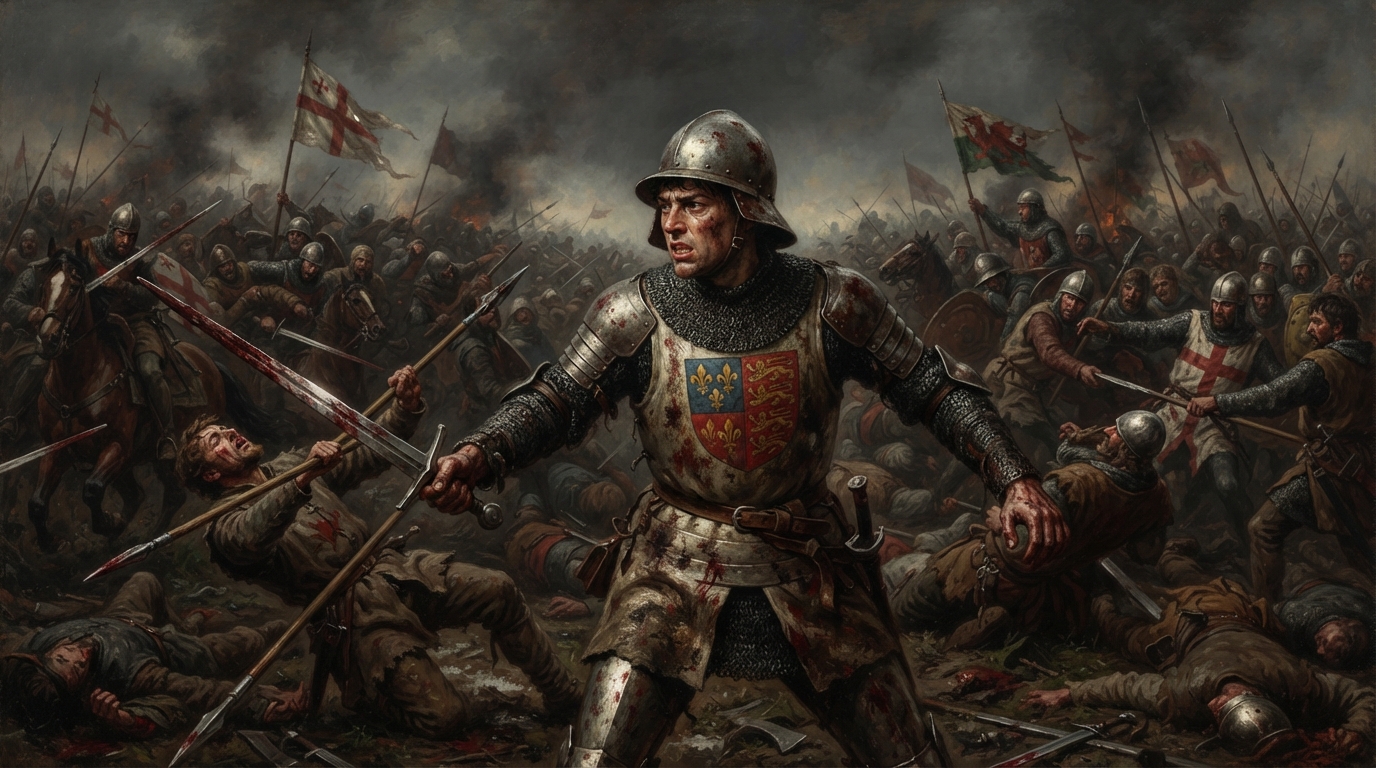
Legitimacy and Crisis
The Lancastrian dynasty sat precariously upon the English throne. Henry IV had seized power by deposing and murdering Richard II, leaving the new royal line plagued by continuous aristocratic conspiracies, financial insolvency, and questions of divine right. When young Henry ascended as King Henry V, he inherited a fractured realm. To secure his dynasty, he needed an external diversion that could unite the warring nobility behind a common cause. Foreign war was not merely an aggressive policy choice; it was an existential survival strategy for a vulnerable crown.
Piety and Persecution
To cement his legitimacy, Henry cultivated an image of supreme moral righteousness and orthodox religious zeal. He viewed himself quite literally as God’s instrument on Earth. This intense piety, however, had a deeply dark side. Henry was a merciless persecutor of the Lollards—an early English reformist movement critical of the Catholic Church. He personally oversaw the brutal prosecution and execution of his former friend and military companion, Sir John Oldcastle (the primary historical inspiration for Shakespeare’s Falstaff), who had embraced Lollard heresy and anti-regime rebellion.
The Agincourt Campaign: Masterclass in Generalship or Risky Gamble?
The Legal Fiction of the French Claim
In 1415, Henry unleashed the Hundred Years’ War anew, dusting off dubious, centuries-old English claims to the French throne. Using convoluted interpretations of Salic Law, his legal teams manufactured justifications for an invasion that violated existing truces. It was an aggressive land grab launched at a moment when France was deeply fractured by civil war between the factions of the Armagnacs and the Burgundians.
The Siege of Harfleur and the March to Calais
The campaign began poorly. The grueling siege of the port town of Harfleur dragged on far longer than anticipated, decimating the English army through dysentery and camp fevers. Refusing to turn back in disgrace, Henry made the disastrously bold decision to march his dwindling, sick army of roughly 6,000 men across northern France toward Calais. He was intercepted near the village of Agincourt by a French force easily three to four times larger, trapping the English in a desperate, cornered position.
Anatomy of Agincourt (1415)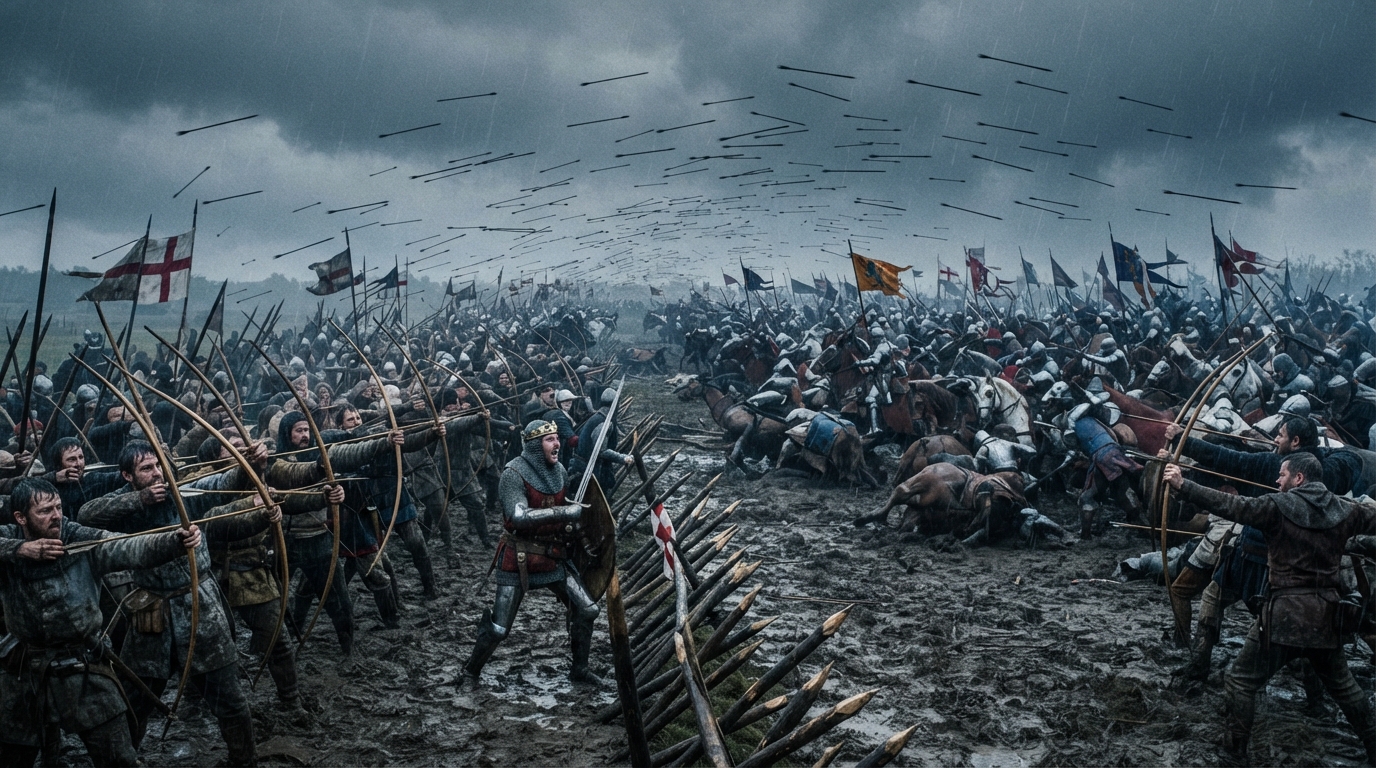
What followed on October 25, 1415, remains one of the most famous upsets in military history. Exploiting a waterlogged, plowed battlefield that neutralized French cavalry charges, English and Welsh longbowmen rained lethal volleys down upon armored French nobility trapped in a deadly bottleneck. While Henry’s personal bravery on the field was undeniable, victory was secured by a combination of desperate tactical positioning, defensive wooden stake palisades, and catastrophic tactical errors committed by arrogant French commanders. Contemporary chroniclers framed the lopsided casualty count—where thousands of Frenchmen died against a mere handful of Englishmen—as an unmistakable divine verdict validating Henry’s righteous cause.
The Darker Side of Conquest: War Crimes and Brutal Realpolitik
The Massacre of the Prisoners
In the thick of the Agincourt battle, faced with a sudden report that the French were counter-attacking and threatening the baggage train, Henry issued an order that modern historians find deeply unsettling: he commanded his troops to execute their high-ranking French prisoners of war. While medieval chivalric codes occasionally permitted killing prisoners if an army faced imminent destruction, executing hundreds of valuable ransom-bearing nobles in cold blood shocked even contemporary chroniclers, illustrating Henry’s cold calculus when survival and victory hung in the balance.
The Siege of Rouen (1418–1419)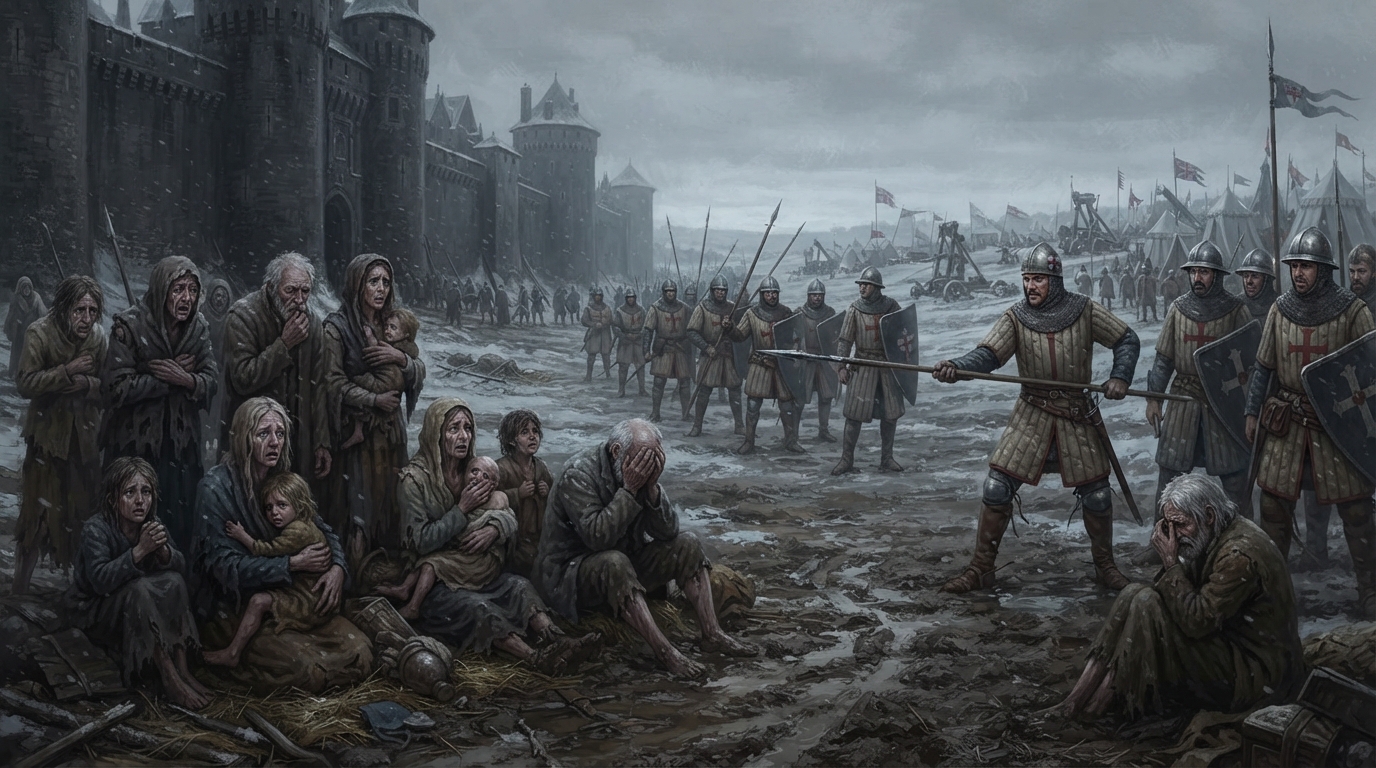
Henry’s subsequent campaigns in France revealed a calculated policy of merciless terror. During the prolonged Siege of Rouen, Henry subjected the city to a brutal starvation blockade. When the city governors attempted to preserve their food supplies by expelling thousands of “useless mouths”—women, children, and the elderly—from the city walls, Henry refused to let them pass through his lines. Left trapped in the freezing ditch between the city walls and the English camp, thousands of non-combatants starved and froze to death in full view of both armies. It was total warfare centuries ahead of its time.
Financial Ruin at Home
While English poets celebrated the glittering spoils of victory, the domestic reality was bleak. Henry’s endless military expeditions required astronomical taxation. The English peasantry and merchant classes were squeezed dry to fund the war machine, leading to chronic domestic inflation, currency degradation, and a crippling neglect of domestic infrastructure and law enforcement.
History vs. Drama: What Shakespeare Got Right (and Wrong)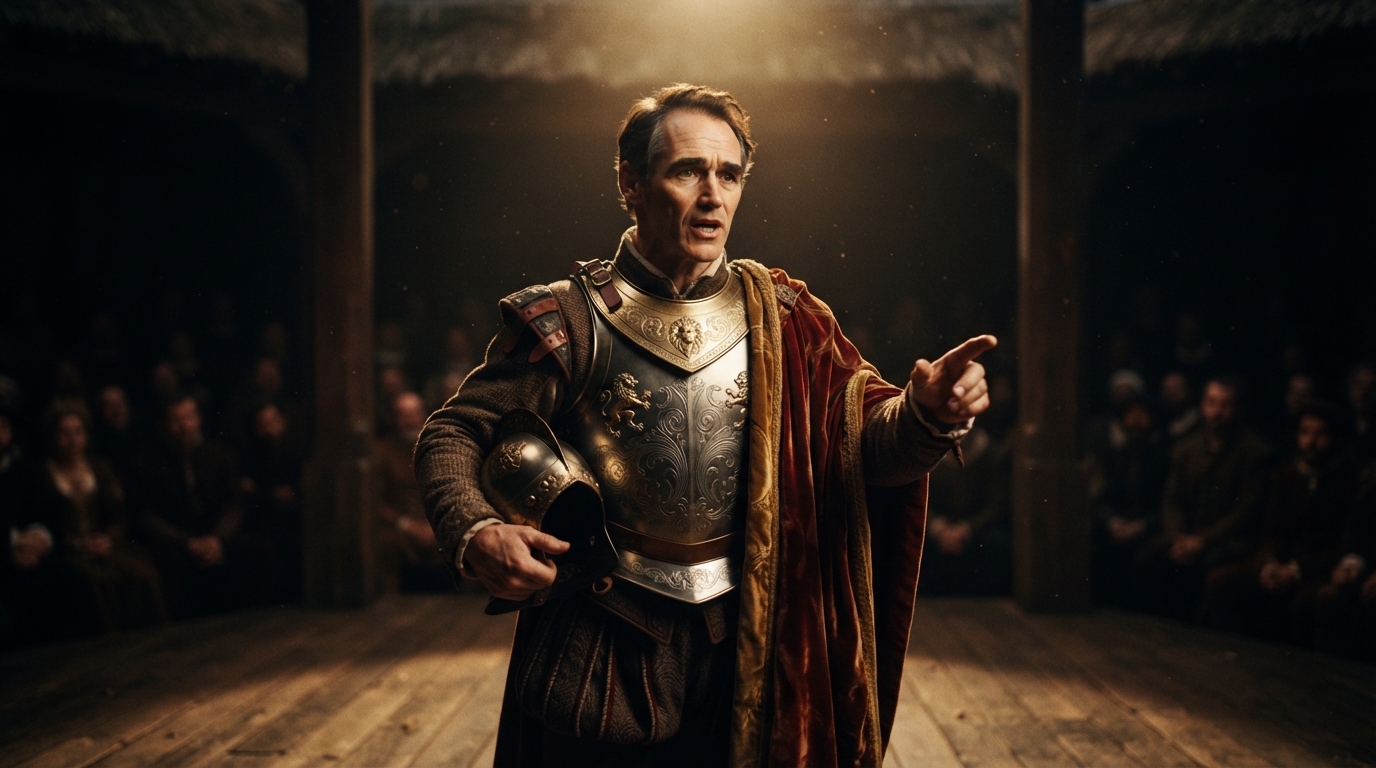
The Consolidation of Tudor Ideology
William Shakespeare wrote his Henriad cycle during the late Elizabethan era—a time of intense national anxiety regarding Queen Elizabeth I’s lack of an heir and the constant threat of foreign Catholic invasions. By portraying Henry V as an inspiring, unified leader who successfully channeled domestic grievances into patriotic foreign triumph, Shakespeare provided Elizabethan audiences with a comforting historical mirror. The plays subtly reinforced the divine stability of anointed monarchy while quietly glossing over the horrific human toll of imperial expansion.
Humanizing the Monarch
Where Shakespeare excels—and where history aligns with drama—is in exploring the crushing psychological isolation of absolute power. The famous scene in Henry V where the king walks incognito among his ordinary soldiers on the night before Agincourt captures a genuine historical truth. Henry was an intensely driven, lonely sovereign who bore the immense psychological weight of statecraft, viewing himself as a lonely servant of divine accountability.
The Whitewashing of War
Conversely, the primary divergence between Shakespeare and historical fact lies in the sanitization of violence. The playwright transforms brutal geopolitical land-grabbing into a noble crusade of brotherhood. In reality, Henry was an exceptionally calculating, legally astute, and emotionally detached autocrat who treated human lives—both French enemy civilians and his own starving subjects—as expendable currency on the geopolitical ledger.
The Fragile Legacy: Why Henry V’s Success Was Built on Sand
The Treaty of Troyes (1420)
At the height of his military power, Henry forced the mentally unstable French King Charles VI to sign the Treaty of Troyes. This agreement disinherited the French Dauphin, married Henry to the French princess Catherine of Valois, and designated Henry and his heirs as the legitimate rulers of a dual monarchy uniting England and France. It appeared to be the ultimate triumph, but it was an overreach of monumental proportions. It united French resistance under the banner of the disinherited Dauphin and created an unsustainable administrative nightmare.
Sudden Death at Vincennes (1422)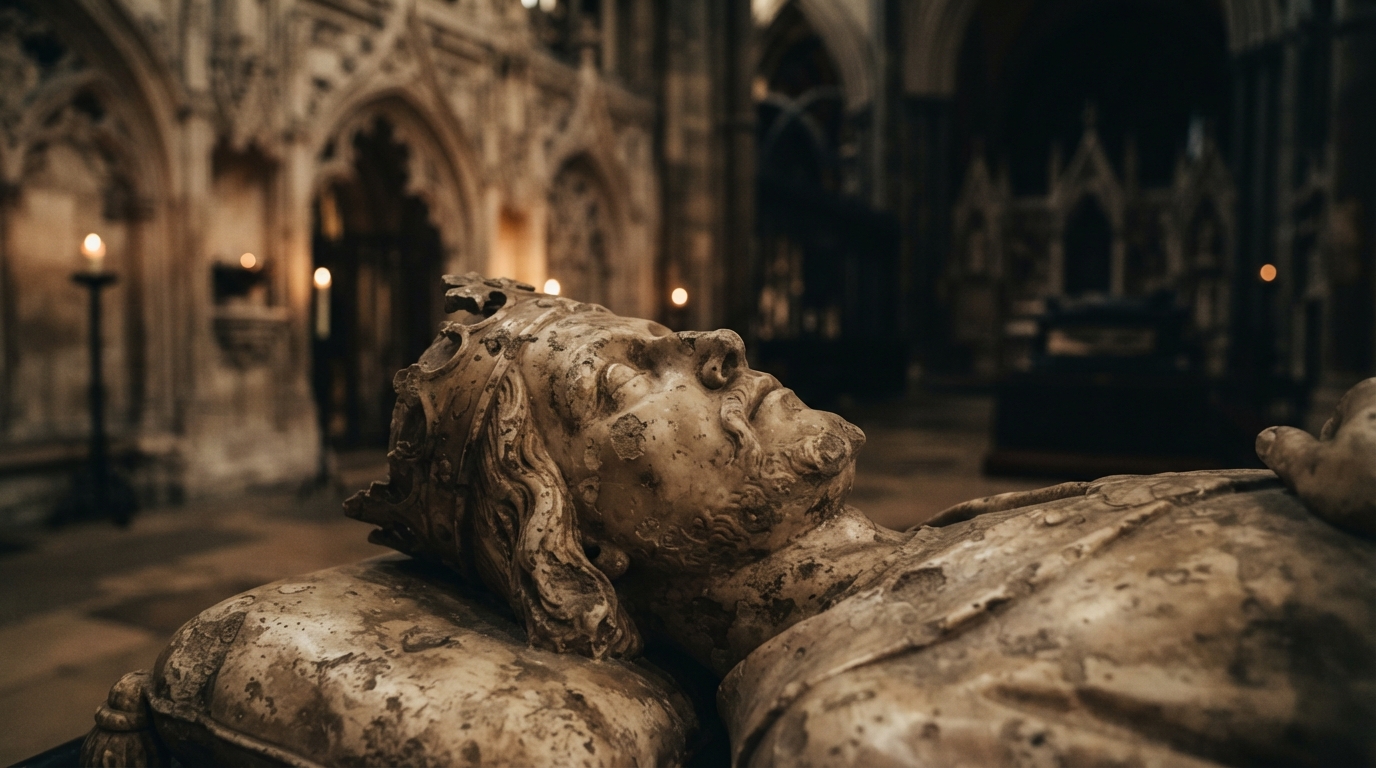
History pivoted on a microscopic organism. In August 1422, while campaigning near Paris, Henry contracted severe camp dysentery (“the bloody flux”). At just thirty-five years of age, at the absolute zenith of his powers, England’s warrior king wasted away and died at the Château de Bois de Vincennes. He left behind a shattered, overextended empire and an infant heir—the nine-month-old Henry VI.
The Unraveling
Henry’s premature death instantly exposed the fatal flaw of his reign: his entire political edifice was entirely dependent on his personal military genius and iron-fisted presence. Within decades, the dual monarchy collapsed entirely. The English were systematically driven off the continent, losing every territorial gain made during the Hundred Years’ War save for Calais. Furthermore, the vacuum left by his absence triggered bitter factional infighting among the English nobility, directly culminating in the Wars of the Roses—a thirty-year civil bloodbath that decimated the Plantagenet dynasty.
Expert Verdict: Was Henry V a Good King?
The Case for Greatness
Viewed through the lens of medieval metrics of kingship, Henry V possessed extraordinary administrative brilliance, unmatched personal courage, and supreme strategic vision. He transformed a bankrupt, politically fractured realm into a dominant European superpower, unified the English language and identity through administrative reforms (he was the first king to conduct major government correspondence primarily in English since the Norman Conquest), and secured an iconic military legacy that defined national pride for centuries.
The Case Against
Yet, evaluated by long-term structural outcomes, his reign was a geopolitical catastrophe. His aggressive, short-sighted imperialism bled England’s economy white, introduced terrifying levels of brutality into medieval warfare, and created an impossible-to-maintain empire that collapsed immediately upon his death, plunging his homeland into catastrophic civil war.
Final Synthesis
Ultimately, King Henry V was not the chivalric demigod of Shakespearean romance, nor was he a mindless monster. He was a hyper-efficient, utterly pragmatic, and relentlessly pious medieval CEO of war who achieved breathtaking short-term tactical triumphs at an exorbitant long-term human and economic cost. He was a brilliant king for the battlefield, but a disastrously short-sighted architect for the future of his realm.
Frequently Asked Questions
-
Did Shakespeare invent Prince Hal’s wild youth?
Not entirely out of thin air. Earlier Tudor chronicles and propaganda accounts hinted at a rebellious youth, but Shakespeare heavily dramatized and exaggerated these accounts to create a compelling dramatic arc of redemption and transformation.
-
How tall was the historical Henry V?
Based on skeletal analysis and contemporary descriptions, Henry was relatively slender and agile, standing around 5 feet 9 inches to 5 feet 10 inches tall—slightly above average height for the 15th century.
-
What role did the longbow play in Henry’s military strategy?
The English and Welsh longbow was the decisive tactical equalizer. Capable of firing up to 10–12 arrows per minute with armor-piercing capabilities at close range, it allowed heavily outnumbered English armies to decimate charging French cavalry and infantry formations.
-
Did Henry V actually marry Catherine of Valois for love?
While historical romances love to portray a deep affection between them, the marriage was entirely a calculated political transaction engineered by the Treaty of Troyes to legally bind the English and French crowns together.